A New York Botanical Garden Spring
Banks of Azalea
Peonies a-plenty
Time for a close-up
Loads of Lilacs, too
Photos by Amanda Slattery
From the Lyndhurst Crafts Fair
Photo by Ed Lannert

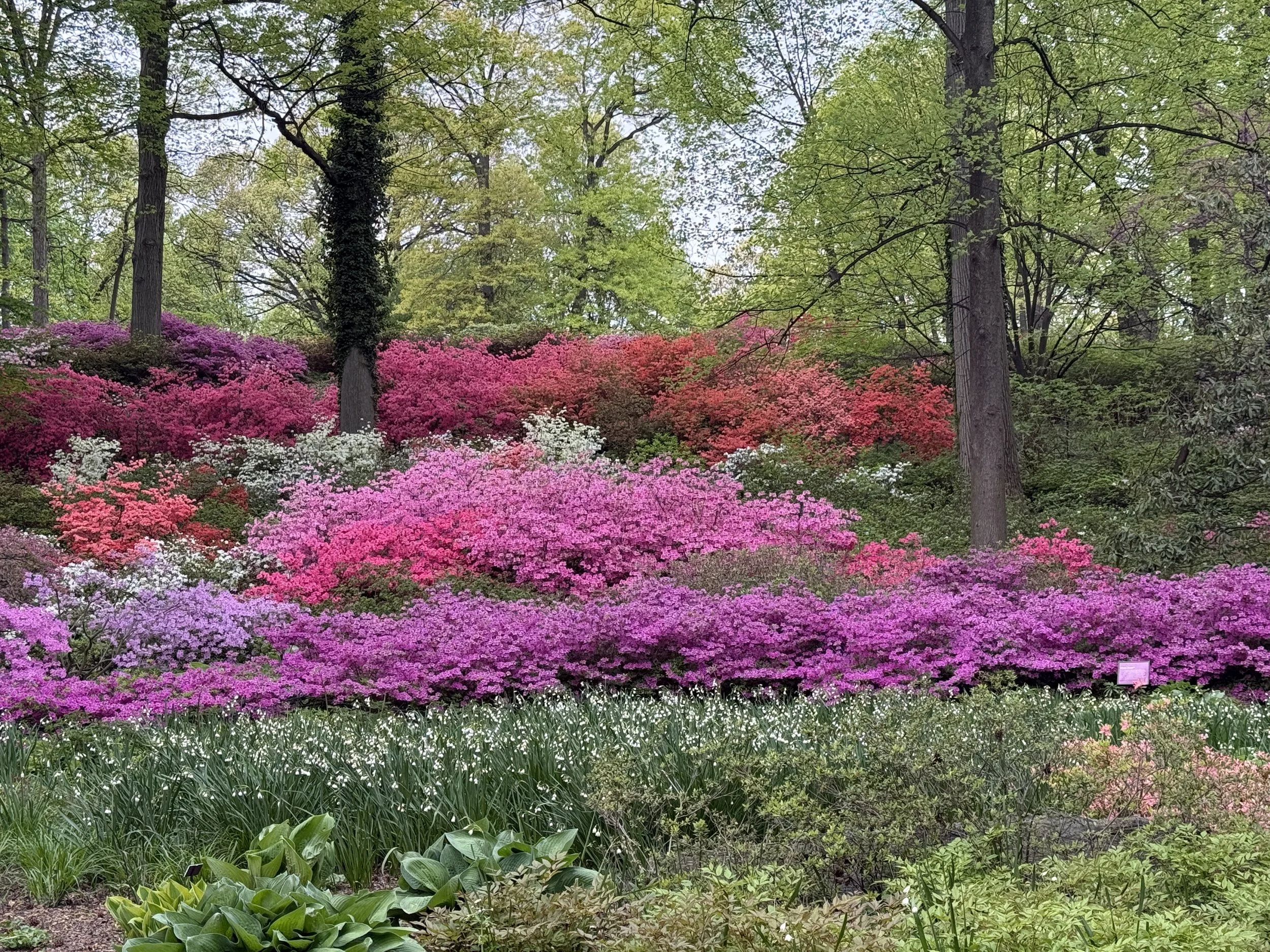
Banks of Azalea
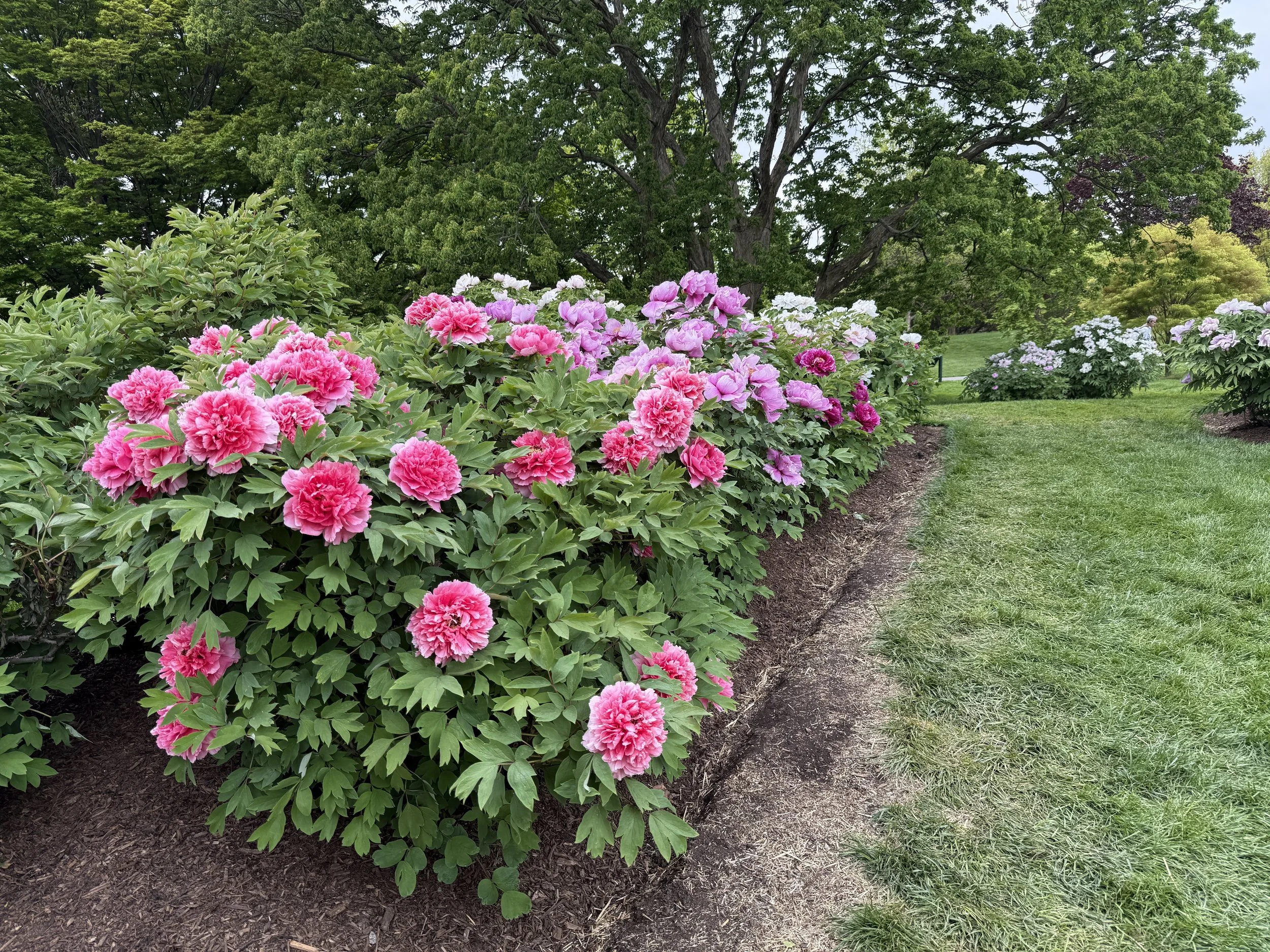
Peonies a-plenty
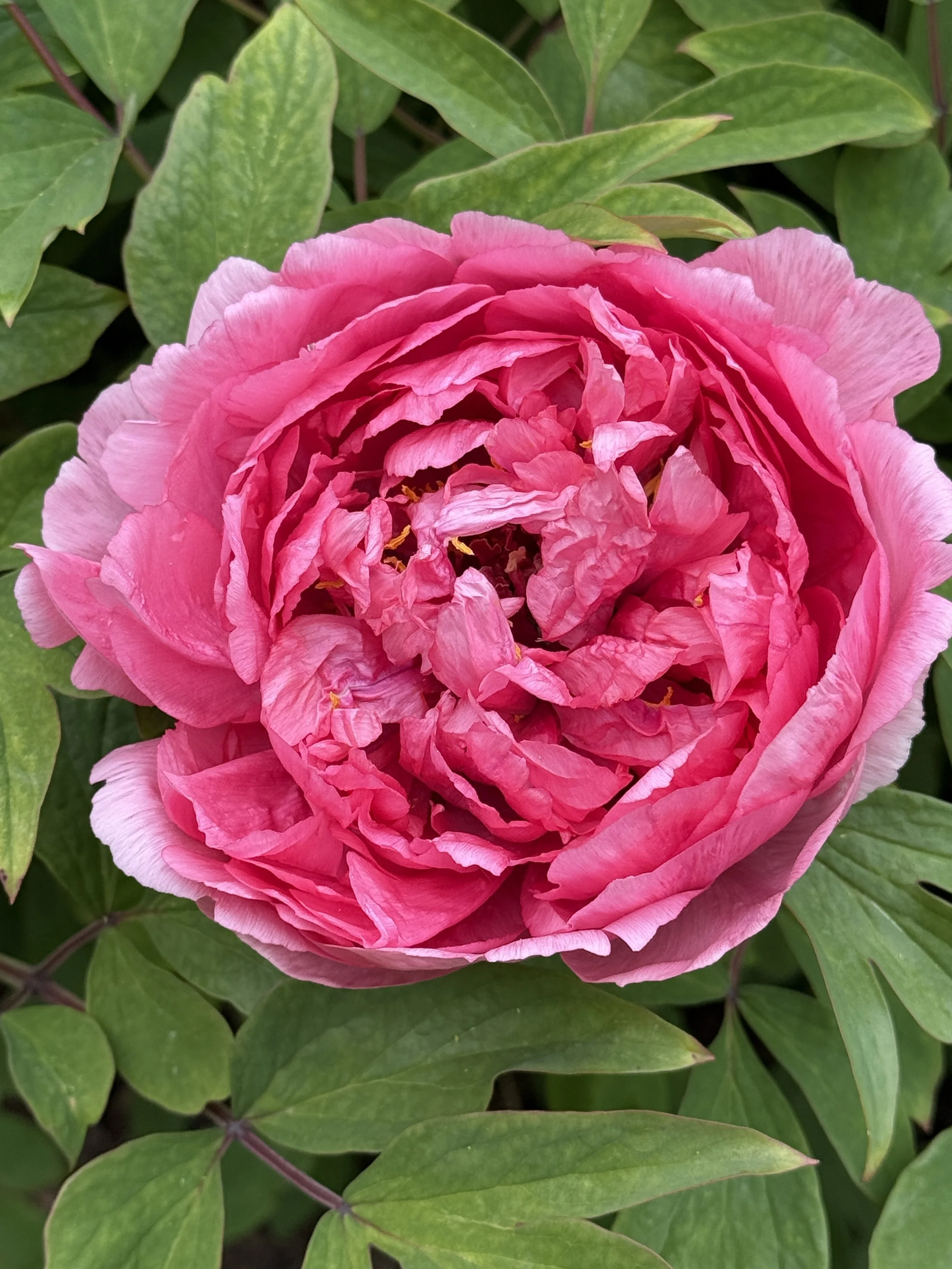
Time for a close-up

Loads of Lilacs, too
Photos by Amanda Slattery
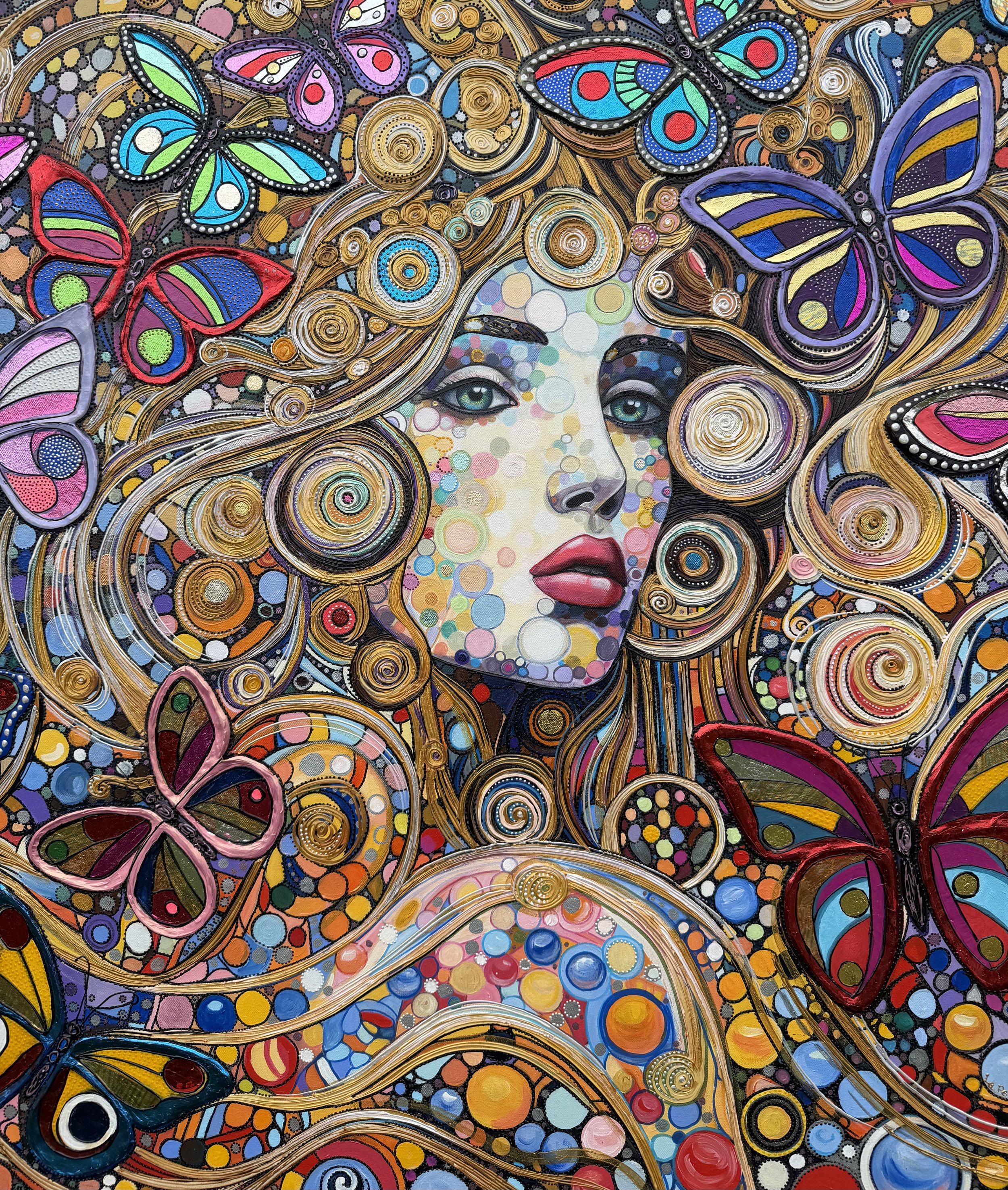
Photo by Ed Lannert


New Residents Association Office Entrance (doors and glass to yet to come)
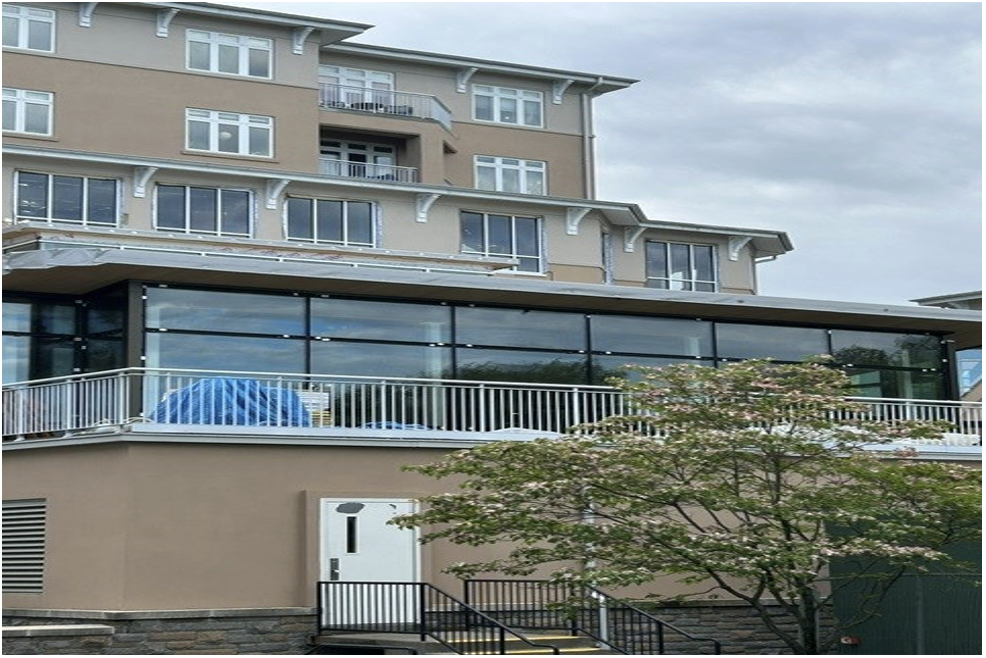
New Terrace Lounge--from the Outside In

Pool Almost Ready to Go (we’re told to ignore the green water--not permanent)
From the Office of Ellen Ottstadt
Recently, a group of Kendalites journeyed to Buttonhook Forest for a docent tour of an area once held sacred by the Munsee Lanape, the Indigenous Peoples who lived in this area long before colonial days. They learned of the forest as sacred land of the Native Americans who previously lived in this region—now Chappaqua in the Town of New Castle—and of the significance of stone structures left by the indigenous people. Those stone structures on the land have been authenticated as a complex of prayer stones, turtle effigies, a serpentine wall, and markers of underground aquifers placed by the original inhabitants. The 20.3-acre site is being protected and preserved by a community coalition “Friends of Buttonhook Forest” together with Indigenous stewardship while legal efforts are underway to keep it from being destroyed, and the significance of the stone structures left by the indigenous people.
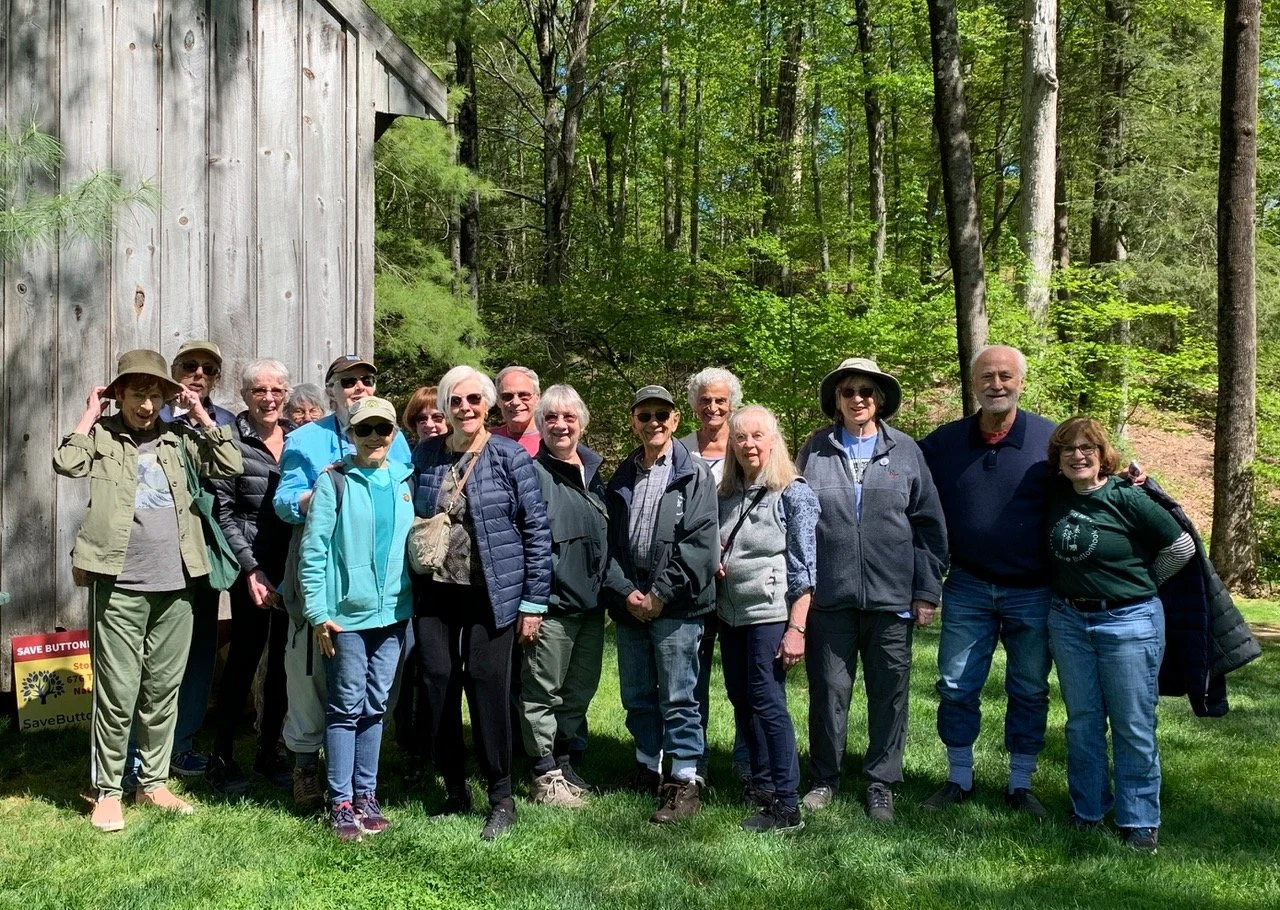
“The Group”
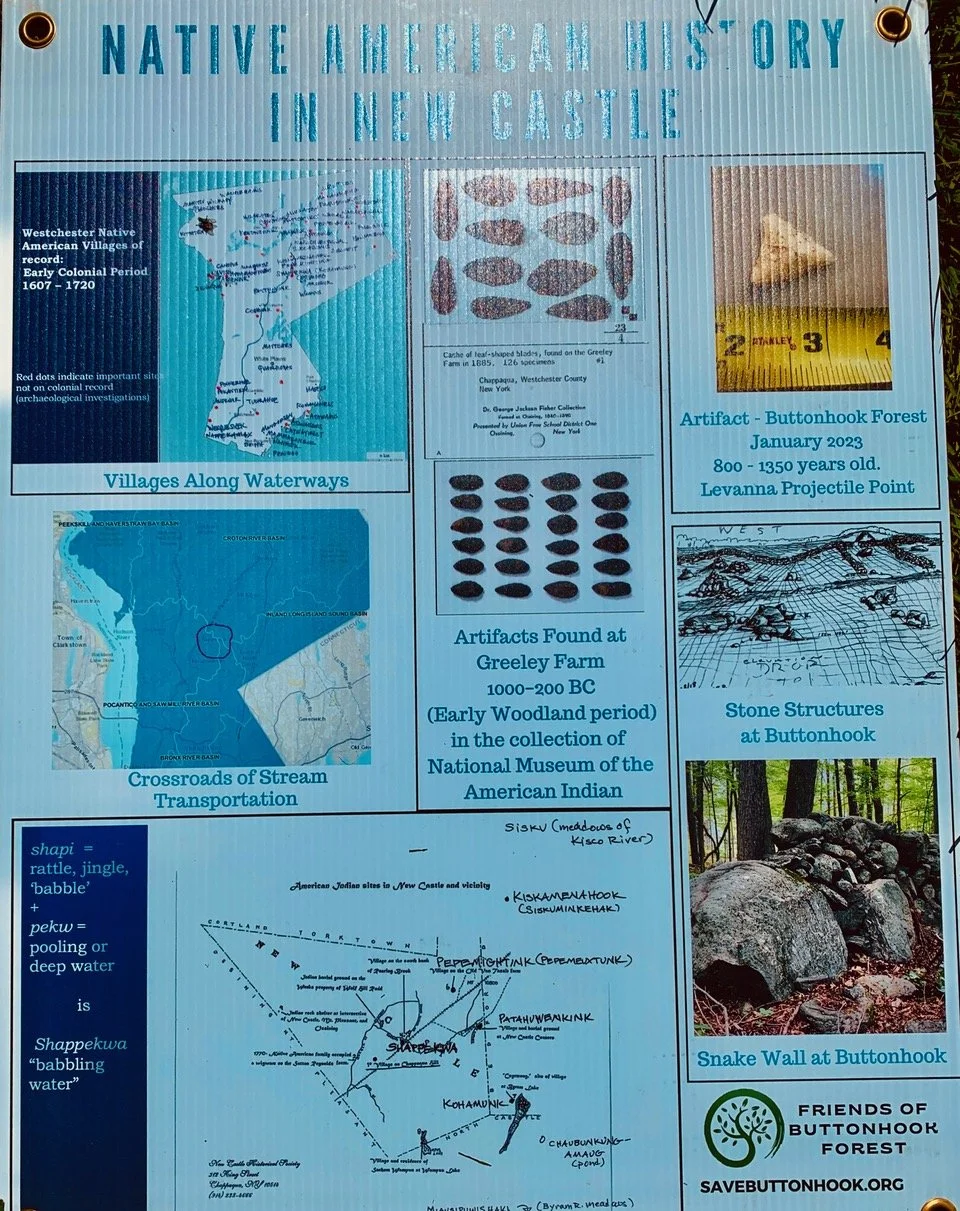
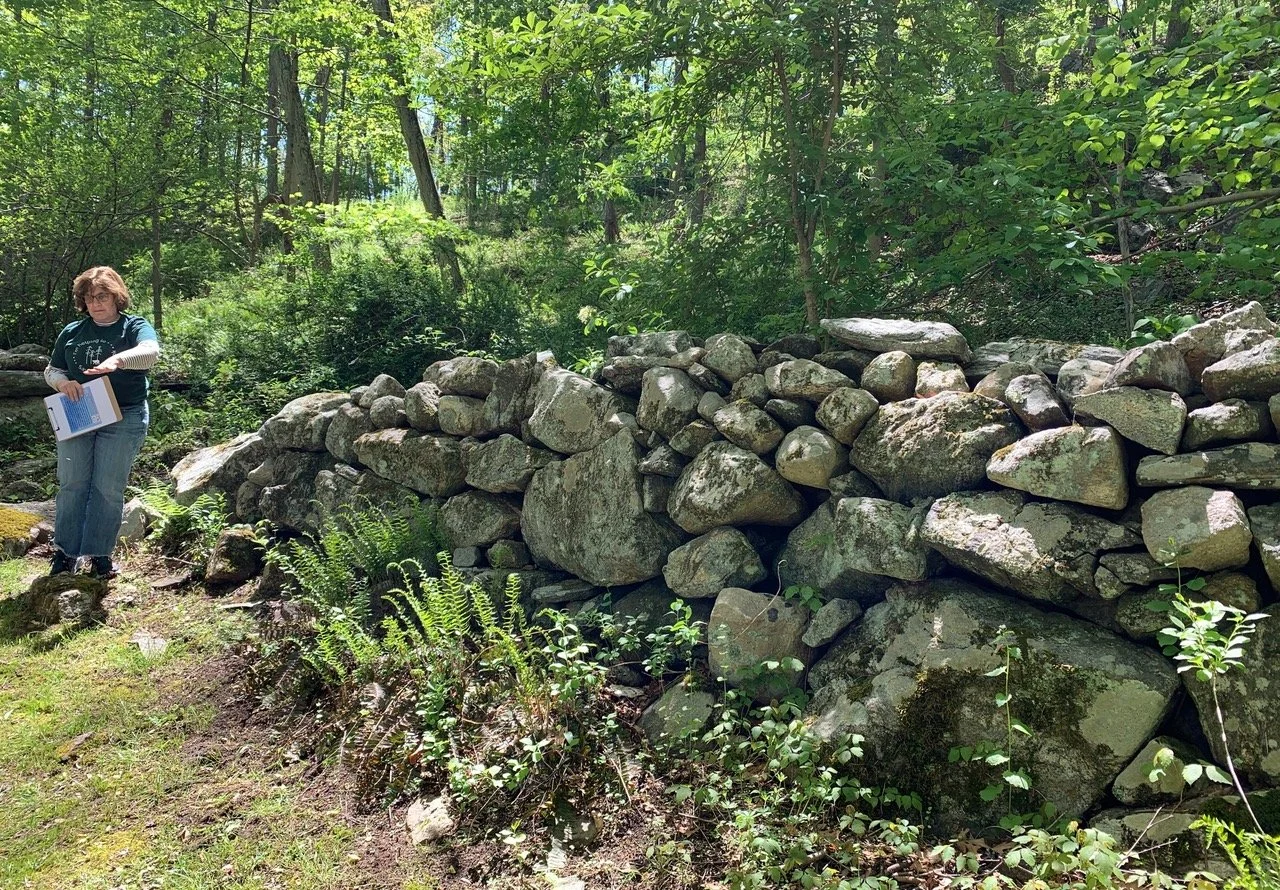
The docent explained the snake wall. Snakes were sacred to the Muncee Lenape people. The front end of the snake wall extends a very long way without bordering anything. So, it isn’t a wall that a farmer would build. Its winding, curvey structure also indicates that it isn’t a functional wall, at all.
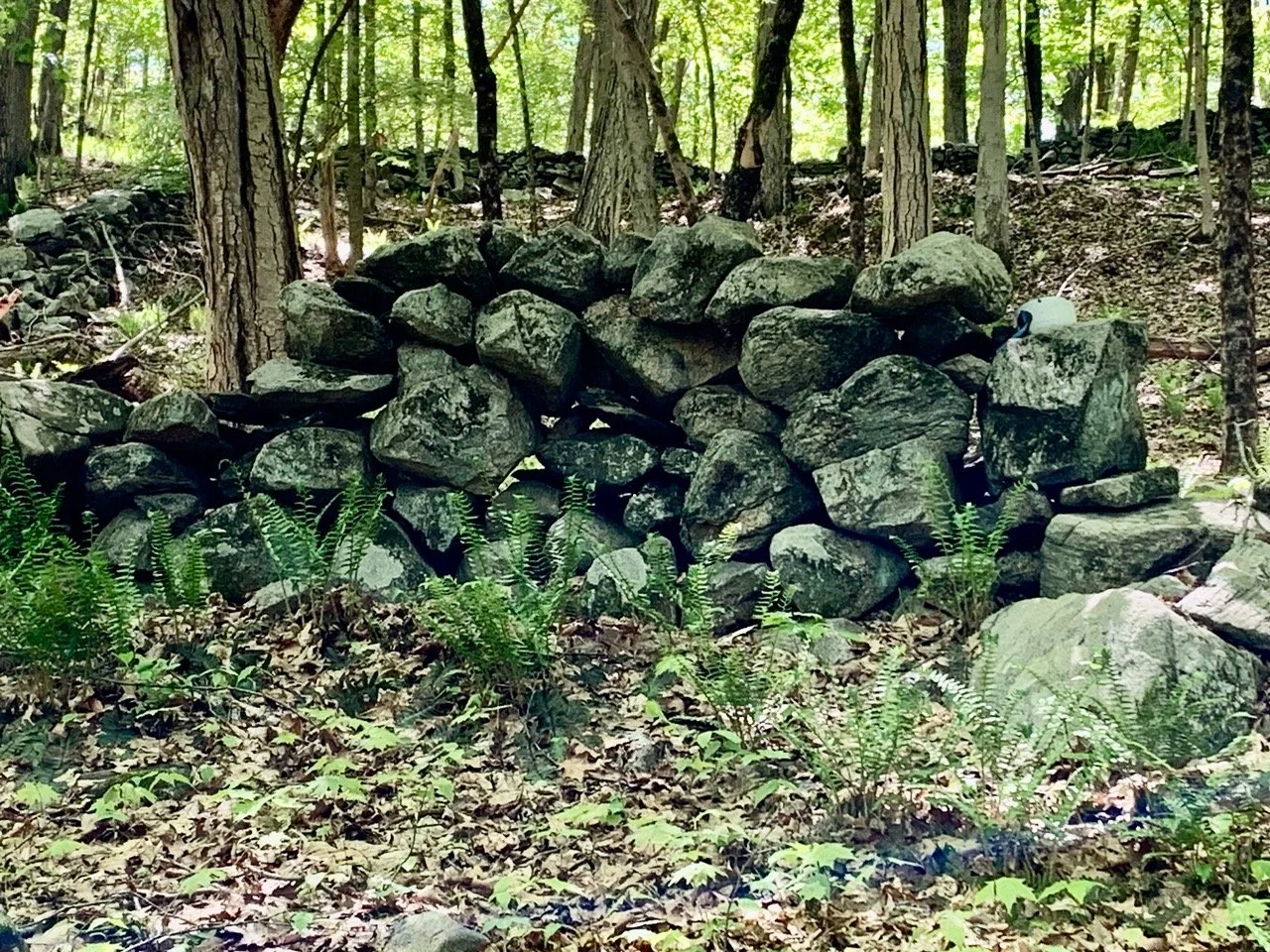
More snake wall
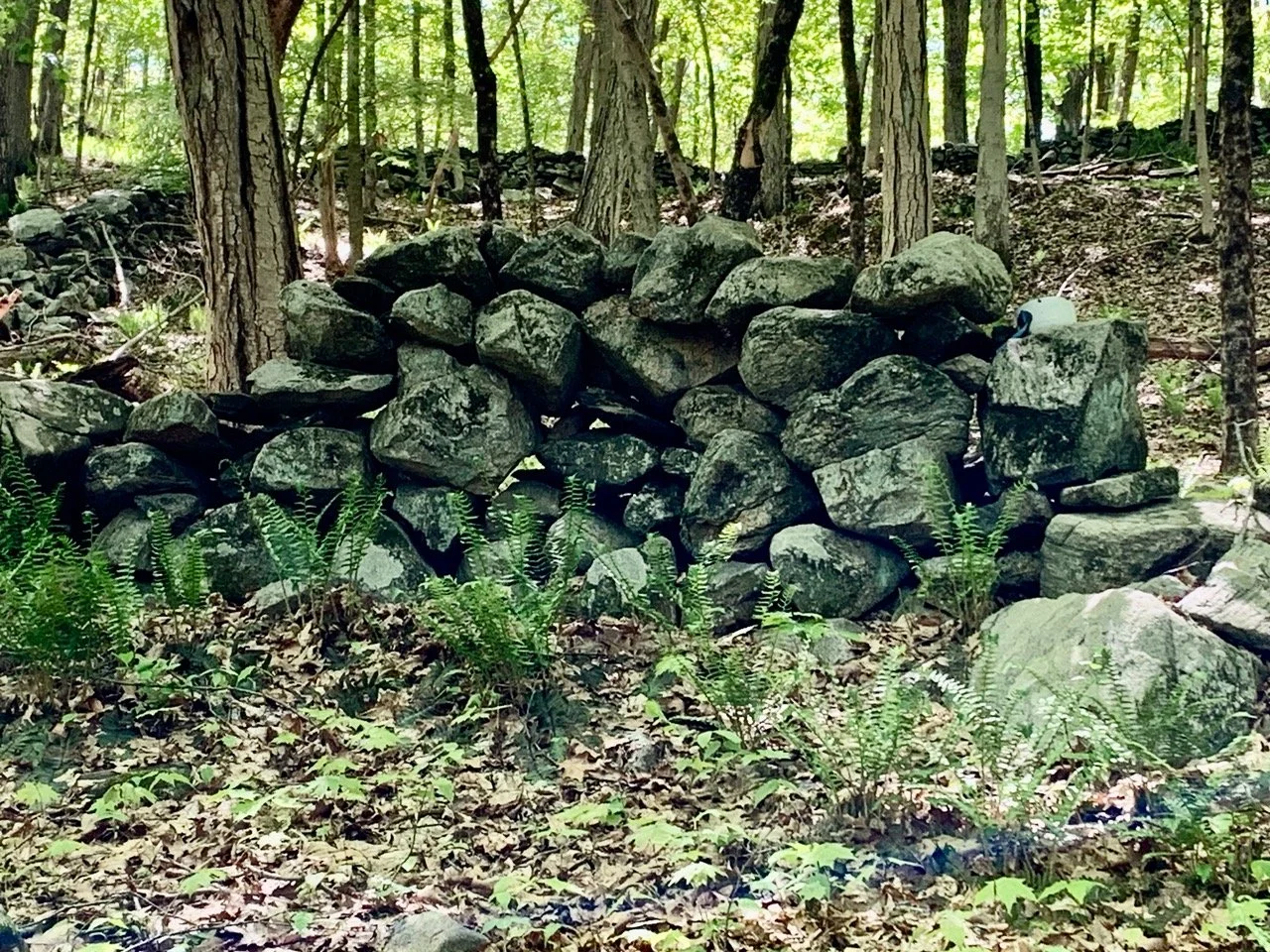
Another example of carefully placed rocks that were probably a ceremonial site.
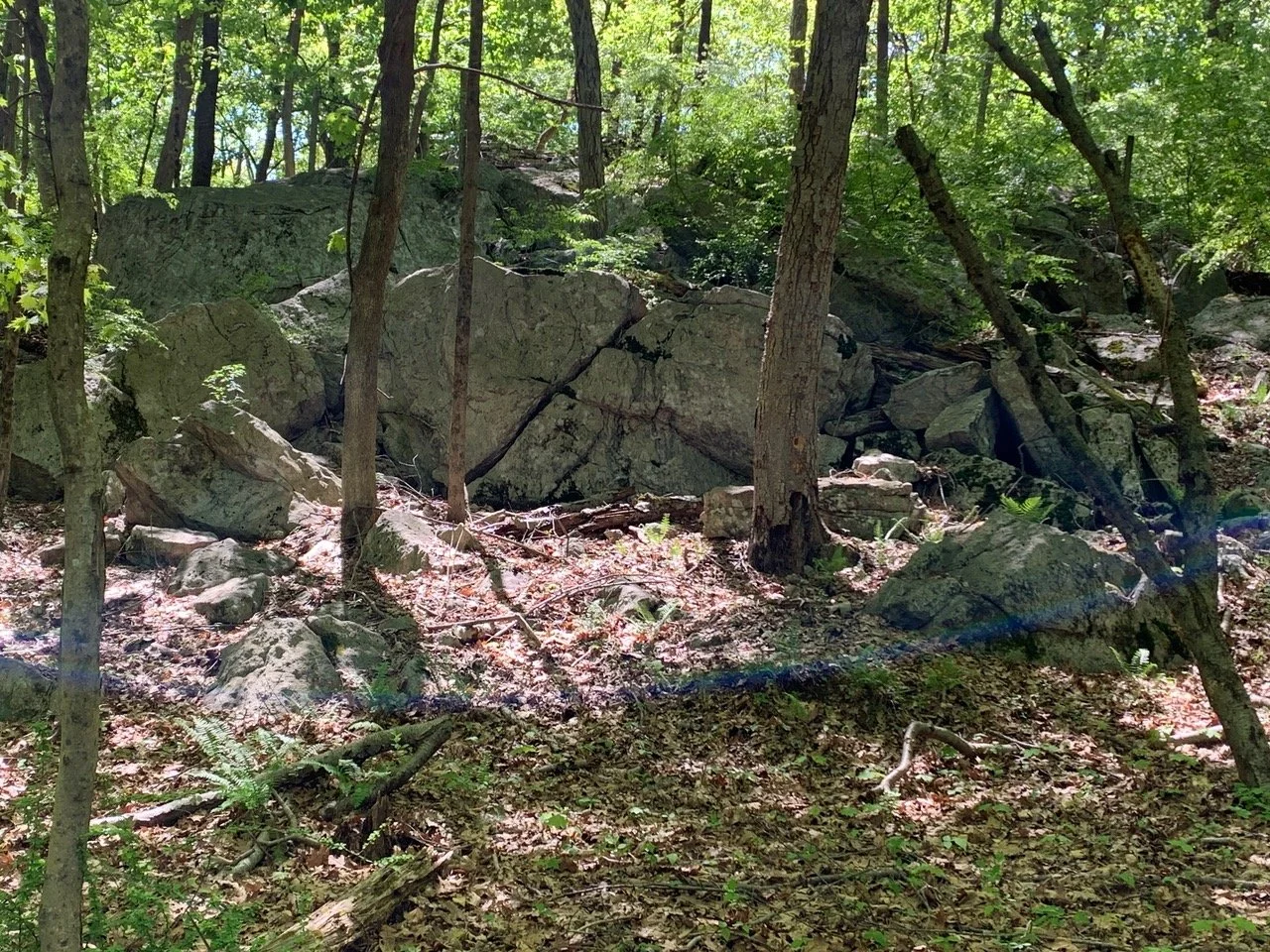
The split rock at the bottom of the photo indicates the location of an underground aquifer.
Photos by Harry Bloomfeld

“Take my wife . . . please.” Rodney Dangerfield may have aced the comedy of the wife joke, but others—in all fields—have joined in the fun:
Some people ask the secret of our long marriage. We take time to go to a restaurant two times a week. A little candlelight, dinner, soft music and dancing. She goes on Tuesdays, I go on Fridays. George W. Bush
I don’t worry about terrorism. I was married for two years. Rudy Giuliani
Two secrets to keep your marriage brimming: 1. Whenever you’re wrong, admit it. 2. Whenever you’re right, shut up. Shaquille O’Neal
The most effective way to remember your wife’s birthday is to forget it once. Kobe Bryant
You know what I did before I married? Anything I wanted to. David Hasselhoff
My wife and I were happy for 20 years. Then we met. Alec Baldwin
To Be Continued . . .
Contributed by Simone
This past April 24, Sleepy Hollow High School’s Asian American Culture Club hosted an intergenerational celebration at Kendal on Hudson, featuring cultural exhibits from nine Asian countries, presented by students. Directed by students Niva Pandya and Kieran Raghavan (yes, grandson of a very proud Aruna), the event fostered community dialogue through shared traditions, food (prepared by Chef Eddy Dias and his fabulous staff), and personal perspectives.
For a wonderful Youtube film of the club’s presentation, click here.

Three of the Sleepy Hollow High School students who gave the presentation. (Kieran, Aruna’s grandson, is front and center.)

Students circulated to answer Kendal questions.
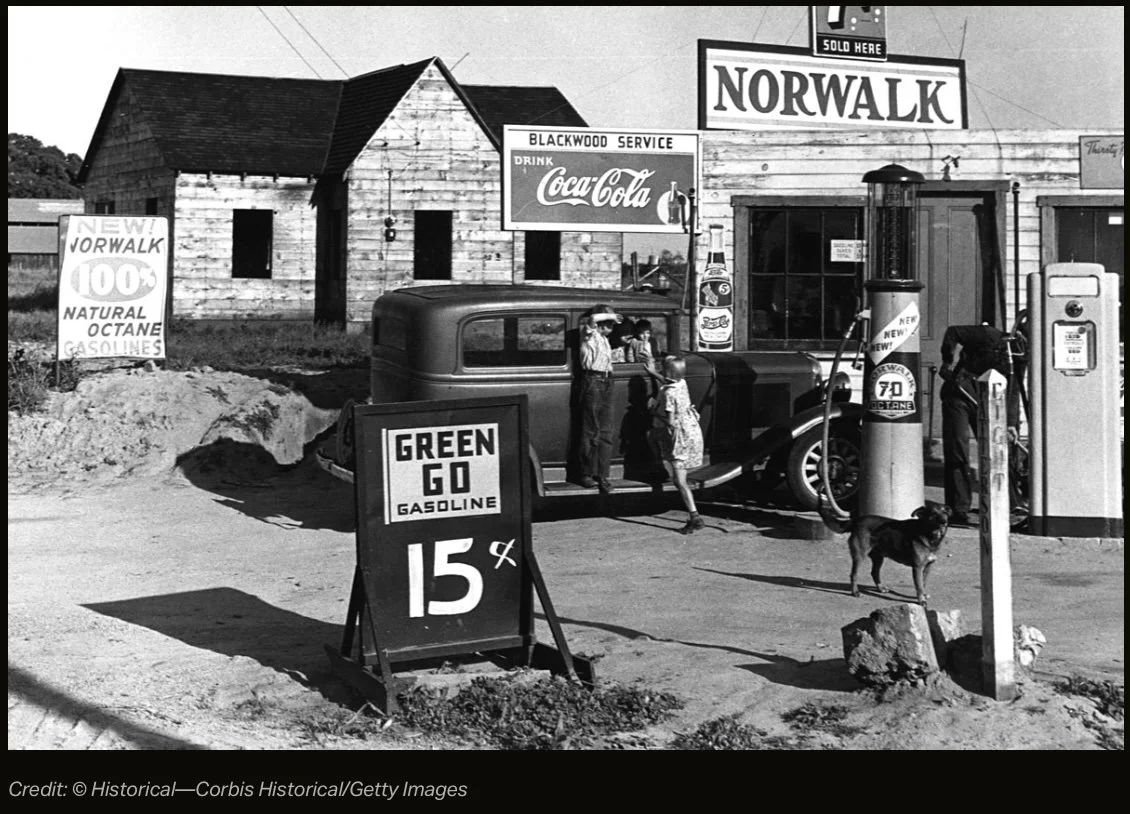
In 1940, the average worker in the United States earned $1,368 a year—roughly $25 a week. And while that figure did rise during the course of the decade, it still sounds like a meager amount by today’s standards, thanks to inflation. Back then, however, a dollar could stretch remarkably far. According to the inflation calculator provided by the US Bureau of Labor Statistics, $1 in 1940 is equivalent to $23.34 in 2026. So, a dollar was enough to stock up on some essential groceries or cover a modest night out. Here’s a look at exactly what you could buy for a buck back in 1940.
10 Loaves of Bread
A 1-pound loaf of white bread cost about 10 cents in 1940, meaning $1 bought you 10 loaves at that price. But a loaf could often be found for even less if you shopped around, so a dollar could get you as many as a dozen loaves, making bread an important staple in most homes.
3 Dozen Eggs
In 1940, a dozen large white eggs cost about 33 cents (and possibly as little as 27 cents), so you could get at least three dozen eggs for a dollar. Being relatively affordable, eggs were considered the perfect protein, and most households ate them daily. And if you wanted bacon with your eggs, you could get at least 4 pounds of bacon for a buck.
20 Hershey’s Chocolate Bars
In the US today, a standard Hershey’s milk chocolate bar typically costs between $1.80 and $2.20. Back in 1940, it cost just 5 cents, so a dollar could get you 20 bars. The size of the bar might have differed slightly, though—Hershey was committed to maintaining the 5-cent price point throughout the 1940s and up through the 1960s, but it adjusted the size of the bar to account for fluctuating cacao prices. Coca-Cola also maintained a 5-cent price point in the mid-20th century, so you could get 20 bottles of Coke for a dollar, too.
4 Pounds of Coffee
In 2025, the average price for a pound of coffee surpassed $9. In 1940, a dollar could buy around 4 pounds of coffee, enough to keep a household caffeinated for at least a week. But a couple of years later, things took a turn for the worse: Coffee was rationed in America from November 1942 to July 1943 to make sure there was enough for the soldiers fighting in World War II.
6 Gallons of Gasoline
The price of gasoline has been on the rise in 2026, with the national average for a gallon now passing the $4 mark. In 1940, $4 would have been a shocking price, since at the time, a gallon of gas cost around 15 cents. While that’s still quite high accounting for inflation, you could buy 6 gallons at the pump and still get change for a dollar.
4 Movie Tickets
In 1940, a standard movie ticket cost a quarter, and matinee showings could be as little as 10 cents. It was a good year for movies, too. You could watch Charlie Chaplin in The Great Dictator; Cary Grant, Katharine Hepburn, and James Stewart in The Philadelphia Story; and Disney’s Pinocchio and Fantasia, all without spending more than a dollar.
33 First-Class Stamps
A first-class stamp cost 3 cents in 1940, and remained the same price until 1959 (when it increased to 4 cents). So, for $1, you could stamp 33 letters — more than enough to keep up with family and friends in an age long before email and social media.
2 Men’s Haircuts
According to Yelp, the cost of a men’s haircut in the US today typically ranges from $25 to $40 (though it can, of course, be cheaper or much more expensive). In 1940, a standard men’s haircut in a barbershop cost around 50 cents—and might have included a shave. For women, a standard cut in a 1940s salon would likely have exceeded a dollar—but would still have been far below the $60 or so charged by a midrange salon today.
1 Pair of Silk Stockings
A pair of medium-quality women’s silk stockings cost about a dollar in 1940. That same year, nylon stockings became available to the American public for the first time, causing quite a stir—customers rushed to stores in the thousands, and four million pairs sold out in four days. Nylon was generally cheaper than top-tier silk, but nylon stockings were a premium product upon their nationwide release—being stronger, more durable, more elastic and less prone to wrinkling than silk—and demand was extremely high, driving the price up to around $1.25 a pair. So, if you only had a dollar, you’d have to stick with silk.
Source: Tony Dunnell, historyfacts.com, May 7, 2026
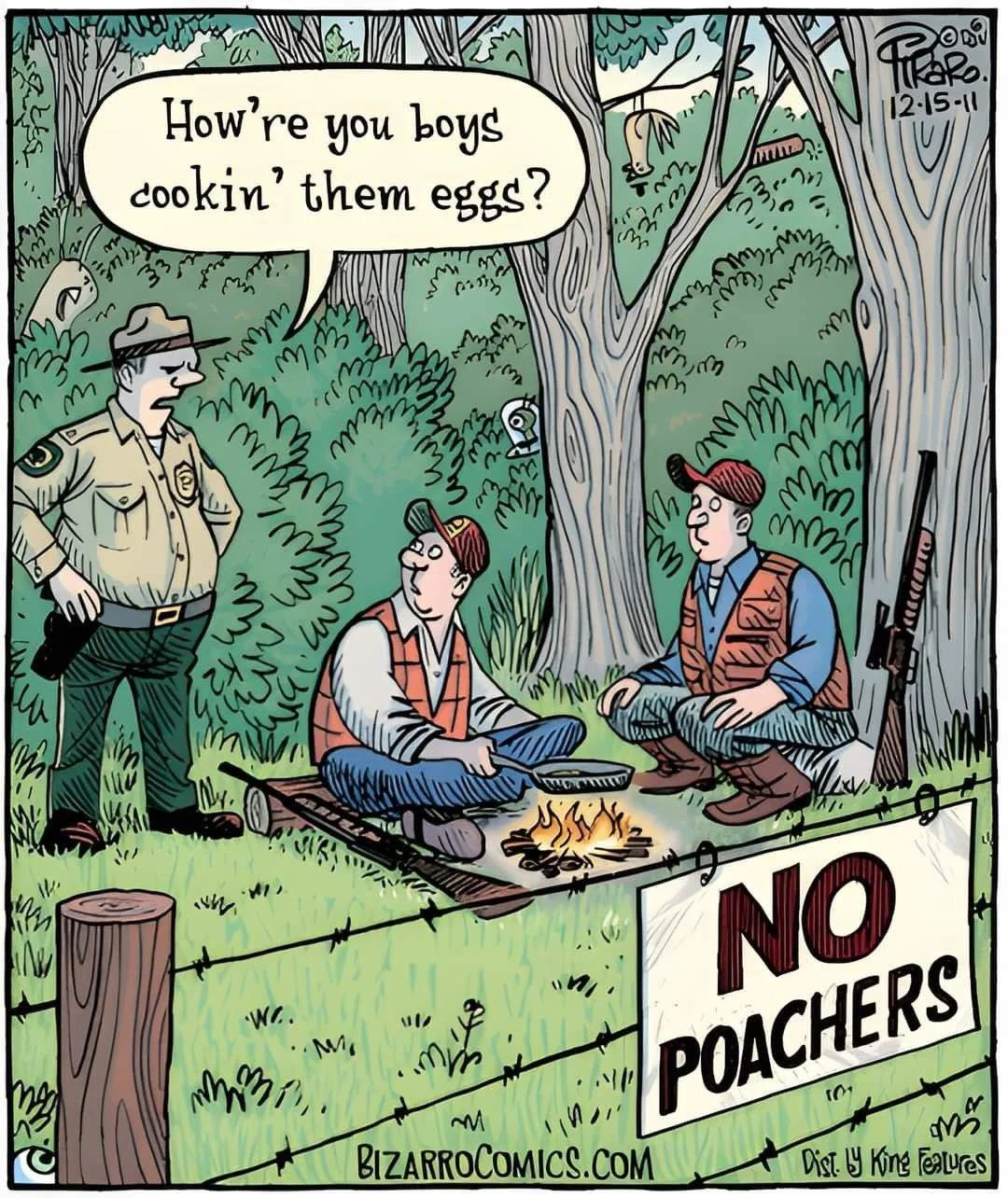

Auden, an orange roughy, explained that he was actually as smooth as silk, as long as he wasn’t being hooked or cooked
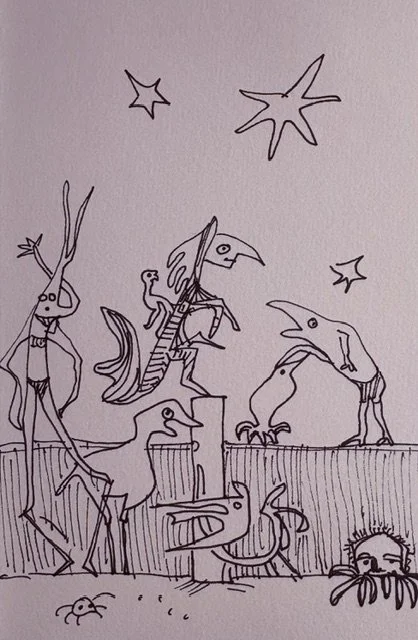
Even at dawn, the beach club was a happening place

In a dramatic career change, the Pink Panther accepted a role as a world-famous drag queen

Martine, a shrimp, and Ron, a baked potato, could never get along
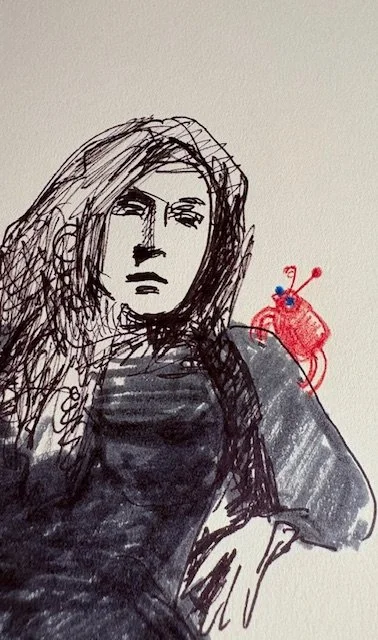
Lizzie and Dankworth’s duets were hauntingly beautiful
Art and photos by Jane Hart
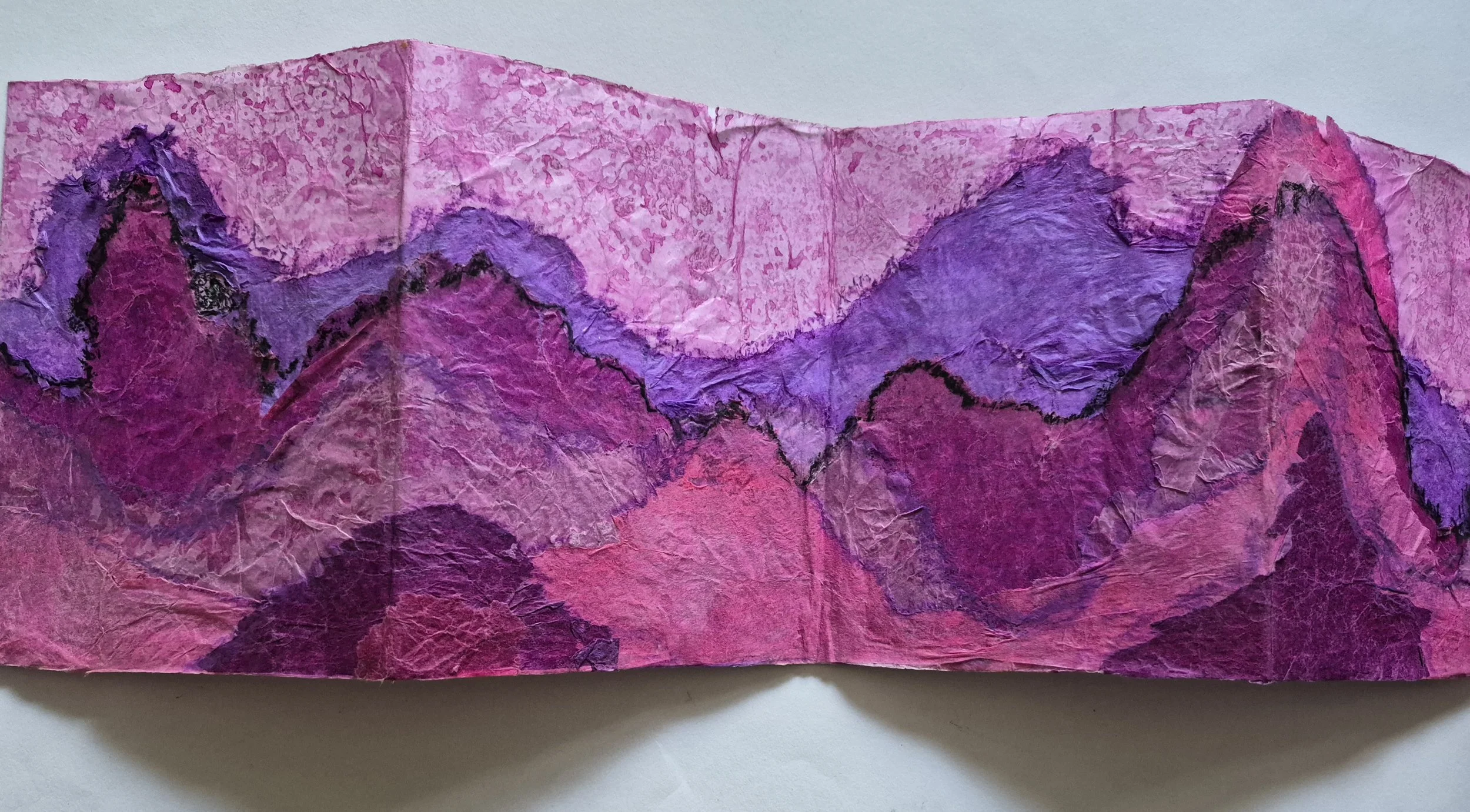
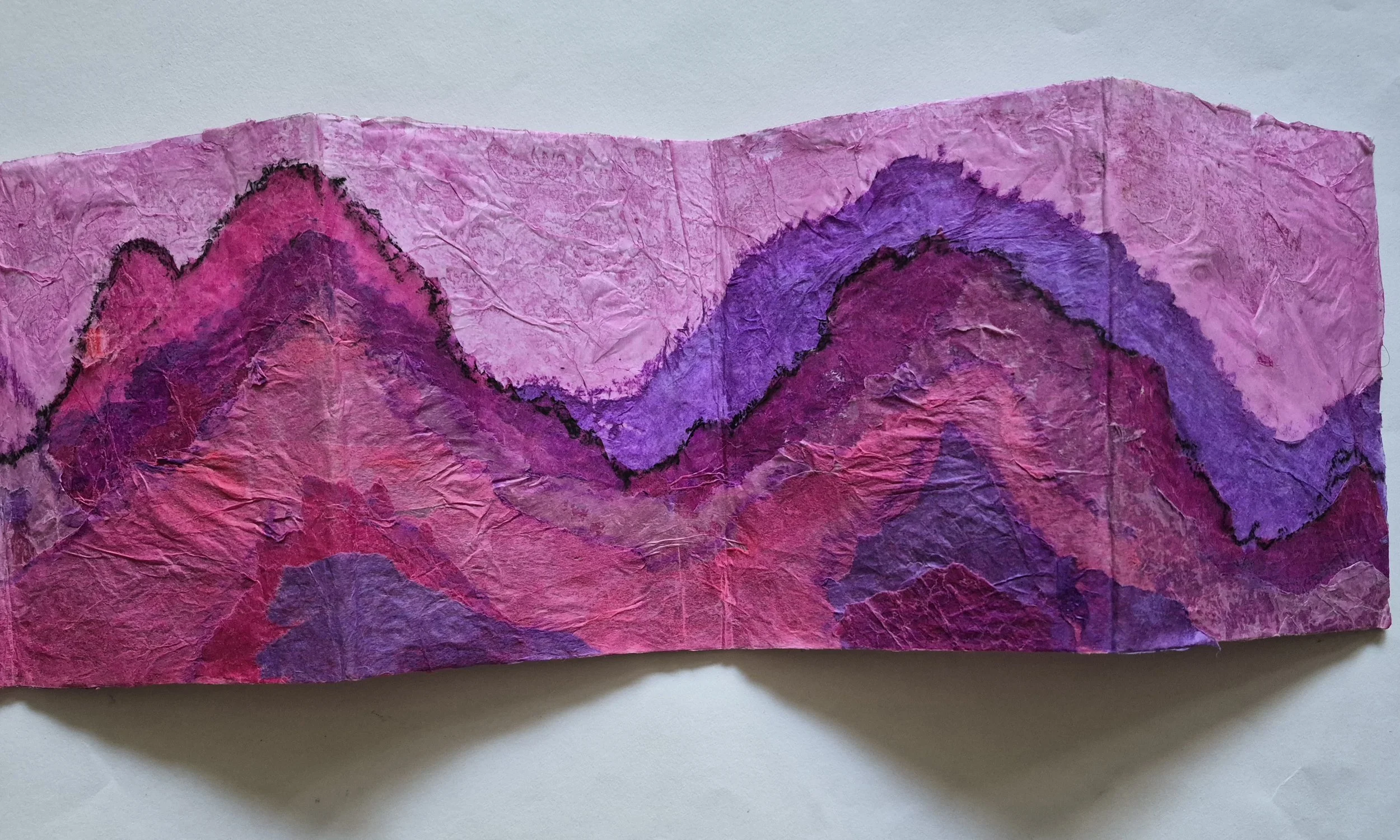
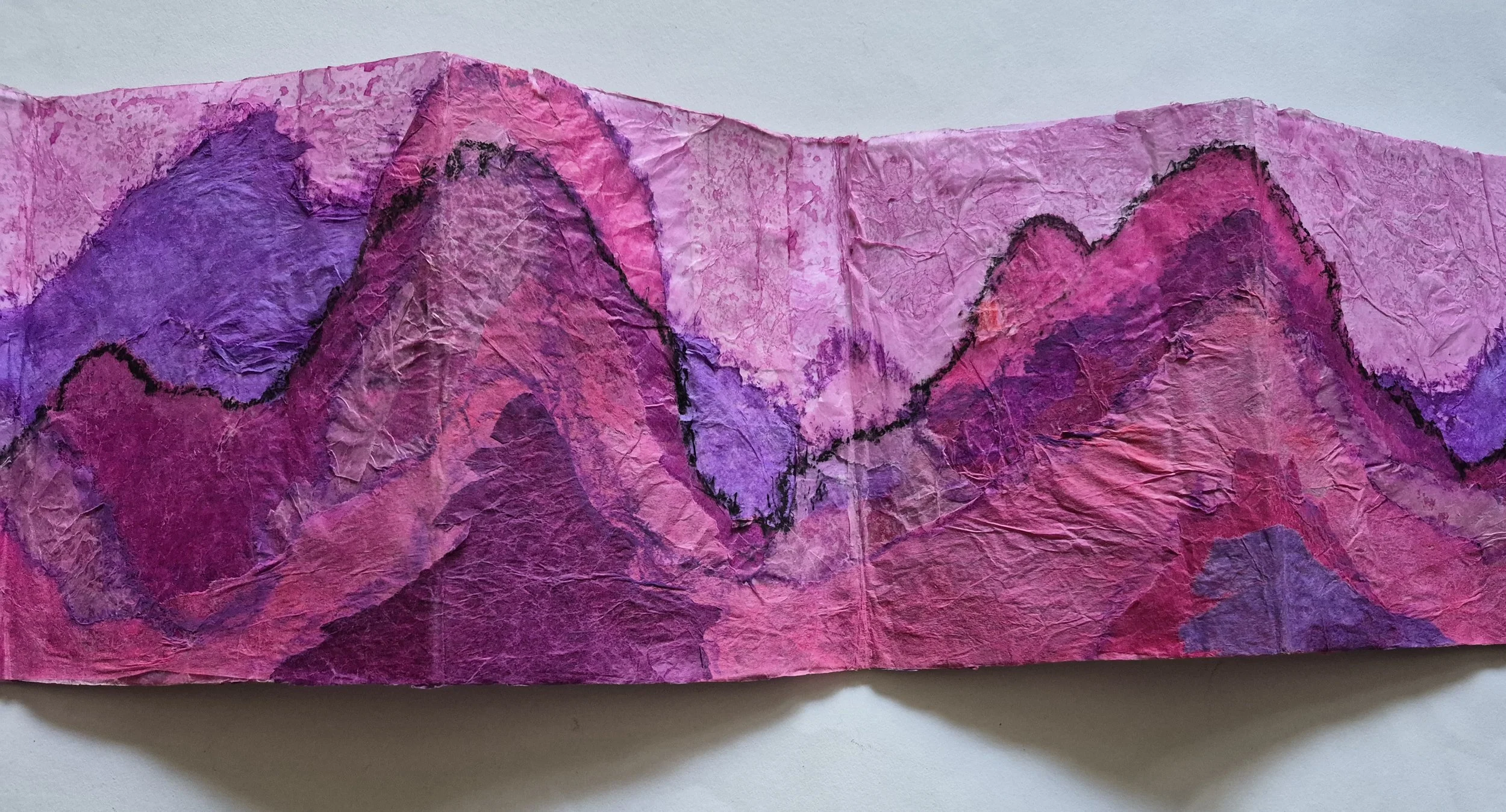
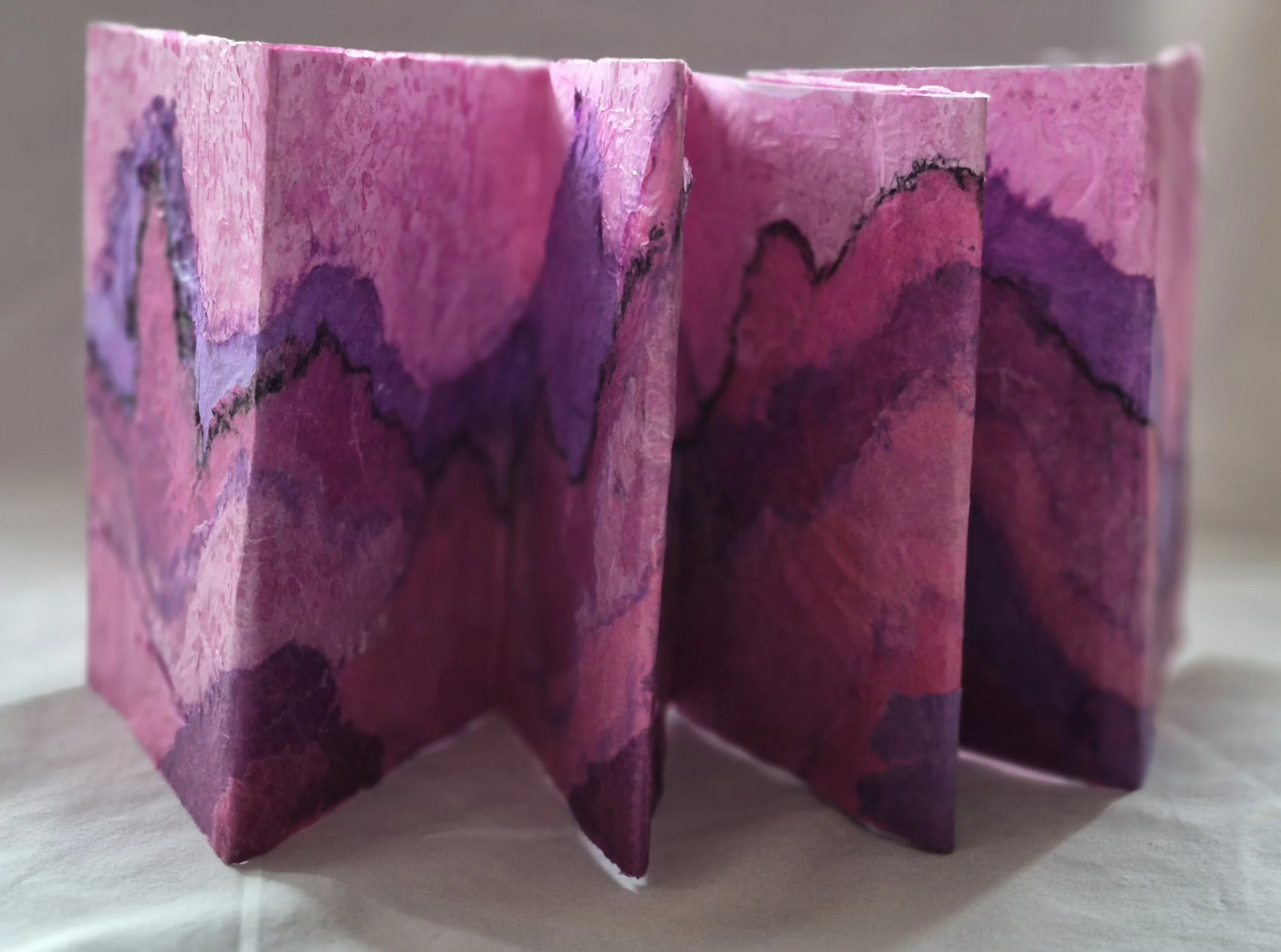
Art and photos by Sheila Benedis
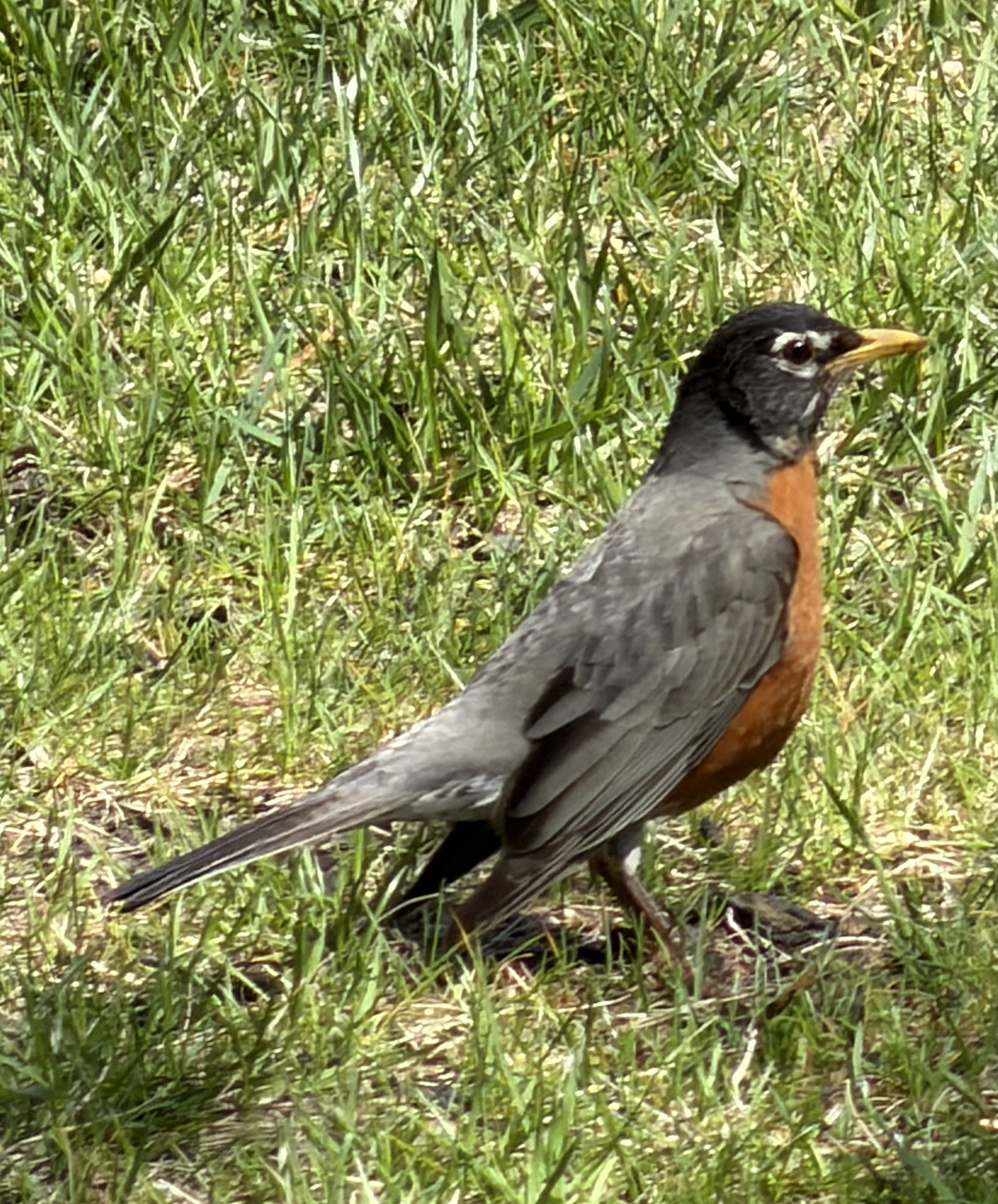
Photo by Ed Lannert
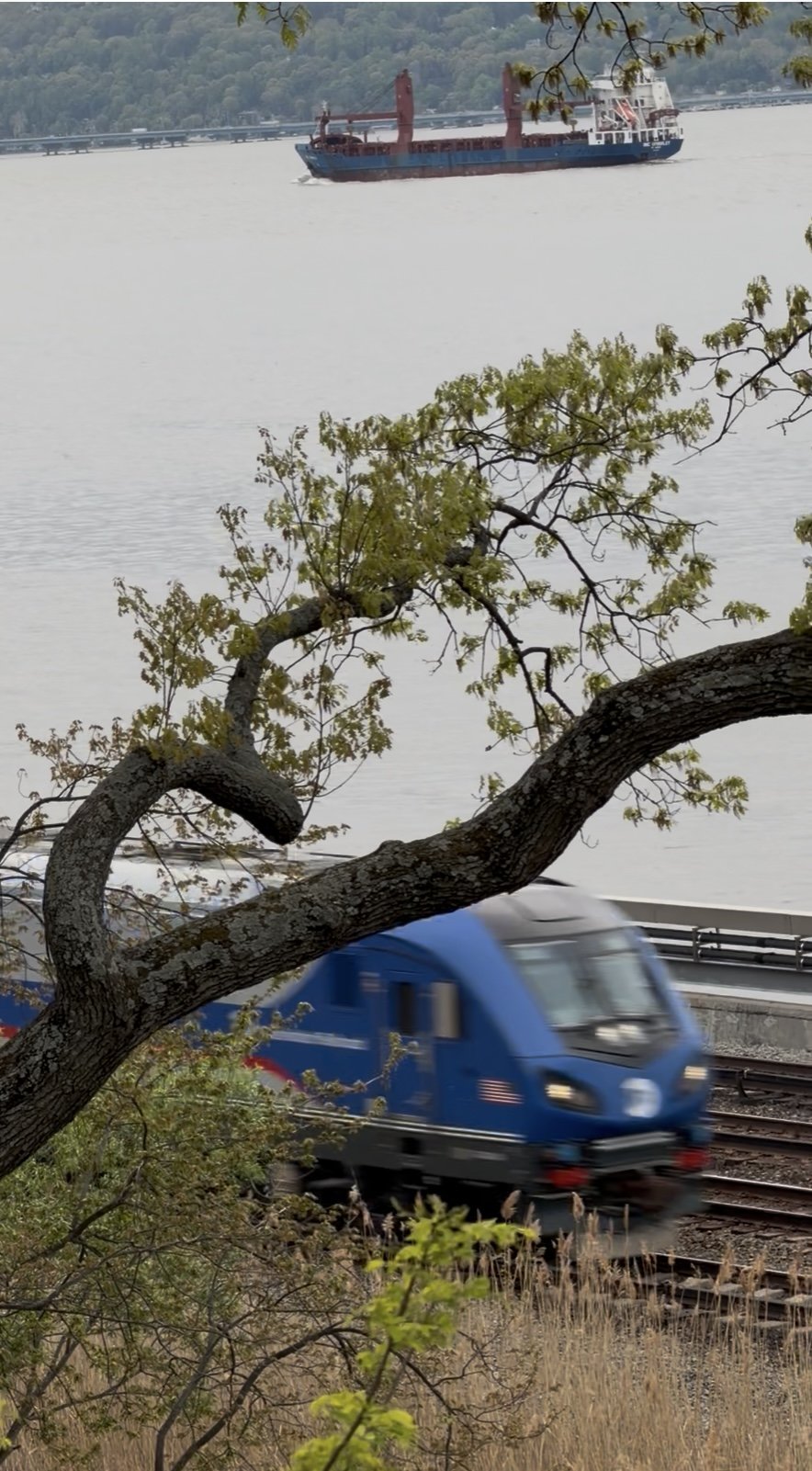
Photo by Ed Lannert
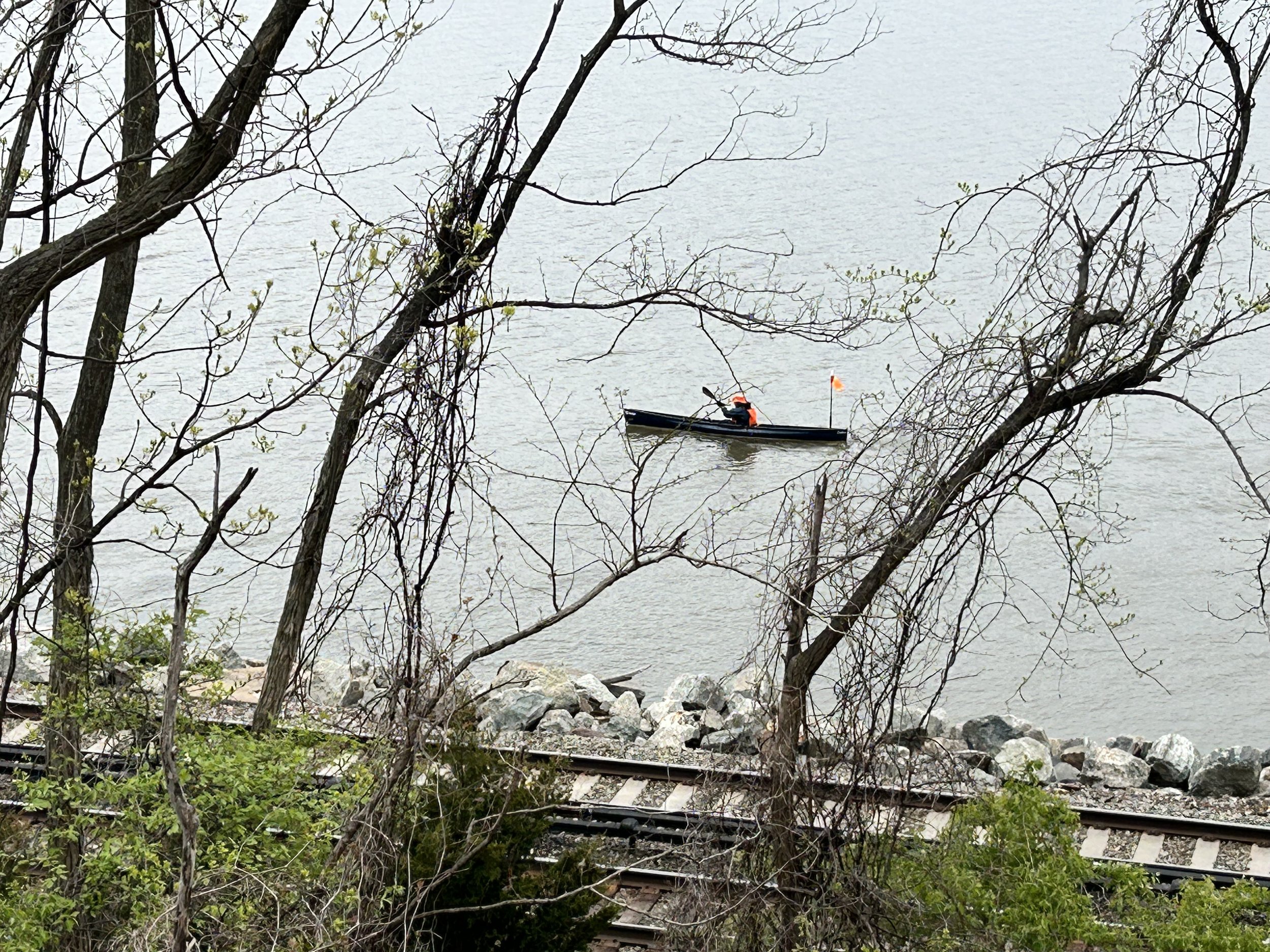
Photo by Aruna Raghavan
Marisa Campbell recently taught a class in drawing birds. Clearly, students worked hard at their new-found skill—and with happy results.
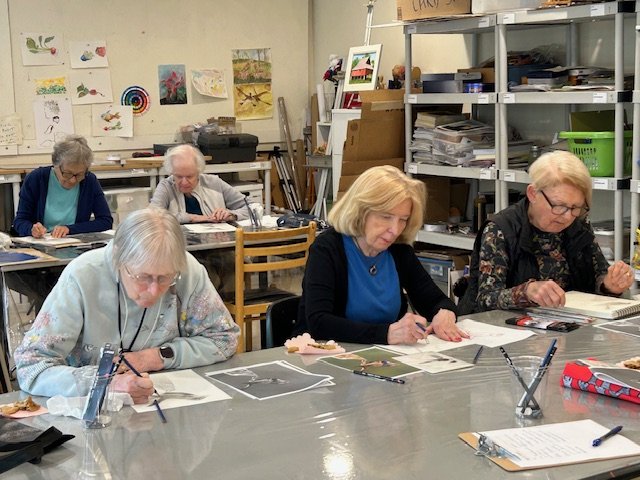
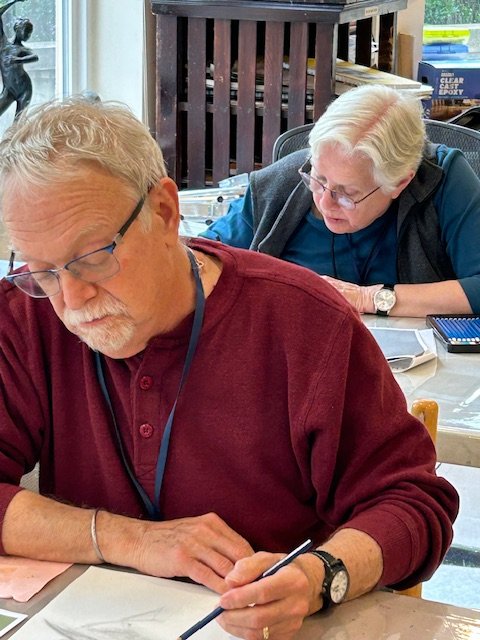
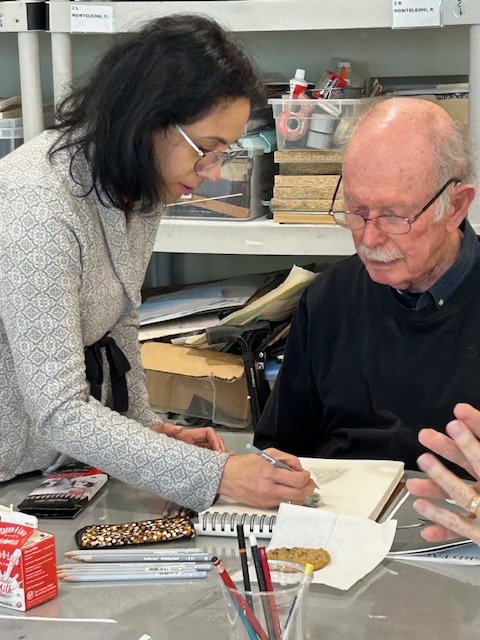
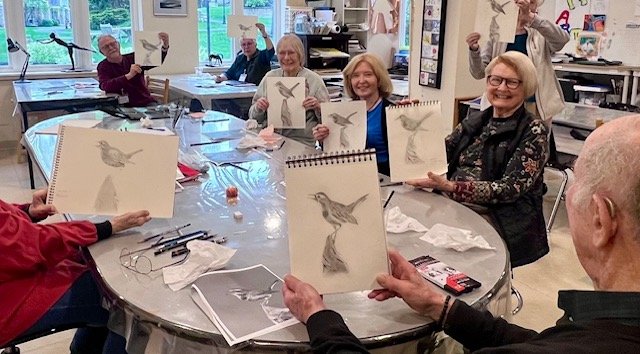
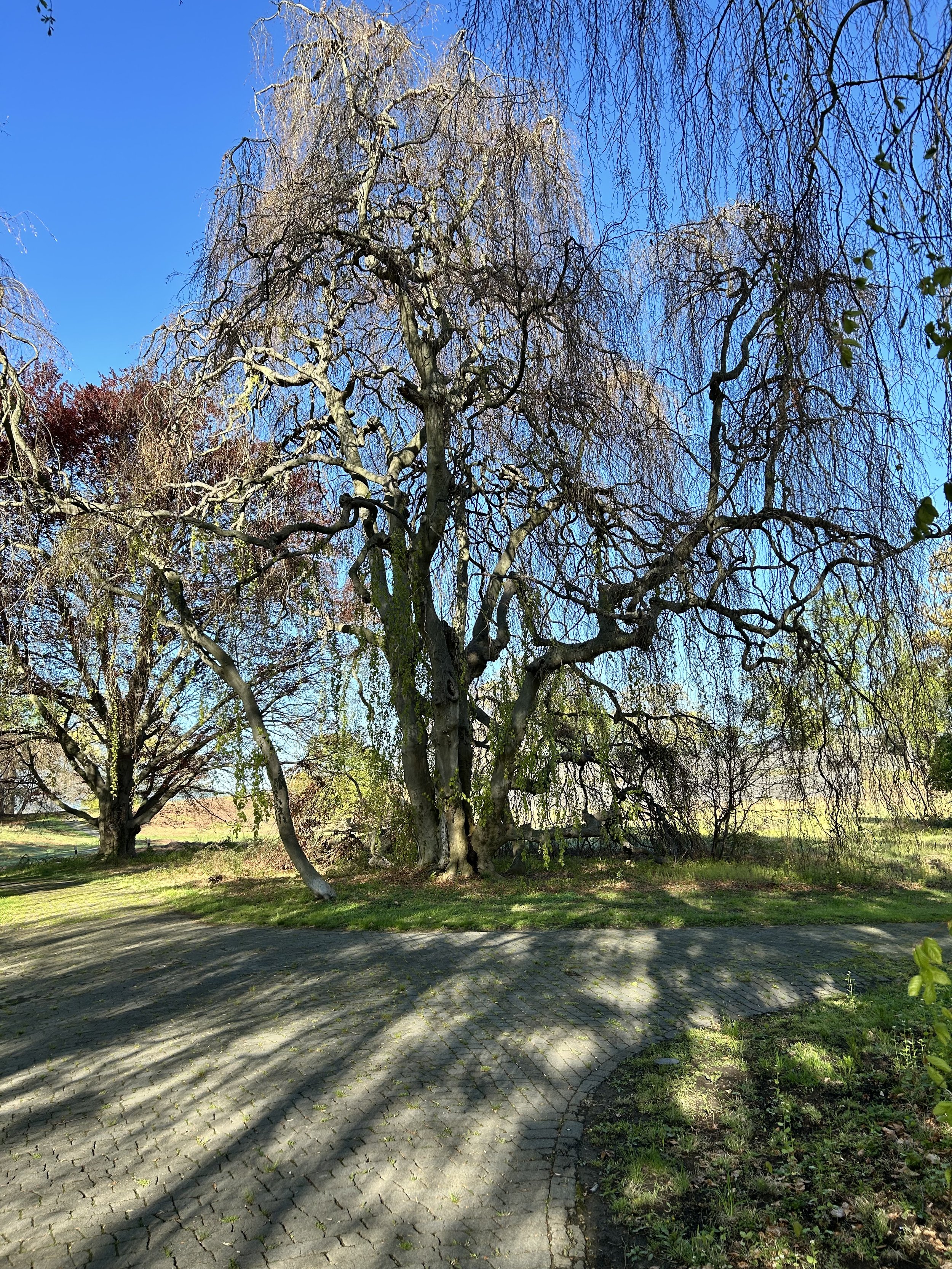
Photos by Carolyn Reiss, with the exception of the final one of happy and successful bird drawers, which is by Marisa Campbell.
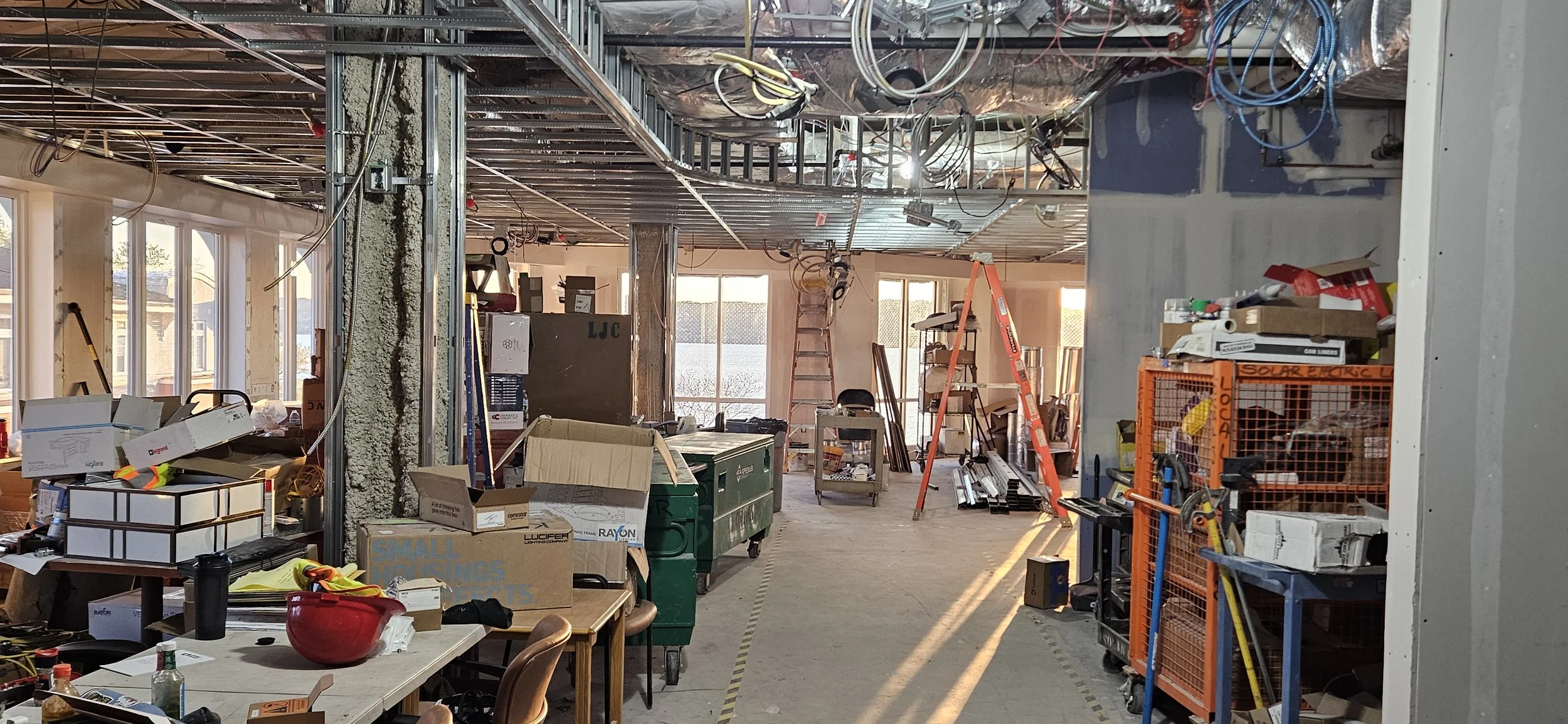
Photo by Joe Bruno
Carolyn Reiss had a Sisters Weekend in Maine recently.
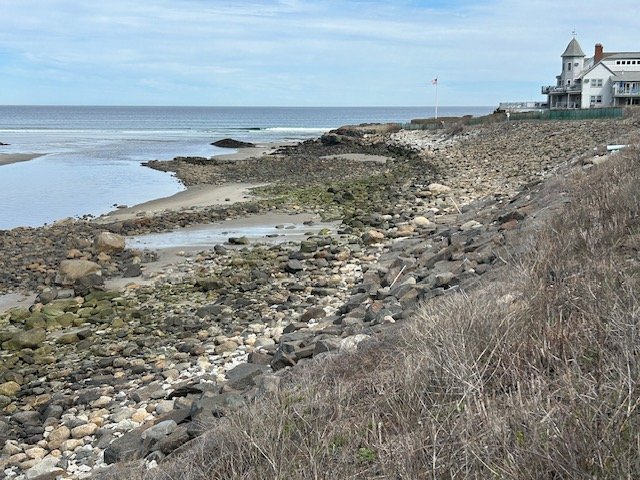
Ogunquit, Maine, by Carolyn Reiss
Photo by Carolyn Reiss

From the Office of Ellen Ottstadt
Ann Lasusa’s art—paintings, mixed media, collage—is well known both at Kendal and beyond. We spotlight here her delightful assemblage work. On her website—lasusart.com—she says, “Using found objects that have been discarded or are no longer useful can be given new life and can be metaphors for a lifetime. I assemble objects in boxes that tell my story, deliver my sense of visual order or are remembrances of life experiences and sensations. I use found objects paint, glue. modeling paste, paper, wood, plant life etc. etc. to compose a new order and accomplish my goal.”
We include a few pictures of Ann’s assemblages here, including the one in the Winter Art Show, now hanging in Robert Fulton. They are entrancing, distinctive, thoughtful, often designed with humor—and, overall, delightful.
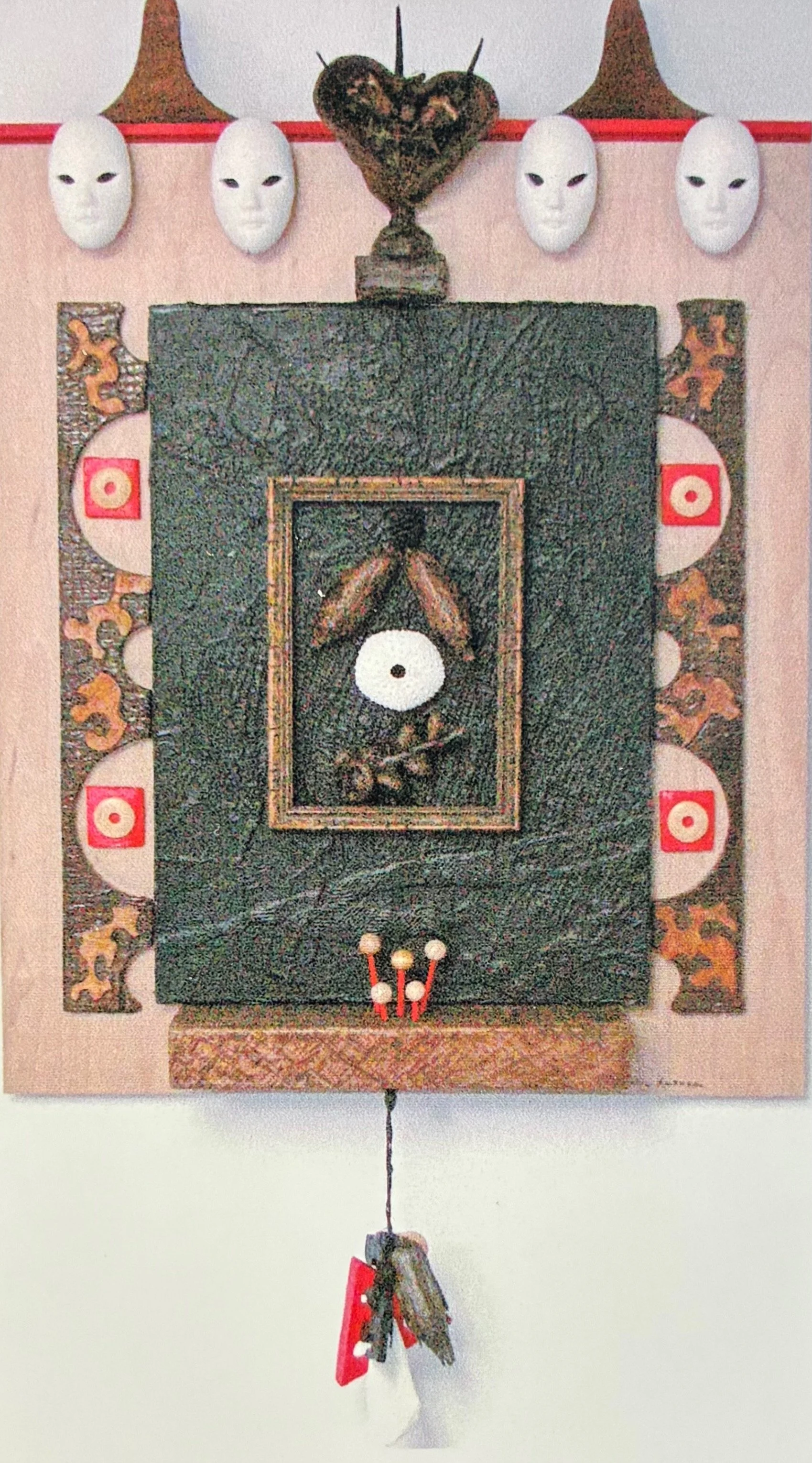
From Women’s Eyes This Doctrine I Devise
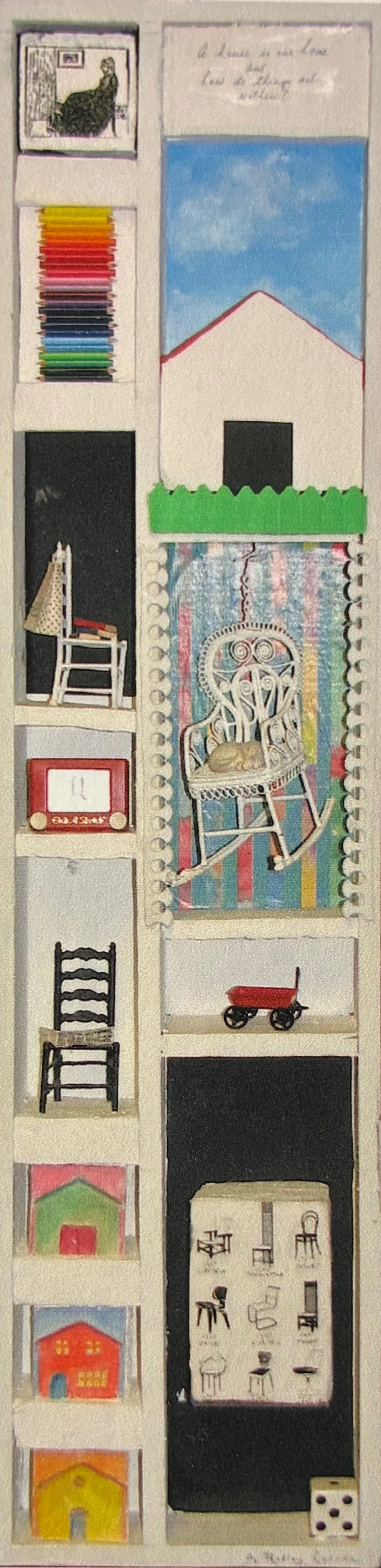
What Sits Within
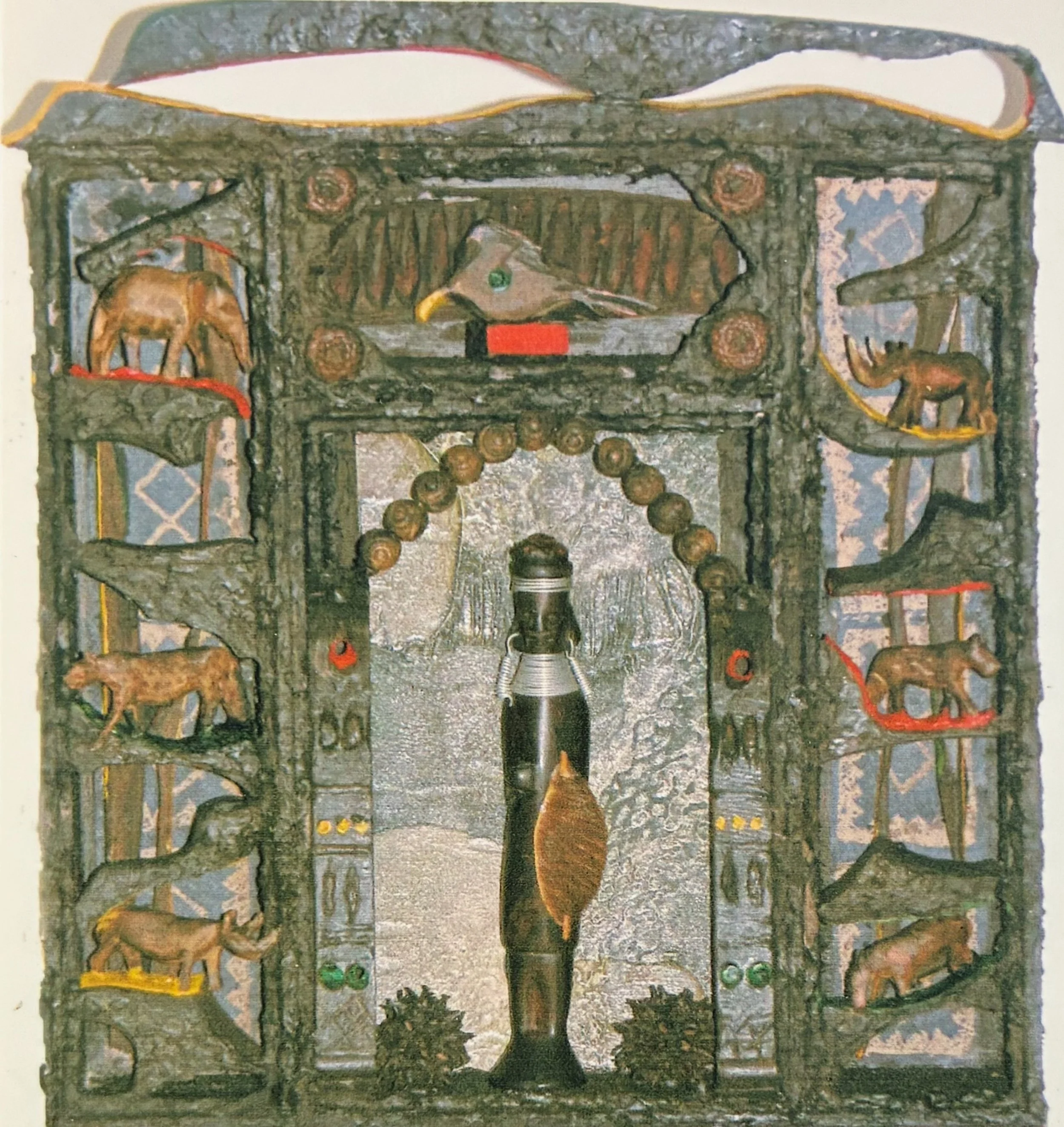
African Melody
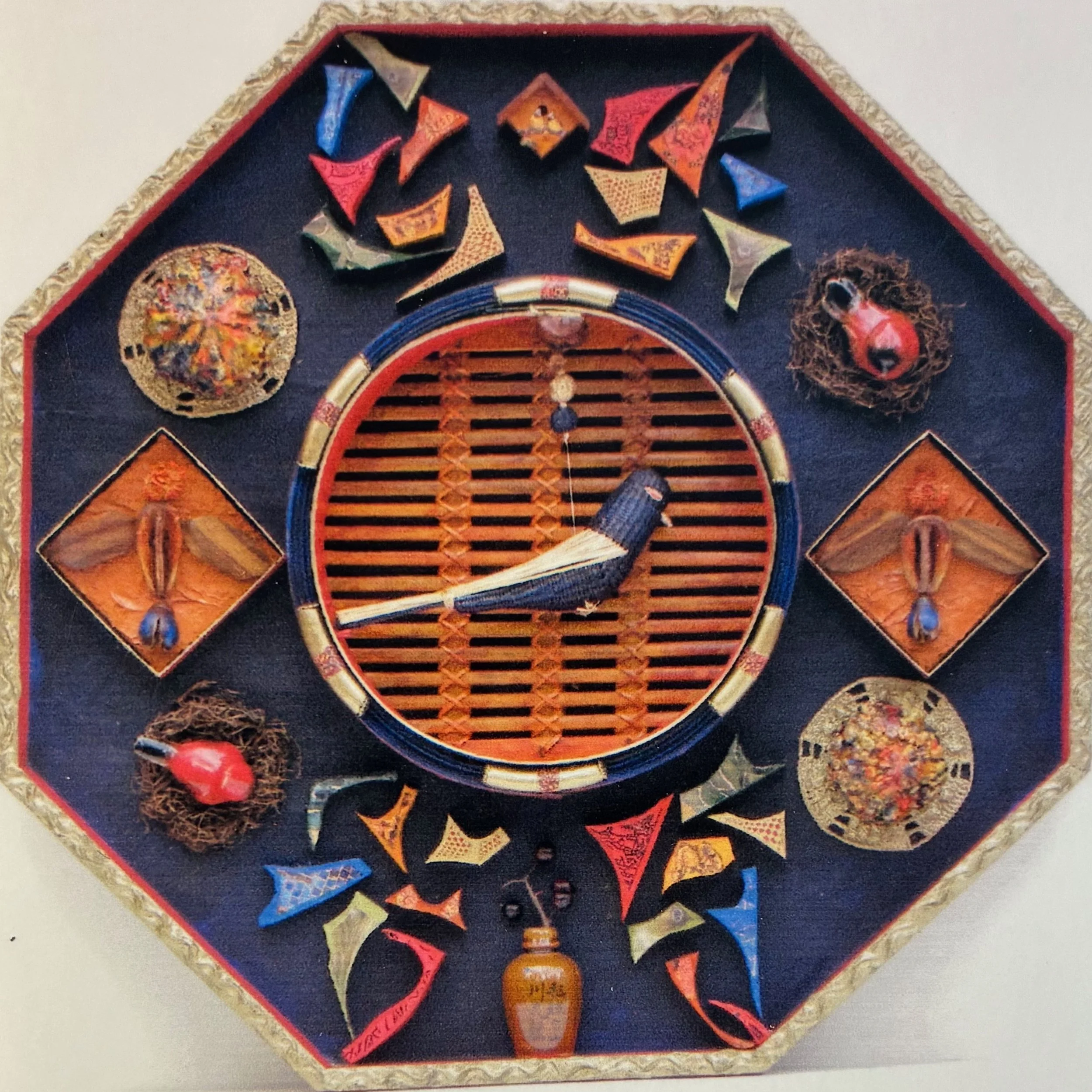
Birds of Calm Sit Brooding
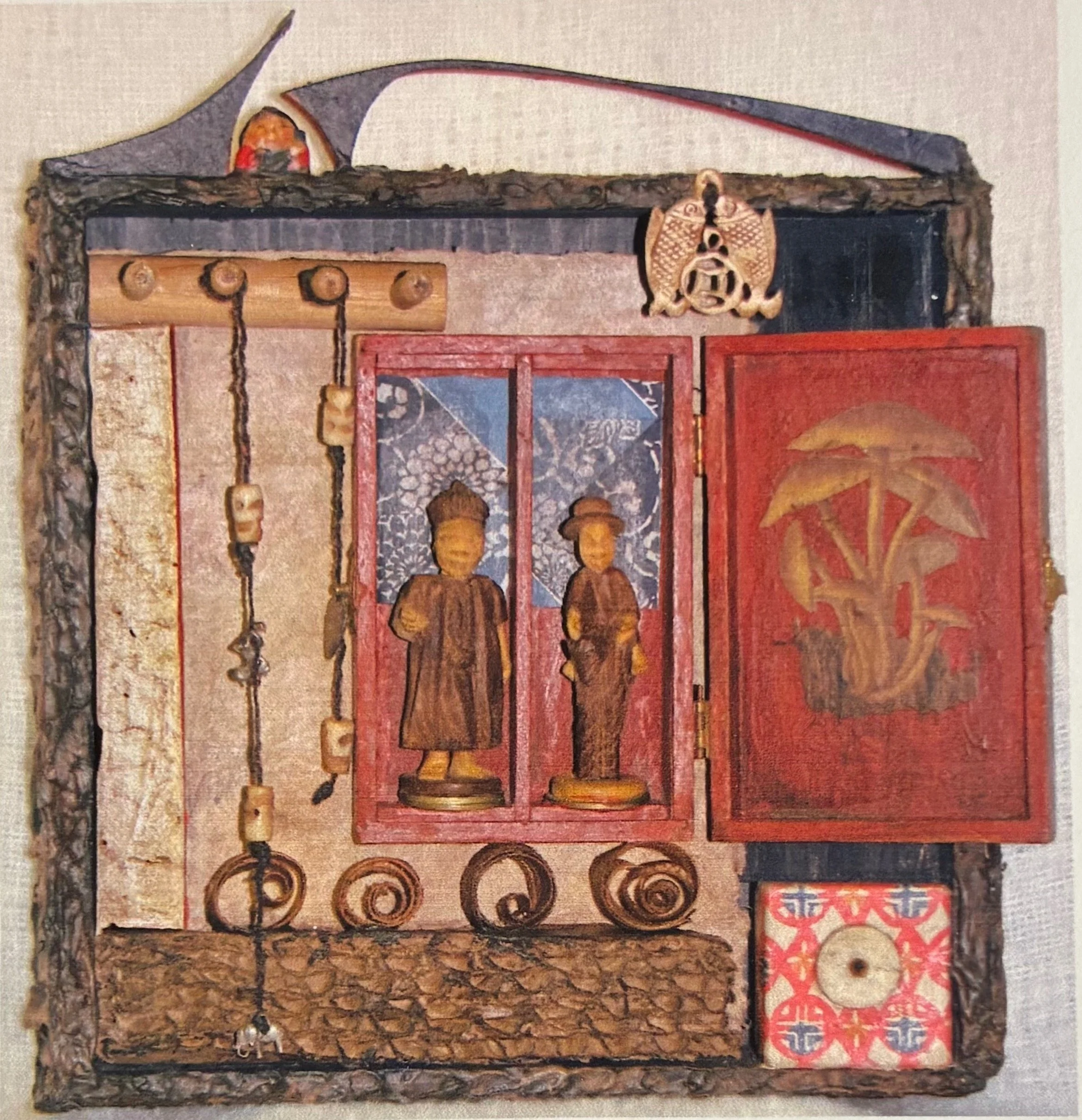
Mandalay Memory
And from the Kendal Winter Art Show:
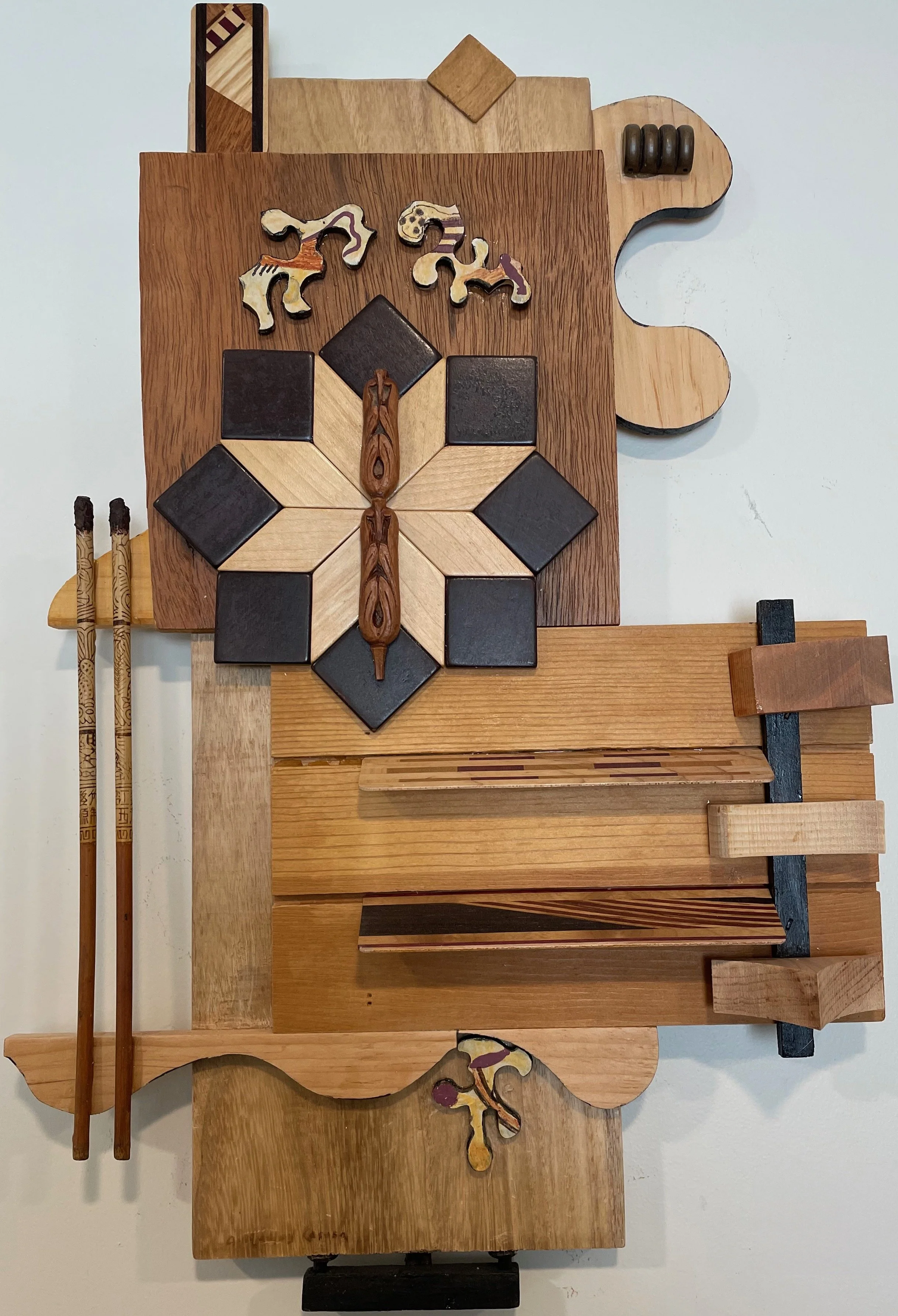
Diversifying Harmony
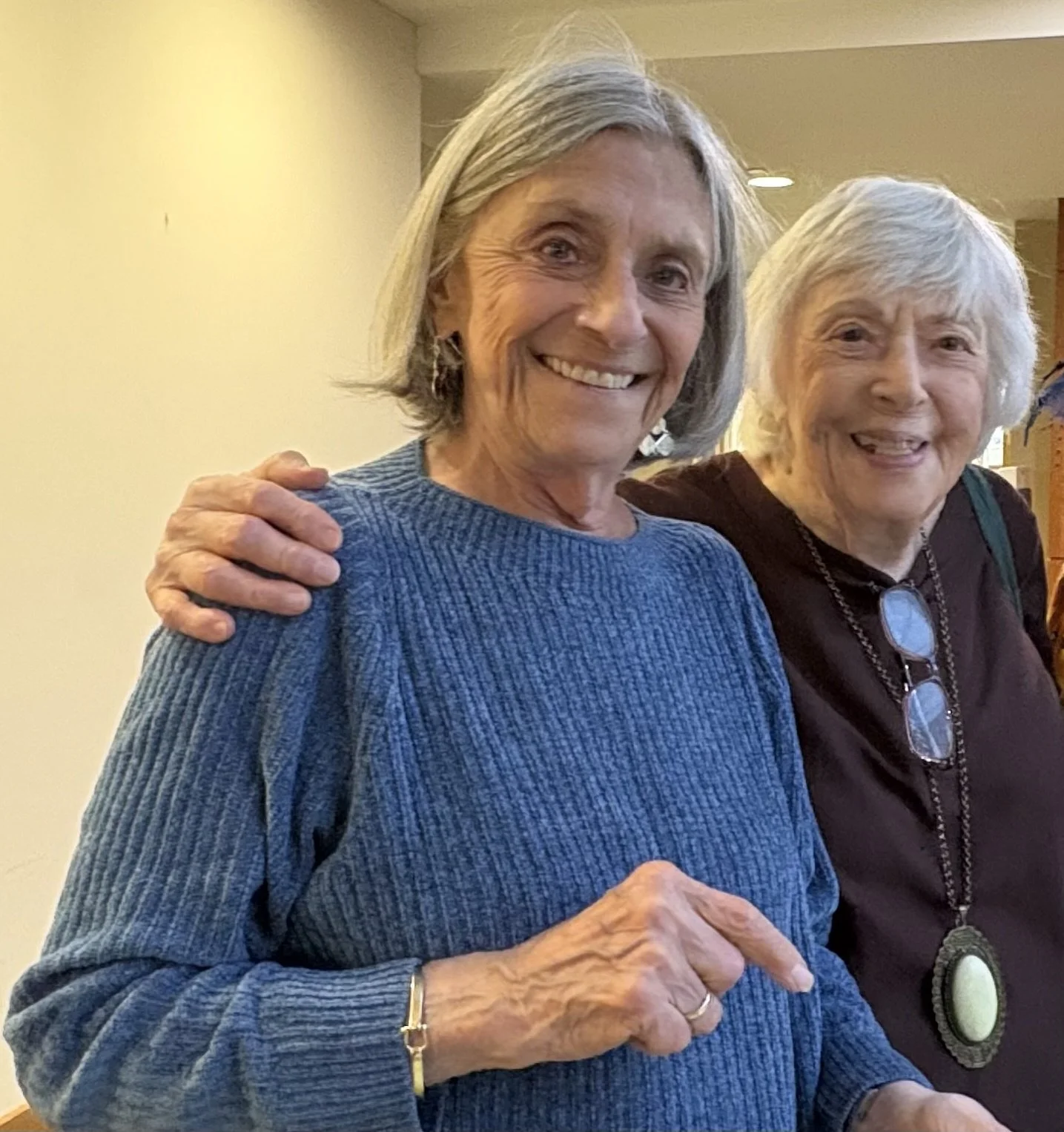
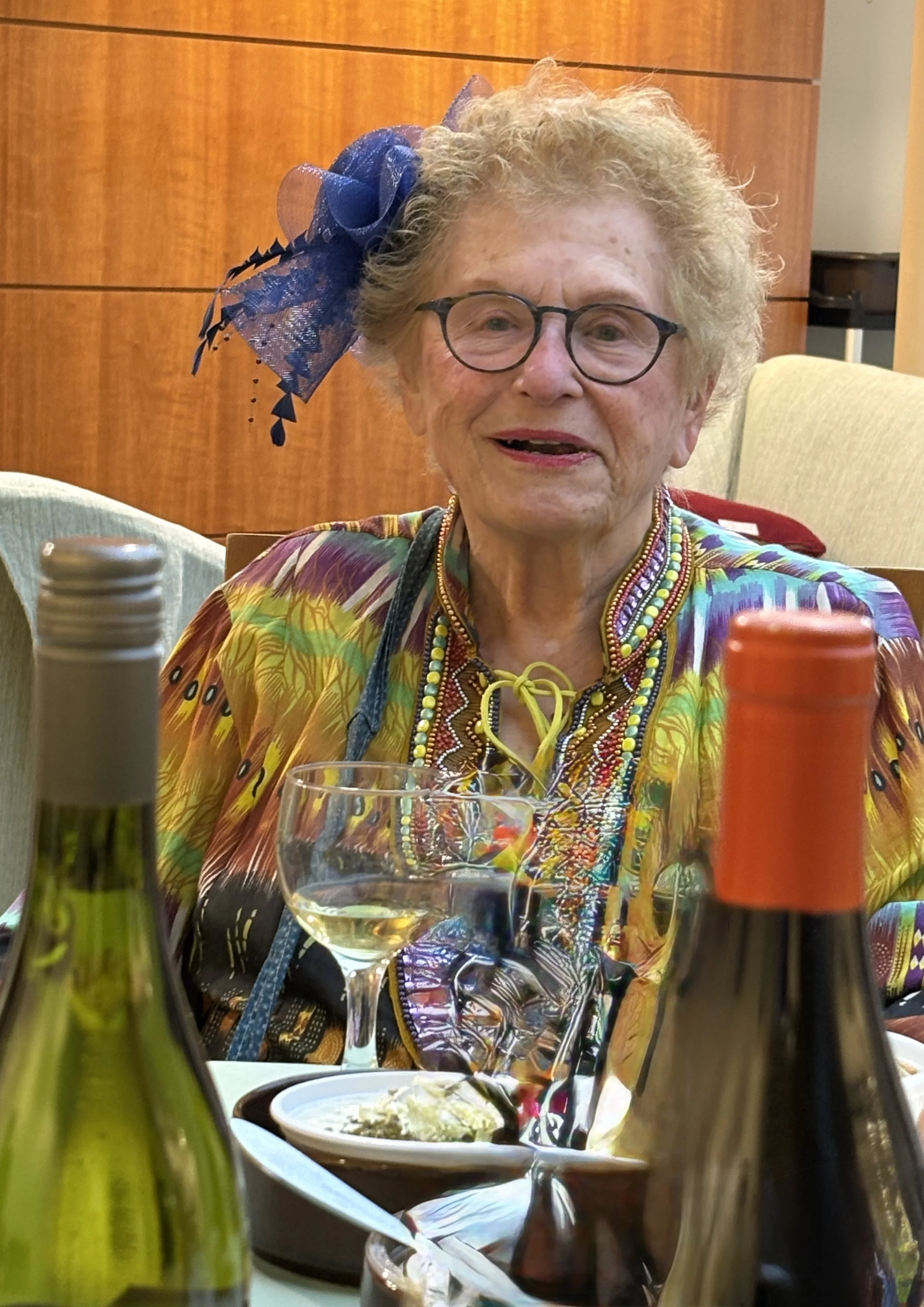
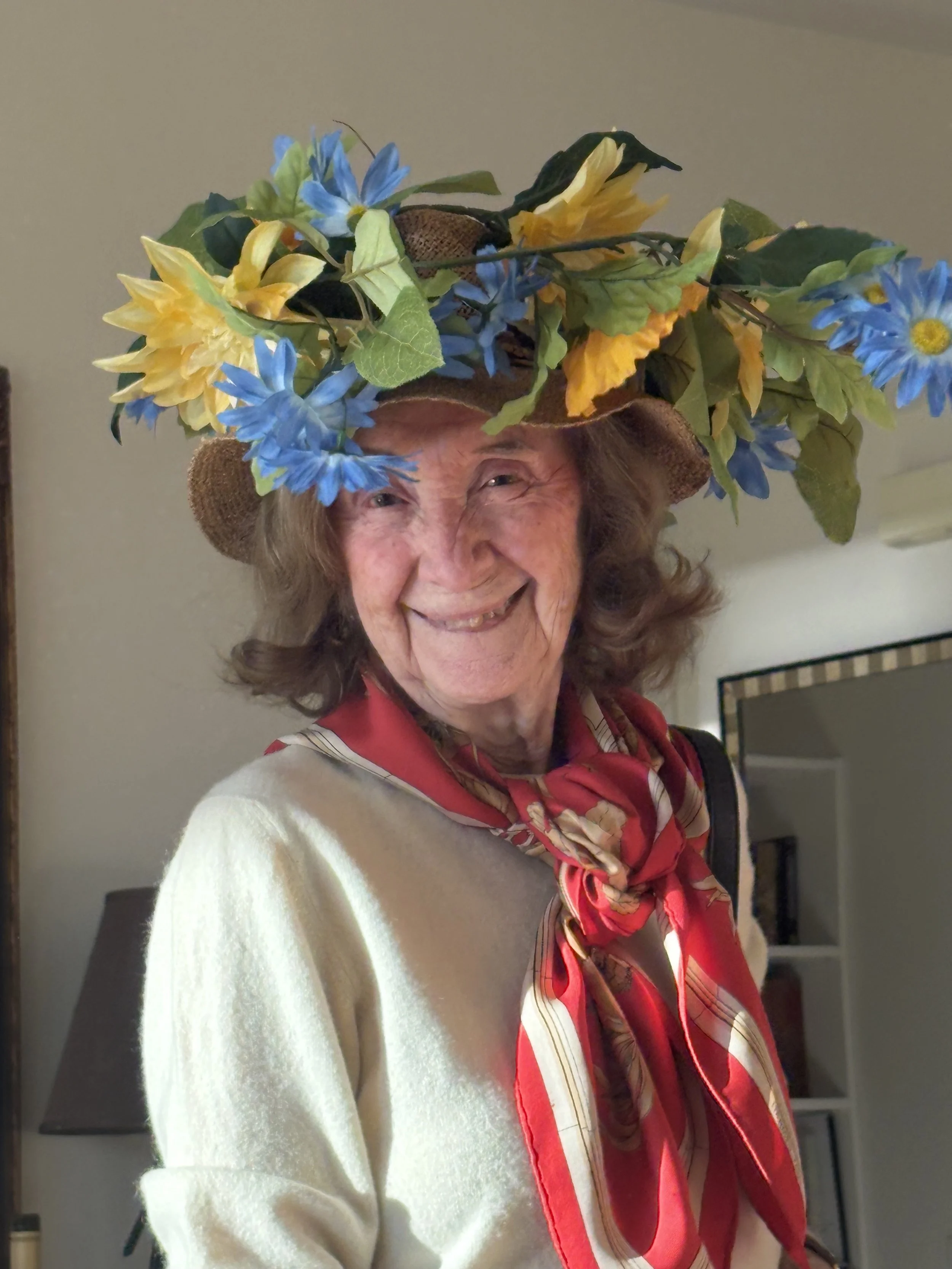
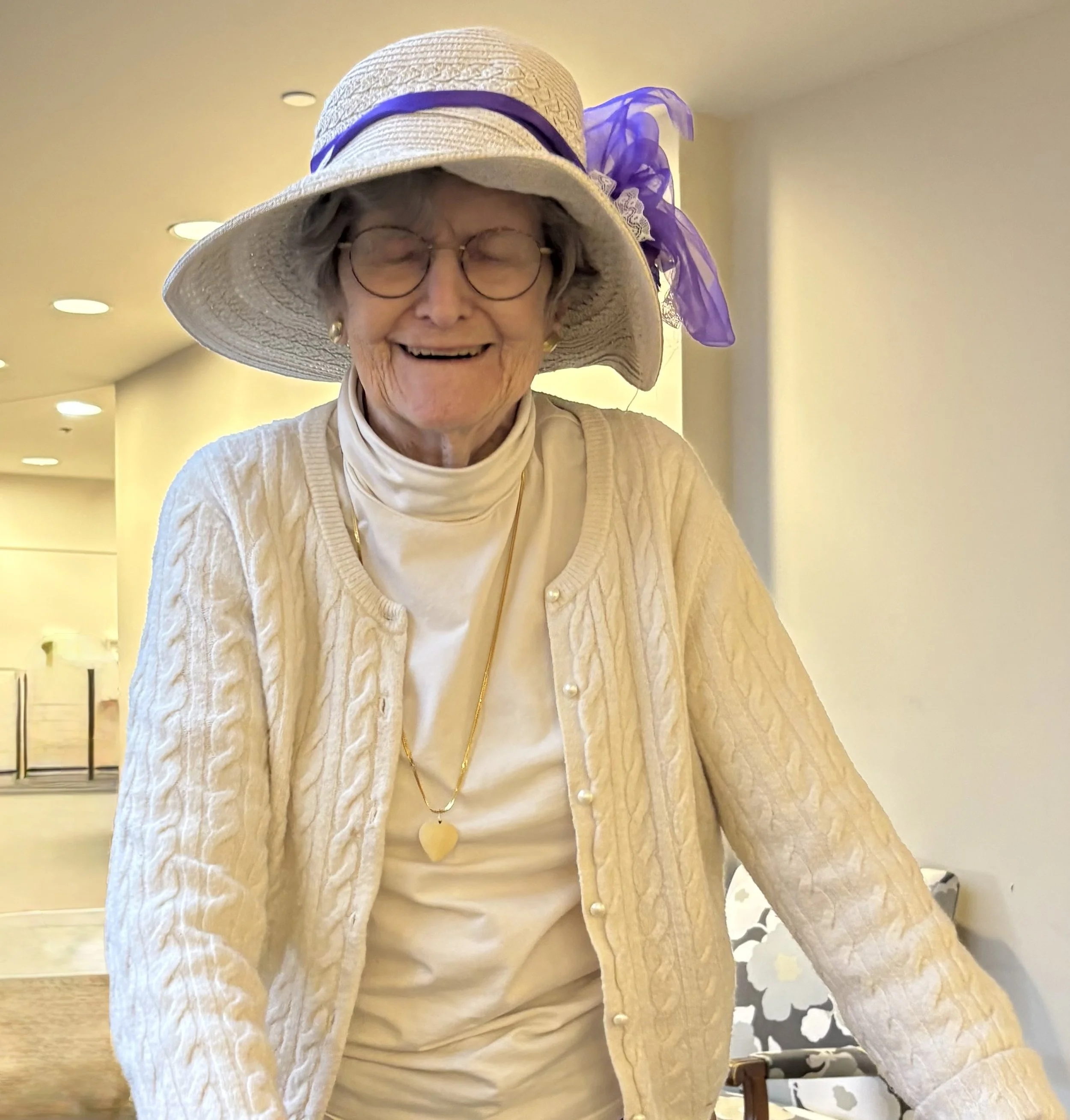
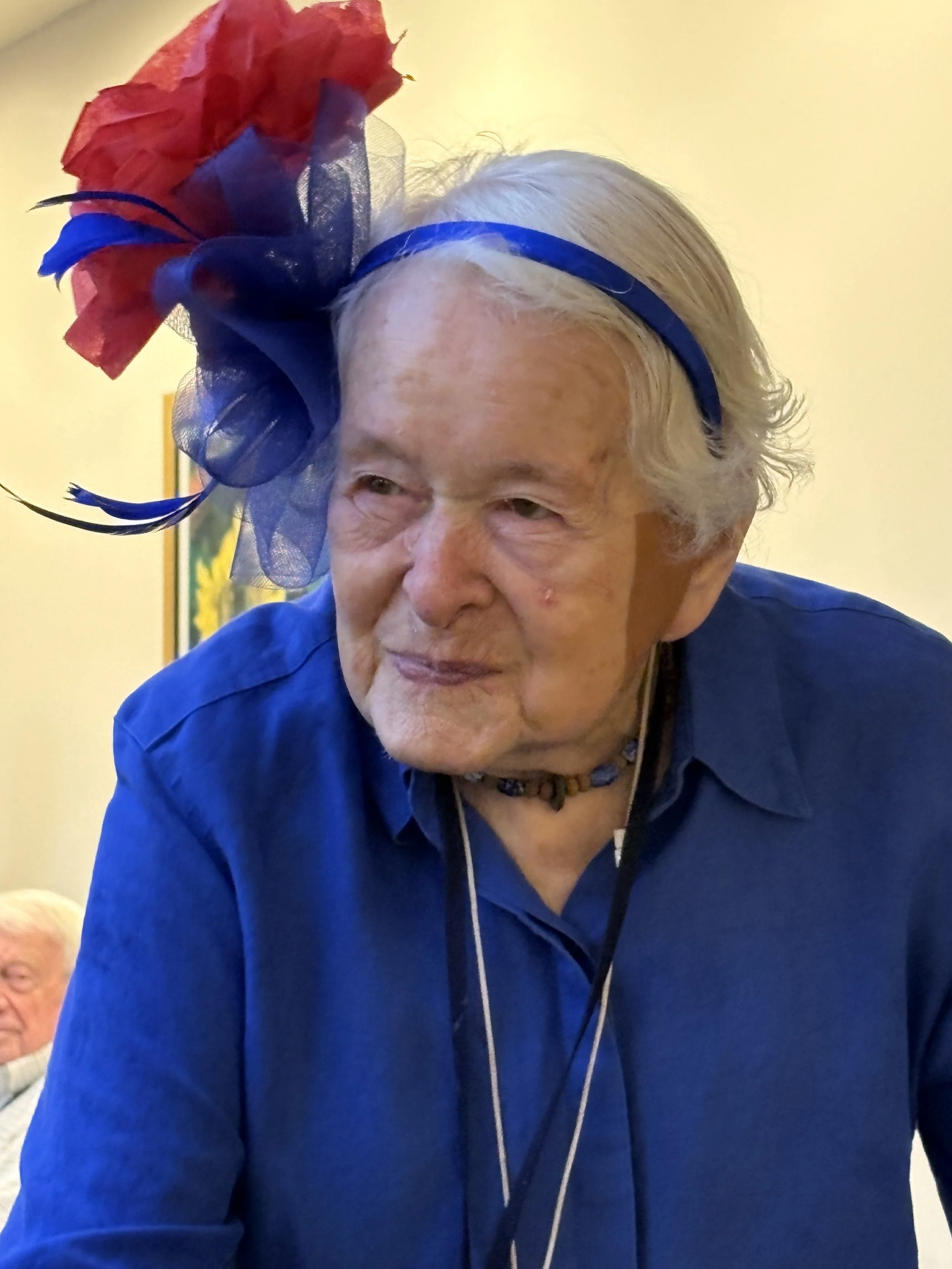
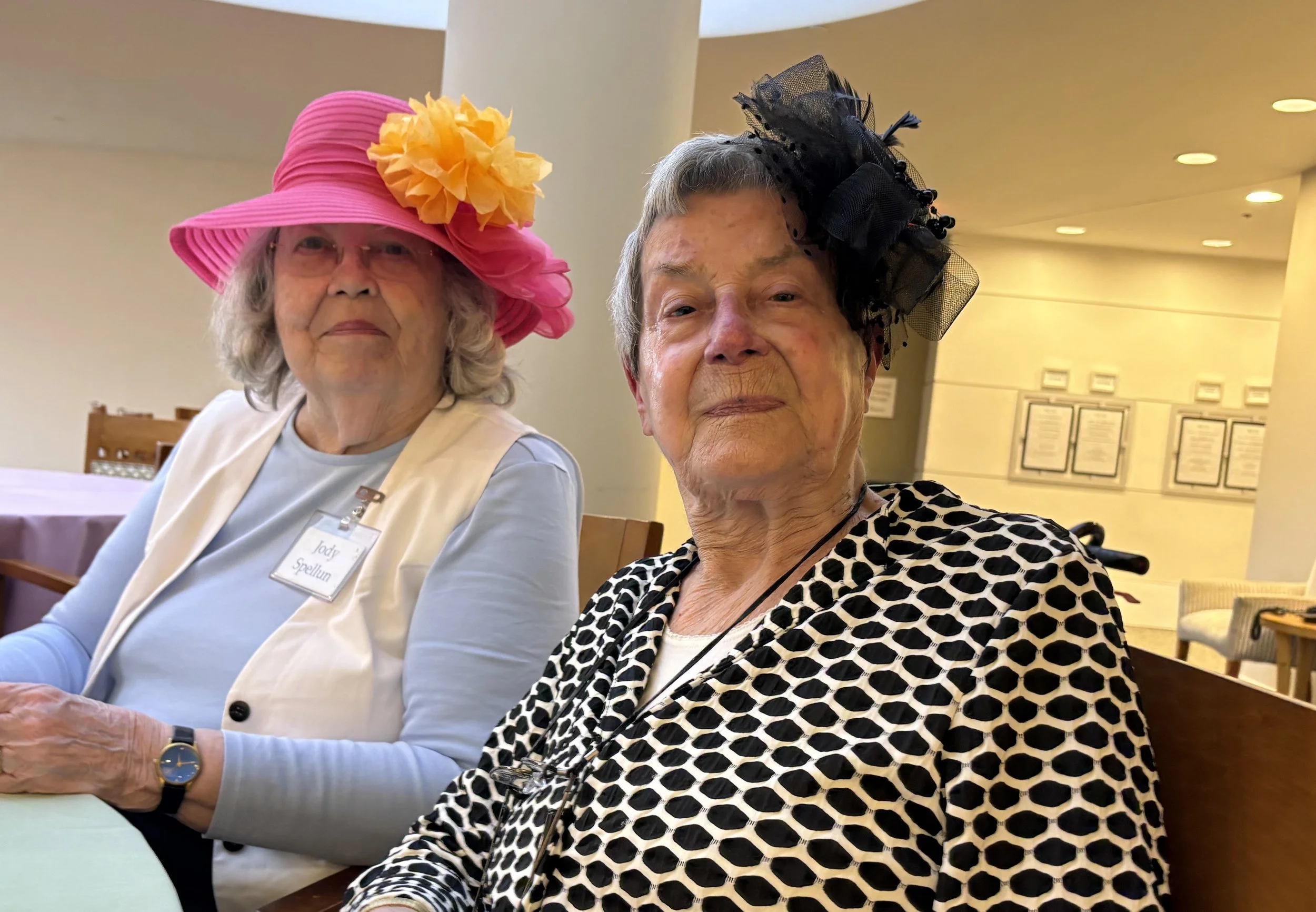
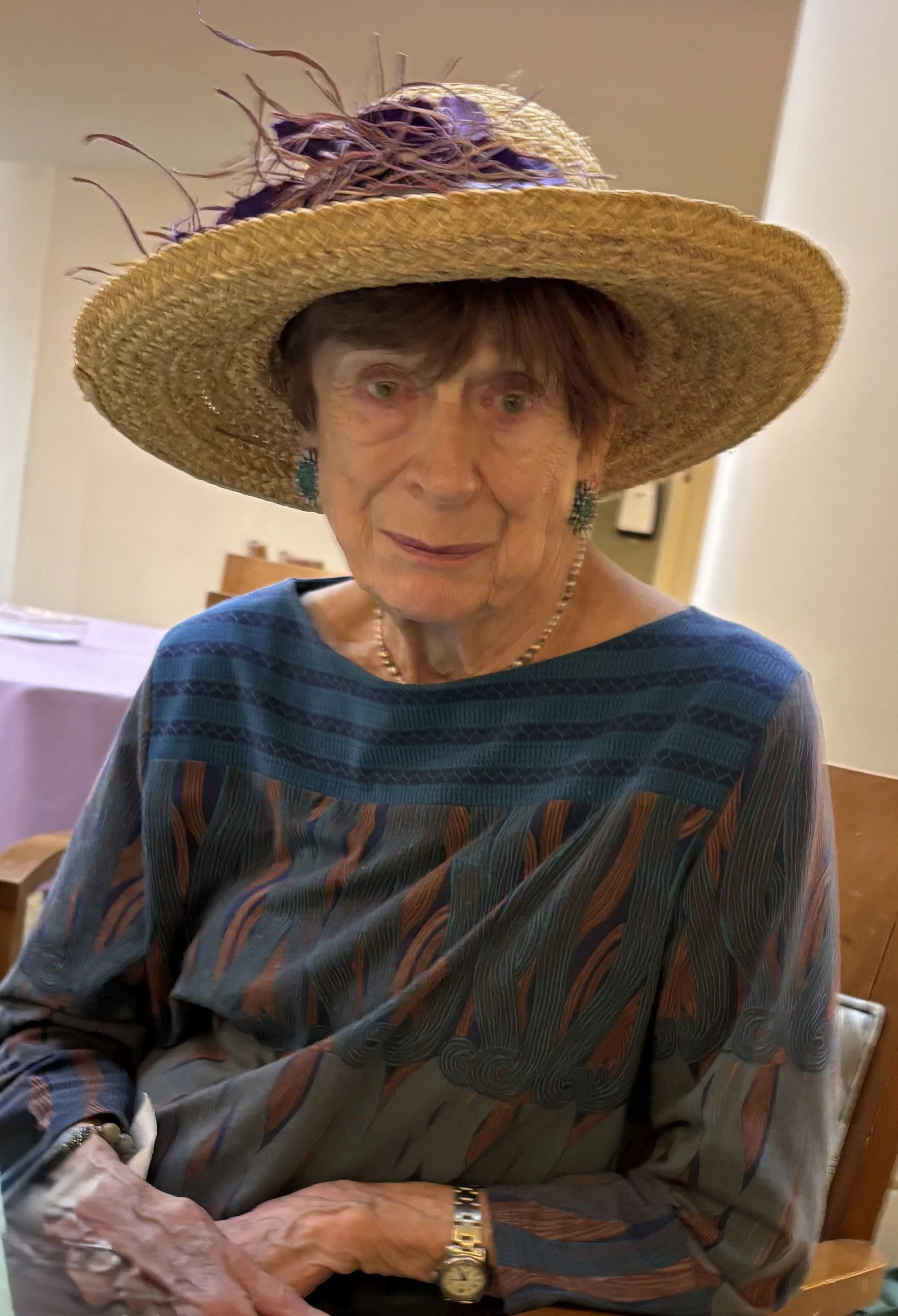
Last Saturday was Kentucky Derby Day, a day some Kendalites embraced heartily with just the right refreshment—and some with stylish head gear, as well!
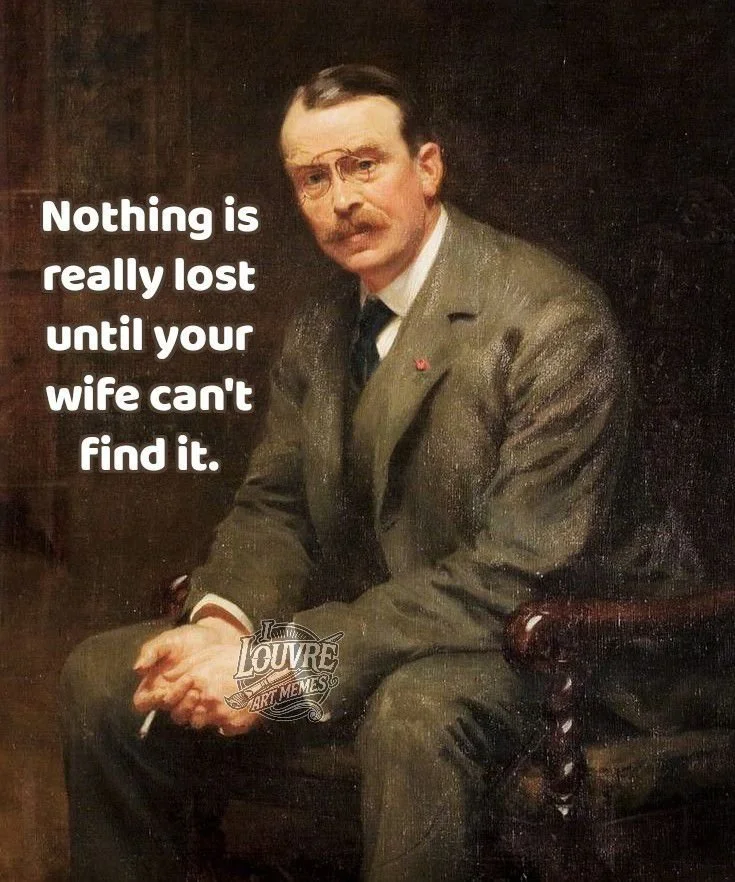
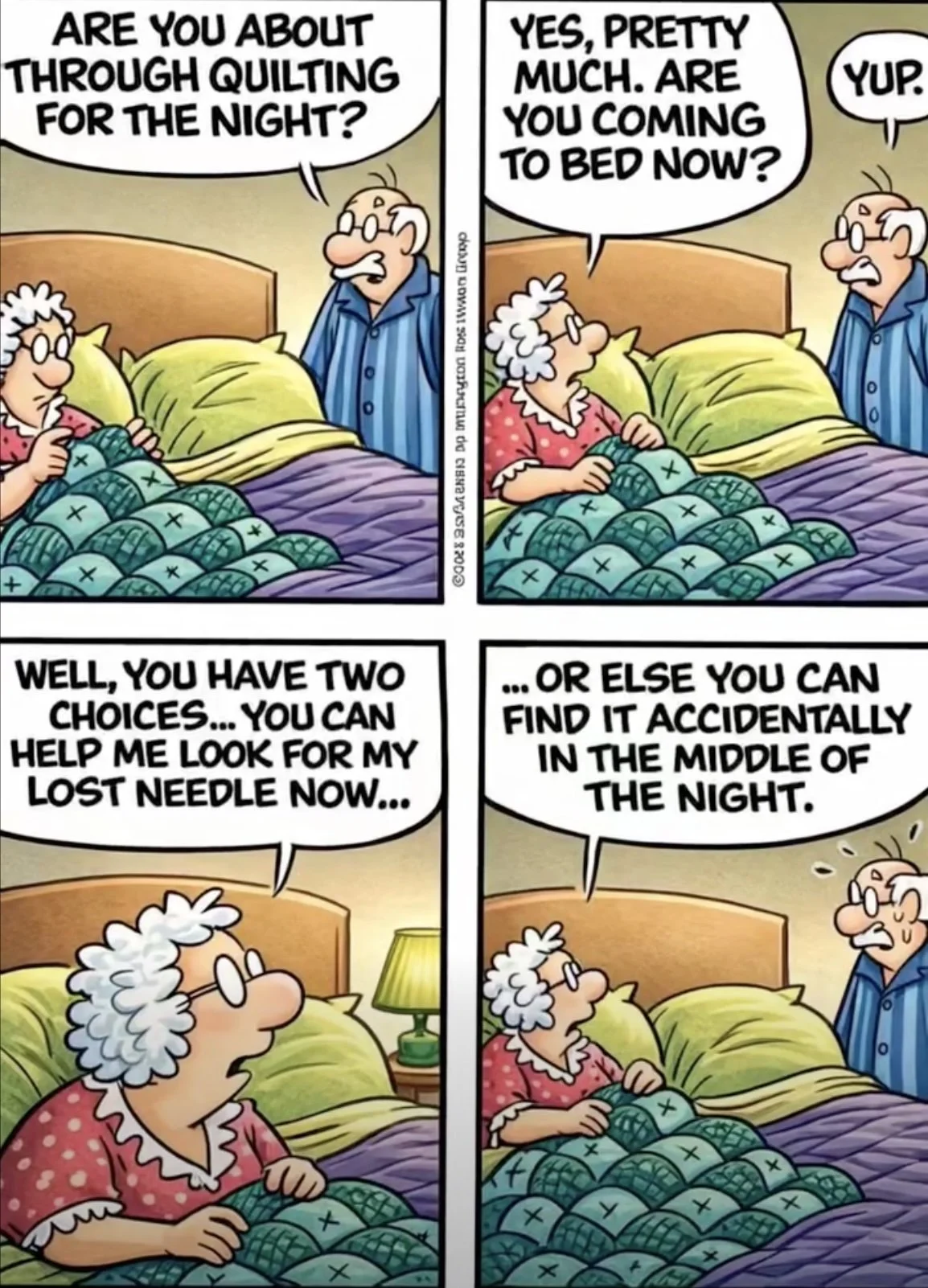
“Take my wife . . . please.” Rodney Dangerfield may have aced the comedy of the wife joke, but others—in all fields—have joined in the fun:
When a man steals your wife, there is no better revenge than to let him keep her. Lee Majors
After marriage, husband and wife become two sides of a coin; they just can’t face each other, but still they stay together. Al Gore
By all means marry. If you get a good wife, you’ll be happy. If you get a bad one, you’ll become a philosopher. Socrates
Woman inspires us to great things and prevents us from achieving them. Mike Tyson
The great question . . . which I have not been able to answer . . . is, “What does a woman want?” George Clooney
I had some words with my wife, and she had some paragraphs with me. Bill Clinton
To Be Continued
Contributed by Simone

On this day in 1978, a marketing manager for a Massachusetts computer company unknowingly made history: He sent the first spam email. The Internet as we know it did not yet exist. But ARPANET, an experimental computer network that connected government-supported research sites in the United States, was up and running—albeit with a much, much smaller audience than the Internet has now. There was an actual printed directory of ARPANET users—all 2,600 of them.
Gary Thuerk, of the Digital Equipment Corporation (DEC), was pondering how to advertise upcoming demonstrations in California of his company’s latest computers. In a moment of inspiration, he decided to send an invitation, which also touted the products, via ARPANET to about 400 people on the West Coast he found in the directory. The response, as one might expect, was not particularly favorable, with DEC being chided by ARPANET users who did not think that the network should be used for sending bulk messages of that nature. Thuerk’s boss made him promise to never do that again. And yet, some 40 recipients of Thuerk’s message did attend DEC’s California product demos, with Thuerk estimating that the company made more than $12 million in sales.
A promising new sales strategy was born. Or not. The practice of sending unsolicited emails in bulk didn’t take off until much later, after the Internet became widely used by the general public. The first intentional sales spam email was sent in 1994. Now, of course, spam emails are as ubiquitous as they are reviled.
So why is it called “spam”? The non-meat use of the term came from the online chat room community, which by the late 1980s was already using it to denote a mass influx of data into their chat rooms that could trigger a computer crash and/or annoy chat room users. They had taken the name from a now-infamous 1970s Monty Python’s Flying Circus sketch in which a group of Vikings in a restaurant sings a chorus about the SPAM meat product, chanting the product’s name repeatedly and drowning out all other conversation.
Source: Amy McKenna, Editor, Britannica

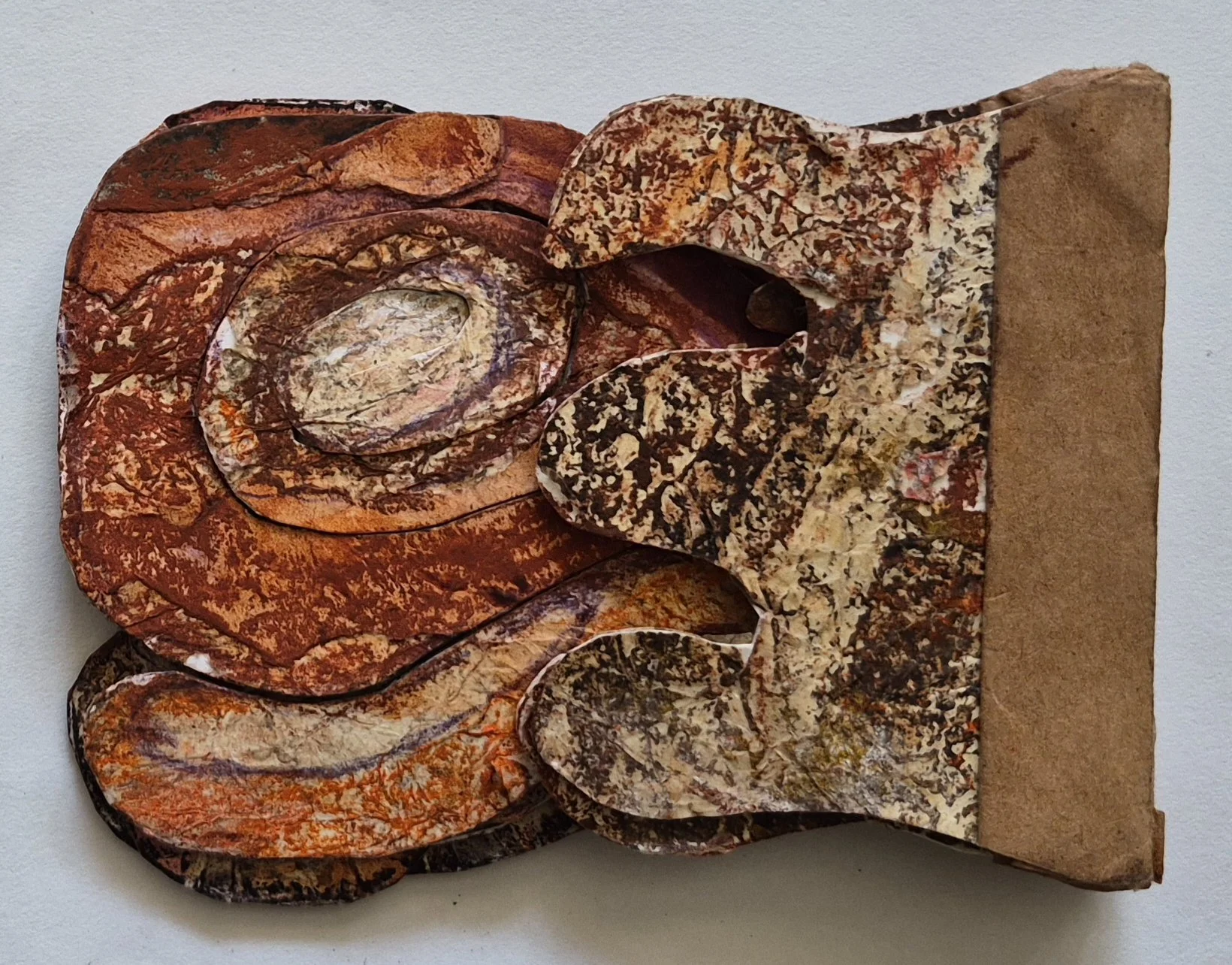
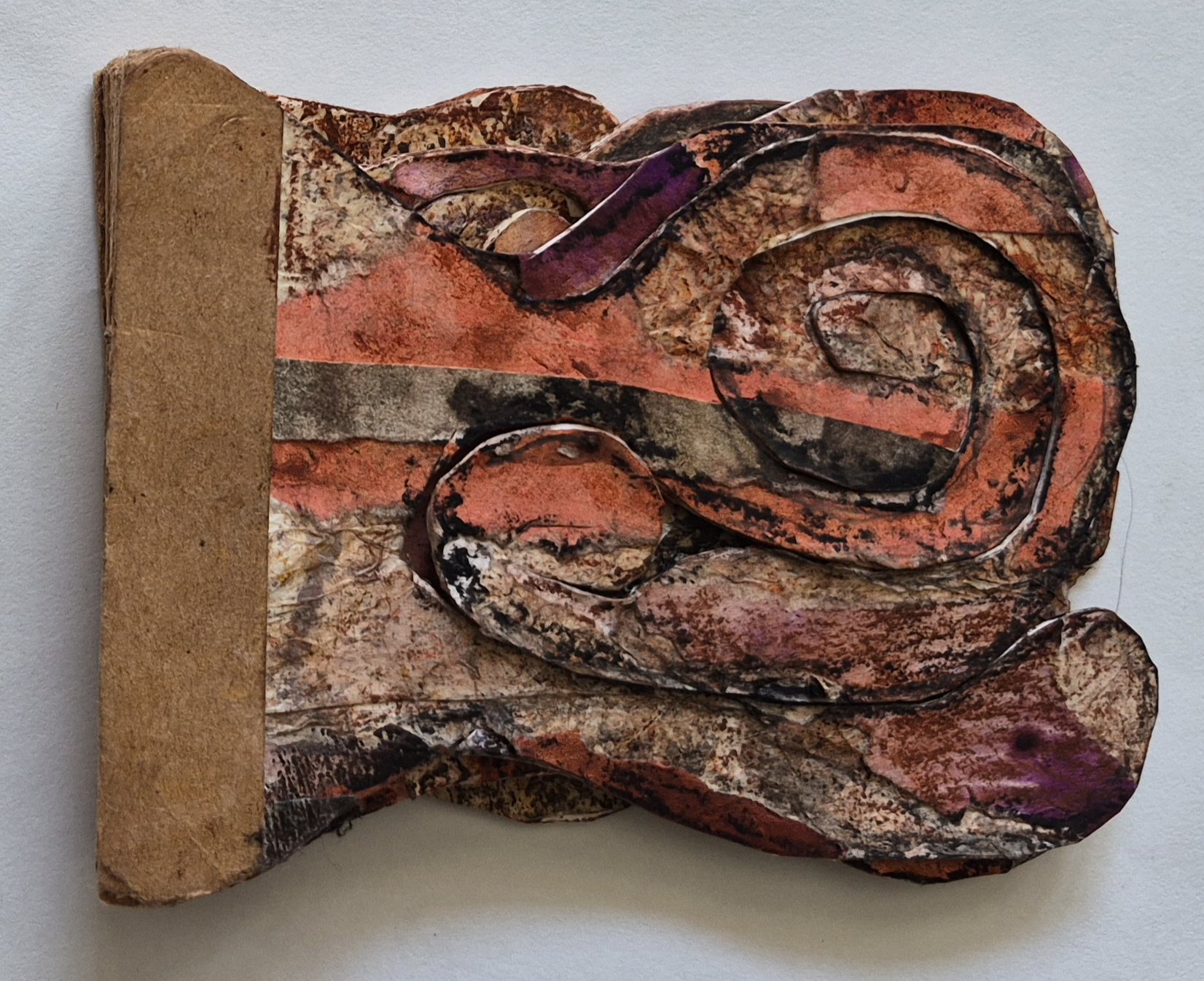
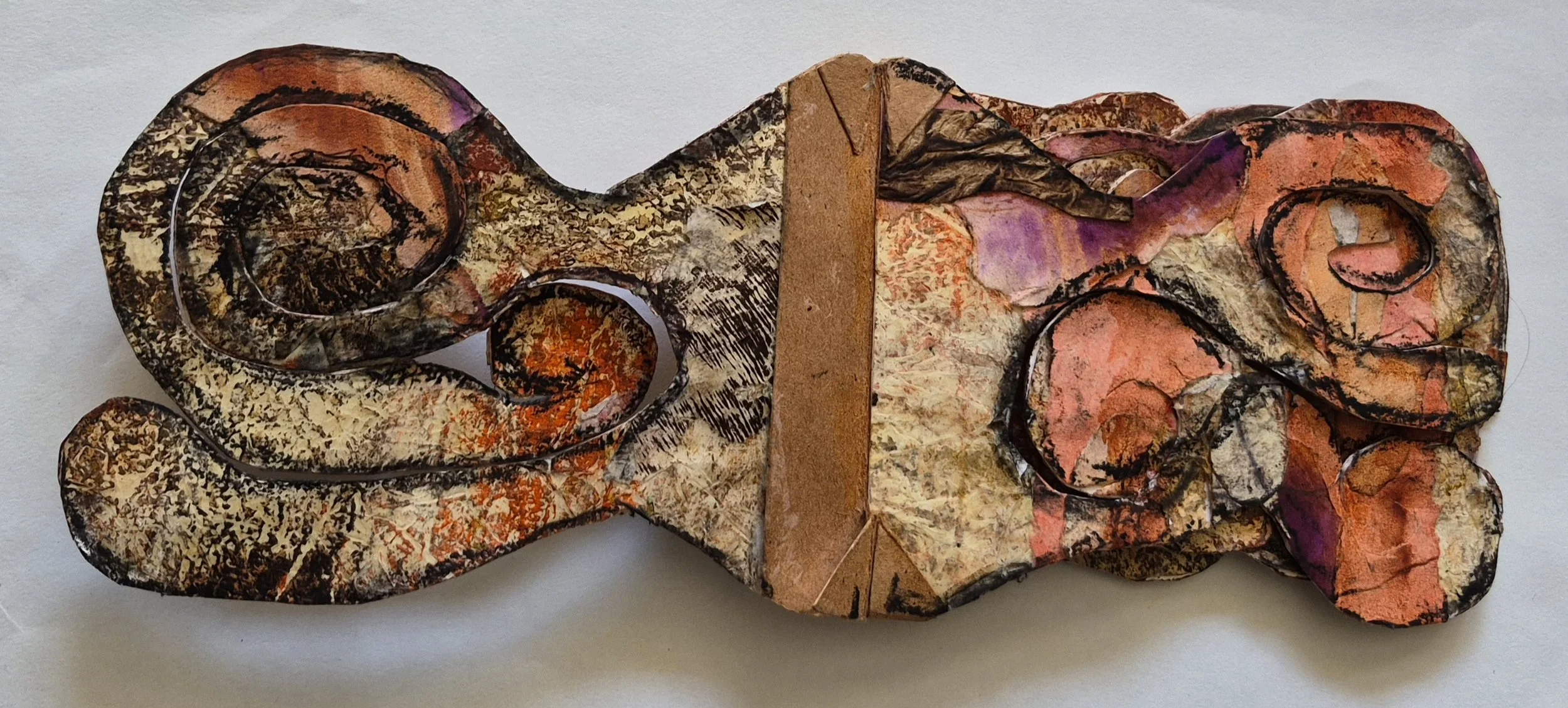
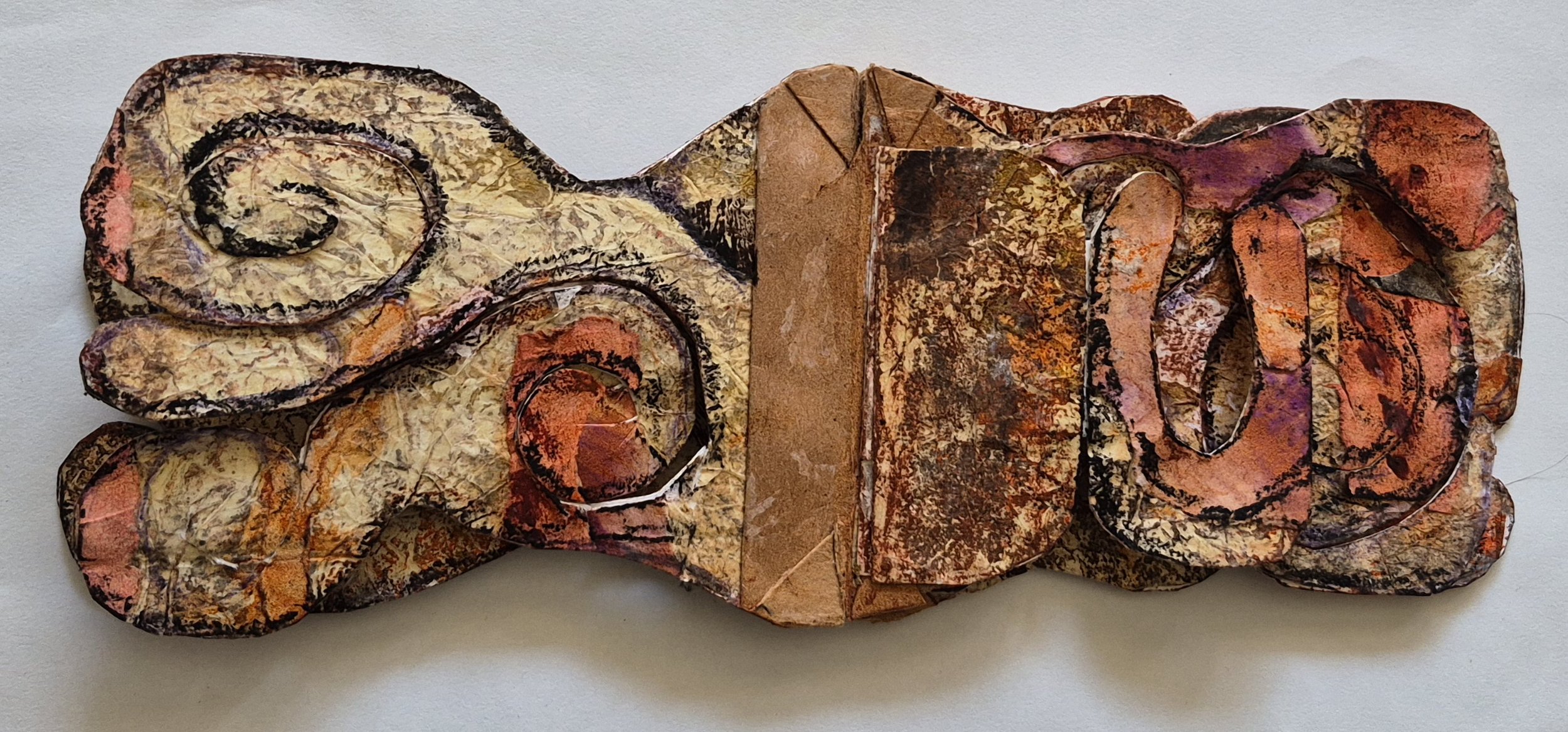
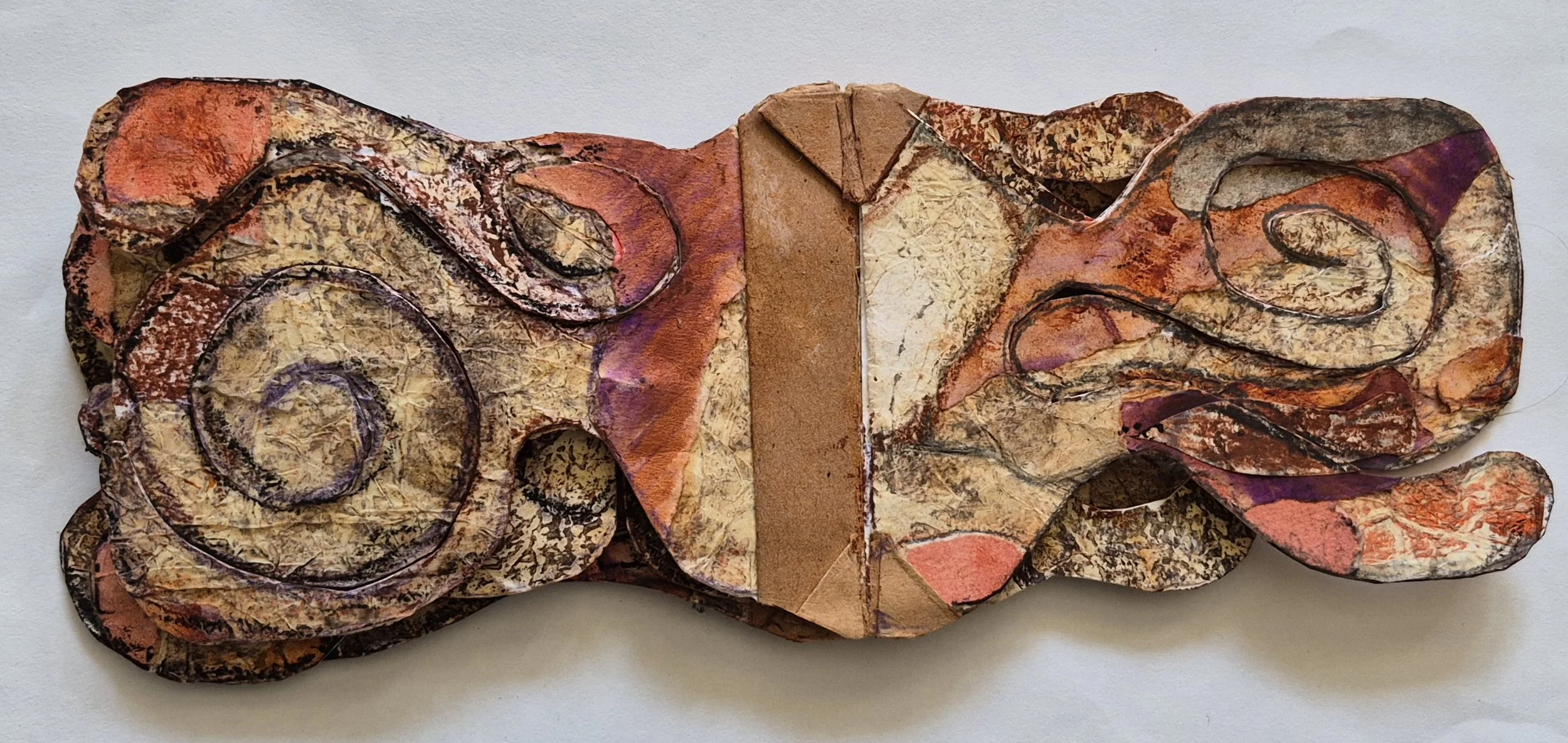
Art and photos by Sheila Benedis

Bernice and Rory had stopped talking to each other, and they both were miserable

Mark and Janet’s kids were the first generation of zebra fish

Mitzi thinks it’s funny to bite the hand that feeds her

Finally, it was the fish’s turn to tell a story
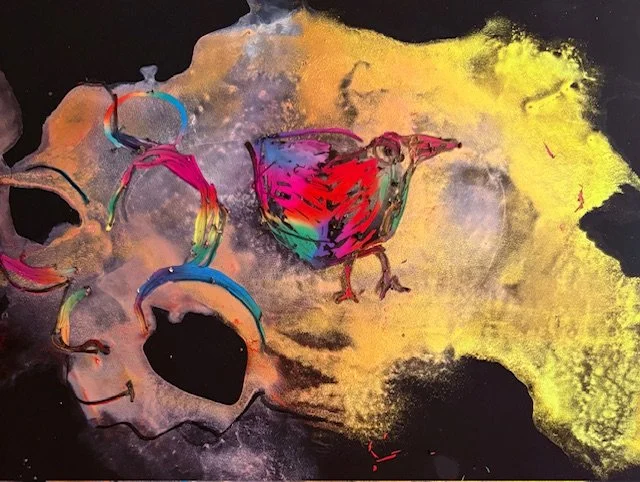
The bird on Rawson’s head evoked comments
Art and photos by Jane Hart
© Kendal on Hudson Residents Association 2015, 2016, 2017, 2018, 2019, 2020, 2021, 2022 all rights reserved. Please do not reproduce without permission.
Photographs of life at Kendal on Hudson are by residents.