
What $1 Bought in 1940
In 1940, the average worker in the United States earned $1,368 a year—roughly $25 a week. And while that figure did rise during the course of the decade, it still sounds like a meager amount by today’s standards, thanks to inflation. Back then, however, a dollar could stretch remarkably far. According to the inflation calculator provided by the US Bureau of Labor Statistics, $1 in 1940 is equivalent to $23.34 in 2026. So, a dollar was enough to stock up on some essential groceries or cover a modest night out. Here’s a look at exactly what you could buy for a buck back in 1940.
10 Loaves of Bread
A 1-pound loaf of white bread cost about 10 cents in 1940, meaning $1 bought you 10 loaves at that price. But a loaf could often be found for even less if you shopped around, so a dollar could get you as many as a dozen loaves, making bread an important staple in most homes.
3 Dozen Eggs
In 1940, a dozen large white eggs cost about 33 cents (and possibly as little as 27 cents), so you could get at least three dozen eggs for a dollar. Being relatively affordable, eggs were considered the perfect protein, and most households ate them daily. And if you wanted bacon with your eggs, you could get at least 4 pounds of bacon for a buck.
20 Hershey’s Chocolate Bars
In the US today, a standard Hershey’s milk chocolate bar typically costs between $1.80 and $2.20. Back in 1940, it cost just 5 cents, so a dollar could get you 20 bars. The size of the bar might have differed slightly, though—Hershey was committed to maintaining the 5-cent price point throughout the 1940s and up through the 1960s, but it adjusted the size of the bar to account for fluctuating cacao prices. Coca-Cola also maintained a 5-cent price point in the mid-20th century, so you could get 20 bottles of Coke for a dollar, too.
4 Pounds of Coffee
In 2025, the average price for a pound of coffee surpassed $9. In 1940, a dollar could buy around 4 pounds of coffee, enough to keep a household caffeinated for at least a week. But a couple of years later, things took a turn for the worse: Coffee was rationed in America from November 1942 to July 1943 to make sure there was enough for the soldiers fighting in World War II.
6 Gallons of Gasoline
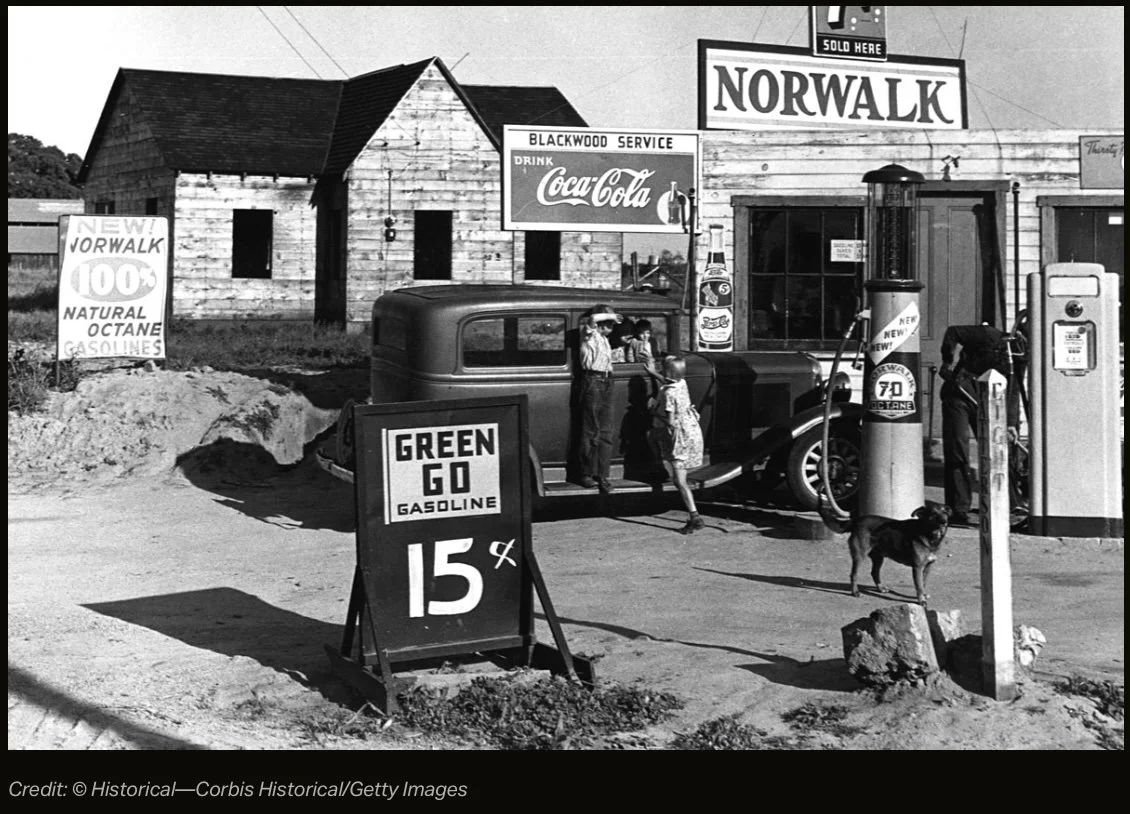
The price of gasoline has been on the rise in 2026, with the national average for a gallon now passing the $4 mark. In 1940, $4 would have been a shocking price, since at the time, a gallon of gas cost around 15 cents. While that’s still quite high accounting for inflation, you could buy 6 gallons at the pump and still get change for a dollar.
4 Movie Tickets
In 1940, a standard movie ticket cost a quarter, and matinee showings could be as little as 10 cents. It was a good year for movies, too. You could watch Charlie Chaplin in The Great Dictator; Cary Grant, Katharine Hepburn, and James Stewart in The Philadelphia Story; and Disney’s Pinocchio and Fantasia, all without spending more than a dollar.
33 First-Class Stamps
A first-class stamp cost 3 cents in 1940, and remained the same price until 1959 (when it increased to 4 cents). So, for $1, you could stamp 33 letters — more than enough to keep up with family and friends in an age long before email and social media.
2 Men’s Haircuts
According to Yelp, the cost of a men’s haircut in the US today typically ranges from $25 to $40 (though it can, of course, be cheaper or much more expensive). In 1940, a standard men’s haircut in a barbershop cost around 50 cents—and might have included a shave. For women, a standard cut in a 1940s salon would likely have exceeded a dollar—but would still have been far below the $60 or so charged by a midrange salon today.
1 Pair of Silk Stockings
A pair of medium-quality women’s silk stockings cost about a dollar in 1940. That same year, nylon stockings became available to the American public for the first time, causing quite a stir—customers rushed to stores in the thousands, and four million pairs sold out in four days. Nylon was generally cheaper than top-tier silk, but nylon stockings were a premium product upon their nationwide release—being stronger, more durable, more elastic and less prone to wrinkling than silk—and demand was extremely high, driving the price up to around $1.25 a pair. So, if you only had a dollar, you’d have to stick with silk.
Source: Tony Dunnell, historyfacts.com, May 7, 2026