
Just a reminder for the fans of the Tarrytown-Sleepy Hollow (TaSH) Farmers Market:
The Art of the Peel: The Final Cut
Many may weep. Many may mutter, “About time.” This week we reach the outer bounds, the final thrust, the last episode of “The Art of the Peel.”
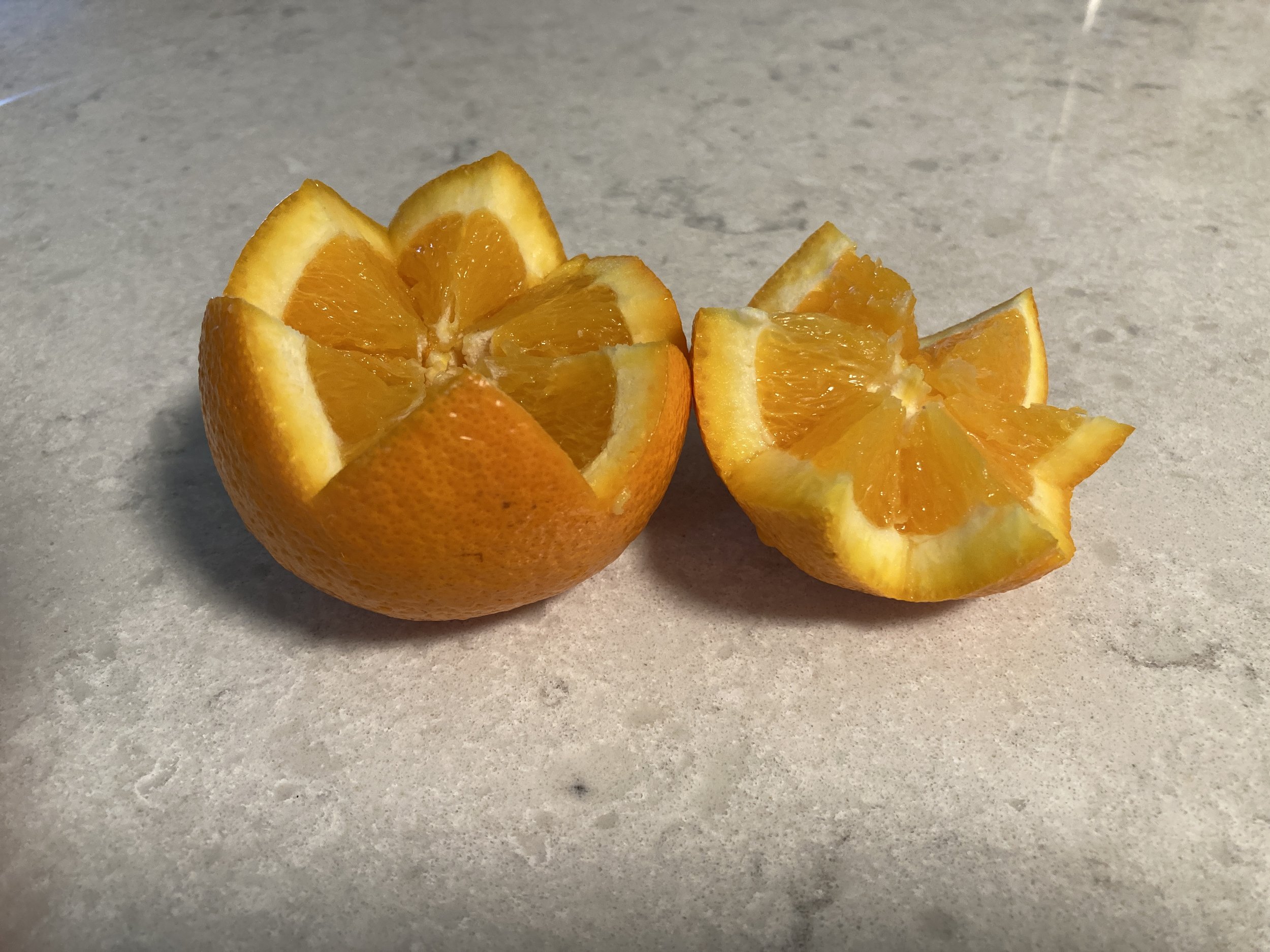
A fancy-cut orange is impossible to eat, but is perfect for two things: decorating a fruit platter or composting. Of course, the critical part—the stabilizing feature—is that said orange must maintain its peel. So, the art involved in this peel is . . . don’t peel. And, with that, this chapter ends. (It lacked further appeal.)
I Never Knew That
Antarctica Had a Rainforest 90 Million Years Ago
It’s difficult to comprehend within our limited, double-digit life spans, but Earth is a dynamic planet that is constantly changing. The continents have crashed together and separated a handful of times now (Pangaea is the latest supercontinent, but not the only one), and the planet’s atmosphere, oceans, and orbit are all temporary and movable.
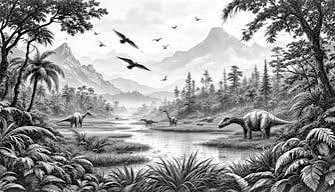
Take, for instance, Antarctica, arguably the most inhospitable place on the planet. Not long ago (geologically speaking), the icy continent wasn’t frozen at all. In fact, it was filled with temperate rainforests teeming with life. Some 90 million years ago, during the Cretaceous Period—the tail end of the age of dinosaurs—Antarctica was home to a completely different habitat, known as the “Cretaceous hothouse.” The Earth was much warmer due to increased carbon dioxide levels (sea-surface temperatures in the tropics were at an incredible 95 degrees Fahrenheit, for example), and the world’s oceans were a staggering 558 feet higher than they are today.
Estimates suggest that Cretaceous Antarctica had a climate similar to today’s Italian peninsula and was filled with plant and animal life, including dinosaurs. The southern continent’s hospitality didn’t end with the dinosaurs, either; it continued on into the Eocene Epoch around 56 million to 34 million years ago. It was then that marsupials likely migrated across Antarctica from South America into modern-day Australia before the continents separated. So while Antarctica is pretty inhospitable to humans now, it may just be a phase.
Source: historyfacts.com, Darren Orf, July 11, 2023
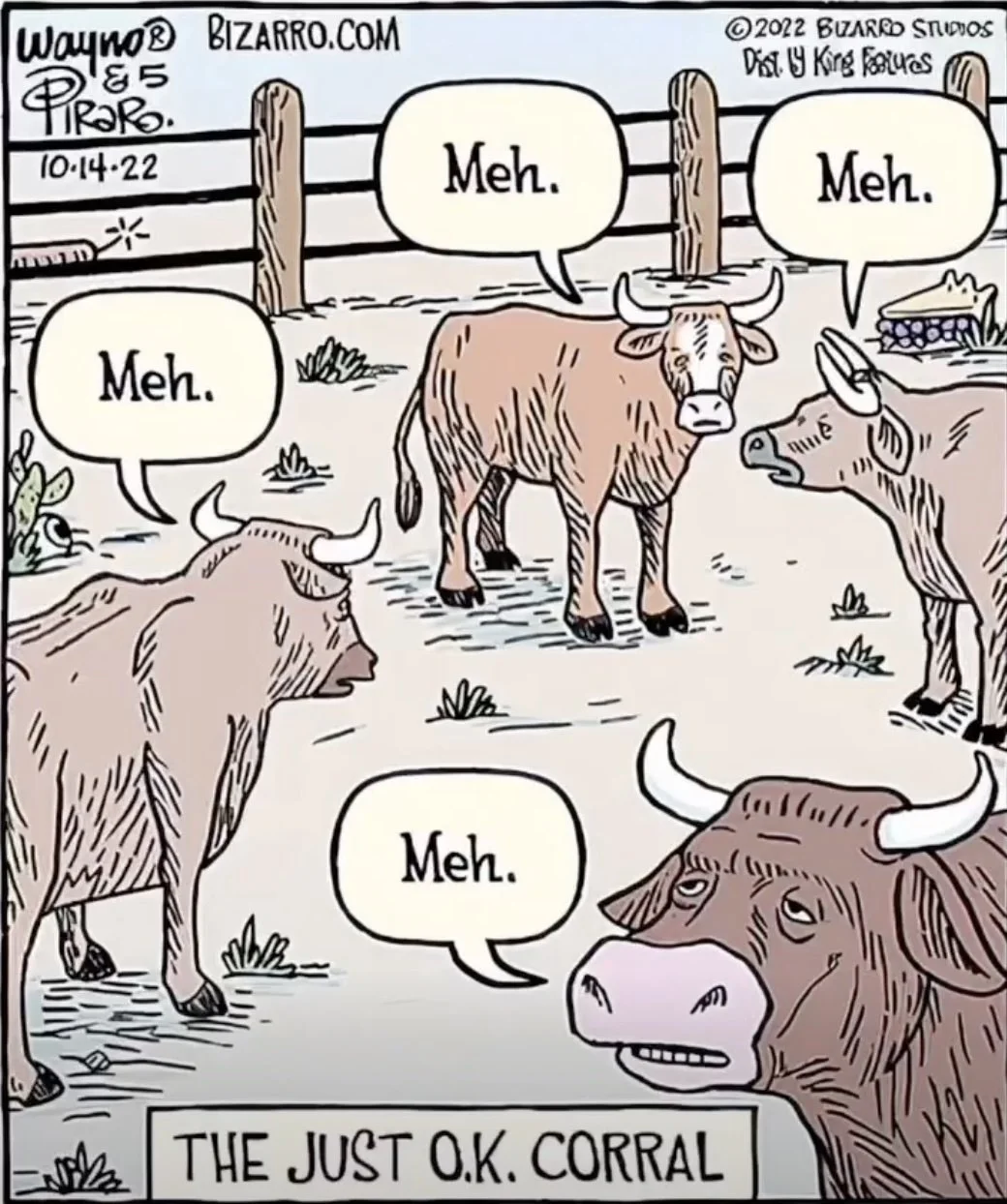
For Your Funny Bone

Contributed by Barbara Bruno



Conversation II, by Sheila Benedis

Art and photo by Sheila Benedis
Art by Hart

After only a year at beauty school, Kevin could do a snazzy permanent wave

Brenda June, the last of the fabulous Unicorn Sisters, was still performing at a tumbledown roadside cafe

Lancaster had never understood his grandfather’s jokes

The office was much more relaxed in the summertime
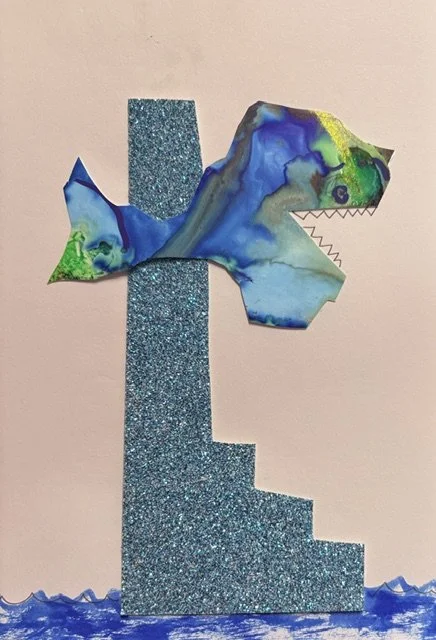
At last Meeker felt like a real New Yorker
Art and photos by Jane Hart
In and Around Kendal
August Birthdays
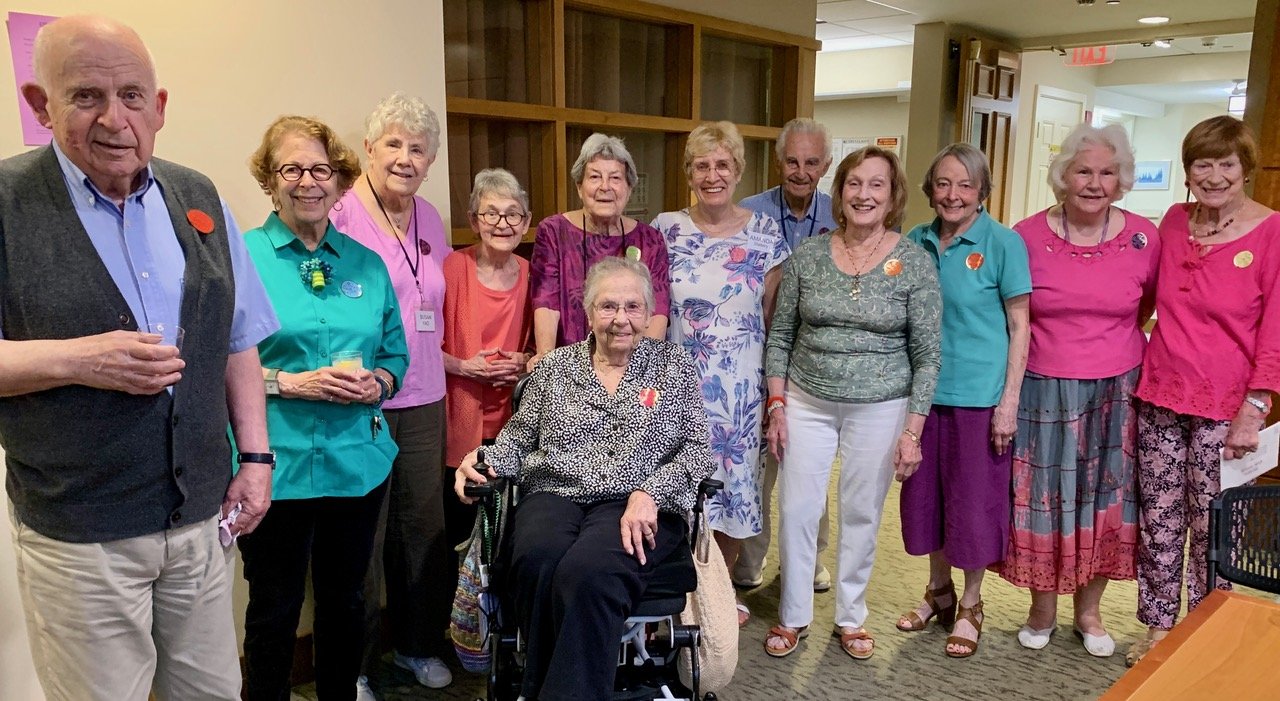
Photo by Harry Bloomfeld
Summertime: And Not Much Happenin’
Photo by Philip Monteleoni
Early Morning Kendal
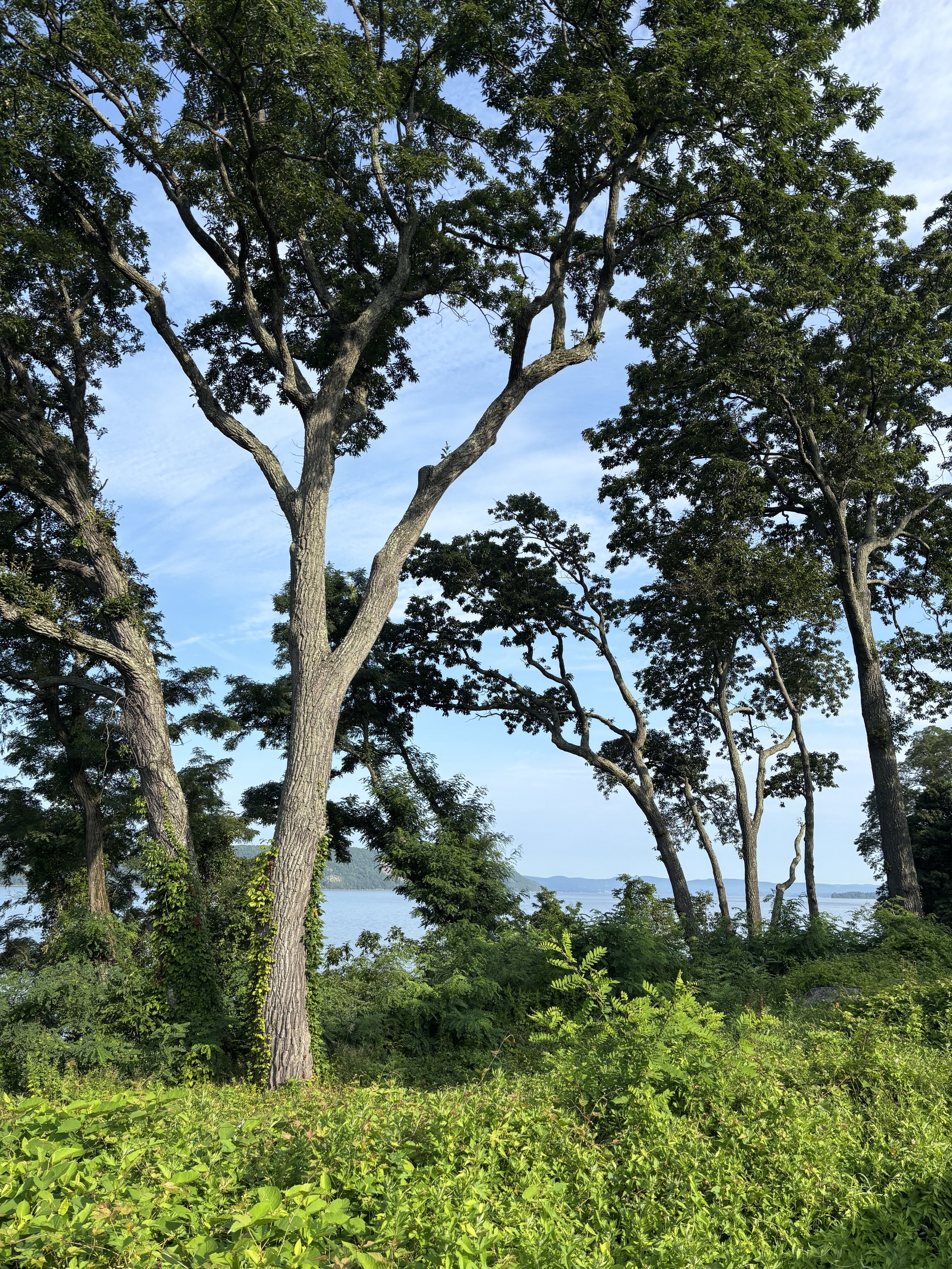
Photo by Lynn Brady
Onward and Upward
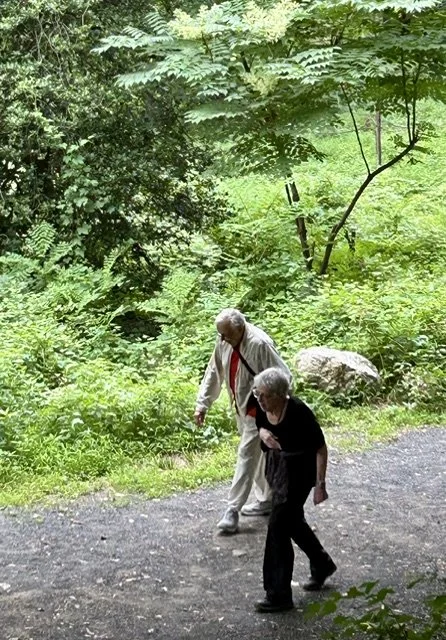
Intrepid Kendalites scale the arduous trail to the top of the Kendal Mount, by Carolyn Reiss
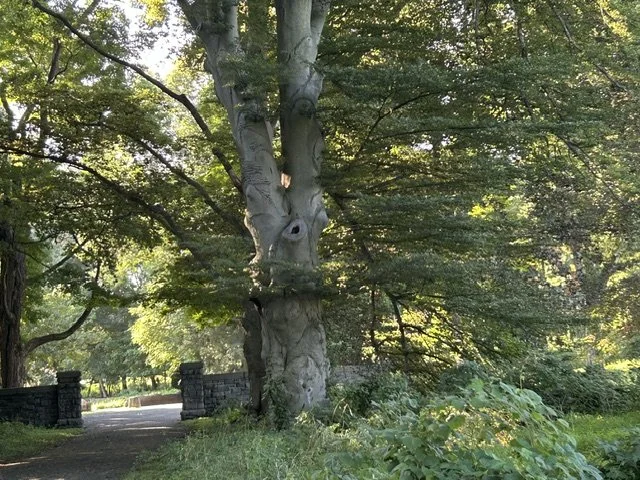
The top of the Mount, by Carolyn Reiss
Olmstead’s “Secret Garden”
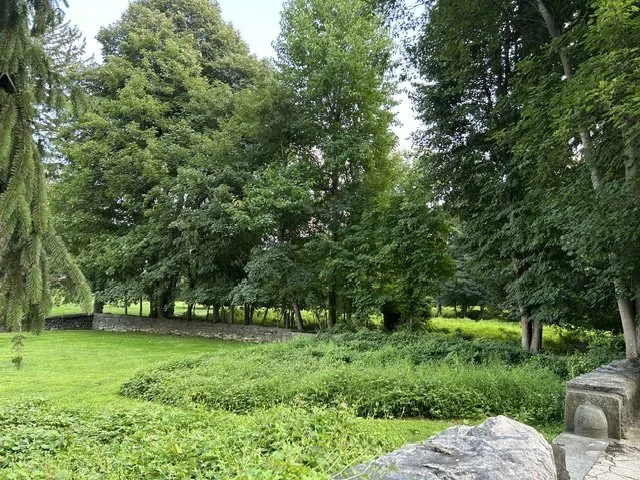
Photo by Edward Kasinec
Kendal’s Entrance Garden
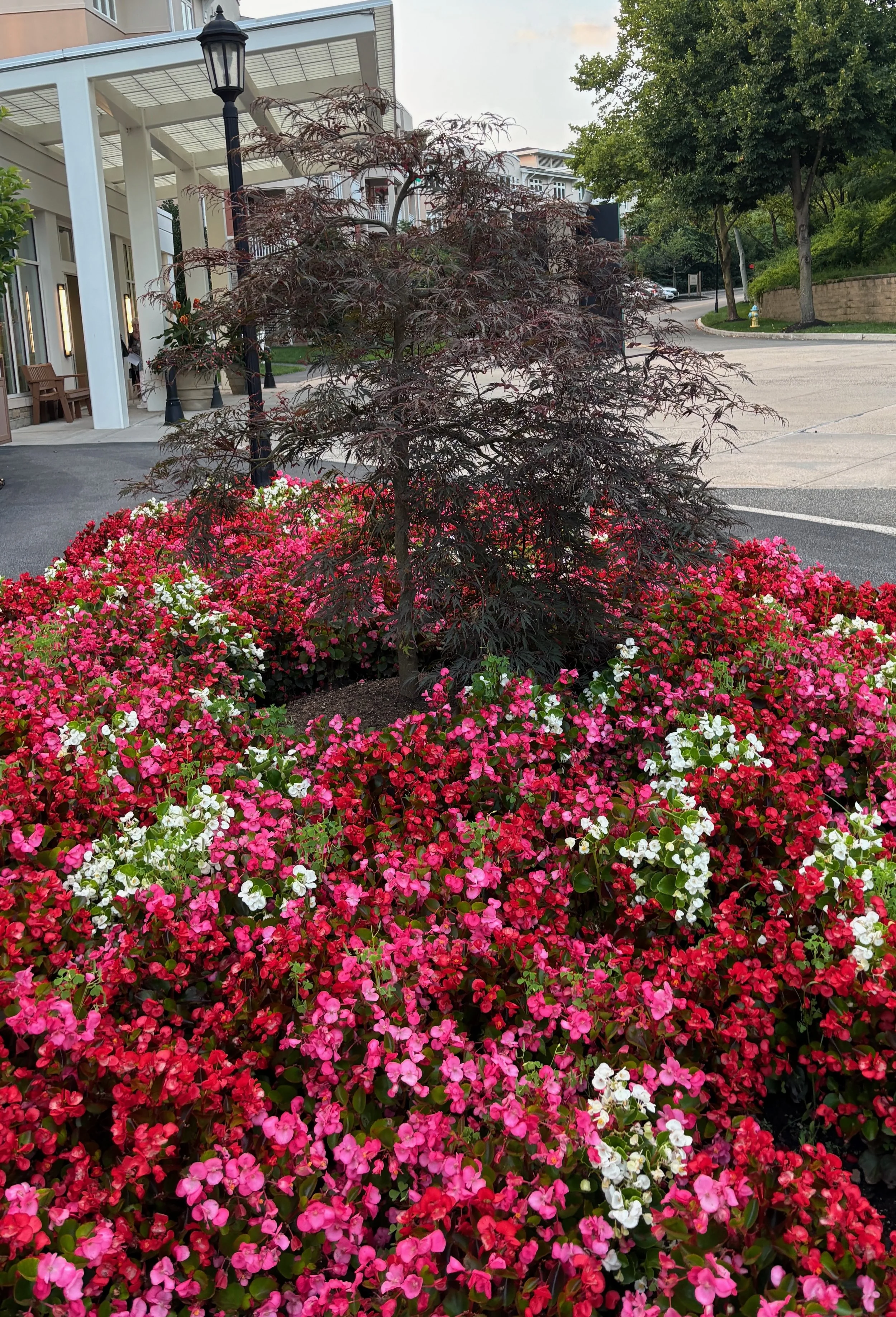
Photo by Lynn Brady
Gettin’ Out the Vote: This Is What Democracy Looks Like
Periodically, there are calls to send postcards calling to get out the vote. Many Kendalites respond. In 60 minutes, some 14 people—at one four or five of the postcard parties recently hosted in Kendal apartments— wrote 400 postcards encouraging people to vote.
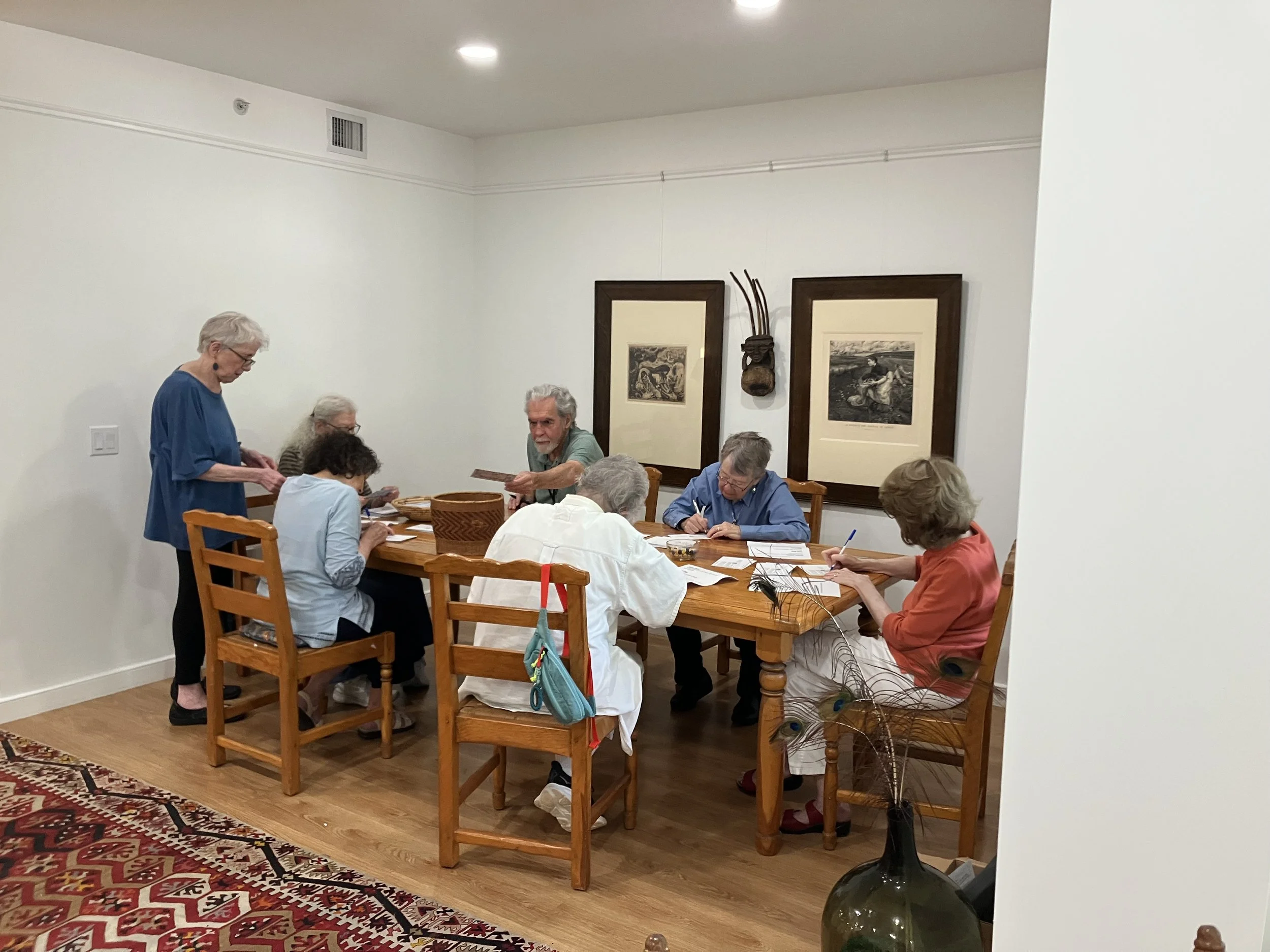
Photo by Bob Abramovitz
The Glorious Finishing Touch at the End of Day

Photo by Harry Bloomfeld
Out and About
A Week Spent in Natural Beauty of the Outer Banks
Aruna Raghavan recently spent some time chillin’ out with family in the Outer Banks of North Carolina. They enjoyed the beauty of the area from Sunrise . . .
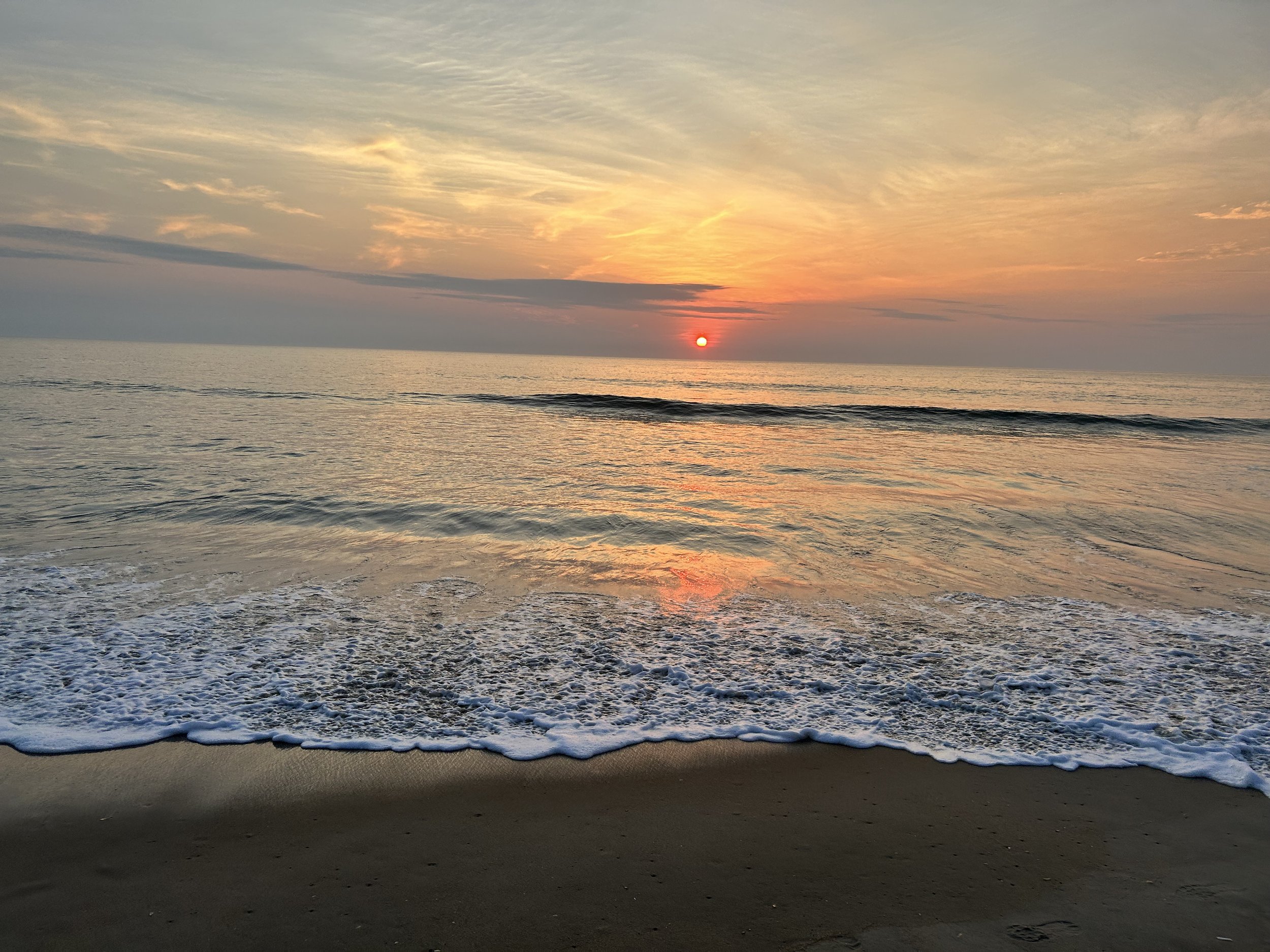
to Sunset . . .

Photos by Aruna Raghavan
The Philosopher of the Pleasantville Farmers Market
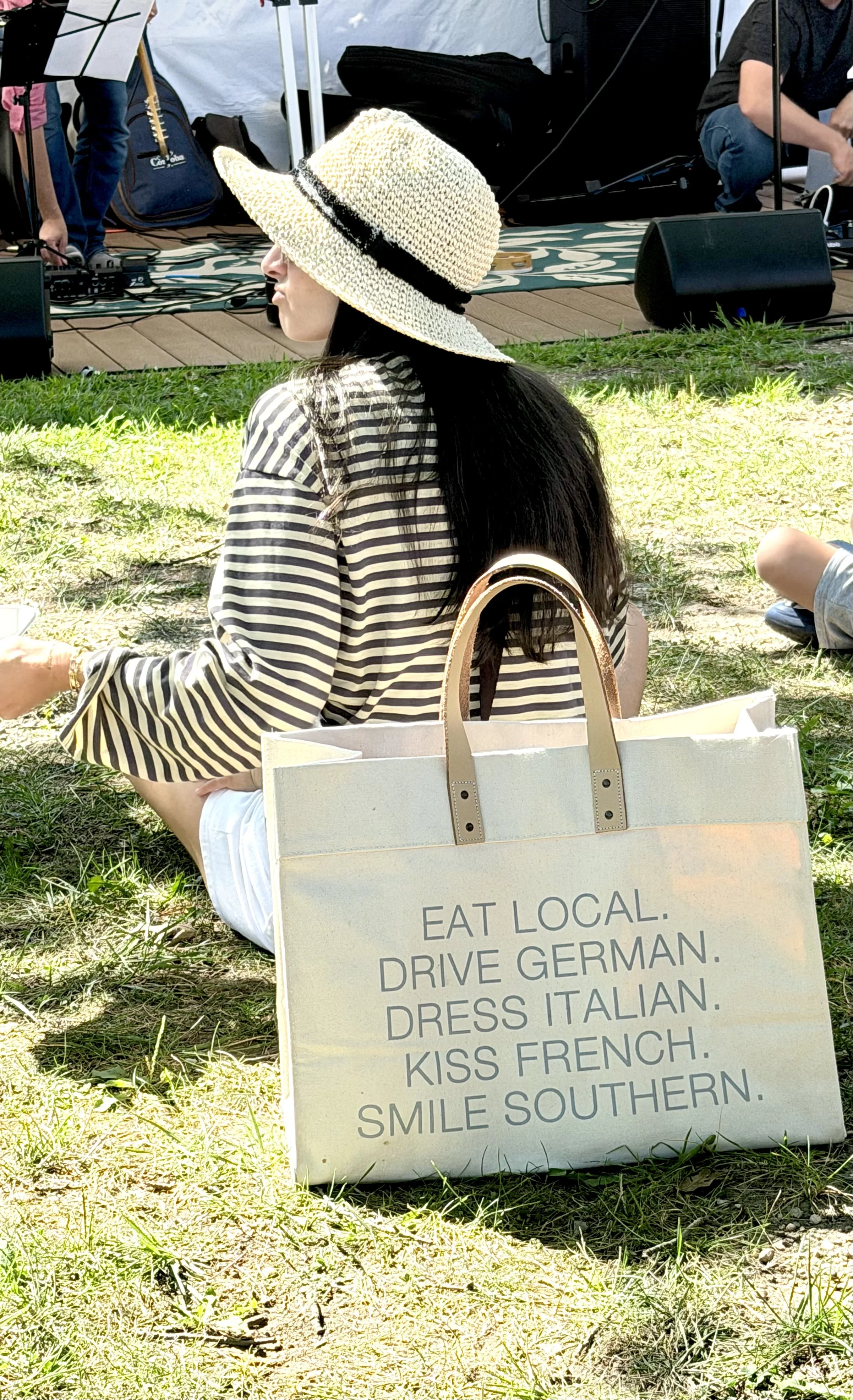
Photo by Ed Lannert
The Art of the Peel--Orange You Glad?
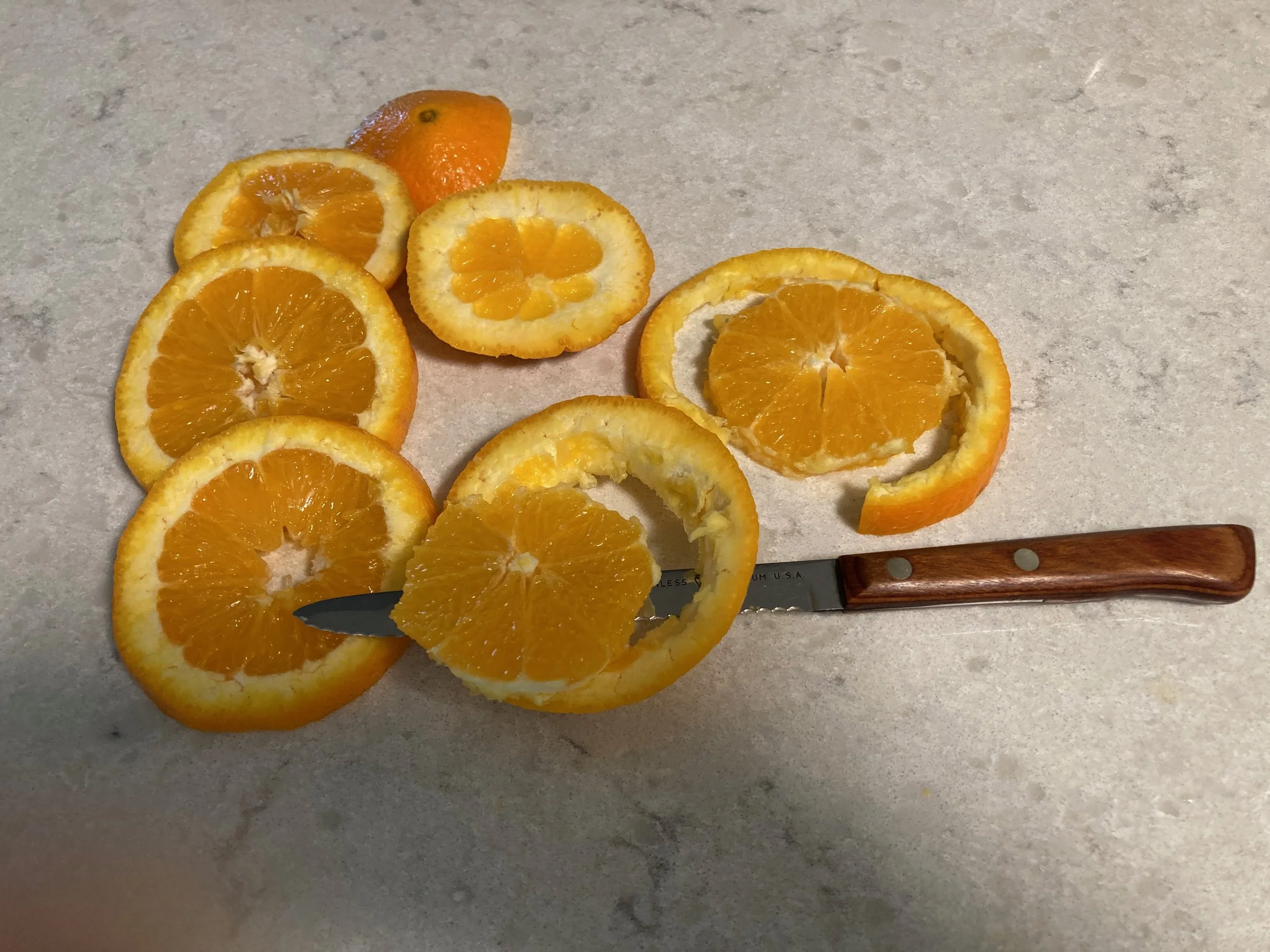
First, slice the orange through the equator. Then slice concentric circles to the north and south poles of the orange.
Note: If the orange slices are aimed for a pitcher of sangria—actually, the recommended use for a sliced orange—don’t even bother removing the skin.
Photo by Marianne Bloomfeld
Weekly Construction Report



From the Office of Ellen Ottstadt
Are You a TaSH Aficionado? Then Make Your Voice Heard!
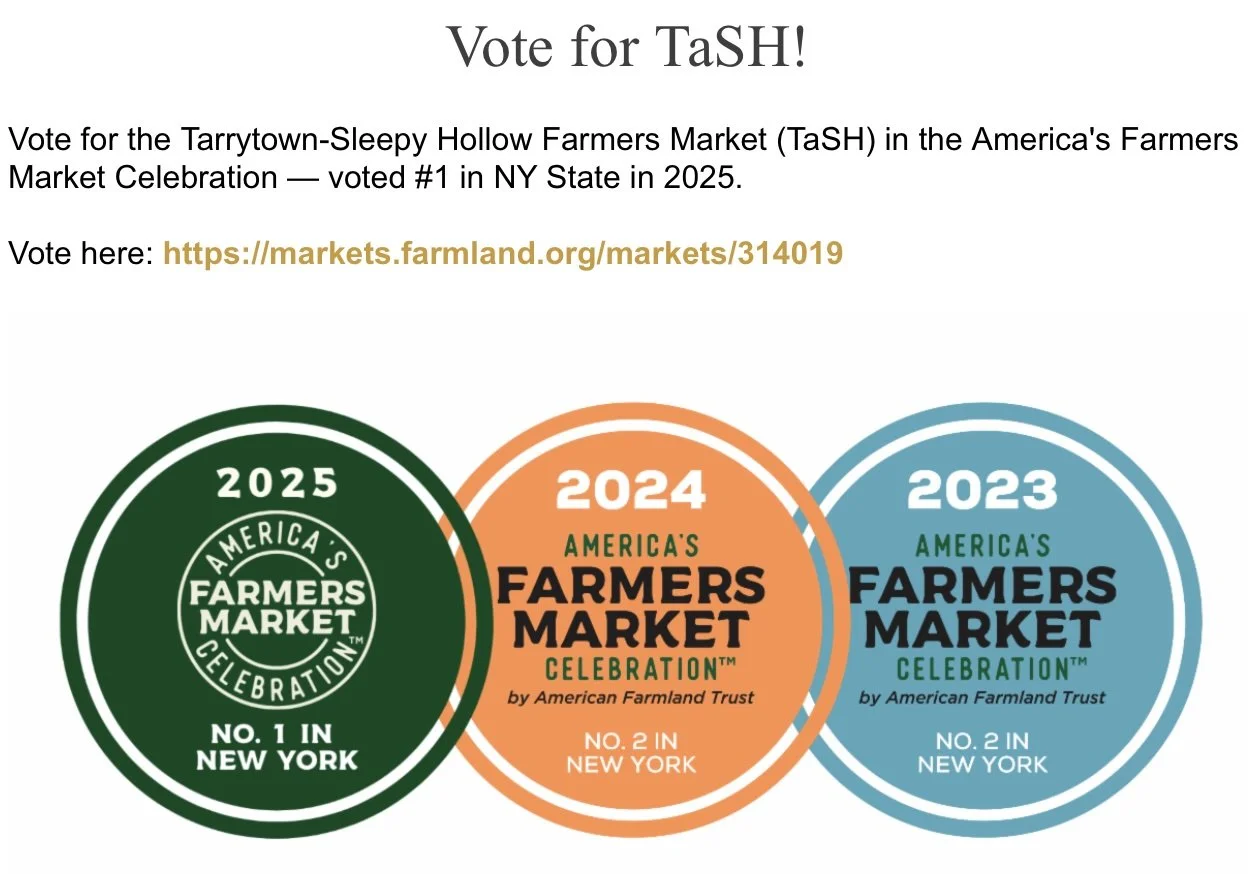
You have until Sept 30 at 5 pm. But why not do it now?
Just So You Know . . .
I got rid of my vacuum. All it was doing was collecting dust.
Looking to buy chicken broth in bulk? Try the stock market.
No matter how much you push paper, it’ll still be stationery.
It’s hard to explain things to kleptomaniacs. They always take things literally.
To err is human. To blame other people is management.
The past, present, and future walk into a bar. Things were tense.
I stayed up one night wondering where the sun was. Finally, it dawned on me.
I skipped work because of an eye problem. I couldn’t see myself in the office today.
Today I got rid of some dead batteries. I gave them away, free of charge.
Contributed by Joe Bruno
I Never Knew That
The Real Story Behind “Hound Dog”
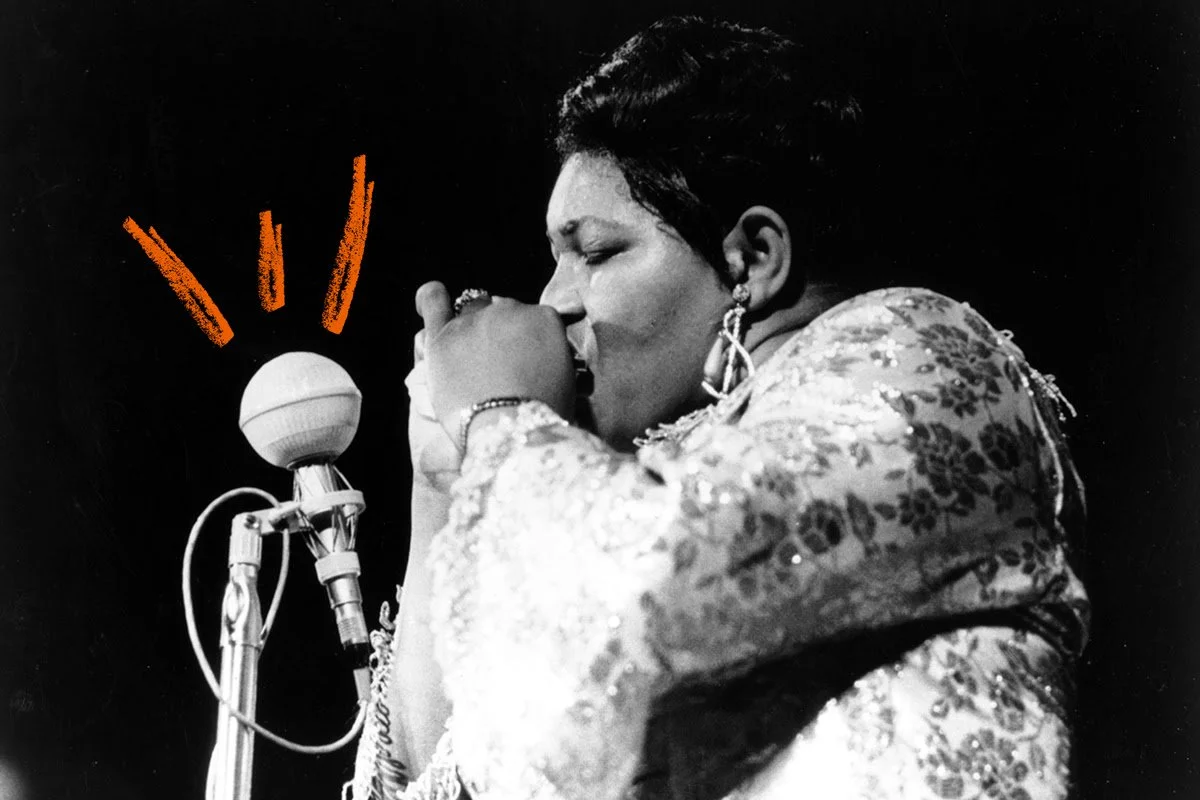
August 13, 1952: Willie Mae “Big Mama” Thornton—the “biggest, baddest, saltiest chick” in blues music—recorded “Hound Dog.” True to her reputation, she gave the song everything she had—and changed rock and roll history. “Hound Dog” had Willie Mae Thornton’s name on it from the get-go. And a ferocious performance with Johnny Otis’s band at Harlem’s Apollo Theater would soon earn her the nickname “Big Mama.”
Otis had an impeccable eye for talent (one of his other discoveries was R&B great Jackie Wilson). He asked Jerry Leiber and Mike Stoller, two teenage songwriters, to meet with Thornton. Leiber said, “We saw Big Mama and she knocked me cold.” That first impression inspired them to write “Hound Dog,” a song about a woman who won’t put up with any more of her man’s cheating and mooching. Thornton didn’t just sing the lyrics, she screamed and growled them. “You ain’t nothin’ but a hound dog / quit snoopin’ ’round my door.” As if she knew exactly what kind of man those words were about.
“Hound Dog” was released in 1953 and spent seven weeks at the top of the Billboard R&B chart. Thornton became a star.
Another singer also found success with the song a few years later. You may have heard of him: Elvis Presley. His version, released in 1956, topped the pop, country, and R&B charts and launched the young rocker’s career straight into the stratosphere. (Thornton reportedly wasn’t thrilled about Presley’s success with the song, probably because she wasn’t given much credit for the original.) But some people think Big Mama grasped the song’s meaning better than Elvis did. As Stoller once said, “She was singing to a man. And he was singing to a dog.”
Source: Britannica, Today in History, René Ostberg, August 13, 2026
For Your Funny Bone


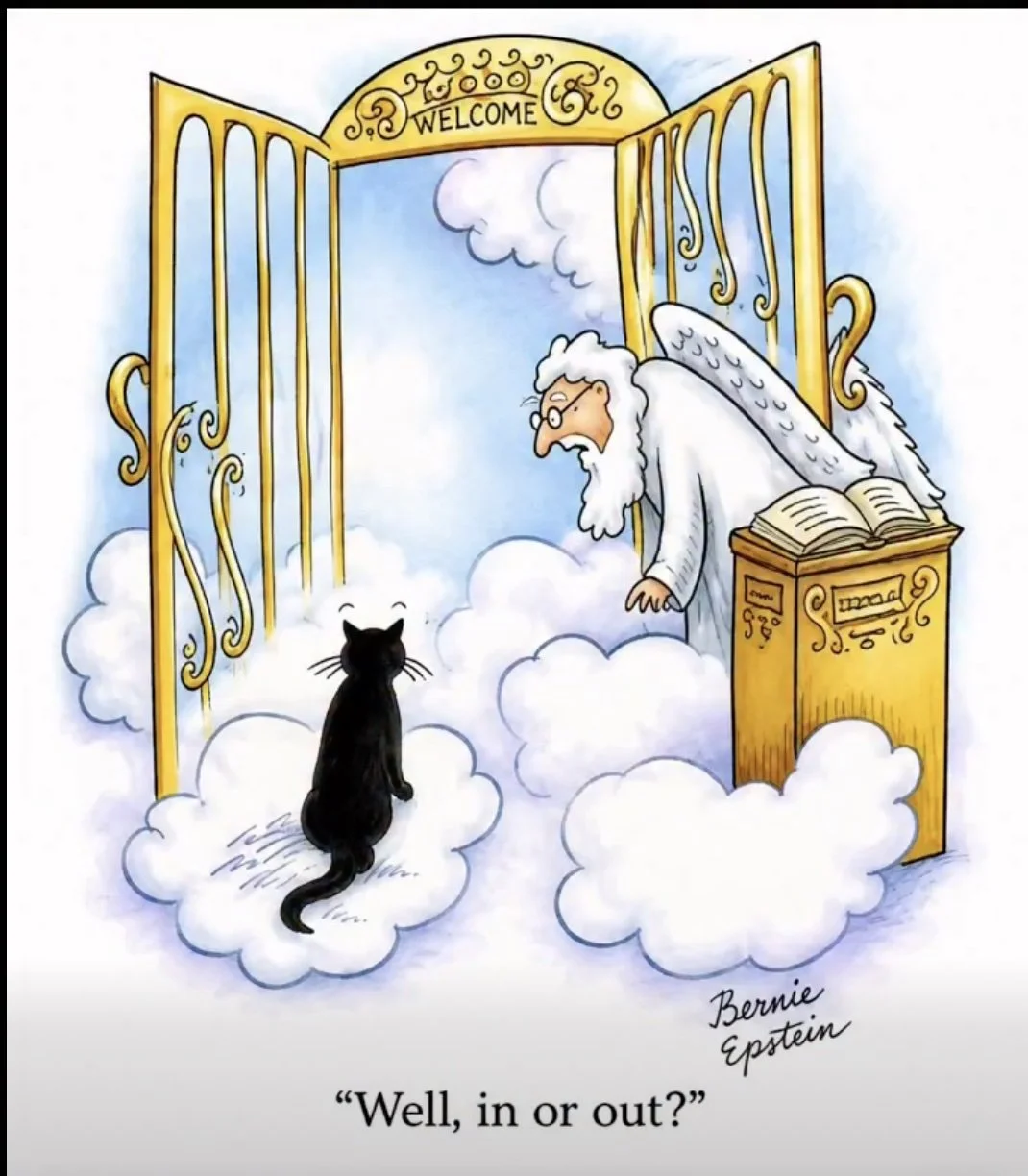
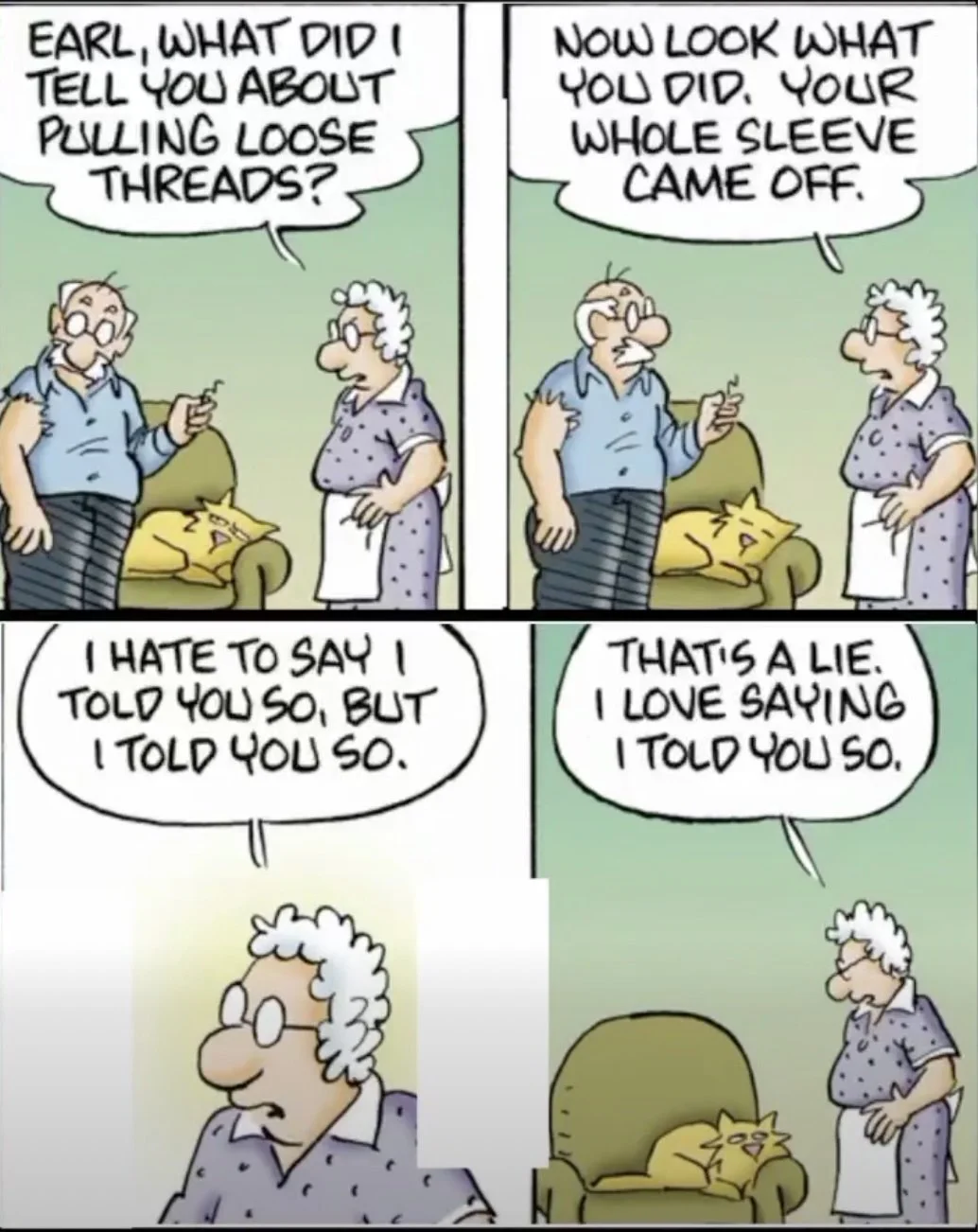

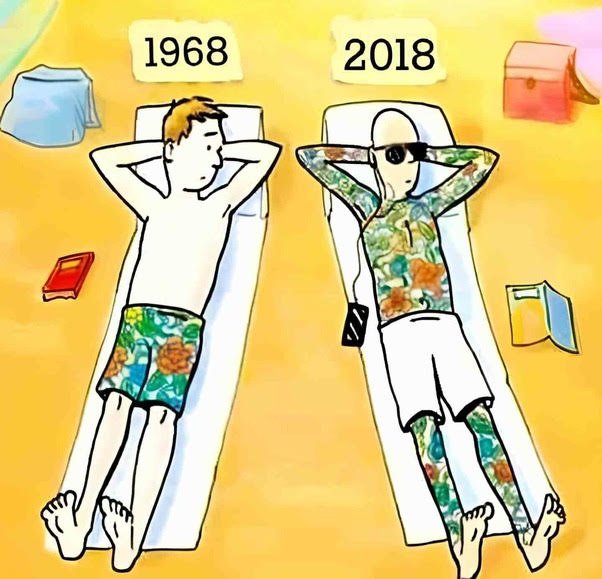
Contributed by Mimi Abramovitz
Art by Hart
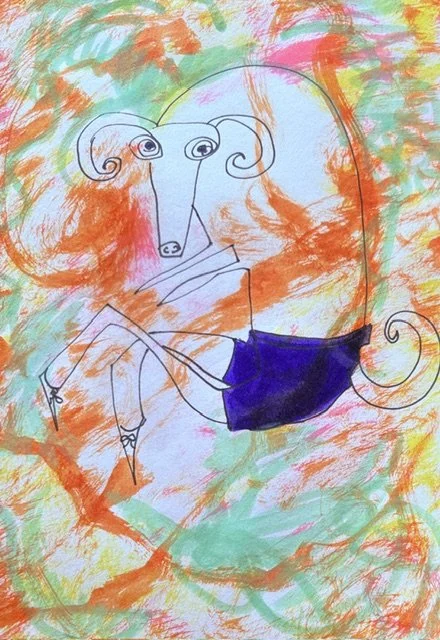
Elliott’s smoothie blender top never fit snugly enough
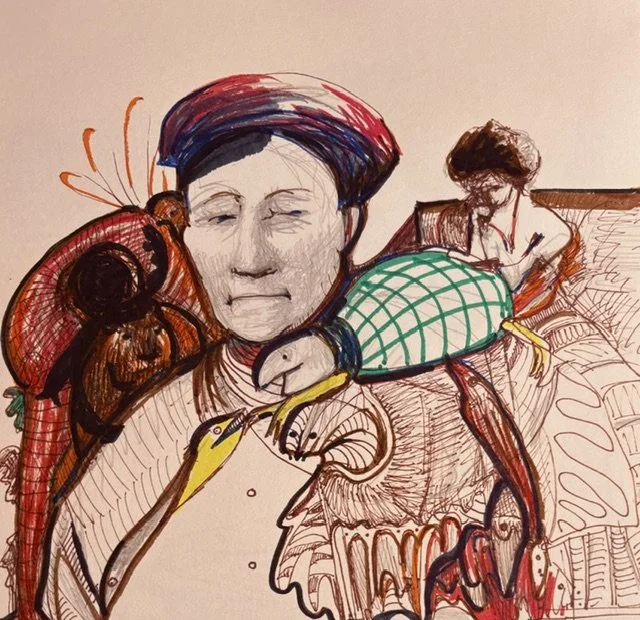
Mrs. Driggs often thought about her loved ones

Carling couldn’t tell the difference between a honeybee and a murder hornet

Amazingly, Pruitt’s rubber band ball had a sense of humor
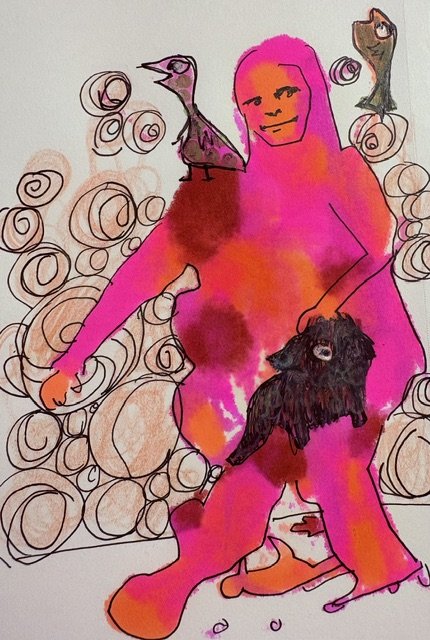
The elite bubblegum team was ready to rock and roll
Art and photographs by Jane Hart
Hope XIX Collage, by Shiela Benedis
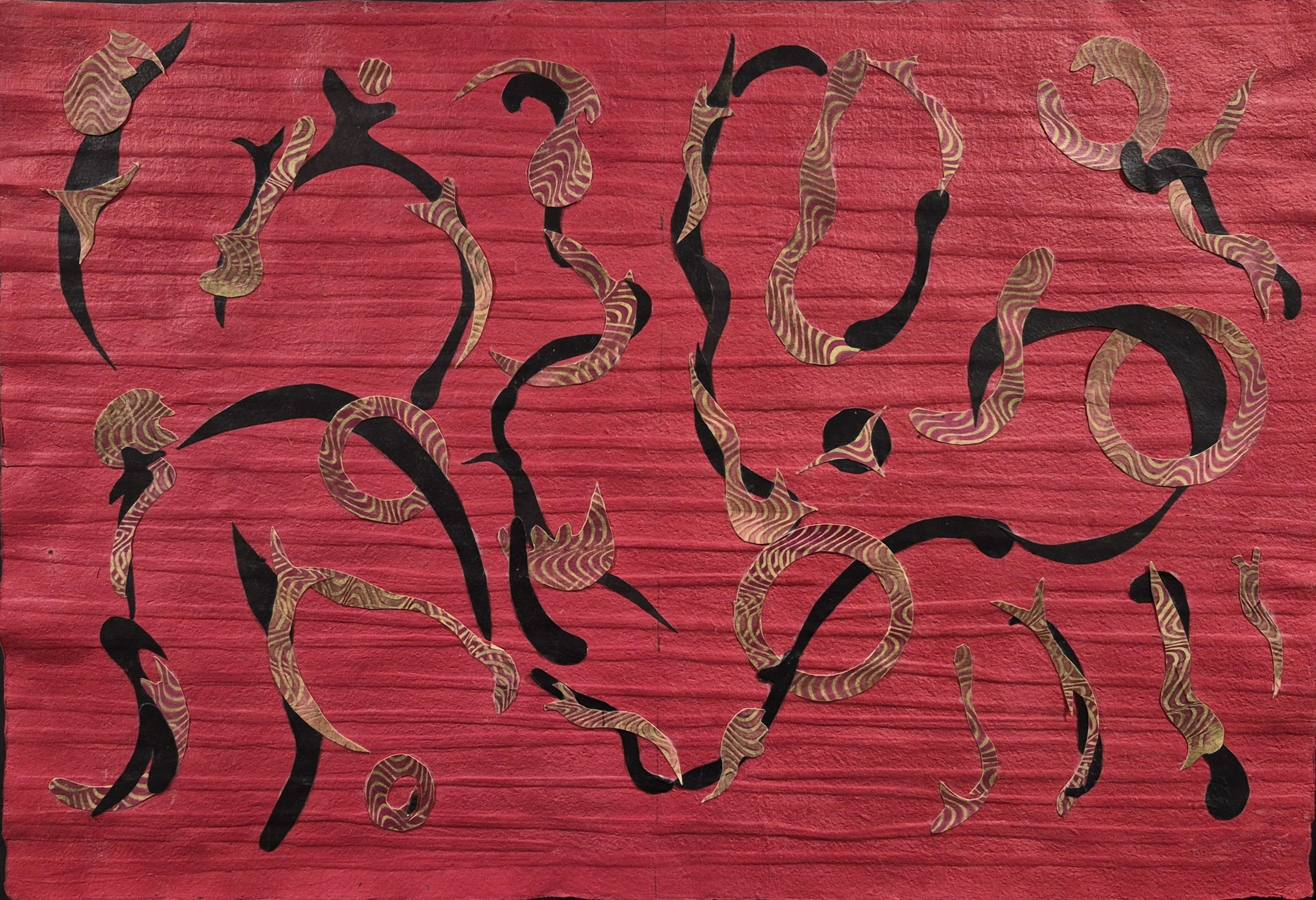
Art and photo by Sheila Benedis
In and Around Kendal
Mornin’, Glory
These days, Gretchen Engler is greeted each morning by this magnificent sight on her balcony:
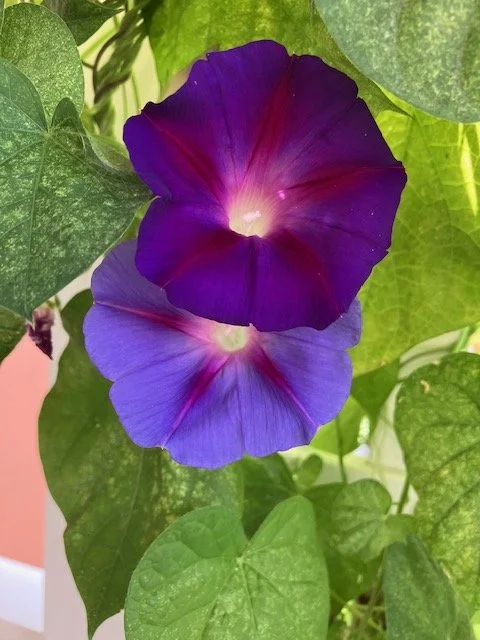
Photo by Gretchen Engler
Barges Racing on the Hudson?

Photo by Joe Bruno
A Beautiful “Welcome” at the Entrance to Kendal
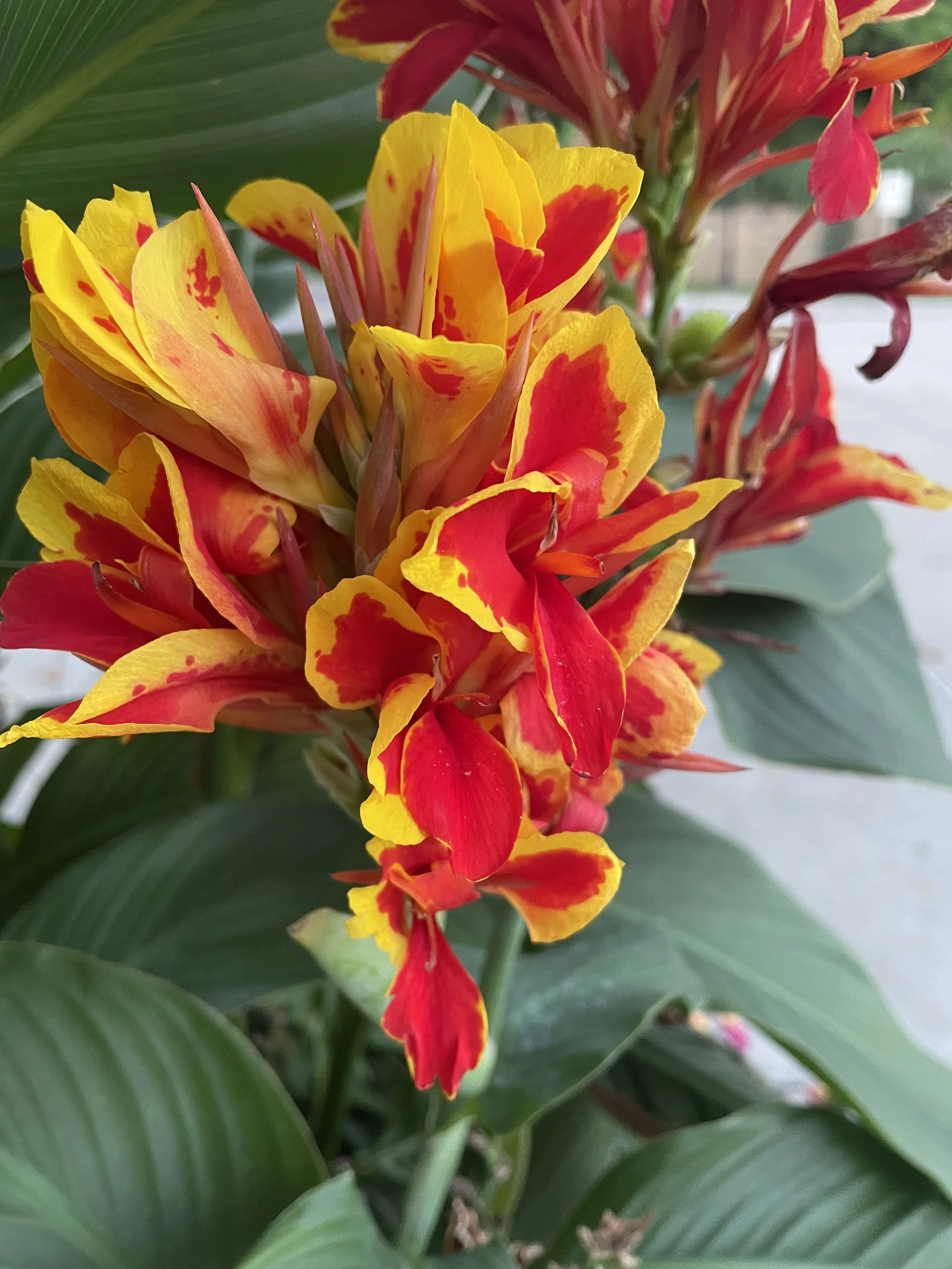
Photo by Peter Catapano
An Unexpected Visitor
Maggie Limberg reports that, for two weeks or so, she has had a visit by a little “hummer” who seems particularly fond of her flowering Haworthia.

Photo by Maggie Limberg
Low-Income Housing Underway in Rockwood
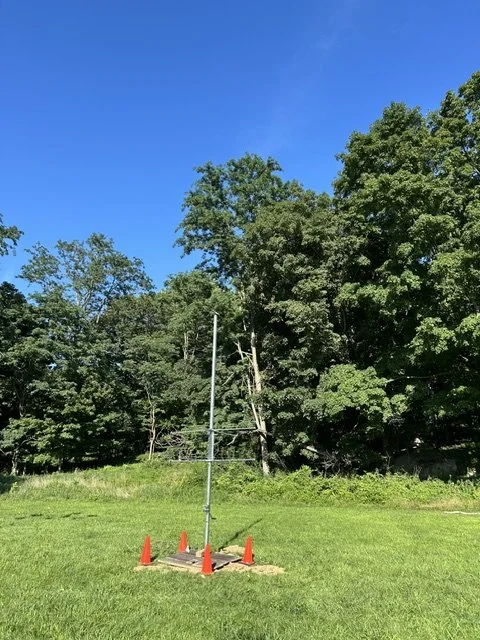
Martins should be moving in soon, no doubt, by Edward Kasinec
No Goats, But . . .
“Our” goats are no more, but enter, stage right—wait for it—turkeys!

Mom vigilant and on guard, by Carolyn Reiss
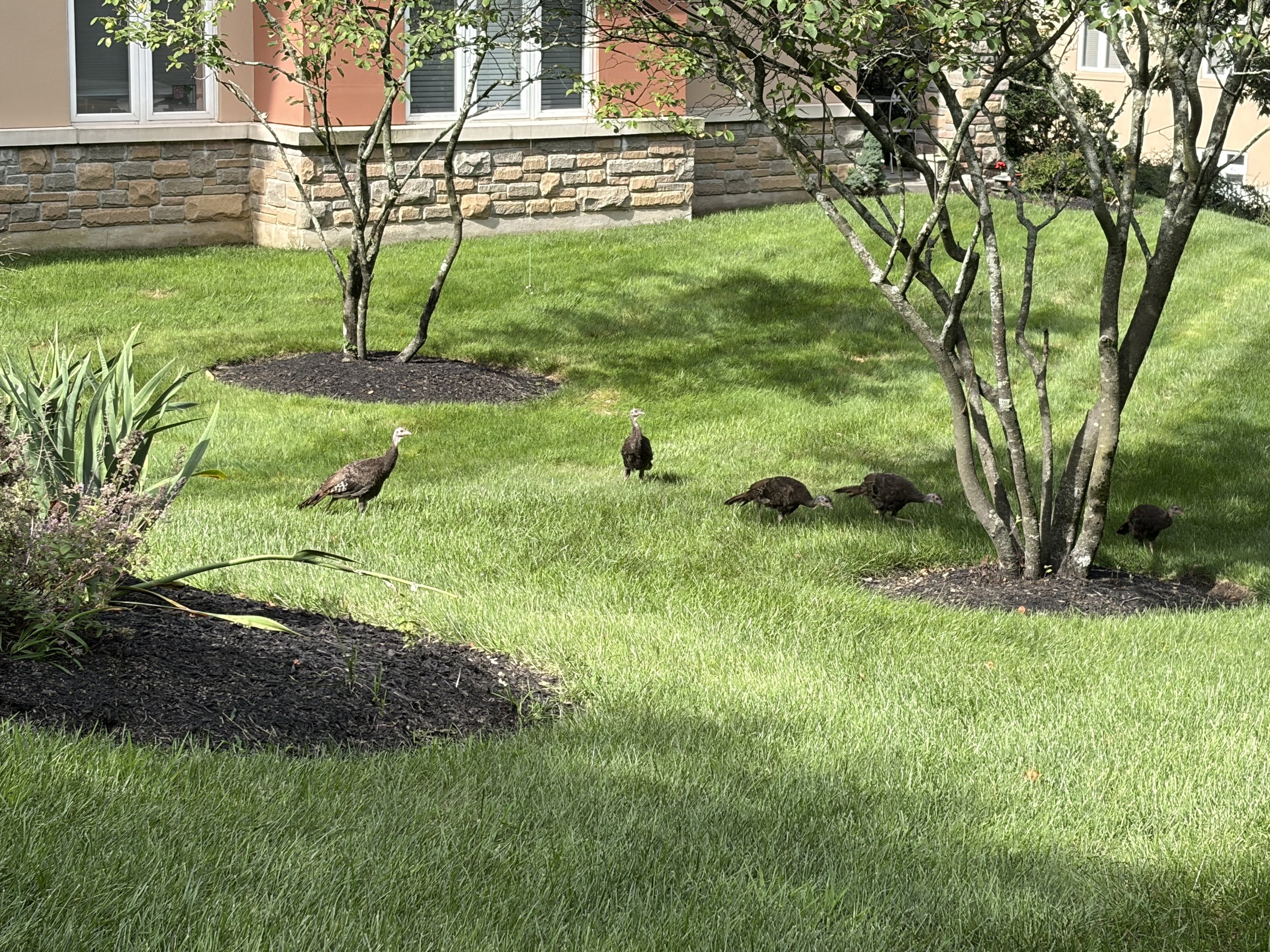
A family affair, by Lisa Rosenbloom
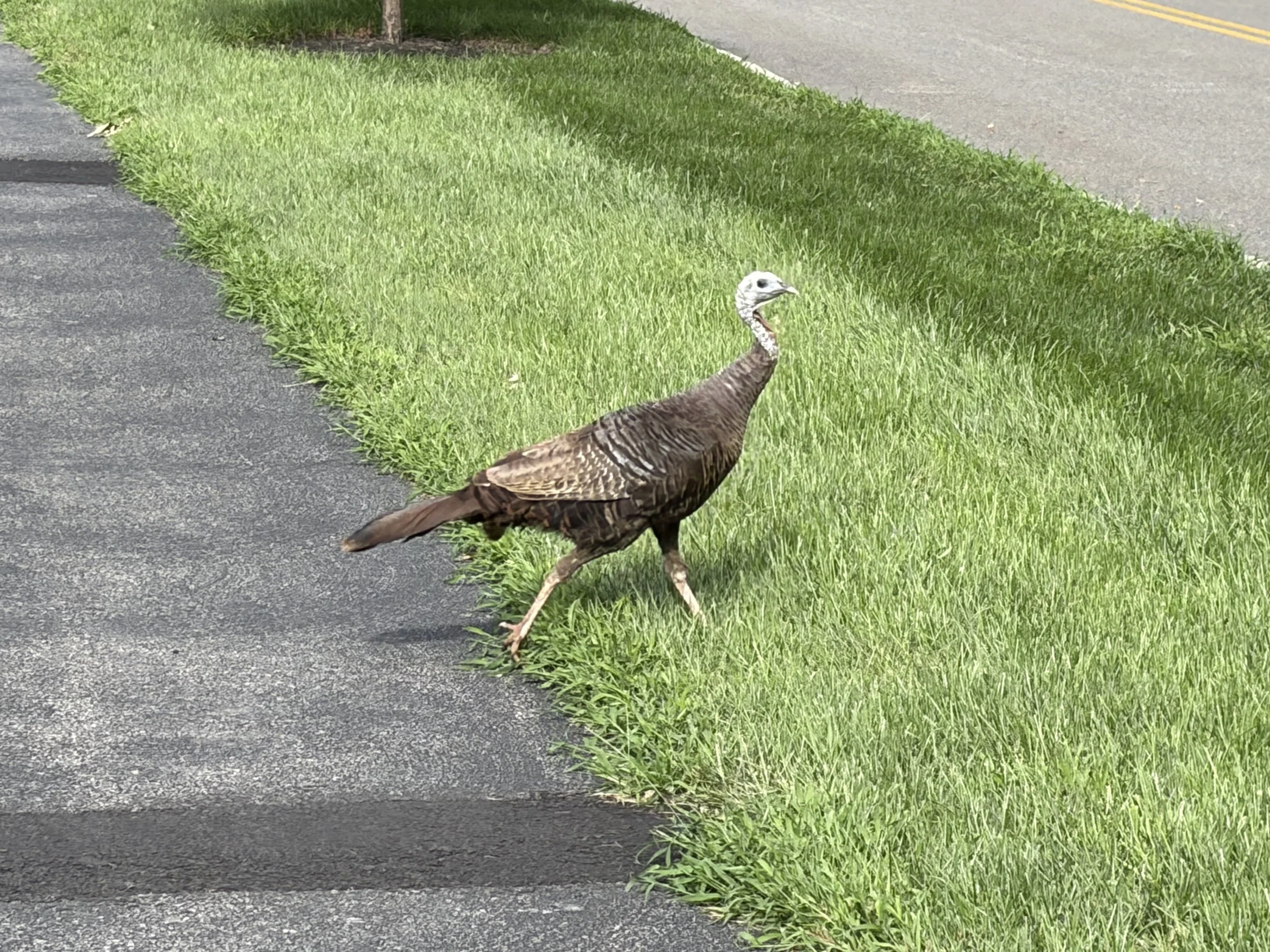
Mom leads the way, by Lisa Rosenbloom
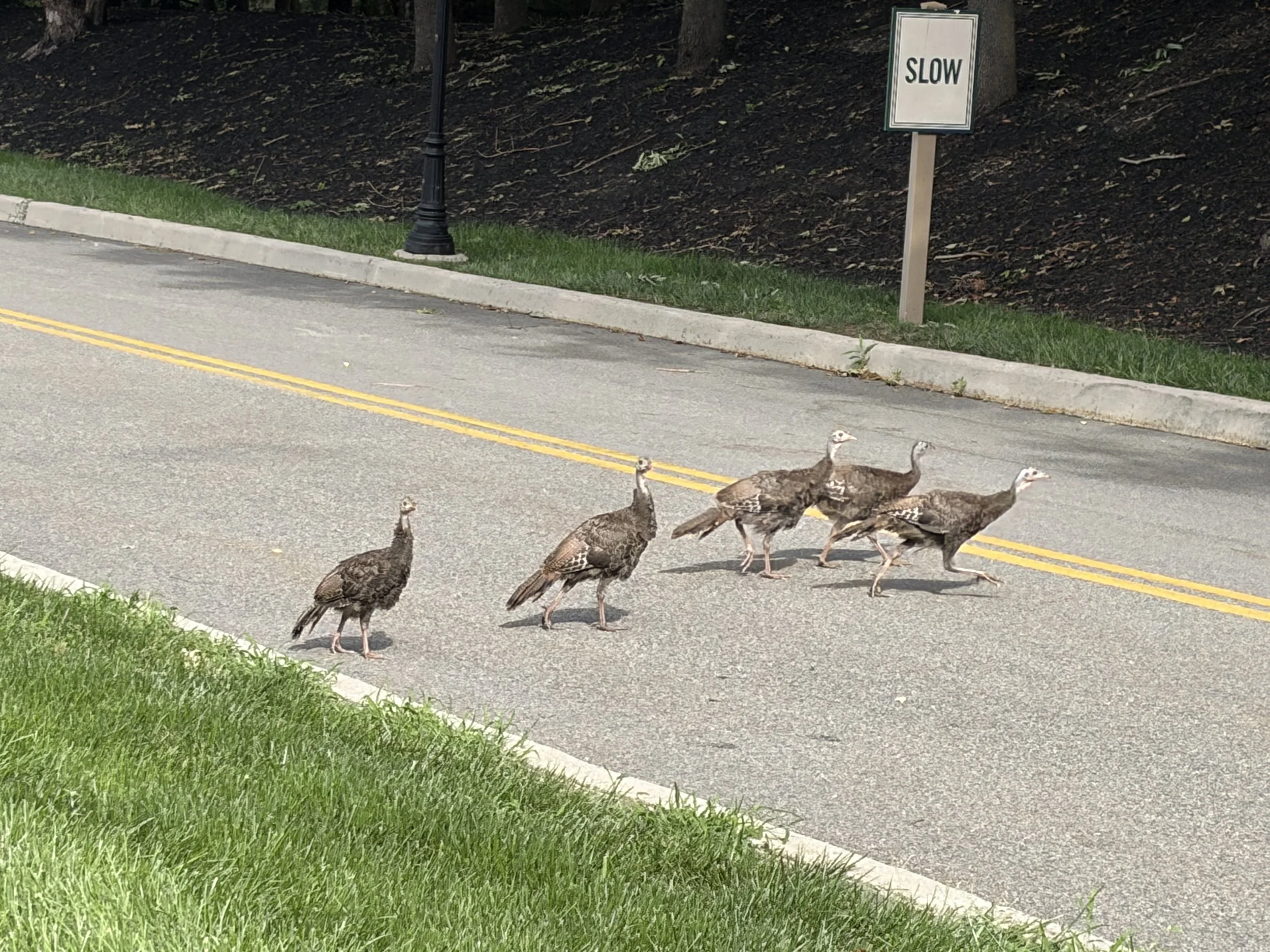
Why did the turkeys cross the road? Well, naturally, upon advice of the chickens. Photo by Lisa Rosenbloom
Beauty at the Close of Day

Photo by Lynn Brady
Out and About
Meet and Greet and Hope for a Treat: a Canine’s Visit to TASH
Recently, Janet Sawyer visited the Tarrytown and Sleepy Hollow (TASH) Farmers Market, and found a whole new world there: a dog’s world.

“Well, hello, what’s your name?”

“What ‘cha got there? How about sharing?”
Photos by Janet Sawyer
The Art of the Peel . . . Yes, There's More!
It all depends on how you slice it. And in this continuing saga, “it” is an orange. First off:
The Emil Bahary Technique
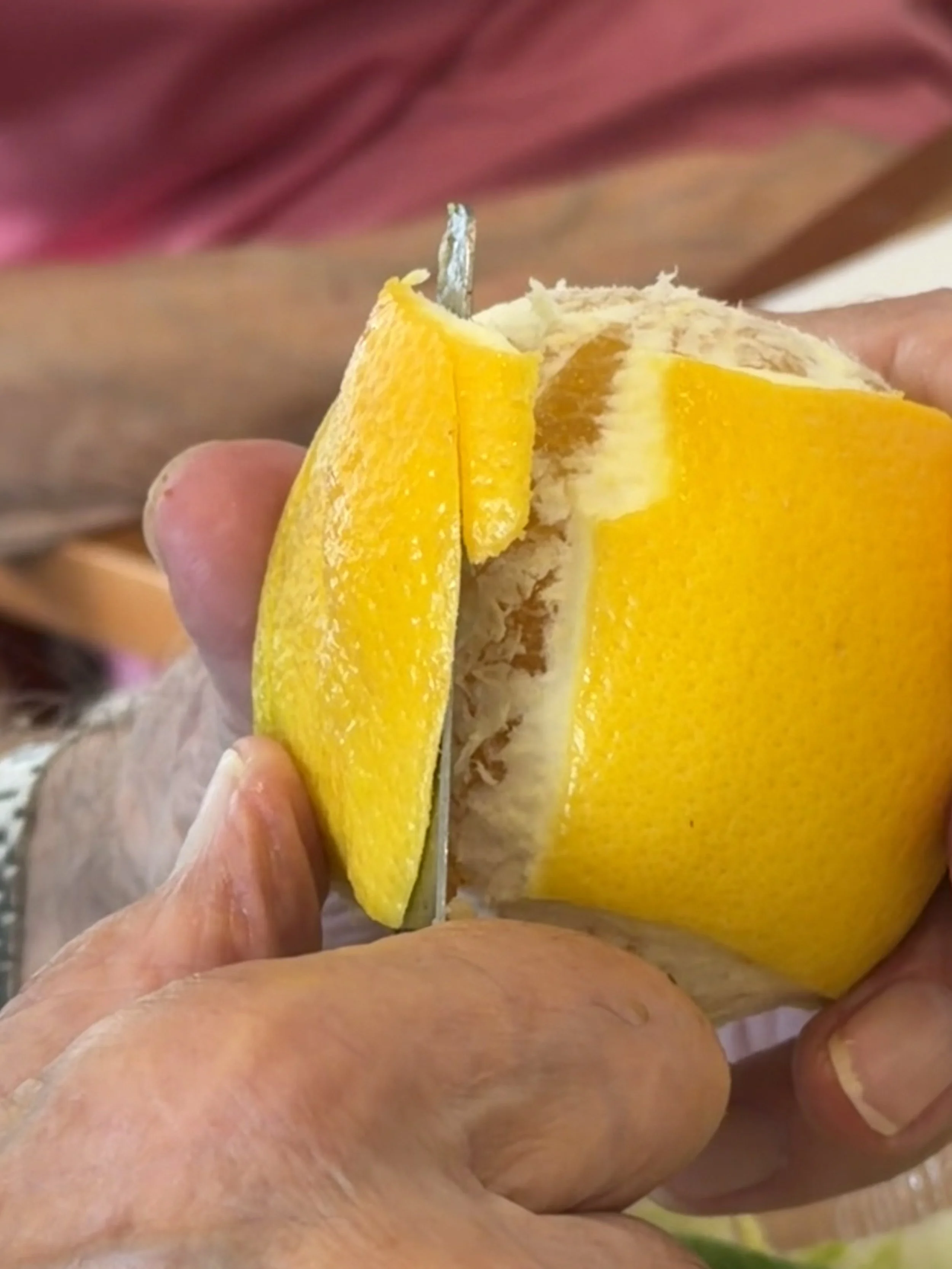
Score the section to be removed, start by gently lifting . . .
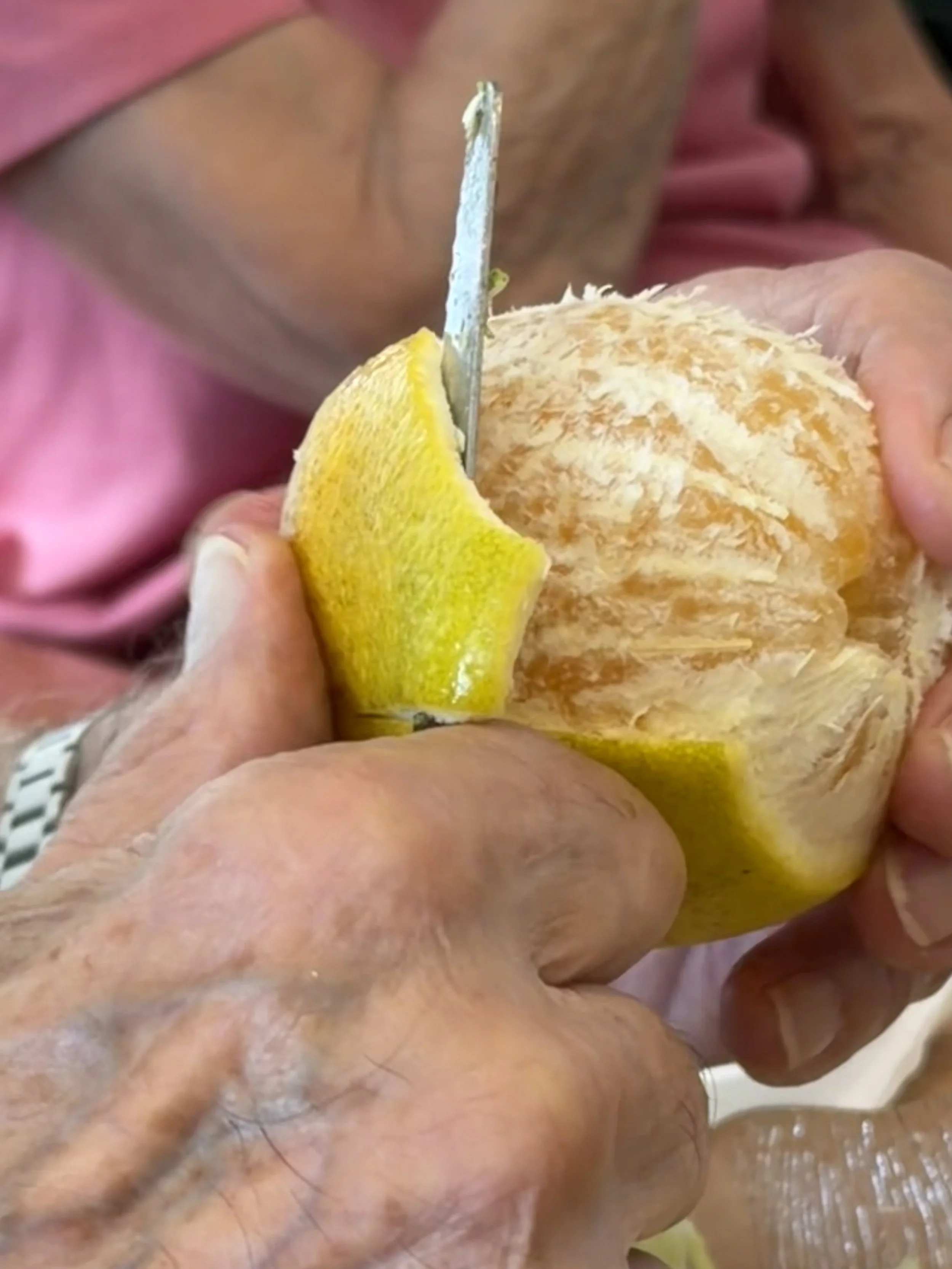
Accomplish the curve and complete that section’s removal. Then work around the orange while it is still whole.
Photos by Ed Lannert
Yet Another Bloomfeld Technique
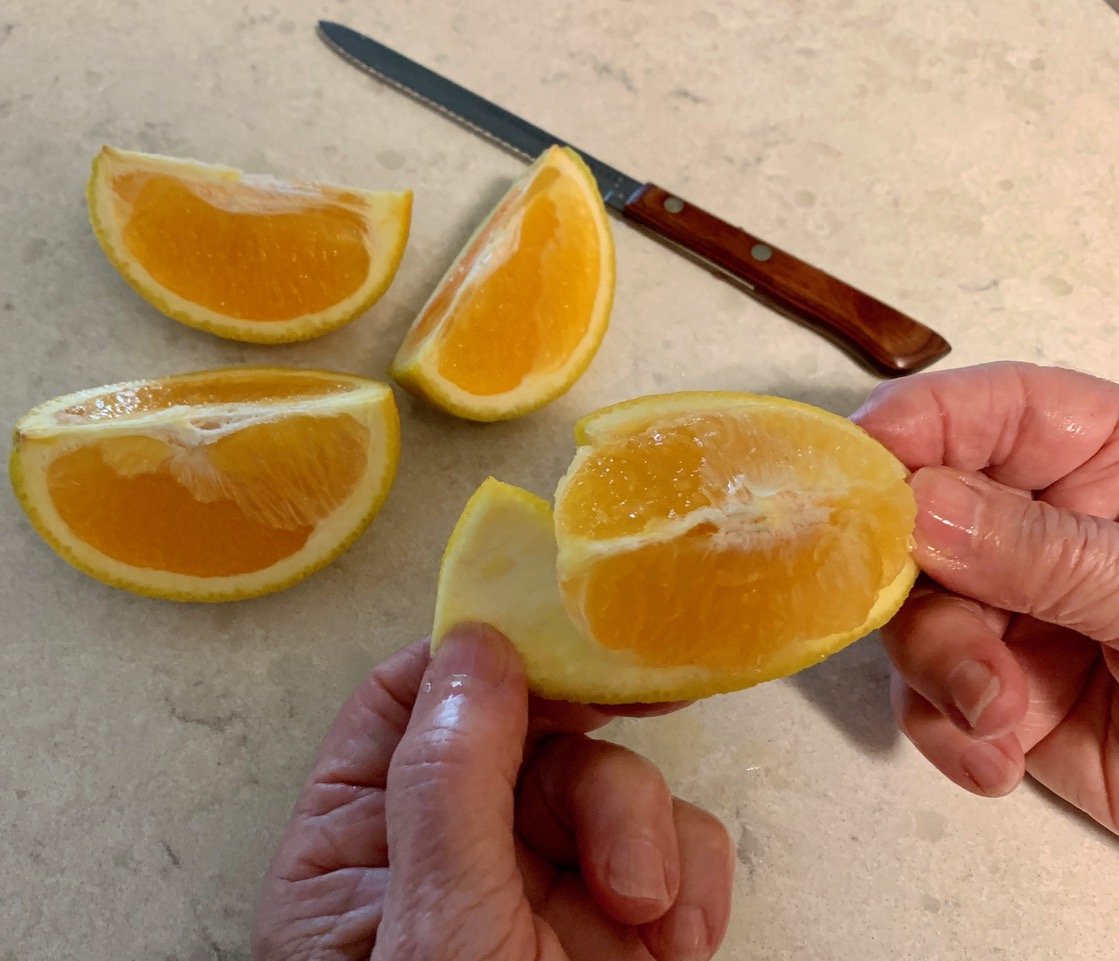
Known as the Martial Art Approach, two karate chops make four quarters which you can peel by folding back the rind and eating directly therefrom. This can be a somewhat messy method and requires a face-wash afterwards. As for the aforementioned karate chop: Yes, you make a quick, forceful, downward blow with the side of your hand to split the orange. (Marianne assures us that the knife is merely there for show. Uh huh.)
Photo by Harry Bloomfeld
Weekly Construction Report
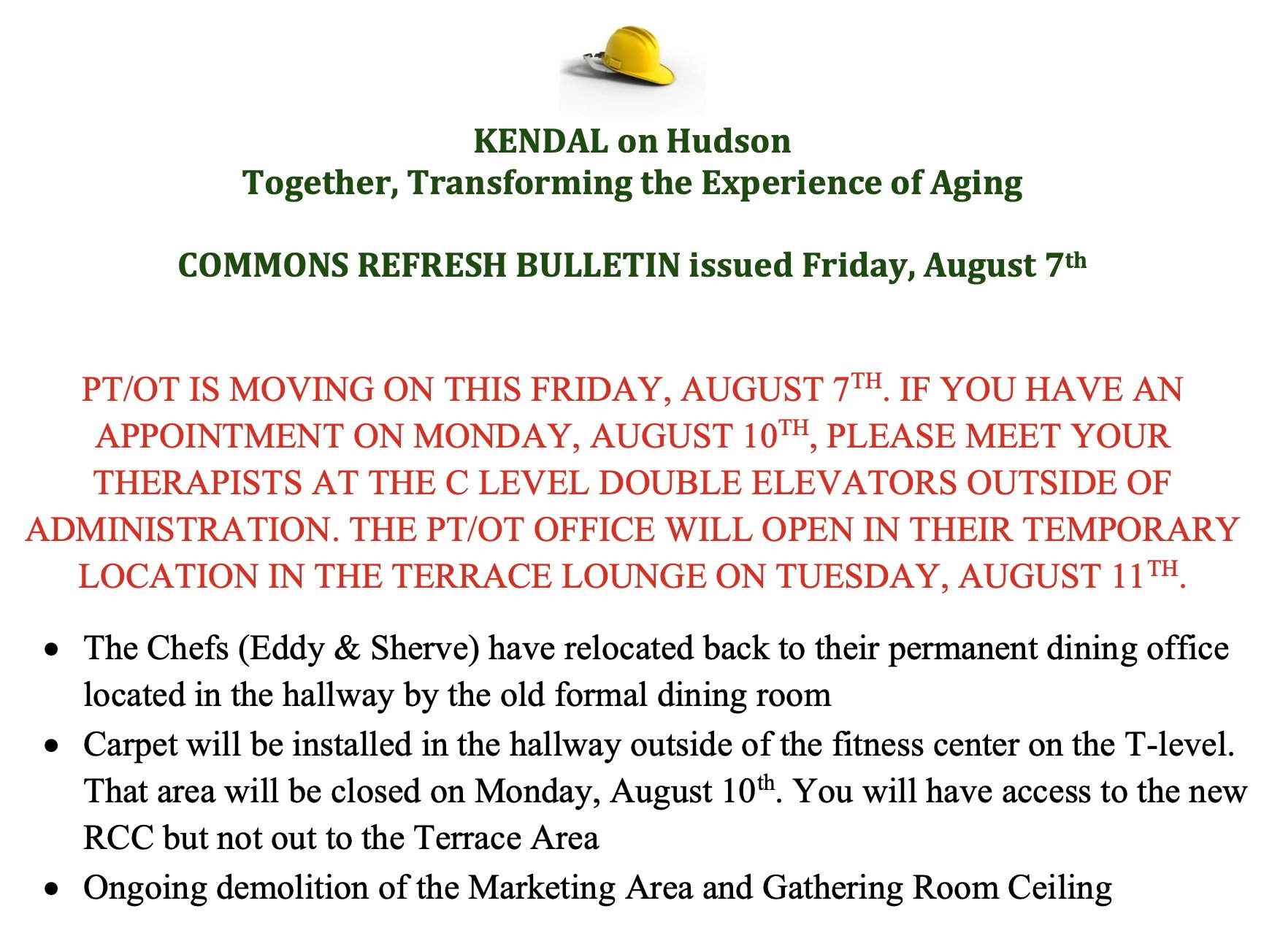



From the Office of Ellen Ottstadt