Pool after Blasting Work
New Entrance to the Terrace
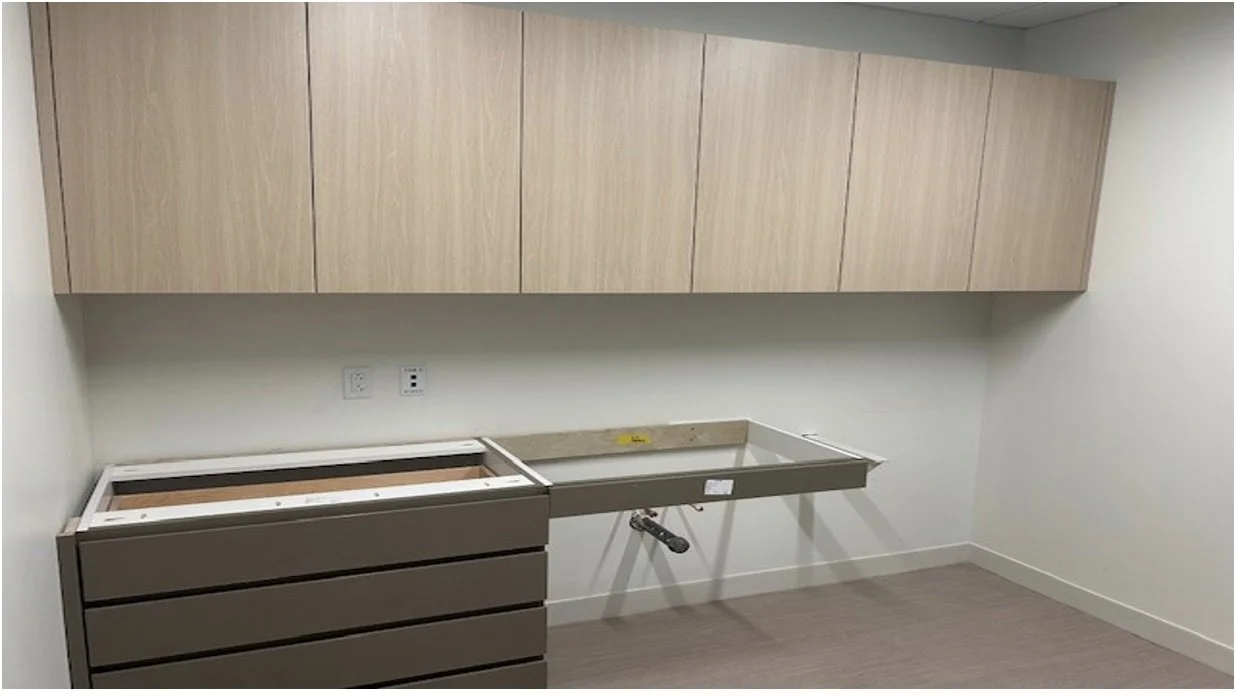
Millwork in the RCC Exam Rooms


Pool after Blasting Work

New Entrance to the Terrace

Millwork in the RCC Exam Rooms
An opera is a song of bigly size. In the last scene of Pagliacci, Canio stabs Nedda who is the one he really loves. Pretty soon Silvio gets stabbed also, and they all live happily ever after.
Music sung by two people at the same time is called a duel.
I know what a sextet is, but I'd rather not say.
Caruso was at first an Italian. Then someone heard his voice and said he would go a long way. And so he came to America.
Most authorities agree that music of antiquity was written long ago.
Probably the most marvelous fugue was the one between the Hatfields and the McCoys.
My favorite composer is opus.
A harp is a nude piano.
My very best liked piece is the Bronze Lullaby.
Contributed by Cathie Campbell
HOT OFF THE PRESS:

Jean Eccleston, Chief Executive Officer of Kendal on Hudson, will be honored alongside three other esteemed community leaders at the annual Pace Celebrates: Westchester Changemakers Award Ceremony. The inspiring event, hosted by Pace University, will take place on April 29, 2026, at Kanopi at The Opus Hotel in White Plains, New York. This prestigious recognition celebrates extraordinary individuals who are deeply committed to shaping Westchester County into a vibrant, forward-looking community that uplifts residents, local organizations, and students alike.
The Westchester Changemakers Awards highlight the profound impact of leaders who champion the region as a true beacon of opportunity and inclusion. Jean embodies this nurturing spirit through her dedicated leadership at Kendal on Hudson, a Life Plan Community in Sleep Hollow, founded on Quaker principles. She shares this year's distinct honor with Kerri Elsabrout of White Plains Hospital, Stephanie Lynn of the Sing Sing Prison Museum, and Dorry Swope representing The David Swope Fund. Together, they represent a shared commitment to expanding meaningful support and empowering others to thrive.
“I am deeply honored to receive this award,” Jean Eccleston shared. “I am continually inspired by my colleagues and by the residents of Kendal on Hudson, whose generosity and spirit strengthen our community every day. It is a privilege to support our local community and to nurture our valued partnership with our neighbor, Pace University. I hope this recognition brings attention to important community initiatives and encourages others to give, connect, and support one another.”
The upcoming cocktail reception and award ceremony directly support Pace University students by funding Immediate Impact Scholarships. By gathering to celebrate these transformative leaders, the community helps foster a new generation of diverse, compassionate thinkers who will continue to elevate the region and transform the shared experience of lifelong learning.
Throughout her tenure, Jean has consistently demonstrated empathetic leadership, a deep understanding of the people she serves and dedicated support of the beautiful local community where Kendal on Hudson is located. Her heartfelt recognition by Pace University reflects her support for the ongoing well-being of the lower Hudson Valley.

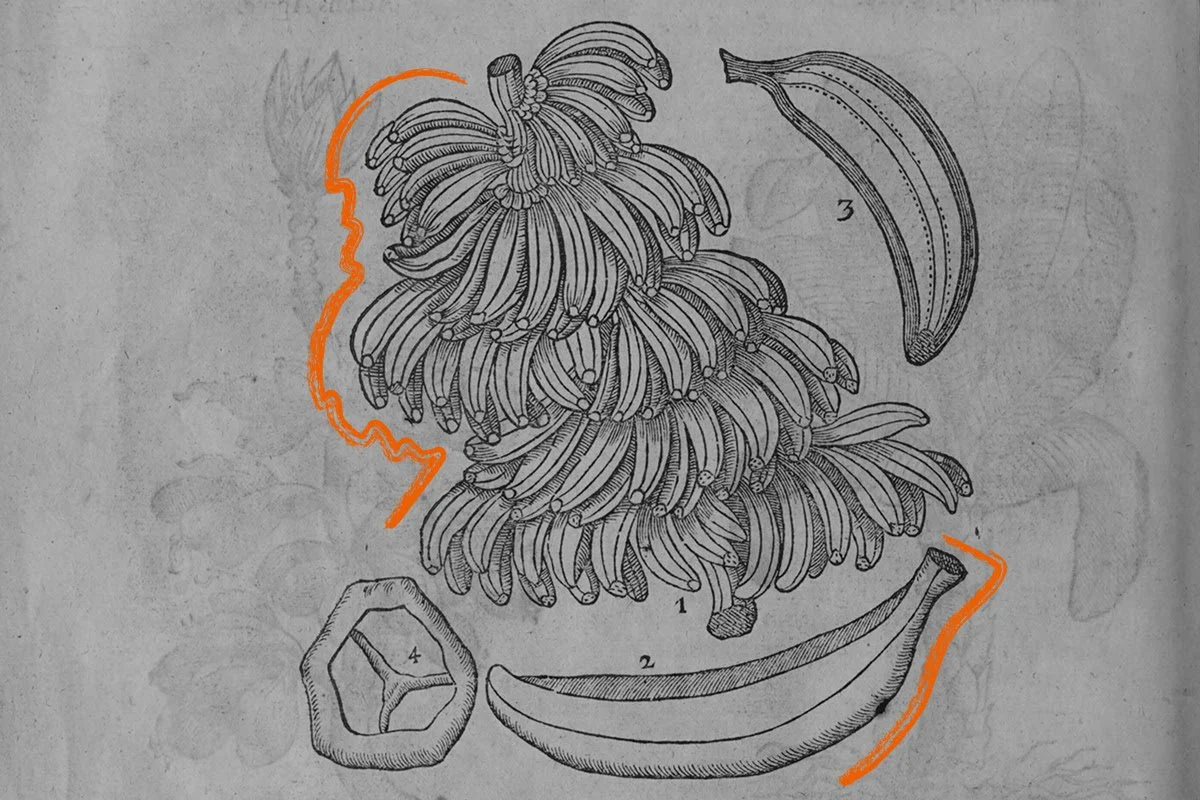
On this spring day in 1633, people gathered outside a Holborn shop window in central London to stare at something few of them had ever seen before: a cluster of strange, curved fruits, green but yellowing gently in the English light. These were bananas—and for most Londoners, they were utterly bewildering (and surprisingly phallic).
The window display belonged to Thomas Johnson, a well-regarded botanist and apothecary who apparently had a flair for spectacle. On April 10 he exhibited the fruit in his shop, effectively staging Britain’s banana debut. Crowds gathered, not to buy—few could have afforded the fruits or even known how to eat them—but to gawk. (Indeed, there are no records indicating whether Johnson sold any of the novel fruits.)
In an age when colonization and global trade were just beginning to reshape English diets, the banana was nothing short of a true marvel.
These early bananas probably arrived somewhat battered after a long Atlantic journey from Bermuda. They were nothing like the sweet, familiar Cavendish variety many of us eat today (in fact, the Cavendish wasn’t developed until the 1800s). Johnson’s bananas were starchy plantains likely meant to be cooked rather than eaten fresh. It seems the man himself wasn’t particularly fond of them. He edited John Gerard’s popular botanical encyclopedia, The Herball, and is thought to have expanded the banana’s description:
“. . . the fruit hereof yieldeth but little nourishment…and hurteth the stomach if too much of it be eaten.”
It would take another two centuries—and the advent of steamships and refrigeration—before bananas became an everyday pleasure in Britain. But on that day in 1633, in a modest Holborn shop, London caught its first glimpse of the wider world in an absurd bunch of unfamiliar fruits.
Source: Britanica Today in History website



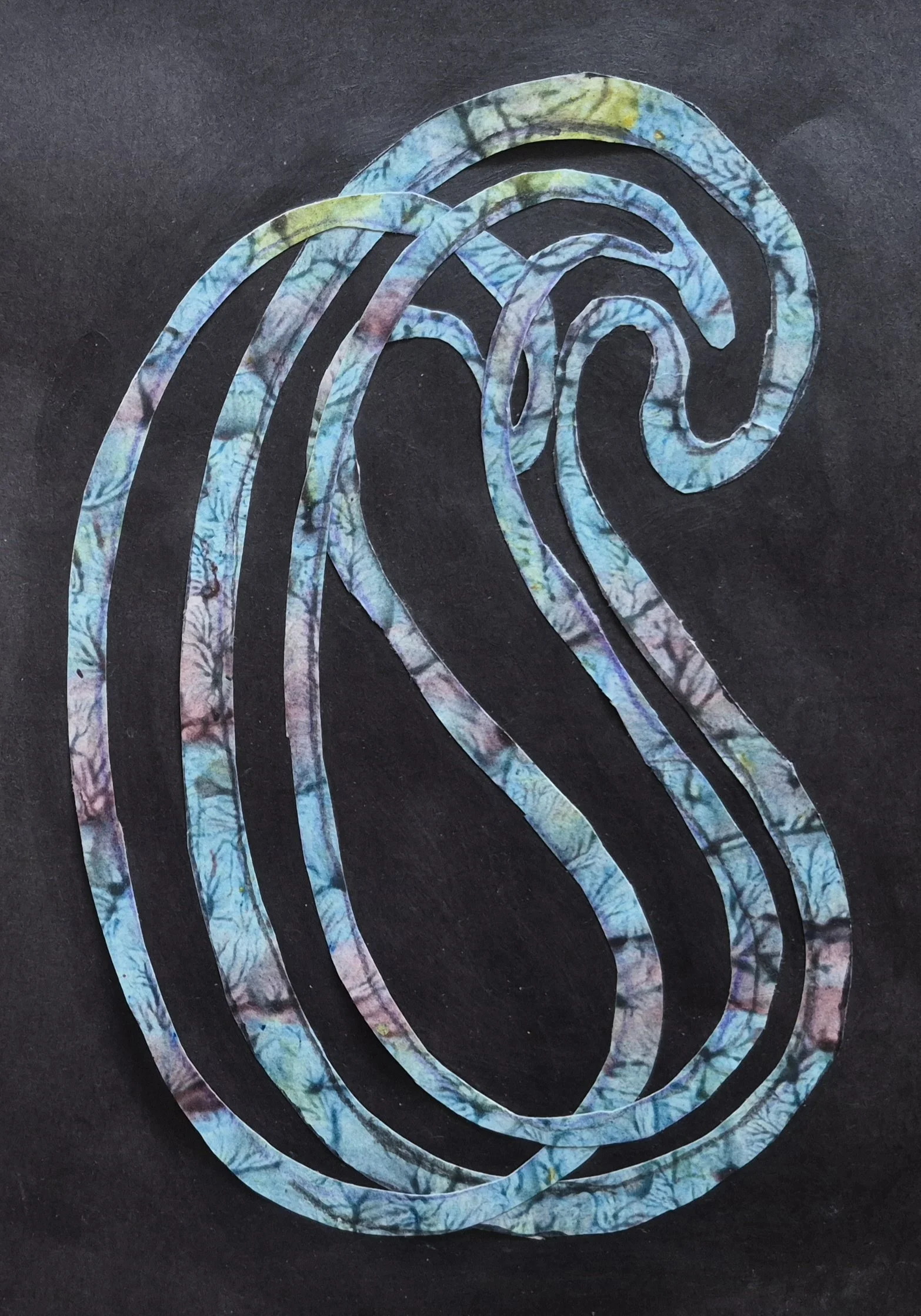
Art and photo by Sheila Benedis

Suddenly pigeon couture is changing the look of New York City
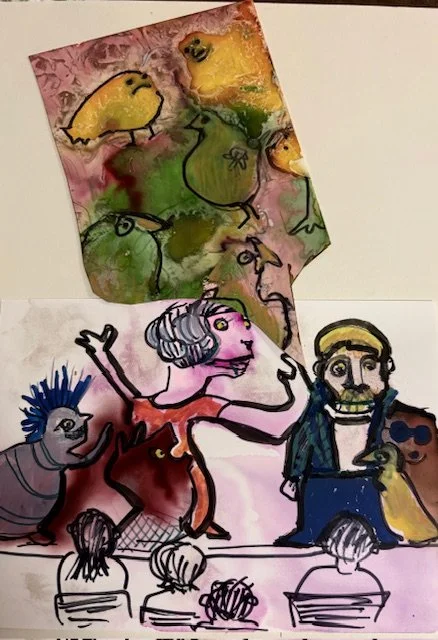
When the Strelson-Banks family performed, it was hard to tell who was the dummy and who was the ventriloquist
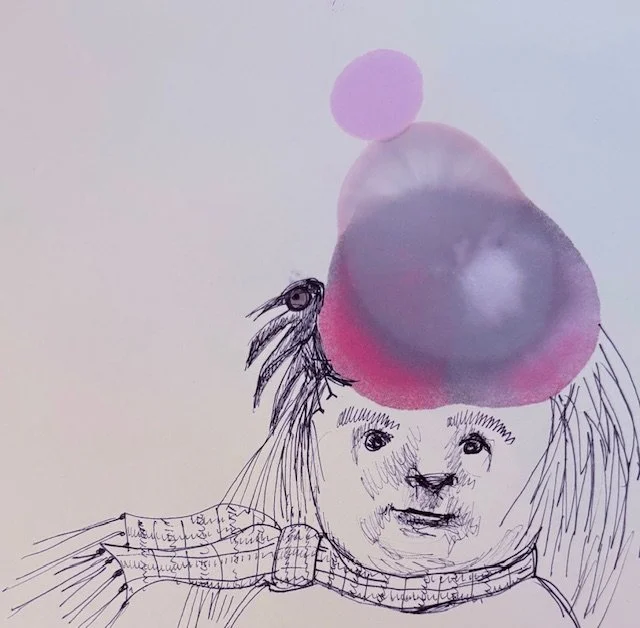
Alissa kept forgetting where she put her bubble gum
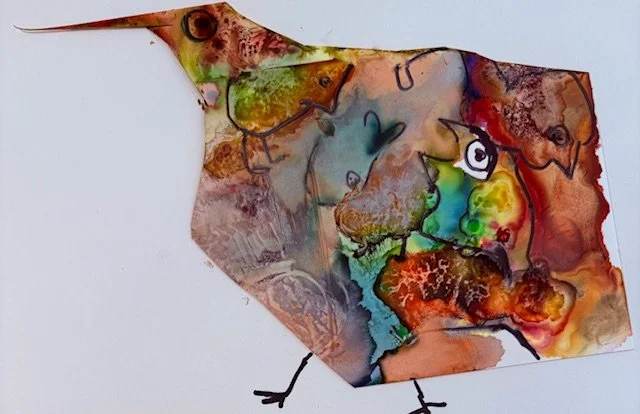
Brenda didn’t even know she was expecting

Bird to boy: “Noah said this flood is couples only. Try next week”
Art and photos by Jane Hart
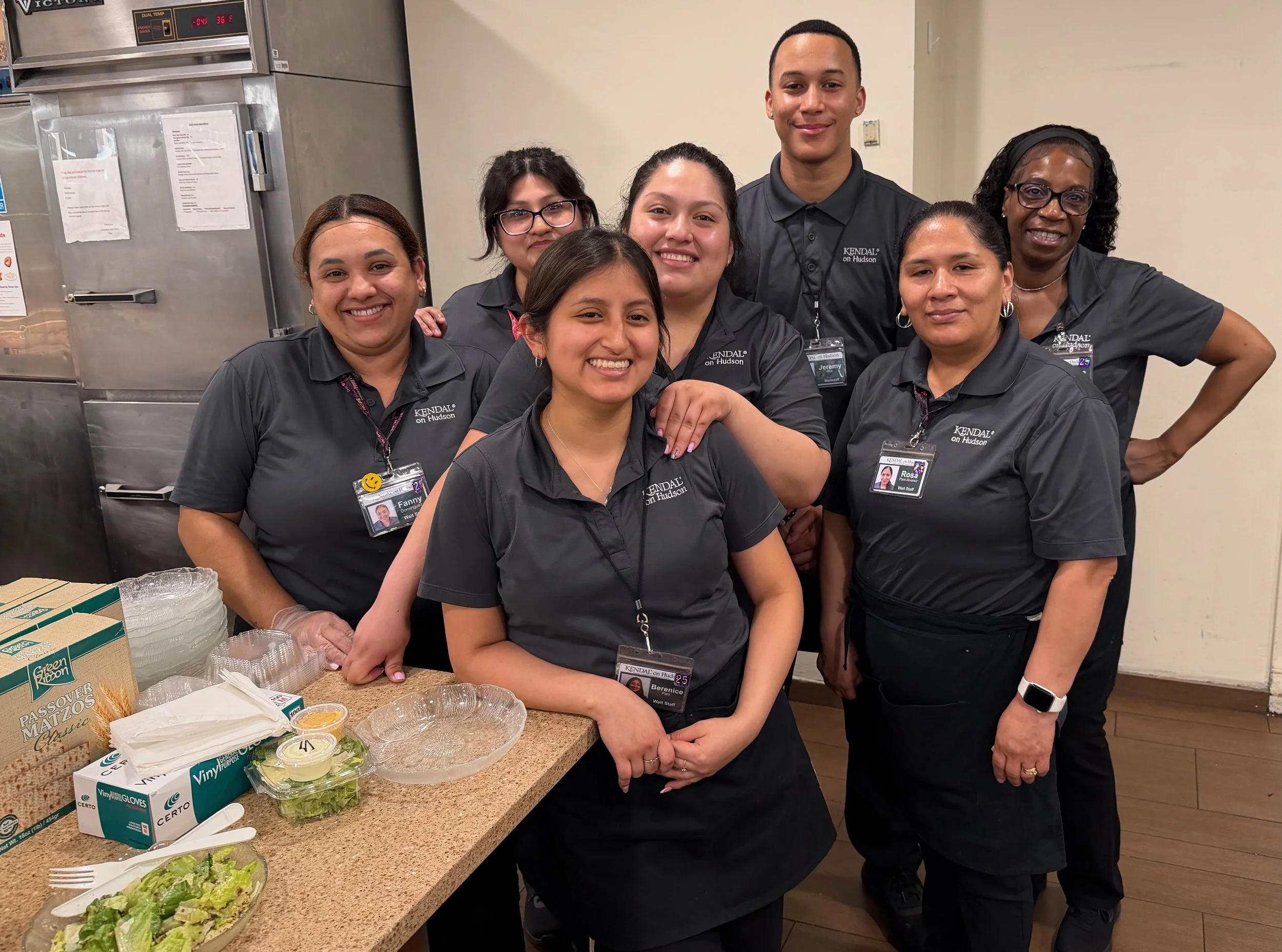
Photo by Ed Lannert
Six teams battled it out for the win at Trivia Night. Ellen served as Emcee for the evening. Mya played the Vanna White role exquisitely. And Briana kept the score for each of three rounds and handed out the prizes to the winning team.
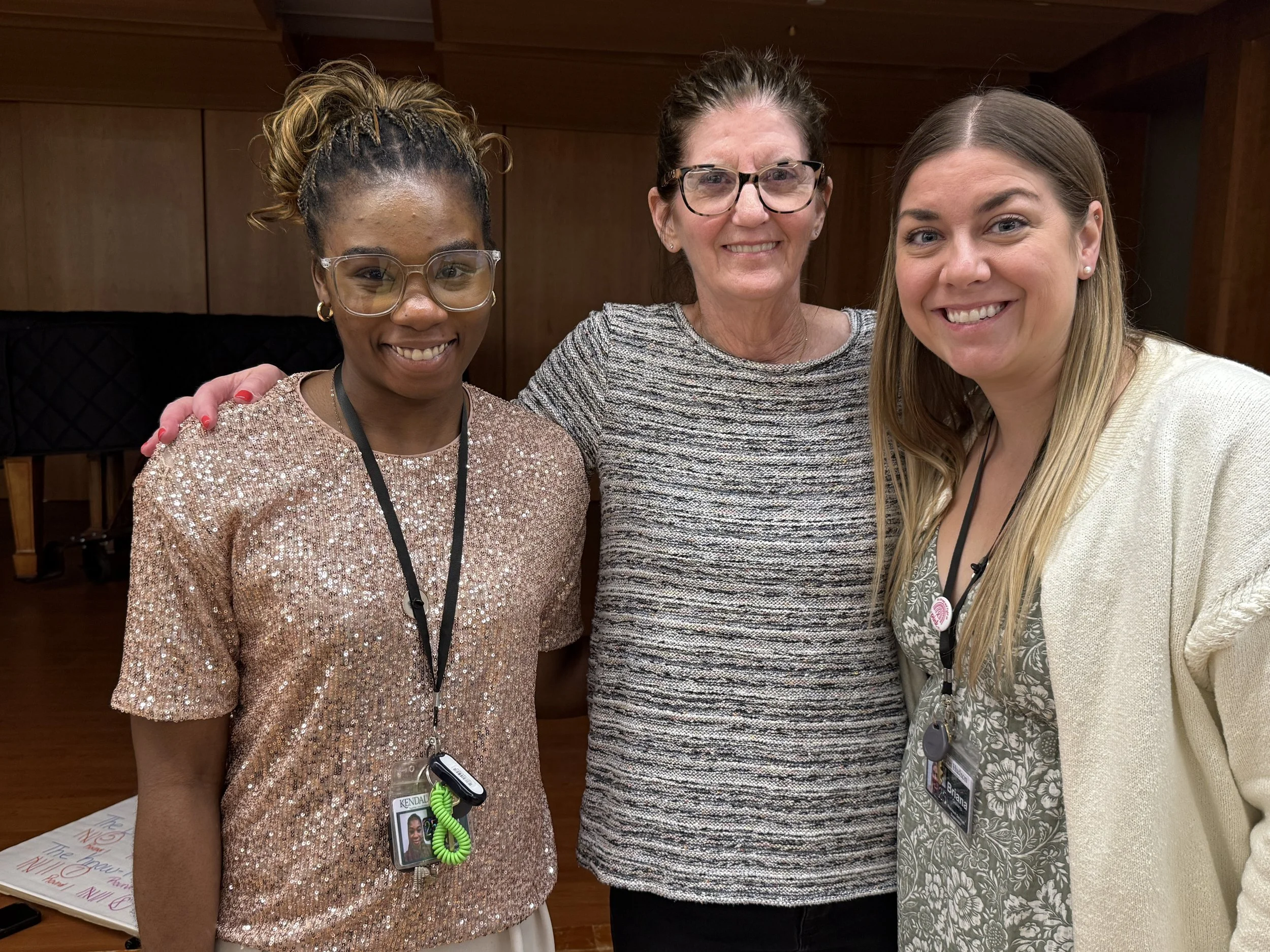
The Big Three, photo by Amanda Slattery
Who was the winning team? Twas The Triviatas—with an overall score of 17! Each received a $15 gift card to local merchants.
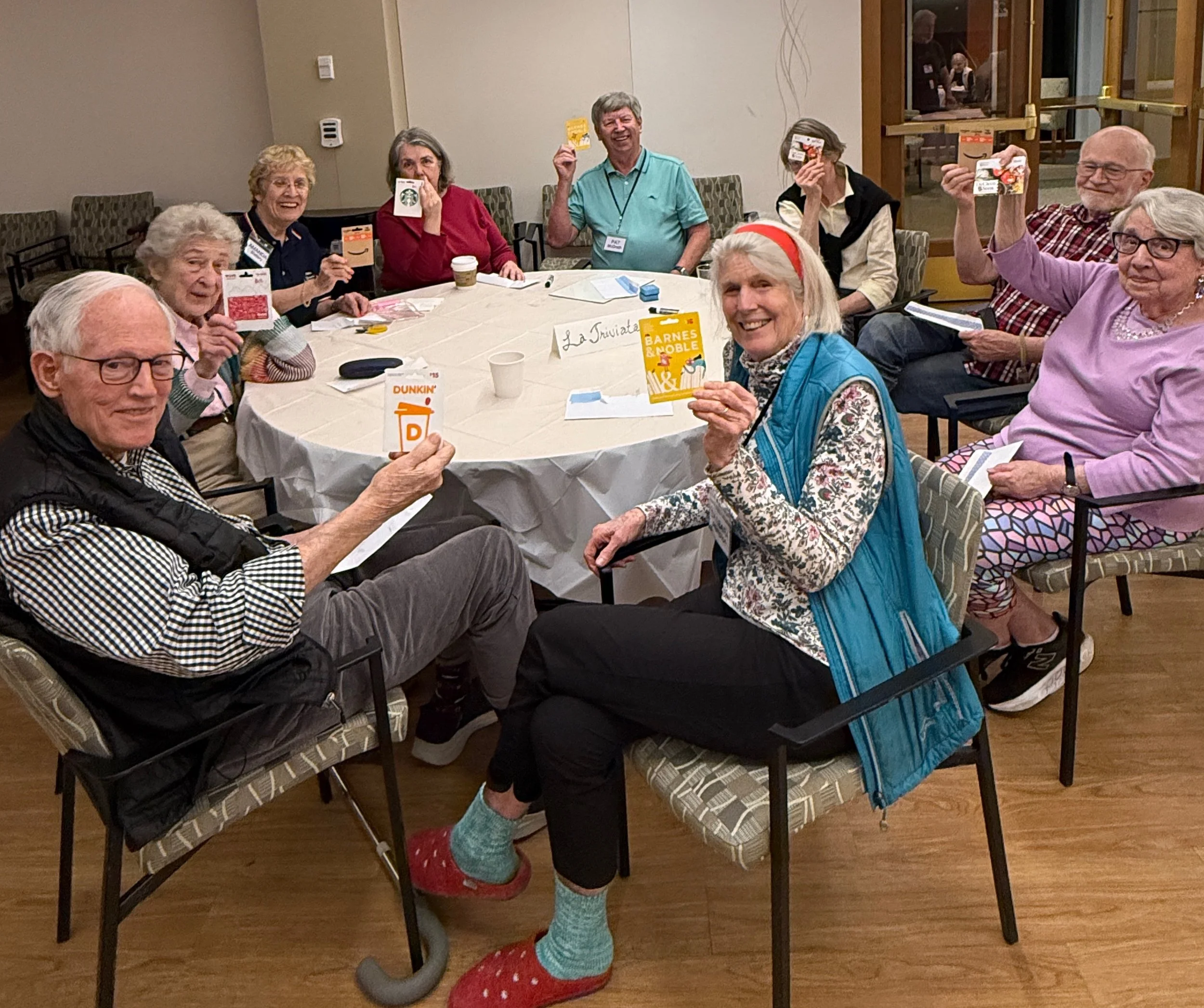
Following the fiercely fought win: the victors.
Unless otherwise noted, photos by Harry Bloomfeld

Photo by Carolyn Reiss

Spring on the Hillside, by Sue Bastian

Mulch Mountain, by Edward Kasinec

And along the walkway, Photo by Joe Bruno

Up close and personal, by Edward Kasinec

Reflection of spring’s delights, by Carolyn Reiss
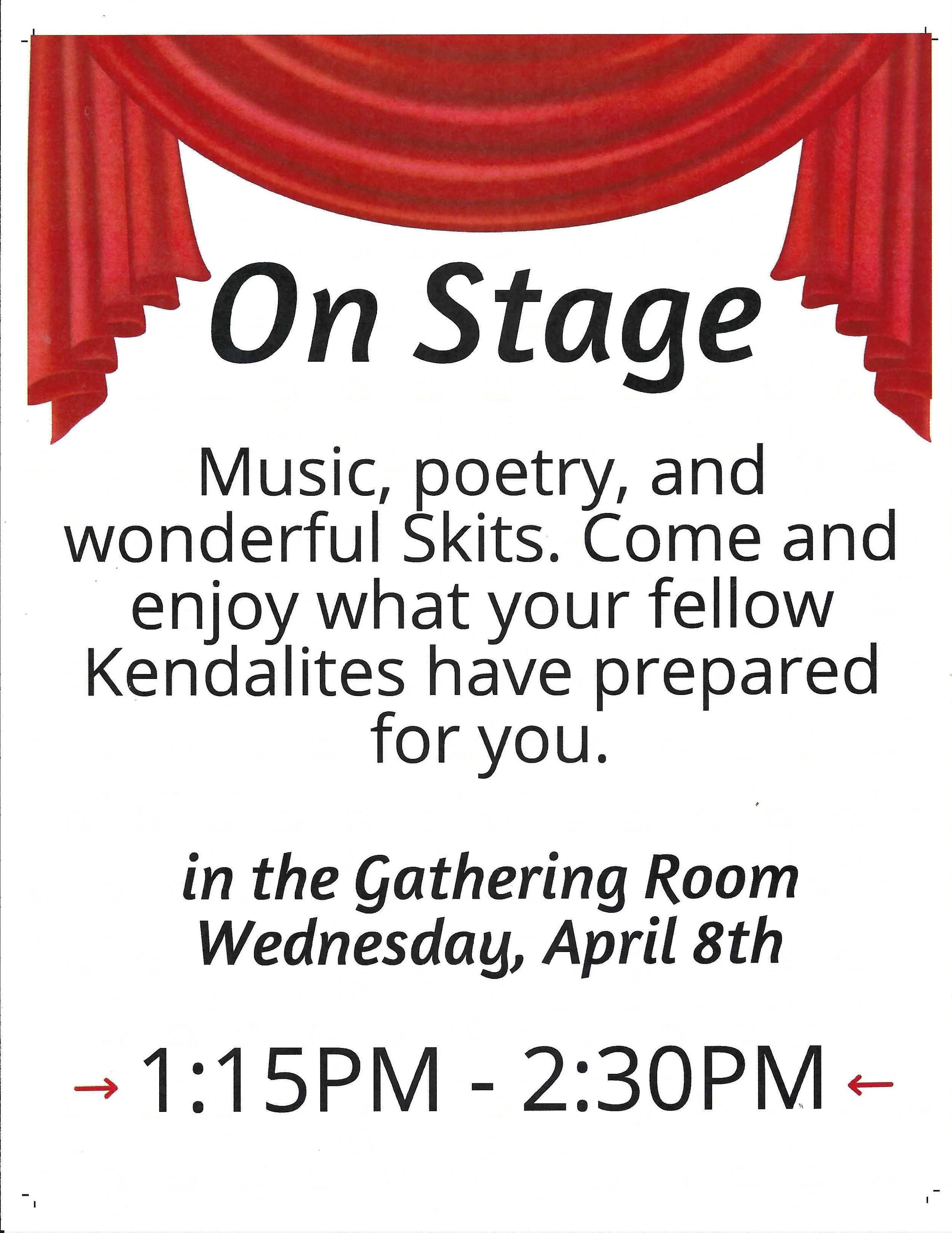
As part of the environmental action committee’s Earth Day celebration, they are pleased to have a major Climate Action attorney as a speaker on April 14 in Gathering room from 2:00-4:00 pm.
Tony Oposa, the lawyer who established the rights of children and future generations to inherit a healthy environment, will speak about his fight to protect the Philippines’ natural patrimony.

This globally celebrated award winner, activist, teacher, and author won landmark cases to protect the country’s remaining virgin tropical forests and to clean up Manila Bay. As an enforcement operative, he organized and led some of the most daring enforcement operations against environmental criminals. He leads a movement to safeguard the high seas as marine reservations for future generations. Oposa calls upon each of us to be a good story for caring for Life.
Thanks to Nick Robinson, Oposa takes timeout from his visit to Pace University to share an inspirational Earth Month message with us here at Kendal on Hudson.
For more information on Tony Oposa, click here.


Join us for a dynamic, interdisciplinary symposium exploring the impact and intersections of weight stigma and weight-based discrimination across healthcare, policy, education, and beyond. Leave equipped with research-grounded strategies, collaborative connections, and actionable tools to advance weight justice and drive meaningful systems change.
Sessions throughout the day with expert speakers from Cornell, across the country and the globe.

Online or in-person @ The Statler Hotel Dates/Times: Friday, April 24, 2026, 8:30 am - 5:45 pm To Contact for Information (click name for email): Deborah Surine Location: The Statler Hotel, 130 Statler Drive, Ithaca, NY Type of Event: Conference/Symposium Departments: Nutritional Sciences, Cornell Human Ecology Sponsor: Barbara Bruno ‘68 Co-Sponsors: Cornell Human Ecology Alumni Affairs & Development
A Virtuoso is a musician with real high morals.
Agnus Dei was a woman composer famous for her church music.
Refrain means don’t do it. A refrain in music is the part you better not try to sing-
J.S. Bach died from 1750 to the present.
Handel was half German, half Italian, and half English. He was rather large.
Beethoven wrote music even though he was deaf. He was so deaf he wrote loud music. He took long walks in the forest even when everyone was calling him. I guess he could not hear so good. Beethoven expired in 1827 and later died from this.
Henry Purcell is a well-known composer few people have ever heard of.
Aaron Copland is one of our most famous contemporary composers. It is unusal to be contemporary. Most composers do not live until they are dead.
To be continued . . .
Contributed by Cathie Campbell
The Leaning Tower of Pisa, originally the bell tower to a medieval cathedral complex, is one of Italy’s most recognizable landmarks. But fascist dictator Benito Mussolini, who came to power in 1922, thought it made the country look bad, so he tried to straighten the tower in 1934. The results were disastrous—not only did his plan fail, but it destabilized the structure and made the tower bend even lower.
Construction on the Tower of Pisa started in 1173, and after the first story was completed, the builders noticed that the foundation had settled unevenly. After a century-long pause, construction resumed, and engineers tried to compensate by making the walls slightly taller on the leaning side. The extra weight on that side made it sink even further. Adding the tower’s seven massive bells didn’t help, either.
By 1817, the tower had tilted a few degrees. Then in 1838, an architect attempted to excavate the base of the tower and inadvertently added as much as half a degree to the lean. So the tilt was quite pronounced and only getting worse by the time Mussolini’s engineers got to it. They drilled 361 holes in the ground around the foundation and injected 80 tons of grout into them, attempting to push the structure upright. Instead, the added weight further destabilized the soft soil, causing the tower to move another half an inch in the wrong direction. Mussolini made no further attempts to straighten the landmark, and he was deposed in 1943.
Source: historyfacts.com, Sara Anne Lloyd

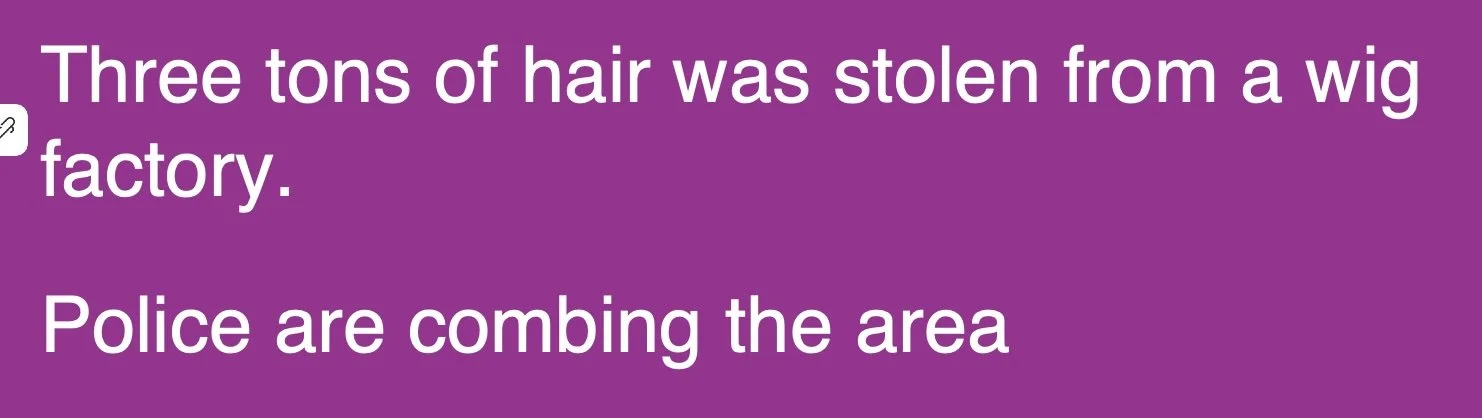
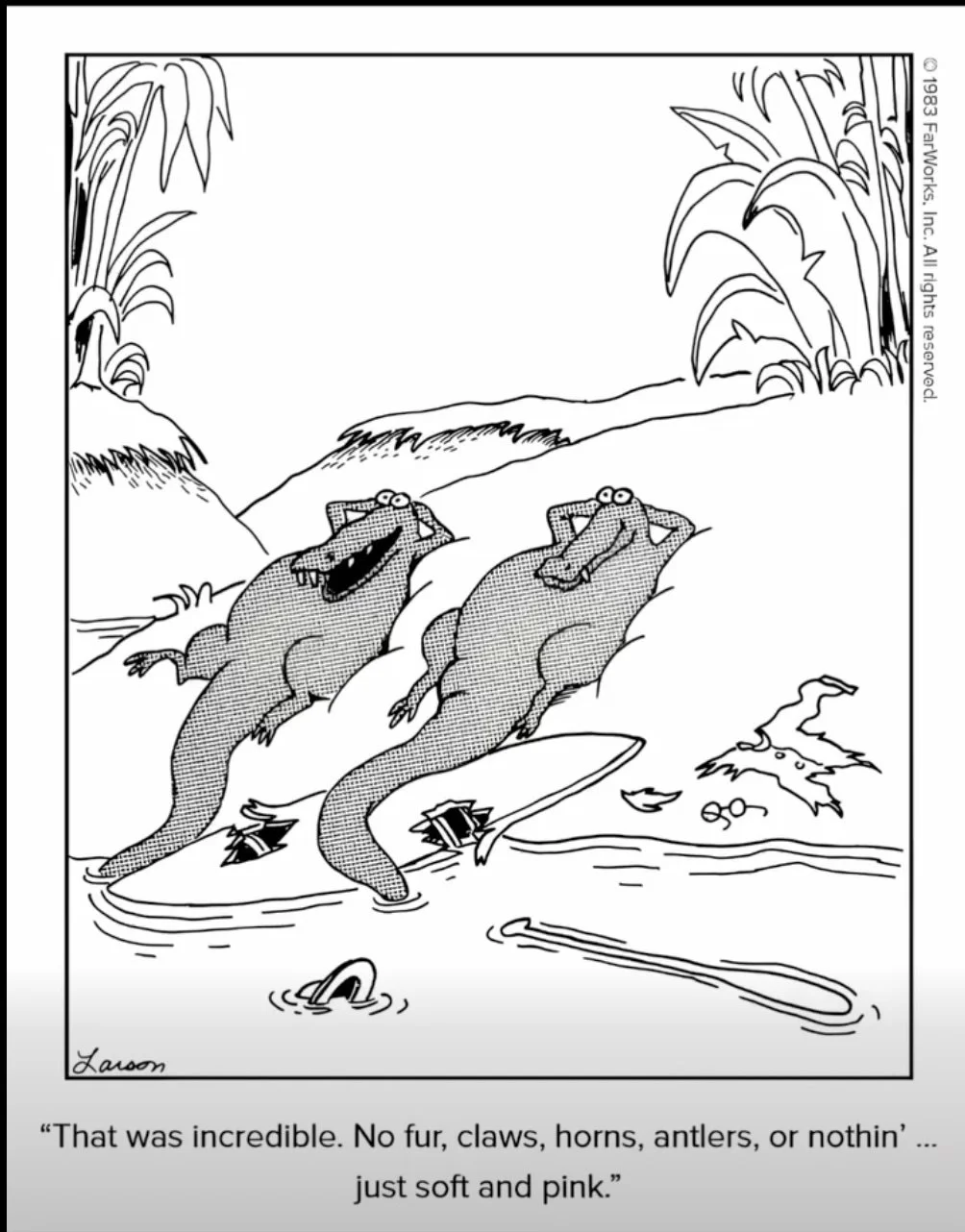
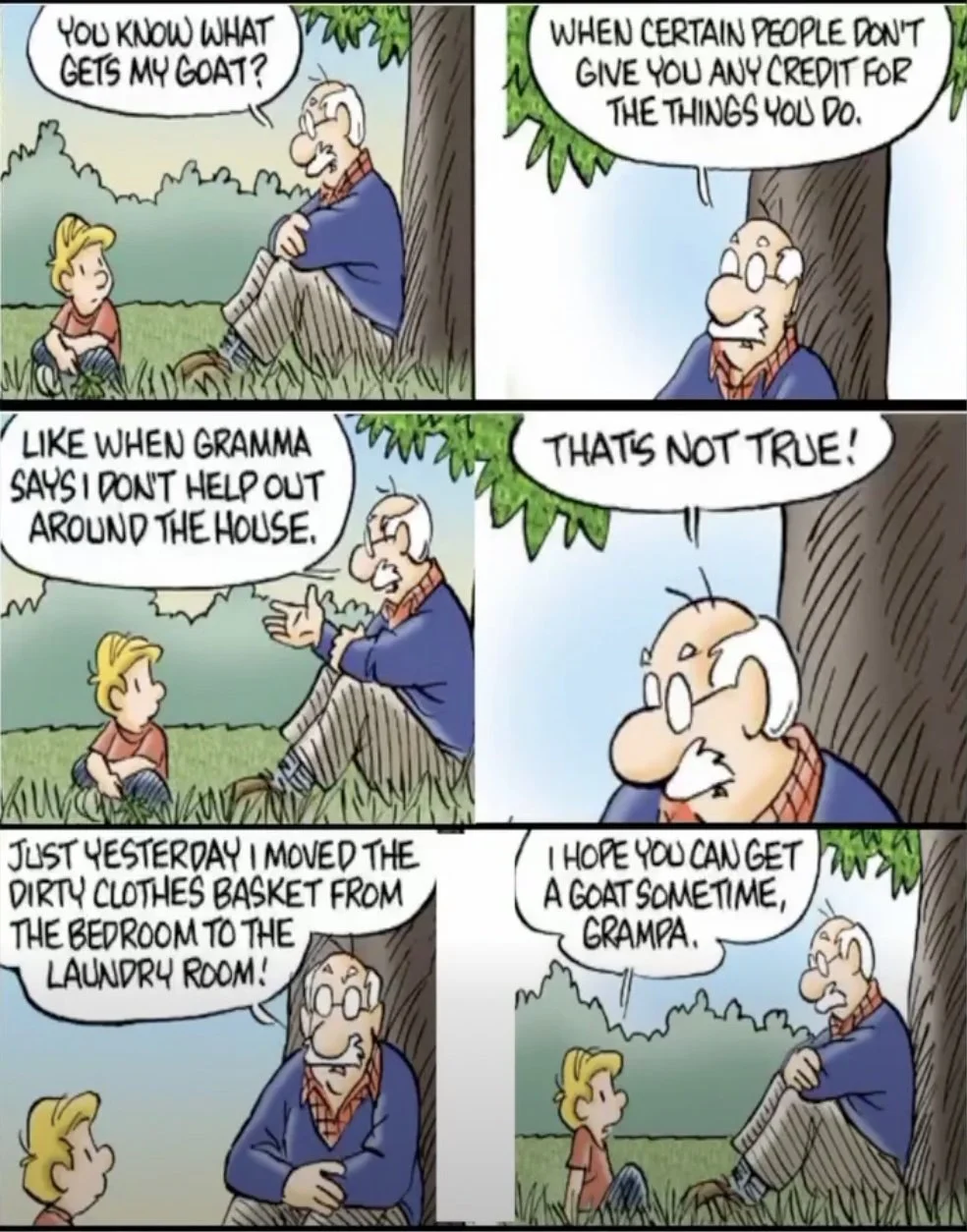

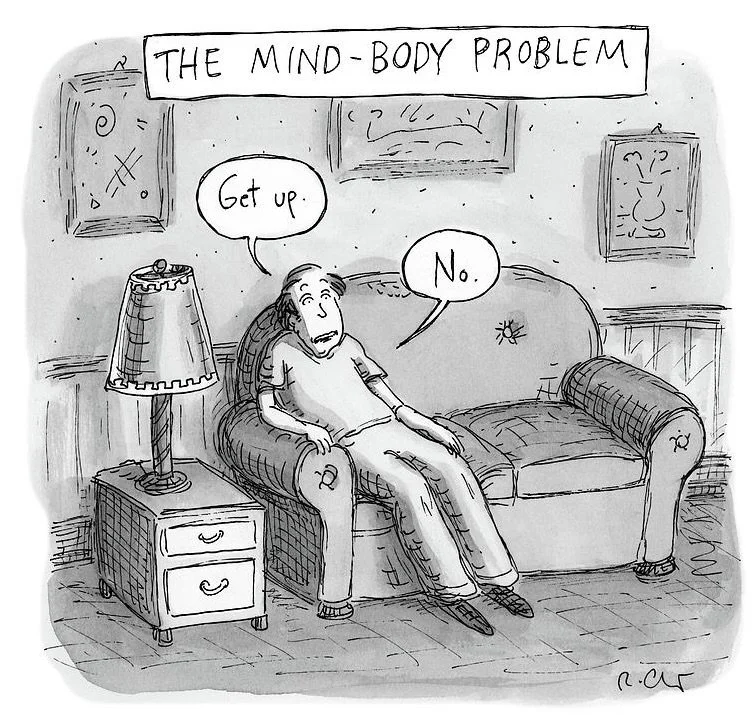
Contributed by Donald Butt

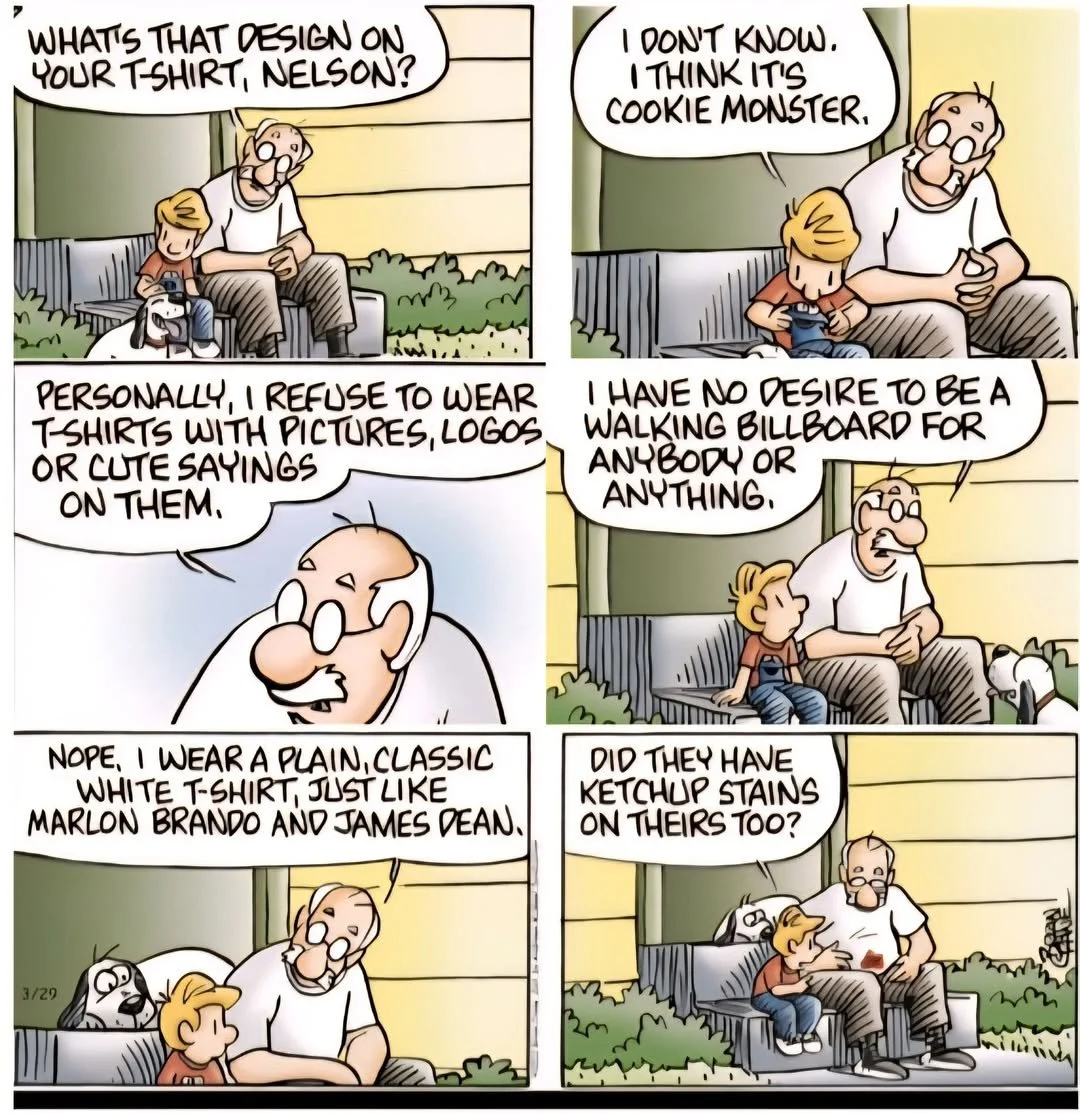
Contributed by Simone
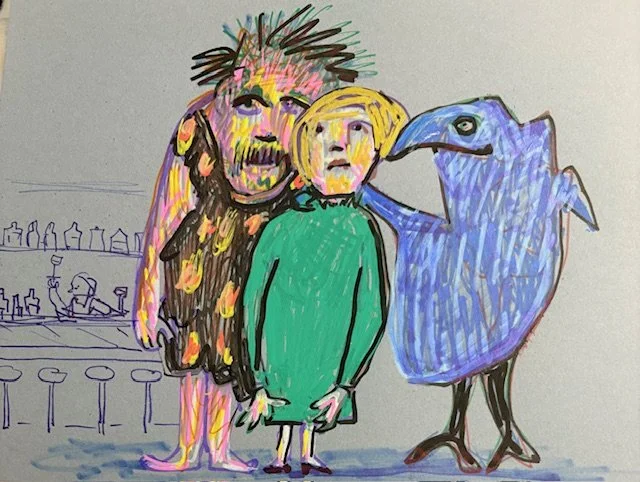
A caveman, a blonde, and a blue heron walked into a bar . . .
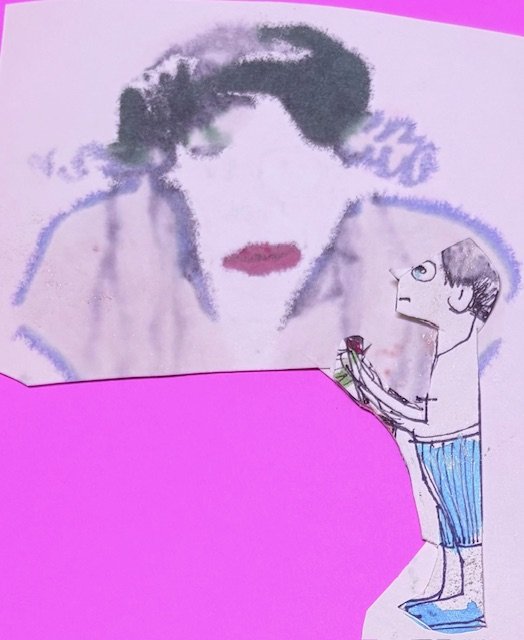
Yolanda was Rickett’s first crush in a movie star
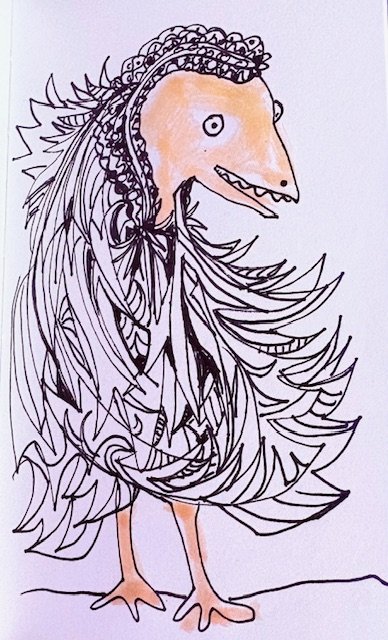
Maxine wore outfits that cried out for people to color her in

As different as they were, the Fogle twins usually saw eye-to-eye
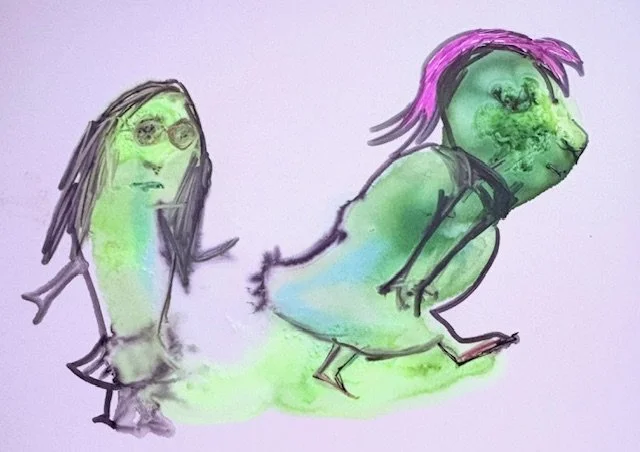
Minnie didn’t understand her granny’s new do
Art and photos by Jane Art
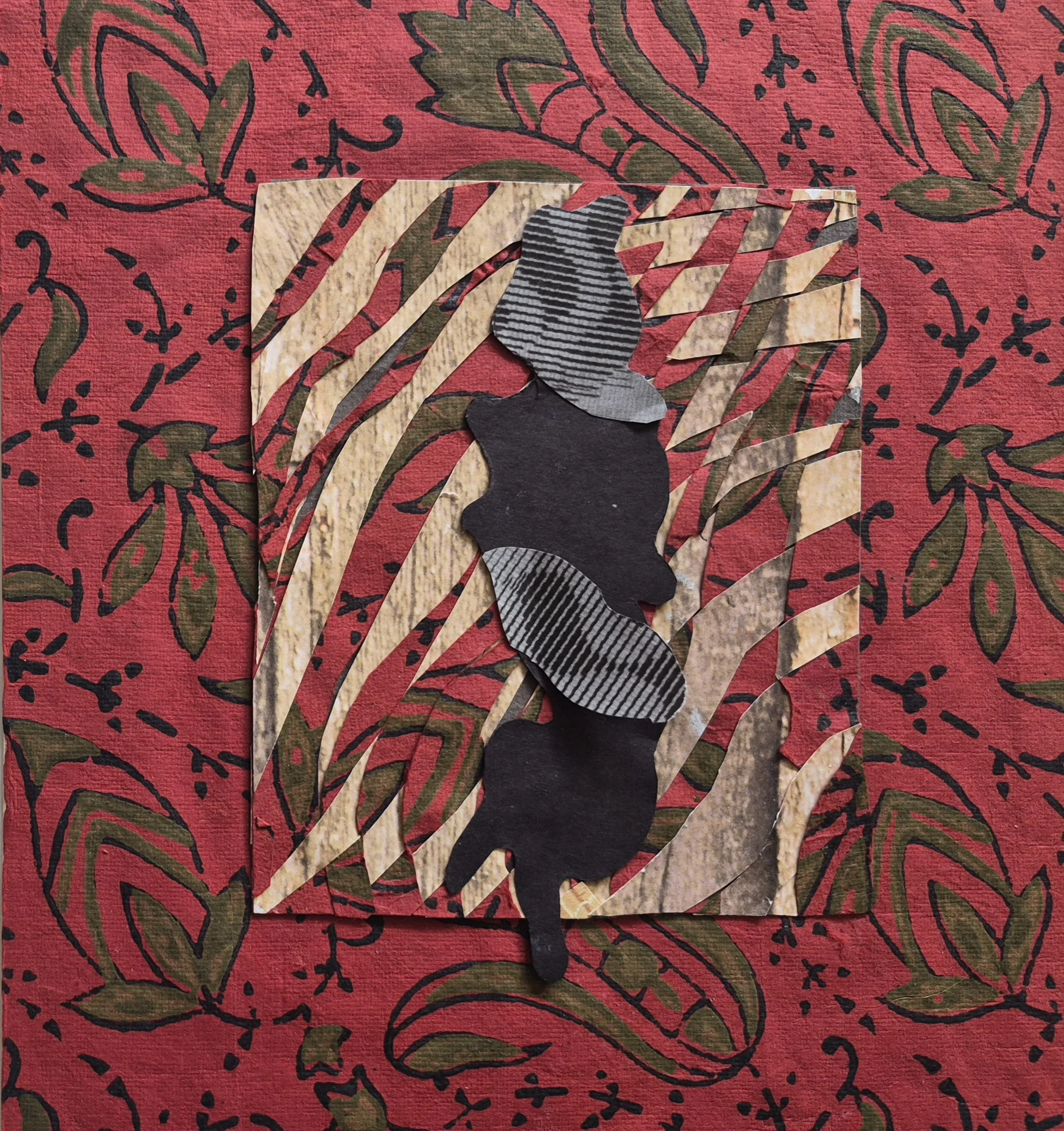
Art and photo by Sheila Benedis

Sail boats on the Hudson, by Beverly Aisenbrey
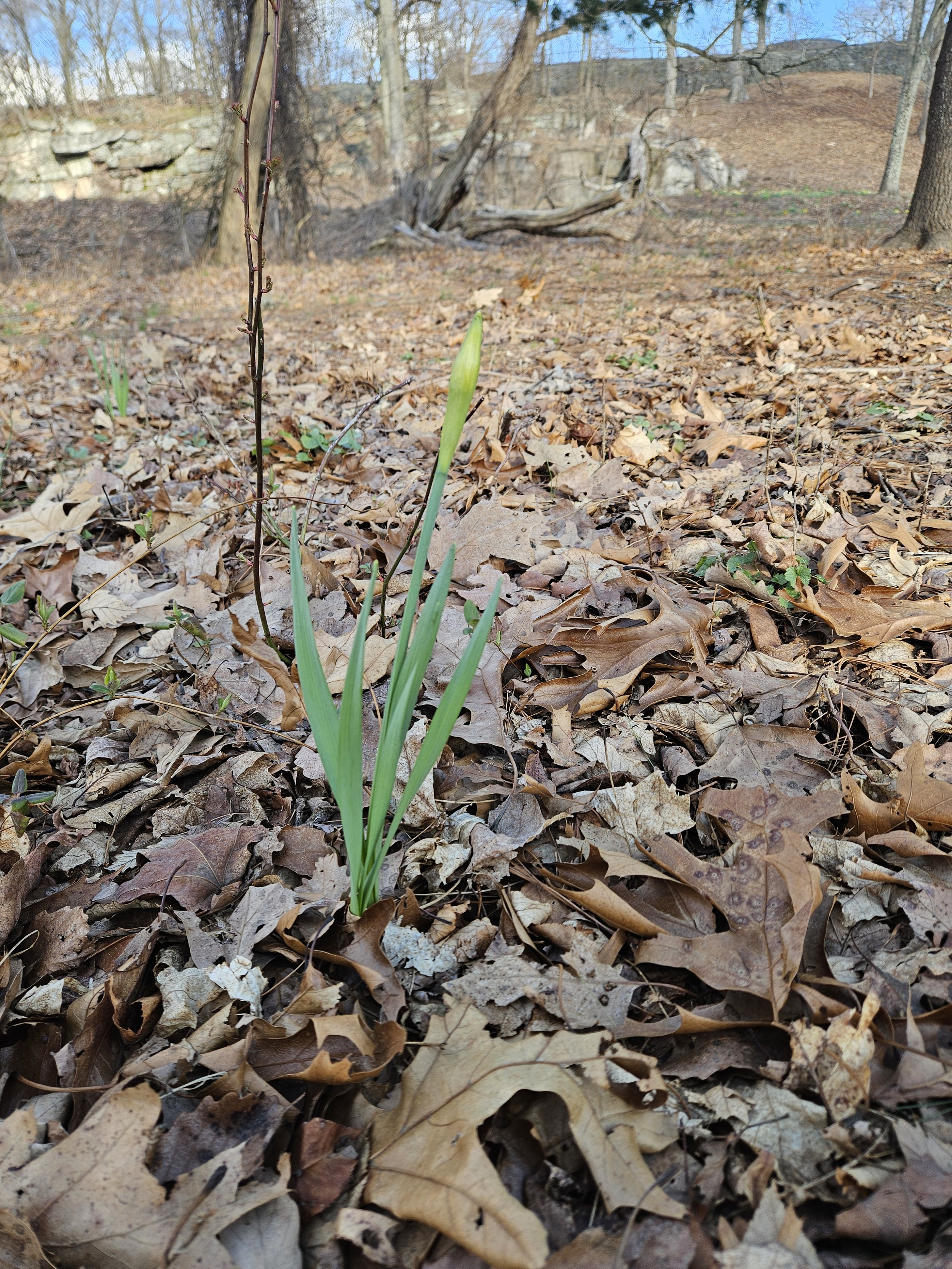
All alone, but trying, by Greg Lozier
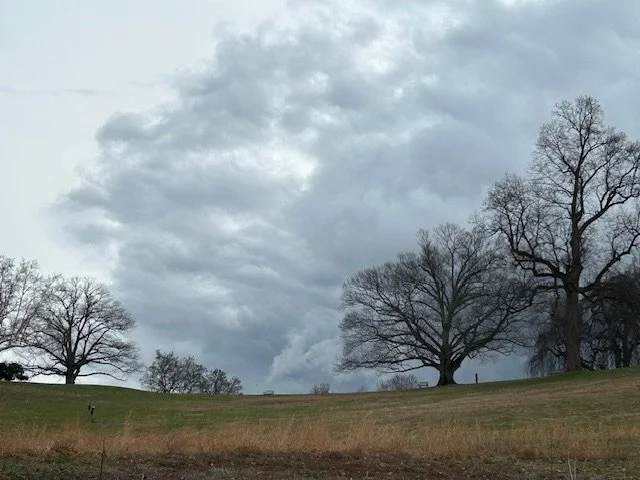
Just greening up, by Carolyn Reiss

Just budding out, by Carolyn Reiss
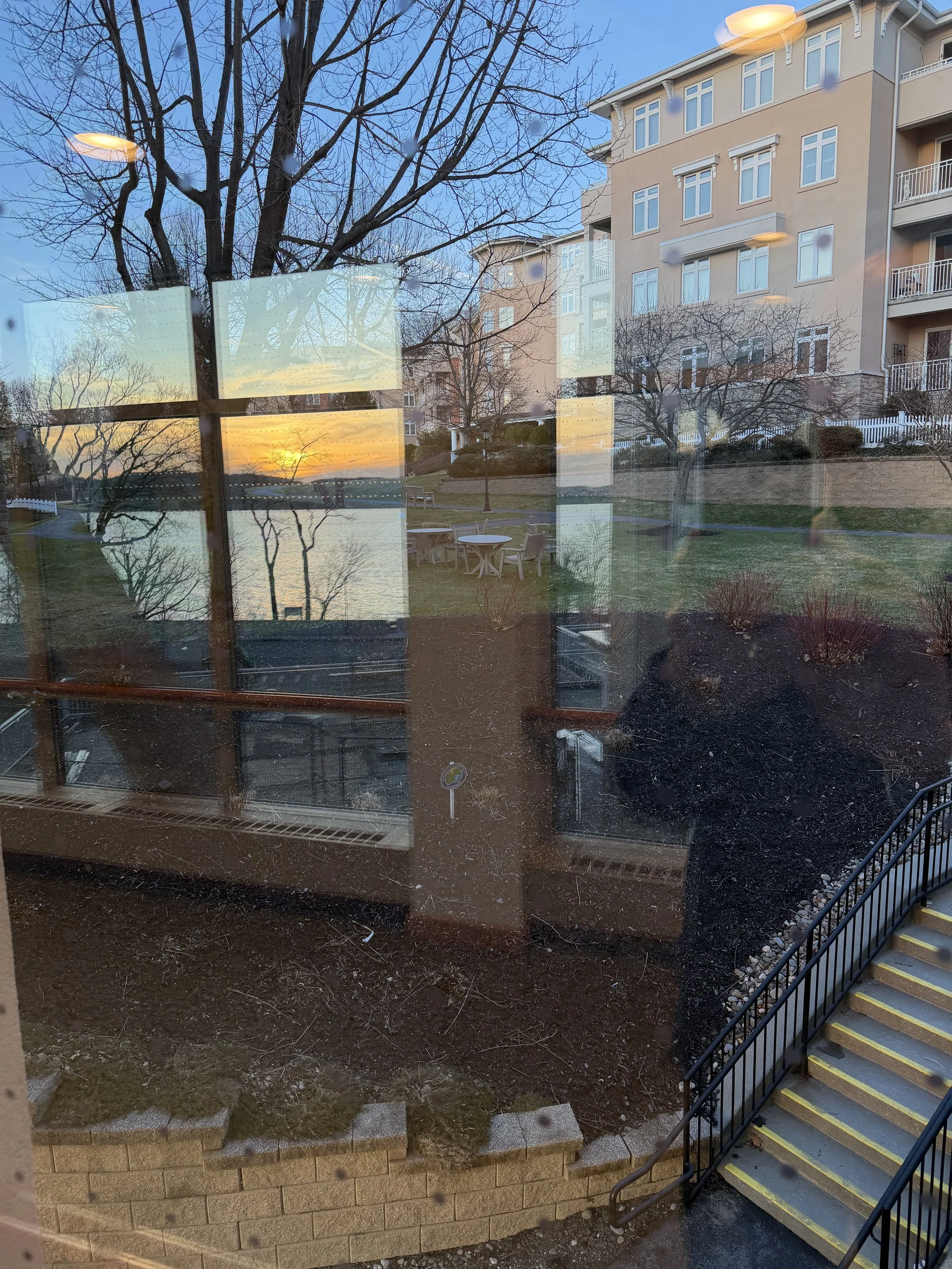
Photo by Ed Lannert
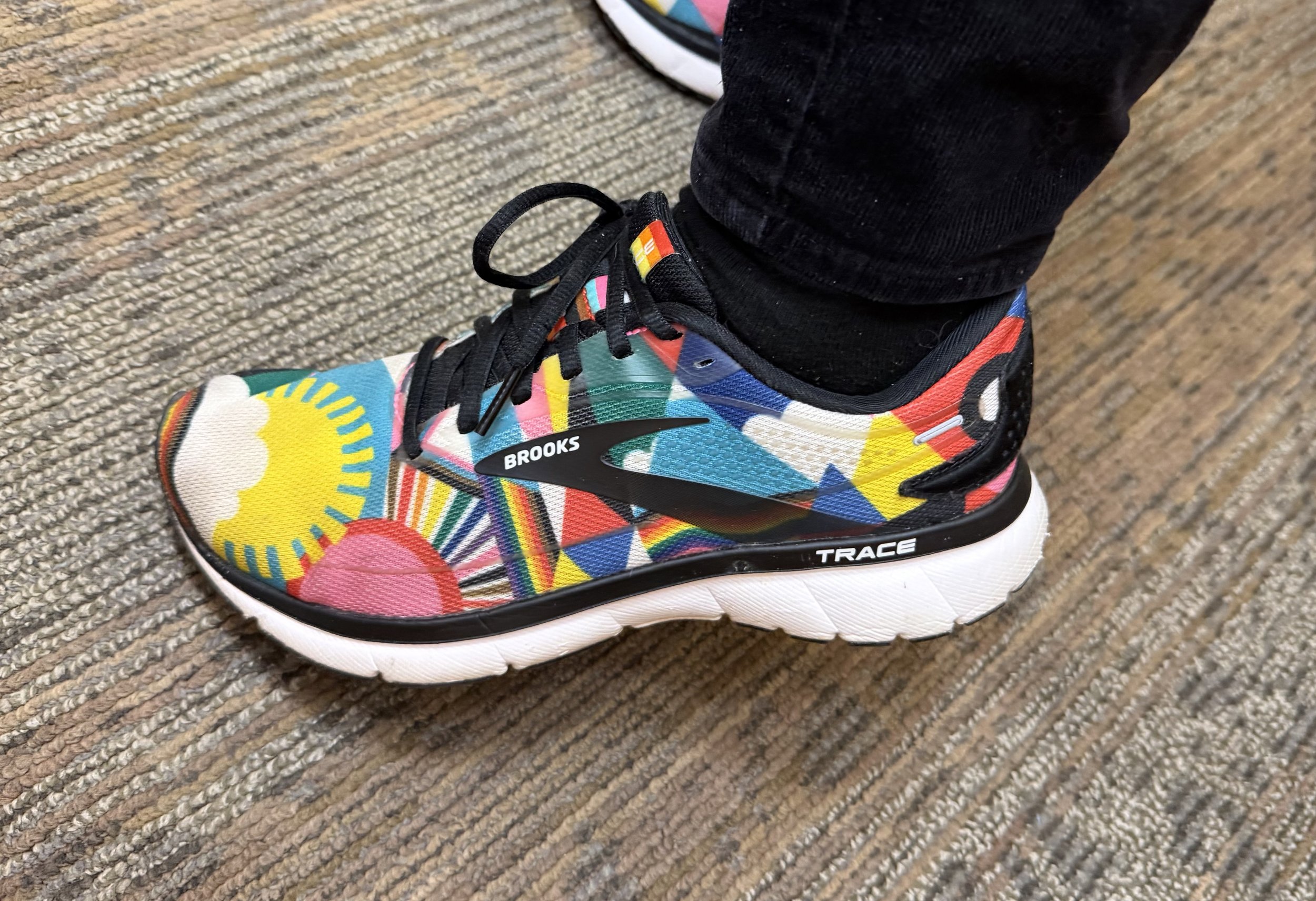
Photo by Ed Lannert

Piping to help a a Runner on his way, by Beverly Aisenbrey
For those of you uninitiated in the glory that is Mah Jongg, it is a game of making patterns with tiles. Some tiles are like playing cards: a design with a number. Their “face cards” are dragons (red and green) and “soap” (looks like a bar of Ivory soap). Some are flowers. Some are “winds”: North, East, South, and West represented by the first letter of its name (N, E, S, W). At a recent game, players noticed that the gods of Mah Jongg must be sending them a coded message with the winds and a Soap:
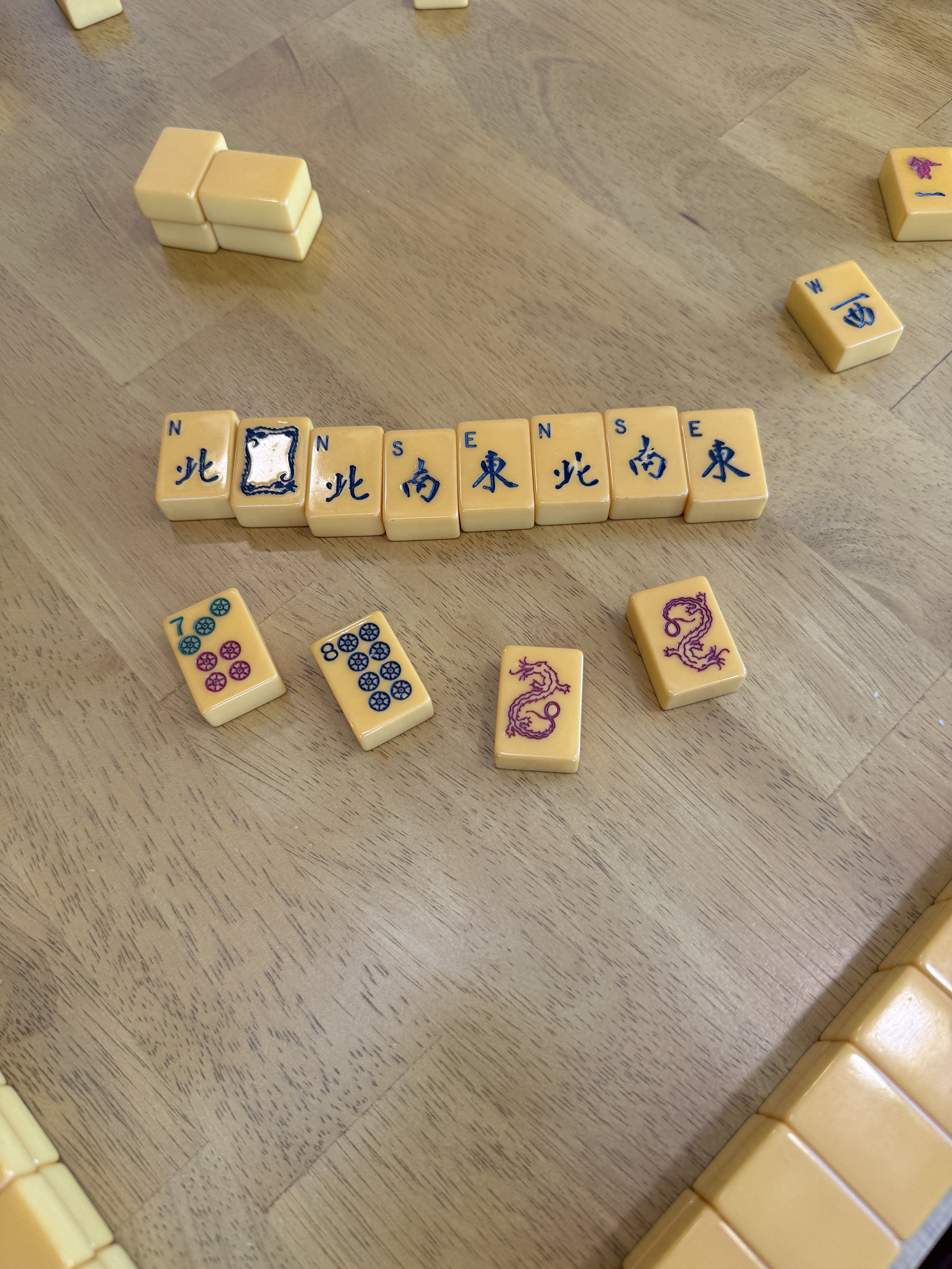
Photo by Amanda Slattery

Photo by Edward Kasinec
The swallows that return to Capistrano have nothin’ on the snow geese of South Dakota. A migratory bird, the snow goose likes to return north once winter is making more-southern climes uncomfortable. March 11, Beverly Aisenbrey just happened to be at Lake Byron in South Dakota near the Aisenbrey’s hometown when the snow geese landed—100,000 strong—for a rest in their travels.

To get a real idea of how many there were, click on the video below:
Photo and video by Beverly Aisenbrey
Intrepid Kendalites recently traveled to Purchase, NY, to visit the exhibitions at The Neuberger Museum.
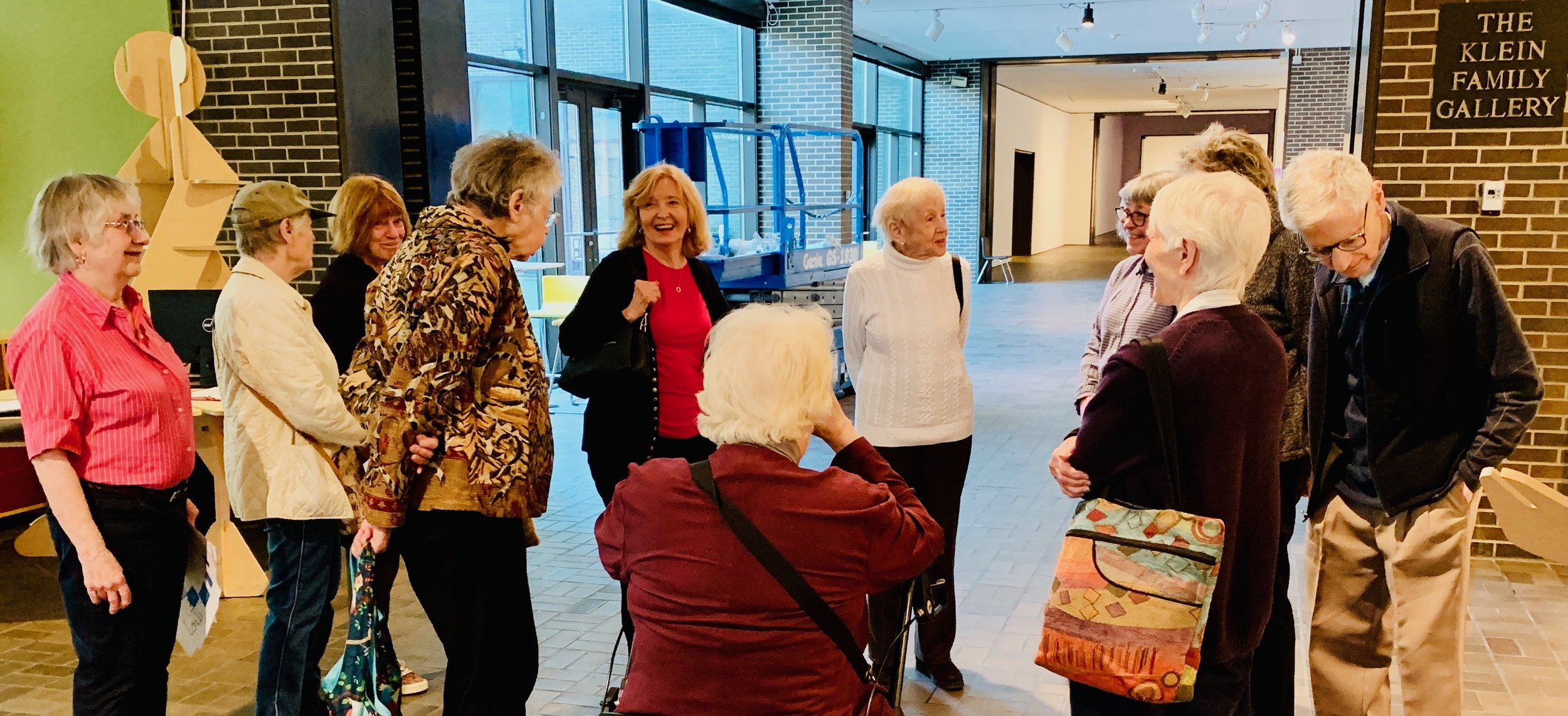
And they had a special docent: our own Birgitta Hockstader, who provided background and consideration of the art and the arts.
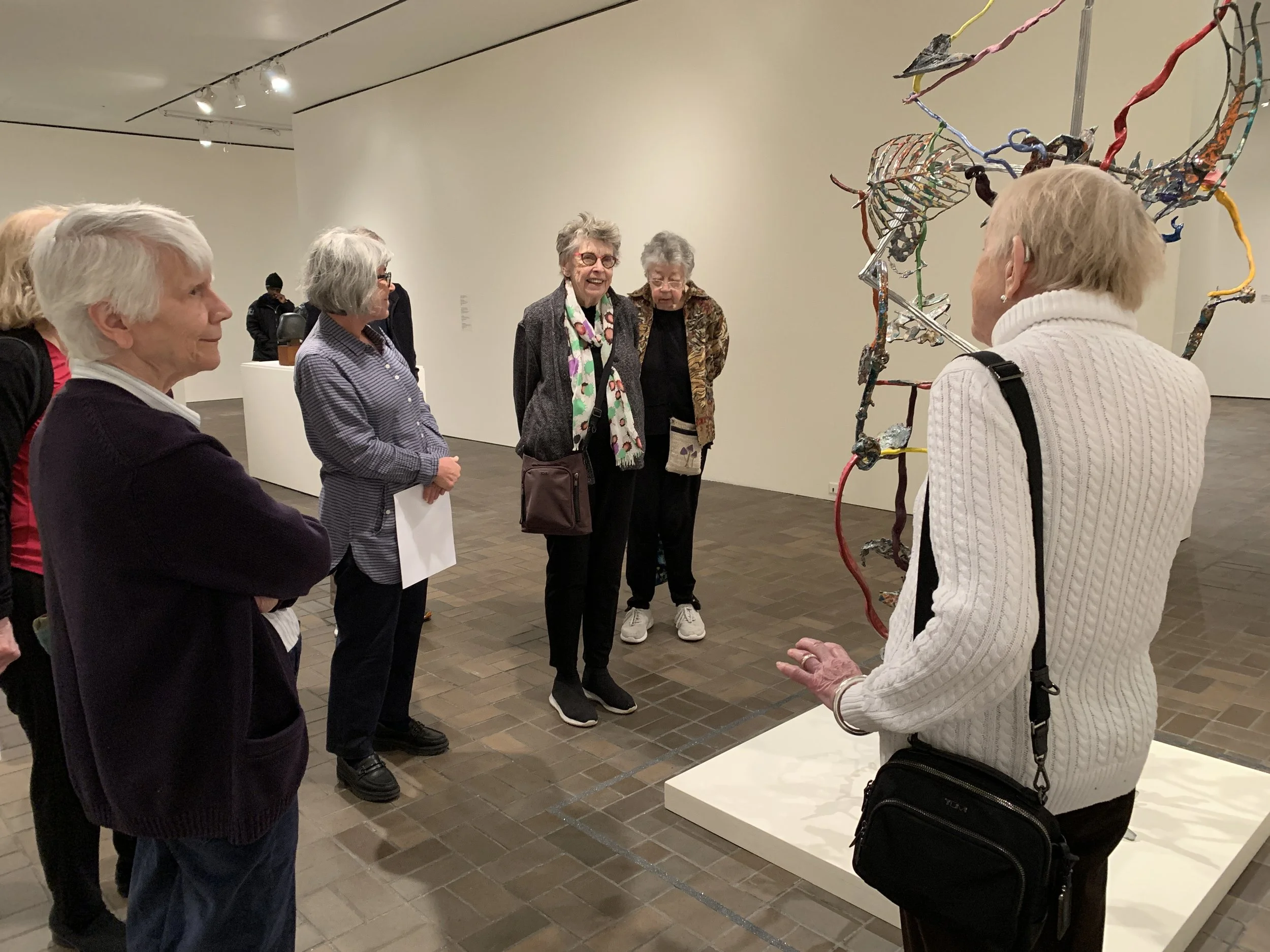
Photos by Harry Bloomfeld
More than 40 Kendalites—along with hundreds others from Tarrytown and surrounding towns—joined the March 28 No Kings rally.

Photo by Edward Kasinec

Photo by Ruth Dinowitz
On March 29, Amanda Slattery took her broken cheese knife, glass napkin ring, and a baseball trophy to The Rivertowns Repair Cafe, held that day at the Sleepy Hollow Senior Center. There she met Lee and Tom, who mended all three “with a smile” and for a very low price: free!
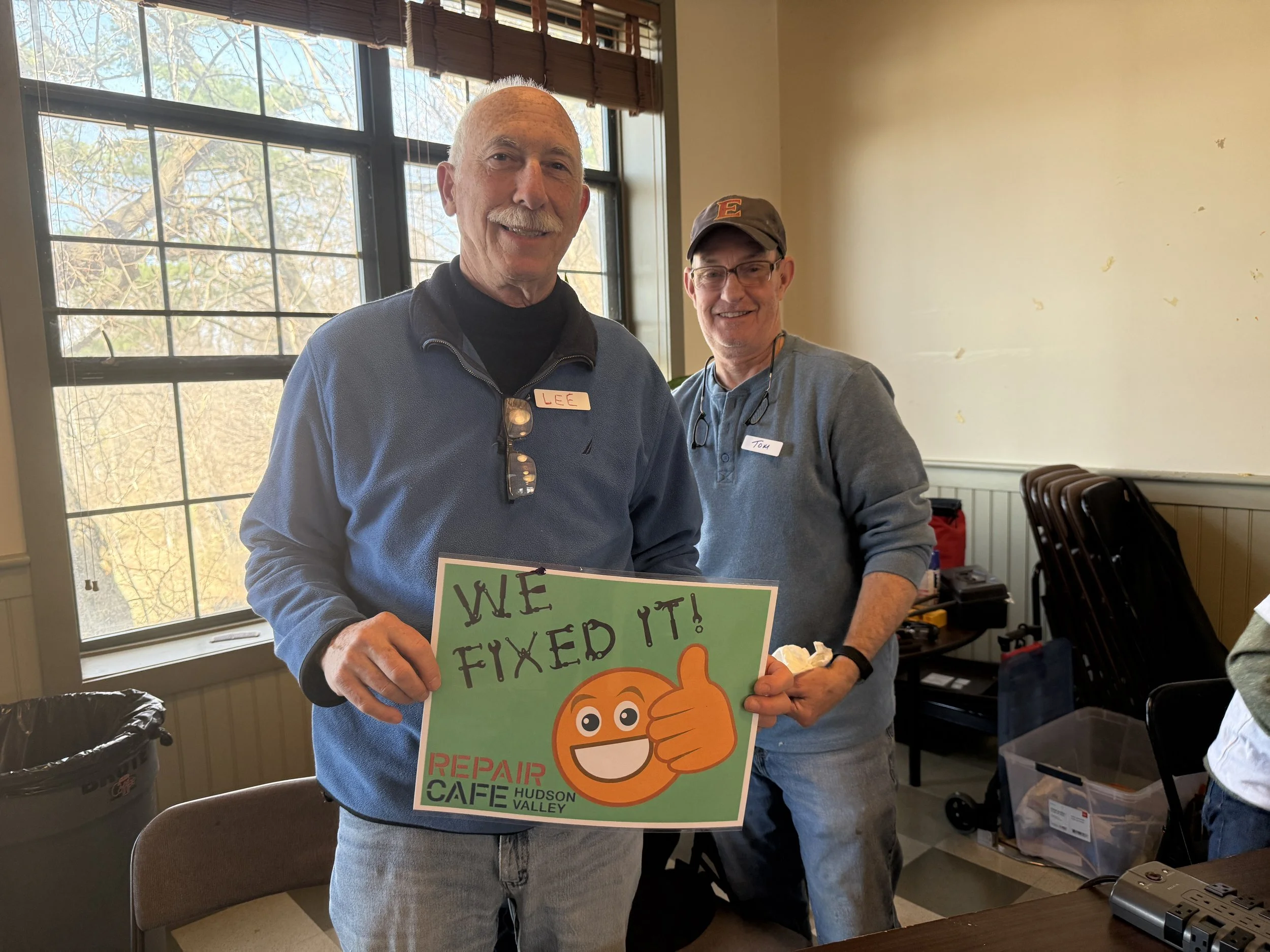
Photo by Amanda Slattery
The Rivertowns Repair Cafe is part of an intervillage community effort known as the “The Rivertowns Repair Cafe” organized in our area by volunteers from Hastings, Dobbs Ferry Irvington, Tarrytown, and Sleepy Hollow. Their mission is not only to fix things—which then don’t have to be tossed and replaced by new things—but also to show people “how to” so maybe the next time they can do it themselves.
Repair Cafe is a part of a grassroots movement that has spread around the globe. It aims to reduce waste, overconsumption, and planned obsolescence. It hopes to reignite the spirit of “do-it-together” and “do-it-yourself.”

From the office of Ellen Ottstadt
Venison for dinner again? Oh deer!
England has no kidney bank, but it does have a Liverpool.
I tried to catch some fog, but I mist.
They told me I had type-A blood, but it was a Typo.
I changed my iPod’s name to Titanic. It's syncing now.
Jokes about German sausage are the wurst.
Don’t worry about old age; it doesn't last.
Contributed by Simone
© Kendal on Hudson Residents Association 2015, 2016, 2017, 2018, 2019, 2020, 2021, 2022 all rights reserved. Please do not reproduce without permission.
Photographs of life at Kendal on Hudson are by residents.