
The Day Bananas Debuted in London: April 10, 1633
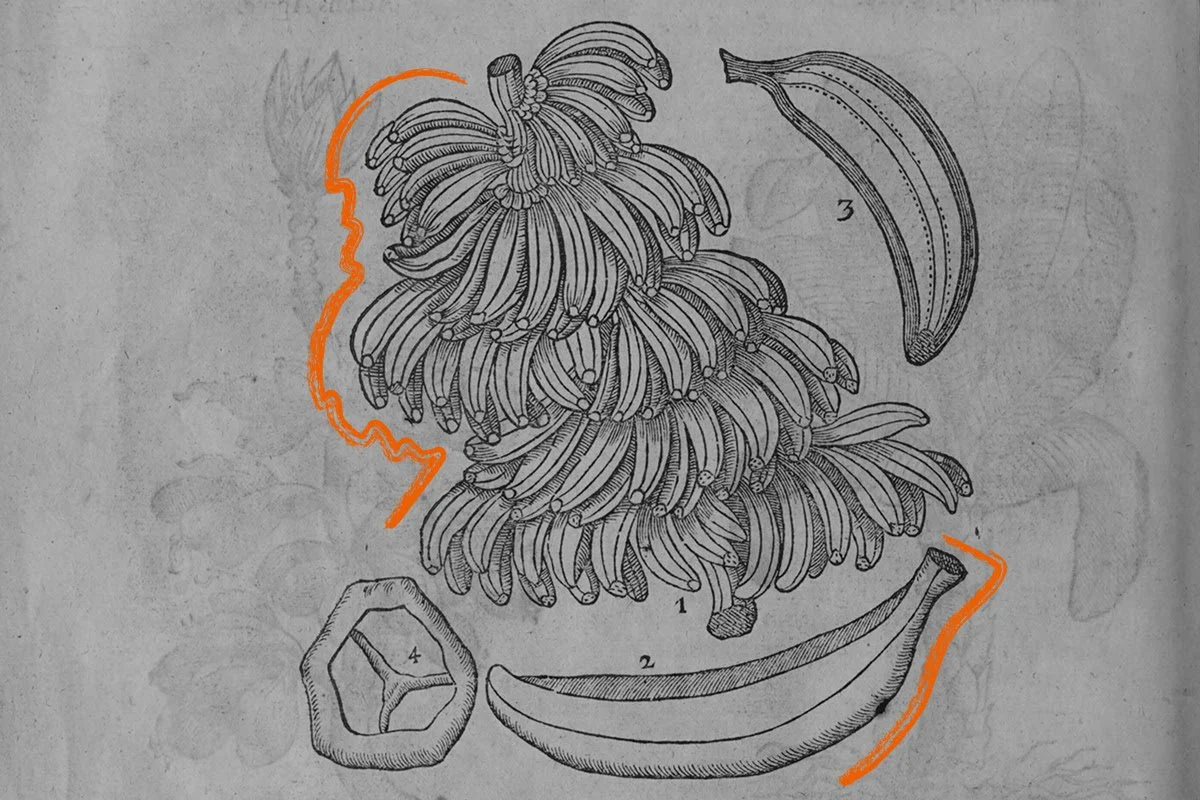
On this spring day in 1633, people gathered outside a Holborn shop window in central London to stare at something few of them had ever seen before: a cluster of strange, curved fruits, green but yellowing gently in the English light. These were bananas—and for most Londoners, they were utterly bewildering (and surprisingly phallic).
The window display belonged to Thomas Johnson, a well-regarded botanist and apothecary who apparently had a flair for spectacle. On April 10 he exhibited the fruit in his shop, effectively staging Britain’s banana debut. Crowds gathered, not to buy—few could have afforded the fruits or even known how to eat them—but to gawk. (Indeed, there are no records indicating whether Johnson sold any of the novel fruits.)
In an age when colonization and global trade were just beginning to reshape English diets, the banana was nothing short of a true marvel.
These early bananas probably arrived somewhat battered after a long Atlantic journey from Bermuda. They were nothing like the sweet, familiar Cavendish variety many of us eat today (in fact, the Cavendish wasn’t developed until the 1800s). Johnson’s bananas were starchy plantains likely meant to be cooked rather than eaten fresh. It seems the man himself wasn’t particularly fond of them. He edited John Gerard’s popular botanical encyclopedia, The Herball, and is thought to have expanded the banana’s description:
“. . . the fruit hereof yieldeth but little nourishment…and hurteth the stomach if too much of it be eaten.”
It would take another two centuries—and the advent of steamships and refrigeration—before bananas became an everyday pleasure in Britain. But on that day in 1633, in a modest Holborn shop, London caught its first glimpse of the wider world in an absurd bunch of unfamiliar fruits.
Source: Britanica Today in History website