



Art by Hart
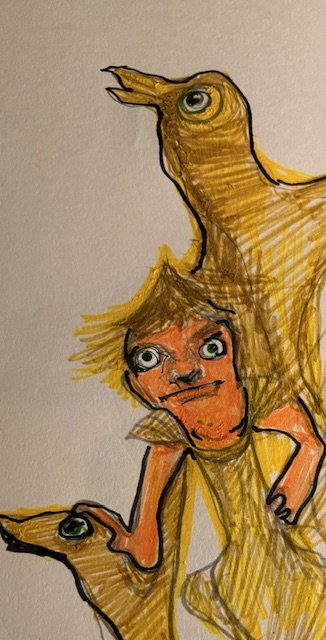
Glick tried out identifying as a goldfinch
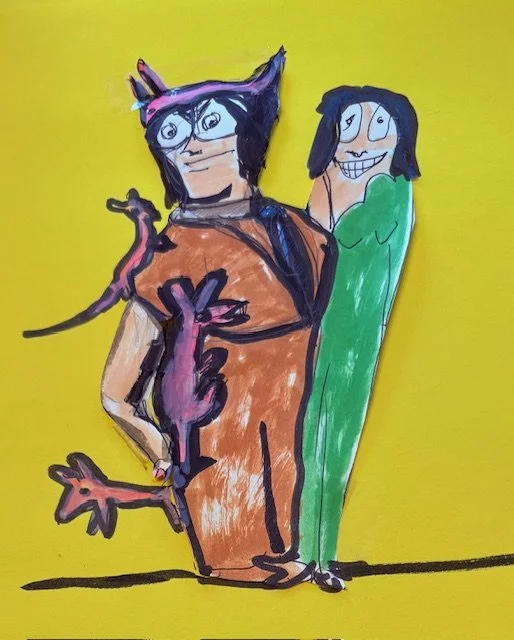
Long-retired superhero Ratman was still regarded as a hunk

It wasn’t easy for Lavinia to deal with certain men in her life

It turned out that Bugsy was the brightest bulb in the drawer after all
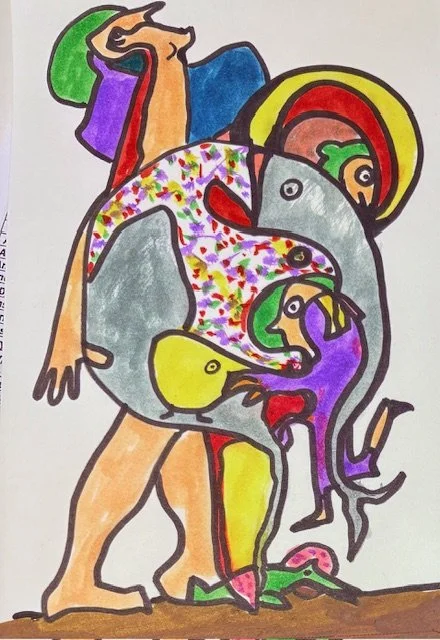
The Gribbles felt that a beach vacation would be perfect
Art and photos by Jane Hart
Hope for the Future of the World III, by Sheila Benedis
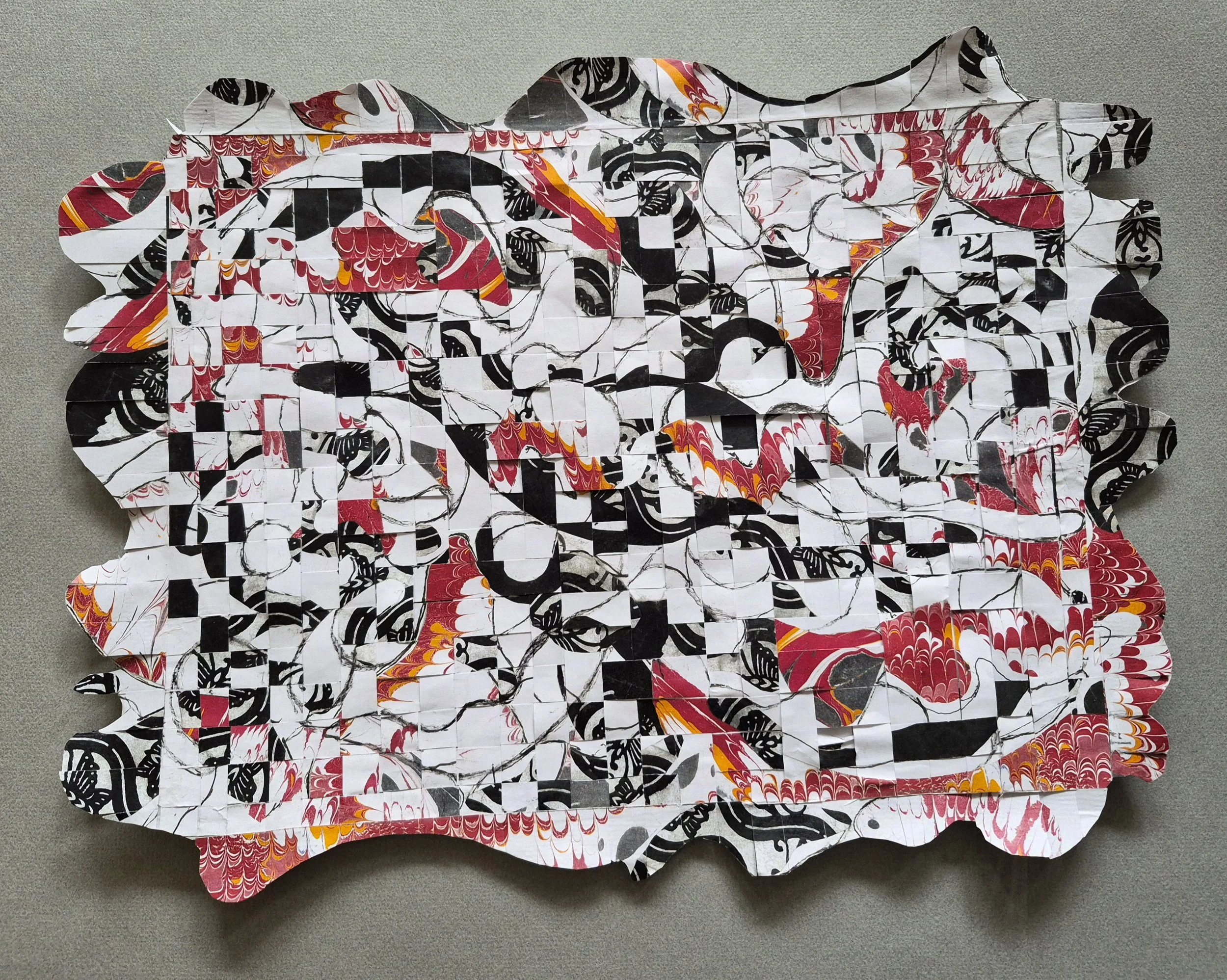
Art and photo by Sheila Benedis
Who's Where?
In and Around Kendal
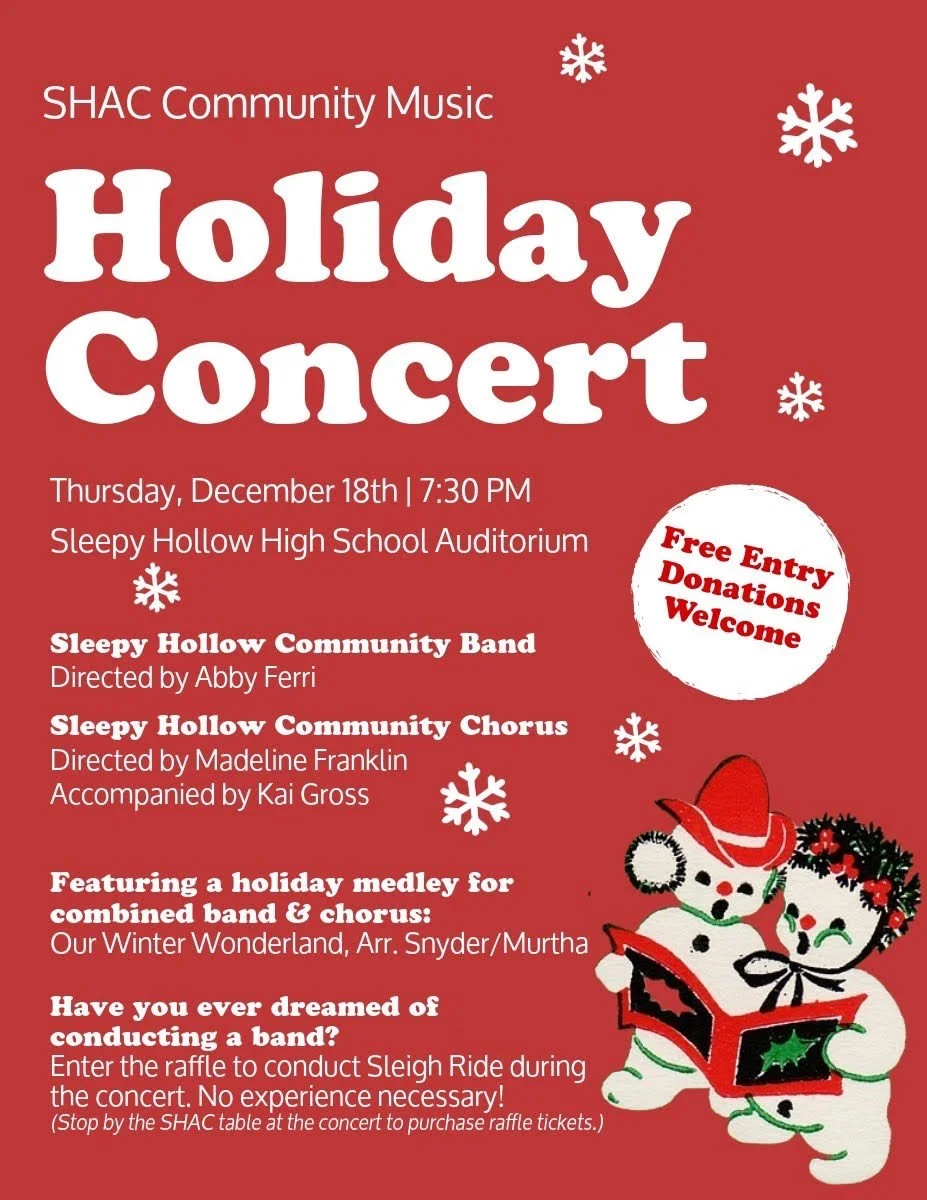
Your Standard Impromptu Monday Night Glögg-tasting Party
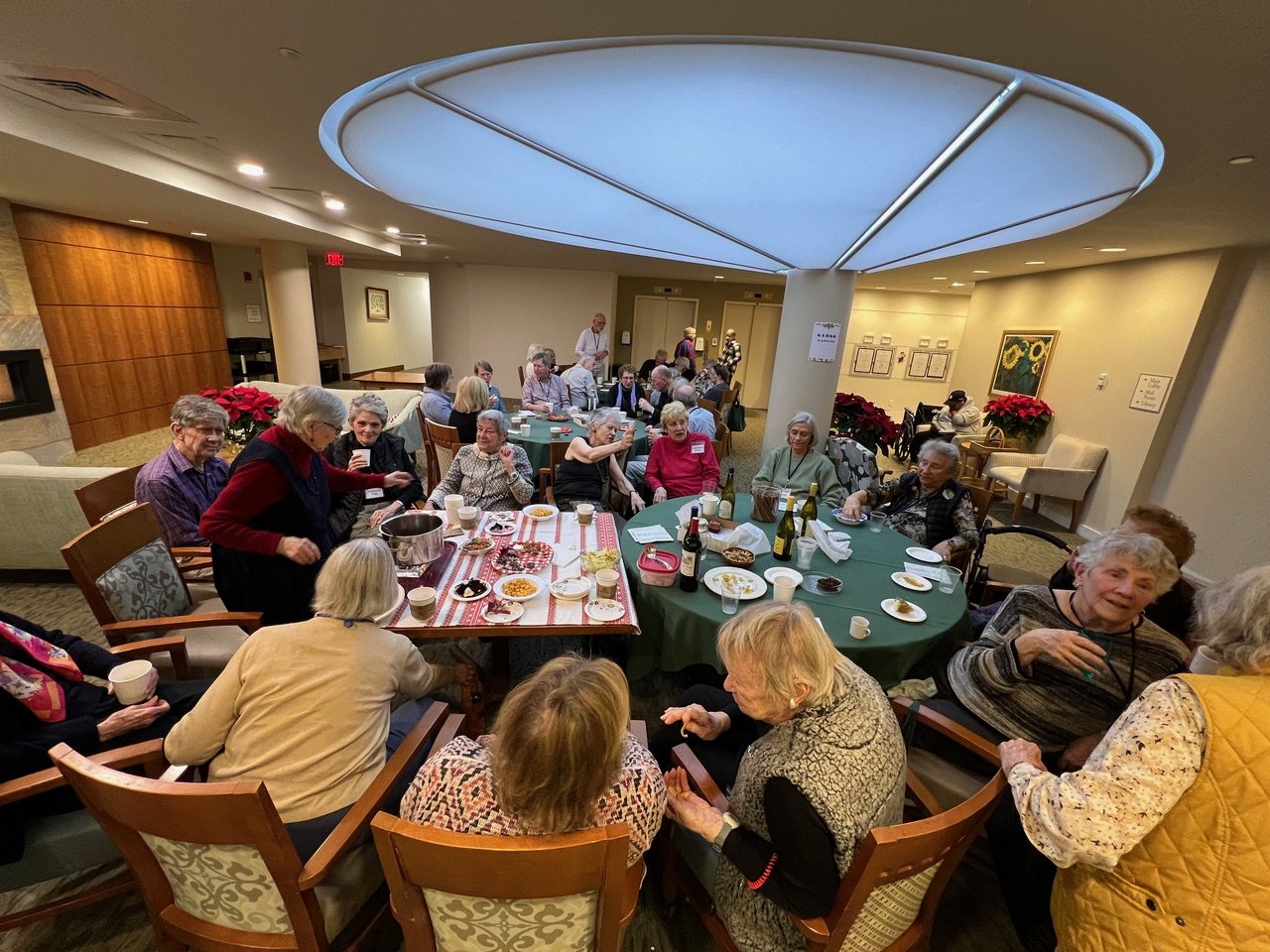
Photo by Philip Monteleoni
The Views—New and Old—from Kendal—and Nearby

View from the Gazebo, Photo by Philip Monteleoni

View from Rockland Park, by Edward Kasinec
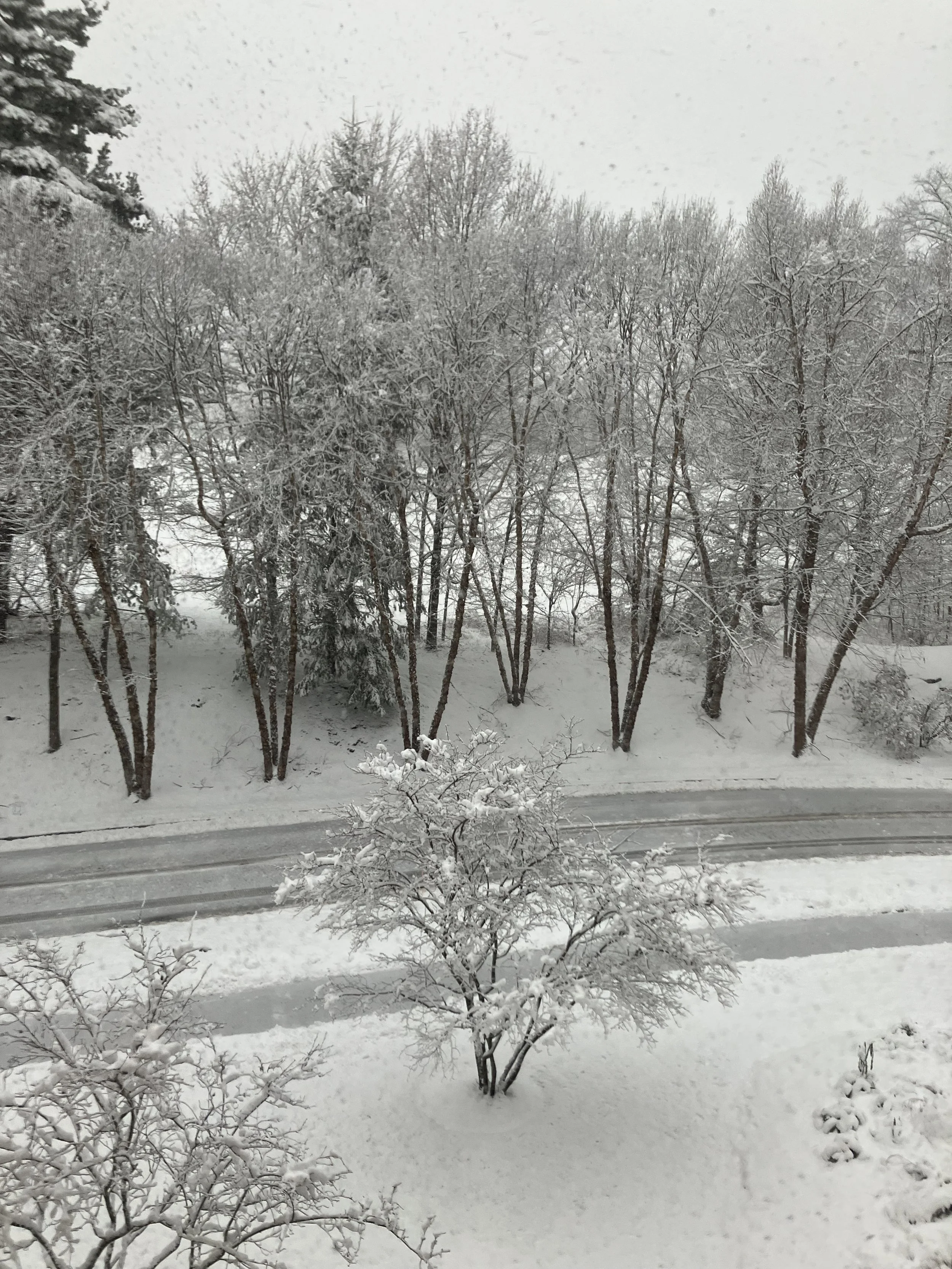
View from the Abramovitz’s Window, by Mimi Abramovitz
Young Bucks Dueling

Photo by Philip Monteleoni
Winter Days Become Evenings

Photo by Edward Kasinec

Photo by Philip Monteleoni
Out and About
December 16, members of the choir of the Christ Church in Rye, NY, joined with the German International School of New York in a production of Carl Orff’s magnificent Carmina Burana.
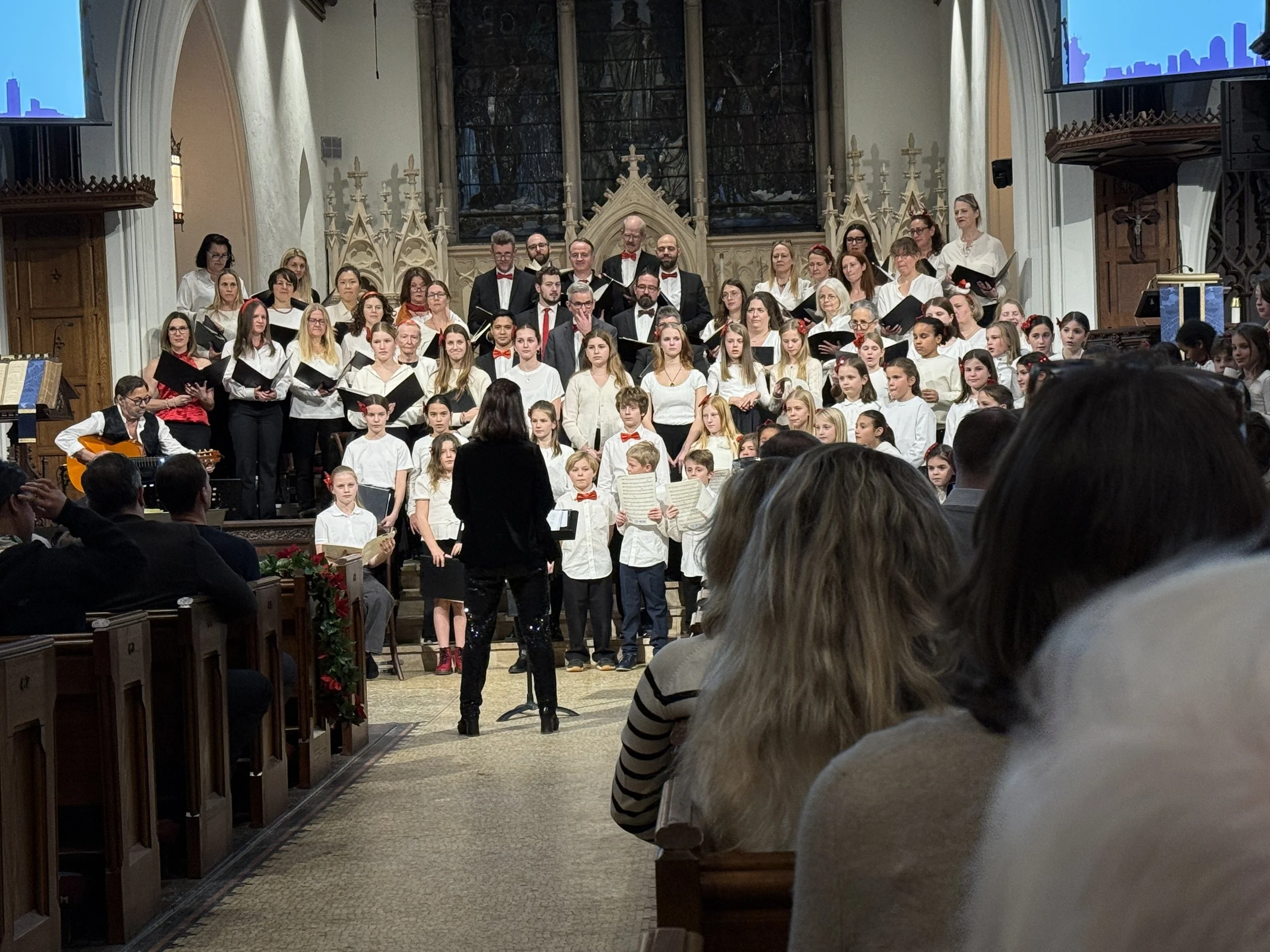
And Kendalites turned out in numbers.
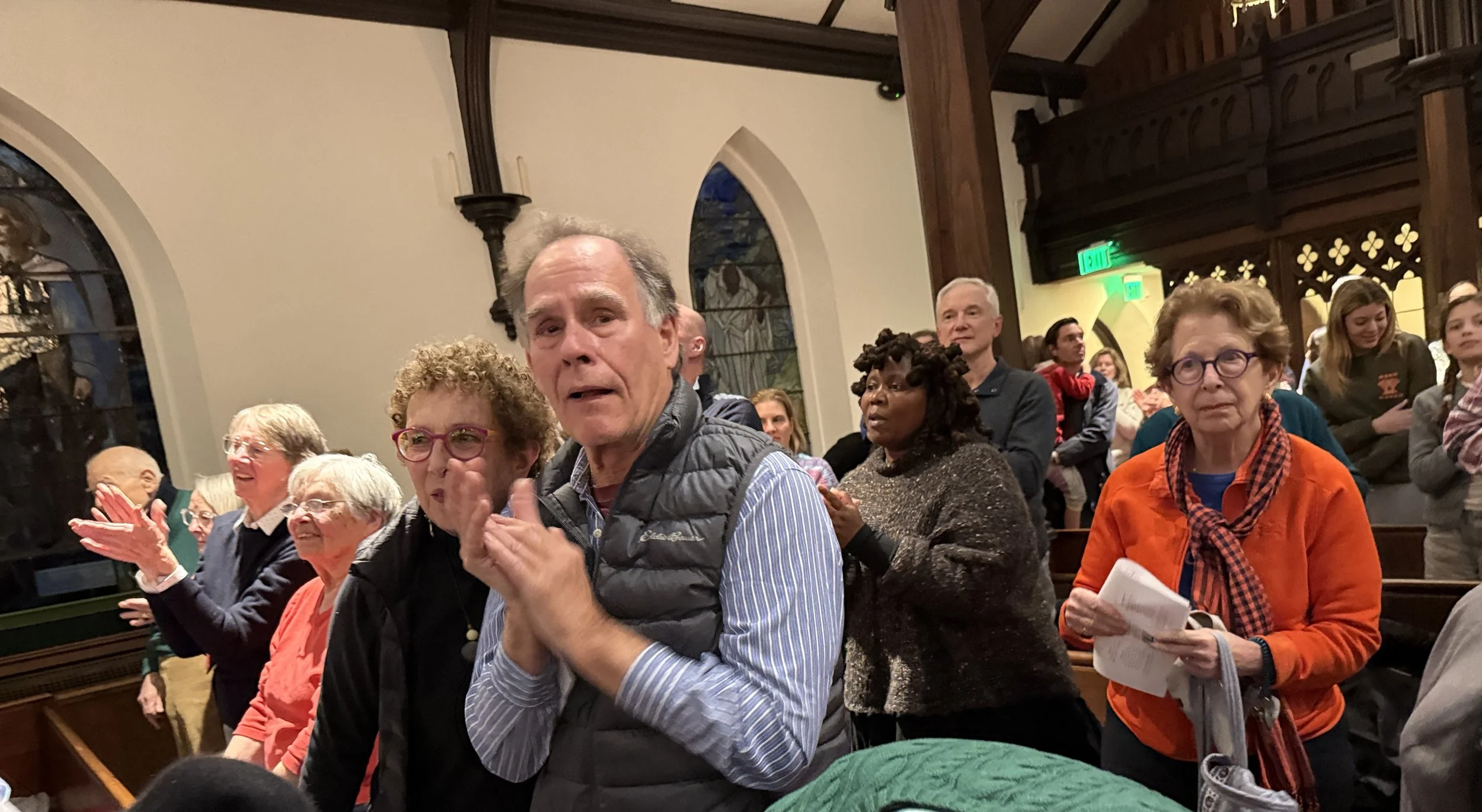
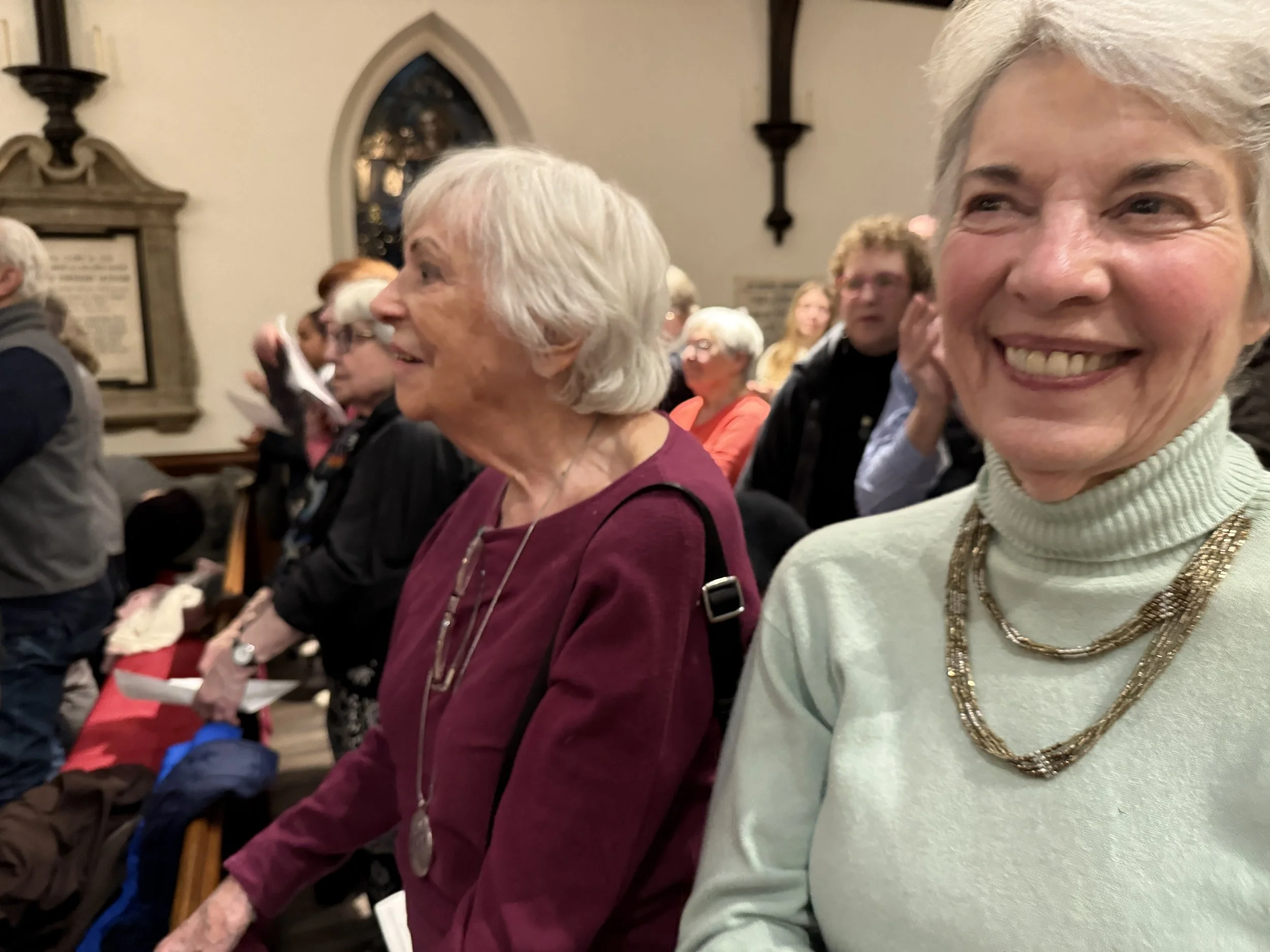
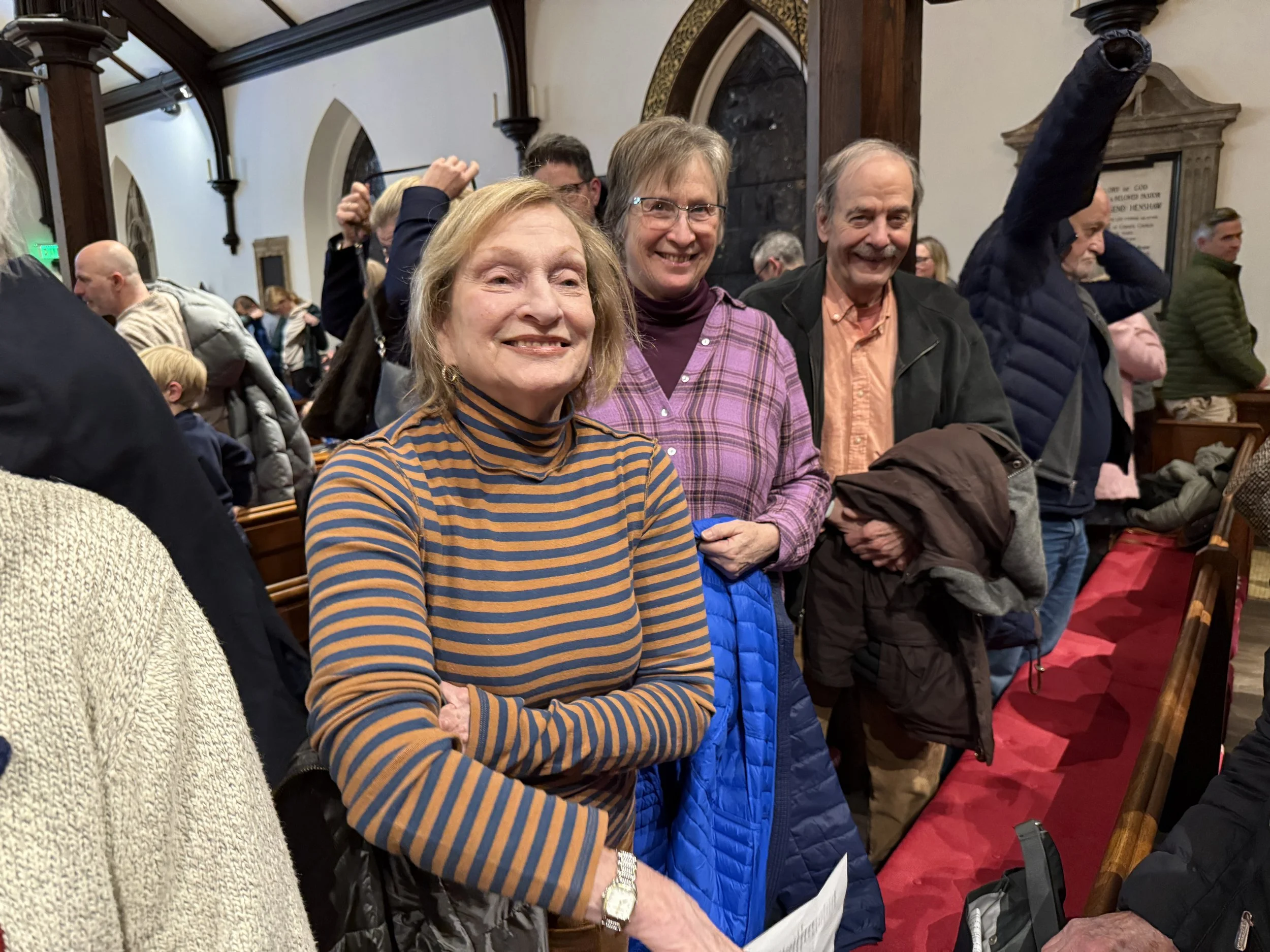
Photos by Amanda Slattery
But what is the Carmina Burana? It sounds so lofty and dramatic. Here’s the scoop (pretty much straight from Wikipedia):
Carmina Burana is a manuscript written in 1230 by two different scribes in an early gothic minuscule on 119 sheets of parchment. A number of free pages, cut of a slightly different size, were attached at the end of the text in the 14th century. At some point in the Late Middle Ages, the handwritten pages were bound into a small folder called the Codex Buranus. However, in the process of binding, the text was placed partially out of order, and some pages were most likely lost, as well. The manuscript contains eight miniatures: the rota fortunae (which actually is an illustration from songs 14–18, but was placed by the book binder as the cover), an imaginative forest, a pair of lovers, scenes from the story of Dido and Aeneas, a scene of drinking beer, and three scenes of playing dice, tables, and chess.
In 1934, Carl Orff encountered the 1847 edition of the Carmina Burana by Johann Andreas Schmeller. Michel Hofmann (de) was a young law student and an enthusiast of Latin and Greek. He assisted Orff in the selection and organization of 24 of these poems into a libretto mostly in secular Latin verse, with a small amount of Middle High German and Old French. The selection covers a wide range of topics, as familiar in the 13th century as they are in the 21st century: the fickleness of fortune and wealth, the ephemeral nature of life, the joy of the return of spring and the pleasures and perils of drinking, gluttony, gambling, and lust.
These Orff set to music in 1936 as Carmina Burana: Cantiones profanae cantoribus et choris cantandae comitantibus instrumentis atque imaginibus magicis [translation: Songs of Beuern: Secular songs for singers and choruses to be sung together with instruments and magical images].
Carmina Burana was first performed by the Oper Frankfurt on 8 June 1937. It is but one part of Orff’s rarely performed Trionfi, a musical triptych that also includes Catulli Carmina and Trionfo di Afrodite.
Carmina Burana quickly became popular and a staple piece of the classical music repertoire. The opening and closing movement “O Fortuna” has been used in numerous films, becoming one of the most recognizable compositions in popular culture.
Harriet Barnett: Honored for an Outstanding Teaching Career
Our own Harriet Barnett is—and has long been a model for—not only teaching but advocating for language learning. We at Kendal know that—and now all of New York State does to.
The following was excerpted from the announcement in the River Journal Online:
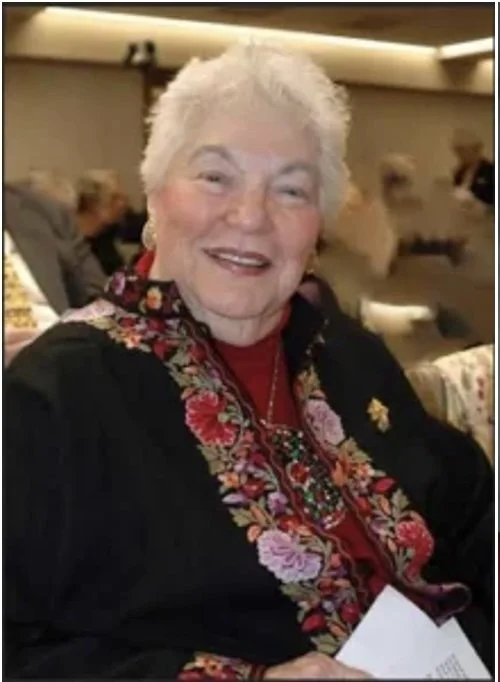
The New York State Association for Language Teachers (NYSAFLT) is proud to announce the establishment of the NYSAFLT Harriet S. Barnett Novice Teacher Award, a new statewide honor recognizing outstanding early-career world language educators. The award is named in honor of Harriet S. Barnett, a long-time NYSAFLT leader and internationally respected language-learning advocate who is a resident of Sleepy Hollow.
Inspired by Barnett’s decades of service to students, educators, and the profession, the Harriet S. Barnett Novice Teacher Award recognizes a NYSAFLT member with five or fewer years of teaching experience who demonstrates professional growth, a commitment to teaching all students, engagement in ongoing professional learning, and alignment with NYSAFLT’s Strategic Goals.
What makes this award especially meaningful is the legacy of the educator for whom it is named. Harriet S. Barnett taught in the Dobbs Ferry Primary, Middle, and High Schools for 35 years and has been an active member of NYSAFLT since the 1960s. Over the course of her career, she worked with ACTFL and Manhattanville College, delivered workshops and keynote addresses at regional, national, and international conferences, and was a two-time runner-up for New York State Teacher of the Year. She is also a recipient of multiple honors, including the New York State Excellence in Education Award sponsored by Burger King.
Barnett has served on the boards of NYSAFLT and the New York Chapter of AATSP, chaired national committees, consulted with school districts across the state, and worked closely with the New York State Education Department on curriculum and standards development. Her contributions include writing and reviewing professional publications, serving on state framework writing teams, and co-authoring textbooks, teaching resources, and instructional materials used by world language educators statewide.
Now residing at Kendal on Hudson, Barnett continues to teach Spanish and English to residents and staff and conducts professional workshops for Putnam–Northern Westchester BOCES, reflecting her lifelong commitment to learning and service.
“The creation of this award allows NYSAFLT to honor Harriet Barnett’s extraordinary impact while simultaneously uplifting the next generation of language educators,” said NYSAFLT leadership. “It is especially fitting that the first recipient exemplifies the same dedication to students, growth, and equity that Harriet has modeled throughout her career.”
The NYSAFLT Harriet S. Barnett Novice Teacher Award will be presented annually, ensuring that Barnett’s legacy continues to inspire educators across New York State.
*********
And the august Kendal on Hudson Resident Website says, “Well done, Harriet!”
Weekly Construction Report

From the office of Ellen Ottstadt
Quotes for Our Age
“To get back to my youth I would do anything in the world, except exercise, get up early, or be respectable.” Oscar Wilde
“The older we get, the fewer things seem worth waiting in line for.” Will Rogers
“We must recognize that, as we grow older, we become like old cars—more and more repairs and replacements are necessary.” C.S. Lewis
“Old age comes at a bad time.” San Banducci
“I’m so old that my blood type is discontinued.” Bill Dane
“The older I get, the more clearly I remember things that never happened.” Mark Twain
Contributed by Jane Hart and Steve Price
To be continued . . .
I Never Knew That
Santa Claus Currency: Then—and Now!
December 6: The Feast of Saint Nicholas. Celebrated as a day children awaken to find gifts left in their shoes. The historical Saint Nicholas (AD 270-343) was the patron saint of archers, sailors, brewers, children and students. He also earned a reputation for secretly giving gifts, serving as the model for everyone’s favorite Christmas gift distributor—Santa Claus, sometimes referred to as “Jolly Ol’ St. Nick.”
In the mid-1800s, the Saint Nicholas Bank in New York City released its own paper money bearing engraved images of Santa Claus delivering toys and sweets to good girls and boys. The bank had opened in 1853 and issued the whimsical notes made by private printers in several denominations, including $3 bills. Like most obsolete currency, Saint Nicholas Bank notes are printed on one side only. Today, they’re highly sought as collectibles by paper money enthusiasts and Santa devotees.
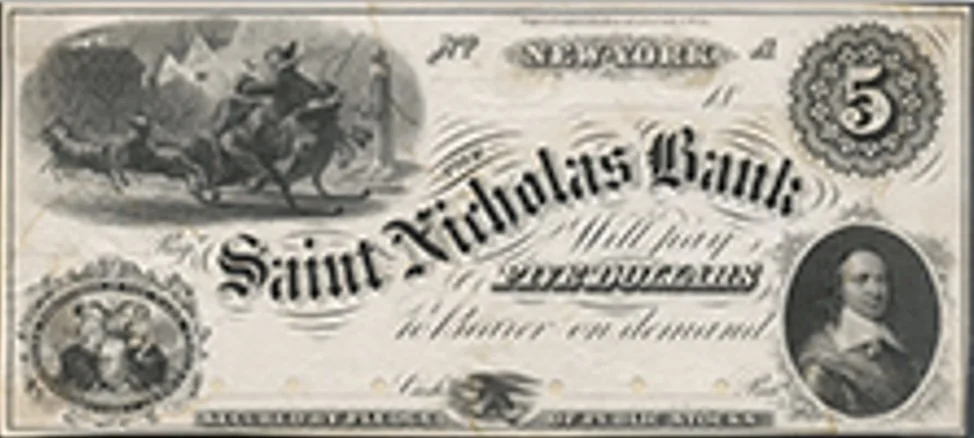
Santa and sleigh are up there in the left-hand corner
Obsolete bank notes were produced between 1792 and 1866 before the federal government issued its own paper money in the 1860s during the Civil War. They were issued by private banks and businesses that successfully applied for a state charter. Including the Saint Nicholas Bank, 21 banks from 8 states (27 total notes) issued obsolete notes featuring Santa Claus. Seven total Santa vignettes were used (there are no examples of type VII; it is lost to history).
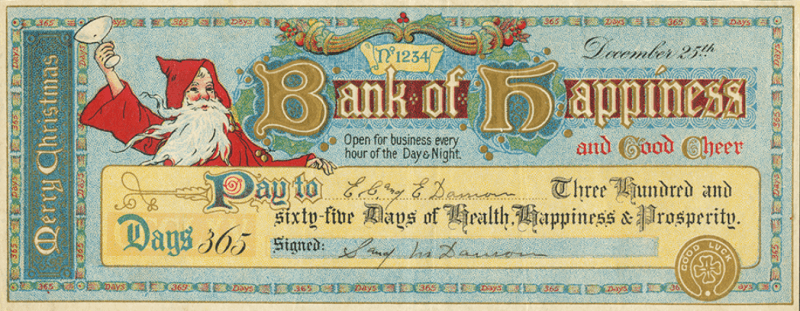
Santa Claus has also appeared on other genres of numismatics, including checks, stock certificates, scrip, gift cards, tokens, medals, wishing coins, elongates and altered currency.
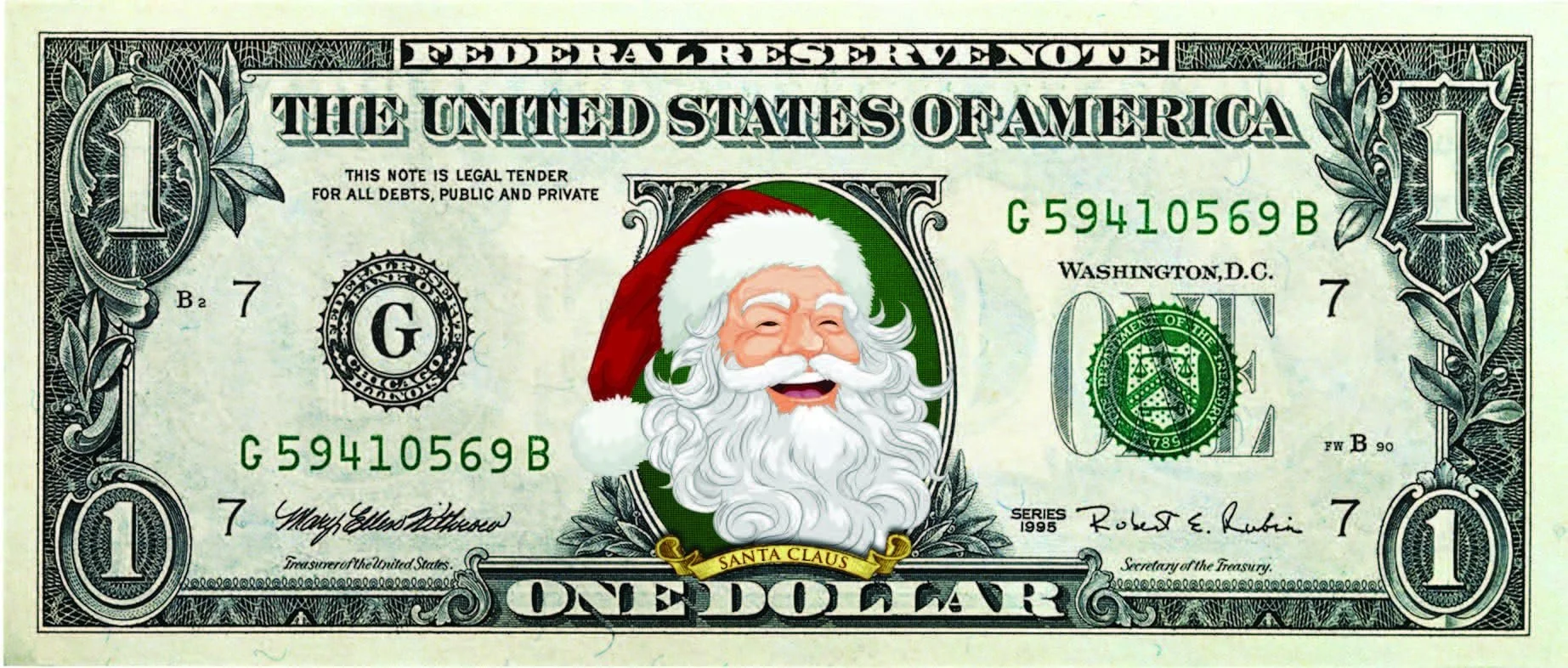
Even today a real and legal US currency can depict Santa’s merry face. They start as real, uncirculated US bills (like a $1 or $5 notes). “Santa Dollars” (santadollars.com) are real, legal US currency (like a $1 or $5 bill) with a special, removable Santa Claus seal placed over a president’s face, making them a popular, spendable (after removing the seal) gift or stocking stuffer that raises money for charities, rather than a fake or novelty bill. They are authentic US currency that meets Treasury requirements, but people usually collect them because they are sold at a premium for a good cause.
So, Yes, Virginia, you can receive Santa currency today! Just don’t forget to remove Santa’s face before handing the cash over to whoever’s at the cash register!
For Your Funny Bone



Contributed by Don Butt
Contributed by Barbara Bruno

Hope for the Future of the World II, by Sheila Benedis
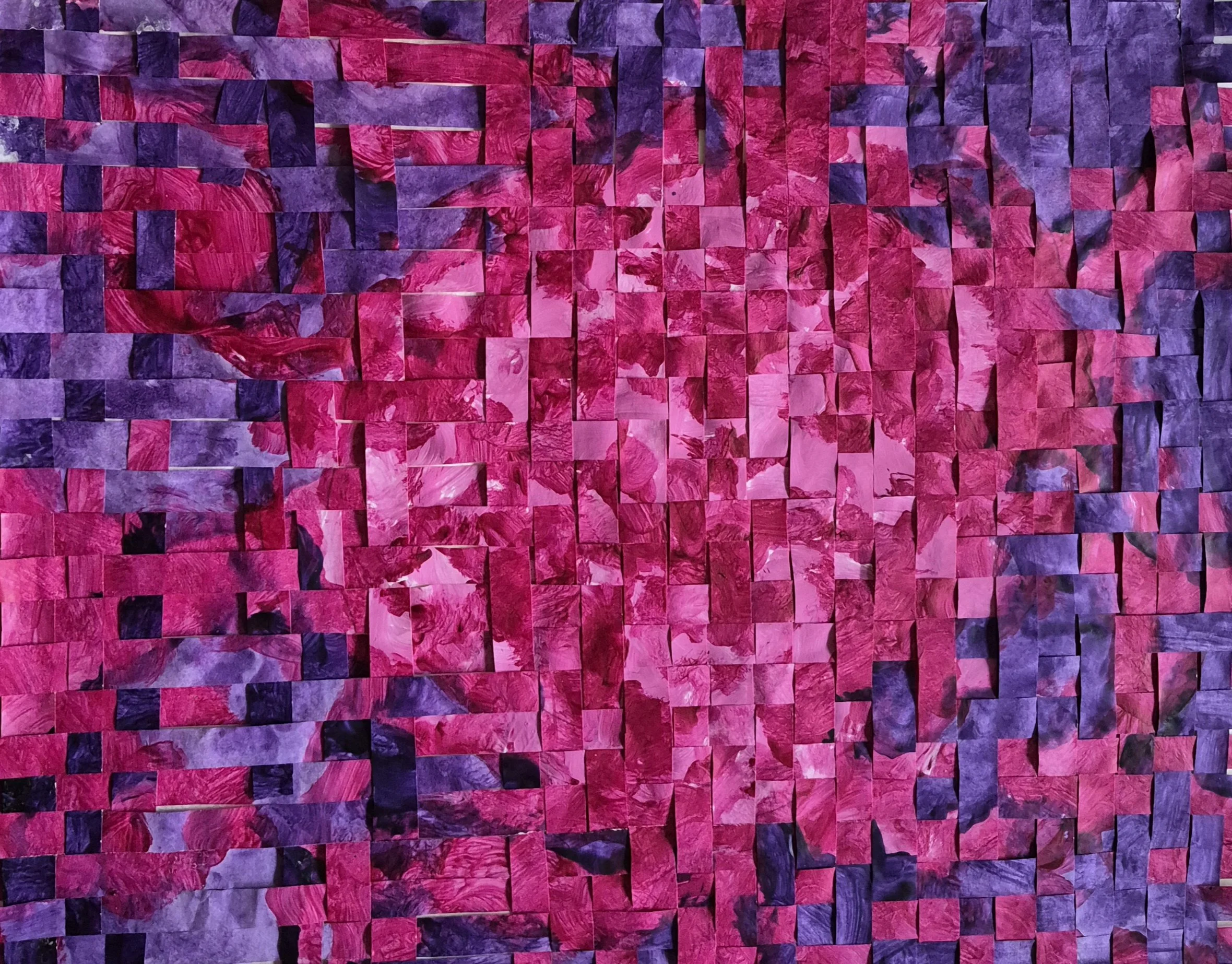
Art and photo by Sheila Benedis
Art by Hart

Addie Jo loved the holiday hubbub, but it made her children cranky
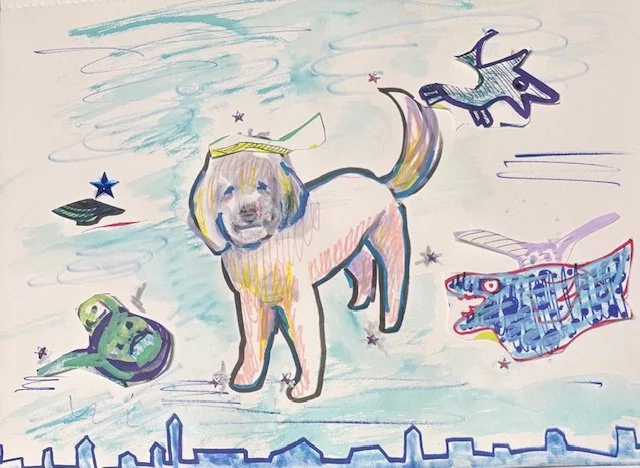
It was Professor Kyle Hamster-Bourne who identified several previously unknown constellations

Sausage’s 18th-century sty was still standing, including the original 18th-century stained glass window

Jumbo felt shy at parties and ended up talking to the babartender
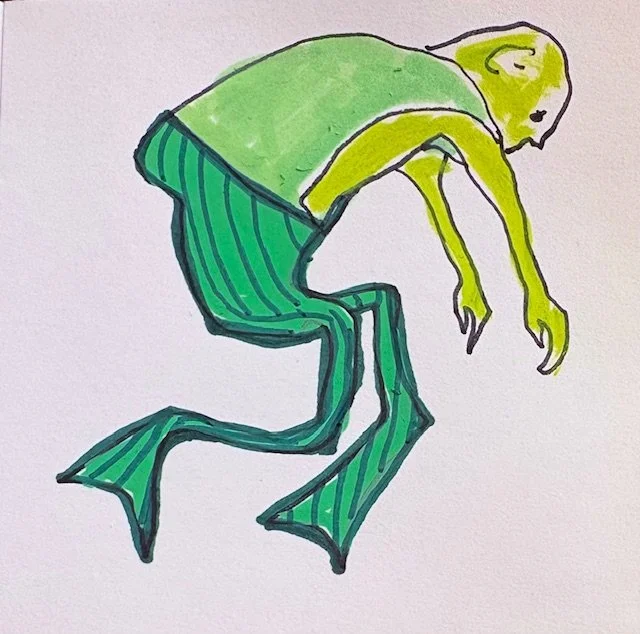
Lester’s dance moves left his partners behind
Art and photos by Jane Hart
In and Around Kendal
December Birthdays
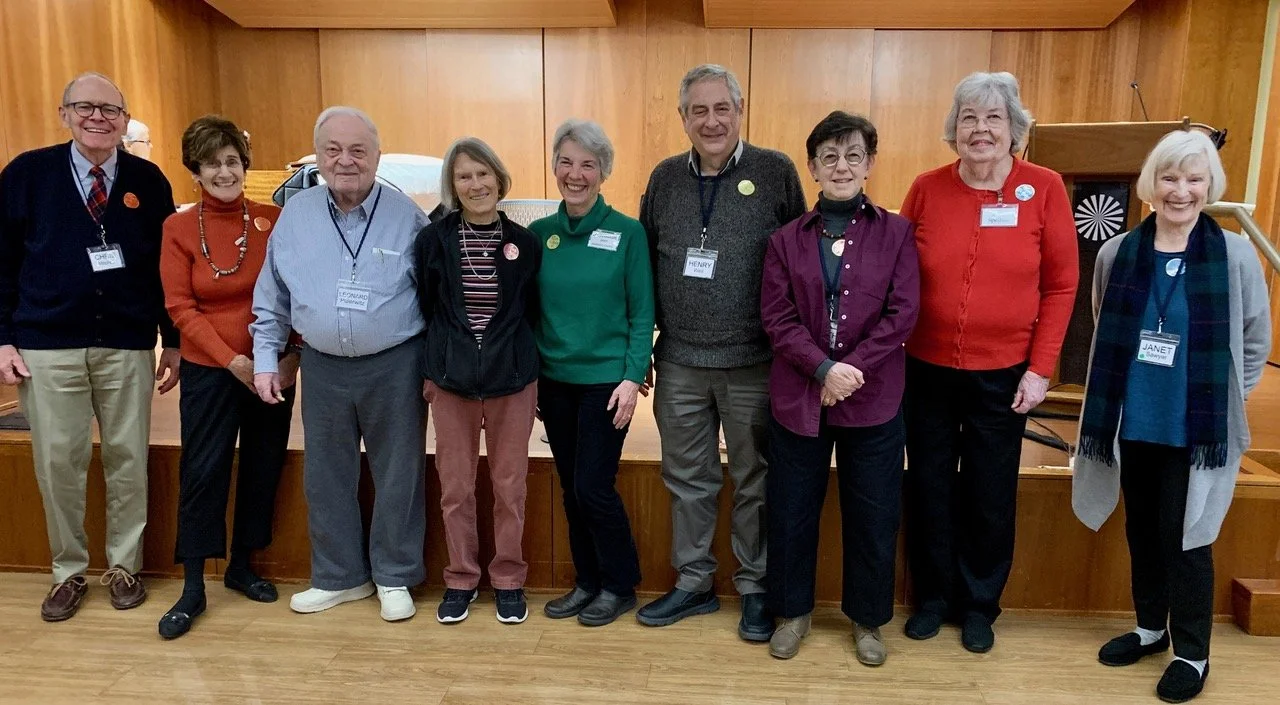
Photo by Harry Bloomfeld
Forget the Warm Puppy, Happiness Is . . .

Photo by Ed Lannert
The Belles of the Bells
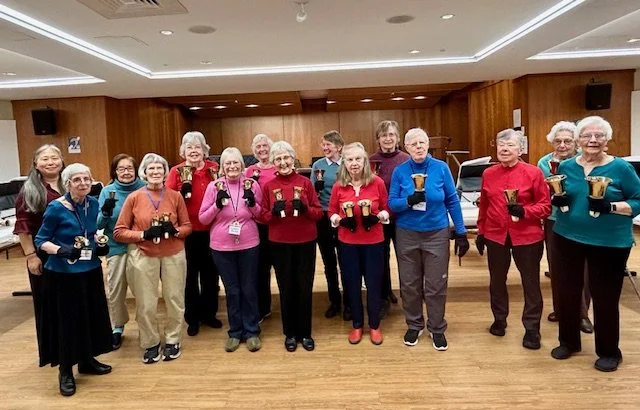
Photo by Carolyn Reiss
Making It Official
We may have six more days until the shortest day of the year, but overnight the weather proved that winter—and all its beauty—is upon us!
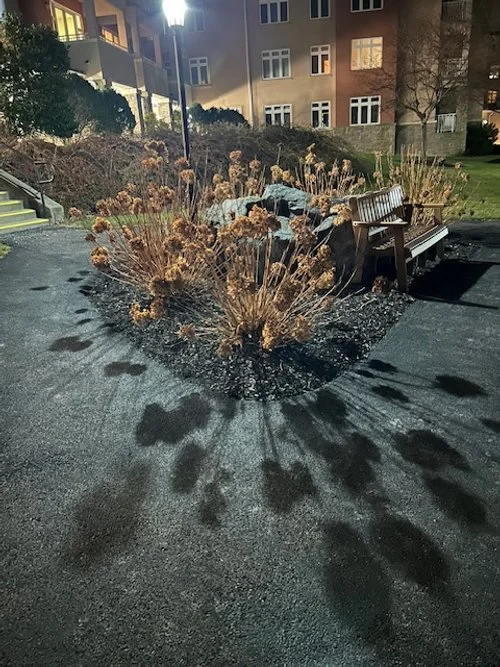
Just Starting December 13, by Carolyn Reiss
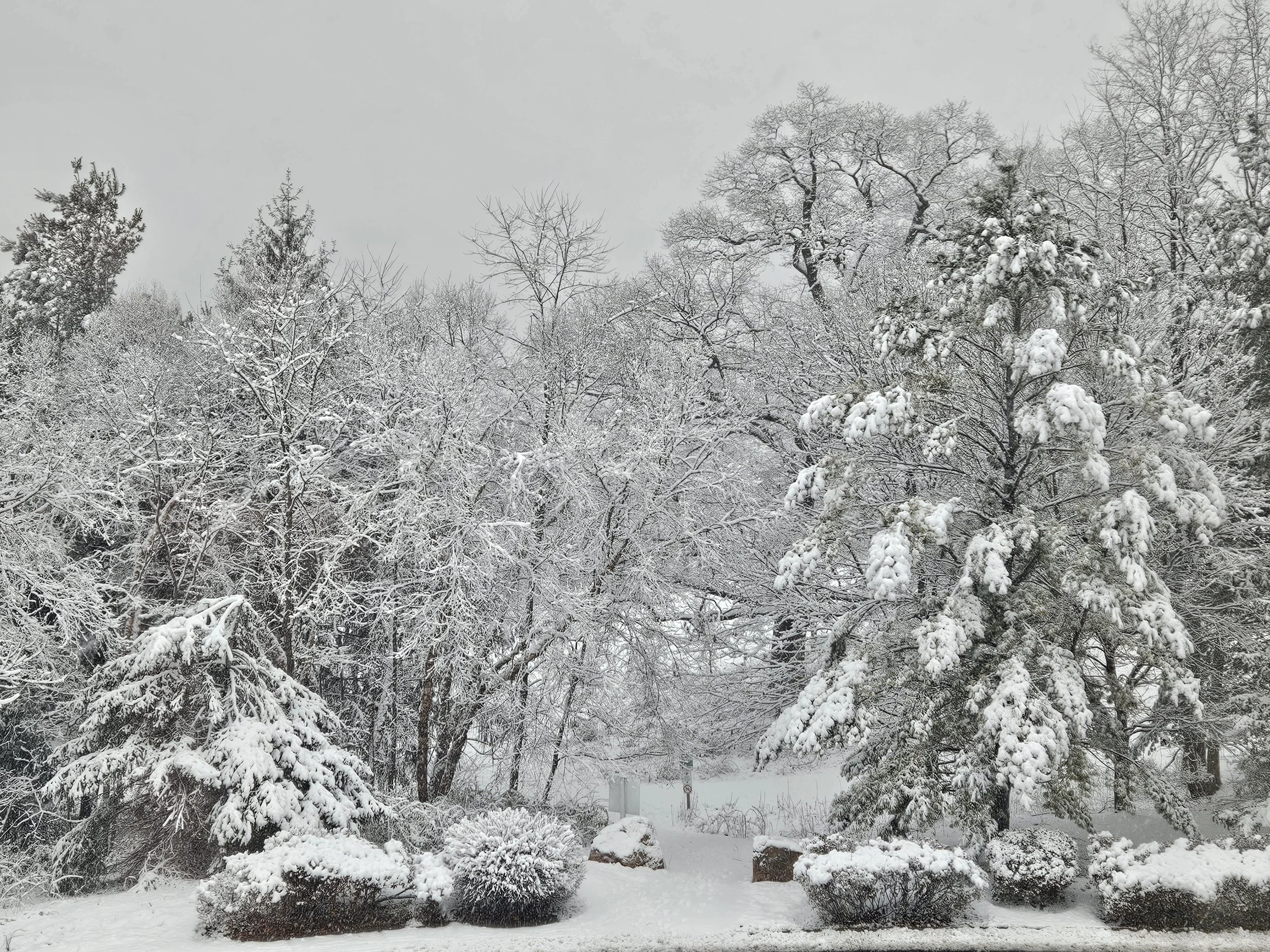
Morning, December 14, Entering Rockwood Park, by Greg Lozier

Photo by Marianne Bloomfeld

Photo by Sue Bastian

A Snowy Kendal, by Edward Kasinec

Photo by Carolyn Reiss
A Girl Who Knows How Important Fashion Can Be

Allie Reiss dresses casually, but oh so stylishly, for a walk in the snow, by Carolyn Reiss
It’s Beginning to Look a Lot Like . . .
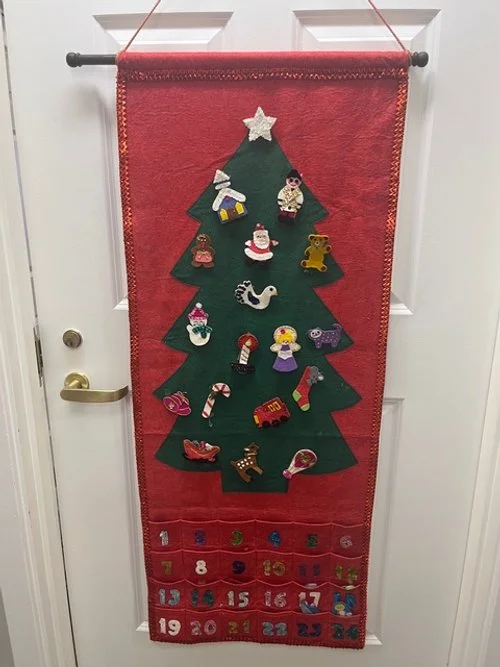
Sue Bastian’s tree is guaranteed not to shed needles . . .
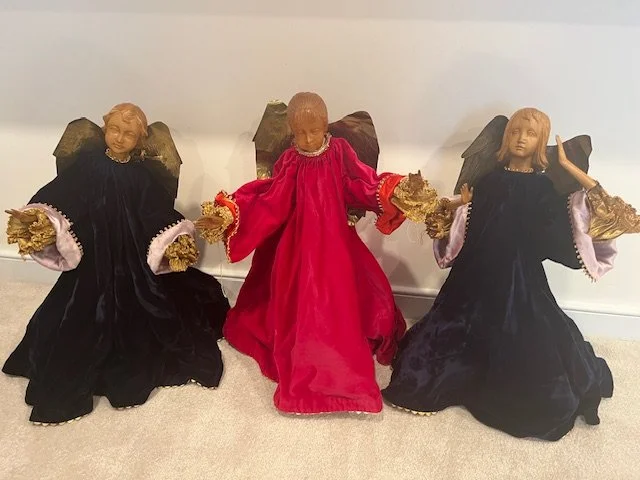
Gracing Sue’s Living Room and spreading joy therein
Photos by Sue Bastian
Out and About
It’s a Lyndhurst Christmas!
Recently, Amanda Slattery and Cynthia Ferguson took a quick drive over to Lyndhurst to indulge in the mansions festive decorations—with 50 uniquely designed trees throughout.
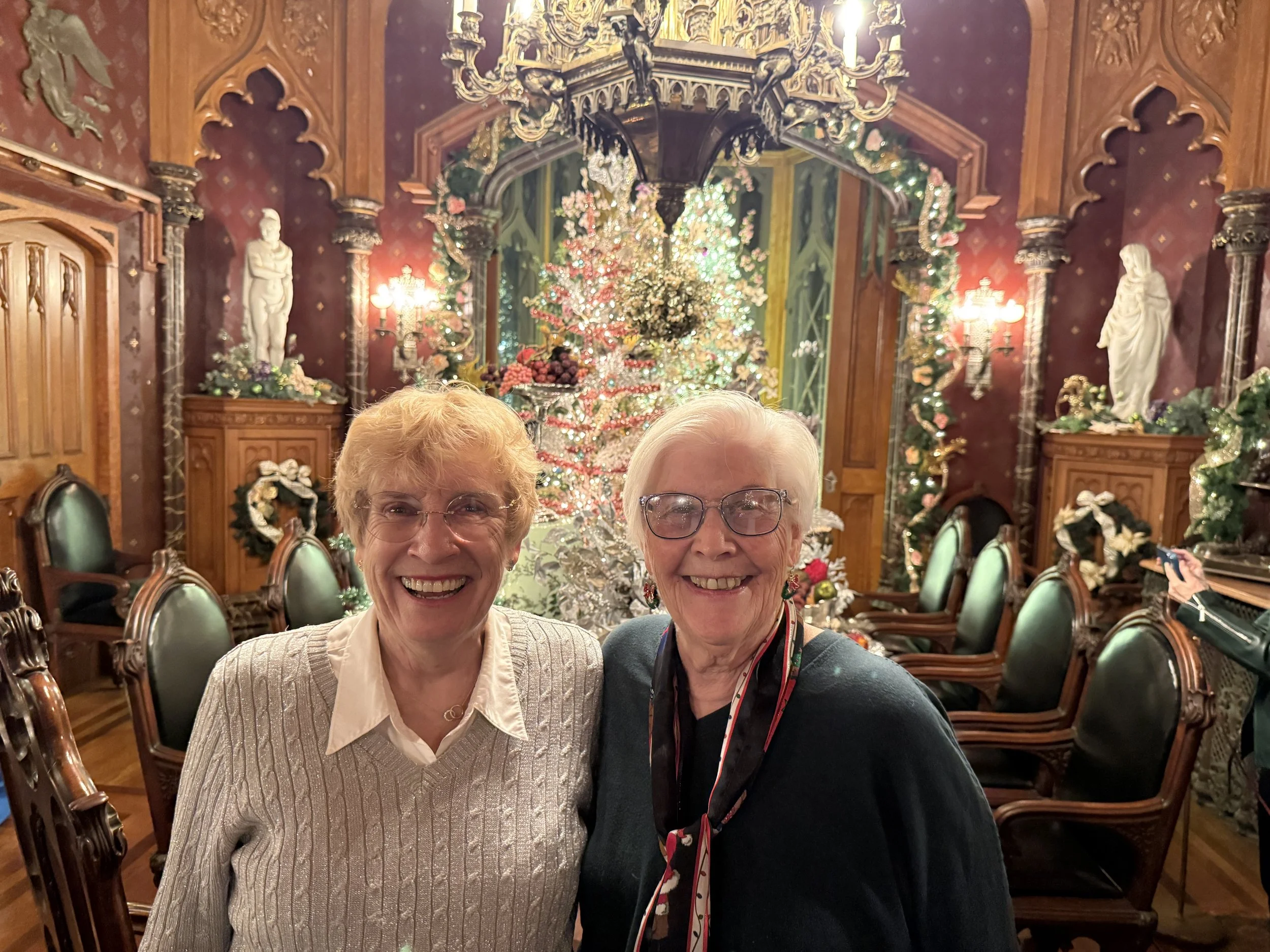
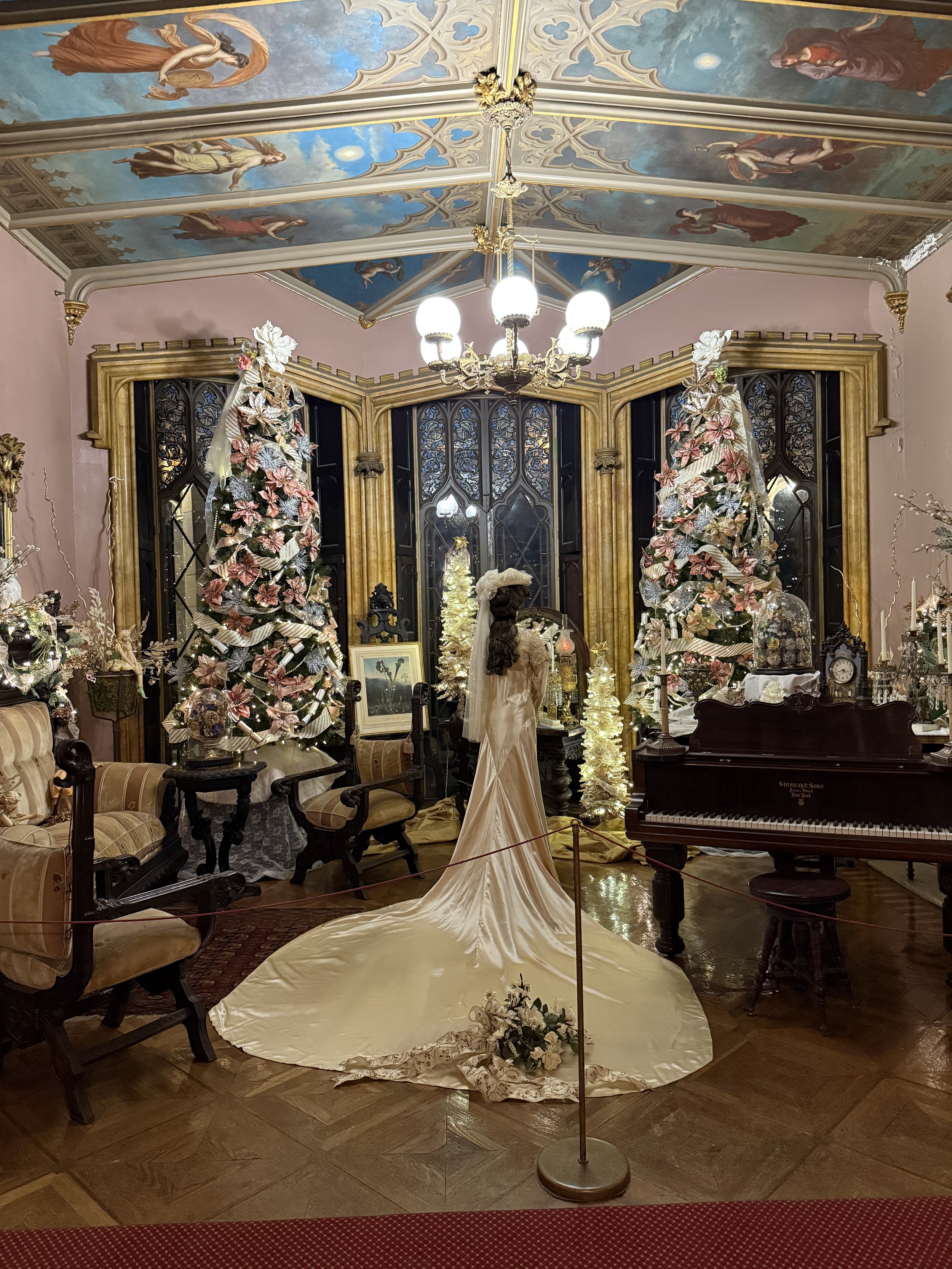
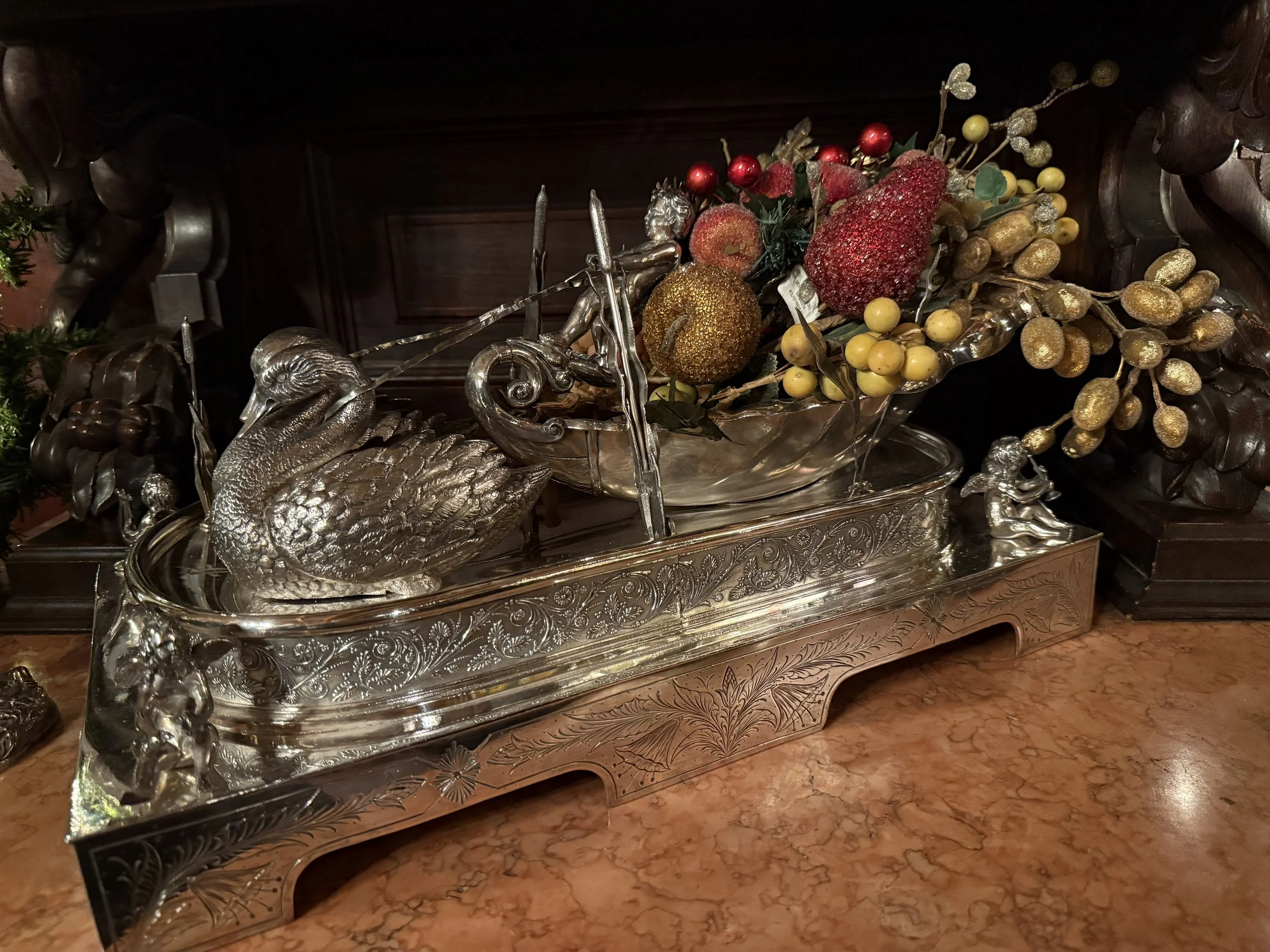

Lyndhurst interior photos by Amanda Slattery
Coming Soon to a Gathering Room Near You!
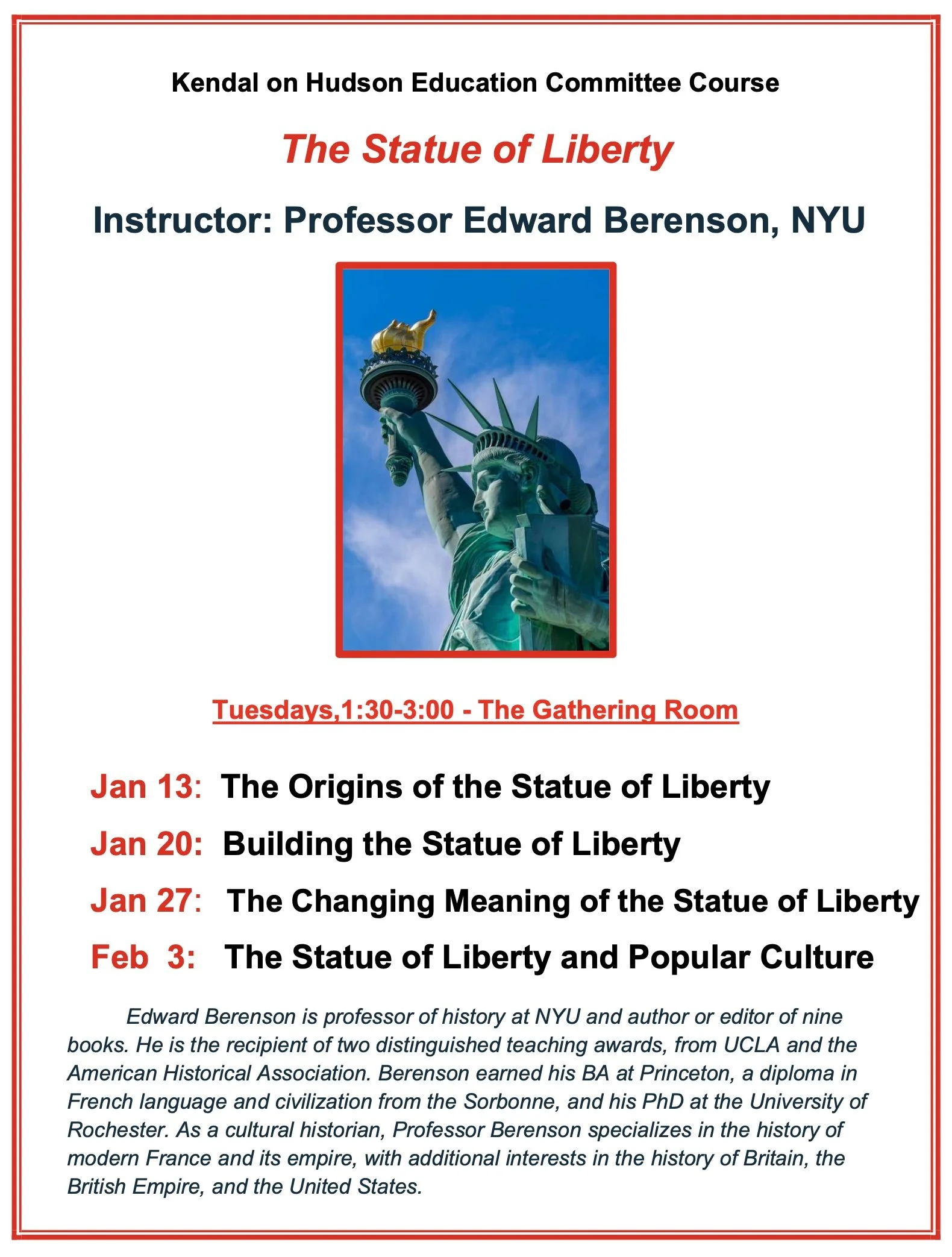
The flyer for signing up for this course has already gone into our cubbies. Missing yours but interested in signing up? You’ll find additional flyers in the Activities Alcove between the Bistro Lounge and the Gathering Room. Don’t dawdle! Sign up soon!
Kendalite Makes News
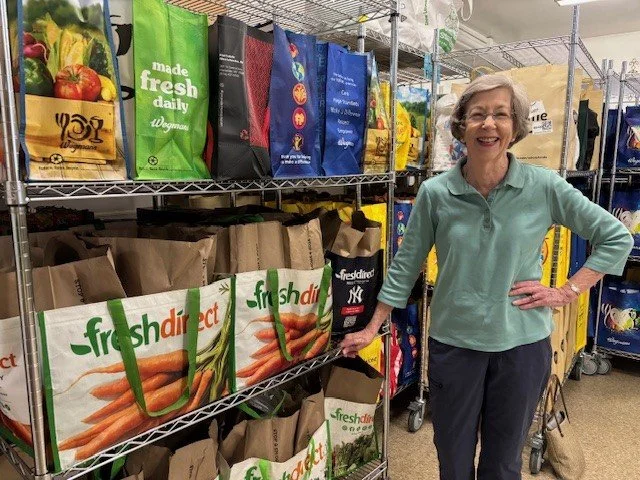
Photo by The Hudson Independent
The Hudson Independent published a lengthy article in their December 2025 issue on food insecurity in Westchester County, mentioning the efforts of community groups to help fill the growing void. Front and center comes our very own Pam Mitchell, thusly:
“Meanwhile, many residents in the area, such as Pam Mitchell of Sleepy Hollow, are lending a hand and bagging groceries for those in need.
As a volunteer with the Community Food Pantry of Sleepy Hollow/Tarrytown, Mitchell noticed there was a shortage of grocery bags for families when they came to collect their food.
Mitchell, a resident at the Kendal on Hudson senior living community, connected with other women to collect bags that could be reused and redistributed at the pantry. At one dropoff, more than 100 bags were donated.”
Yay, Pam!
Just in Time . . .

Kendal Performances
Performances—musical, educational, edificational, just for kicks—provide a lot of enjoyment here at Kendal. Every once in a while, a photographer here can capture an extra something special, as well.
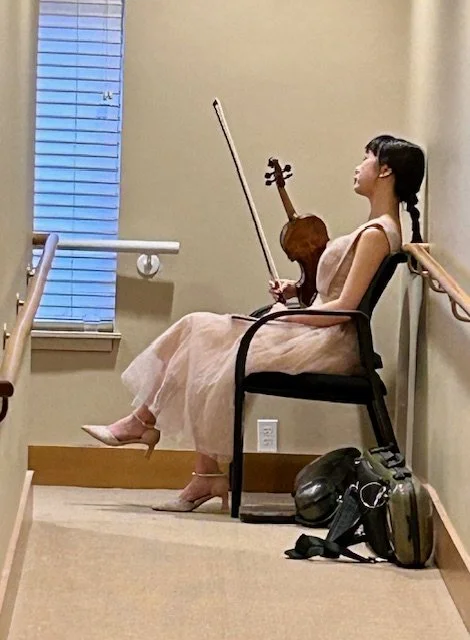
Waiting in the Wings: 15-year-old violinist Nickita Zhang performed with her older sister on the piano. Photo by Carolyn Reiss
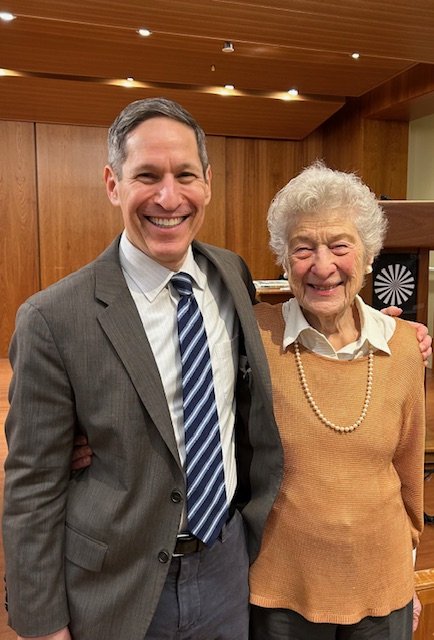
A Family Affair: Tom Frieden—who keeps us abreast of the state of health home and abroad—with mom Nancy Frieden of Kendal fame. Photo by Edward Kasinec