Tarrytown Traffic Alerts
I Never Knew That
Last week we learned about when packaged sliced bread was introduced. This week we learn about something mentioned at the end of that article:
The World War II Home Sacrifice That Failed
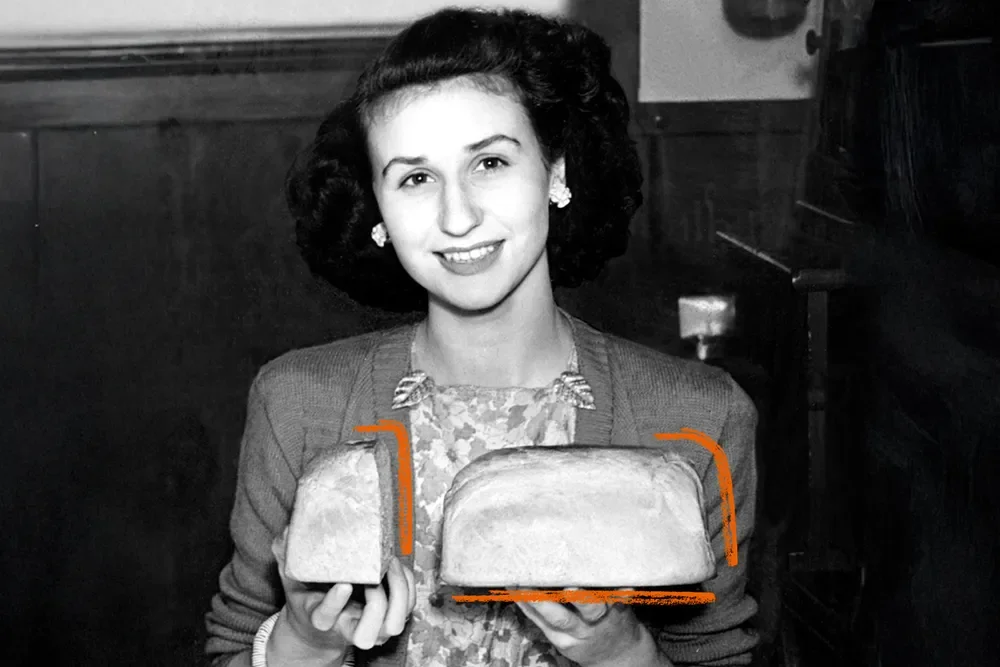
Early in 1943, with hundreds of thousands of troops overseas fighting Nazi Germany and the Axis powers, Americans were already deep in the daily restrictions of wartime life. Sugar and gasoline were in short supply. Tires and coffee were scarce. Ration books and their stamps were part of life—and most people had learned to live with it.
But then the government came for their bread.
The order came from U.S. Secretary of Agriculture Claude R. Wickard, who declared the sale of sliced bread illegal in Food Distribution Order No. 1.
Rationing had begun in 1942 and now governed everything from food to fuel. Each person was assigned a careful tally of stamps, and those stamps had to be handed over—along with cash—to purchase goods. The idea was simple: The war would get what it needed first, and civilians would learn to live with what was left.
By and large, Americans took this seriously, even cheerfully. They planted victory gardens. They ate more Kraft Macaroni & Cheese. They volunteered to distribute ration books. They patched, saved, reused, and made do. (They also sold tires on the lucrative black market that developed.)
But those same Americans had just gotten used to the soft, uniform, preservative-laden glory of machine-sliced bread, and they were reluctant to have it pried from their hands (hands that were not used to holding serrated knives). Wonder Bread had landed on store shelves in 1930, after the first commercial bread-slicing machine debuted at a Missouri bakery in 1928. Americans ate it up. Literally.
Wickard’s rationale wasn’t absurd. Getting bread from wheat in the field to perfectly portioned loaves in consumers’ hands required many of the same things that the war effort needed: waxed paper for packaging, steel for slicing machines, milk for baking, and labor.
The problem was that most bakeries—small shops and commercial factories—already owned slicing machines. Making consumers slice their own bread didn’t save much money, material, or man power. Bakeries found that unsliced loaves didn’t fit in the packaging they had, and consumers were terrible at cutting bread at home, with widespread complaints of waste.
The backlash was intense. After a week the mayor of New York announced that bakeries already equipped with slicing machines could continue to use them, creating instant acrimony between the sliced and the unsliced, the haves and the have-nots.
By early March the order had unraveled. The government backed down, issuing a statement that the country had a four-month store of wax paper—and that was plenty. Sliced bread returned, and the republic endured.
Source: Britannica.com, “Today in History,” Michele Metrych
For Your Funny Bone
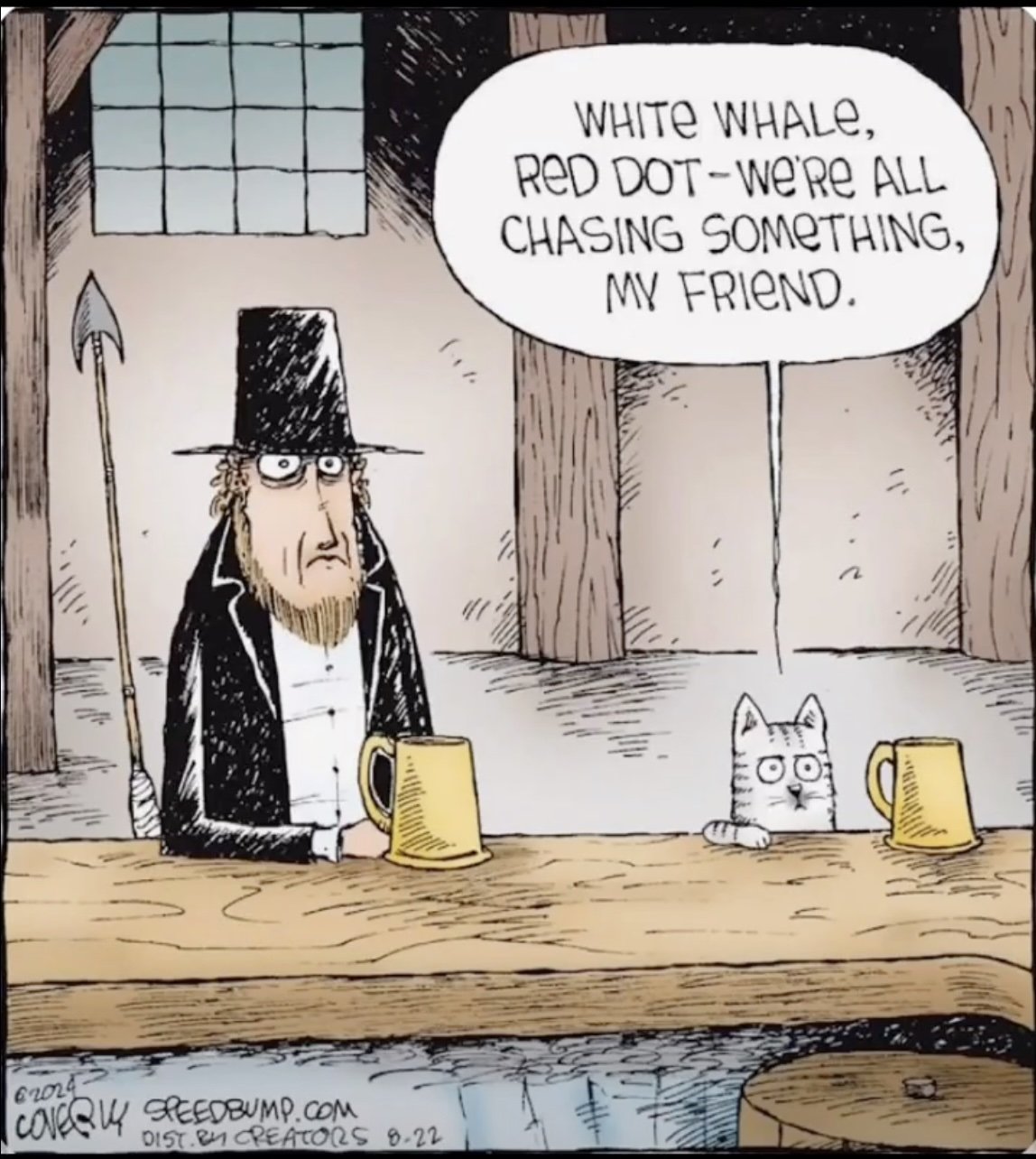
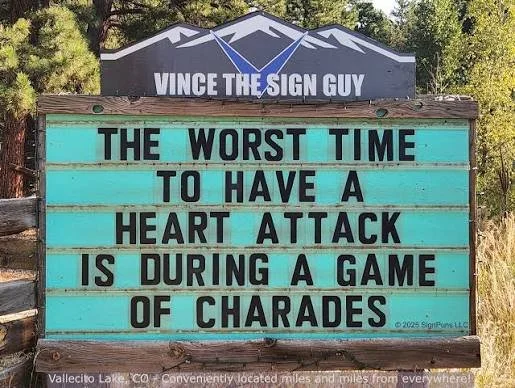

Art by Hart
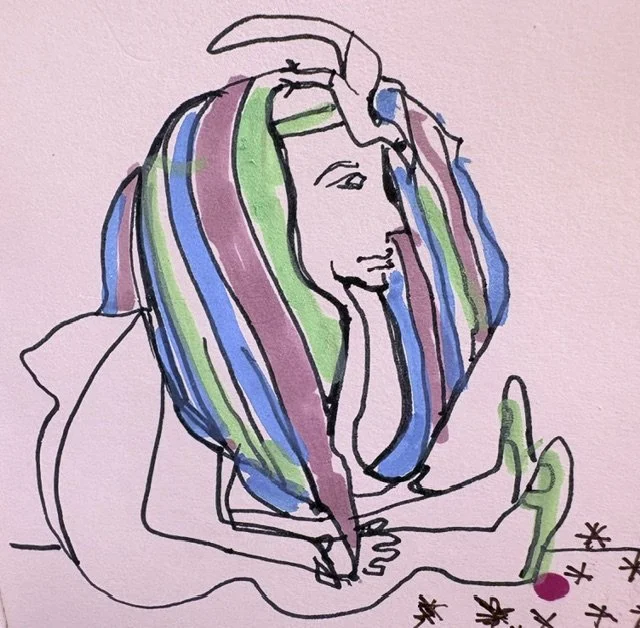
FIFA wasn’t the only sporting event on TV
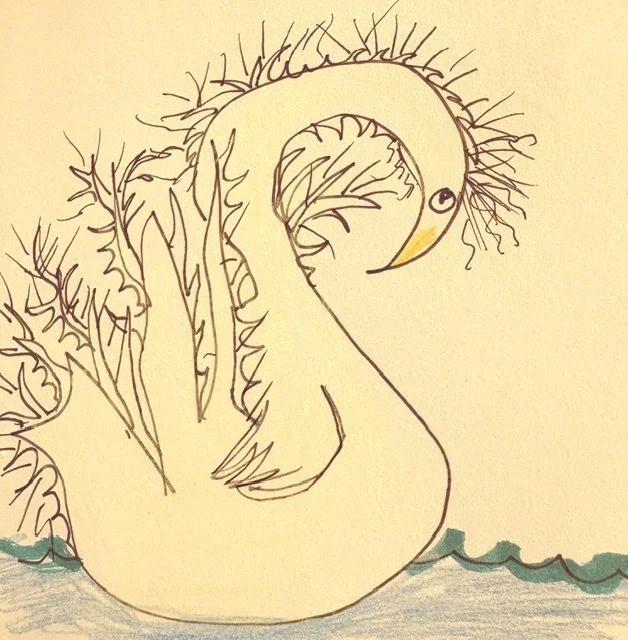
The frizzy weather was playing havoc with Franny’s feathers
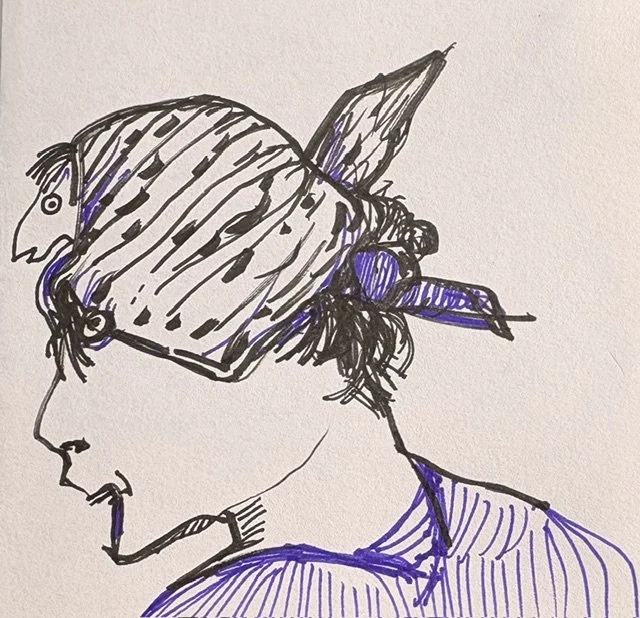
Laurel never had to hire a babysitter

Rhetta’s mother assured her that nobody would notice such a tiny pimple

The Selkirk boys were harmless, but they liked to stride into town like a couple of outlaws
Art and photos by Jane Hart
Hope XV, by Sheila Benedis
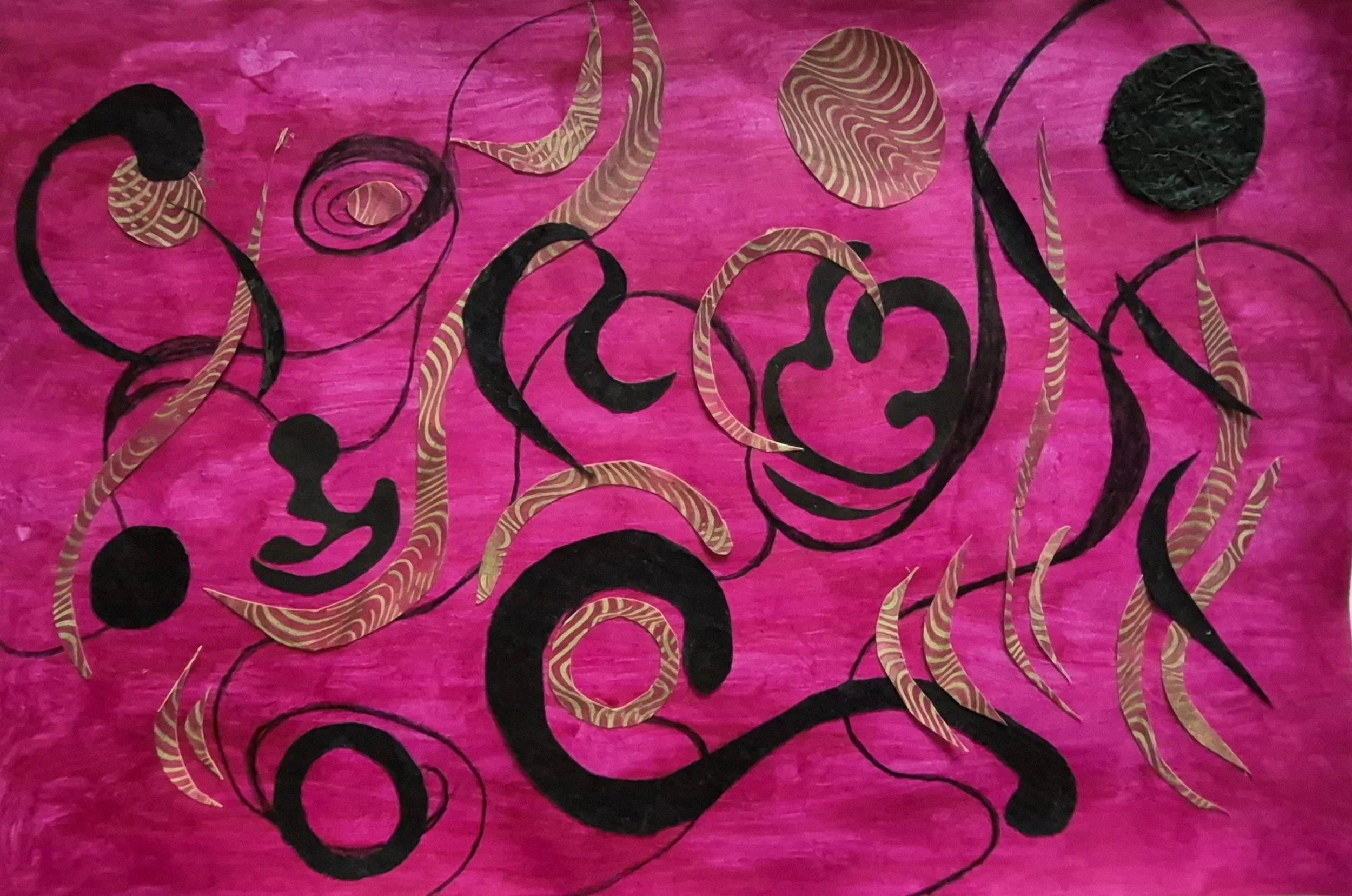
Art and photo by Sheila Benedis
In and Around Kendal
No, Thank You
Well—clearly—he’s not afraid of heights!
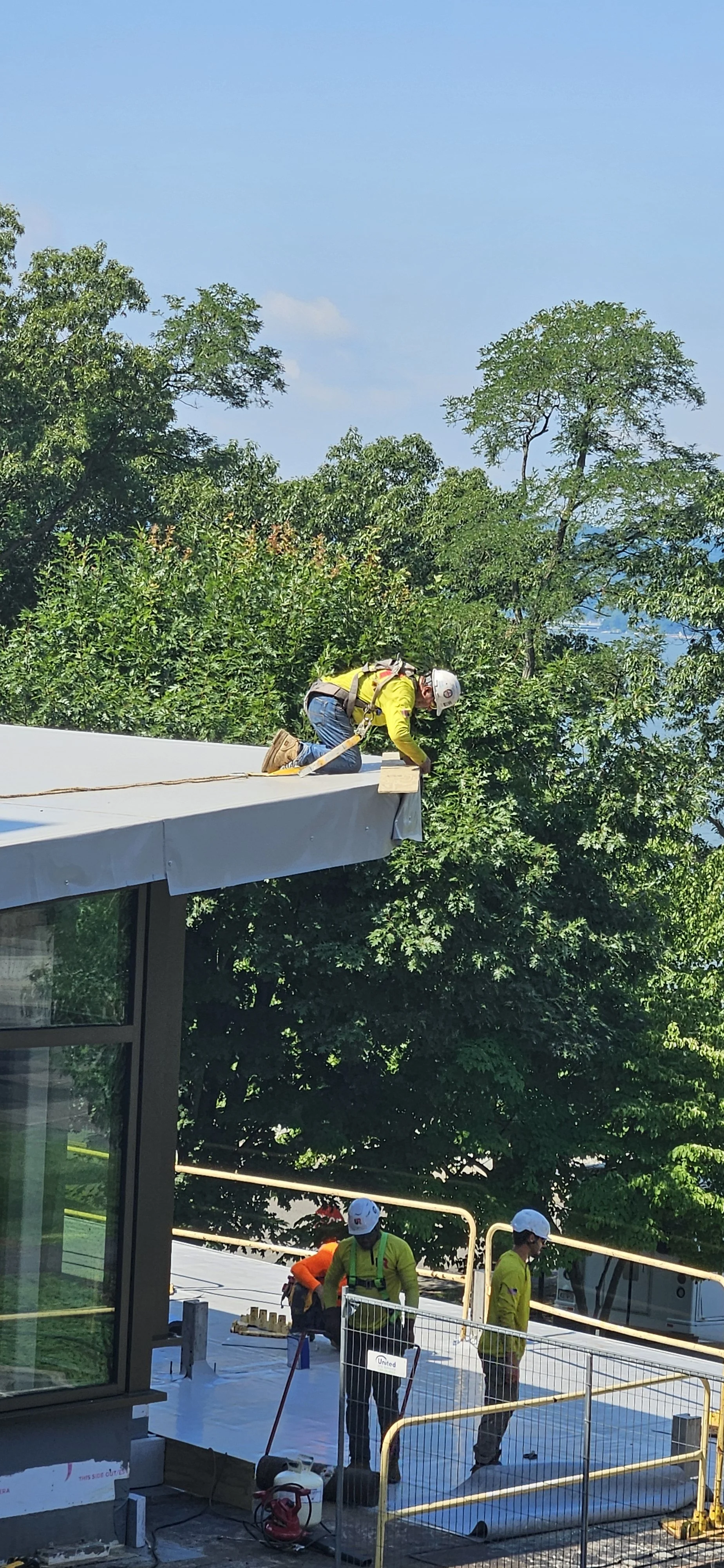
Photo by Joe Bruno
A Perfect Summer Day . . .

Photo by Carolyn Reiss
On Duty! Morning Shift
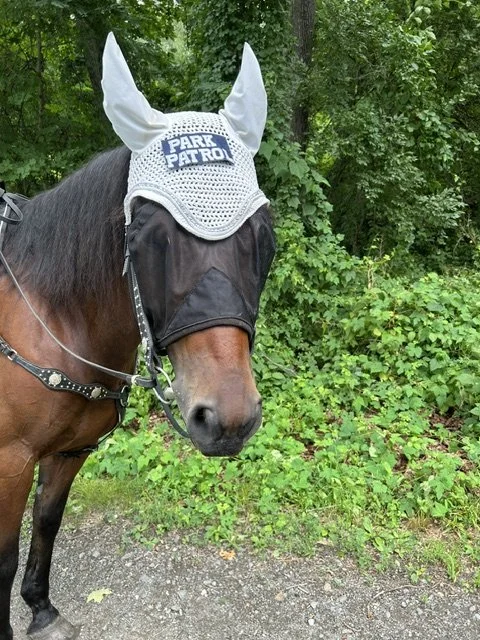
Photo by Edward Kasinec
Out for an Afternoon Stroll with the Kids
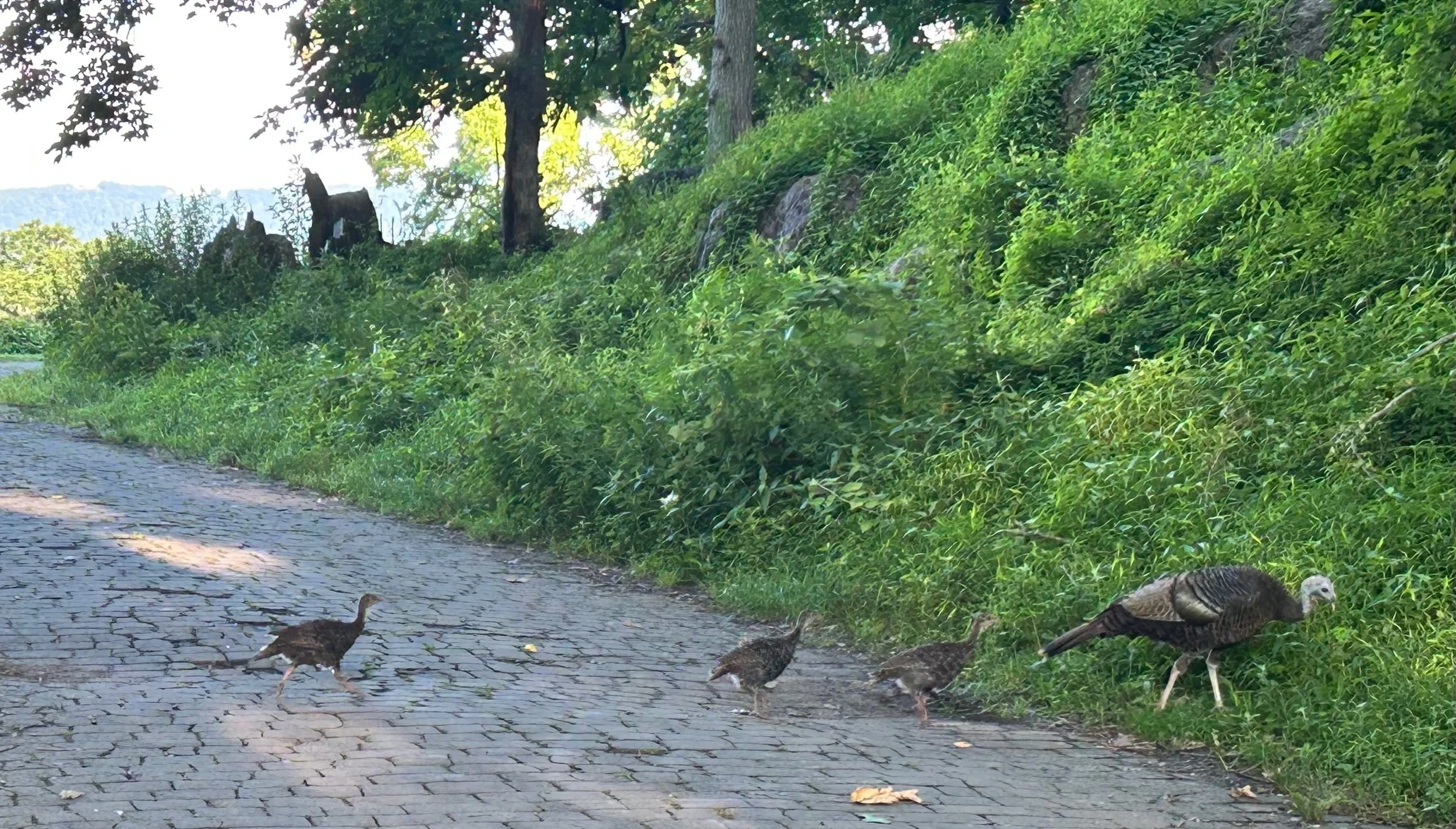
Photo by Aruna Raghavan
Wine Berries Begin to Show Their Stuff

Photo by Carolyn Reiss
Returning the Compliment
Last week, Carolyn Reiss captured photographer Ed Lannert on a stroll in the park—doubtlessly with photos to follow. This week, Ed returned the favor. Carolyn and Allie go for a walk—surely photography will ensue.
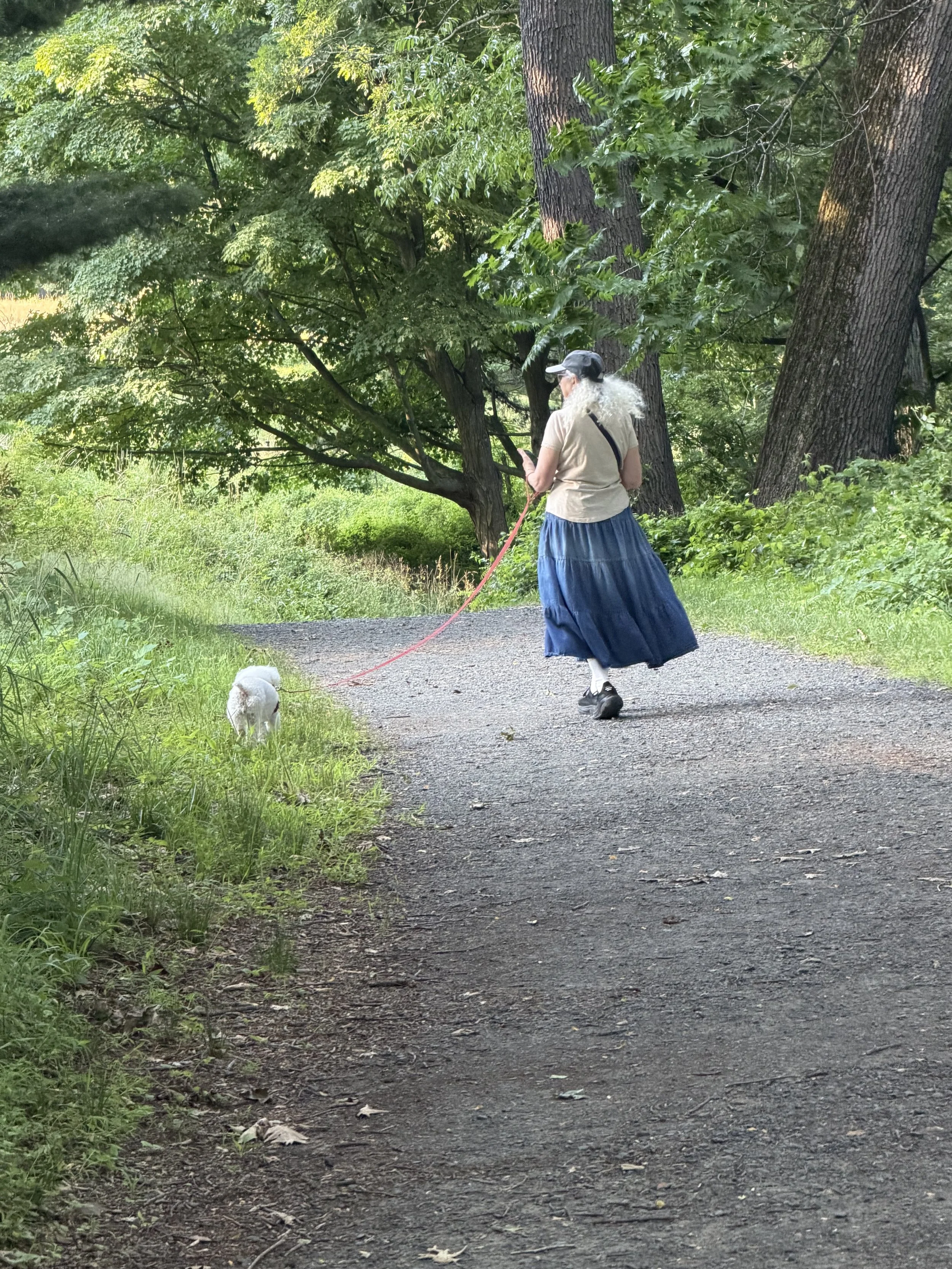
Photo by Ed Lannert
The Latest Kendal Craze
It began about mid-week. We received a cool picture of a mushroom from Edward Kasinec. Then a few days later, we received a cool picture of a mushroom from Philip Monteleoni. And guess what happened as we were finishing up Res Web for the week! We received a cool picture of a mushroom from Aruna Raghavan. Mushroom photographers of the world, unite!

Photo by Edward Kasinec

Photo by Philip Monteleoni

Photo by Aruna Raghavan
Out and About
It’s always great for new residents to just dive into Kendal activities. Along that line, Pete Catapano sent this photo, explaining that it “was taken at Flushing Bay near LaGuardia Airport [seen in the background] and the site of the 1964 World’s Fair. It demonstrates to me that it’s in [childrne’s] nature to find a way to play. No matter where they are or what the situation, unless they are restrained, curiosity, spontaneous movement, and a lust for life will take over.”

Goldenaires on the Fourth
This year’s Kendal Fourth of July celebration was special: the Declaration and the Bill of Rights, the singing, a reenvisioned American flag, the Emma Lazarus poem, the unsung women of the Founding era, the debate. But even in all that excellence, the “Linda and the Goldenaires” piece stood out. We saved a special section in this Residents Website to salute them.
If you remember, these usually jovial Kendalites were deadly serious. They began in a line, each dressed in a shirt printed with American flags—reading a quote from the past—near or far —he felt pertinent to our Democracy. Then, rotating in line, each read a second quote.
THE QUOTES
Mike Kornfield Quotes:
I cannot believe that war is the best solution. No one won the last war and no one will win the next war. Eleanor Roosevelt
There is danger from all men. The only maxim of a free government ought to be to trust no man living with the power to endanger the public liberty. John Adams
Greg Lozier Quotes
True heroism is remarkably sober, very undramatic. It is not the urge to surpass all others at whatever cost, but the urge to serve others at whatever cost. Arthur Ashe
The fact is, with every friendship you make, and every bond you establish, you are shaping the image of America projected to the rest of the world. Michelle Obama
Jon Masters Quotes
I don’t want to be the President who built empires, or sought grandeur, or extended dominion. I want to be the President who helped to end hatred among his fellow men and who promoted love among the people of all races and all regions and all parties. President Lyndon B. Johnson
We here highly resolve that these dead shall not have died in vain—that this nation, under God, shall have a new birth of freedom—and that government of the people, by the people, for the people, shall not perish from the earth. Abraham Lincoln
Philip Monteleoni Quotes
To lodge all power in one party and keep it there is to insure bad government and the certain and gradual deterioration of public morals. Mark Twain
When we unite in purpose, we are greater than the sum of our parts. Maya Angelou
THE SONG
The height of the evening was the group’s performance of a singing of The Battle Hymn of the Republic, again reenvisioned for our day, and written by Mike Kornfield and Linda Mahoney.
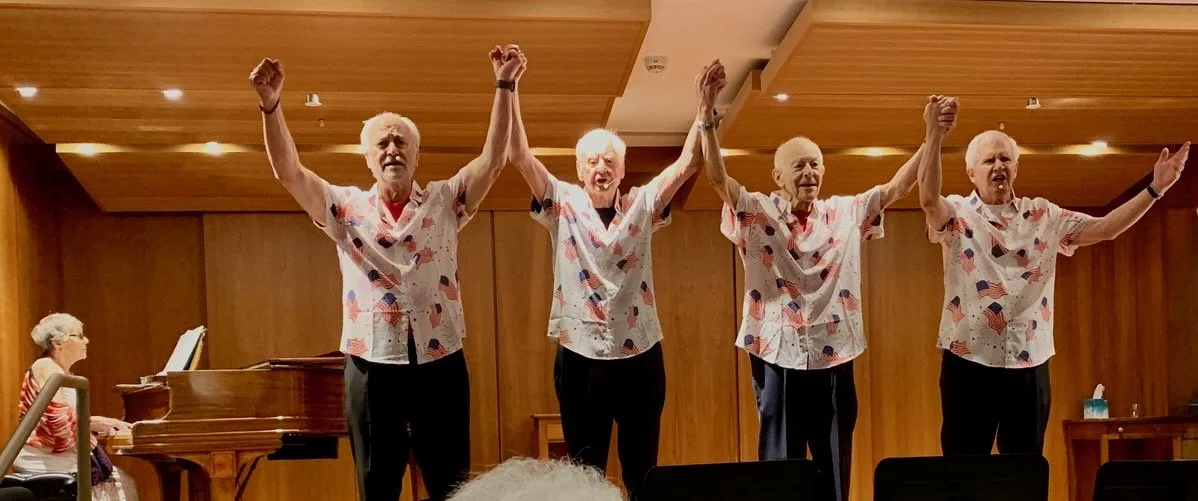
Linda and the Goldenaires, photo by Harry Bloomfeld
Battle Hymn for July 4th
Our country is in trouble Now of that there is no doubt So we must resist all tyrants From within and from without Who try to take our rights away And crush democracy Reclaim our liberty
Chorus: Glory, Glory, let us all be strong Glory, Glory let us right what’s wrong Glory ,Glory let us sing one song Unite and we’ll be strong
On city streets and country roads We’re neighbors one and all We’ll bear each others’ burdens And help them if they fall We must build a new community And try to sing one song Unite and we’ll be strong
Chorus
We all live on this planet And we all must learn to share This Earth has been our mother And her gifts are everywhere The trees, the birds, the animals, The water and the air We all must do our share
Chorus
Our spirit is awakening We’ll do what must be done We will practice love for neighbors Until the battle’s won We will keep our nation friendly. To the stranger who’s in need Be true in word and deed
Chorus
By the final chorus, the entire audience seemed to be singing, with vigor, along with them.
Well, done Linda and the Goldenaires!
Try Something New . . .
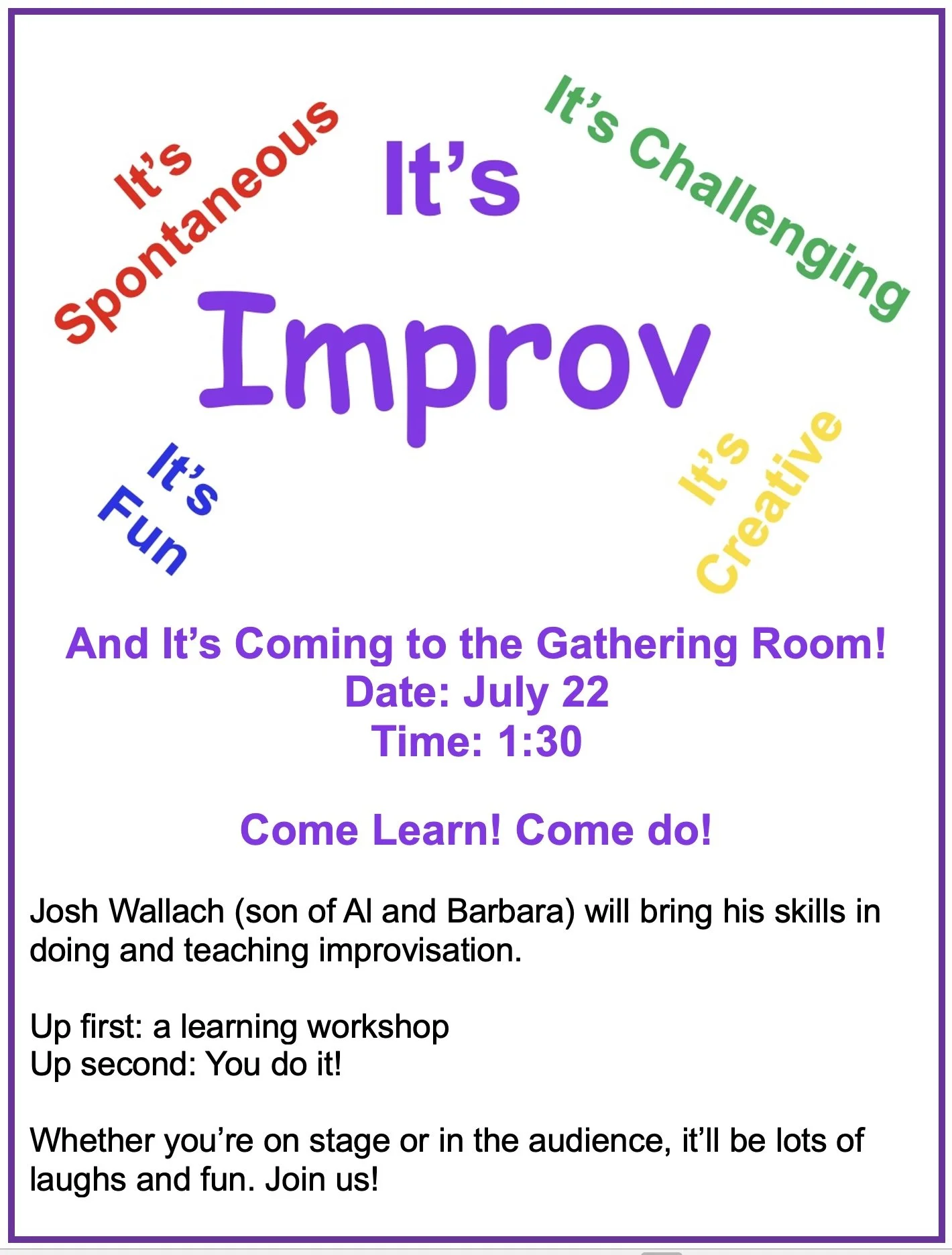
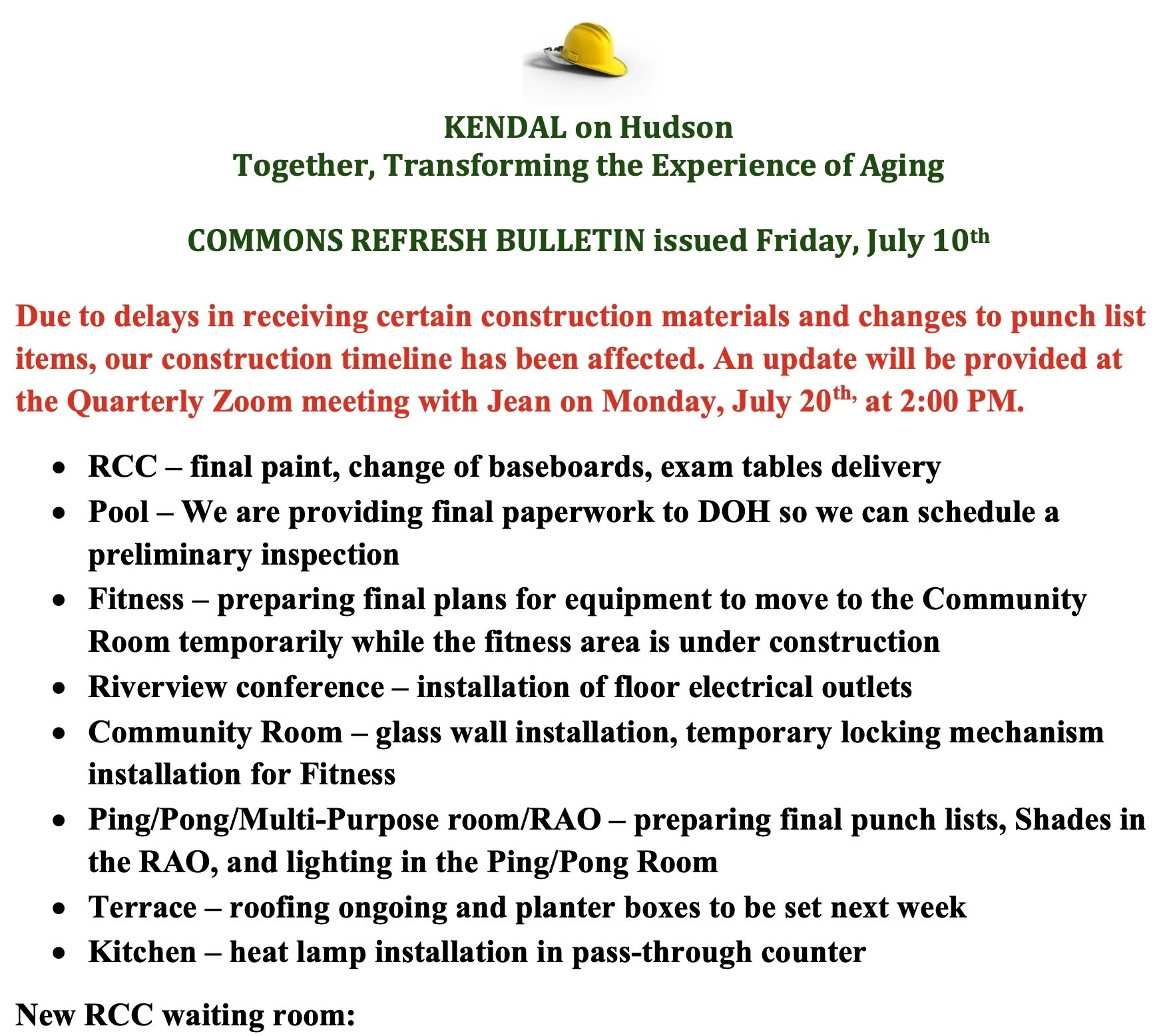
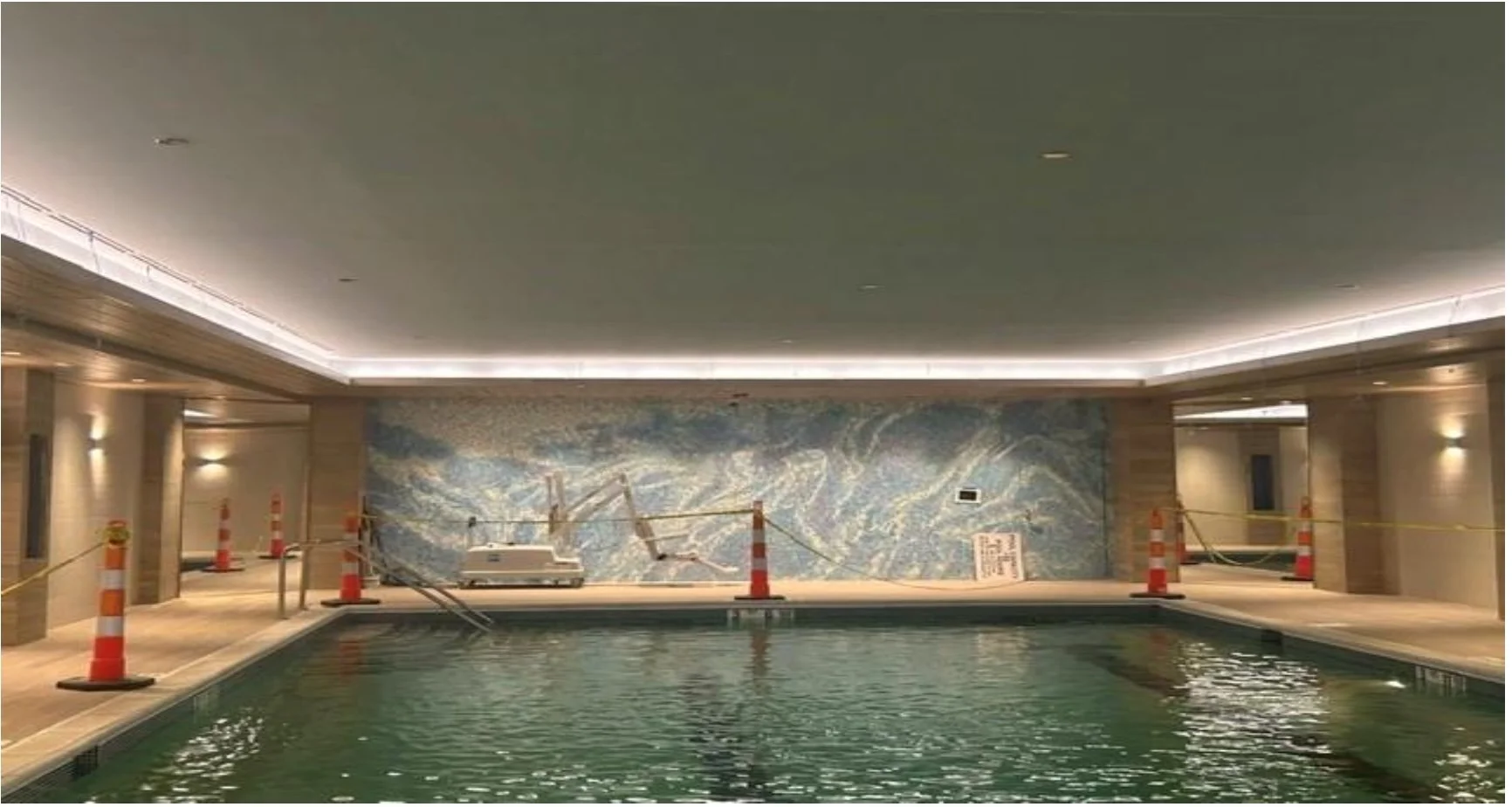
Weekly Construction Report
New RC Waiting Room

New Pool Bench

New Pool Mirrors
From the Office of Ellen Ottstadt
If You Can't Say Anything Nice, Say It With Wit
These insults are from an era before the English language got boiled down to 4-letter words.
1. “He had delusions of adequacy.” Walter Kerr
2. “He has all the virtues I dislike and none of the vices I admire.” Winston Churchill
3. “I have never killed a man, but I have read many obituaries with great pleasure.” Clarence Darrow
4. “He has never been known to use a word that might send a reader to the dictionary.”William Faulkner (about Ernest Hemingway)
5. “Poor Faulkner. Does he really think big emotions come from big words?” Ernest Hemingway (about William Faulkner)
6. “Thank you for sending me a copy of your book; I'll waste no time reading it.” Moses Hadas
7. “I didn’t attend the funeral, but I sent a nice letter saying I approved of it.” Mark Twain
8. “He has no enemies, but is intensely disliked by his friends.” Oscar Wilde
9. “I am enclosing two tickets to the first night of my new play; bring a friend, if you have one.” George Bernard Shaw to Winston Churchill
10. “Cannot possibly attend first night, will attend second . . . if there is one.” Winston Churchill, in response
11. “I feel so miserable without you; it’s almost like having you here.” Stephen Bishop
12. “He is a self-made man and worships his creator.” John Bright
13. “I’ve just learned about his illness. Let’s hope it's nothing trivial.” Irvin S. Cobb
Contributed by Barbara Bruno
I Never Knew That
The Long Road to Sliced Bread
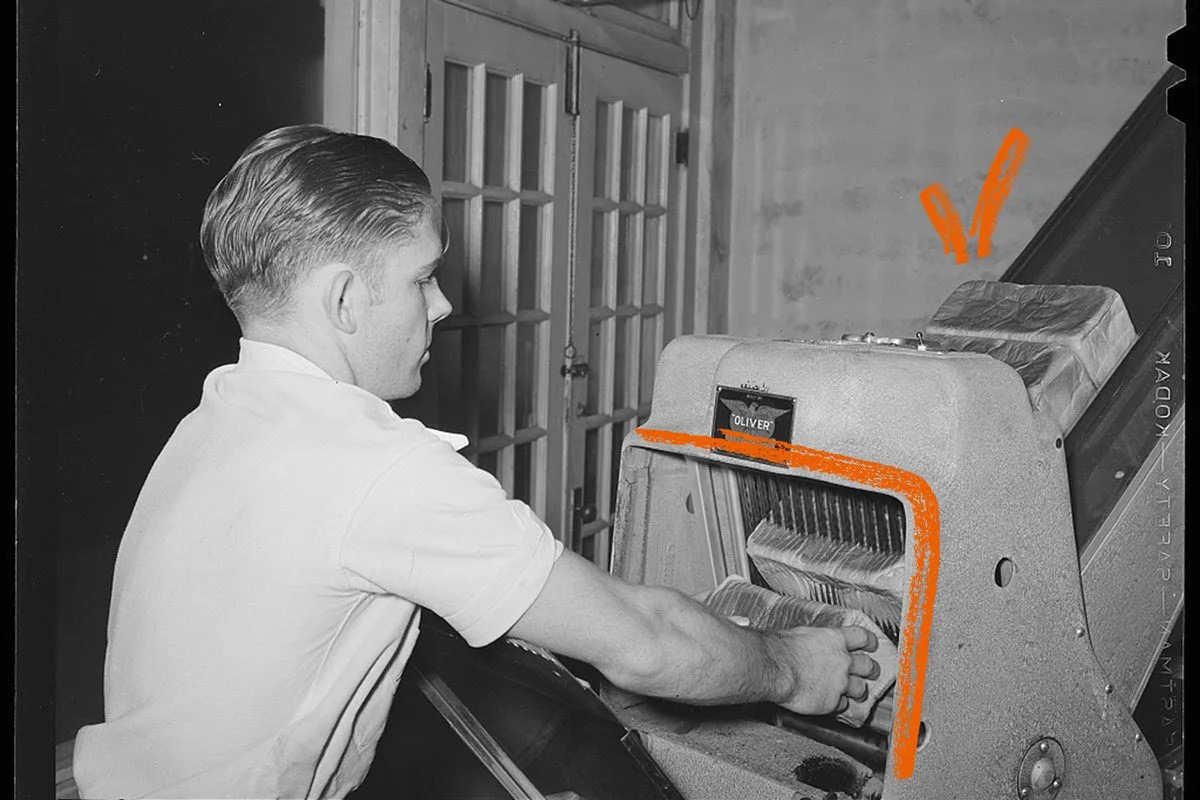
Prints and Photographs Division/Library of Congress, Washington, D.C.

Bread has been made for thousands and thousands of years. But the convenience of commercially available presliced bread? That is a much more recent development, relatively speaking.
On July 7, 1928, bread loaves that had been presliced—with the first commercial bread slicer—were sold for the very first time. And the person responsible for this, one of the most revolutionary inventions in the baking industry, was . . . a jeweler? Indeed. The creator, Otto Rohwedder, was a jeweler by trade, but he liked to invent things in his spare time. He had graduated with a degree in optics from the Northern Illinois College of Ophthalmology and Otology. (Rohwedder was a man of many interests.) He eventually left the jewelry business entirely and took a chance on an idea: a machine that would automatically slice loaves of bread. By 1917 he had a viable prototype and a factory that was ready to produce it. So why didn’t his invention debut then? That year a fire destroyed the factory that housed Rohwedder’s prototype and blueprints. The setback meant he would have to start over.
Rohwedder got back to work. He partnered with Frank Bench, the owner of the Chillicothe Baking Company in Missouri, which would go on to produce the first loaves of bread that would be sliced by Rohwedder’s invention in 1928. The day before the first sales of their presliced bread, they advertised in a local newspaper, touting the innovation as “The Greatest Forward Step in the Baking Industry Since Bread Was Wrapped” and “a fine loaf sold a better way.”
Customers agreed.
As the demand for sliced bread increased, the use of commercial bread slicers spread across the country. The sale of presliced bread has been ubiquitous ever since—with one small hiccup in 1943, when there was a brief ban on it in the U.S. (But that’s a story for another time. Stay tuned.)
Source: Britannica.com, “Today in History,” Amy McKenna
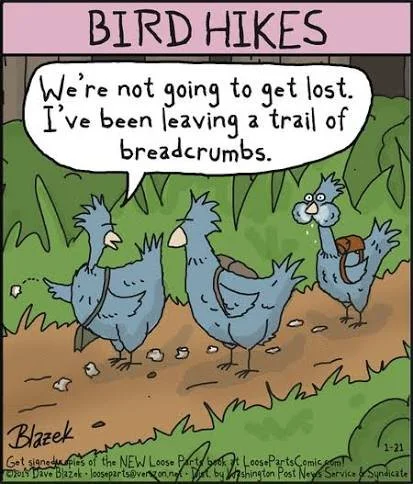
For Your Funny Bone
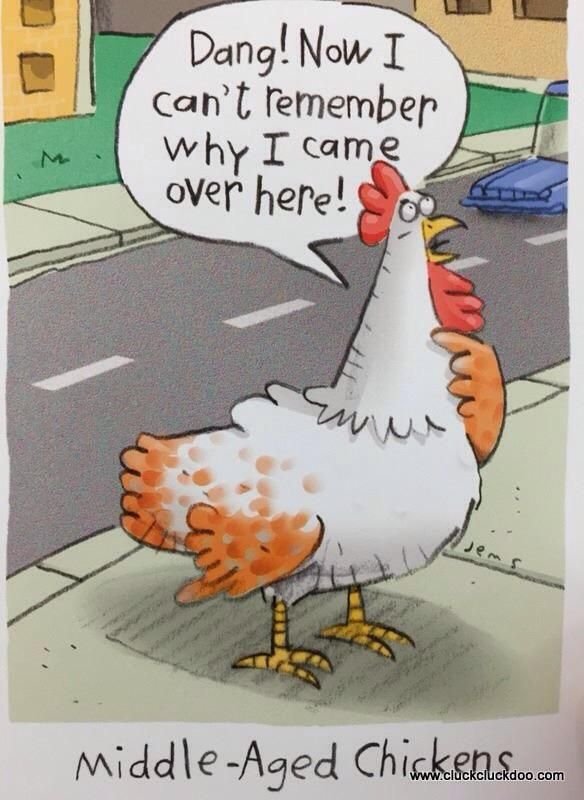

Contributed by Maria Harris
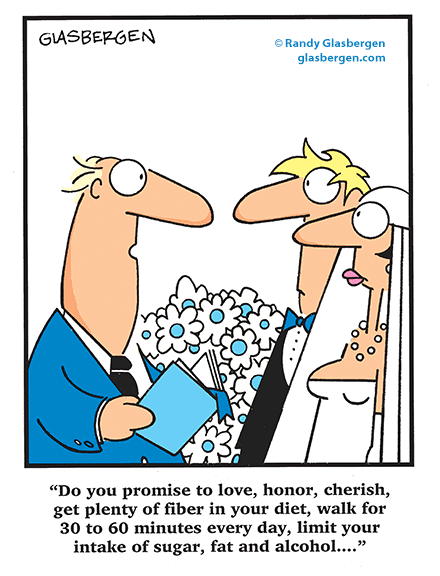
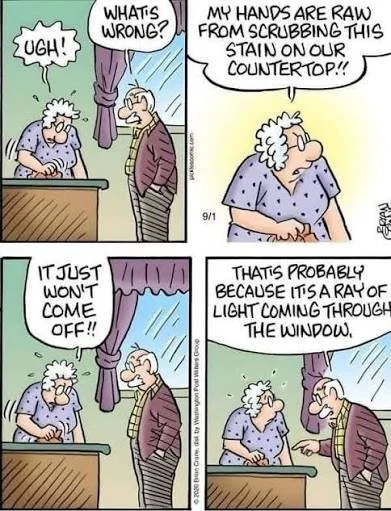
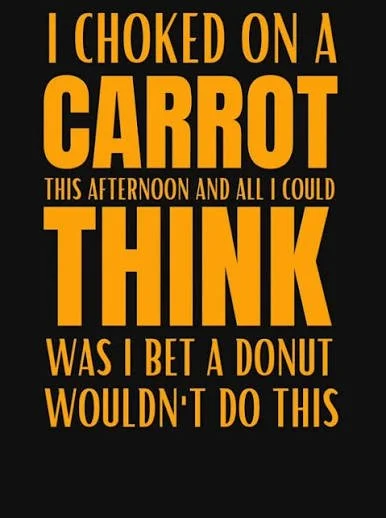
Contributed by Barbara Bruno
Hope XIV Collage, by Sheila Benedis
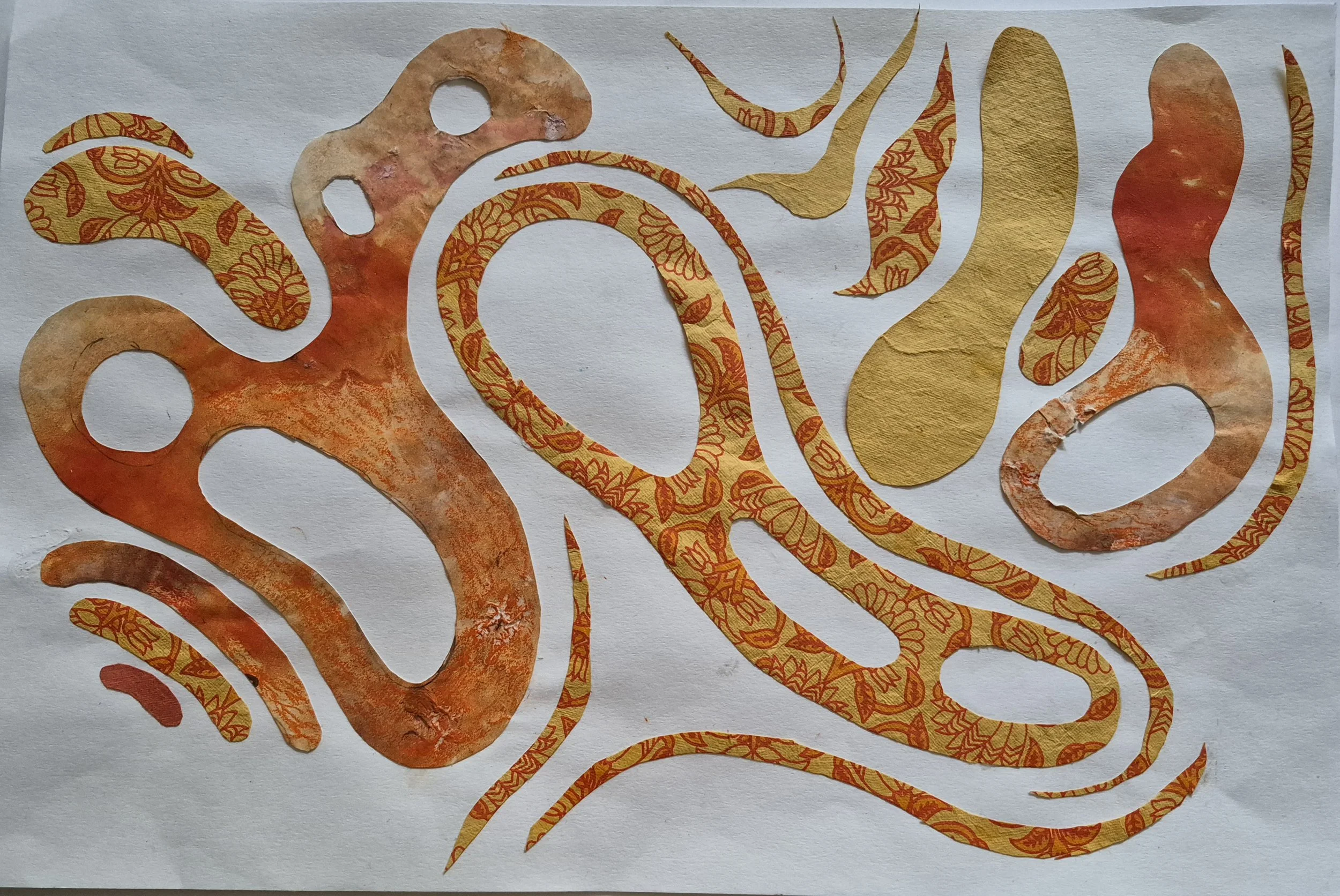
Art and photo by Sheila Benedis
Art by Hart

Late in life, Aunt Lulu fell in love with floofy fabrics

Mac was asking more and more questions that his parents couldn’t answer

For many on the island, ride-sharing was a good option

If Cinderella had been an elephant, she would have remembered to go back for her shoe
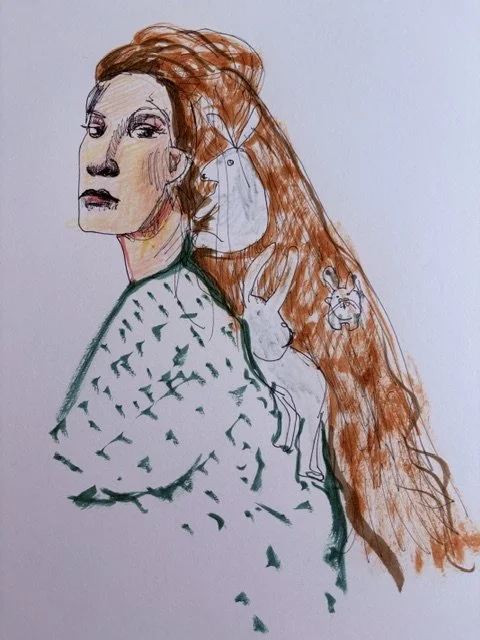
Karen’s new cruelty-free shampoo was unable to keep rabbits out of her hair
Art and photos by Jane Hart
In and Around
The End of a (Very Short) Era
Remember the house being built in Rockwood Park—the one to serve as the setting for a soon-to-be released mini-series saga? Well, it’s gone. Done and dusty. End of story. Here it is on its last legs—a dumpster nearby—courtesy of Carolyn Reiss.

The Beginning of the End
It will not come as news that, in the past week or so, we have been struggling with a profound heat wave. The evening of July 3 was the first hint of its breaking, and Greg Lozier got in down in before-and-after pictures.
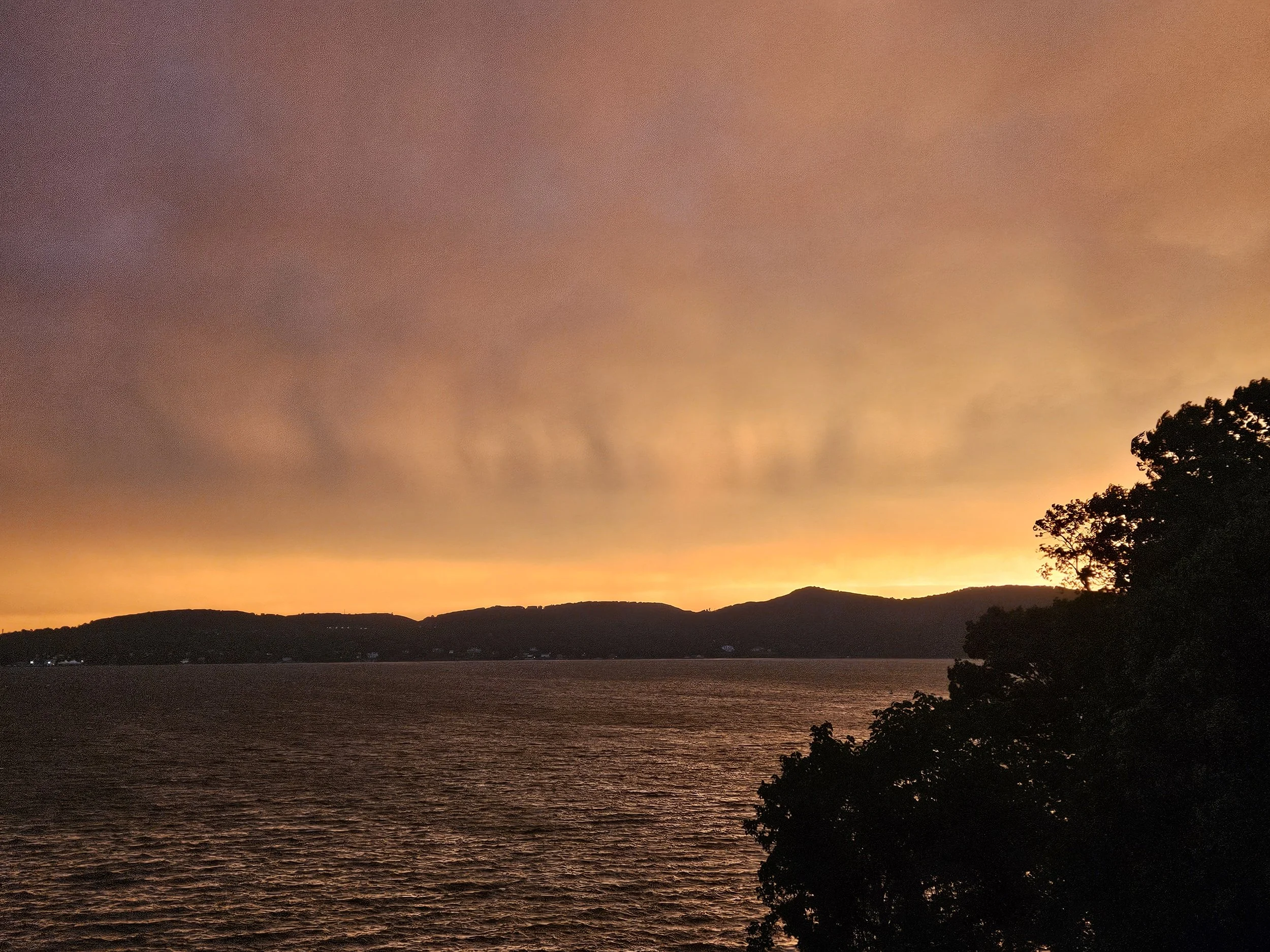
Evening sky before the rain
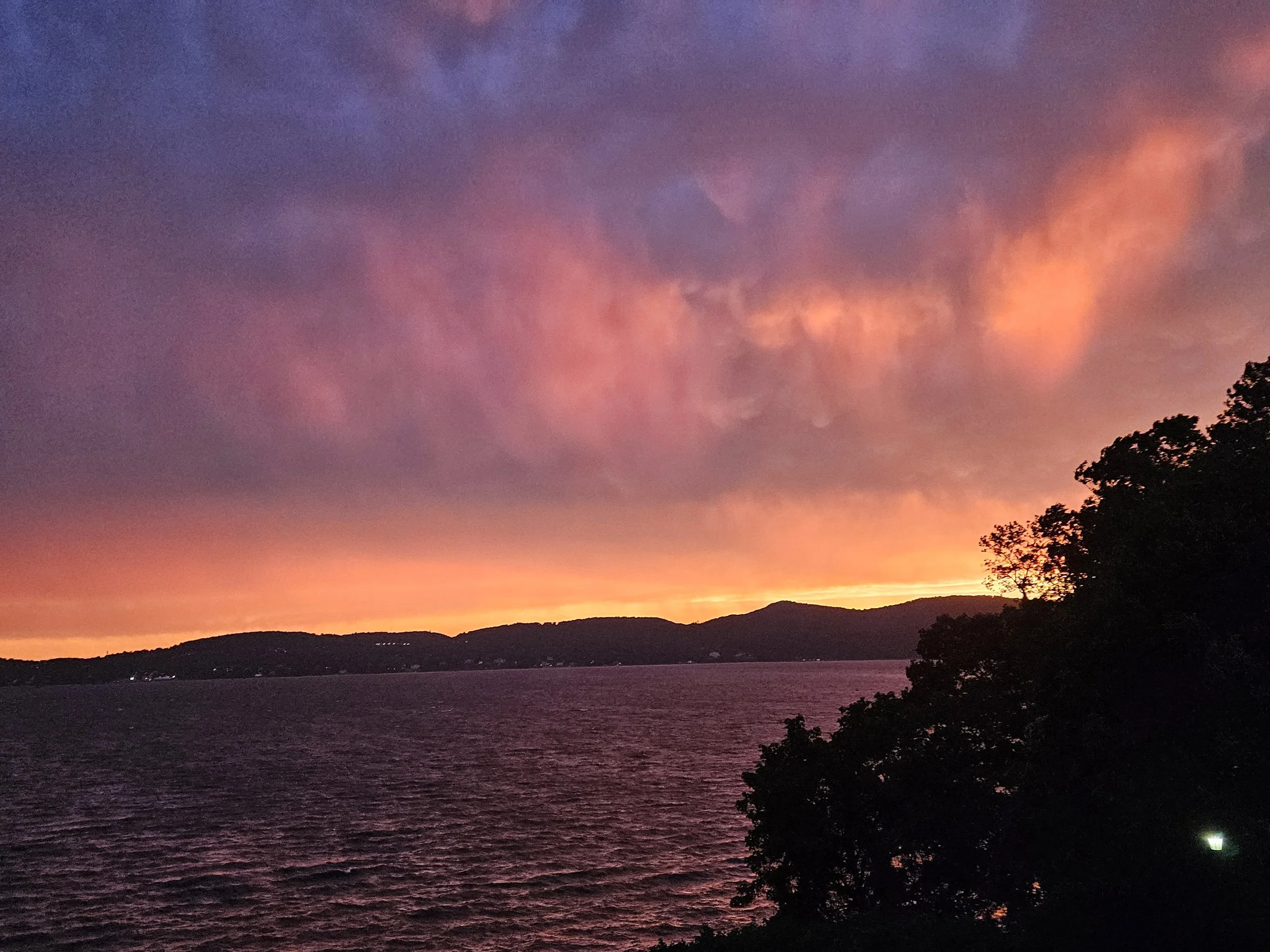
After the rain
Feathered and Four-Legged Friends
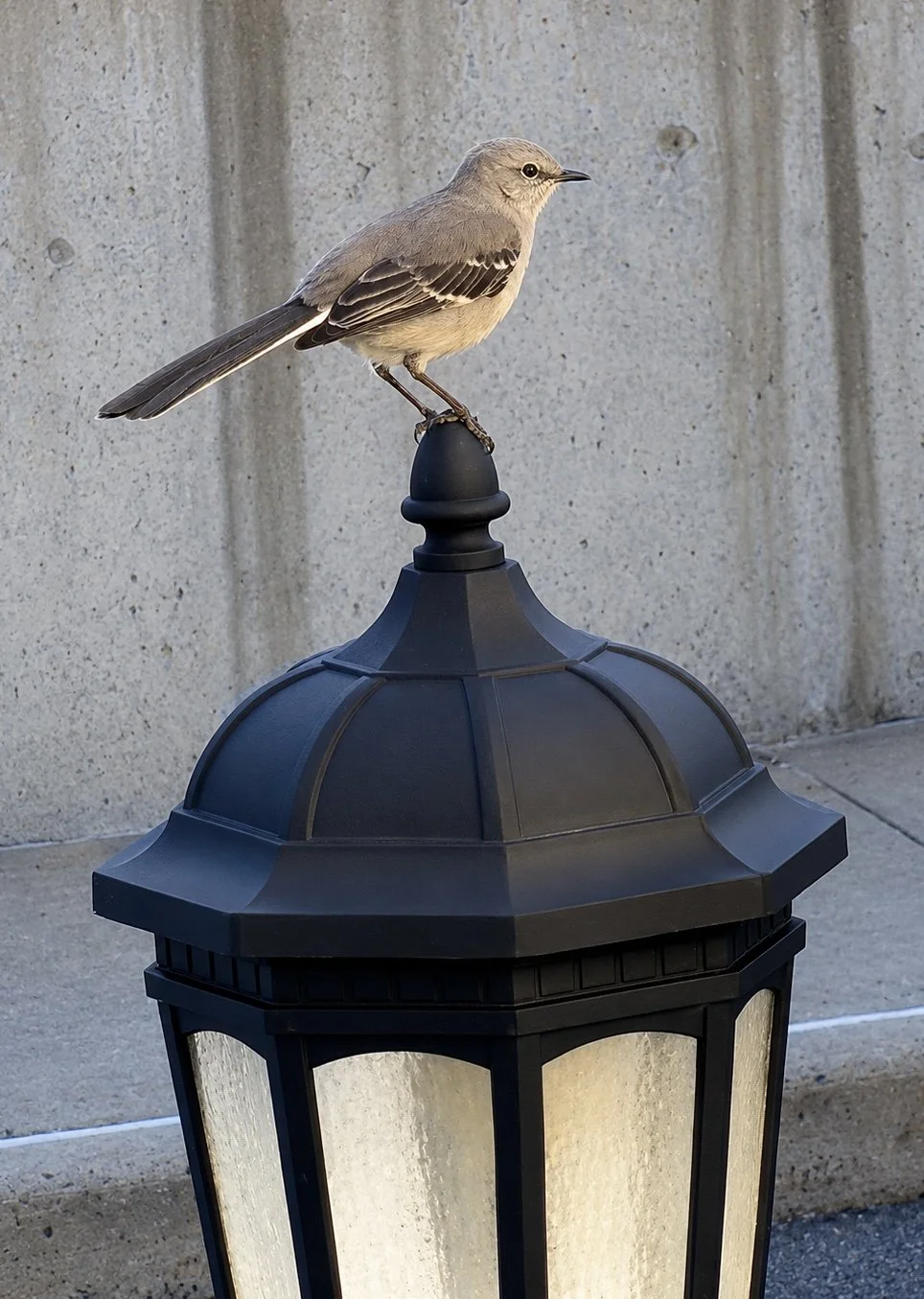
Standing Guard. Photo by Ed Lannert

When You Don’t Have Goats, Bunnies Will Do. Photo by Jane Hart

Getting in a Quick Visit Before Thanksgiving. Photo by Carolyn Reiss
When You Least Expect . . .
Ed and Joyce Lannert have a friend who owns Chappaqua’s Susan Lawrence Bakery/Cafe. Their friend organized a special reception to celebrate another friend and invited Ed and Joyce—and the Clintons. Ed reports it was “a great event and even greater to spend some time with them.”
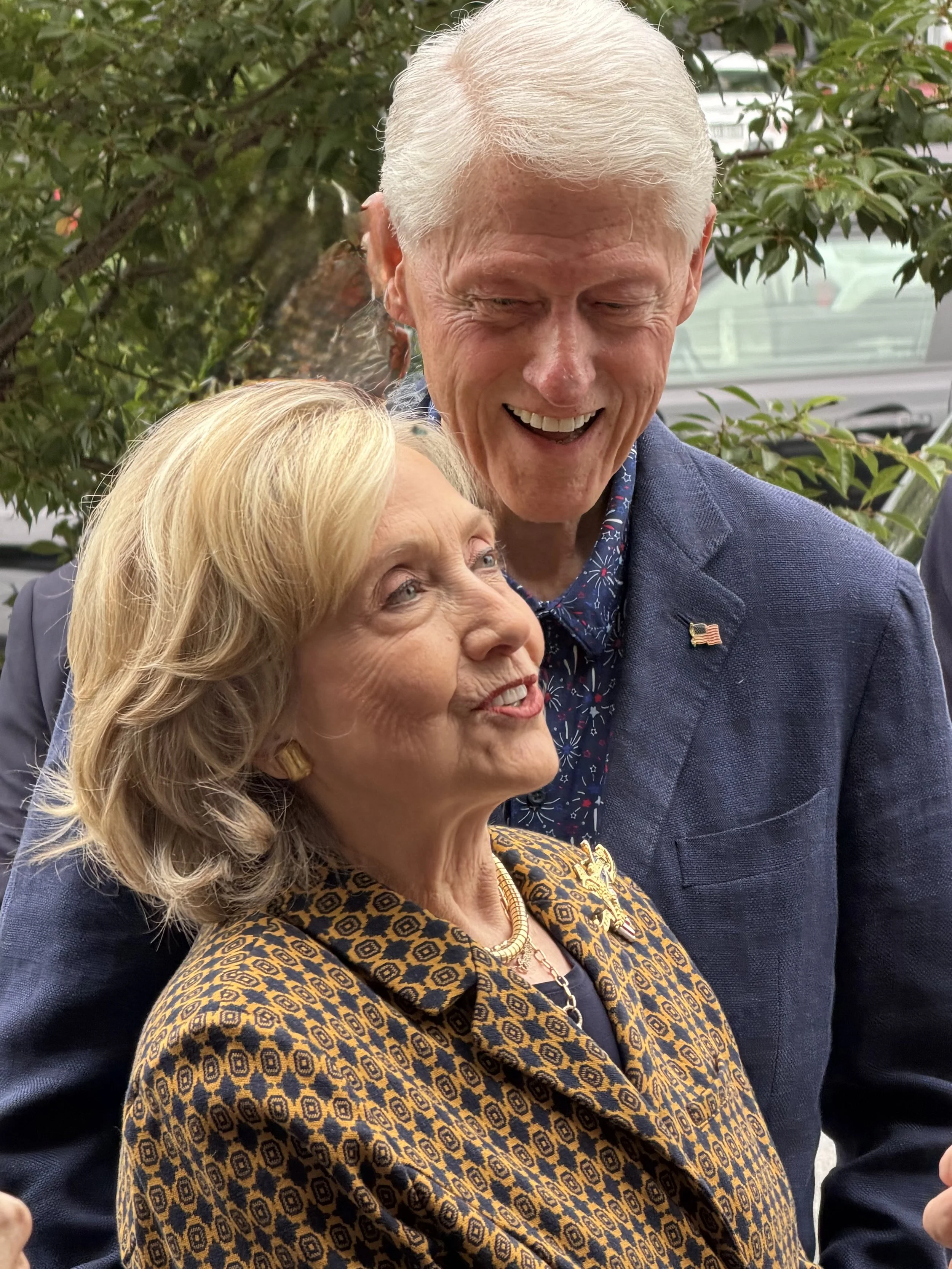
Photo by Ed Lannert
Meanwhile, From a Kendal Birthday Party
Barbara App celebrated a birthday recently, and her daughter went all out with goodies from Chappaqua’s Les Tulipes. File under the category of “Too Beautiful to Eat”!

Photo by Jane Hart
A Growing Family at Kendal
Naomi Gross has become honorary Grandma to a robin family that moved recently into her patio. Now baby —of the feathered variety—makes three. And Papa Robin is definitely a modern dad, taking on the feeding role to a seemingly insatiable offspring.

Photo by Carolyn Reiss
Salvation from the Season’s Heat

Sweet Summer Rain, photo by Peter Sibley
While Walkin’ in the Park One Day
Carolyn Reiss captured the beauty of a summer morn in the park . . .

And—what do ya know—there’s another Kendal photographer out for a stroll: Ed Lannert.

Photos by Carolyn Reiss
Inspired by the imagery suggested by America the Beautiful, Marilyn Bottjer produced a work of art for our 250th anniversary.
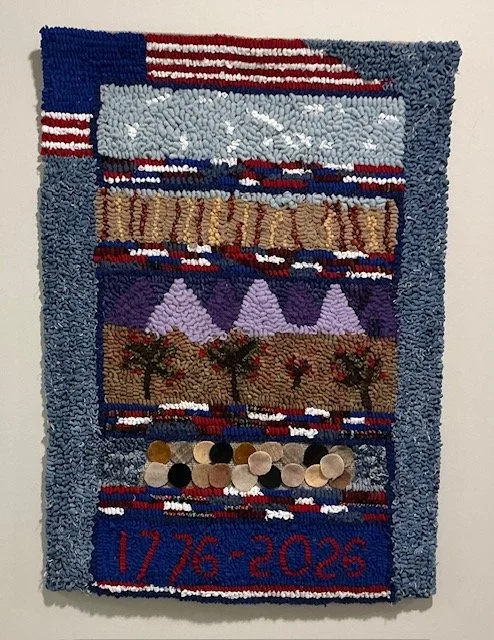
Photo by Marilyn Bottjer
Out and About
Politics Wheresoever Ye Turn
While in London recently, Joe and Barbara Bruno came across an interesting political sign indicating an extreme threat of action:
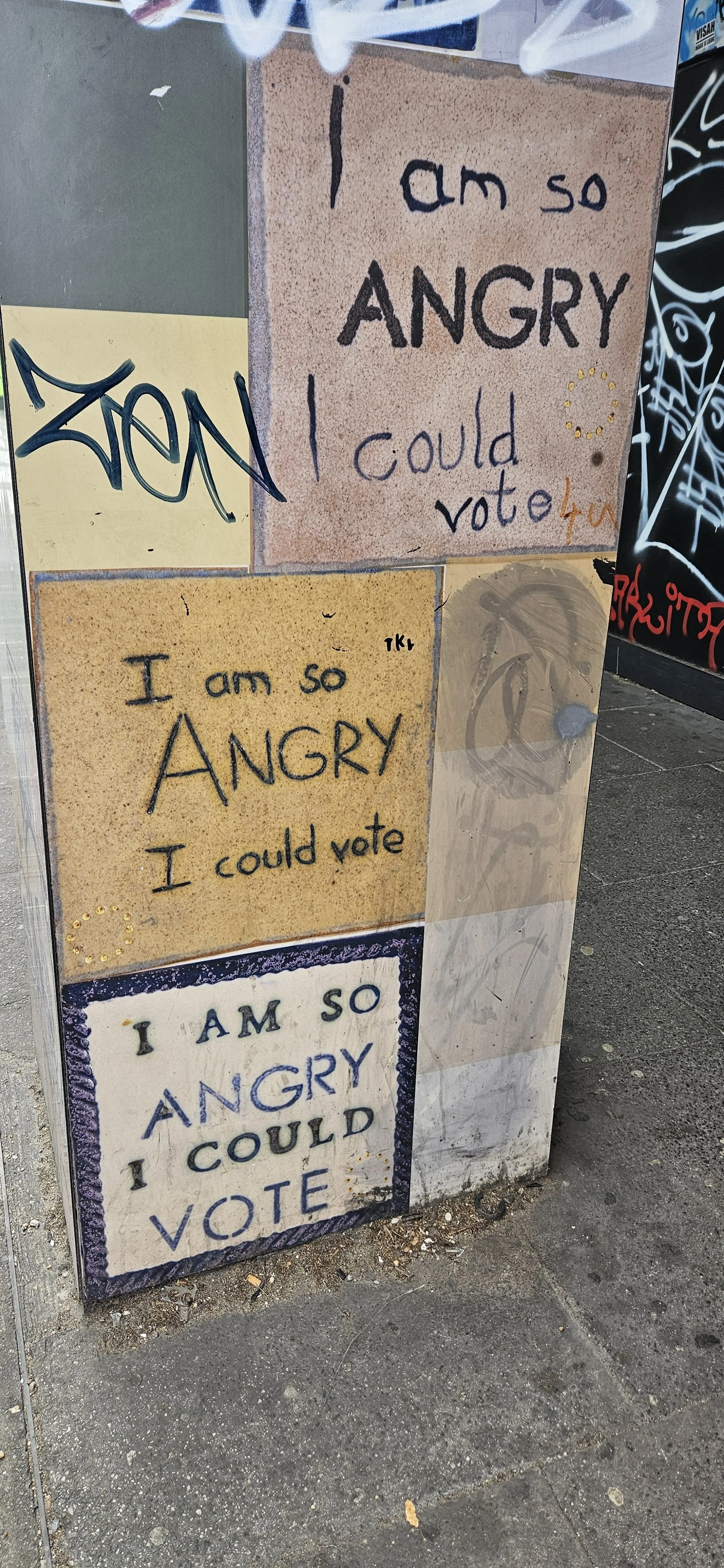
Photo by Joe Bruno
On Stage
Doin' It Up Right for The 250th Fourth
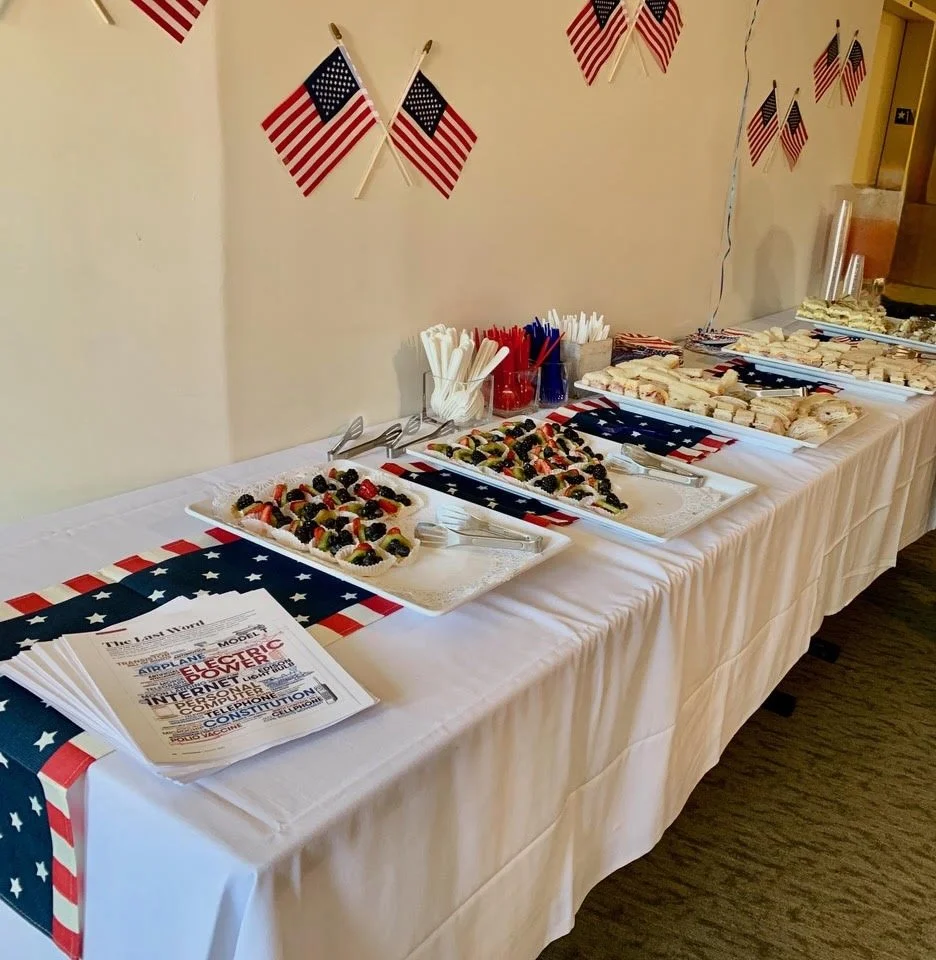
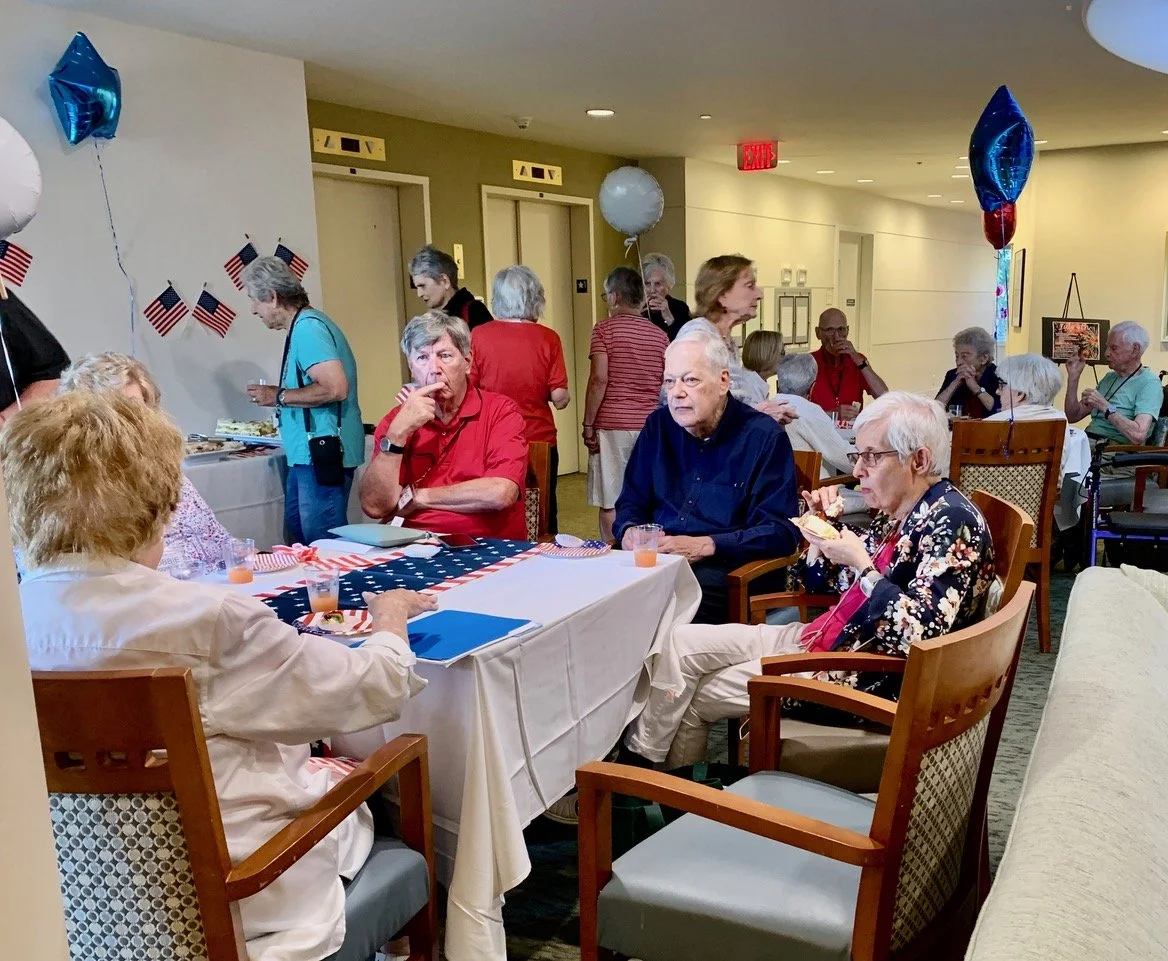
First, a Bit of Fueling for the Event
And Then: The Show!
Kendal’s traditional Fourth of July celebration was all that more special this year because we were also celebrating the USA’s 250th anniversary.
We hasten to say that photographs are very difficult to take given the lighting in the Gathering Room. But we still wanted to remember this wonderful gathering.
Muriel Fox and Bobbie Roggemann put together a great show. We were all delighted to have Muriel Fox back as our traditional emcee.
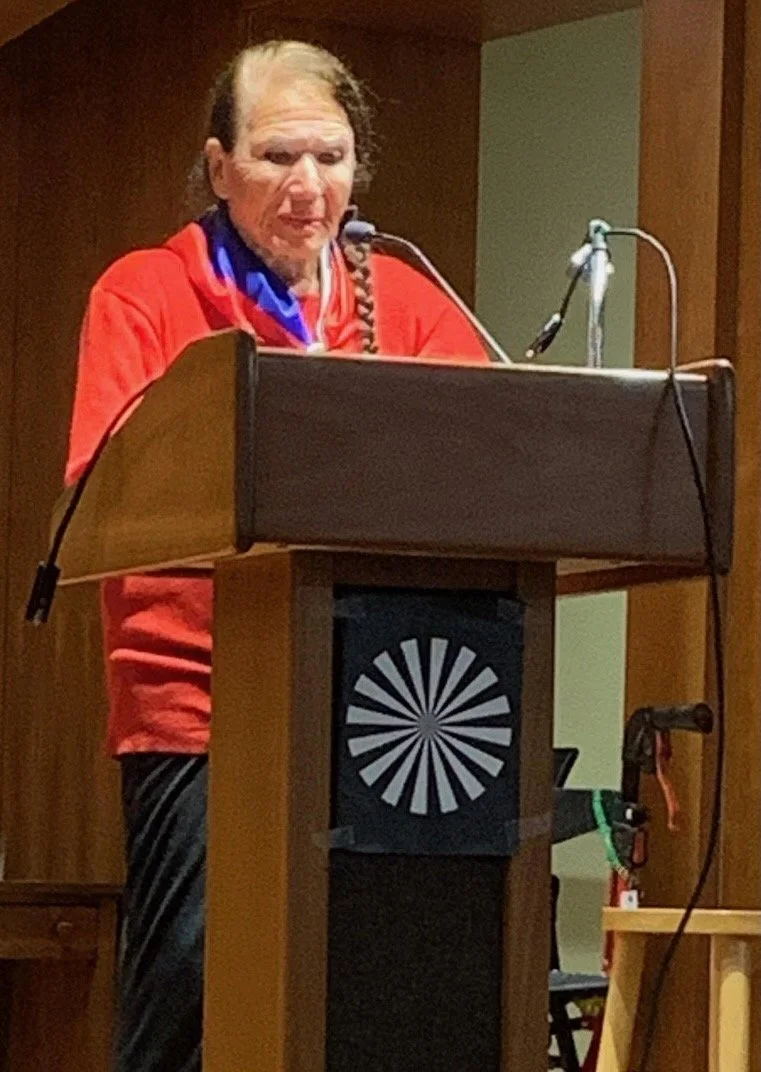
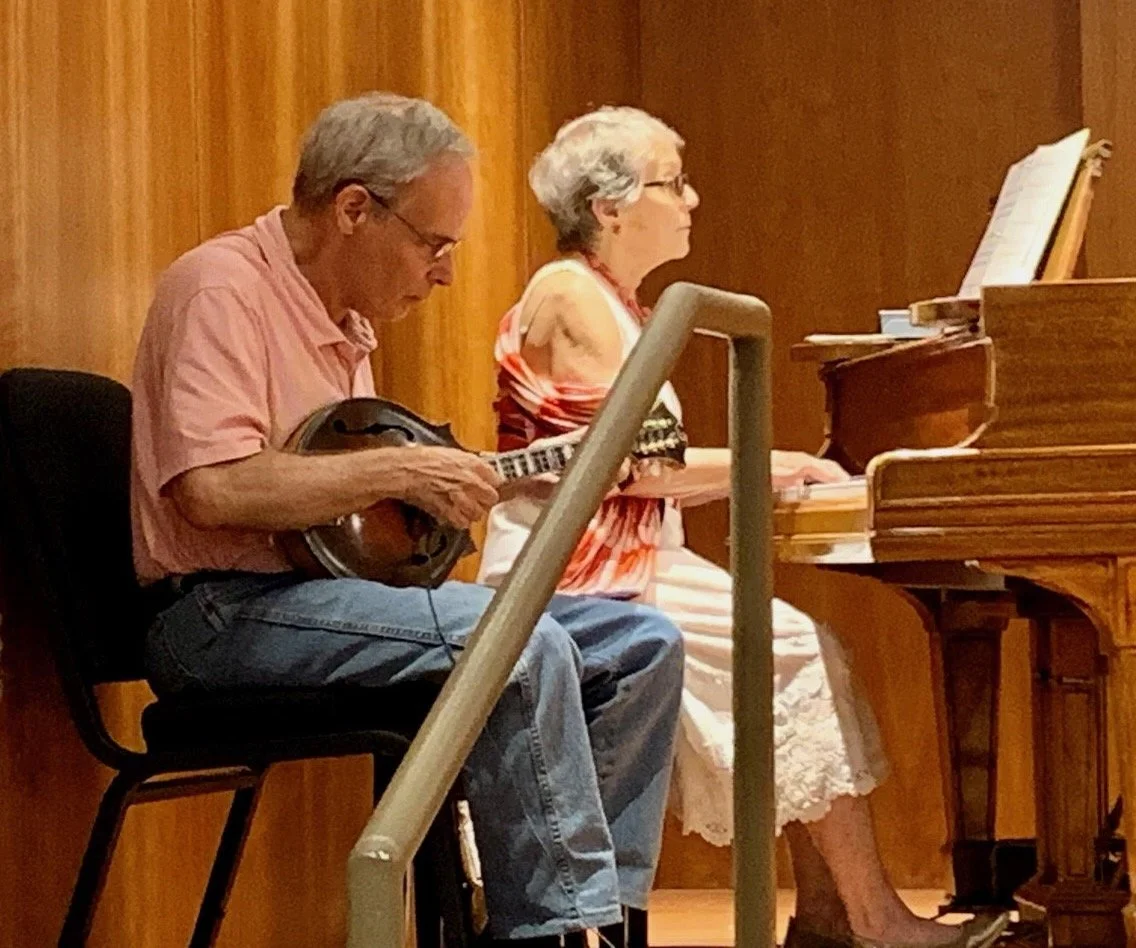
And we were, as usual, grateful for the musical talents of Linda Mahoney and Donn Williams.
The Reading of the Declaration of Independence
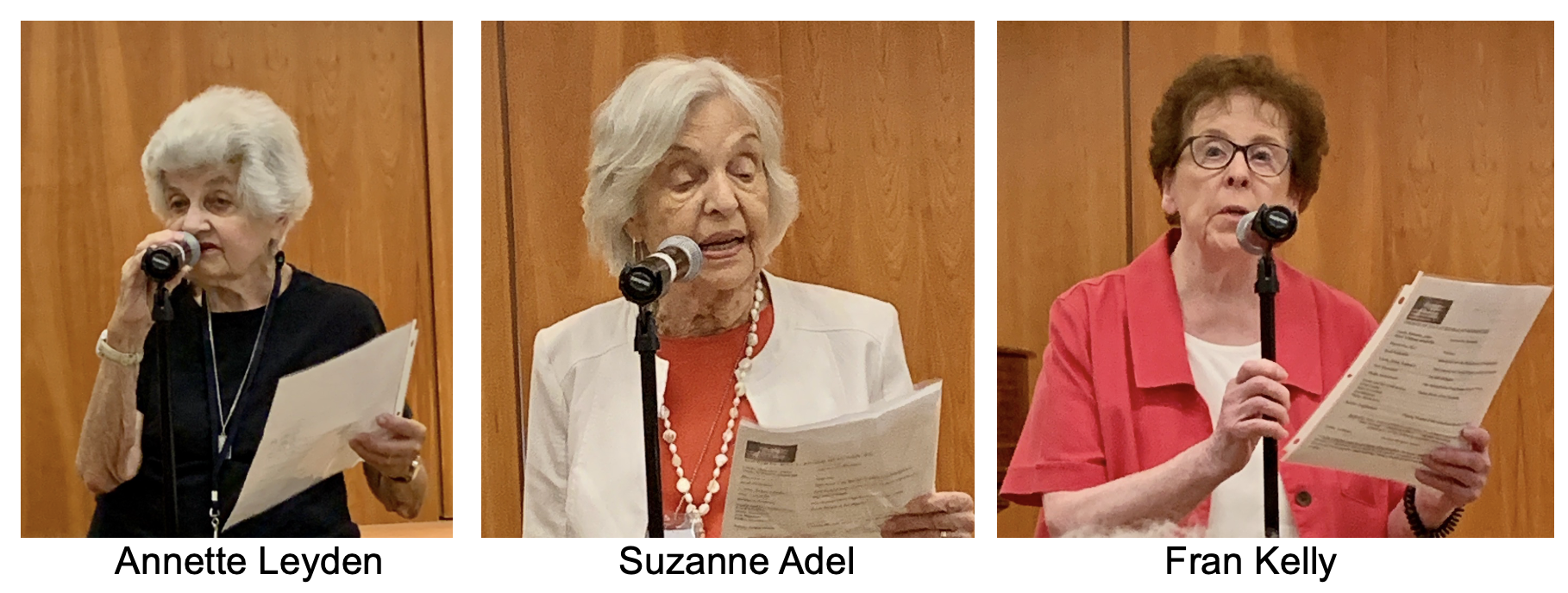
Long a Kendal tradition is to have the Declaration of Independence read. This year, the Founders’ words were read by our Founders. Here are three:
The Bill of Rights
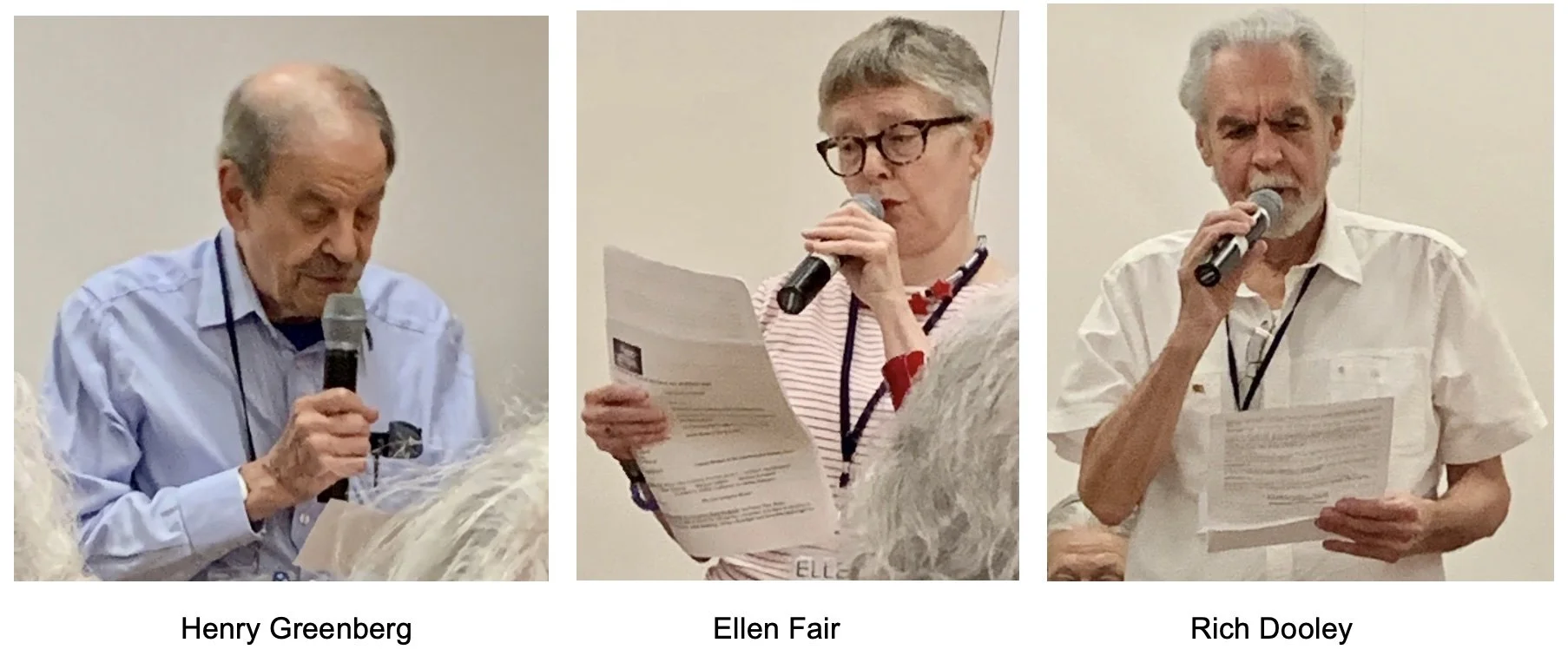
Another tradition: Reading the Bill of Rights. This year—to balance our Founders’ reading of the Declaration—some of our newest Kendal neighbors took turns with each of the Constitution’s first 10 amendments. Again, a sample of three:
The American Flag: a New Interpretation

The American flag in E Pluribus Unum mode hung in the Gathering Room during the event. A creation of Philip Monteleoni’s, Philip gave a brief talk on what it represented: America as a tapestry woven of immigrants ever since its founding. The stars are still there, and the white stripes, too. The red strips have been reimagined as the flags of many of the countries from whence Americans have originated (there are more flags, but they wouldn’t all fit!).
Philip also read Emma Lazarus’ poem A New Colossus in its entirety. We all know its inspiring end verses:
“Give me your tired, your poor Your huddled masses yearning to breathe free, The wretched refuse of your teeming shore. Send these, the homeless, tempest-tost to me, I lift my lamp beside the golden door!”
The Gold of the Goldenaires
The Goldenaires provided a new interpretation of The Battle Hymn of the Republic. We will provide more on this next week—stay tuned.
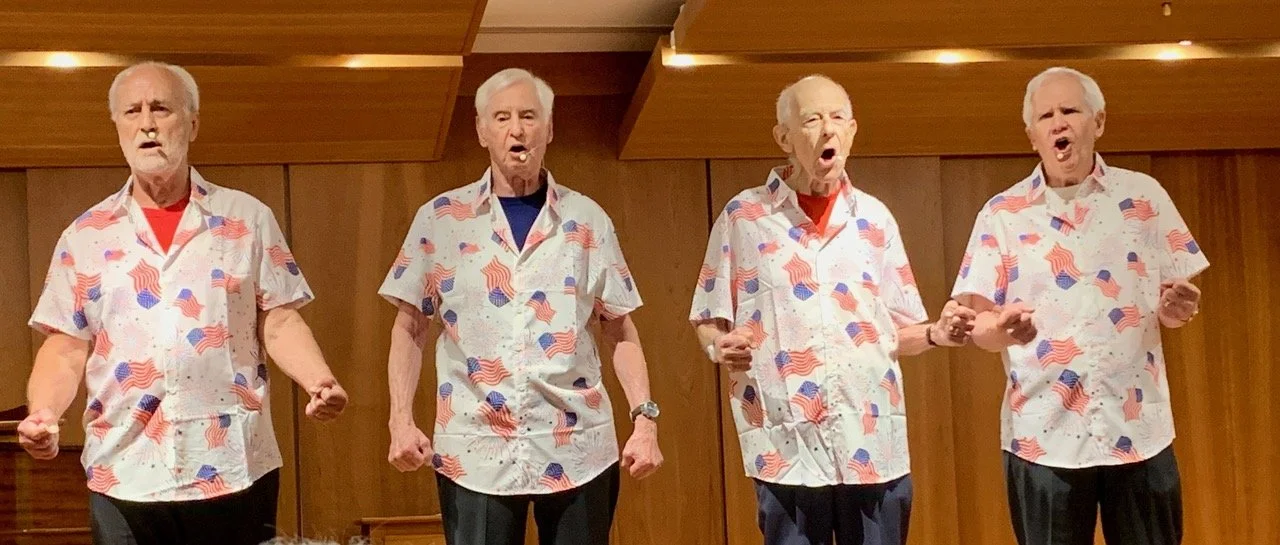
At the end of their performance, there was an announcement of a change in the name of this popular Kendal group. It will henceforth be known as “Linda and the Goldenaires.” Gold, indeed.
Unsung Women of the American Revolution
Bobbie Roggemann brought us Part I of an examination of the great women who have helped shape American history and its great experiment: government by and for the people. With only a brief time to try to squeeze in all women have done to bring our country into being, she promised Part II next year.
The Great Debate
Each year, a question is posed and Kendalites take part in a debate, presenting varying points of view. This year, the question was: Will the United States Elect a Woman President?
Stan Amberg’s approach: Yes, but only if she’s a conservative.
Marjorie Gilbert’s approach: Yes, but over time and only if she’s a moderate.
Barbara Kornfield’s approach: Yes, but only if she is a progressive.
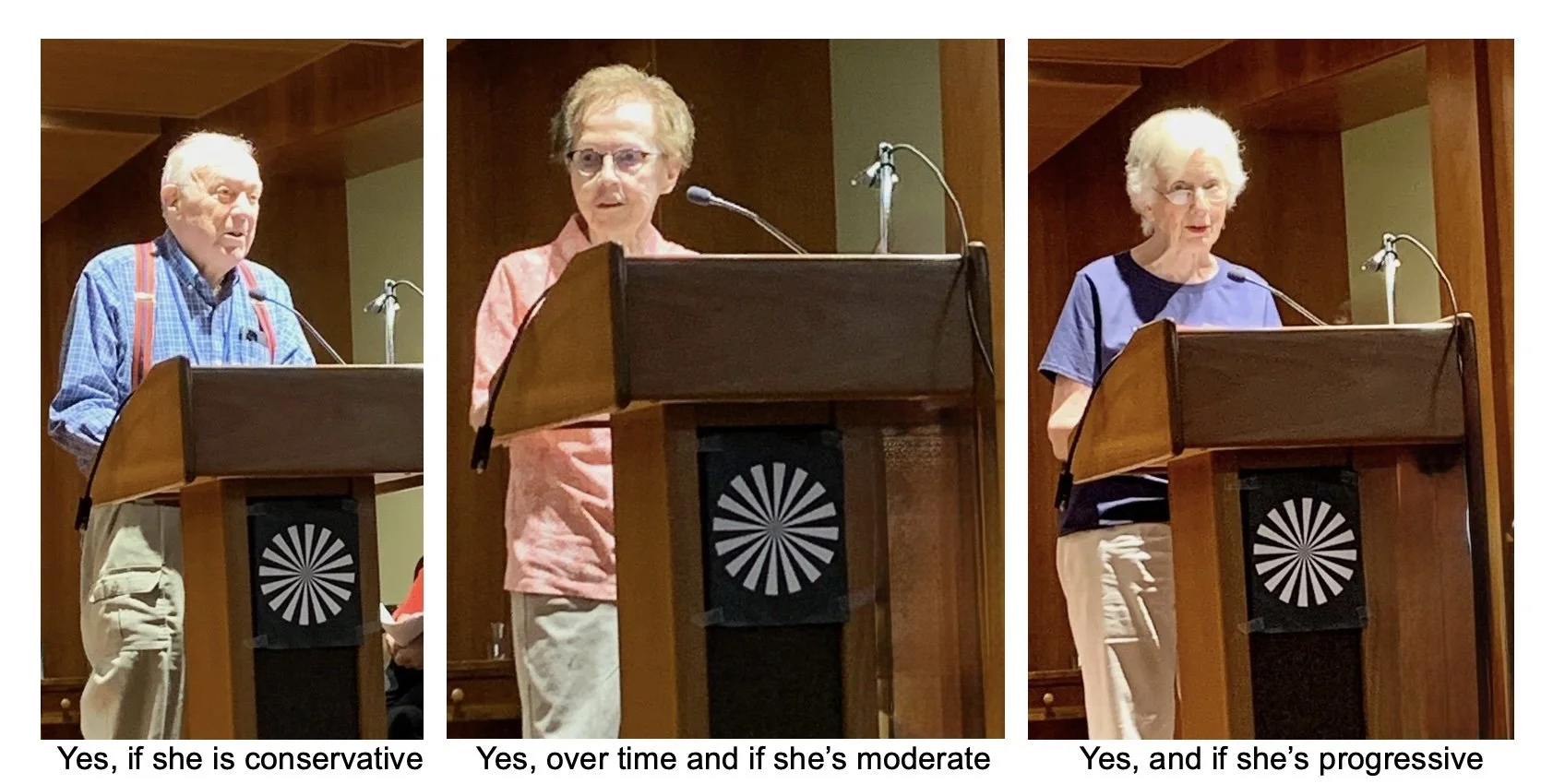
Following the three presentations, the audience voted. The winner: Barbara Kornfield’s argument: Yes, but only if she is a progressive.
Time will tell.
Photos by Harry Bloomfeld