

From the Office of Ellen Ottstadt
Ja, Ja, Ja, Ja!! Oktoberfest!!
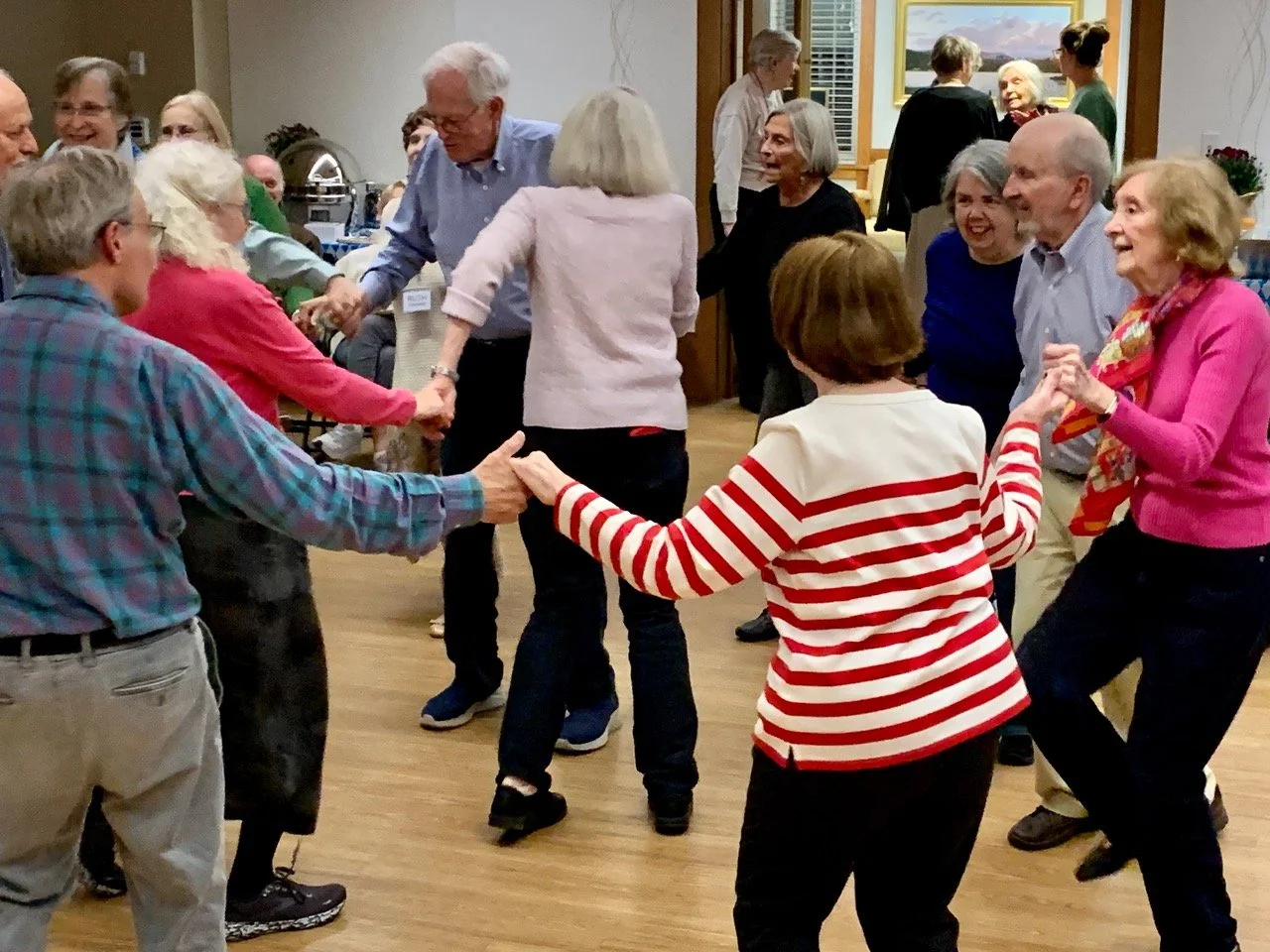
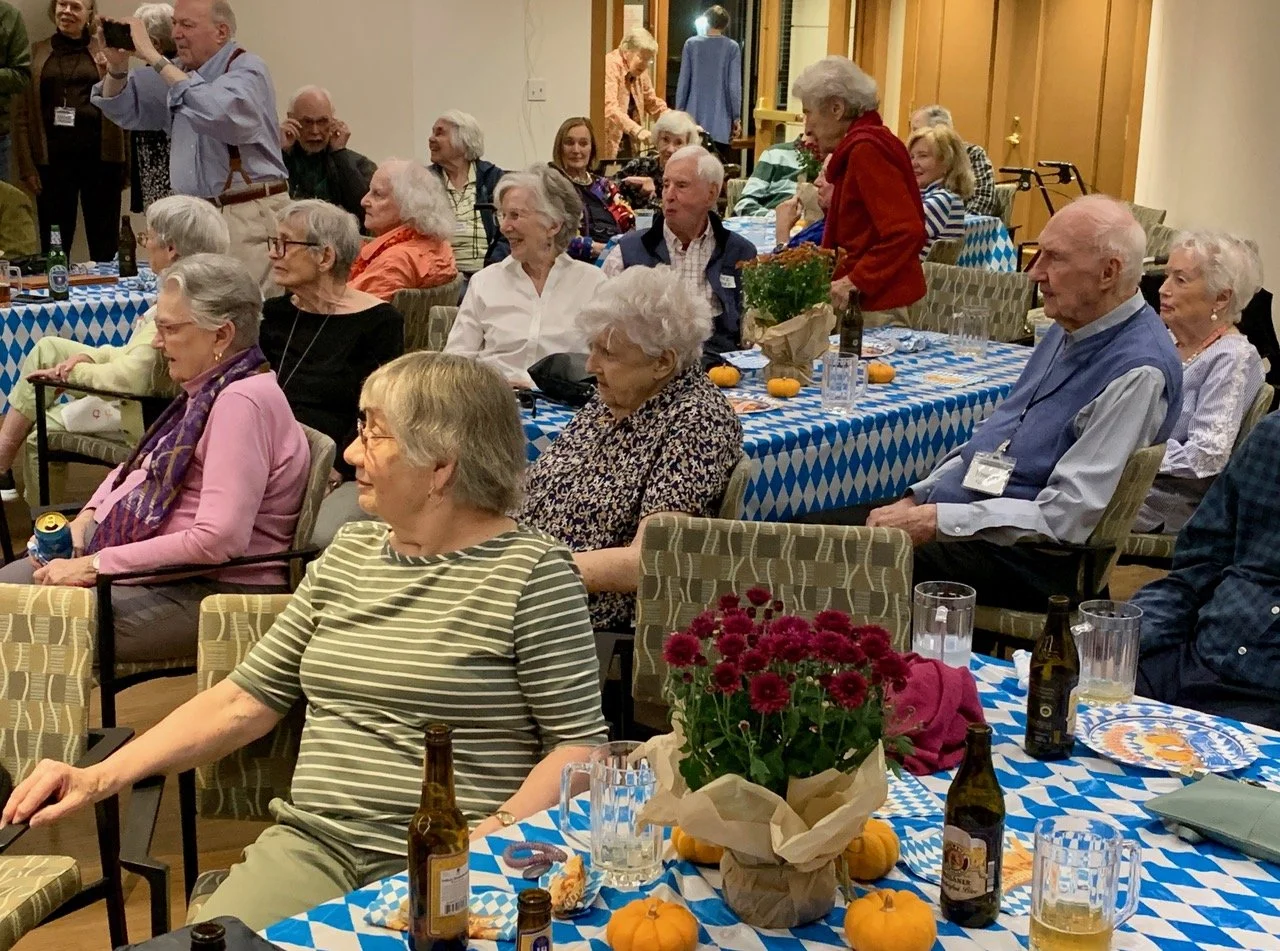
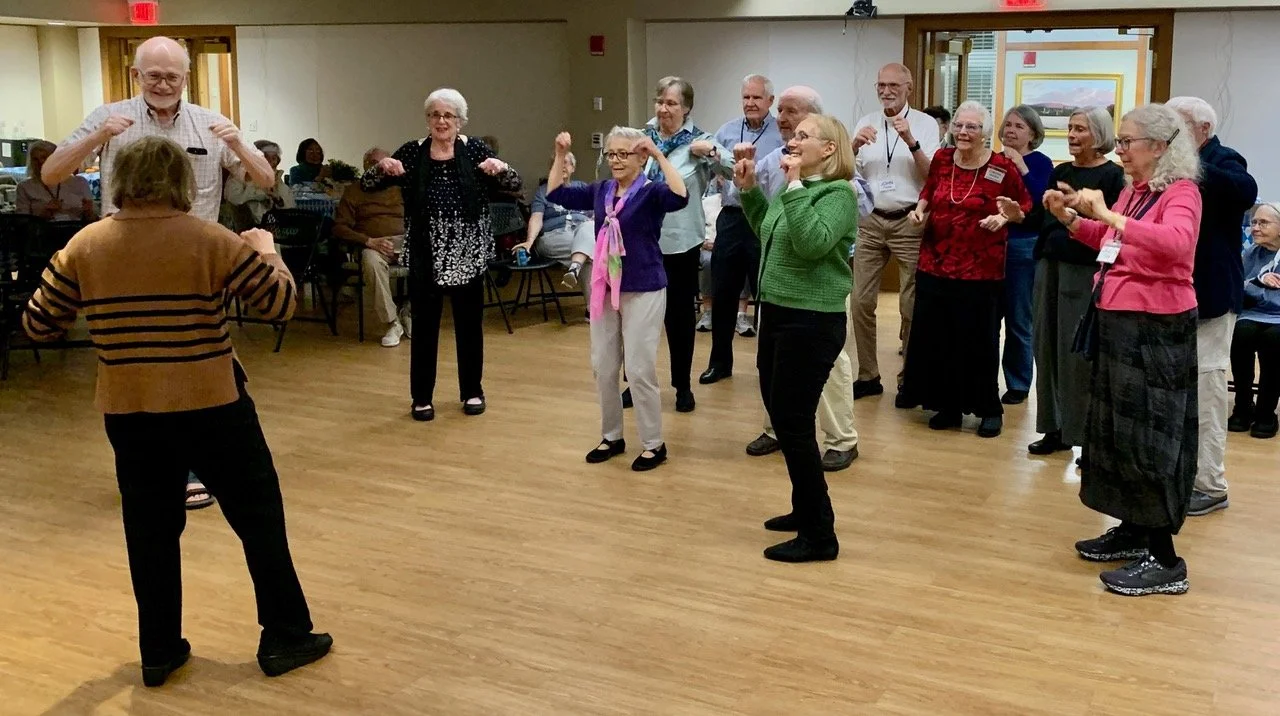
There was great beer, delightful sweets, and dancing, dancing, dancing—in ones, twos, threes, and on up! It was Oktoberfest! And Kendalites had a ball!
We danced . . .
Rested, watched, and waited . . .
Especially for the classic Chicken Dance . . .
Photos by Harry Bloomfeld
Grow Old Along with Me . . .
Profound advice and observations for our Kendal Years . . .
Continued from last week . . .
I love being old, I learn something new every day and forget 5 other things.
A thief broke into my house last night. He started searching for money, so I got up and searched with him.
I think I’ll just put an “Out of Order” sticker on my forehead and call it a day.
Just remember, once you’re over the hill, you begin to pick up speed.
Having plans sounds like a good idea until you have to put on clothes and leave the house.
To be continued . . .
Contributed by Beverly Aisenbrey
Spelling Bee
It was dog-eat-dog on Friday night, October 17—or, rather, dog-spell-dog—as seven teams of expert spellers competed for 1st place in the very first Kendal Spelling Bee. Chris Mitchell served in the dual role of Word Announcer and Pronouncer. Pam Mitchell—doing her best Vanna White impersonation—served as the Provider of All Answers with each new word. Shamya Walker was Emcee, providing both humor and scores. The judges were Llyn Clague and Jan Maier. Ellen Ottstadt watched the clock as time-keeper.
Round 1 saw the teams of The Stellar Spellers, CVS (so named for the first letter in each team member’s name), and The Spell Demons competing . . .
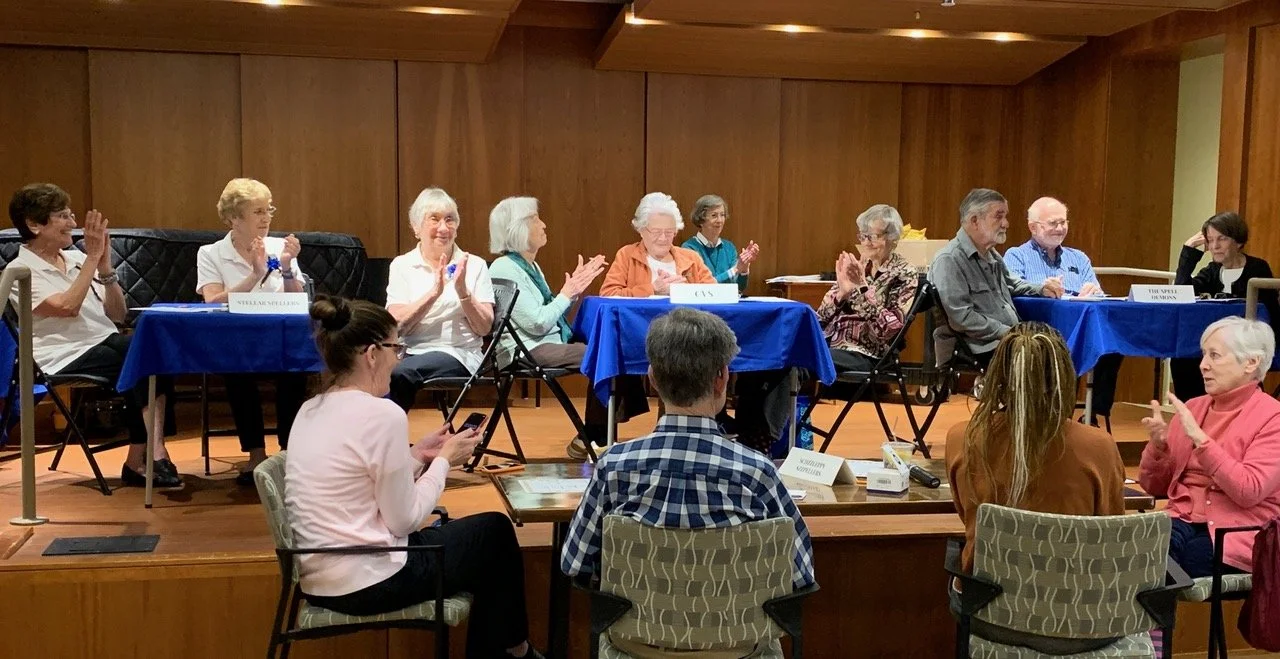
followed by Round 2 in which the competing teams were: Ten Thousand Words, The Websters, The Wanna-Bees, and The Schzzeleppy Szzpellers (no, no one there, other then the team members, could pronounce it).
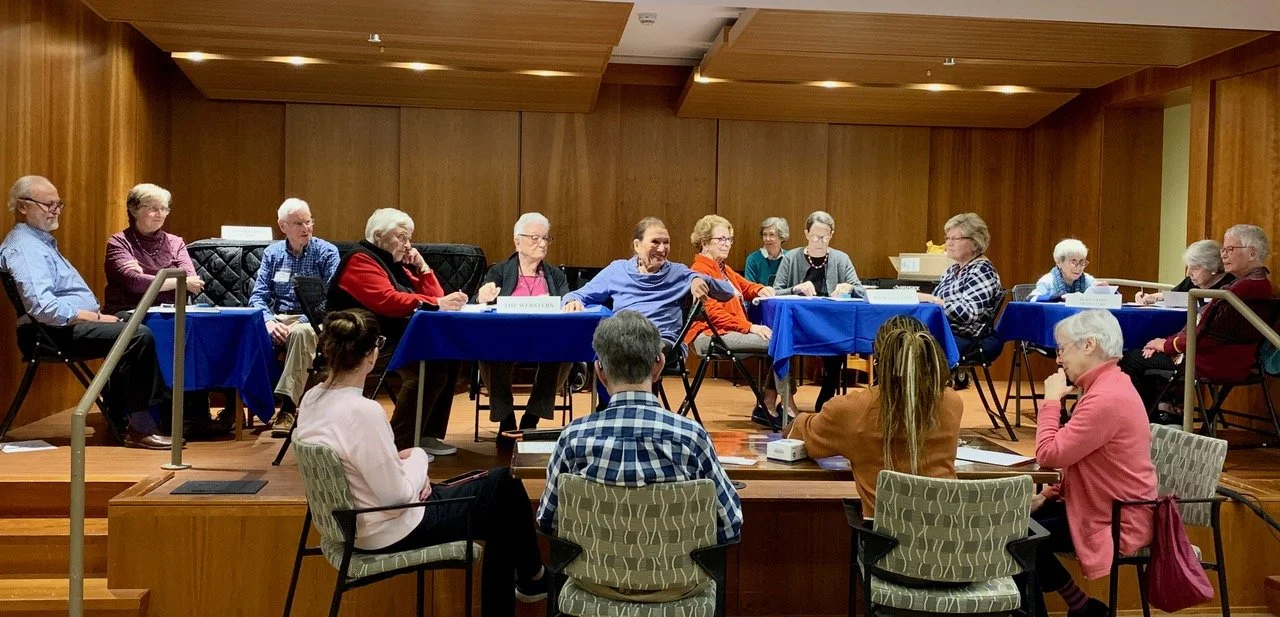
The winners of Rounds 1 and 2 then went on to the Big Spell-Off. The two finalists were teams CVS and Ten Thousand Words.
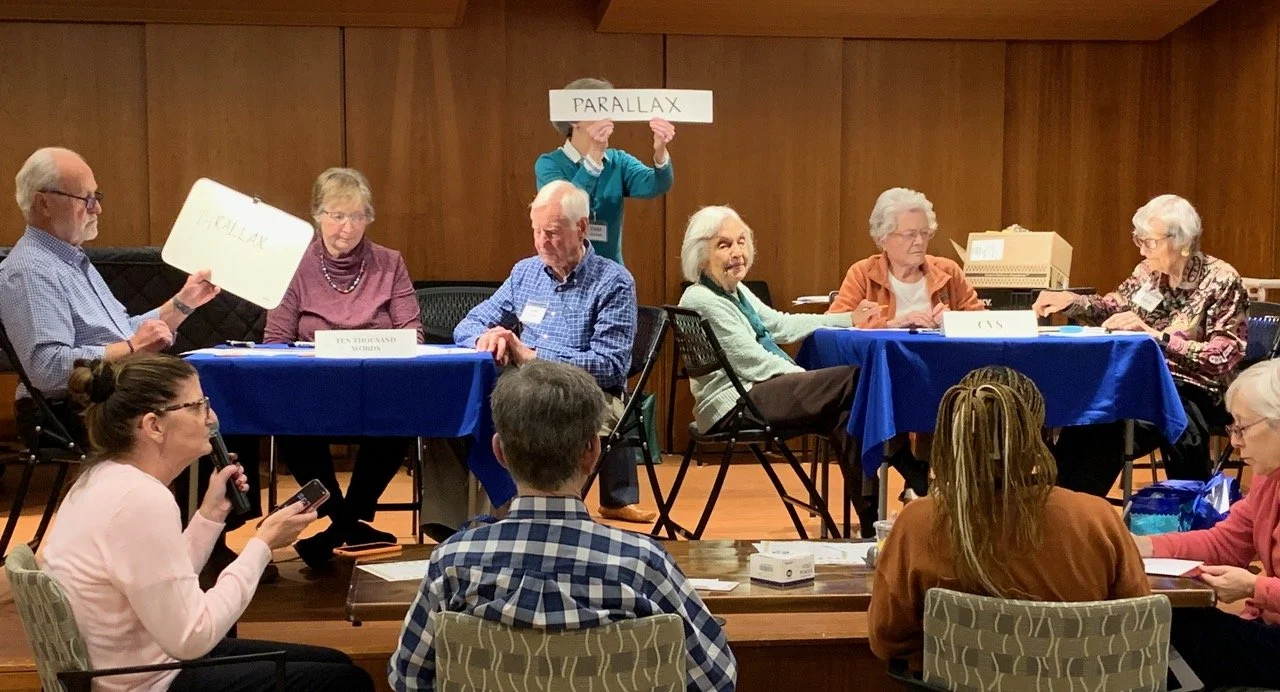
The teams battled it out unstintingly, as Pam Mitchell provided the answers.
And the winning team—with the word yttrium—was . . .
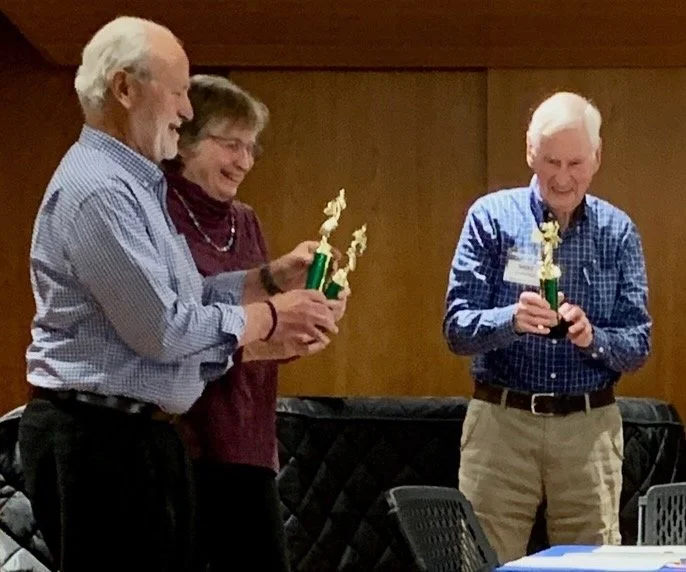
Team Ten Thousands Words, shown here happily admiring their handsome trophies.
An exciting evening—and one of great fun! Stay tuned . . . maybe there’ll be another soon. Start practicing now.
Photos by Harry Bloomfeld
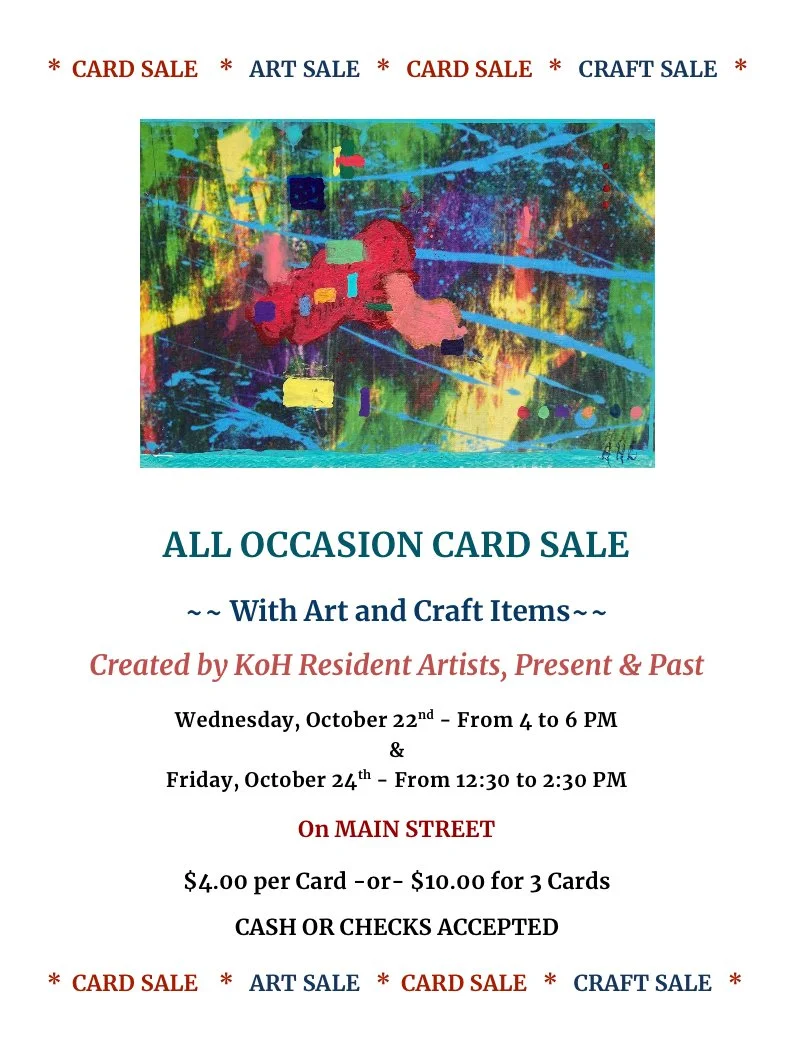
The Kendal Art Committee's Biannual Boutique by Kendalites for Kendalites
Bethany Arts Community Features "Faces of Ossining"
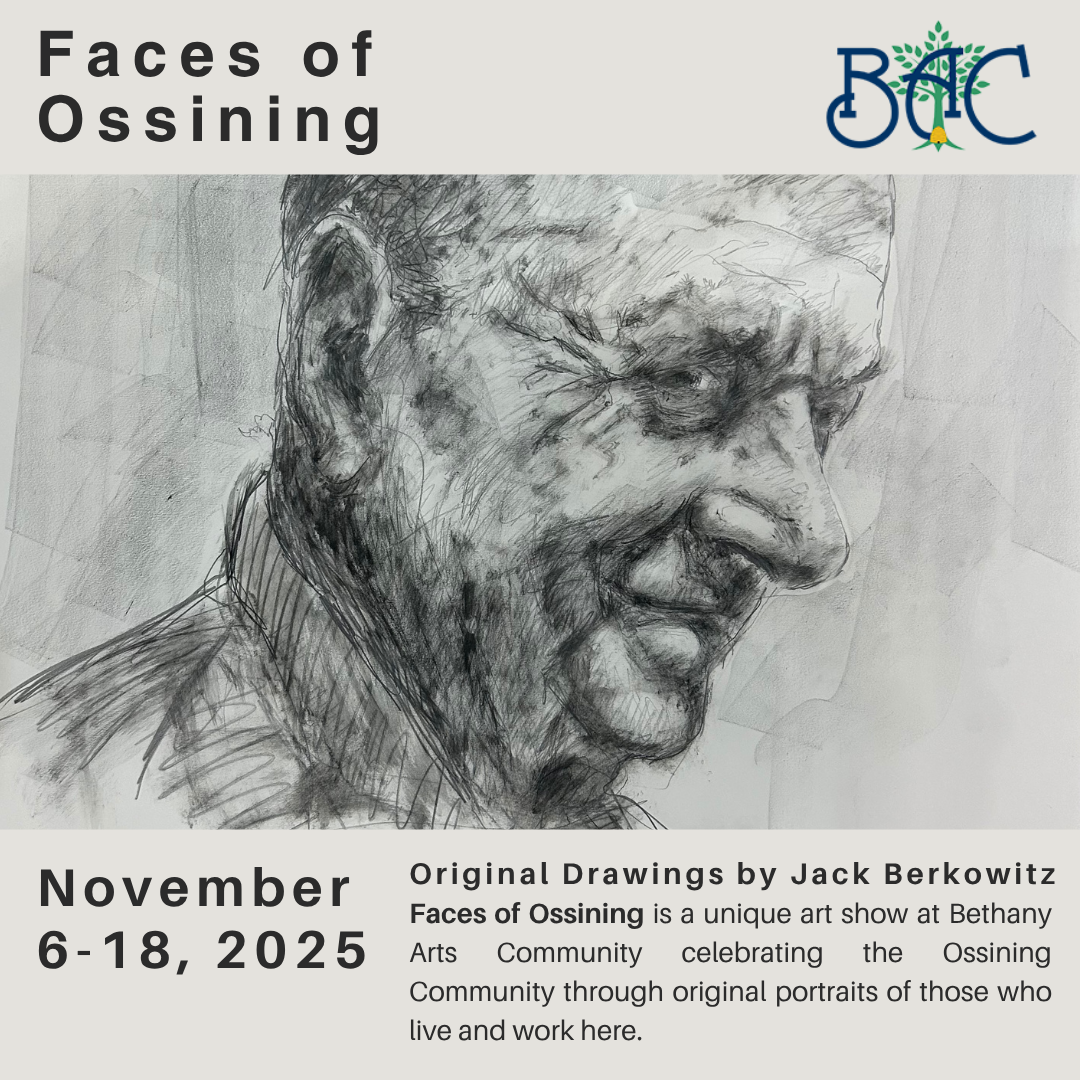
The drawings, created by artist Jack Berkowitz, include store owners, seniors, children and their parents, teachers, community leaders, barbers, restaurant workers, politicians, librarians, artists, members of many different cultural communities, and more. The 50 original portraits depict the real people and rich culture of the very vibrant population of Ossining.

GALLERY HOURS (Starting November 6)
Monday – Friday, 10am-4pm
Late Night: Friday November 7, 10am-8pm
Select Saturdays: November 8, 10am-4pm
Select Sunday: November 9, 10am-4pm
OPENING RECEPTION: Thursday November 6, 6:30-8:30pm
SUNDAY SUPPER: Sunday November 9, 5-7pm
Join us from November 6-18 at Bethany Arts Community to reflect, share, and celebrate the people who call Ossining home and make Ossining great.
NOTE: OUR OWN AMANDA SLATTERY IS A FRIEND OF THE ARTIST. SHE IS OFFERING TO DRIVE ANYONE WHO WOULD LLIKE TO ATTEND THE SHOW’S OPENING ON NOVEMBER 6. GIVE HER A CALL OR SEND AN EMAIL.
Early Voting Explained
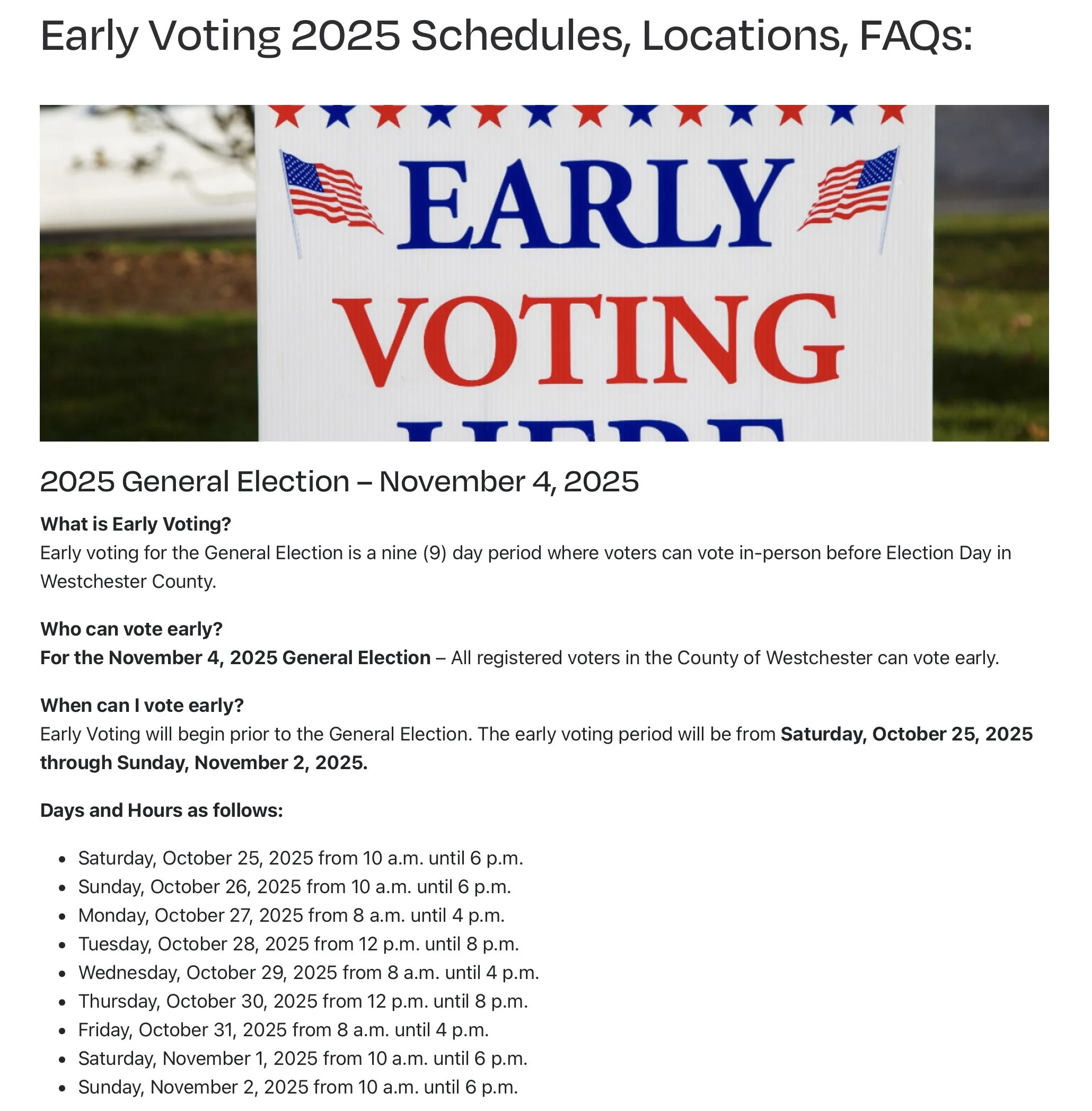
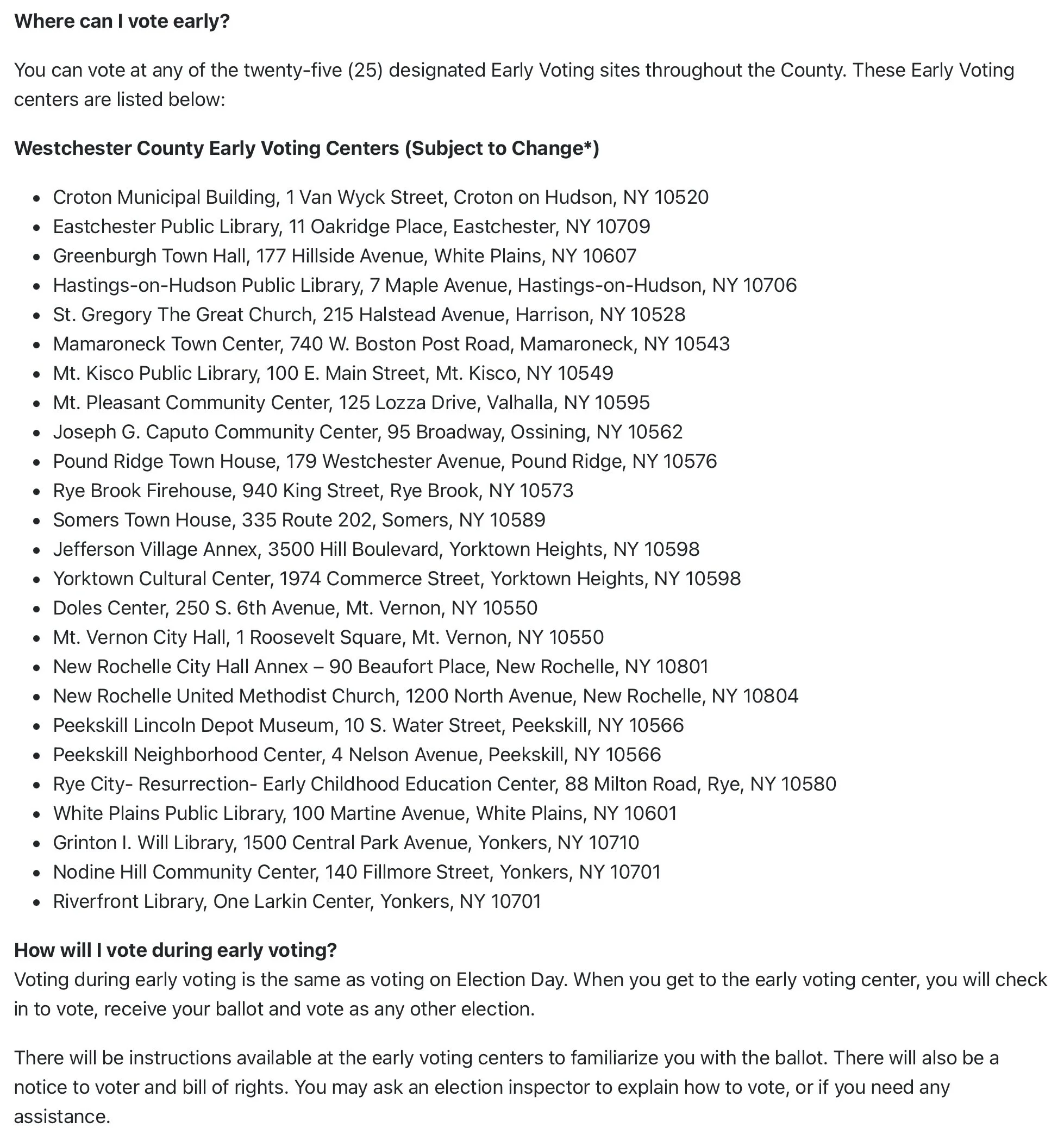

Source: Westchester County website
'Tis the Season . . . for Dwali
As one lamp lights another,
no grows less, So nobleness
enkindleth nobleness.
By James Russell Lowell
Happy Diwali! October 20 marks the beginning of Diwali—the Hindu Festival of Lights (also joined into by other faiths) celebrated throughout India. It symbolizes the spiritual victory of light over darkness, good over evil, and knowledge over ignorance.
Key dates for the five-day festival are:
Dhanteras: Saturday, October 18
Choti Diwali: Sunday, October 20
Diwali / Lakshmi Puja: Monday, October 20
Govardhan Puja: Wednesday, October 22
Bhai Dooj: Thursday, October 23
During these five days, celebrations include:
Lighting: Homes are lit with oil lamps (diyas), candles, and decorative lights to signify the triumph of light over darkness.
Worship: Families perform Lakshmi Puja to honor Goddess Lakshmi, the deity of wealth, and Lord Ganesha.
Traditions: Celebrations often include creating rangoli (decorative patterns) at the entrance of homes, sharing sweets and gifts, and spending time with loved ones.
Businesses: In some traditions, business owners close their annual accounts on Diwali and begin the new year with blessings.
Meera Srinivasan made her own lamp this year. It will also be in the Kendal Fall Art Show which begins October 29.

Photo by Carol Monteleoni
A light would be fit into the point and lit. Lamps are displayed in groups, symbolic of community:

Photo by National Geographic

Photo by National Geographic
For more information about Dwali and its celebration, click the button below.
I Never Knew That . . .
Beyond “Dickensian”: 7 Quirky Words Created by Charles Dickens
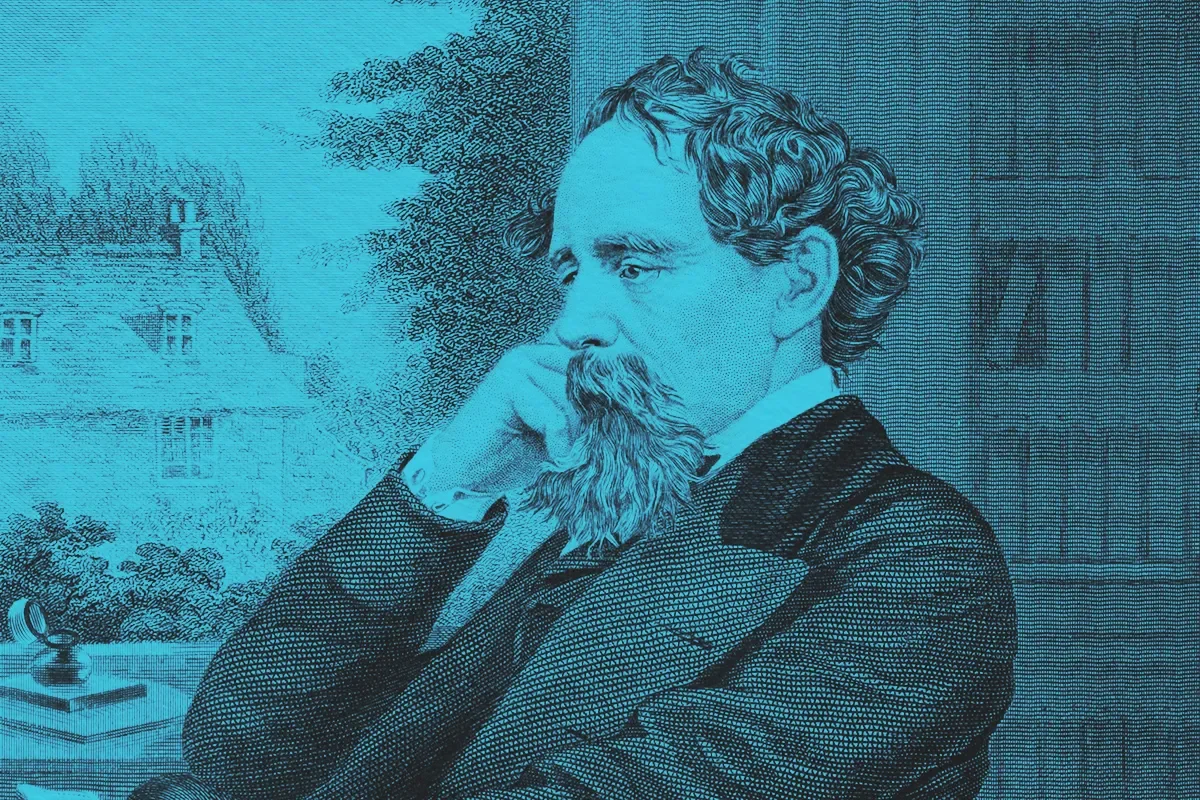
Known for penning works such as A Christmas Carol (1843) and Oliver Twist (1838), Victorian-era writer Charles Dickens is so influential that the word “Dickensian” was coined in his honor, meaning “of or reminiscent of the novels of Charles Dickens.” While “Victorian” suggests the prudishness and high moral tone on display during that queen’s reign, the adjective “Dickensian” connotes the poor social conditions in Dickens’ novels, or perhaps refers to over-the-top characters, such as master thief Fagin in Oliver Twist. It might also refer to the themes present in Dickens’ works: redemption, resilience, and social critique.
The author is even said to have invented a slew of interesting words, though incorrectly in some cases. He’s falsely credited, for example, with inventing common words including “boredom,” “flummox,” and “butter-fingers.” While he did popularize them in his writing, there’s evidence of earlier records by other authors. However, this shows that Dickens sought out lesser-known words, further demonstrating his prowess with the English language. Let’s take a look at some Dickensian words that the author did invent.
Sassigassity
Apparently, this word was employed only once, and by its inventor. According to Dickens, “sassigassity” means “audacity with attitude.” It was published in 1850 in “A Christmas Tree,” in the line “…the sassigassity of that dog is indeed surprising…” Perhaps it deserves a comeback.
Messiness
“Messiness,” a derivation of “messy” (“untidy” or “dirty”), can be credited to Dickens. It’s a result of converting an existing adjective into a noun, something Dickens was famous for. In addition to “messiness,” it’s believed he coined “cheesiness,” “fluffiness,” and “seediness” from their respective adjectives.
Sawbones
Dickens coined this slang term in The Pickwick Papers in 1837, and described it thusly for readers: “I thought everybody know’d as a sawbones was a surgeon.” We don’t see this word often, but it’s still listed in the dictionary as an informal term for a doctor or surgeon.
Whizz-bang
“Whizz-bang” was used in The Pickwick Papers to describe the sound of a gunshot. Today, “whizz-bang” (or “whiz-bang”) refers to a resounding success, as in, “She ran a whizz-bang campaign.” During WWII, it had a meaning closer to how Dickens used it, as a small-caliber shell.
Comfoozled
Dickens invented this word to mean “exhausted” or “overcome,” as seen in The Pickwick Papers: “He’s in a horrid state o’ love; reg’larly comfoozled, and done over with it.” This is not to be confused with the relatively new word “confuzzled,” which is a portmanteau of “confused” and “puzzled.”
Mildewy
While Dickens often turned adjectives into nouns, he was also known for adding suffixes to nouns to create new adjectives. Case in point: the word “mildewy,” which was first recorded in The Pickwick Papers as an adjective, and was used later in A Tale of Two Cities (1859) to describe “the mildewy inside of the coach.” This is consistent with the modern usage to describe something moldy or affected by mildew. While he didn’t coin the original nouns, Dickens was known to create many new adjectives by adding the suffix “-y” to nouns, including “bulgy,” “swishy,” “soupy,” “waxy,” and “trembly.”
Jog-trotty
Dickens went one step further with the noun “jog-trot” when he transformed it into an adjective with an entirely new meaning. “It’s rather jog-trotty and humdrum. But it’ll do as well as anything else!” he wrote in Bleak House (1852). Traditionally, a jog-trot is a slow trot by a horse, but Dickens transformed it into an adjective to describe something that is boring or dull. It seems that this was a one-off creation, never to be seen again in other works.
Source: wordsmarts.com
Contributed by Jane Hart
For Your Funny Bone

Contributed by Donald Butt


Contributed by Barbara Wallach
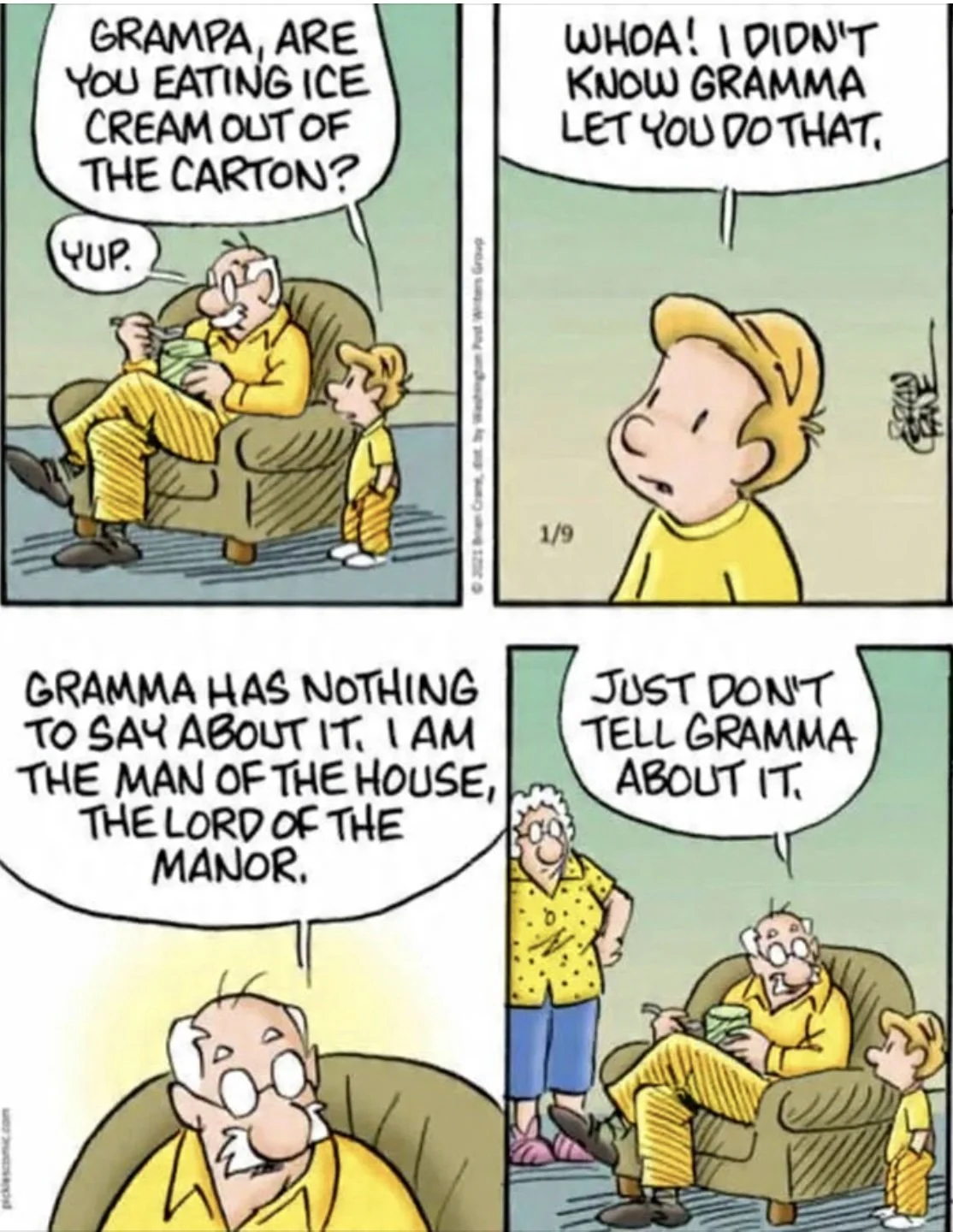

Contributed by Barbara Bruno

Art by Hart

For the first time since prom, Brad and Octavia danced the night away

The Woodstock-Stratton freestyle swim race ended in a photo finish

There was something fishy about Irene

The Martins had never been so close to real celebrities before

Thanks to their excellent jigsaw puzzle skills, the Wilfords could go anywhere on one ticket
Art and photos by Jane Hart
Overcome Climate Change, by Sheila Benedis

Art and photo by Sheila Benedis
In and Around Kendal
Flowering Kendal Artists
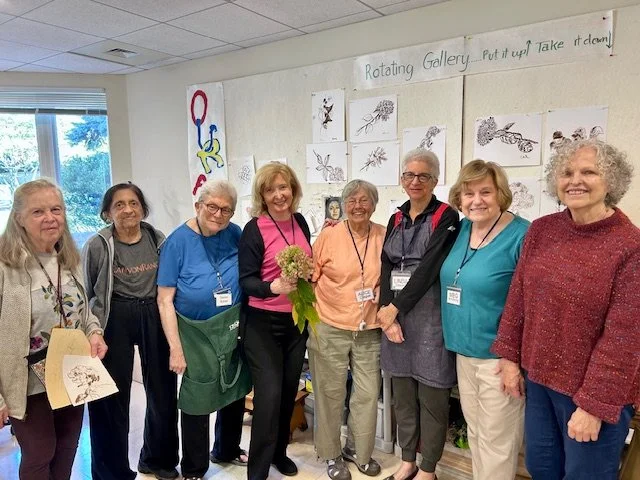
Photo by Carolyn Reiss
These seven hearty and talented souls have undertaken a new task: Drawing Botanticals. The course—taught by Pam Dietrich (far right)—is now blossoming in the Art Room.
A Sneak Peak
Psst! Wanna see what’s behind the wallboard on C Level? Quick! Look below:

The latest and greatest in undercover photography. What you’re seeing is the new community room and beyond that the new Residents Association room and the ping-pong venue. Ssshhh . . .
Nature’s Autumn Gifts
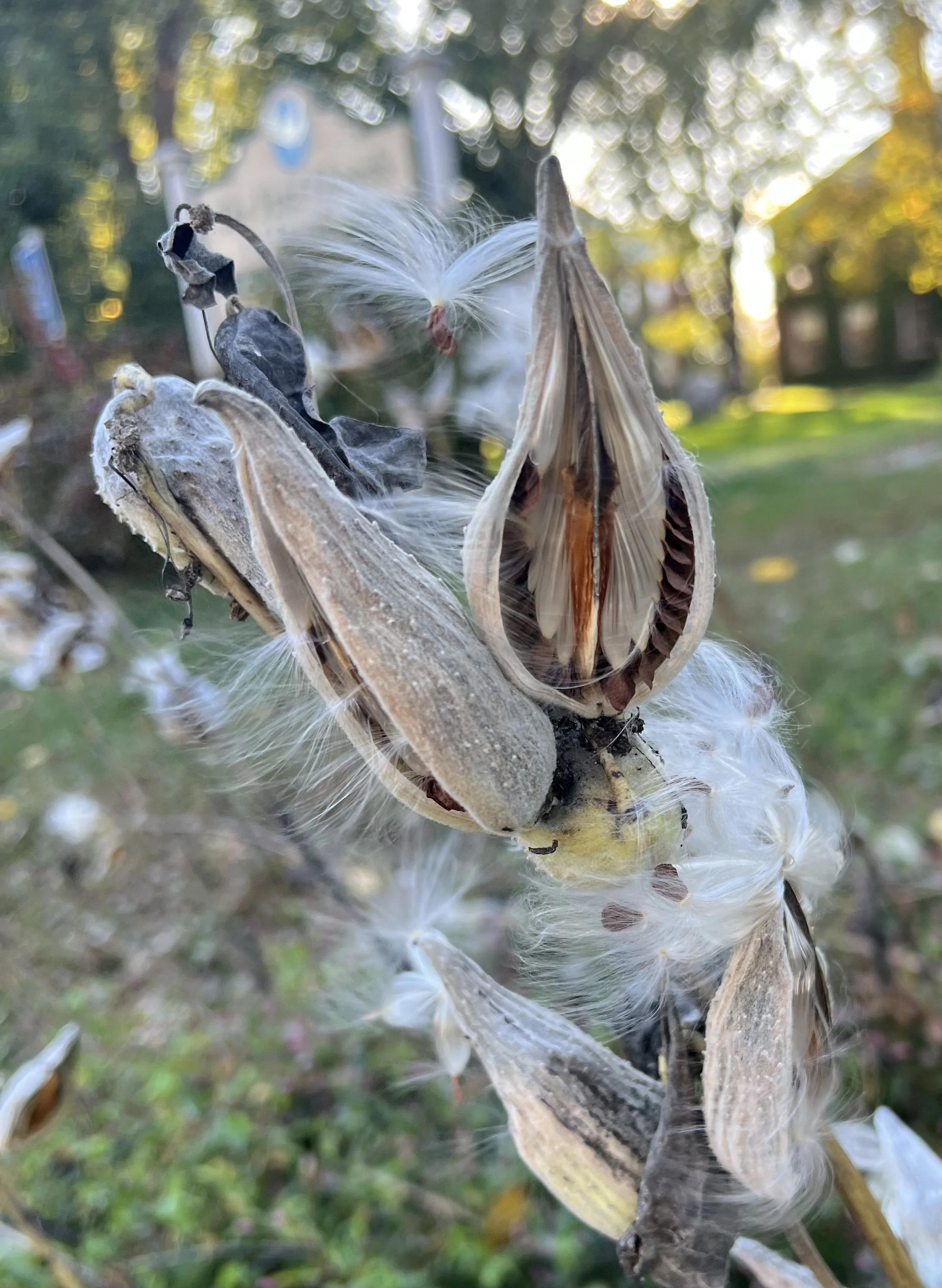
Photo by Ed Lannert

Photo by Carolyn Reiss


Photo by Carolyn Reiss

Photo by Edward Kasinec
Out and About
The Bold and the Trekking
Henry Neale launched a challenge several weeks ago (reported here, no less!): Walk the entire Croton Aquaduct—from the Croton Dam to Bryant Park—in measured doses. The latest dose brings them within Kendal territory.
Henry’s best estimate of the mid-point between the Croton Dam and the Bronx (the plan for 2025). The Fearless Footed will most likely cross Benedict in the early stage of the next walk planned for Saturday morning (10/18/2025).
The rest of the way from the Yonkers/Bronx line in Van Cortlandt Park to Bryant Park in Manhattan is a project for Spring 2026.
Well done!

Photo by Philip Monteleoni
Loosen Your Belts, Wear Comfy Shoes, and Get Ready! It's . . .
A Kendal Oktoberfest!

Weekly Construction Report

There was NO construction update this past Friday, October 10; however, there were some new developments this past week:
A temporary wall was put in place by the Chefs’ office in the Bistro Lounge.
The Chefs—Eddy, Sherve, and Deigo—moved temporarily to the computer room located right outside of the Gathering Room. Demolition will begin on Monday, October 13, in the Chefs’ office and only that office. No other part of the kitchen will be demolished, as of yet.
The temporary kitchen was inspected and cleaned.
The stairs by the entrance to the Formal Dining Room will remain open.
The next construction update will be on Friday, October 17.
Information from the office of Ellen Ottstadt.
They're Out! Again . . .
Our friends the neighboring goats seem to have a greater talent even than destroying bad flora and making milk (and little goats). They are break-out artists! Ellen Lagemann chronicled their latest escape.
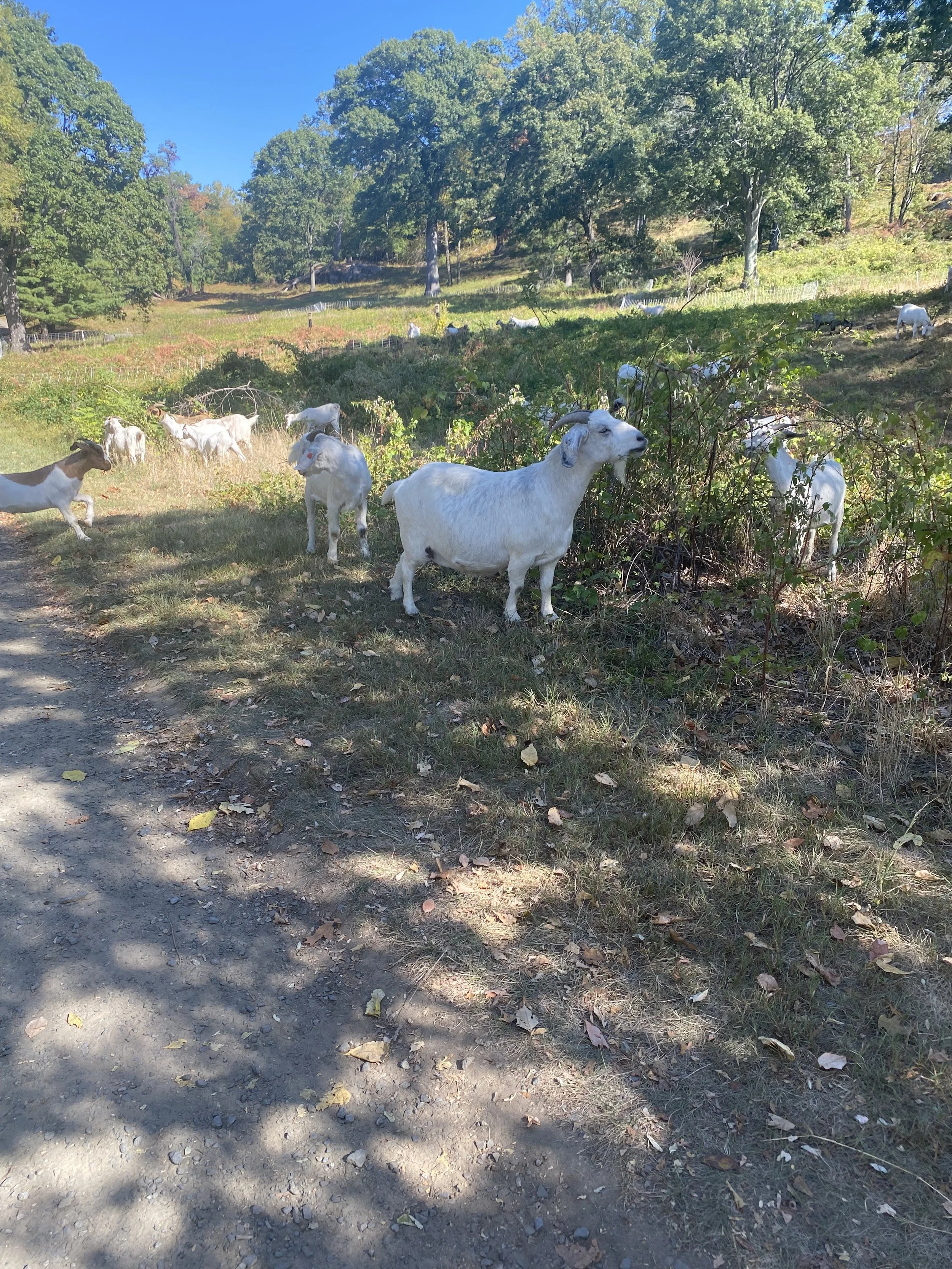
Free at last! Ooo, that looks like a tasty tidbit.
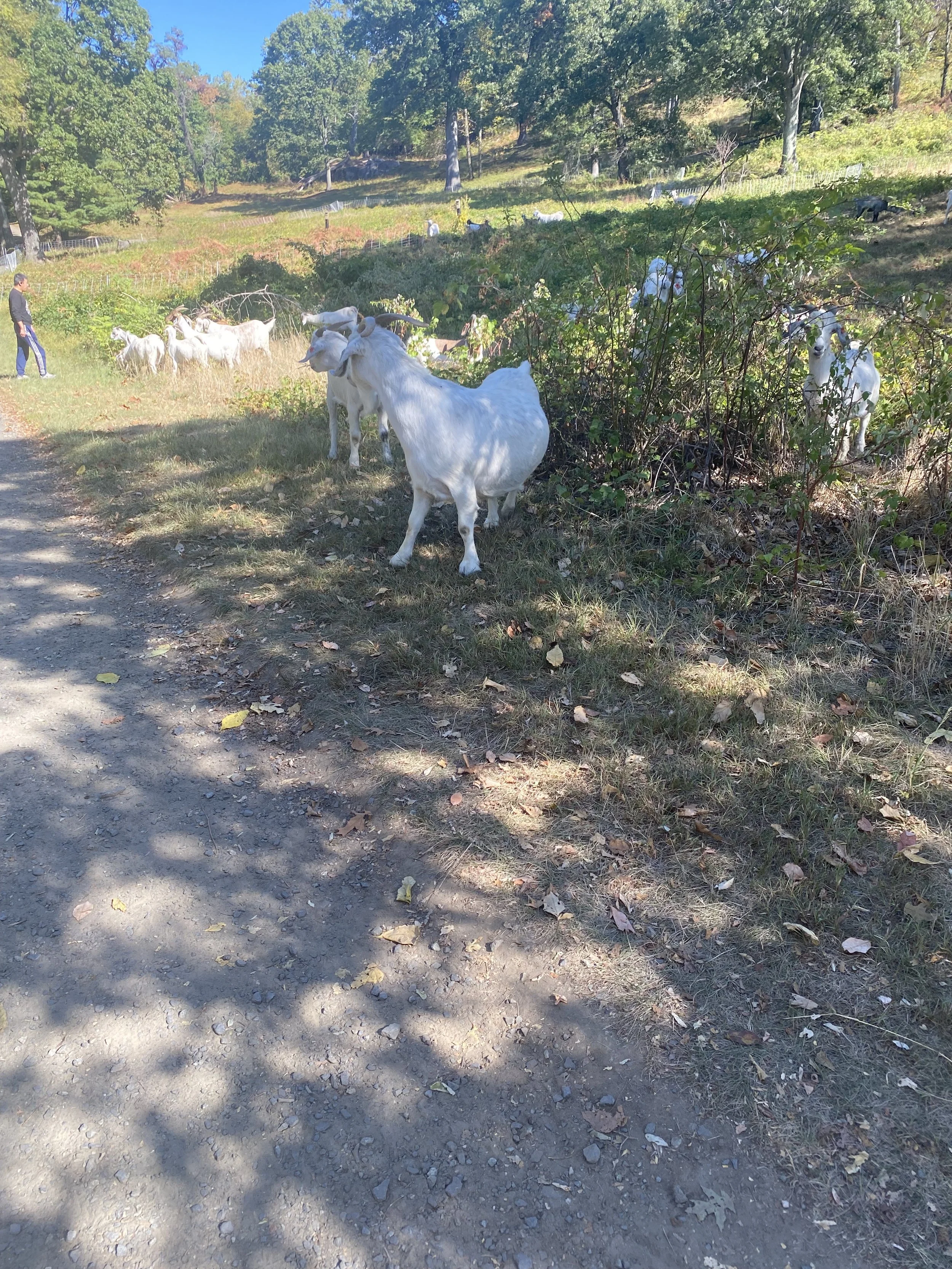
Uh oh, the sheriff’s back in town . . .
Grow Old Along with Me . . .
Profound advice and observations for our Kendal Years . . .
If you can’t think of a word, just say, “I forgot the English word for it.” That way people will think you’re bilingual instead of an idiot.
I’m getting tired of being part of a major historical event.
I don’t always go the extra mile, but when I do, it’s because I missed my exit.
My goal for this year was to lose 10 pounds. Only have 14 to go.
I just did a week’s worth of cardio after walking into a spider web.
I may not be that funny, athletic, good-looking, smart, or talented but . . . I forgot where I was going with this.
Contributed by Beverly Aisenbrey
To Be Continued . . .
I Never Knew That
The World’s Oldest Bread Loaf Is More Than 8,000 Years Old
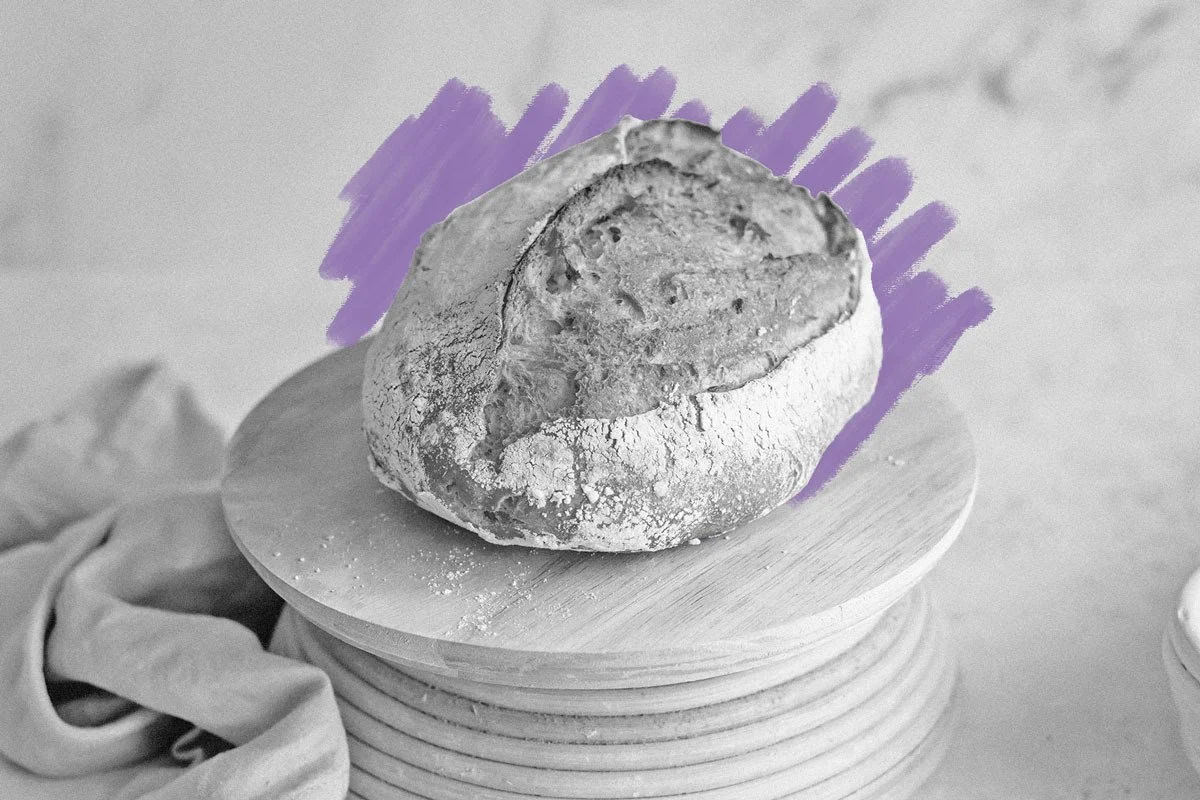
Bread is such a staple food that it’s often synonymous with sustenance itself, as in “putting bread on the table,” “breadwinner,” or “daily bread.” Indeed, humans have been eating bread for a long, long time. The earliest loaf of bread ever discovered is a whopping 8,600 years old, unearthed at Çatalhöyük, a Neolithic settlement in what is now southern Turkey, comprised of mud-brick dwellings built on top of one another.
While excavating the site, archaeologists found the remains of a large oven, and nearby, a round, organic, spongy residue among some barley, wheat, and pea seeds. After biologists scanned the substance with an electron microscope, they revealed that it was a very small loaf of uncooked bread. It had been fermented, like a sourdough loaf, and someone had pressed their finger in the center of it. The dough had been encased in clay, which allowed it to survive for thousands of years.
The preserved loaf dates back to around 6,600 BCE, but by that point humans had already been baking bread for thousands of years. Some baking even predates agriculture, meaning our prehistoric ancestors were making the food with foraged grains. The oldest known evidence of bread, found in the Black Desert in modern-day Jordan, dates back around 14,000 years. Researchers recovered crumbs from large, circular stone fireplaces—one archaeobotanist compared it to the charred crumbs at the bottom of a toaster. This ancient bread was made of wild wheat and root vegetables, kneaded, then baked on hot stones. The process would have been labor intensive, so archaeologists theorize that bread was a treat reserved for special occasions.
Source: historyfacts.com
Contributed by Jane Hart
