A Kendal Spring

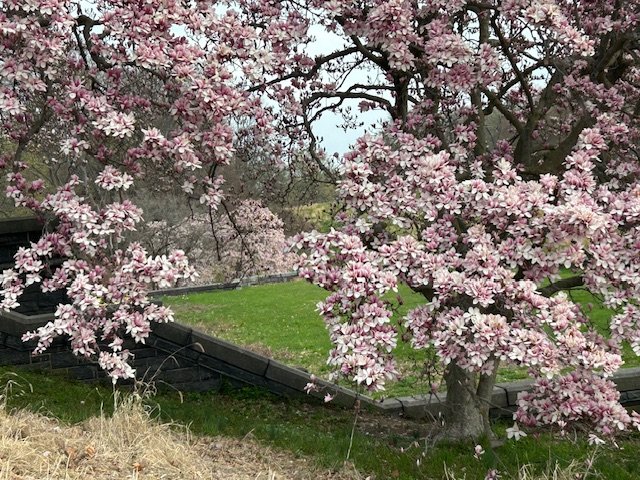
This past week, so many pictures came in featuring the beauty of our Kendal neighborhood that we thought we’d make an entire segment of them.

Photo by Joe Bruno

Photo by Carolyn Reiss

Photo by Carolyn Reiss

Photo by Mimi Abramovitz

Photo by Mimi Abramovitz

Photo by Mimi Abramovitz

White Torch, by Edward Kasinec

Outside Sunnyside, by Joe Bruno

Photo by Joe Bruno

I Never Knew That

Where did May Day Come From?

Most dates that are recognized as national holidays or at least entail widespread celebrations can enjoy that particular 24-hour designation to themselves on the calendar. It’s rare for a widely acknowledged holiday—say, Halloween or Presidents Day—to share top billing with another commemoration. Which brings us to the outlier of May Day.

For hundreds of years across much of Europe, May 1 was celebrated as a time when spring was in full bloom, with outdoor communal festivities highlighting the merriment enjoyed by participants who no longer had to fear winter’s wrath. However, for more than a century now, May Day has had a more serious significance. Also known as International Workers’ Day, it’s recognized as a time to mark the ongoing struggles for improved labor conditions—and, by extension, human rights. Although neither version of May Day is formally acknowledged as a holiday in the United States, both are more widely known internationally, and in some areas dually celebrated. So, what exactly is May Day, and how has the significance of the day evolved?

May Day Originated From Pagan Celebrations

May Day as a commemoration of spring has its origins in older pagan traditions. The Romans celebrated the six-day festival of Floralia from late April into early May, an event marked by various competitions, theatrical presentations, and the releasing of hares and deer as symbols of fertility. Farther north, the people of Ireland, Scotland, and the Isle of Mann celebrated May 1 with the Gaelic festival of Beltane. Marking the start of summer, Beltane was traditionally observed with the lighting of bonfires and collection of flowers. By the late Middle Ages, these events had coalesced into the May Day celebrations that were held through much of Europe. Perhaps the most famous rite associated with the day is dancing around the maypole. First noted in the 14th century, the maypole was originally a full tree hauled into a village, before evolving into a shorn wooden pole. Other May Day traditions surfaced later, including the appearance of the Jack-in-the-Green and the selection of the May Queen.

Source: historyfacts.com

Contributed by Jane Hart

Art by Hart

Vanessa was proud of how Booboo’s penmanship was improving

Mitzi and Lombard had to hide their love behind a passing cloud

A kind woman, Noah’s wife sneaked several of her small single friends aboard the ark

Richardson was not a fan of the new subway lighting

Just as Granny Finch-Baum warned, Dennis turned into an ice cream cone

Art and photos by Jane Hart

Suited Them to a Tea

Friday, April 25, was the time for grace and elegance—and fancy headgear, too. The second Kendal Afternoon Tea was a hit! The atmosphere was gracious, the delicacies delicious, and the hats and fascinators tasteful and appropriately spring-time. Fred and staff outdid themselves, once again. To the planners we say a heartfelt YAY! And thank you. As we do to Fred et al for carrying it out to a tee.

Tea-time Menu

Fred actually sat down—for a moment

Stay tuned: Fred has promised us his scone recipe.

Photos by Greg Lozier

From the Attic: The Aroma of Change, ala 1973--and Beyond!

Sometimes “out of the attic” comes a memory of the work-world past.

The time was 1973. Revlon was joining what was then a world-changing movement now best known as The Women’s Revolution. It did so by deciding to change the face of traditional perfume advertising. Charlie perfume was born—and, with it, the Revlon Charlie perfume ad featuring a confident, modern woman plowing happily and forcefully through the world on her very own.

Fast forward to 1988. A new Charlie campaign, designed by our own Cathie Campbell, hit the market. It featured a woman patting a man on the backside, a playful representation of female self-sufficiency.

Revolutionary! It took the powers that be by surprise—and a wee bit of consternation—as depicted in a sketch Cathie did at the time of those to whom she presented the ad for approval (naturally, after the usual 3-martini lunch).

It was in the end accepted and pitched into the world. Playful? A paean to self-suffiency? Whoa! Not all agreed. There were those—The New York Times, for example—who criticized it as sexist and in poor taste. And the reaction, in turn, was dramatic.

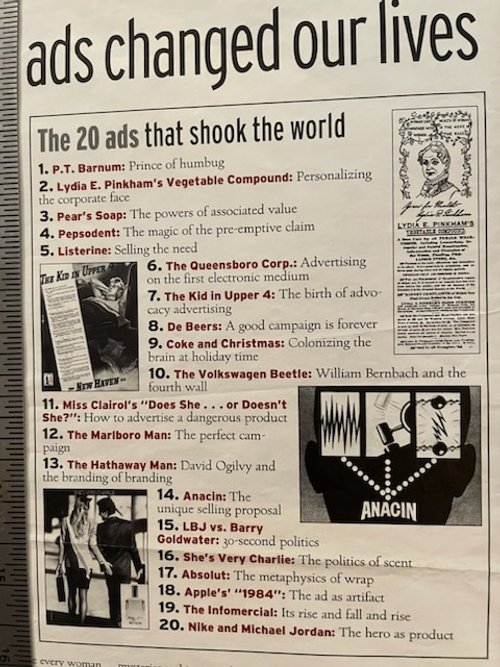
And the ad campaign was a hit! And a significant marketing move for Revlon: within three years, Charlie became the world’s top-selling perfume. And in the ad world, too, making #16 in “The 20 Ads That Shook the World” list from Adweek.

Building Community Commitment

They came, they saw, they volunteered. And then they talked about it.

At the recent Residents Association Quarterly meeting, Carlisle Spivey chaired a panel of four residents who have helped build the spirit, energy, and actuality of community here at Kendal: Marianne Bloomfeld, Caroline Persell, Peter Roggemann, and Tom Wolzien. They talked among themselves about what they had expected from Kendal, how they had entered into the community, and what advice they’d have for new residents.

Photos by Harry Bloomfeld

I Never Knew That

People Used to be Able to Send Children Through the US Mail

You can send a lot of things in the mail, but you can’t send a person—at least not anymore. There was nothing preventing people from mailing their own children in the early days of the US Postal Service’s parcel post service, though, and at least seven families took advantage of it. That includes the Beagues, an Ohio couple who in 1913 paid 15 cents in postage to mail their newborn son to his grandmother’s house a mile down the road. Beyond the novelty of it—when the parcel post service began on January 1, 1913, some were eager to see which packages they could get away with sending—it was a surprisingly practical way of getting one’s kiddo from point A to point B.

To start with, many people in rural areas knew their postal carriers fairly well, which meant the children were simply walked or carried on often-short trips. In other instances, children traveled on trains as Railway Mail, but with stamps instead of (usually more expensive) train tickets.

The longest known trip of a child through the mail occurred in 1915, when a 6-year-old was sent 720 miles from Florida to Virginia—a lengthy trip that cost just 15 cents.

Fortunately, there are no reports of children being injured by being sent through the mail. (Pictures of children in literal mailbags were staged.) The practice ended, as so many do, when certain higher-ups became aware of the loophole and decided to close it, also around 1915. 

Source: interestingfacts.com

Contributed by Jane Hart