11 Common Objects That Are Never Called By Their Proper Names
Image by Joshua Hoehne
1. The tip of the shoelace

Image by Emilie
The little plastic or metal tip at the end of shoelaces or drawstrings is there to prevent the fibers from fraying and to make it easier to pass the lace or drawstring through a hole. Its proper name is aglet, from the French aguillette, meaning “needle,” a reference to its use in helping to thread the string through the hole.
2. The metal band on the end of a pencil
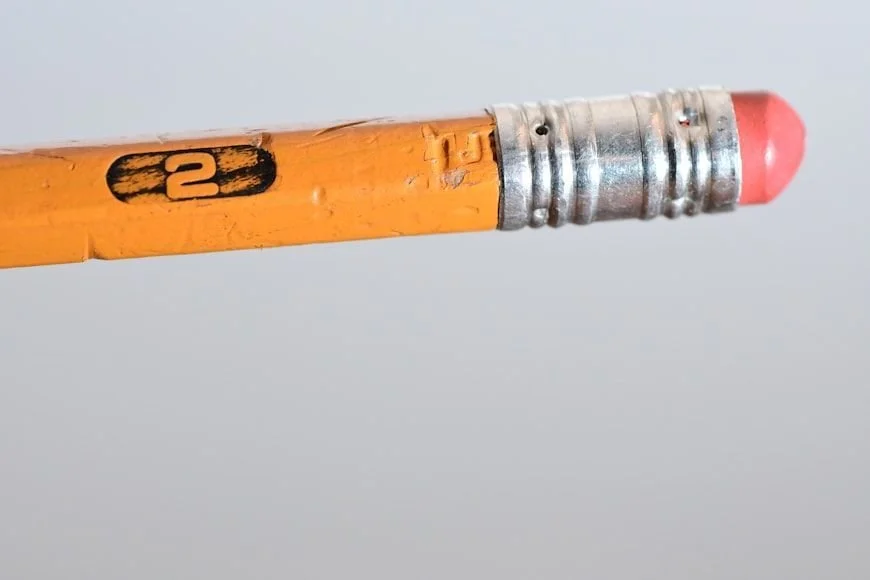
Image by Kim Leary
Erasers at the end of wooden pencils are not usually glued together, but they are instead held together by a little metal band. This band is called a ferrule—from Medieval Latin viriola or “little bracelet”—and the term can be used for any metal band that strengthens or fastens a joint, such as those used in handles to hold brush bristles or to secure a connection between two cables.
3. The little plastic table on the pizza

The “little plastic table on the pizza” is quite a long name for something aptly named pizza saver, but no one seems to really care. It was invented in 1974 by an Argentine pizza maker who named it SEPI or separador de pizza (“pizza separator”). In America, it was patented as a package saver in 1985, though it was later renamed pizza saver.
4. The division sign
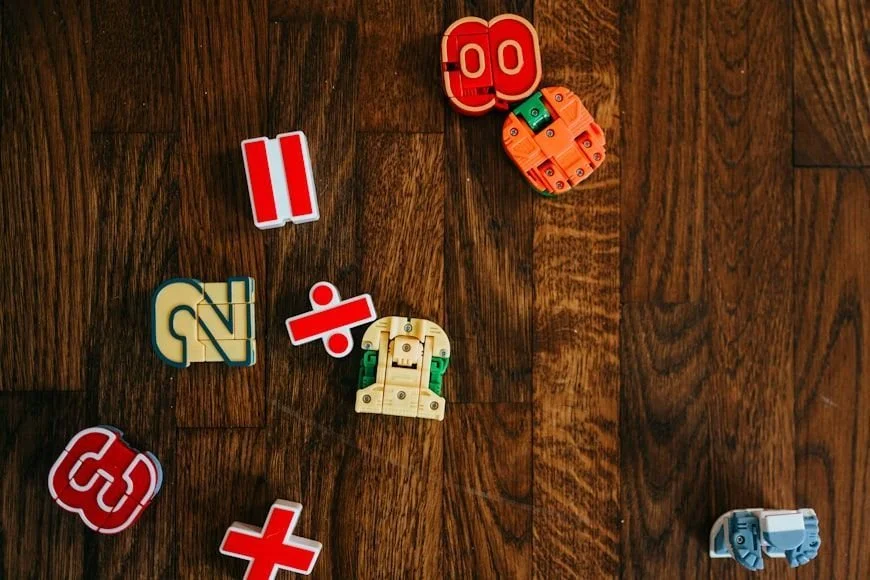
Image by Nathan Dunlap
Most mathematical symbols have proper names that are not regularly used, and the division sign is no exception. It was officially introduced into mathematics as a symbol of division in 1659 by the Swiss mathematician Johann Rahn in his influential work Teutsche Algebra. This sign is called an obelus, from the Greek obelos, meaning “sharpened stick” or “skewer,” as it was initially used as a pointer for questionable passages in a text.
5. The coffee cardboard sleeve

Image by Truong Tuyet
Paper cups and their corresponding cardboard sleeves to protect our hands from the heat or the cold are relatively new, but their proper names are not—at least, the name for the cardboard sleeve. This holder is called a zarf, an Arabic (zuruuf) and Turkish (zarflar) word used for ornamented cup holders, usually made from metal. The materials and the details of the zarf have changed, but the purpose still remains.
6. The armhole in clothes

Image by Liana
Do we need a more technical term than “armhole” for a hole meant for an arm to go through? Maybe not, but the technical term still exists. An armscye (pronounced arm-sigh) is the proper term used in sewing and patterns to describe the opening on a garment where the sleeve is attached. The word is a compound of arm + scye, a Scots word meaning “opening.” So, in the end, armscye just means “armhole.”
7. The railing and pillars on a staircase

We often use the words “railing” or “handrail” when talking about a staircase, but these terms only describe the top portion of it, not the pillars that support the handrail. The pillars and the rail altogether are called a banister, a corruption of the word baluster, derived from the Italian balaustro. The term originally was used for the pillars, but eventually came to mean the entire structure.
8. The foam on alcoholic beverages

Image by Engin Akyurt
Not all beverage foams are equal. The foam on top of alcoholic beverages, in particular, is called barm, a term derived from Old English beorma, meaning “yeast” or “leaven,” and it's mainly used for the effervescence of fermented liquors such as beer, ale, or wine.
9. The whites of the egg

Image by Sanjoy Saha
Did you know that the white (or clear) part of the egg is called the albumen? The term entered English as a loan from Latin, where albumen—from albus, “white”—was used in the same way. Though it is not widely used in everyday life, it’s still the correct term for that part of the egg.
10. The dot on the “j” and the “I”

Image by Marcel Eberle
As a rule of thumb, you should always assume that all marks, symbols, and strokes in calligraphy have a proper name, even if it’s not often used. When it comes to the lowercase letters “j” and “i,” the little dot on top is not a dot, but a tittle. This name comes from the Latin titulus—meaning “title,” “inscriptio,” or “small mark”—and was initially used by scribes to distinguish these letters in their cramped writing.
11. The “you are here” pointer on a map
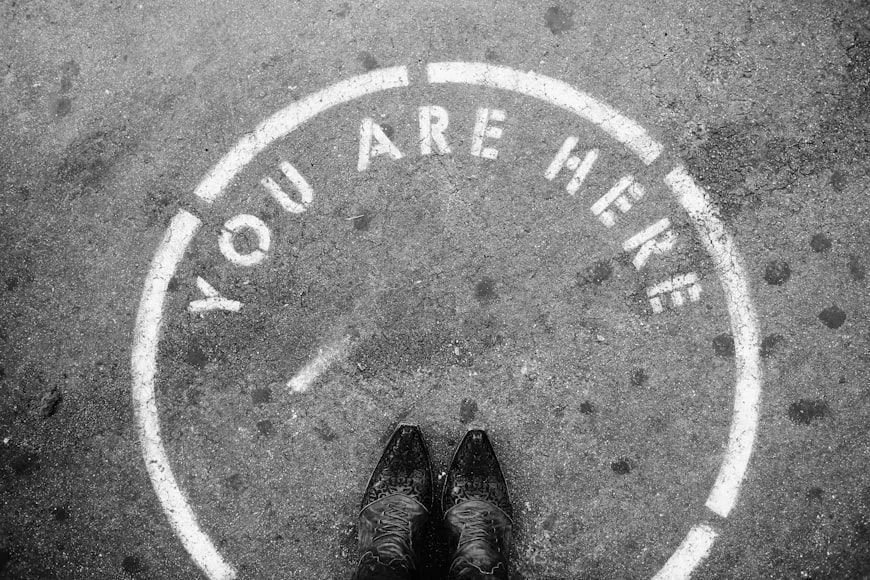
Image by Fallon Michael
If you ever got lost in the mall or the museum, you must have come across a map that marked your location using an arrow or a pointer, usually accompanied by the phrase “you are here.” Well, that pointer is called an ideolocator, a combination of the Greek idea, a “mental image, concept, or visual representation” (in this case, the pointer), and the Latin locatus, meaning “to place” (the specific location on the map). For the sake of convenience, we will keep calling it the “you are here” sign.
Source: DictionaryScoop.com, May 12, 2026