
The Day the Liberty Bell Came Home
On June 27 in 1778, a jubilant wagon procession made its way from Allentown, Pennsylvania, to the newly renamed Independence Hall in Philadelphia. The reason for the celebration? The Liberty Bell had survived the war—so far—without being melted down into musket balls by the British.
Nine days earlier the British had ended their nine-month occupation of Philadelphia, part of the larger British plan to seize New England. But the British campaign failed to achieve its goals, and the lengthy stay in Philadelphia contributed little militarily and dragged on so long it dogged even the city’s Loyalists.
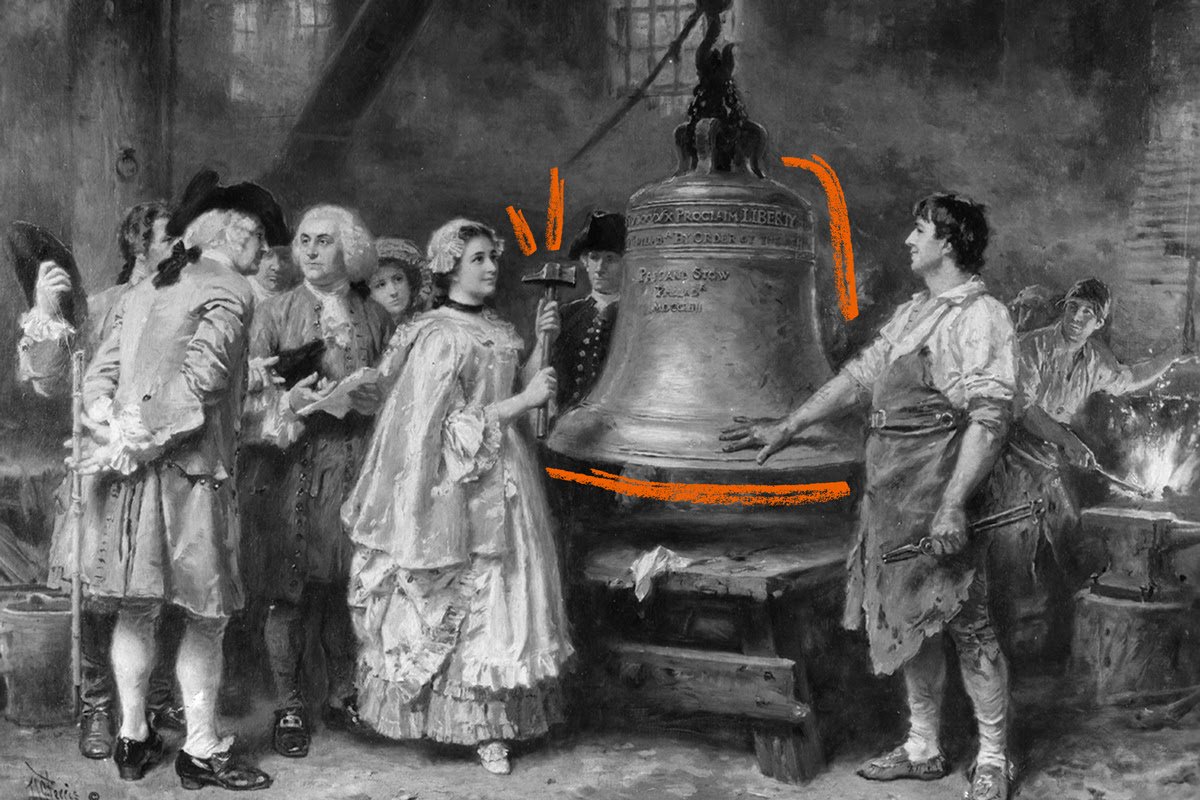
Before the American Revolution, Independence Hall was known as the Pennsylvania State House. The Continental Congress met there. The bell that tolled for all those historic events had an unlikely origin: It had been commissioned from a foundry in London in 1751. That bell cracked at its test in 1752. It was recast, but too much copper was added to the alloy, and it didn’t ring properly. The third attempt was better. That bell worked; it was far from perfect, testers noted—but it would do the job.
And it did, serving the colonies of British America for more than two decades.
Then, in September 1777, when the British marched into Philadelphia to hunker down for the winter—and the delegates to the Continental Congress fled—city officials feared the occupiers would seize the bells and melt them into ammunition.
The Liberty Bell and 10 others, weighing about 12,000 pounds total, were moved to Allentown, some 50 miles away. Or, to put it in terms the Patriots understood, roughly 200,000 musket balls of metal were secreted away. It was an eventful move, involving a convoy of 700 guarded wagons. The wagon carrying the Liberty Bell broke down en route, and its precious cargo had to be transferred mid-journey.
After its triumphant return, the Liberty Bell rang for decades. The famous crack snaked through during its ringing at the funeral of Chief Justice John Marshall in 1835 and widened beyond repair in 1846 while marking George Washington’s birthday. Though it is now silent, it is still tapped (gently, we hope) on rare occasions with a special hammer.
Source: Britannica, “Today in History,” by Michele Metych.