
Was Robinson Crusoe Real?
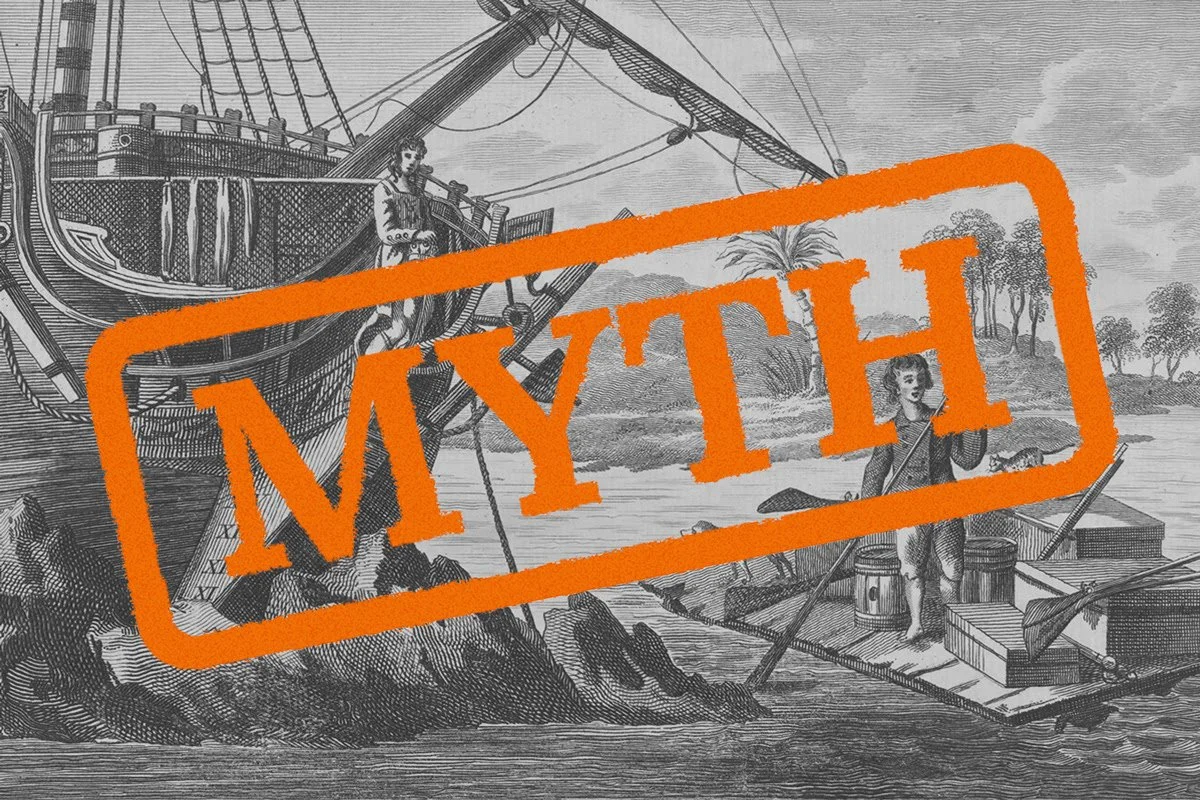
“September 30, 1659. I poor miserable Robinson Crusoe, being shipwreck’d, during a dreadful Storm, in the offing, came on Shore on this dismal unfortunate Island.”
So begins this day in The Life and Strange Surprizing Adventures of Robinson Crusoe, of York, Mariner, Written by Himself. What follows is the saga of a man who would spend 28 years stranded on a remote island, recording his transformation into a self-sufficient castaway. He salvages from the wreck, builds increasingly permanent lodging, and coaxes barley from the tropical ground to supplement a diet that is otherwise, basically, goats.
But when the book was published anonymously in 1719, it wasn’t exactly marketed as a novel. The first edition alleged that Crusoe’s story was a memoir. There were reasons for that. Fiction wasn’t an established commercial genre yet. But readers loved the adventures of real-life sailors, pirates, and others who’d survived in places where people probably shouldn’t have been.
The book’s author, British activist and failed businessman Daniel Defoe, had already been thrown in jail a few times for running afoul of the government in his political writing. He or his publisher might’ve preferred to withhold his name. Defoe took inspiration from some real-life survival stories, including that of Alexander Selkirk, a Scottish privateer marooned off the coast of Chile, and Robert Knox, a sailor of the East India Company who was shipwrecked and imprisoned in Sri Lanka.
Crusoe’s island had all the ingredients of a myth: shipwrecks, wild forests and animals, and cannibals and their captives. Blending travel and adventure literature—the stuff of sailor’s yarns—with realistic narrative, Puritan allegorical sensibilities, and a healthy dose of criticism of capitalism, Defoe gave the world a perfectly ordinary, flawed man to root for. In doing so, he also gave the world what is often considered the first true English novel.
In the book, Crusoe rescues a man from the cannibals and names him Friday. The two become bosom companions, with a genuine friendship in the story—but for Crusoe it’s threaded with assumptions about race, religion, and colonization. He never quite stops trying to shape the landscape to fit his worldview.
Eventually, a ship comes by. Crusoe and Friday help seize it and sail to England. Crusoe, though, a bit like his inventor, is never satisfied and soon sets sail again.
Source: Britannica.com, Today in Myth-Story, by Michele Metych.