
Turkeys Were Named After the Wrong Country
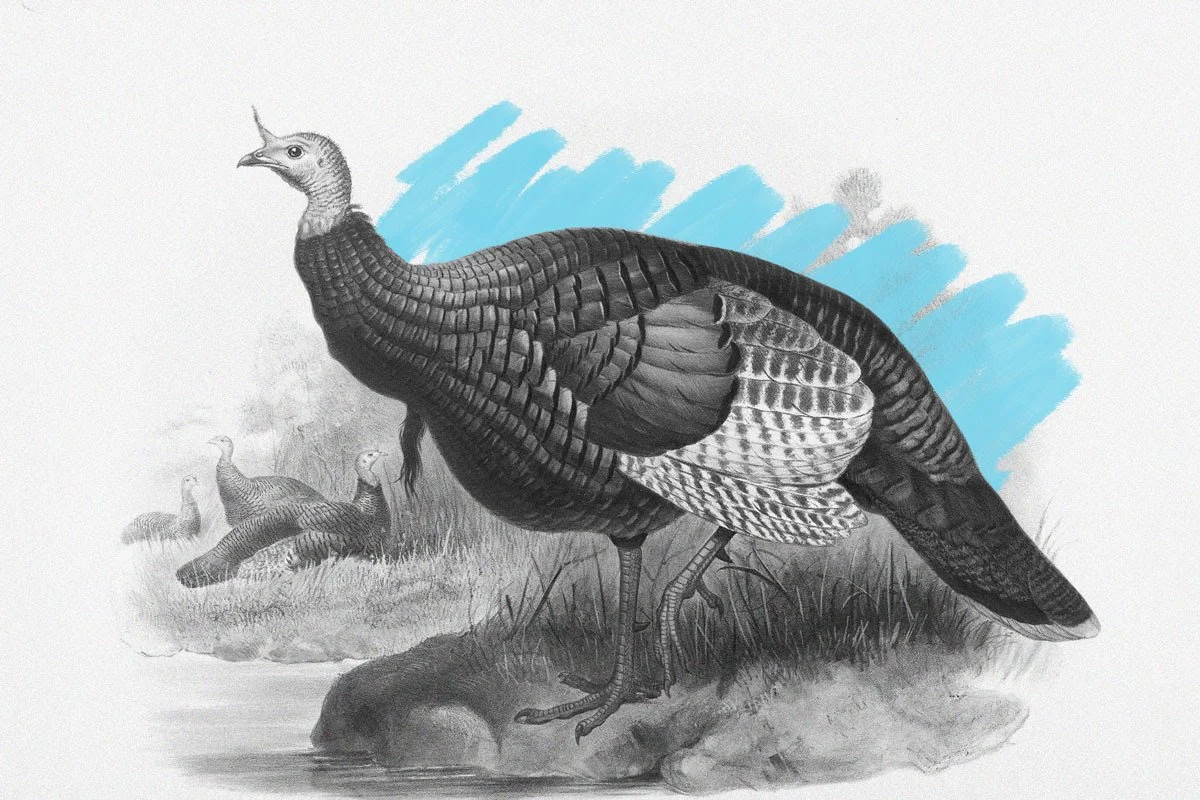
Turkeys—the quintessential American bird— owe their name to a centuries-old case of mistaken identity. When Spanish explorers arrived in Mexico in the 1500s, they encountered a plump, impressively feathered bird that the Aztecs had long domesticated and called huexolotl. The Spaniards brought these birds back to Europe, where they quickly became a hit on farms and dinner tables.
So why do we call them “turkeys”? Possibly because Europeans had already encountered a somewhat similar bird, the African guinea fowl, which reached Europe earlier via trade routes controlled by the Ottoman Empire of the Turks. Because of that connection, guinea fowl were known as Turkey cocks or Turkey hens. So when the new, American bird arrived in Europe, people may have assumed it came from the same place and gave it the same name.
However, some sources say the bird’s name arose simply because at the time, the Ottoman Empire was at its peak, and Europeans were apt to designate all new imports as “Turkish.”
Either way, the misnomer stuck. But while English speakers called the bird a turkey, in other languages the geolinguistic confusion multiplied. The French dubbed it coq d’Inde —“rooster of India”—thinking it came from the Indies. In Portuguese it became a peru, in Malay a Dutch chicken, and in Turkish, tellingly, a hindi, meaning “from India.”
Everyone, it seems, thought the bird came from somewhere else. But when your Thanksgiving feast was served up, the people you actually wanted to thank weren’t the Turks; they were the Aztecs.