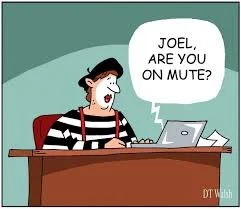
Bears Repeating: Important Zoom Presentation on Avoiding Scams

Yes, we put it in the website last week. And, yes, Jean mentioned it in the Residents Council meeting. Still, it’s important enough to plop it in place this week, as well. Monday, June 15—be there or be vulnerable!

I Never Knew That

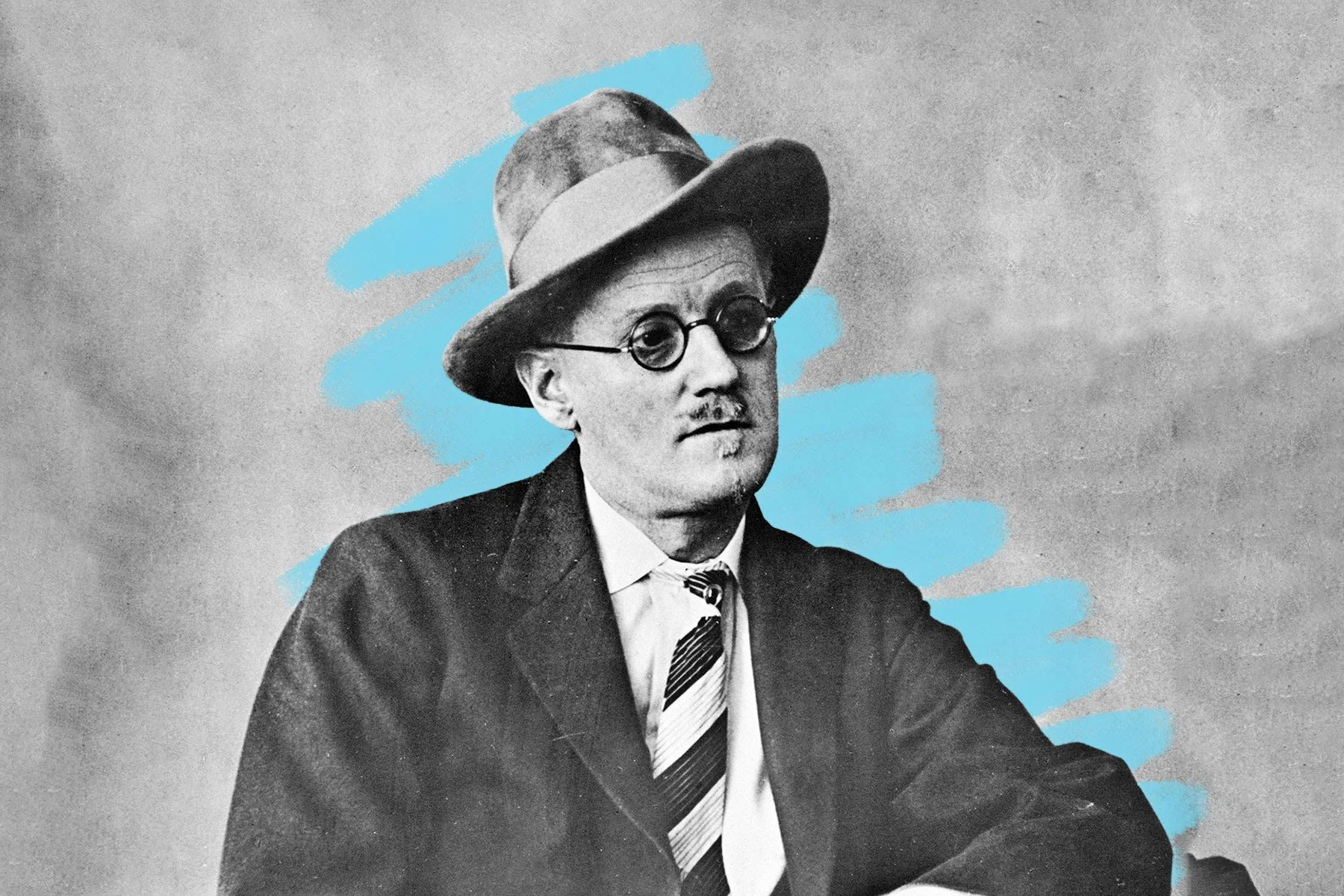
James Joyce Used Crayons When Writing His Novels

James Joyce didn’t just write some of the most acclaimed novels of the 20th century—he did so using crayon. Though it sounds like a quirky affectation on the part of the Ulysses and A Portrait of the Artist as a Young Man author, it was actually a medical necessity. Because Joyce had trouble with his eyesight and was nearly blind by the time he wrote Finnegans Wake in the last few years of his life, “the large crayons thus helped him see what he was writing,” according to culture writer Maria Popova. Joyce was farsighted as a child and had severe issues with his eyesight by the time he reached his 20s. These problems only worsened after a bout of rheumatic fever left him afflicted with the condition iritis.

Fortunately for readers, Joyce was as adaptable as he was brilliant. He began writing while “lying on his stomach in bed, with a large blue pencil, clad in a white coat” that reflected more light back at the empty page at night. This process became even more elaborate during the editing phase, when Joyce relied on crayons of varying colors (namely orange, blue, red, and green) to underline and circle individual words or sentences and even cross out entire pages. Finnegans Wake in particular remains one of the English language’s most difficult and inscrutable works some 85 years after it was written, but at least there’s no mystery as to how it was written.

Source: historyfacts.com

Art by Hart

It seemed to Rushnell that the world was upside down

Simon couldn’t remember whether or not you’re supposed to answer a dear John letter

Only Aunt Betsy knew how badly Chicken wanted a watermelon costume

It seemed to Fiske that all the affordable beach condos were under water

With no set vacation plans, the Whitmores hopped an Amazon truck, destination unknown

Art and photos by Jane Hart

In and Around

A Rose by Any Other Name

Photo by Edward Kasinec

Early Morning Visitors

Photo by Ed Lannert

Photo by Jane Hart

A New Point of View

Photo by Lynn Brady

The High Point of Rockwood Park

“'Tis sweet to trace the setting sun
Wheel blushing down the west” George Moses Horton

Photo by Maria Harris

Photo by Maria Harris

Photo by Lynn Brady

The Best Offence Is a Good Defense

What’s So Punny?

1. I once worked at a cheap pizza shop to get by. I kneaded the dough.

2. My friends and I have named our band “Duvet.” It’s a cover band.

3. I lost my girlfriend’s audiobook, and now I’ll never hear the end of it.

4. Why is “dark” spelled with a k and not c? Because you can’t see in the dark.

5. Why is it unwise to share your secrets with a clock? Well, time will tell.

 6. When I told my contractor I didn’t want carpeted steps, they gave me a blank stare.

7. Bono and The Edge walk into a Dublin bar and the bartender says, “Oh no, not U2 again.” 

8. Prison is just one word to you, but for some people, it’s a whole sentence. 

9. Scientists got together to study the effects of alcohol on a person’s walk, and the result was staggering.

10. I’m trying to organize a hide and seek tournament, but good players are really hard to find.

11. I got over my addiction to chocolate, marshmallows, and nuts. I won’t lie, it was a rocky road.

 Contributed by Don Butt

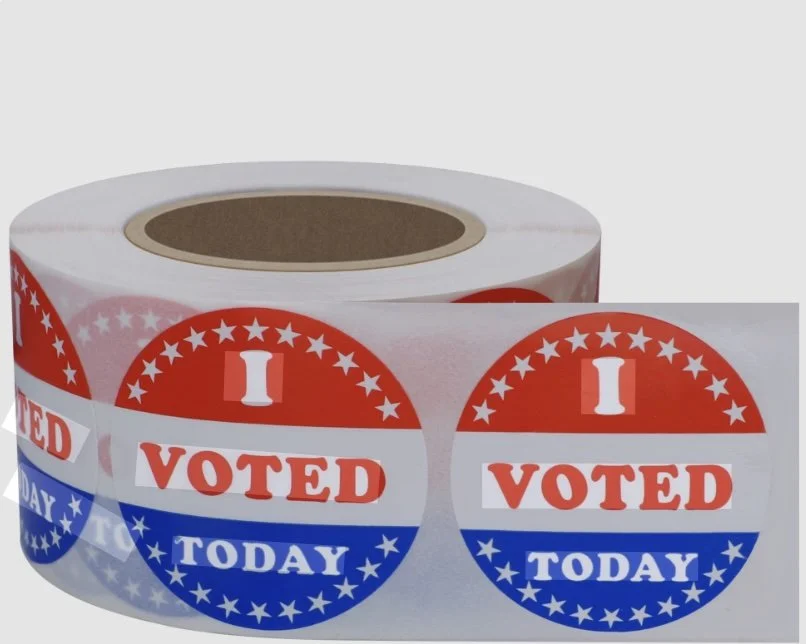
A Civic Duty Realized: Election Examinations

Arriving at Kendal: Four of the five Democrats running to win the June 23 Primary for New York 17th District’s seat in the House of Representatives. Why? To provide us with their thoughts and platforms on the issues of the day. Hildegarde Gray moderated. The candidates did not hesitate to speak their minds. A riveting evening!

From left to right: Mike Sacks, Beth Davidson, Effie Phillips-Staley, Cait Conley.

Photo by Harry Bloomfeld

I Never Knew That

The Debut of the Shopping Cart

“Can you imagine, wending your way through a spacious food market without having to carry a cumbersome shopping basket on your arm?” Sylvan Goldman, through a Standard Stores advertisement, asked readers of the Oklahoma City Advertiser that very question this day in 1937, inviting them to try the new shopping carts (“the latest device conceived by the mind of man”) and experience a new way to “shop with an ease never before known” in his supermarkets.

Goldman, the son of Jewish immigrants, learned the grocery trade from his father and uncles who owned stores in Tulsa. He and his brother eventually owned their own stores in the Standard Food Market and Humpty Dumpty supermarket chains, where necessity collided with Goldman’s ingenuity.

In 1937, in the midst of the Great Depression and the Dust Bowl, Goldman needed a way to boost his stores’ sales. He noticed that once shoppers filled their arms or a handheld basket, they stopped shopping. So one night, assisted by a mechanic friend, Goldman fused together a folding chair, a platform, two baskets, and four wheels, and voilà!—capacity doubled and shoppers had a free arm for more groceries.

Goldman’s invention arrived at a moment brimming with technological innovation, cultural change, and great opportunity: Supermarkets were booming. Refrigeration let stores stock more food, the rise in American car culture let shoppers haul more home, and home refrigeration and freezers allowed Americans to keep their purchases fresh longer. Convinced he had a winner, Goldman submitted a patent application for a “combination basket and carriage”—the first patented shopping cart—a month before debuting it in his stores.

Alas, customers were initially doubtful. Women already pushed carts around (albeit ones with babies in them) and were tired of doing so, and male shoppers thought the cart made them look effeminate. Goldman was confident shoppers just needed convincing (and a smidge of peer pressure), so he hired attractive models, both male and female, to push his carts around his stores. The gimmick worked: The shopping cart was a success. The first national convention of the Super Market Institute was held in September 1937, and there Goldman’s Folding Basket Carrier Corporation shared Goldman’s innovation with the nation, and grocery shopping was revolutionized.


Source: Britannica Today in History, Britannica.com

Art by Hart

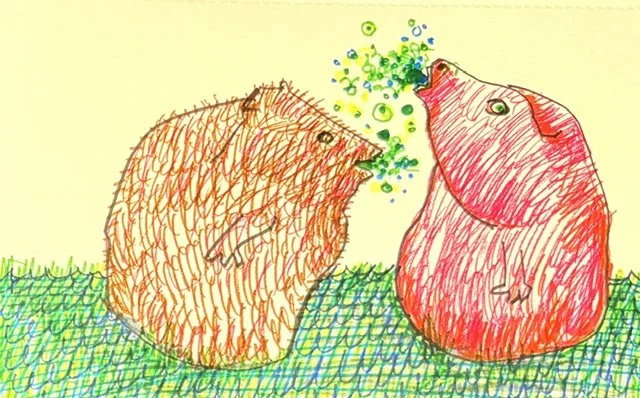
The Hacklefords both loved arugula-flavored bubblegum

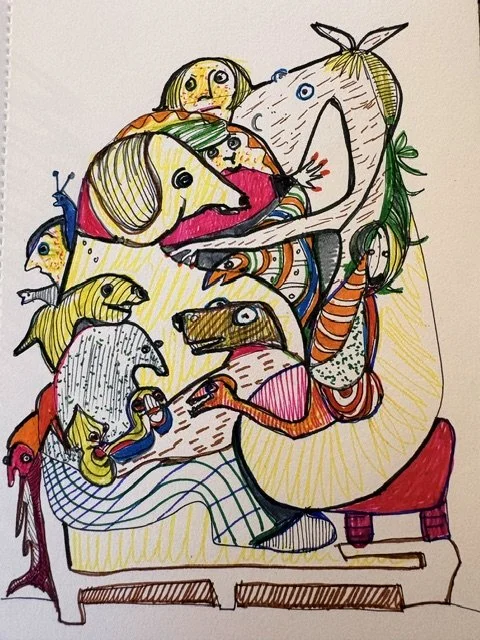
Small as it was, Richie’s was the place to be

Unable to select a shelter pet, Steele came home with five

Clelia’s new home hair dye was a disappointment

The kids enjoyed helping Aunt Prudence with her Tai Chi

Art and photos by Jane Hart

What's So Punny?

1. Dad, are we pyromaniacs? Yes, we arson.

2. What do you call a pig with laryngitis? Disgruntled.

3. Writing my name in cursive is my signature move.

4. Why do bees stay in their hives during winter? Swarm.

5. If you’re bad at haggling, you’ll end up paying the price.

6. Just so everyone’s clear, I’m going to put my glasses on.

7. A commander walks into a bar and orders everyone around.

8. I lost my job as a stage designer. I left without making a scene.

9. Never buy flowers from a monk. Only you can prevent florist friars.

10. How much did the pirate pay to get his ears pierced? A buccaneer.

Contributed by Don Butt

To Be Continued