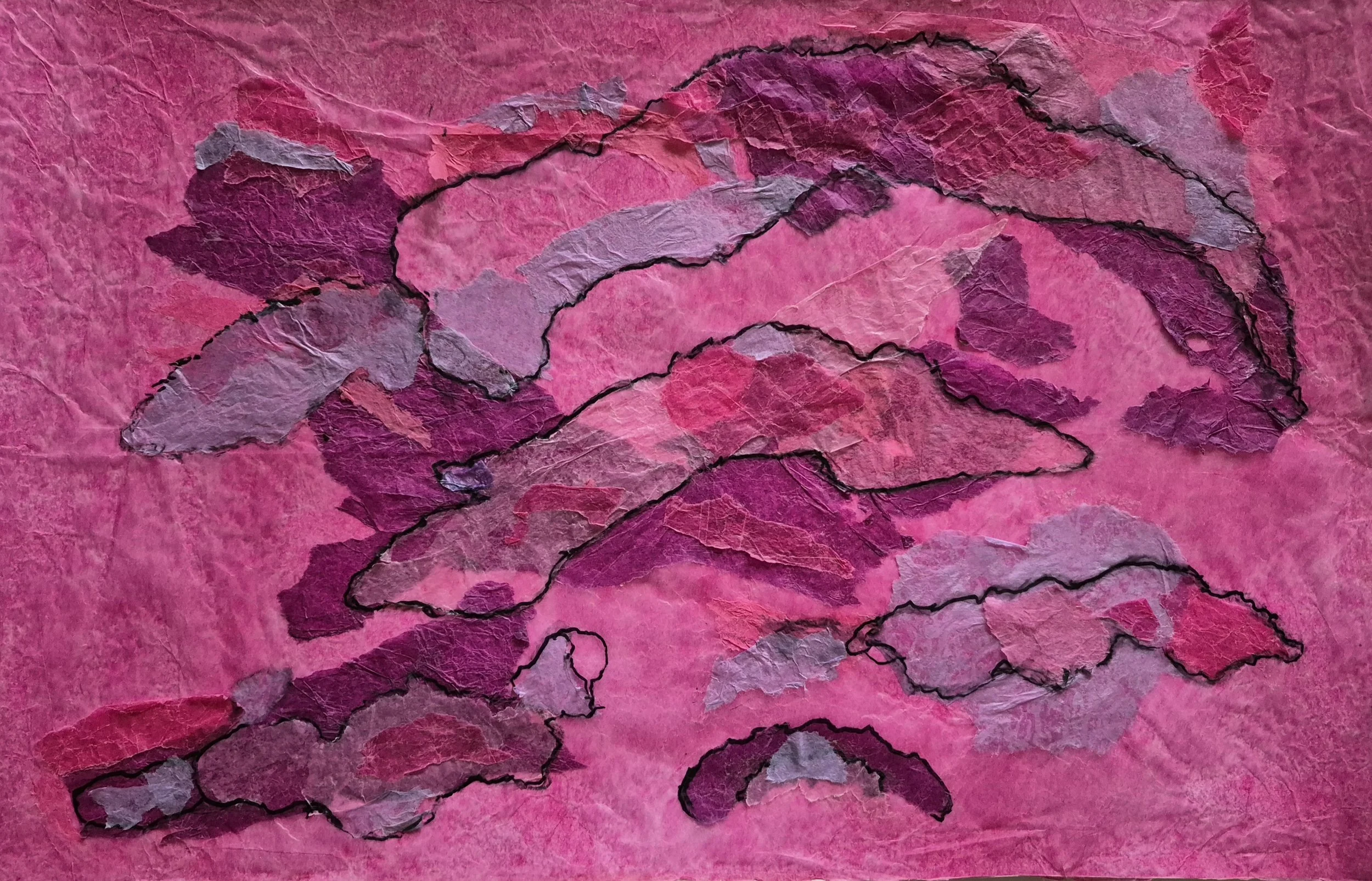
Art and photo by Sheila Benedis
Art by Hart

A close-knit family, the Wylies liked to greet the sunrise together

The Starbucks lines were getting longer every morning
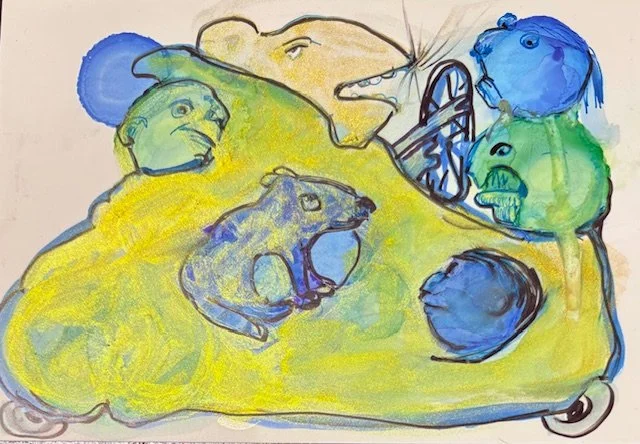
Elmore vowed to stop buying cheesy cars
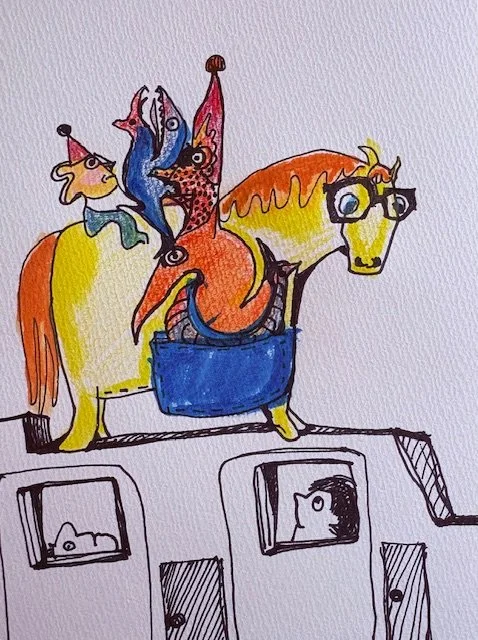
Margery wished the neighbors would quit double-parking

If you saw a piece of sky missing, it was Woofy’s fault, but he says he’s sorry
Art and photos by Jane Hart
In and Around Kendal

Just returning from Hawaii, it looks just like old times, by Joe Bruno
The Moods and Majesty of the Hudson River
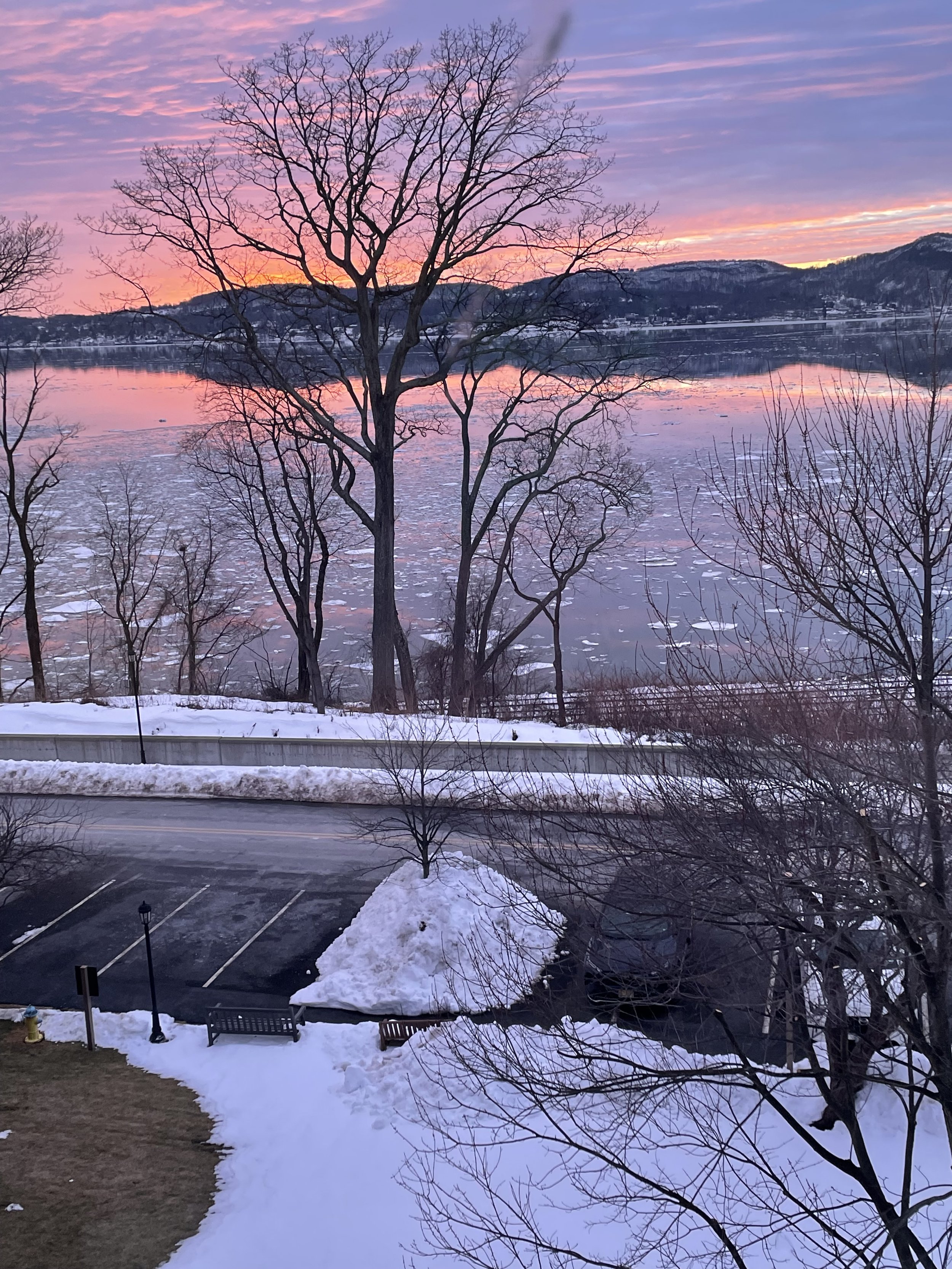
Photo by Susan Martin
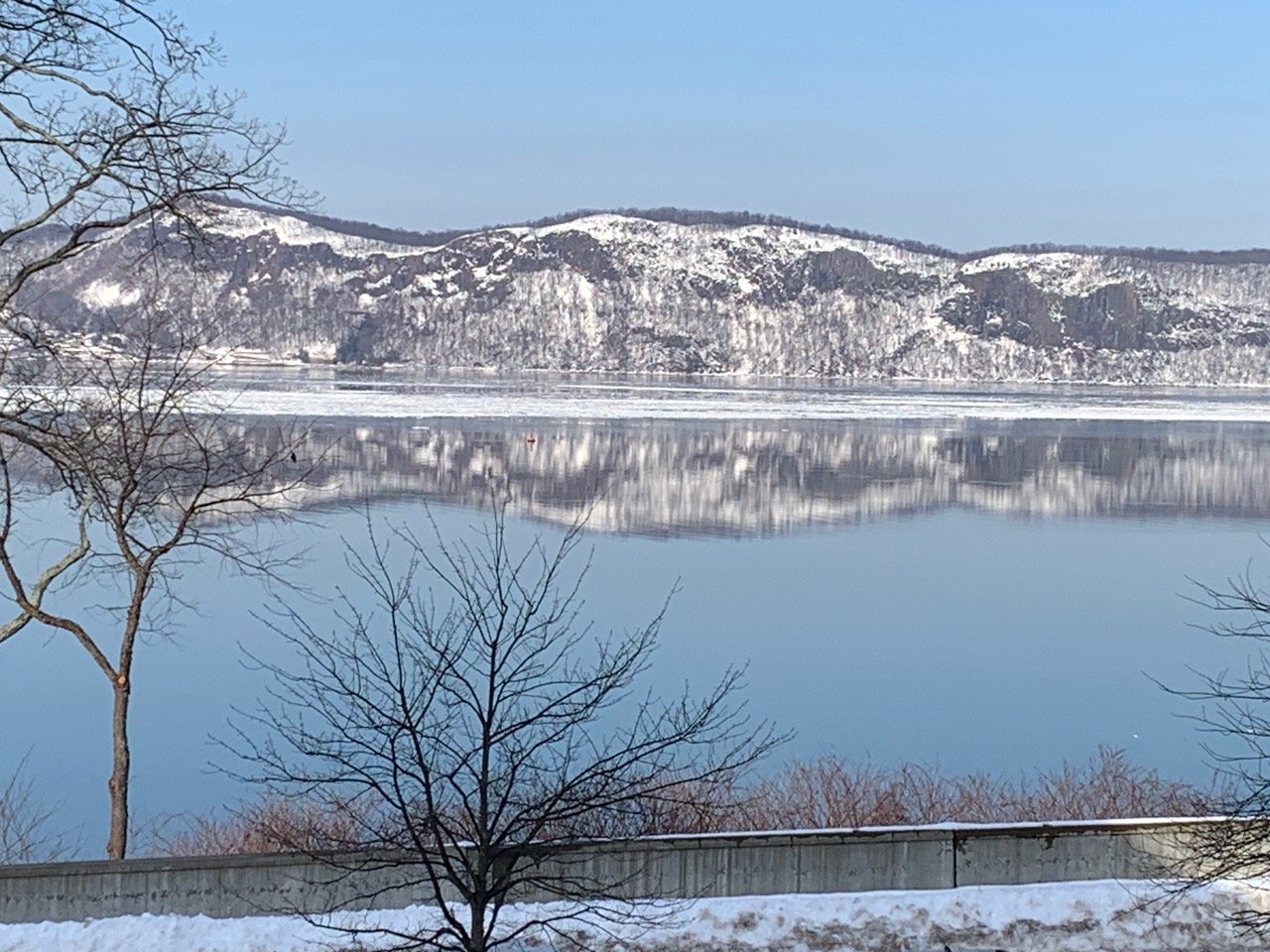
Photo by Harry Bloomfeld
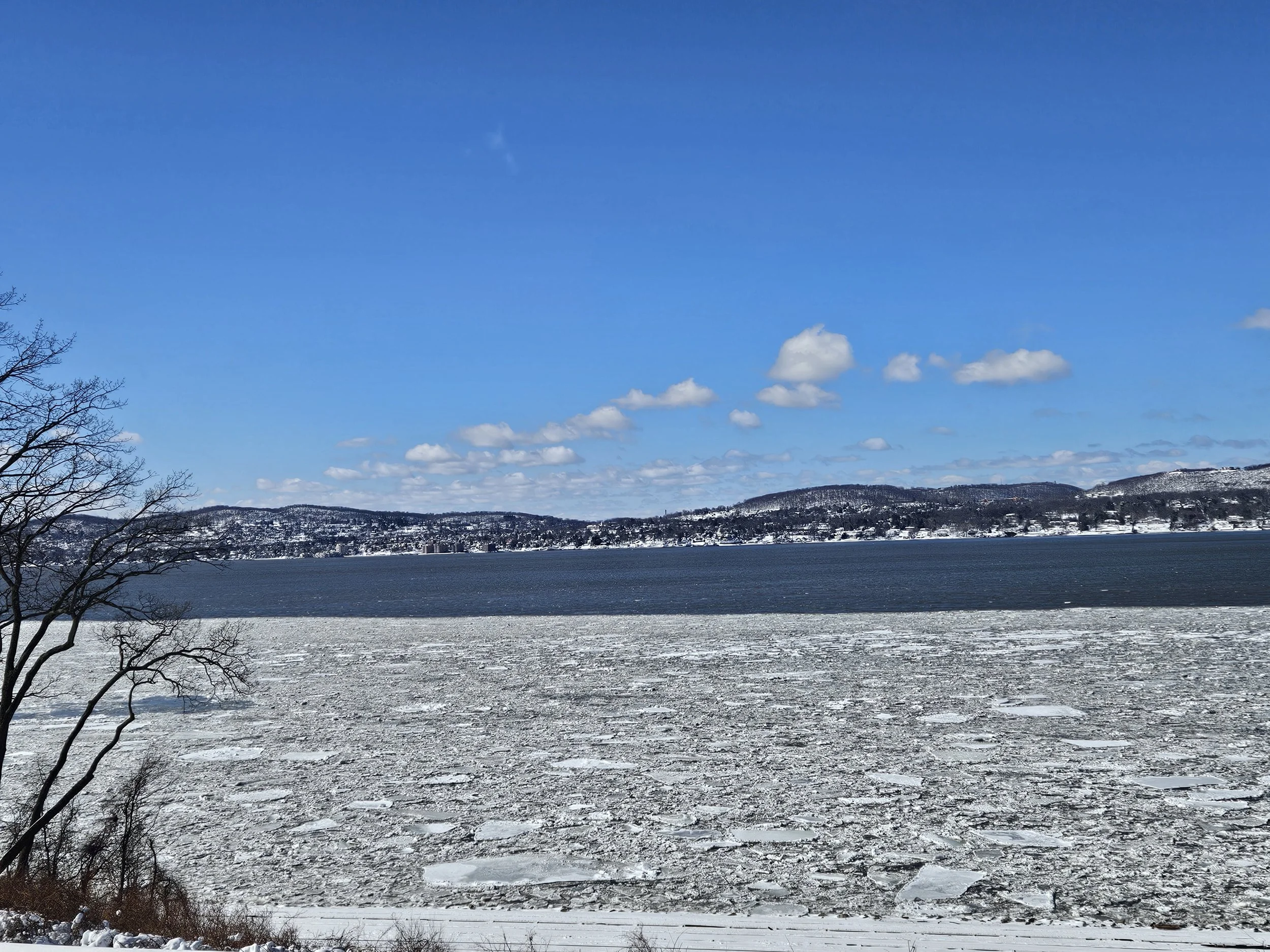
Ice flow, by Greg Lozier

Golden Reflection, by Philip Monteleoni

Sunset Reflection, by Greg Lozier
Out and About
Recently, Kendalites traveled to Yonkers to visit the Philipse Manor Hall, the city’s last connection to the 17th century. Built starting in the 1680s as a frontier trading post, by the 18th century it had become the central hub of the massive Philipse Manor, which spanned 52,000 acres of Westchester County. All on the trip declared it an excellent site to visit.
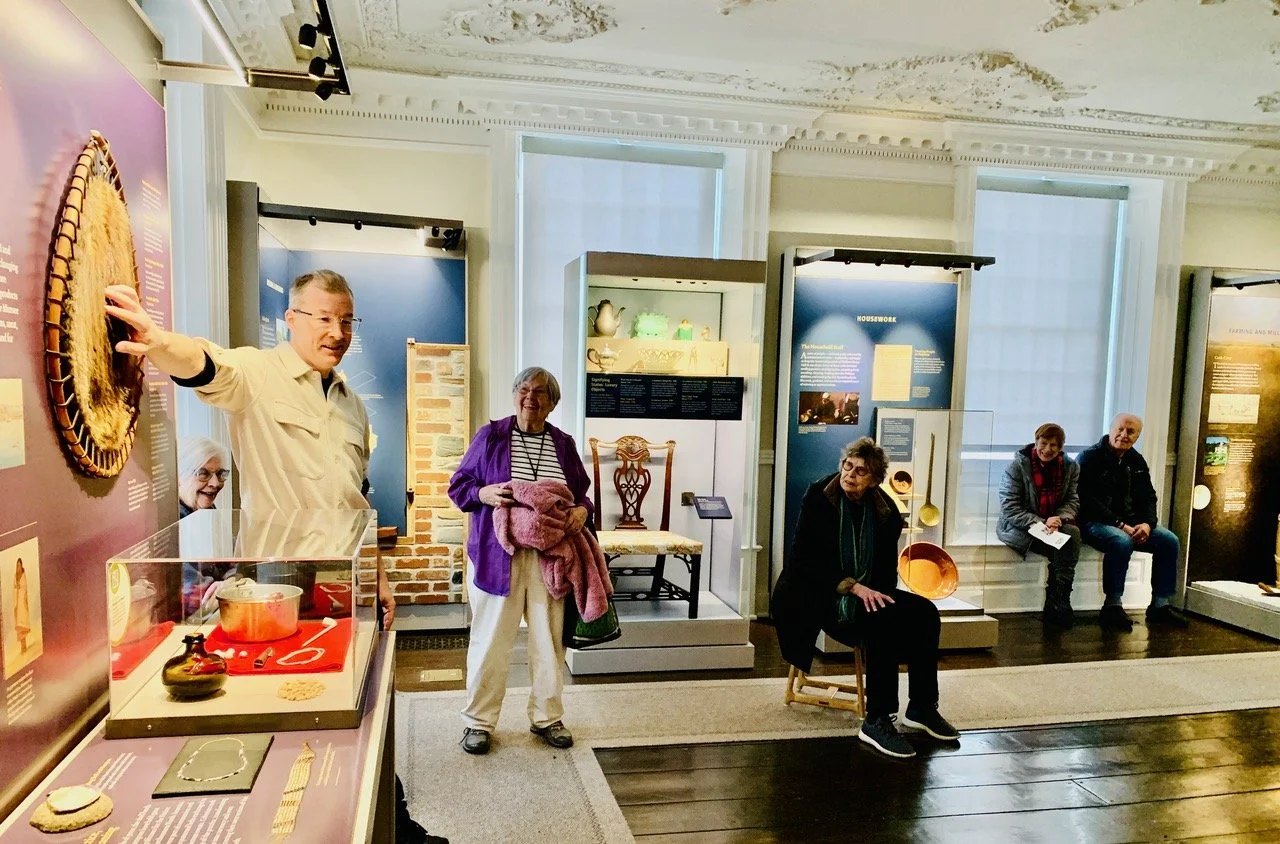
A retired professor of history was the group’s docent. Good choice!
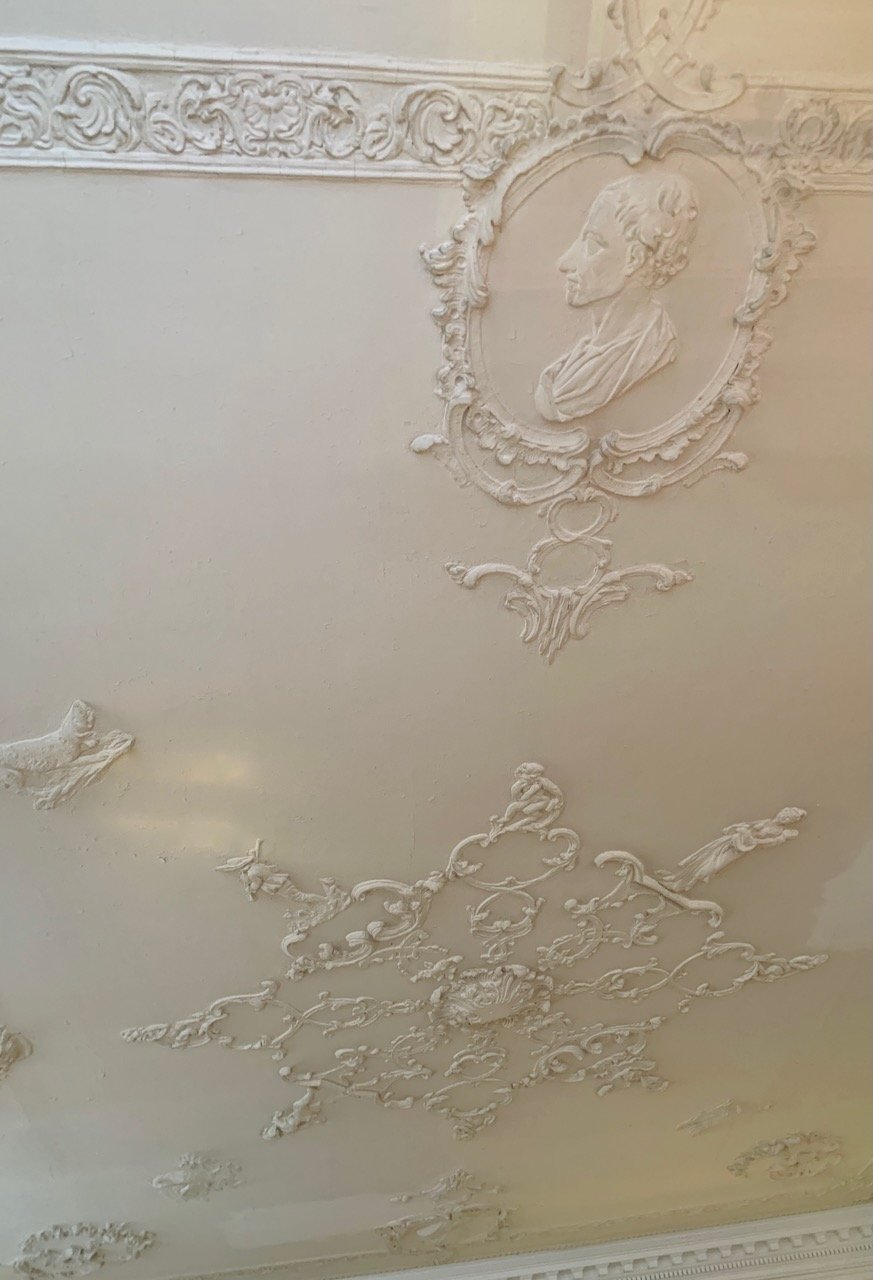
Not only could the group view the decorated ceiling, but were told the details of how such a ceiling came to be.
Spelling Bee
In a field of 11 teams, Kendalites Carol Monteleoni, Mike Kornfield, and Philip Monteleoni—as team Ten Thousand Words—battled word by word, letter by letter, for the championship of the Irvington Spelling Bee. Words like scyntilla, efflorescence, quixotic, and pulchritude. They made it to the sudden-death final round with three other teams. One by one the others fell. The final two: Ten Thousand Words vs Reservoir Dogs. They fought it out until the word list was exhausted. Gone. Finished. The Bee leader scrounged for more words, finally coming up with the last one: kakistocracy: “government by the least suitable or competent citizens of a state.” And the Ten Thousand Words team won! Our heroes left the stage victorious, with Kendal pride justifiably intact. You could say that got an A in Bee.
And if you’d like to see The Hudson Independent article on the Bee, click here.
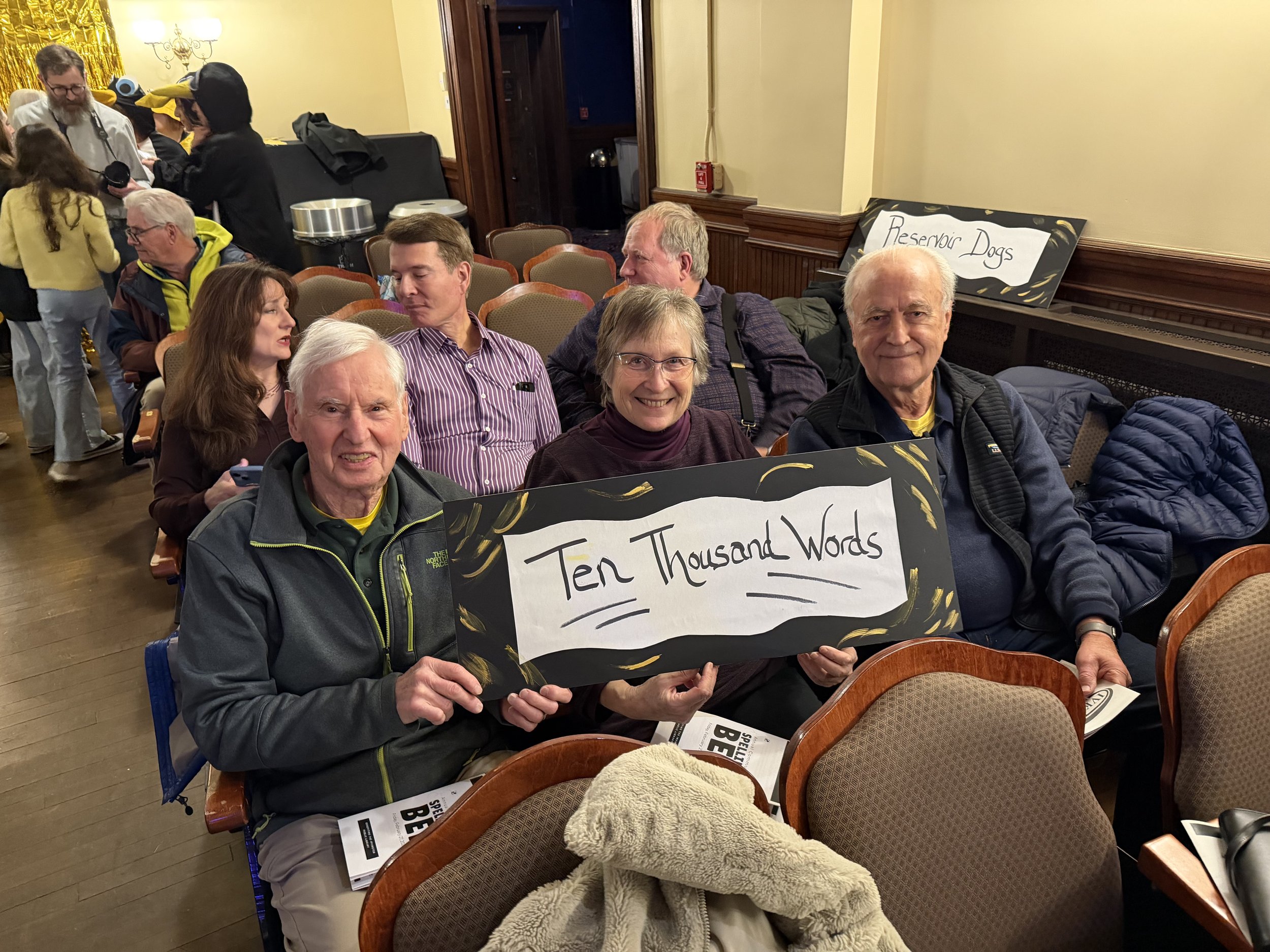
The KoH Team
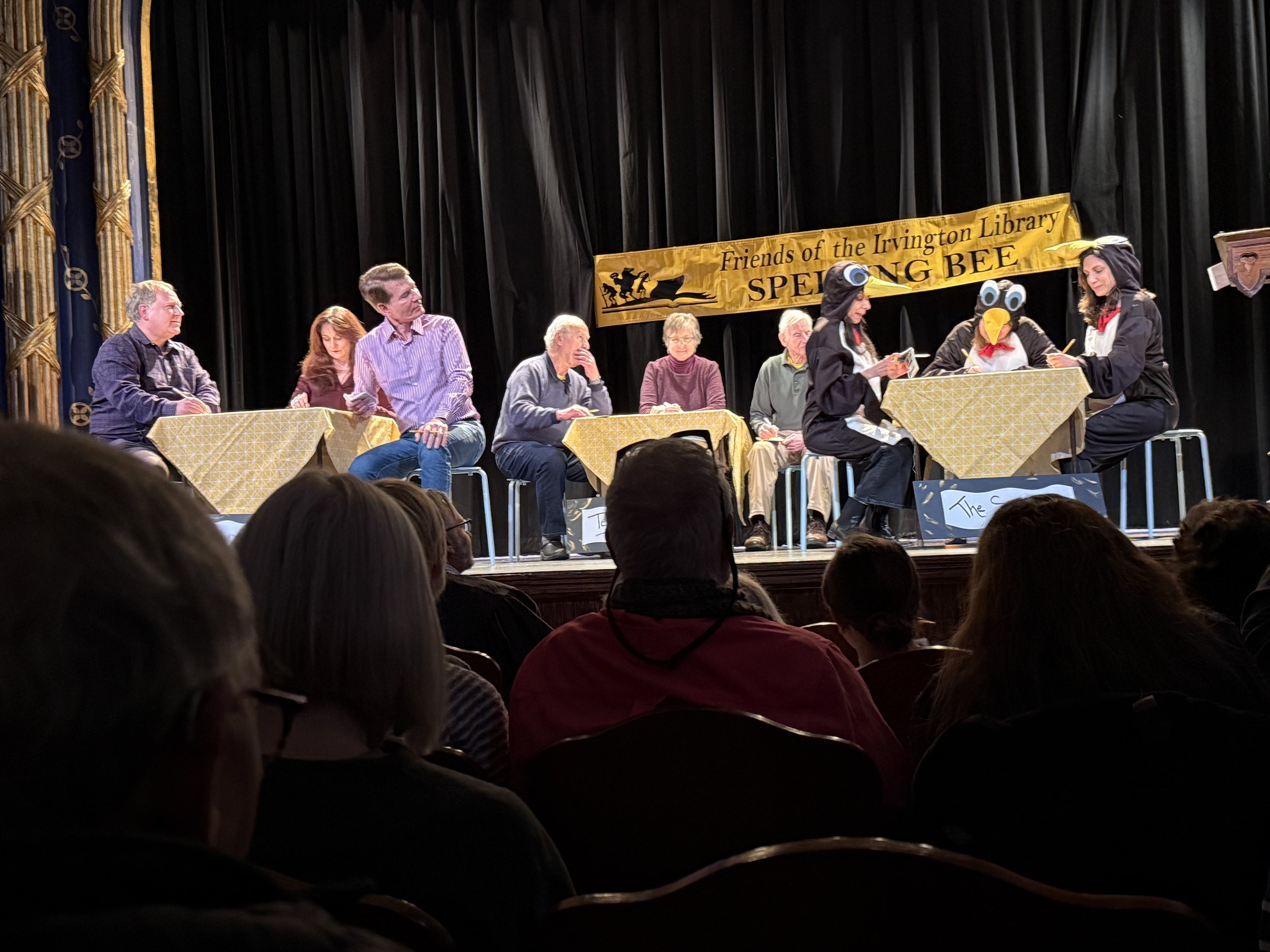
The First Round (yes, there were costumed teams—here you see the Spell-quins) Photo by Amanda Slattery
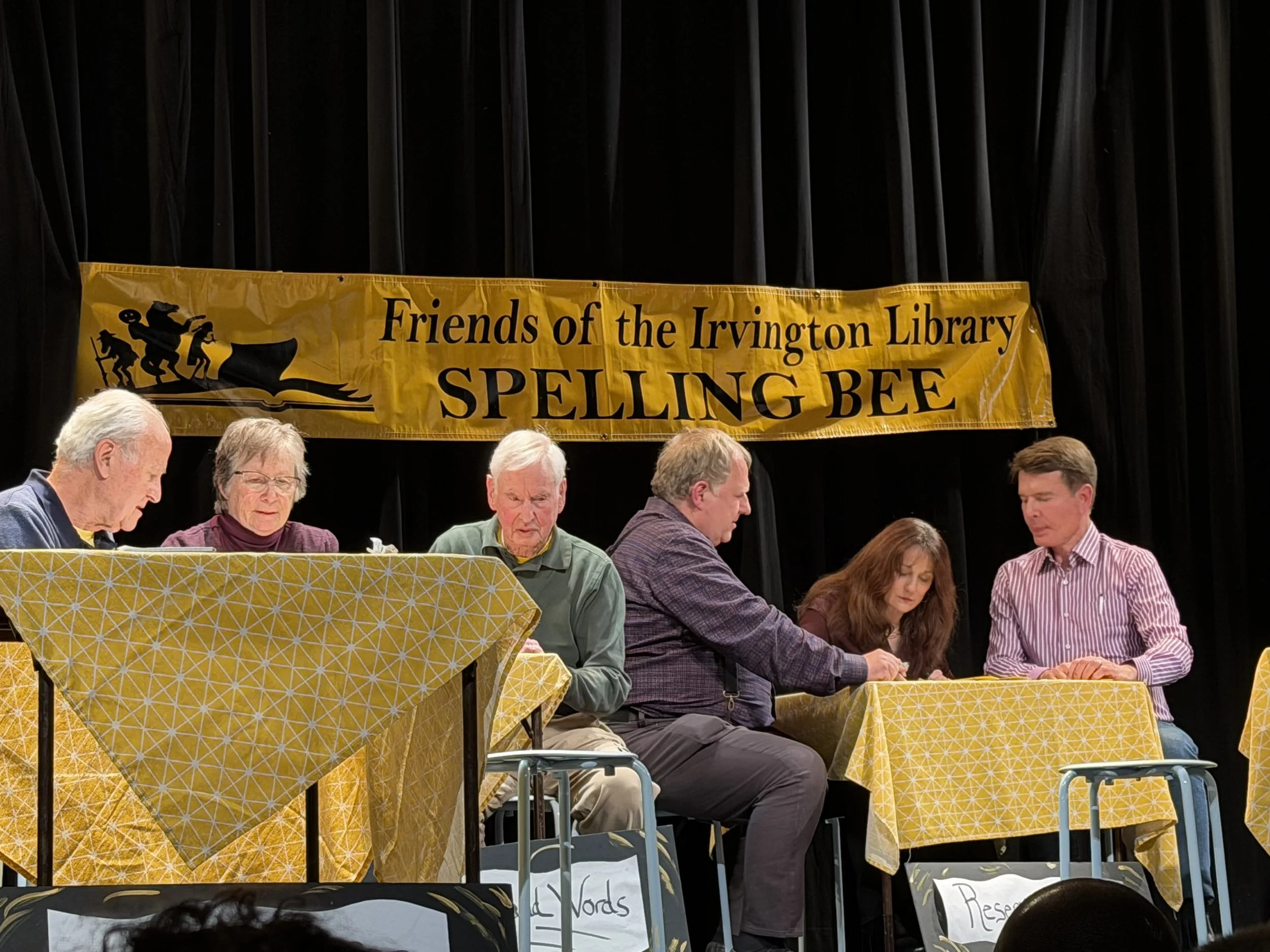
The Final Round: Ten Thousand Words vs Reservoir Dogs—the tension is at its peak! Photo by Ed Lannert
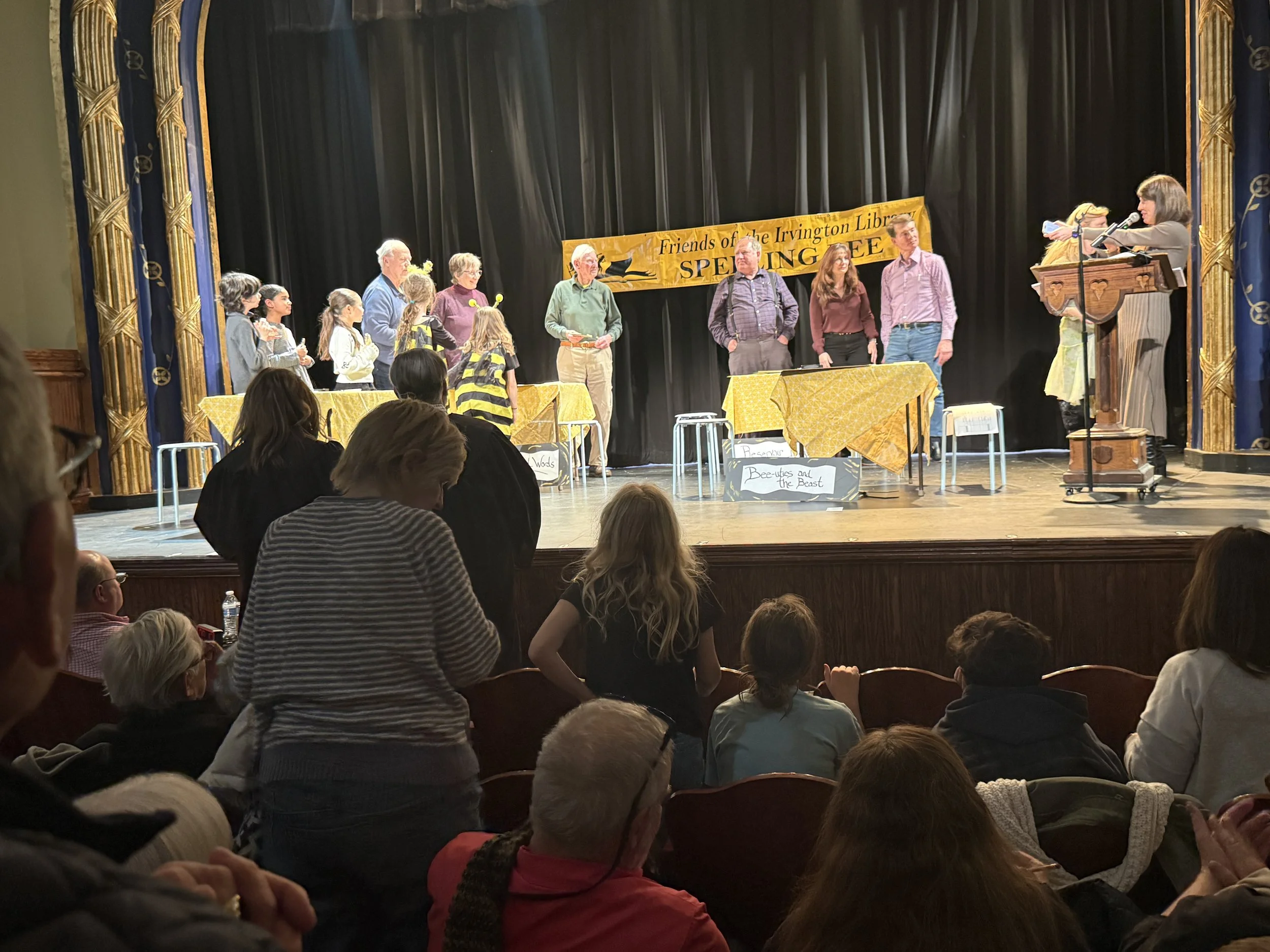
And the winners are: Ten Thousand Words! And the audience jumps to its feet to applause. (Please note the charming bee-bedecked children who served as helpers in distributing prizes.) Photos by Amanda Slattery.
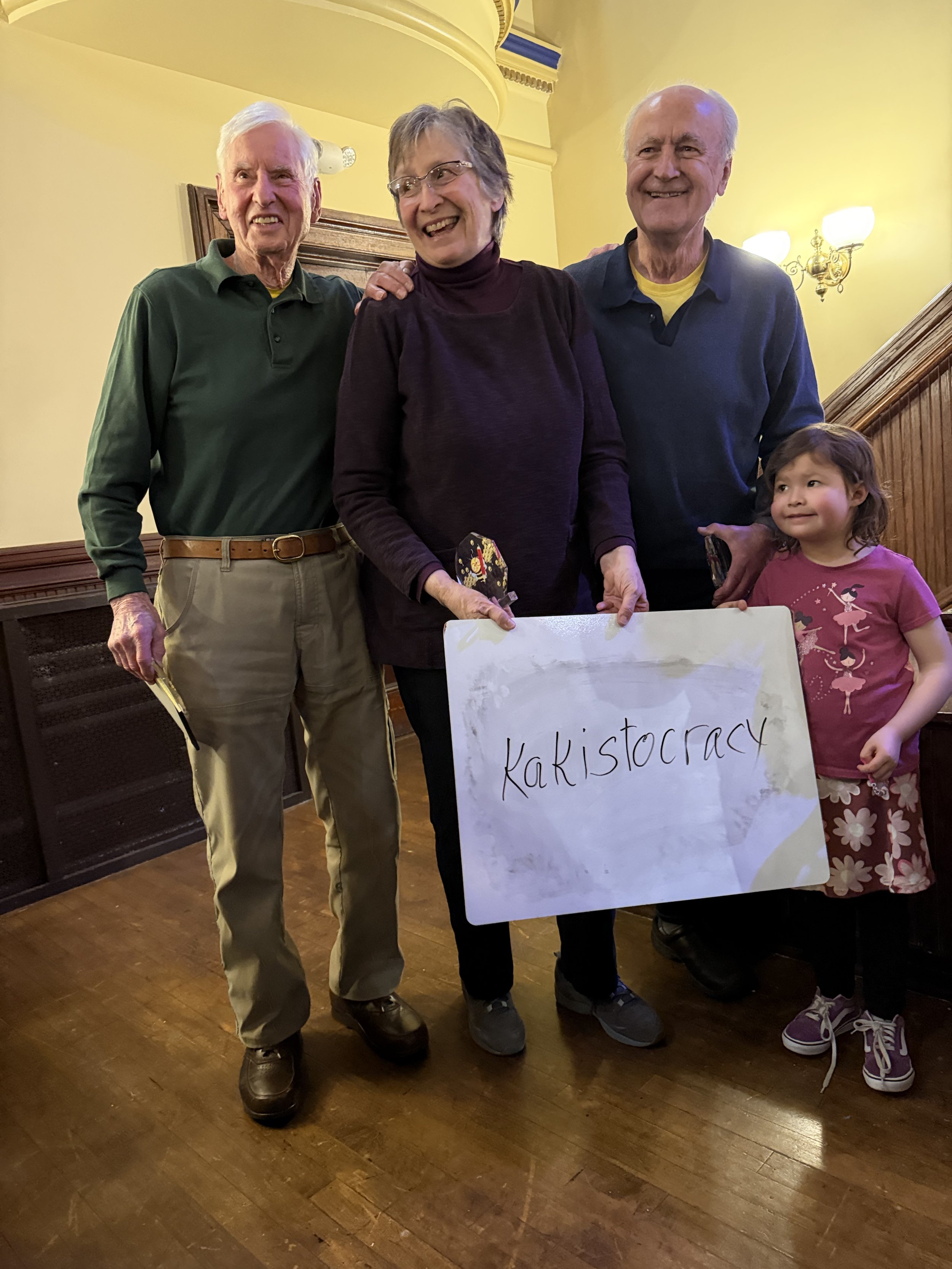
Kendal’s Pride and Joy—and the word that took them over the top (also, a young lady clearly enthusiastic to meet real celebrities). Photo by Ed Lannert
The (Second) Blizzard of '26
So . . . how’s the Winter of ‘26 shaping up snow-wise in Sleepy Hollow?
January: 15”
February: 20.1”
Let’s hope March is not competitive-minded.
Tne February Blizzard of ‘26
And Thus It Begins
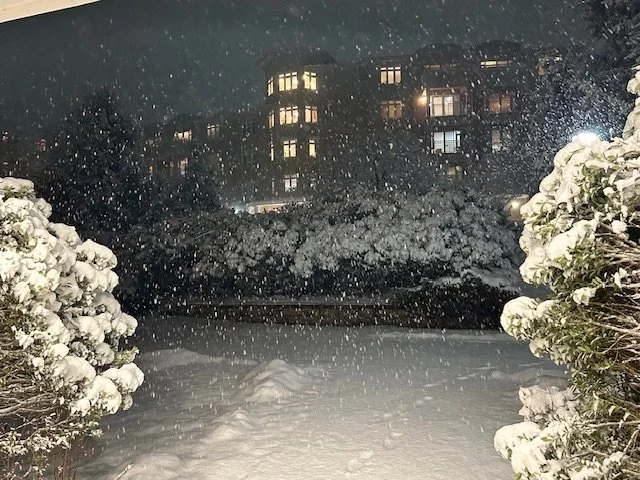
February 22, by Carolyn Reiss
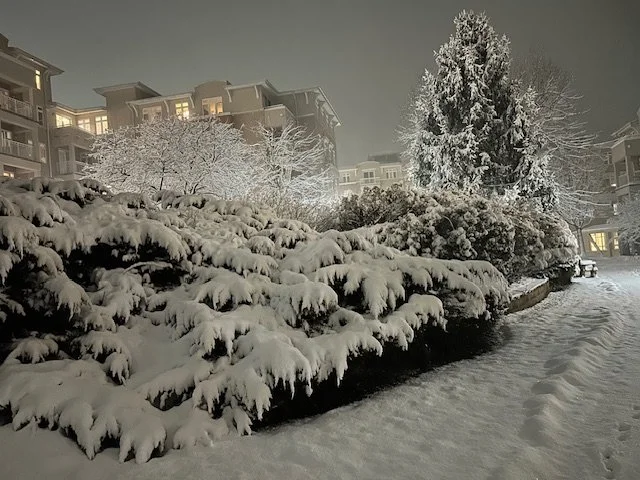
Photo by Carolyn Reiss
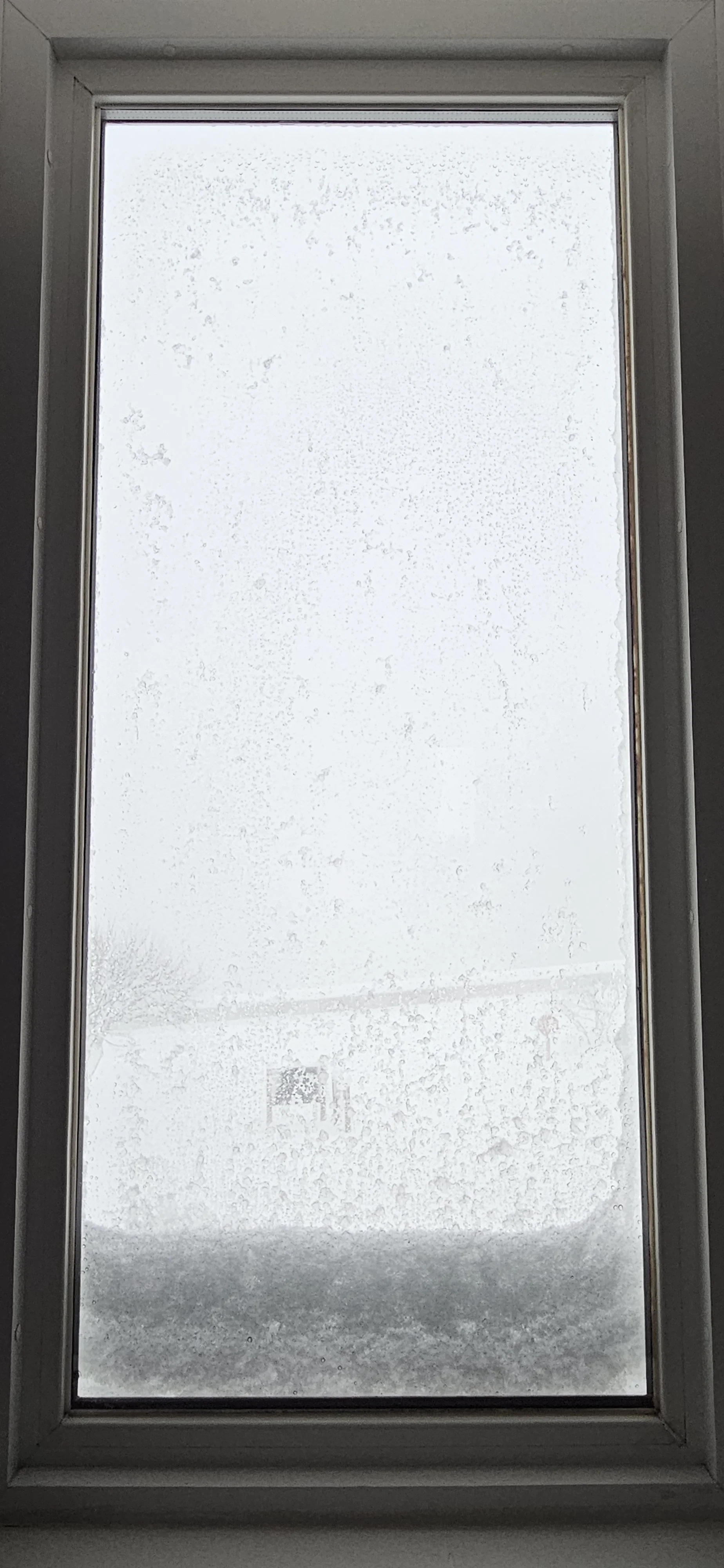
View from my window—by Joe Bruno
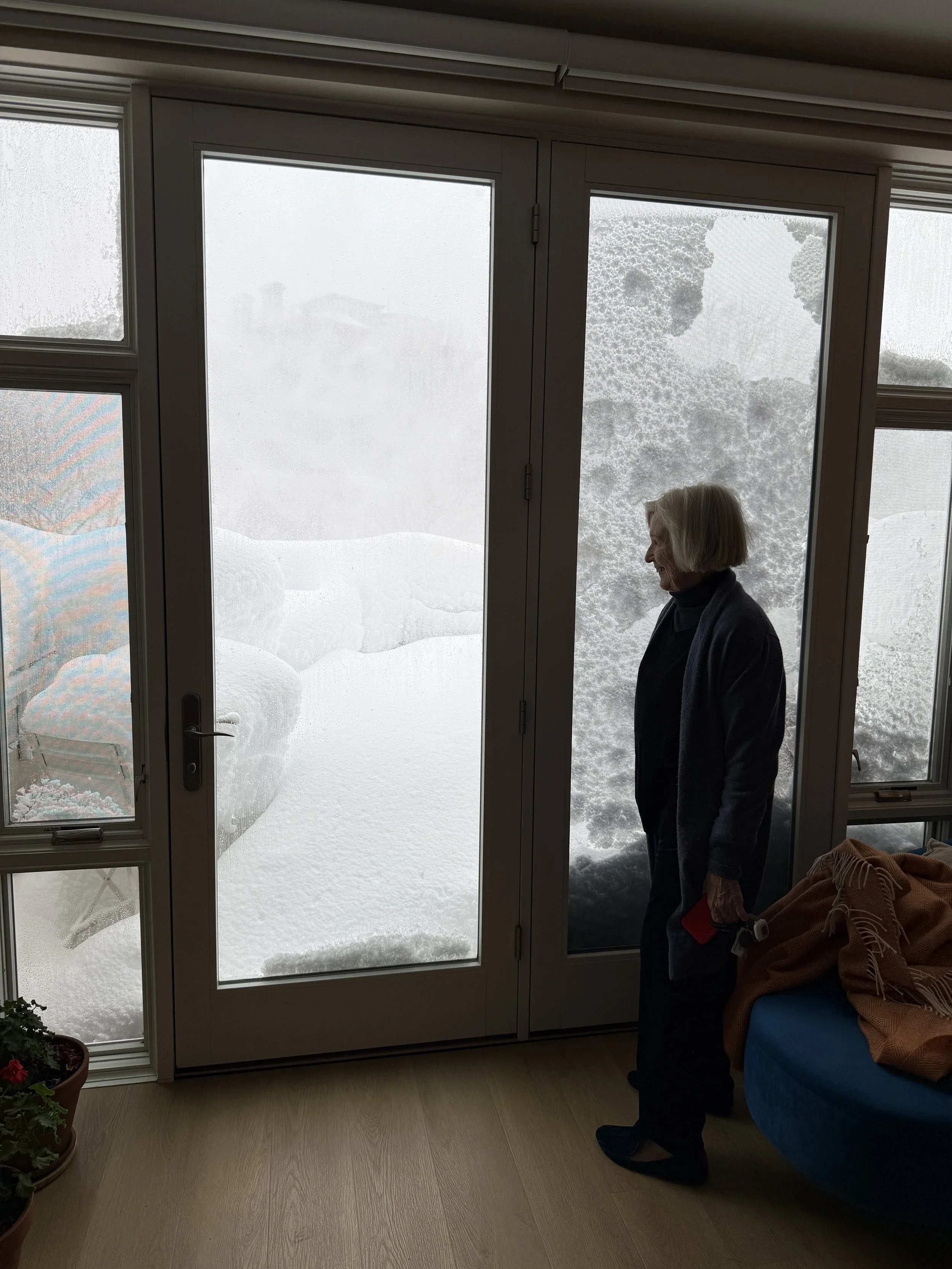
Will it never end? Photo by Amanda Slattery
And the Results . . .

Photo by Alice Clague
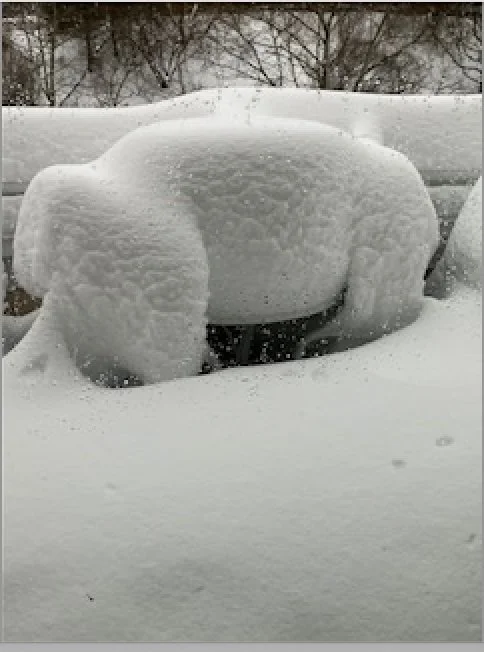
A strange snow-white buffalo appeared on Barbara Kornfield’s patio. He seemed happy to stay where he was. Photo by Barbara Kornfield.
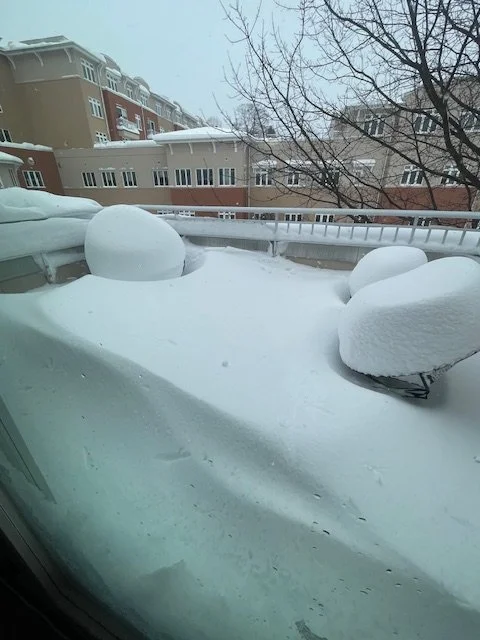
Photo by Alice Clague
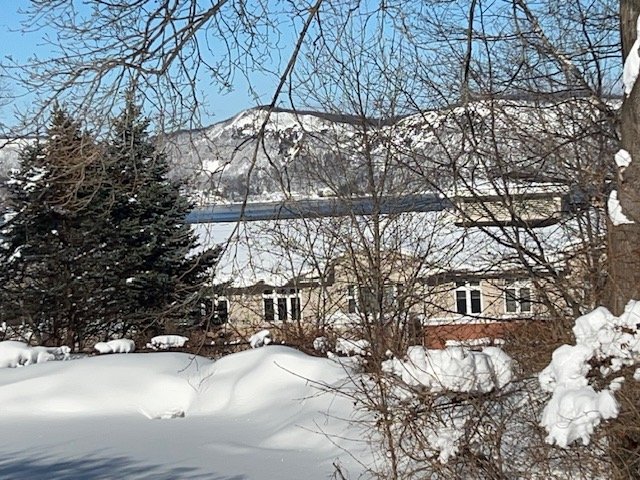
Photo by Carolyn Reiss
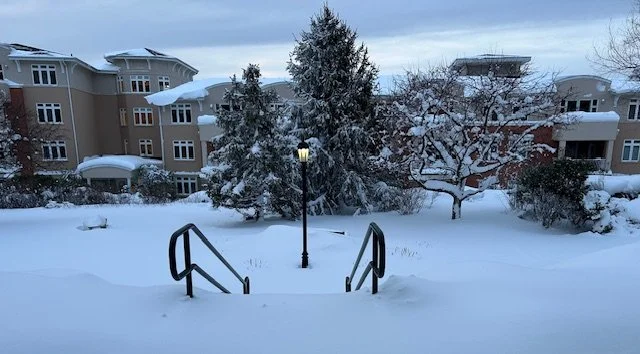
Dusk, by Edward Kasinec
The Kendal Crew Has the Situation in Hand

Monday-night dinner: The staff may be short-handed, but they are great problem-solvers, by Joe Bruno
And, Anyway, Who Cares?
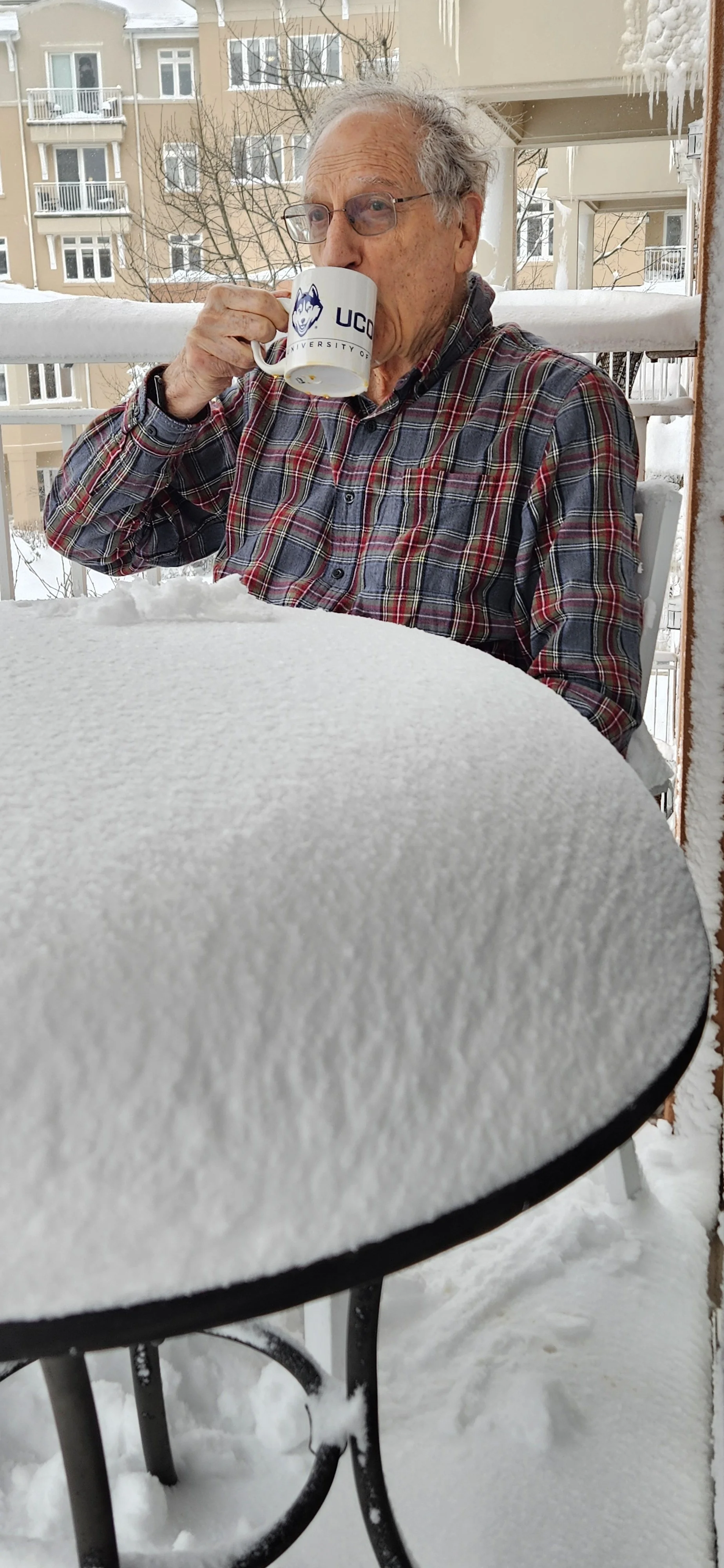
Nothin’ beats a good cup of coffee, by Joe Bruno
The Road to Art Knowledge . . . Without the Road

Art Show
The Winter Art Show formally opened on Wednesday, February 25, in the hallways of Robert Fulton. But the planning and organizing had started well beforehand. A photo story of some of those who made it all happen.
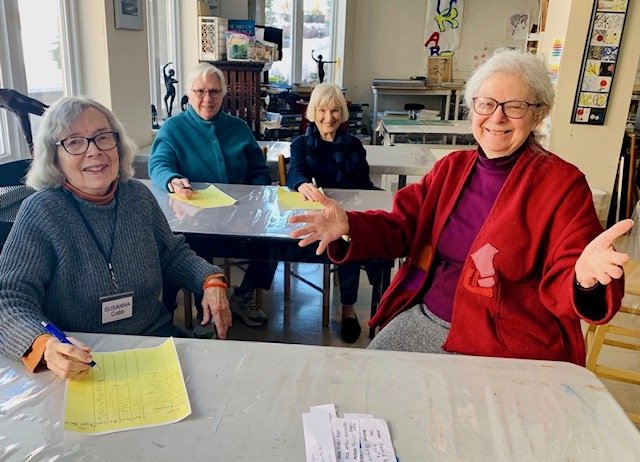
The Show Team interfaces with the artists: they make announcements, receive artwork, return artwork, ensuring labels are correct. They make sure that all pieces are accounted for
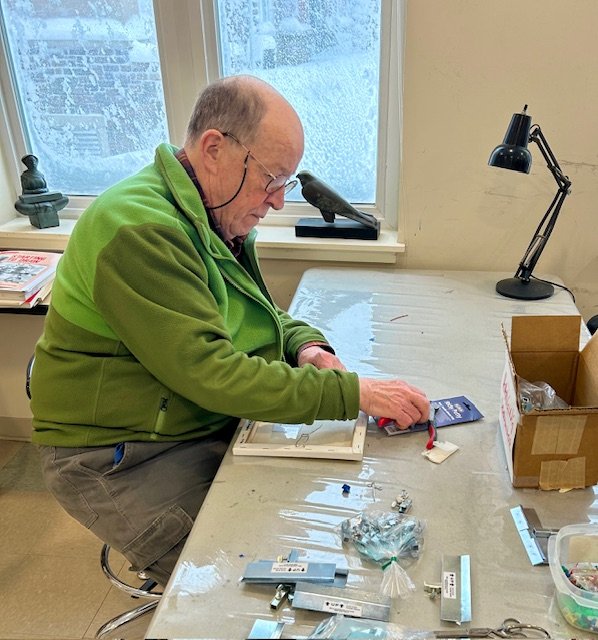
Framing takes patience
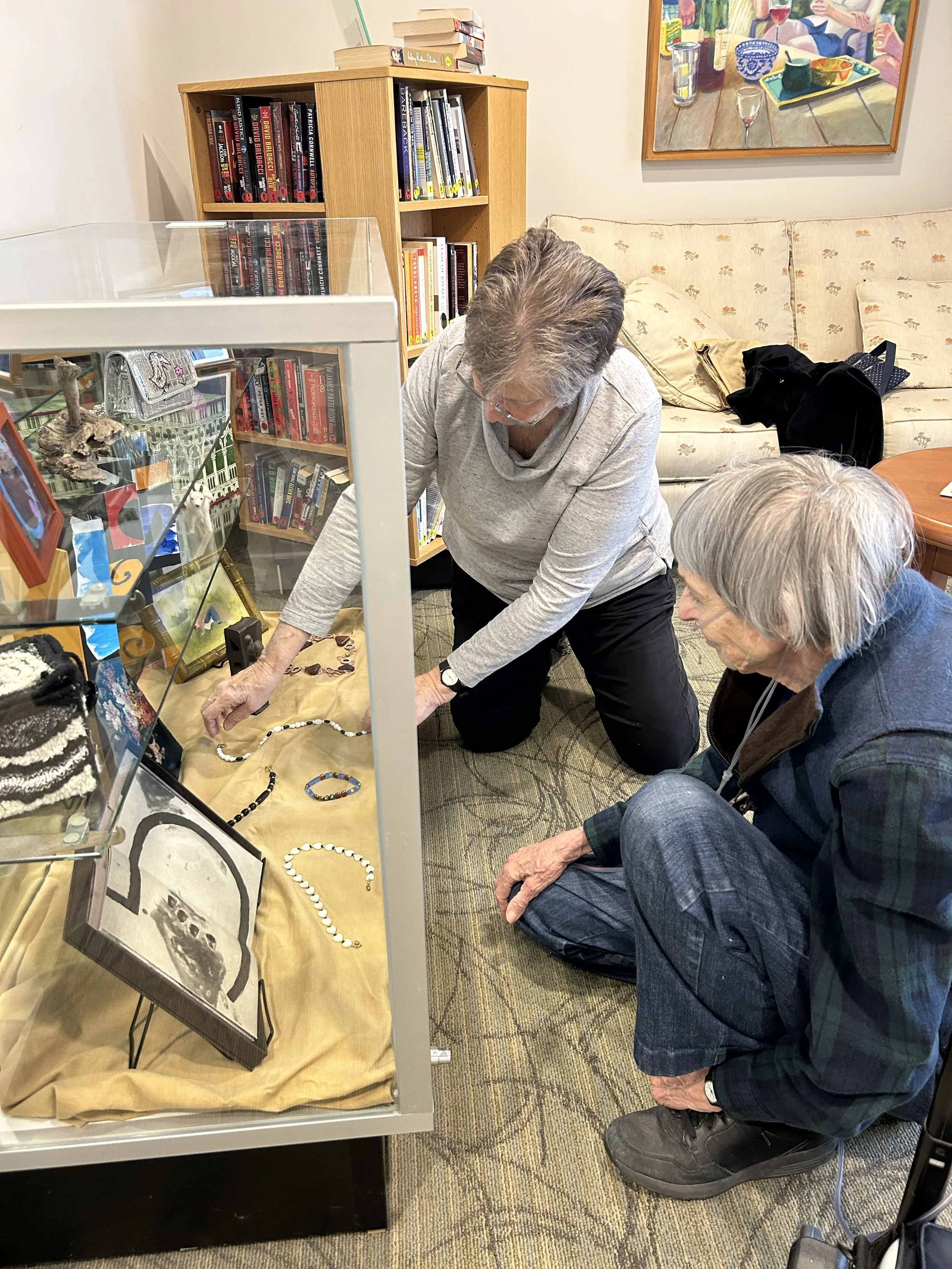
Vitrine curators select the small work and arrange it
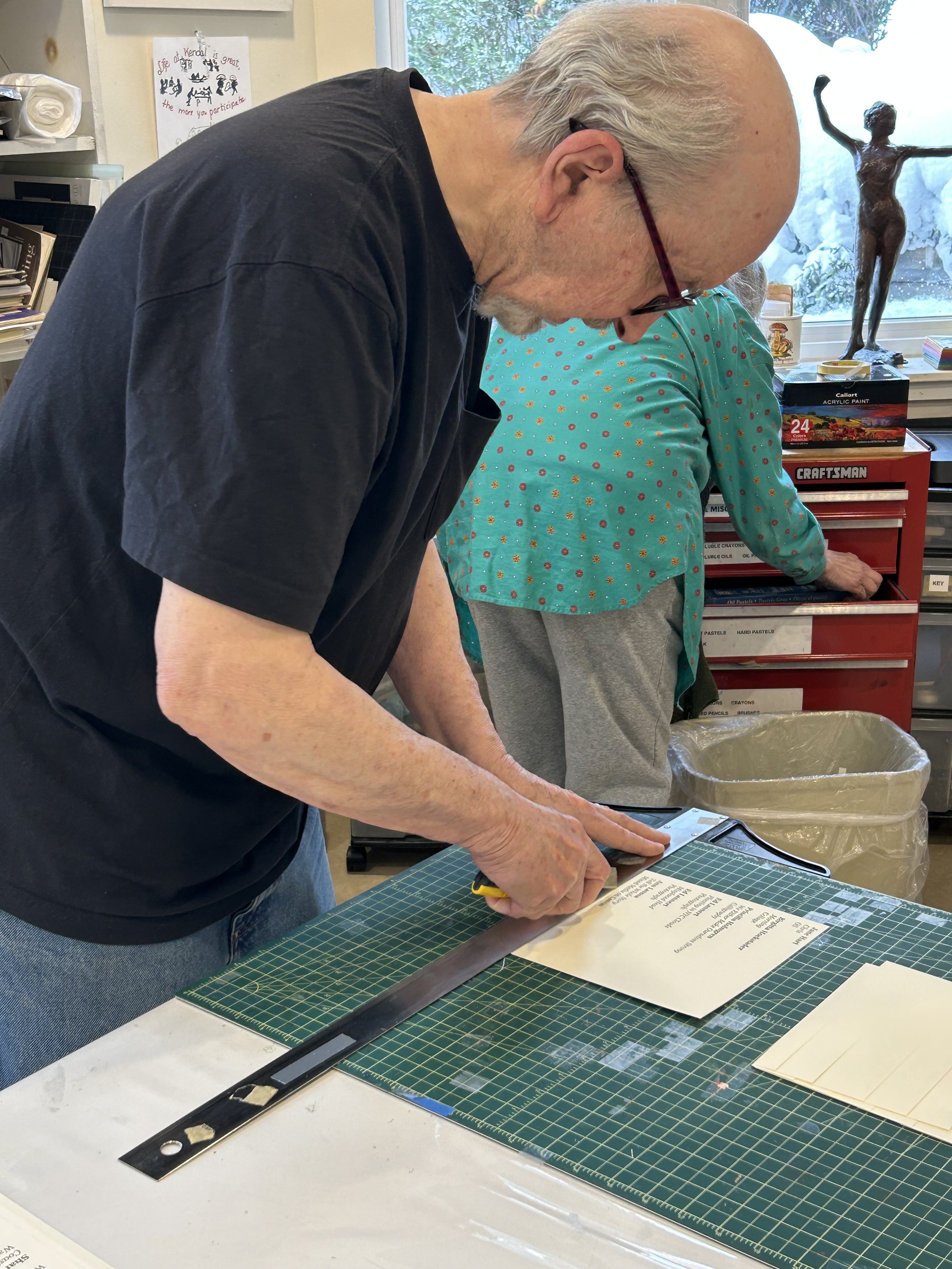
Early on the designer makes posters, flyers and invites, as well as show signage
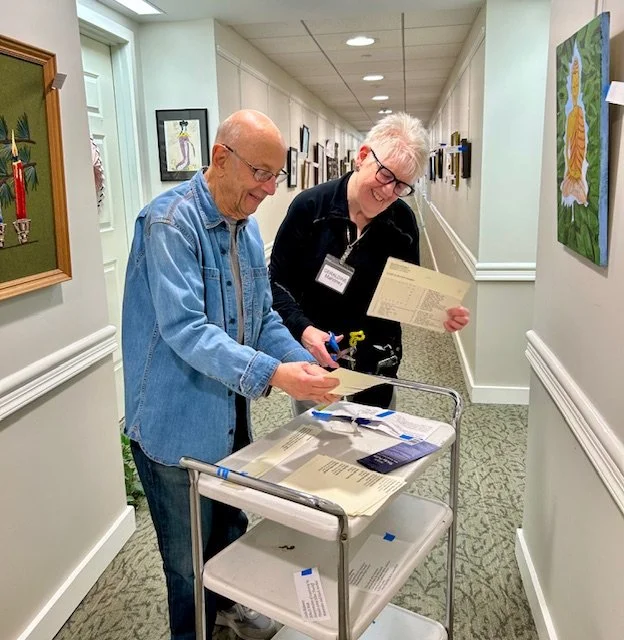
Labelers put labels on the final installation
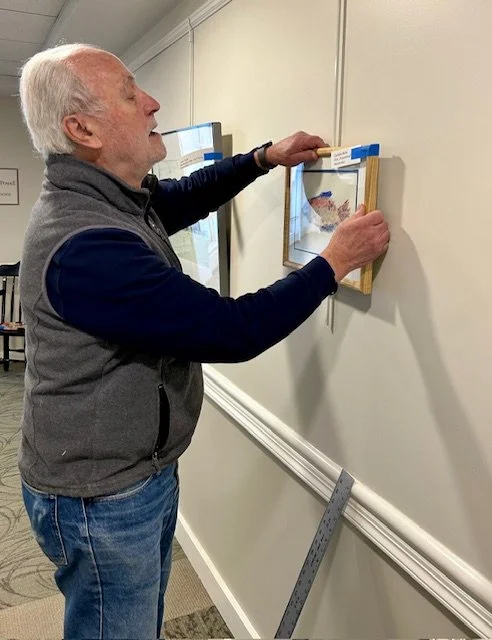
Getting it j-u-u-ust right: The curators select the pieces for the show, install the pieces, and sometimes tweak the frames if they are not hanging properly
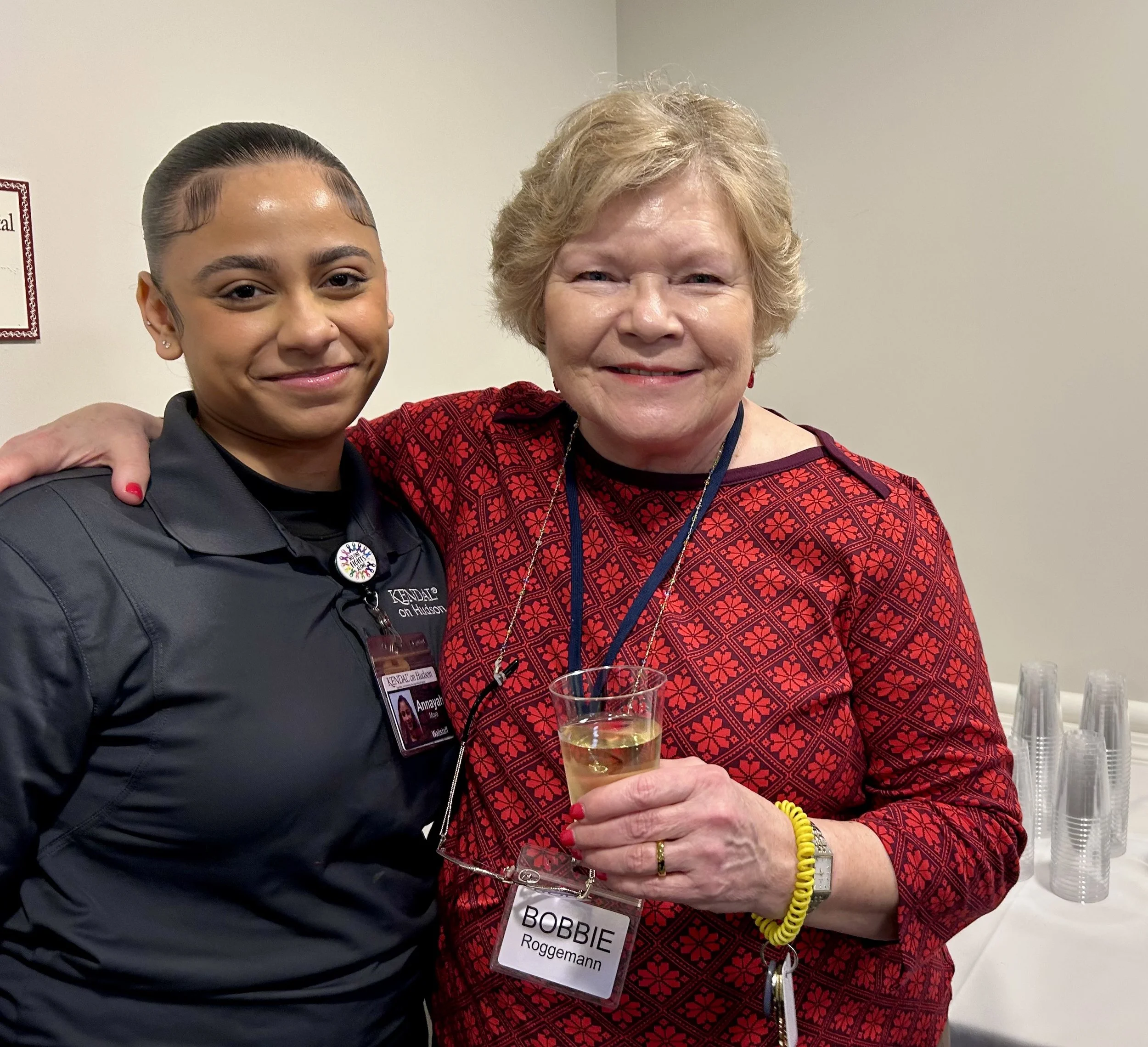
Hospitality arranges the opening setup with maintenance, orders wine, and plans the food with dining
Now It’s Time to Party
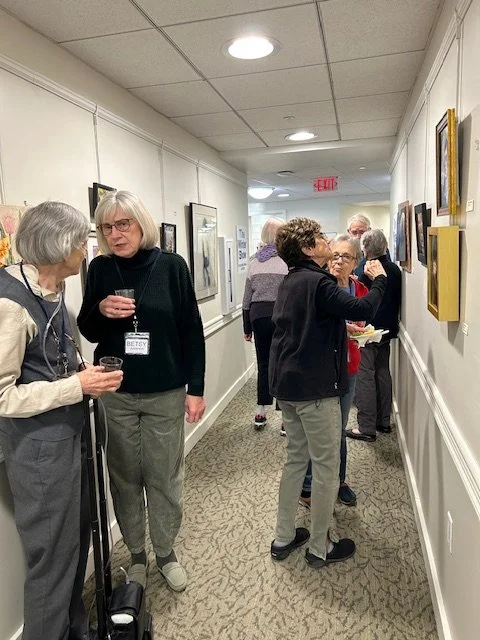
Strolling by the art—and commenting on it
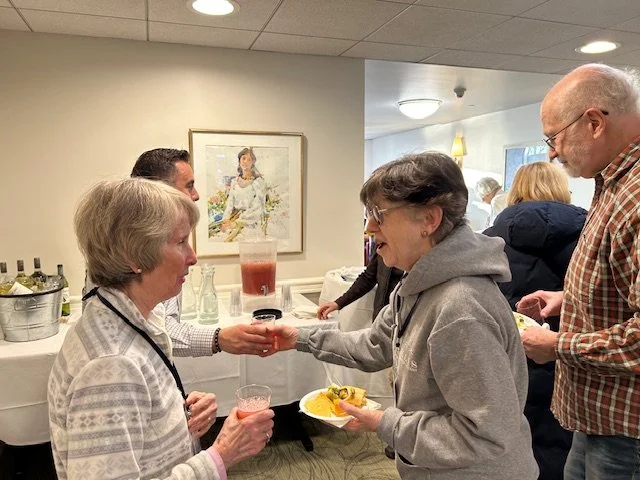
The art of enjoying oneself
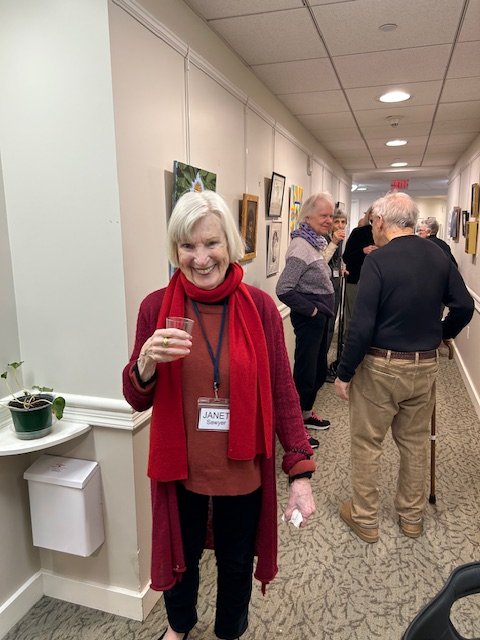
Celebrating the artist alone with the art
Photos by Carolyn Reiss
Weekly Construction Report
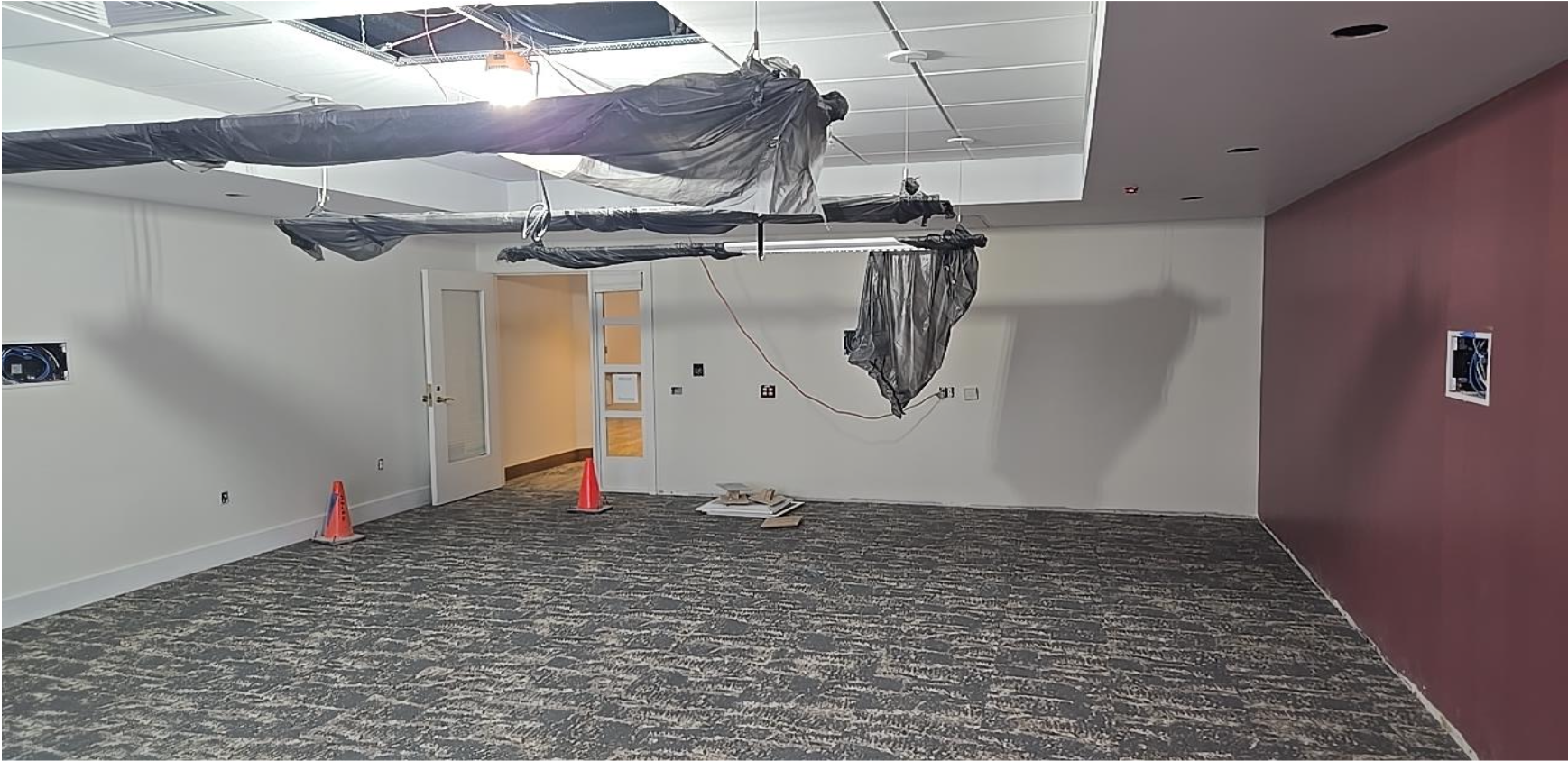
The Riverview Conference Room
Entrance to the New Community Room—Level C

From the office of Ellen Ottstadt
I Never Knew That
New York City Once Had Miles of Hidden Underground Mail Tubes
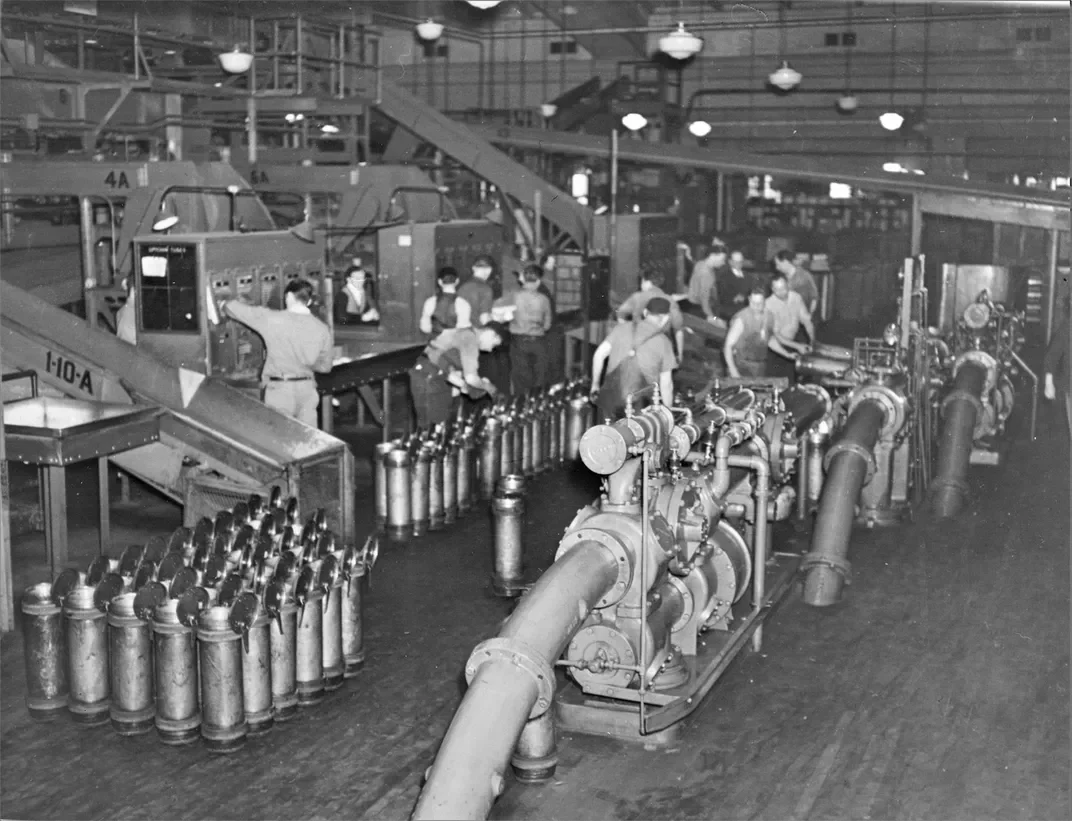
In October 1897, construction of a high-speed network designed to service an ever-expanding city was underway beneath the streets of Manhattan. No, it wasn’t the subway; that would take a few more years. This was a pneumatic tube mail system, developed using engineering principles that dated back more than two centuries and had already been put to the test with working models in London, Paris, and Philadelphia.
Built by the Tubular Dispatch Company and leased to the US Post Office Department, the New York City system was powered by rotary blowers and air compressors that shot steel mail-carrying canisters through cast-iron tubes at speeds of approximately 30 mph. The tubes were largely installed between 4 and 6 feet underground, with a noticeable outlier following the length of the Brooklyn Bridge, while the canisters they supported measured approximately 2 feet long by 8 inches in diameter. The network eventually connected 23 post offices through 27 miles of tubing, its early success paving the way for systems in Boston, Chicago, and St. Louis.
As one might suspect, a canister would occasionally get stuck, shutting down that particular pathway until it could physically be removed. But a bigger problem was the exorbitant costs that came with the endeavor, an issue that became more pronounced as the network continued circulating the same volume of mail even as the need for a larger, faster system increased with the growing population.
Postmaster General Arthur Summerfield finally put the kibosh on New York City’s mail tubes in late 1953, reasoning that the addition of two trucks would be just as effective and far cheaper to maintain, and this once-futuristic service was left to become a hallmark of the city’s past.
For Your Funny Bone
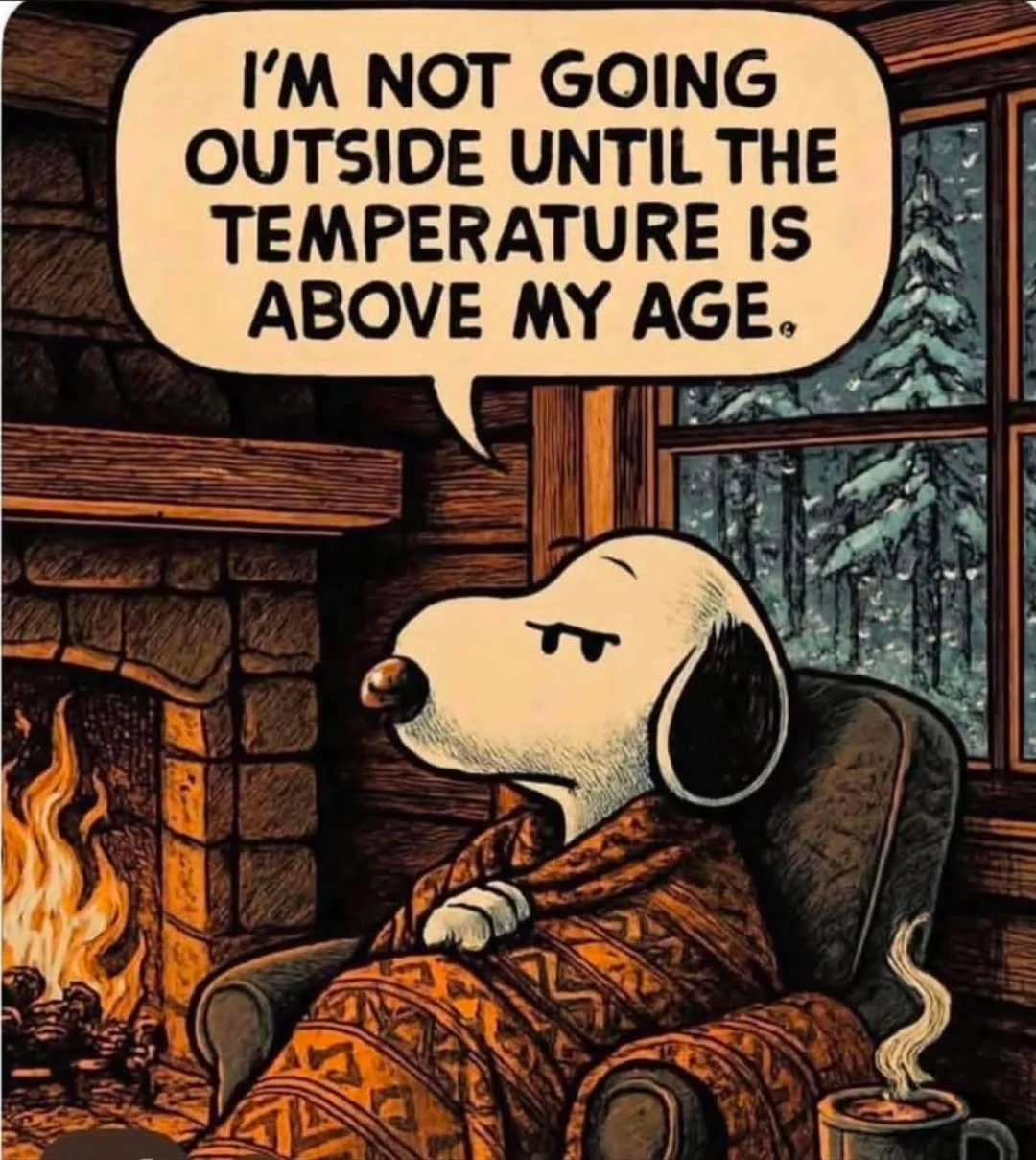
Contributed by both Barbara Wallach and Joe Bruno
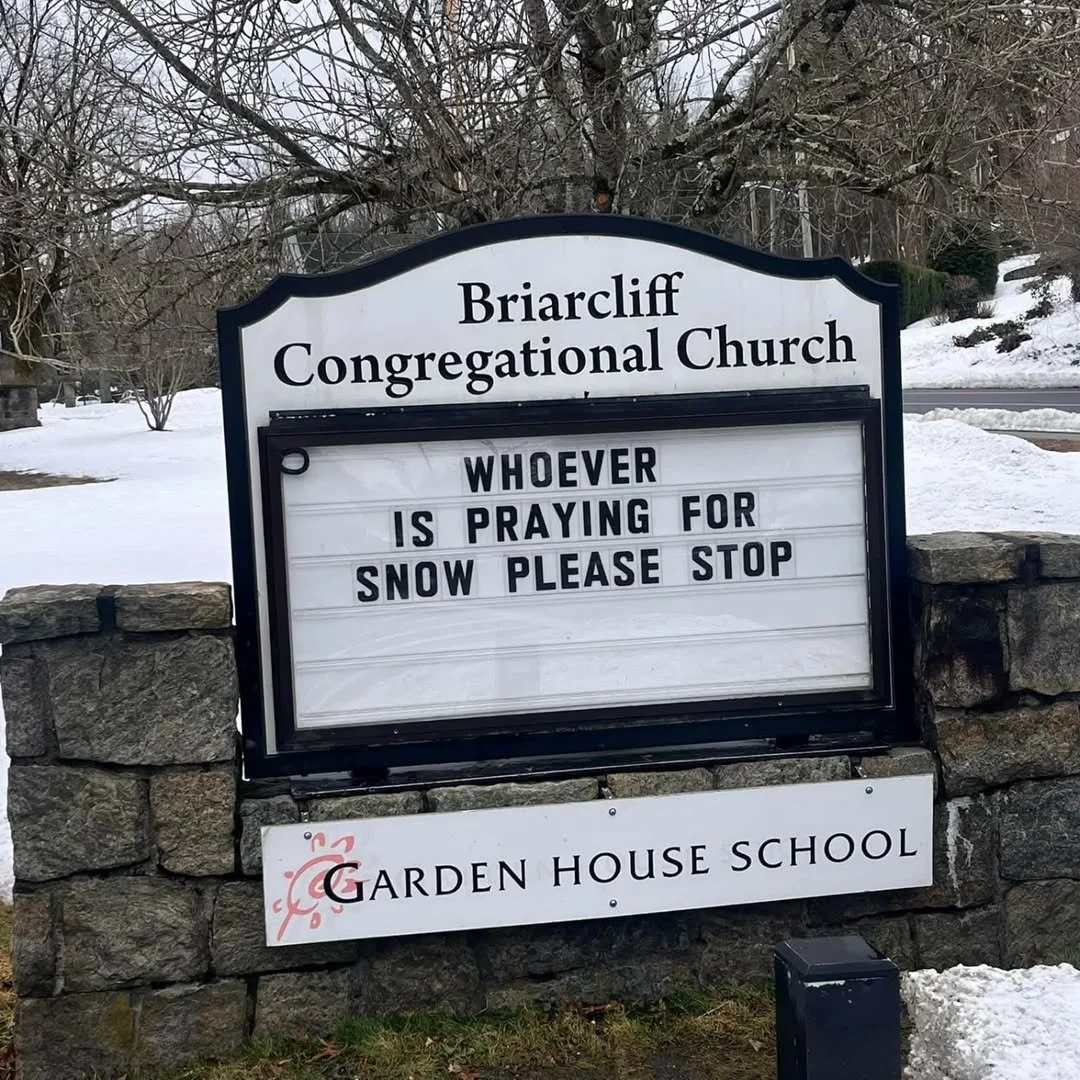
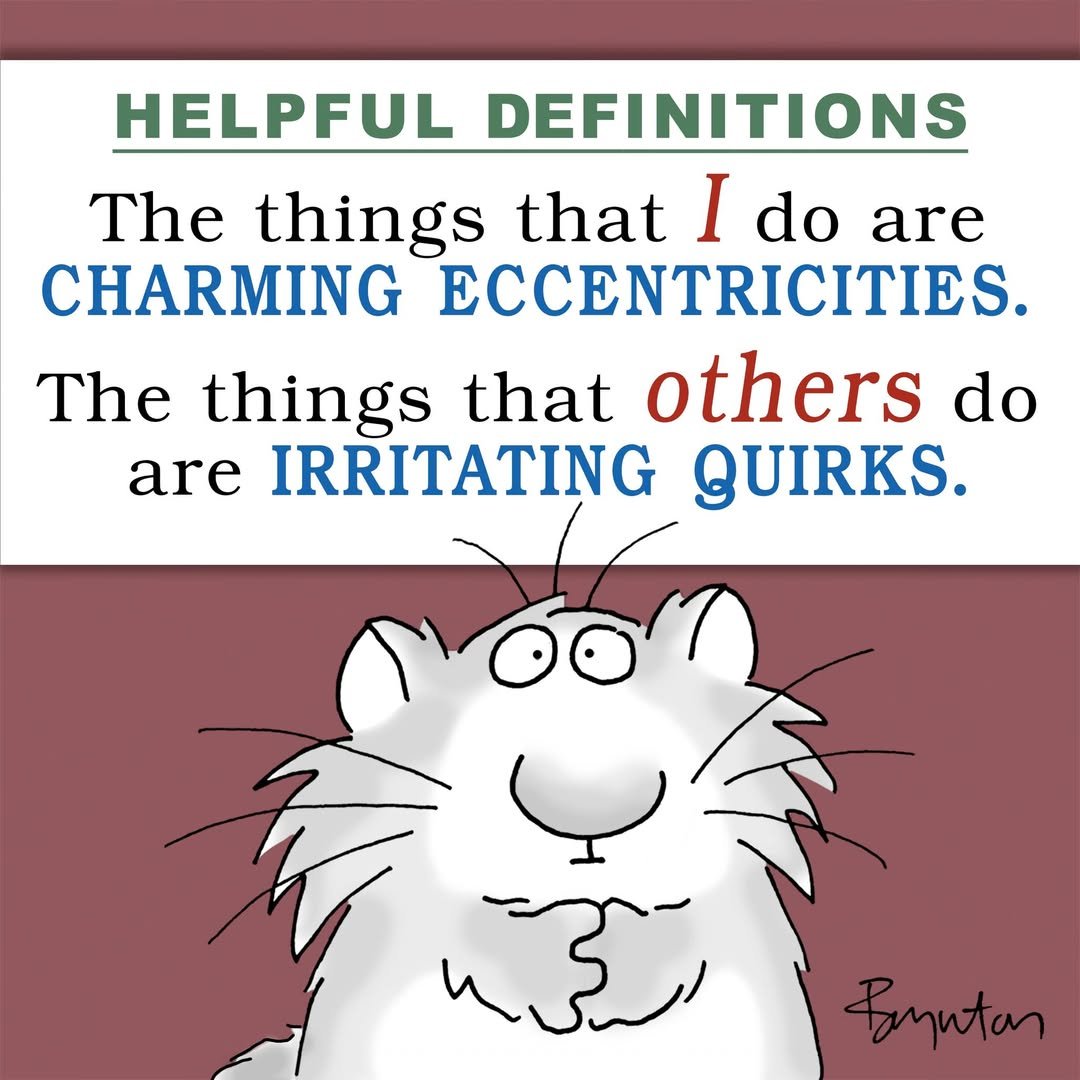
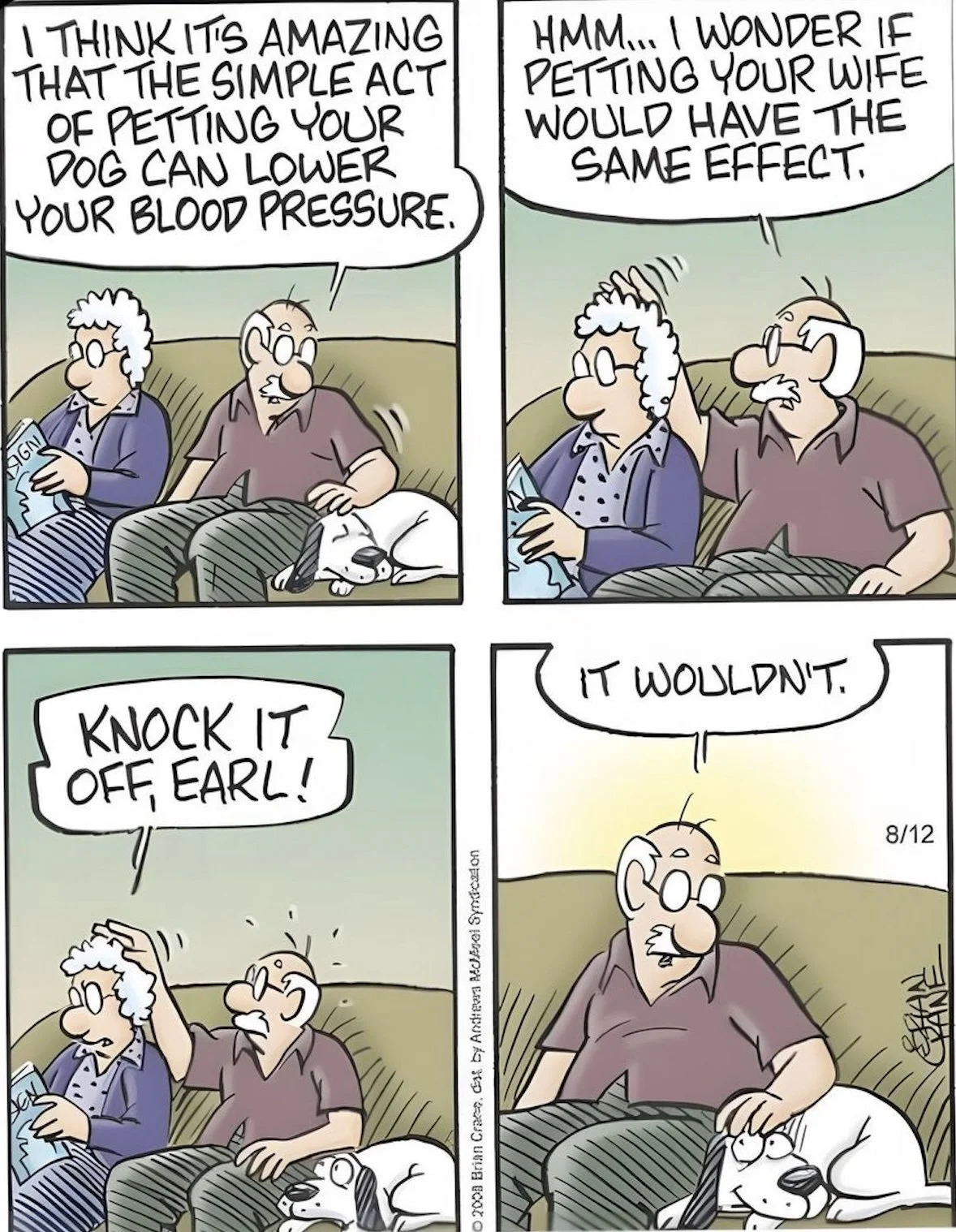


Contributed by simply too many people to name . . .
Hope IV, by Sheila Benedis
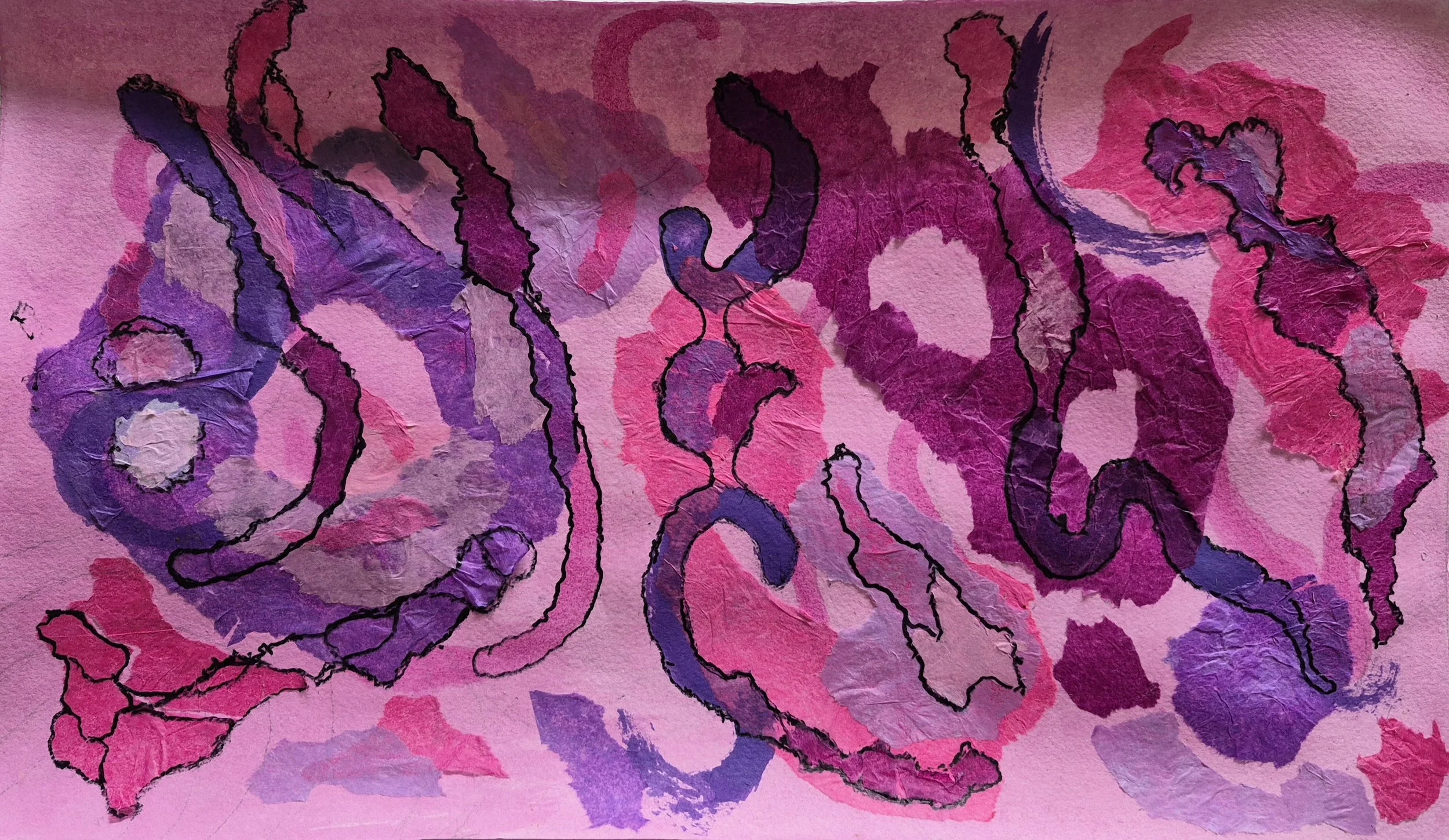
Art and photo by Sheila Benedis
Art by Hart
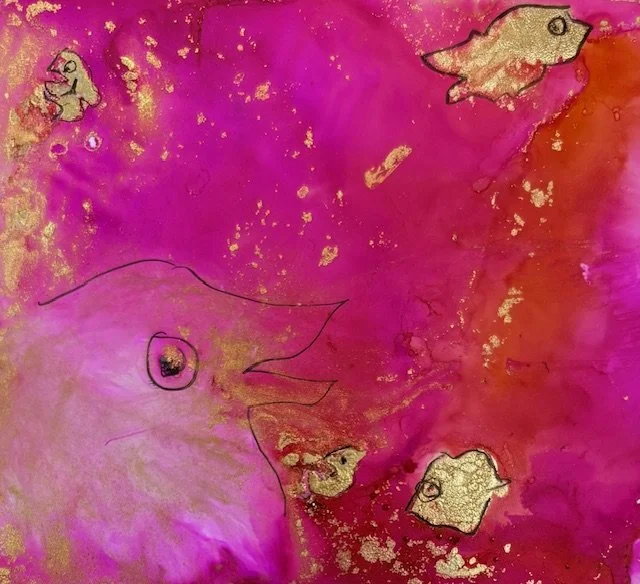
Lila loved goldfish, except for their metallic aftertaste
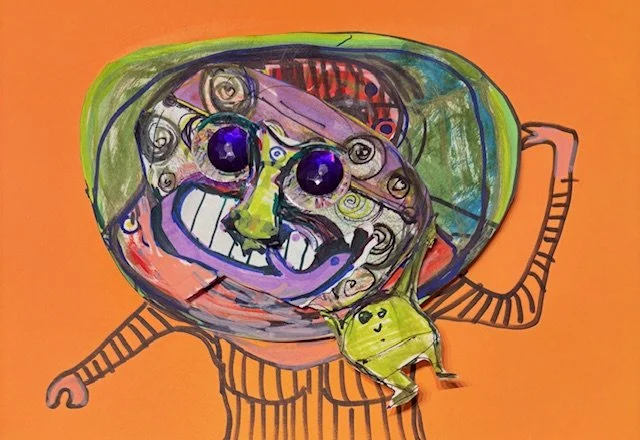
Aunt Lulu thought the baby was a little bit clingy
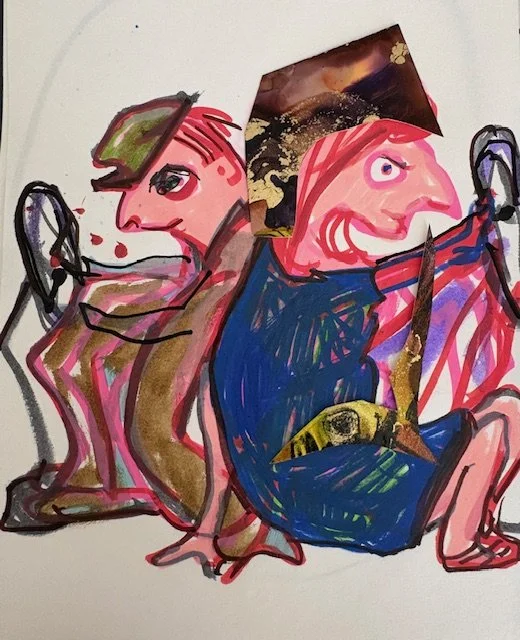
Luckily neither of the Kurkles had car keys
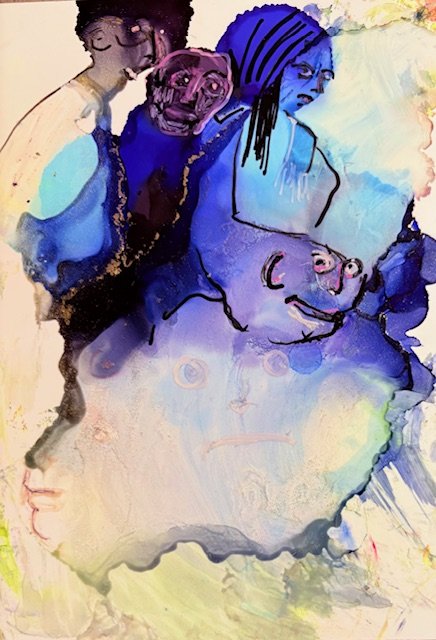
The Blue Plate Special was not what any of the family remembered
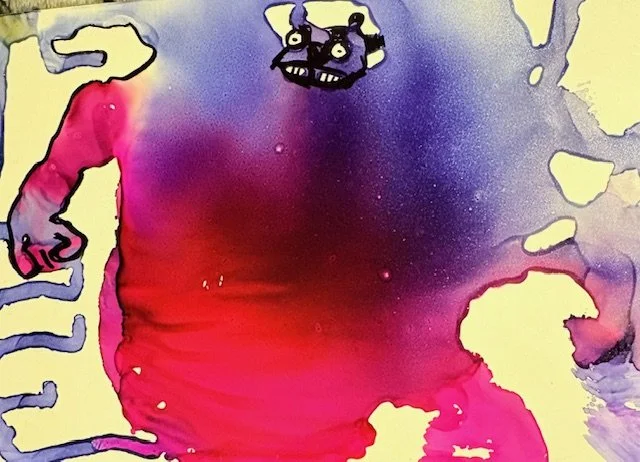
Pibble felt invincible in his superhero suit
Art and photos by Jane Hart
In and Around Kendal
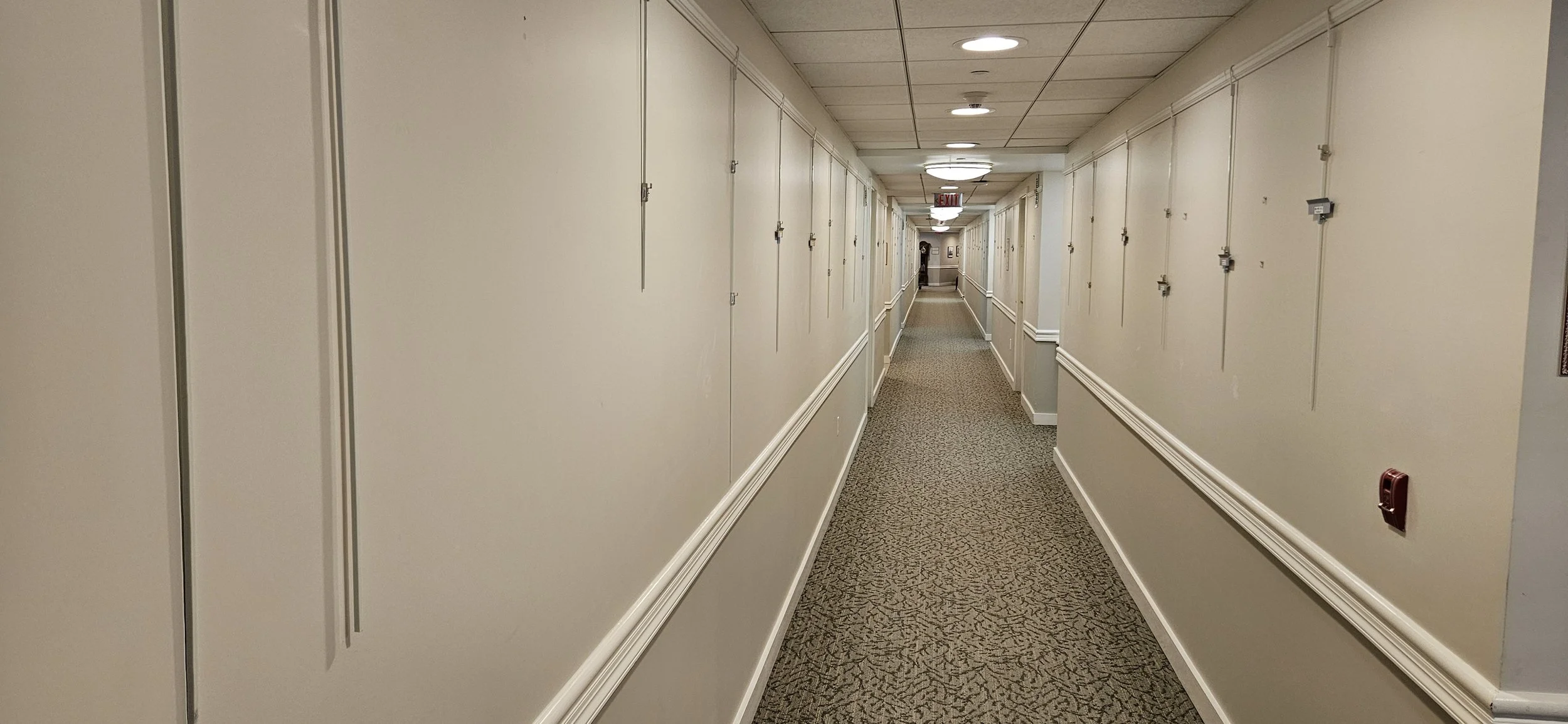
Hanging the Winter Art Show Begins: Step One
Reflections
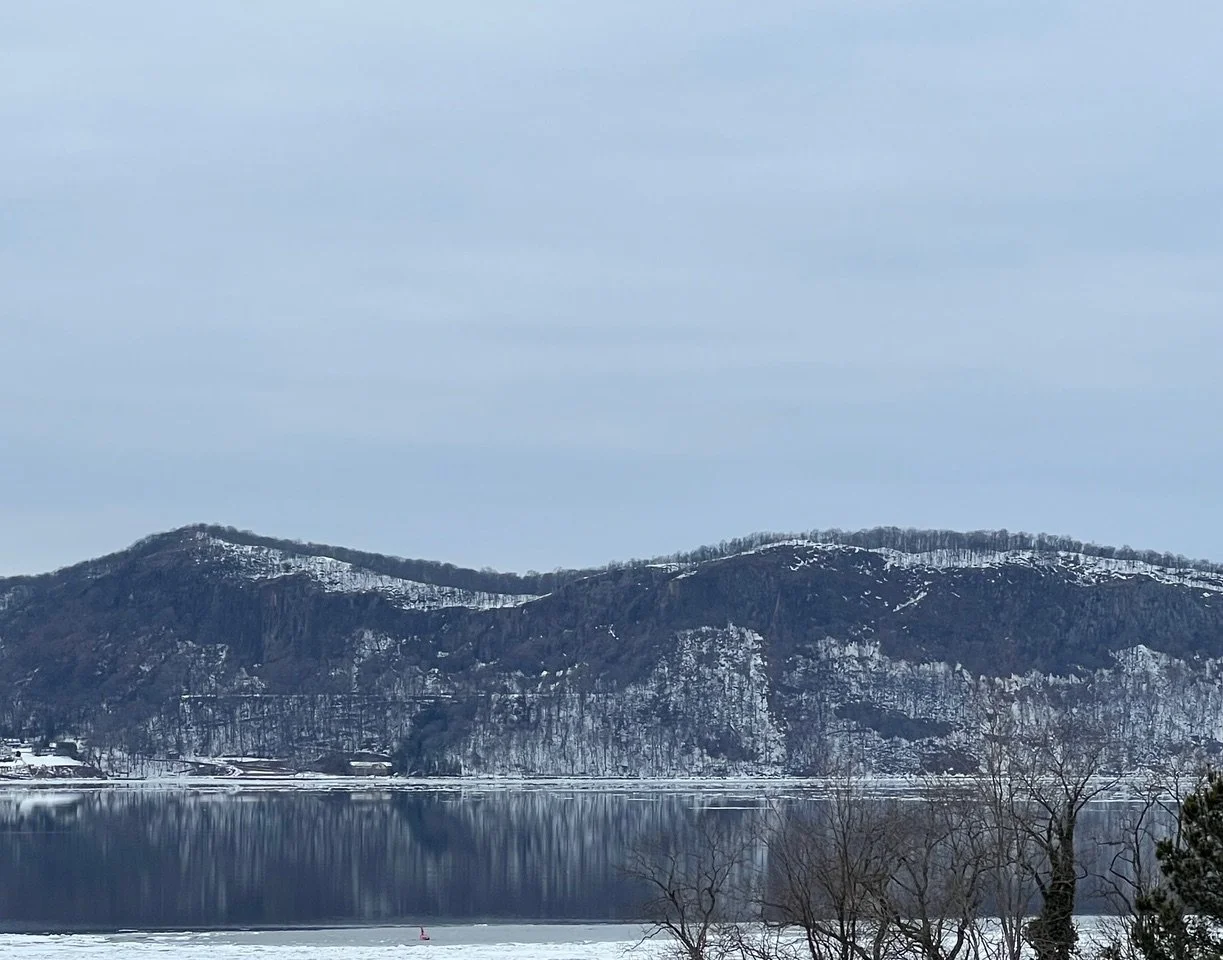
Photo by Philip Monteleoni
A Basic Approach. But a Kendal Value?
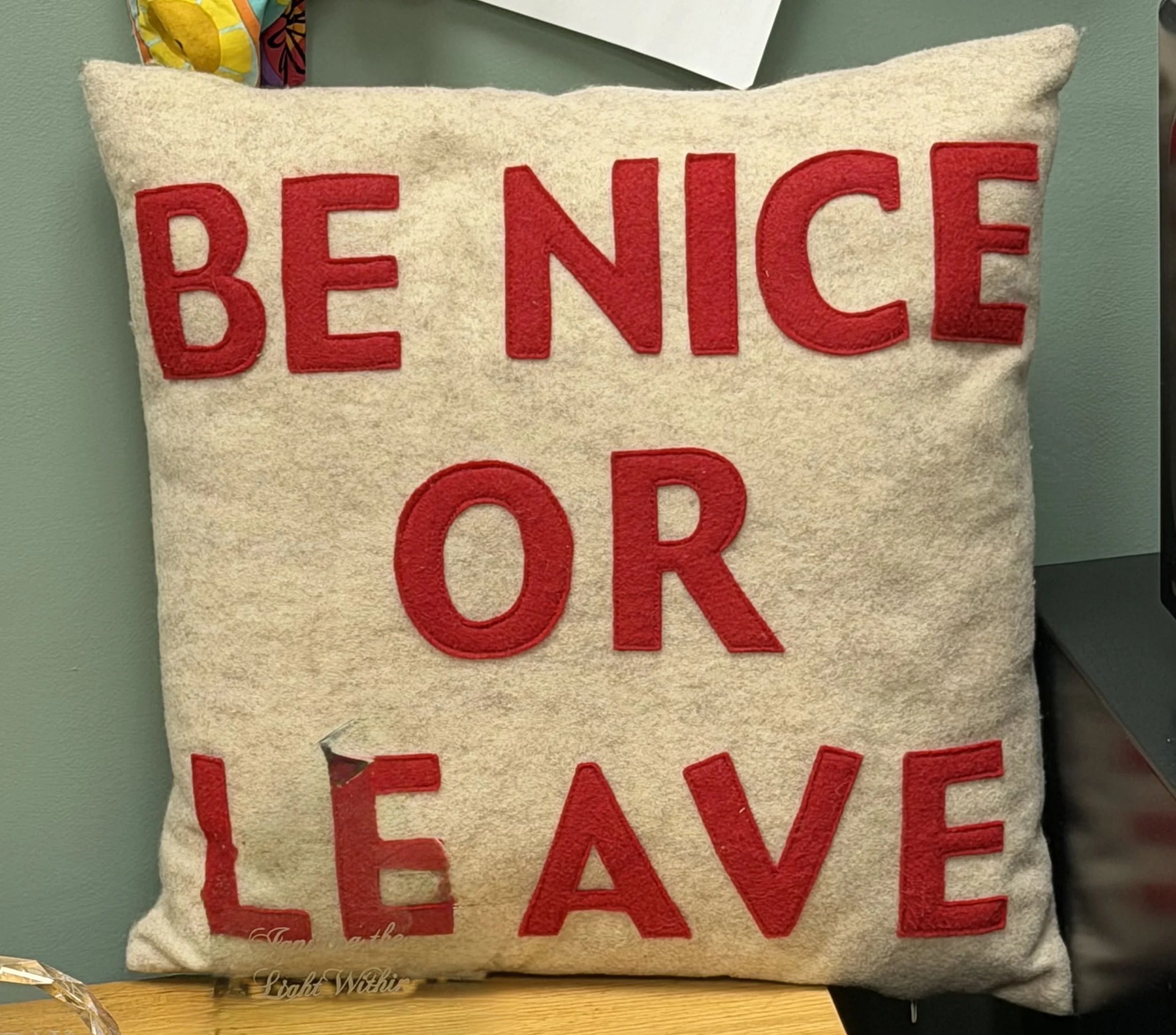
Photo by Ed Lannert
Under the Big Beech Tree

Photo by Carolyn Reiss
A Familiar Kendal Scene: Friends in Conversation
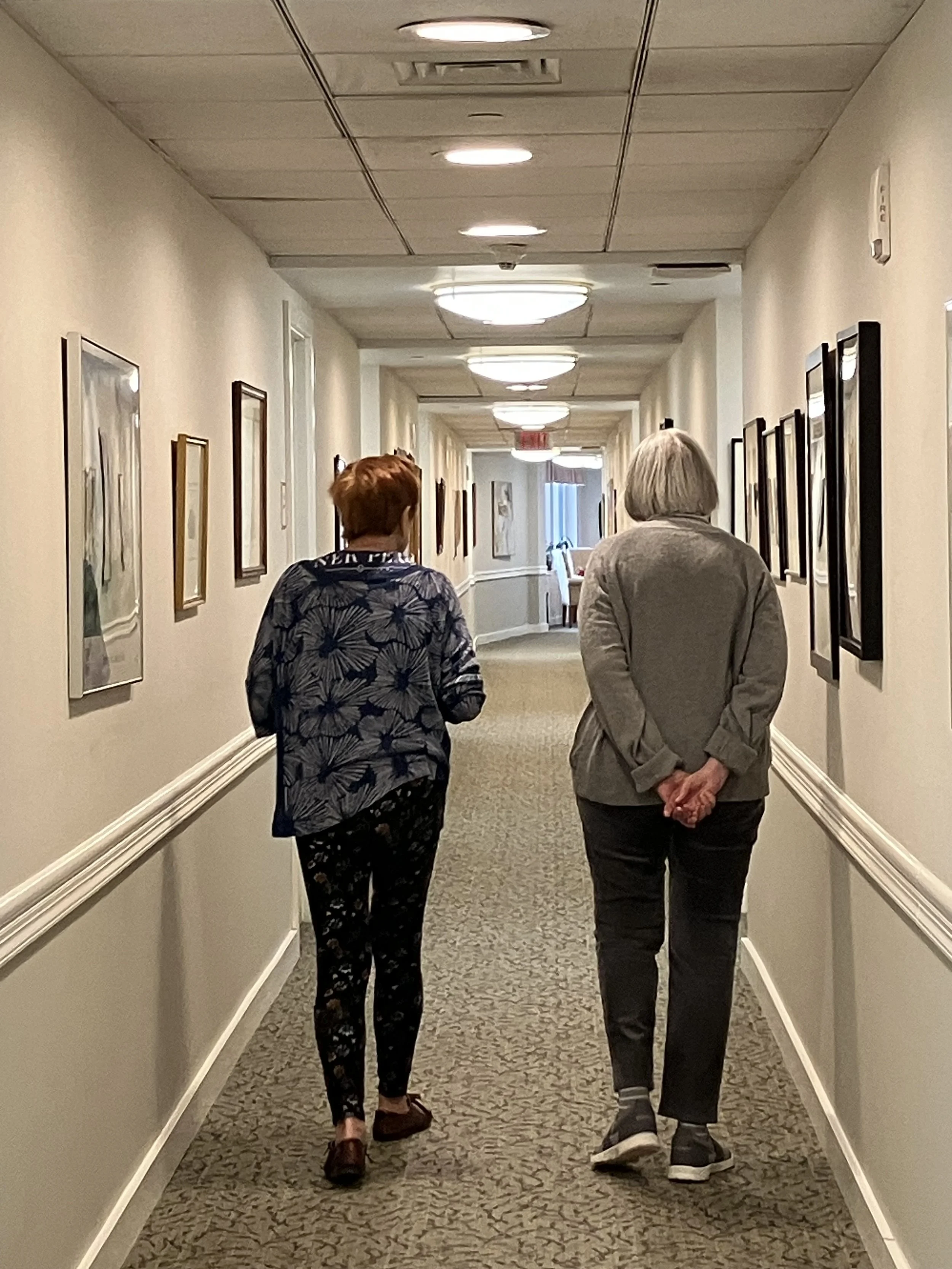
Photo by Ruth Dinowitz
Unexpected Guests

Photo by Carolyn Reiss
Another Beautiful Sunset

Photo by Greg Lozier
Out and About
Another Win for the Kendal Team!
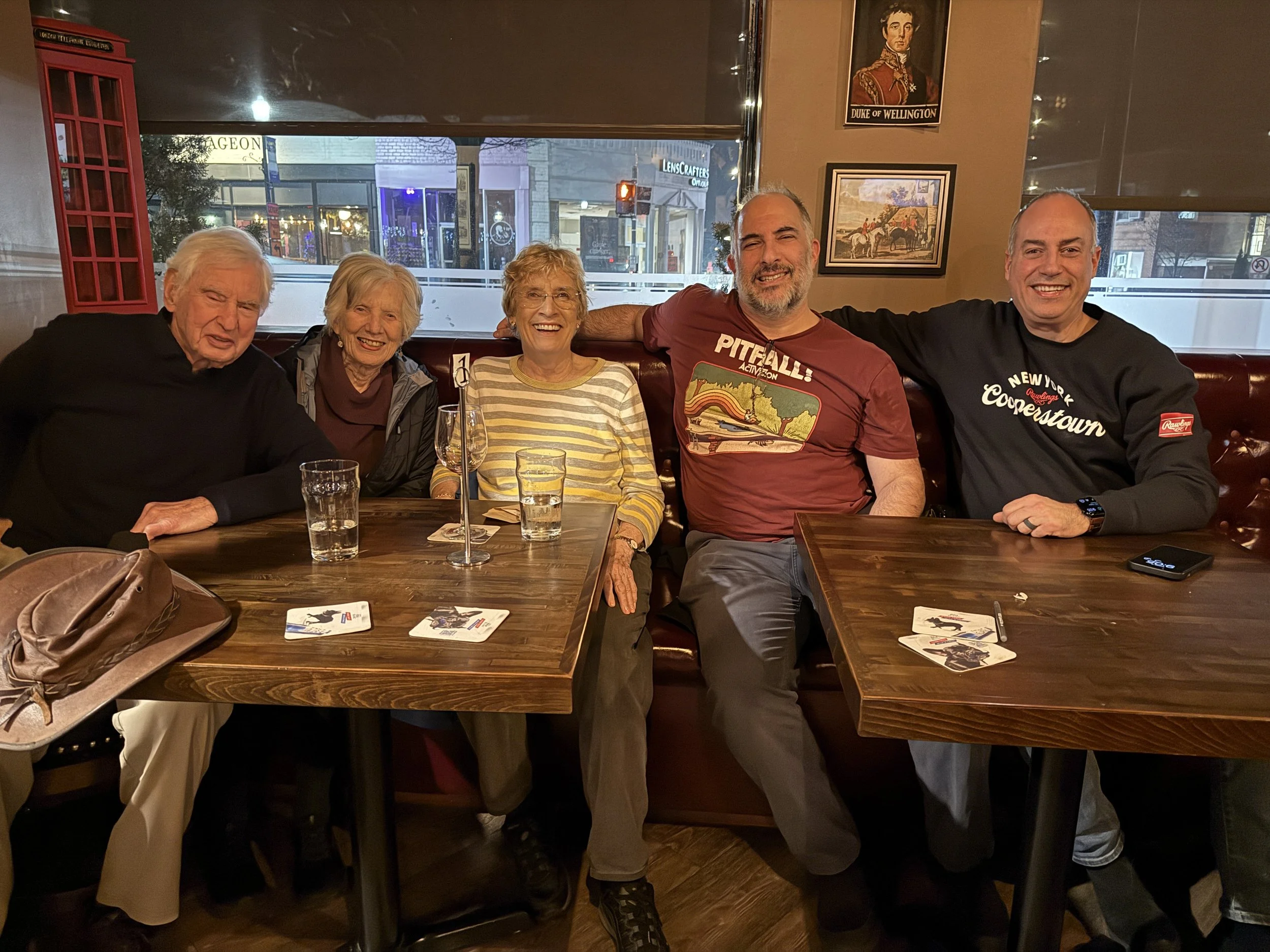
Amanda Slattery’s Trivia Quiz team—this time rotating in to the challenge teammates Mike and Barbara Kornfield—racked up another win at the Ambleside Pub! Yay and Congratulations! (Laurel wreaths to be distributed at future date.)
Where in the World Is Pat McGrath?
Answer: Sanibel Island—where chances are good he has not heard blizzard warnings.


Spoonbills on the Golf Course
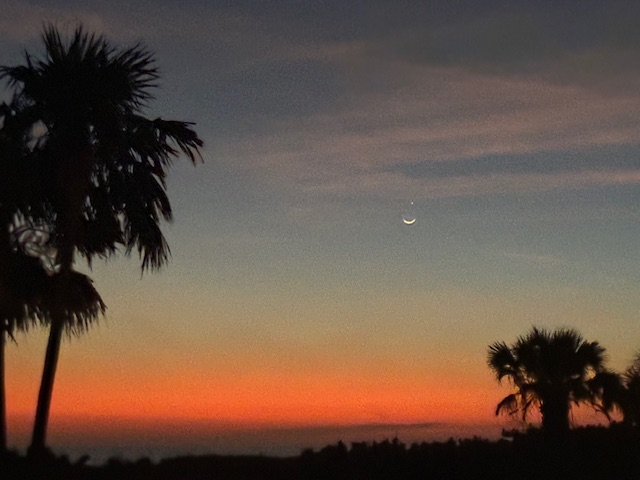
Sunset over the Gulf of . . .
Photos by Pat McGrath
For Your Viewing (and Noshing) Pleasure

Weekly Construction Report

NEW RESIDENTS CARE CENTER
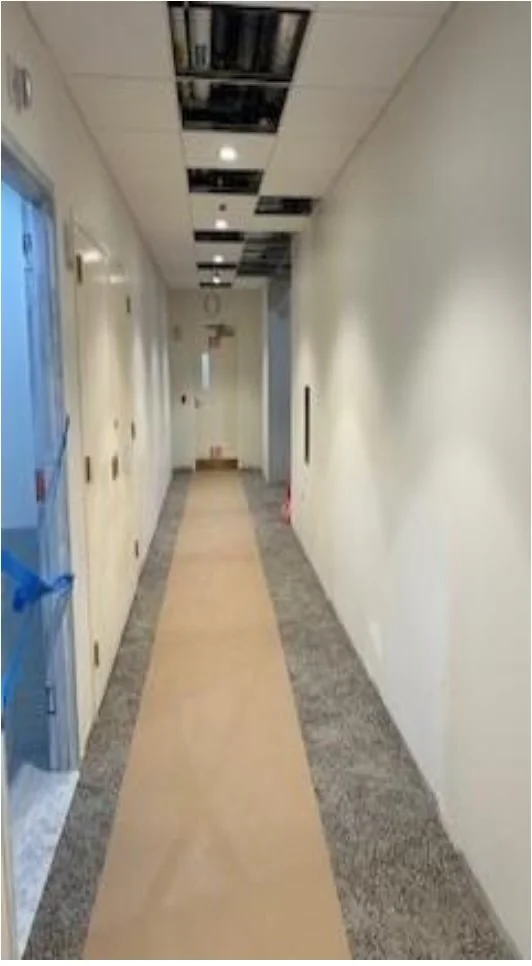
HALLWAY
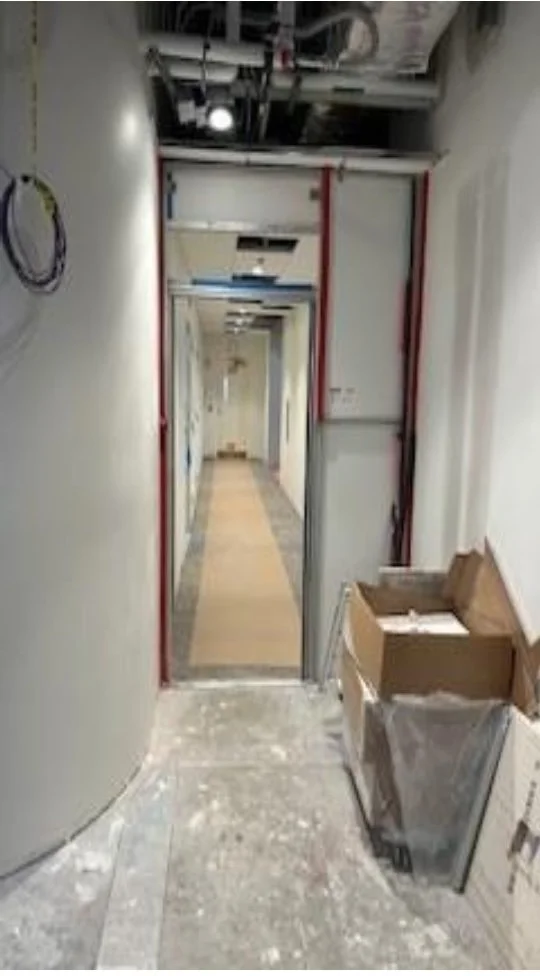
ENTRANCE
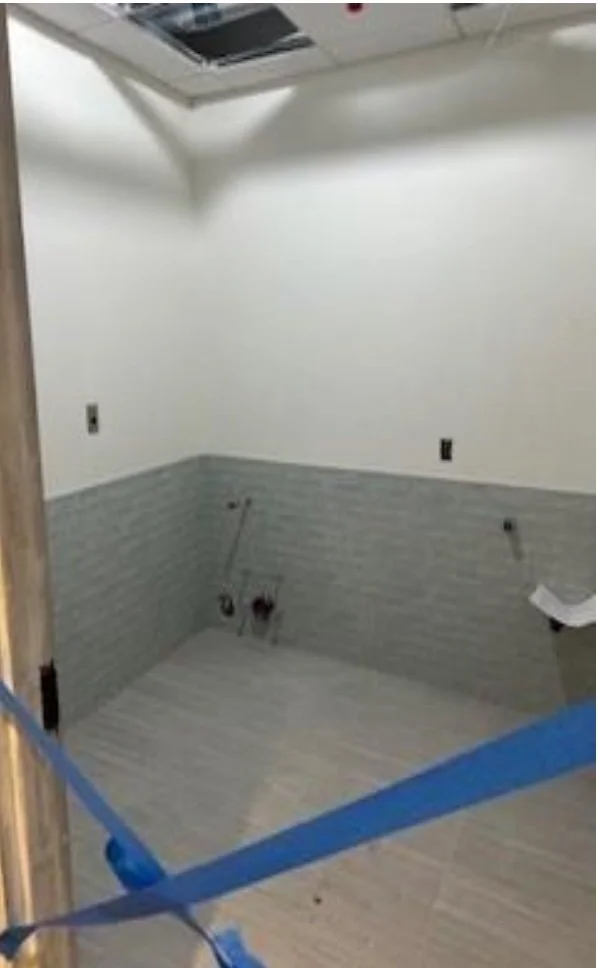
BATHROOM
NEW TERRACE ROOM

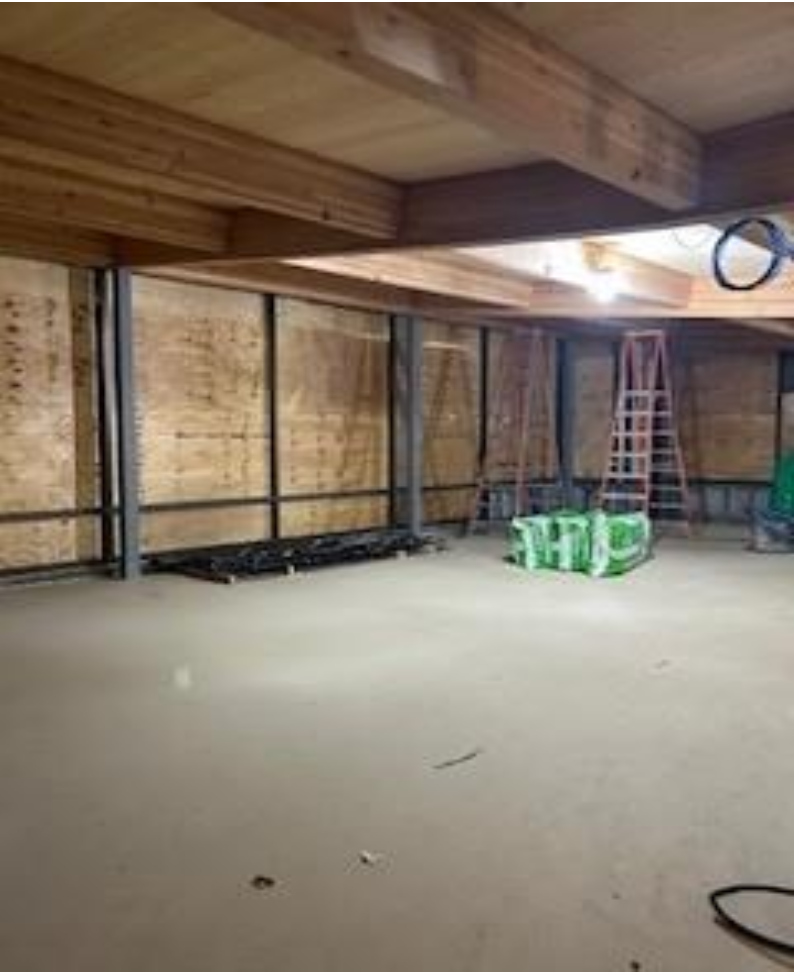
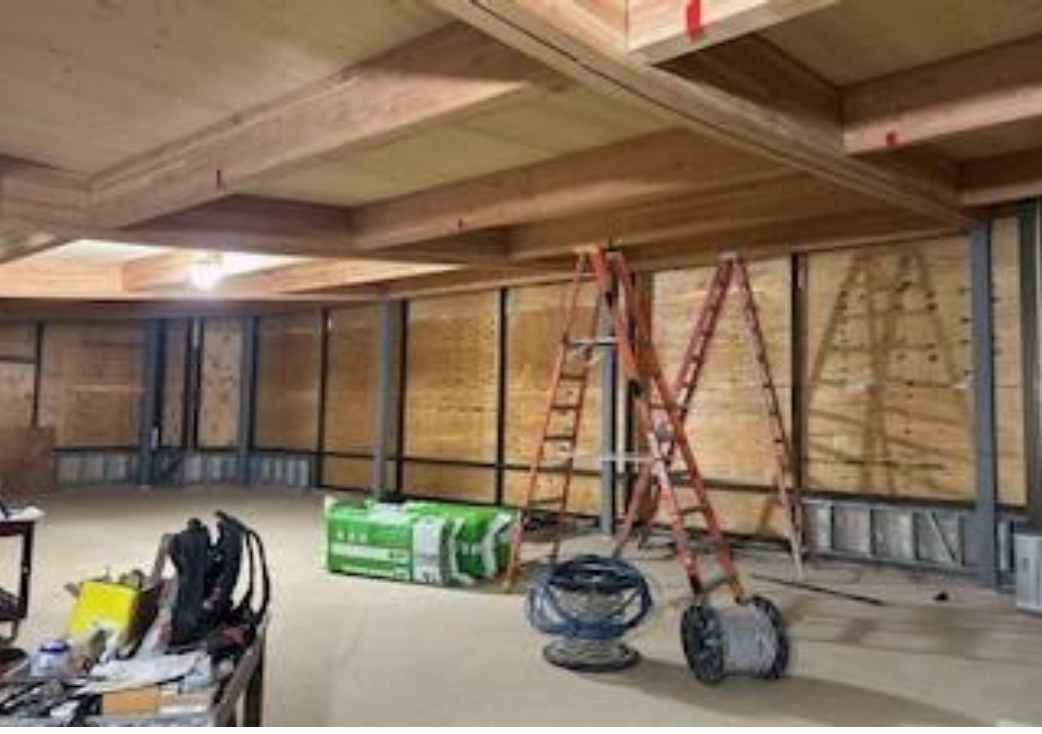
From the Office of Ellen Ottstadt
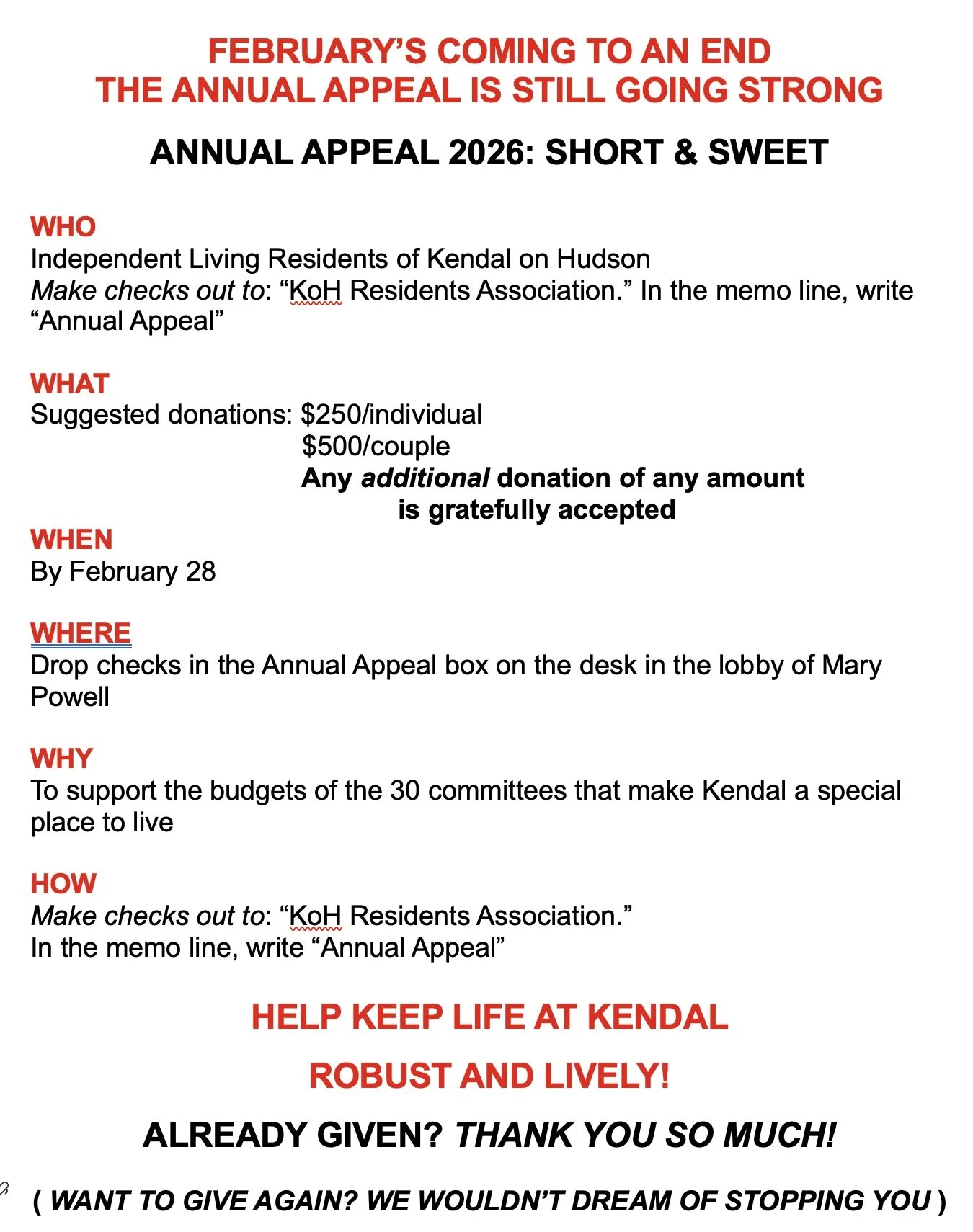
Join in the Annual Appeal
I Never Knew That
Jackie Robinson Was Honorably Discharged from the Army after Refusing to Move to the Back of a Segregated Bus
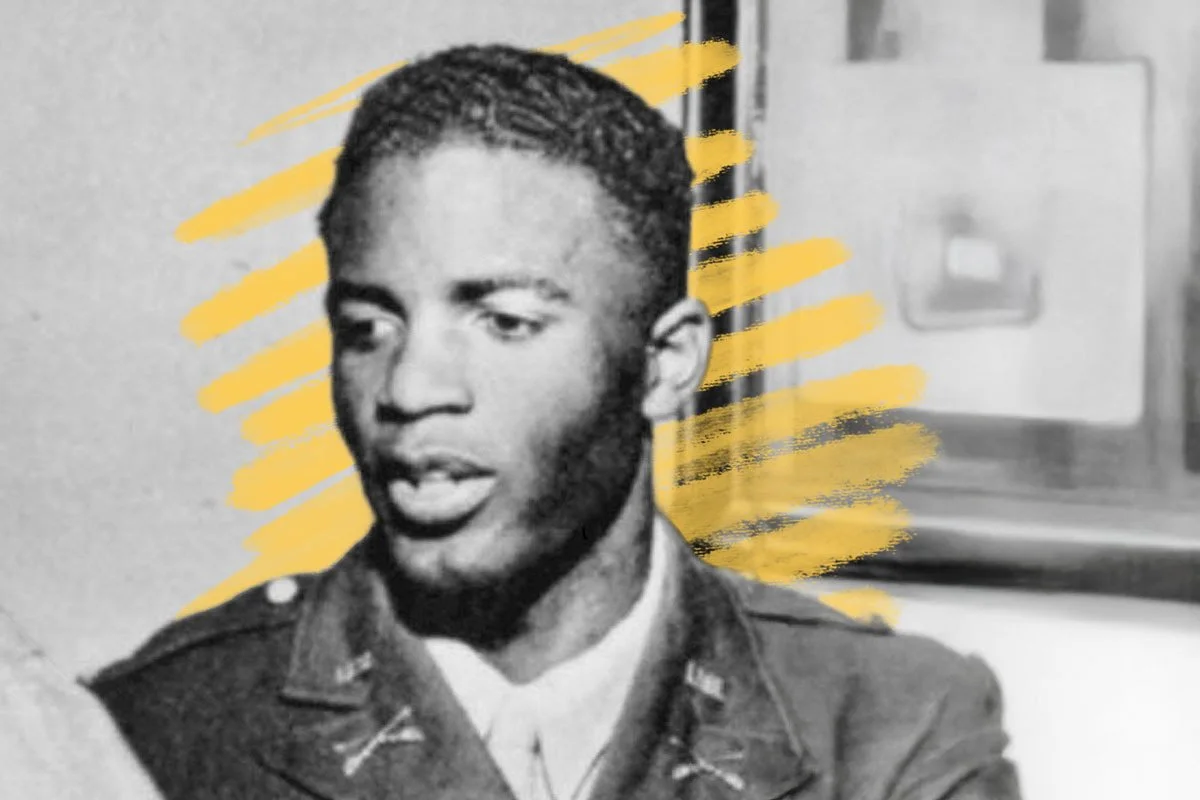
Five years before he broke the color barrier in Major League Baseball, Jackie Robinson was drafted into the military. He received his notice on April 3, 1942, just a few months after the attack on Pearl Harbor propelled the United States into World War II. He joined an all-Black unit stationed at Fort Riley, Kansas, and was later transferred to Fort Hood, Texas. There, racial segregation was strictly enforced despite Executive Order 8802, which was issued by President Franklin D. Roosevelt to ban discriminatory practices in federal agencies and organizations contributing to the war effort.
This ban was put to the test on July 6, 1944, when Robinson refused to move to the back of a bus in Fort Hood. He faced six charges at a subsequent court-martial, which he believed was racially motivated. In his autobiography, Robinson wrote that his lawyer “summed up the case beautifully by telling the board that this was not a case involving any violation of the Articles of War, or even of military tradition, but simply a situation in which a few individuals sought to vent their bigotry on a Negro they considered ‘uppity’ because he had the audacity to exercise rights that belonged to him as an American and a soldier.”
The nine combat officers who comprised the court acquitted Robinson of all charges. The ballplayer received an honorable discharge four months later.
Source: Michael Nordine, historyfacts.com
Contributed by Jane Hart