

Art and photo by Sheila Benedis
In and Around Kendal
A Fulton Sunset

Photo by Lynn Brady
A Significant Birthday for a Significant Sweetie
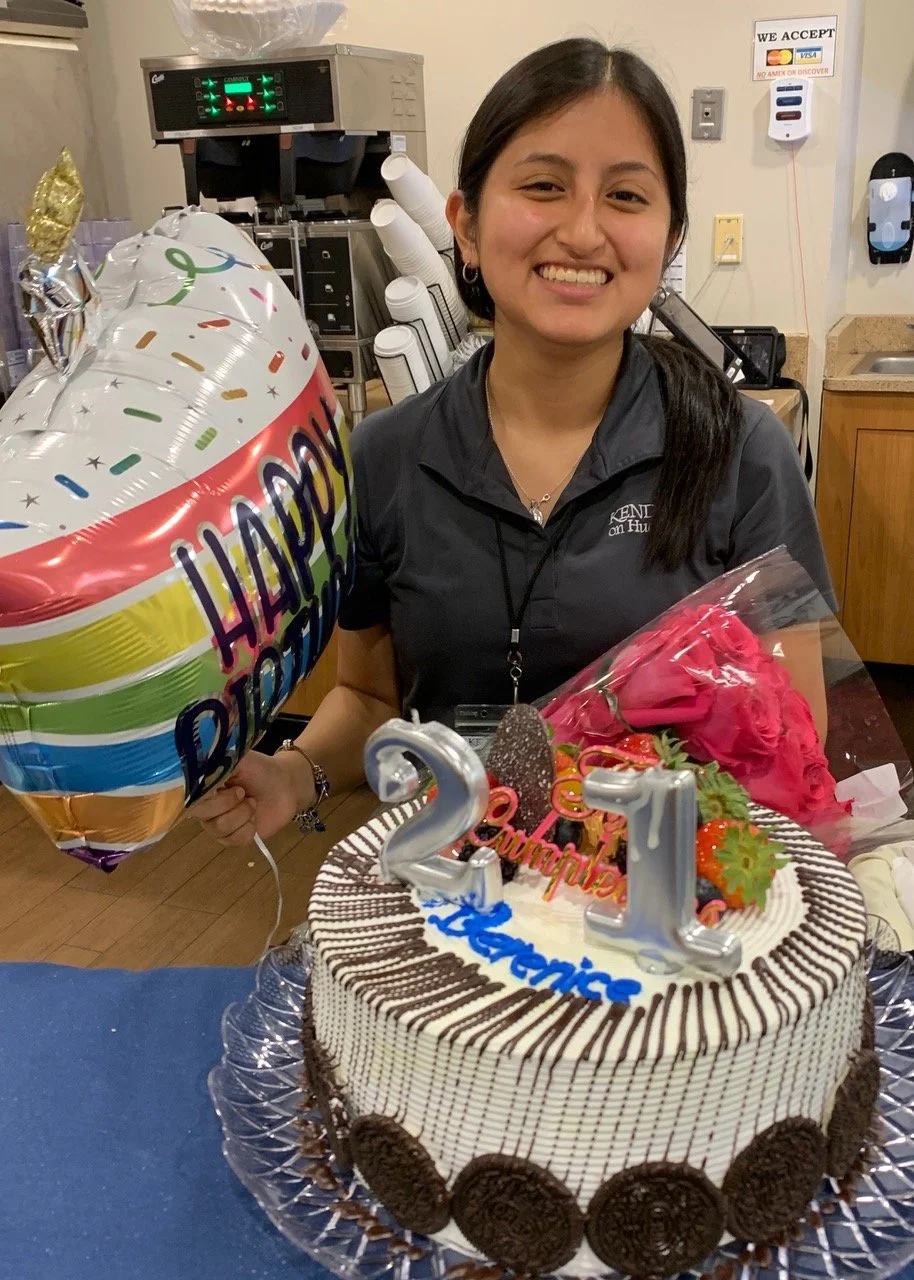
Berenice’s co-workers surprised her with a celebration for her 21st!
Photo by Harry Bloomfeld
The Fauna of Rockwood Park

Boy meets girl, by Mimi Abramovitz

A Young Buck Takes the Field, by Carolyn Reiss

Perhaps a new friend approaches. Allie Reiss is more interested in eating the grass. Photo by Carolyn Reiss
Likewise the Flora

Fungus in Fall Attire, by Rich Dooley

Serenity, by Carolyn Reiss
Just Passin’ By Kendal

The Bare Minimum, by Joe Bruno

Goin’ All Out, by Joe Bruno
The Last Rays of the Sun

Photo by Carol Monteleoni
The Very Last Rays

Sunset with Schooner, by Philip Monteleoni
Out and About
All A-Blaze for the Season
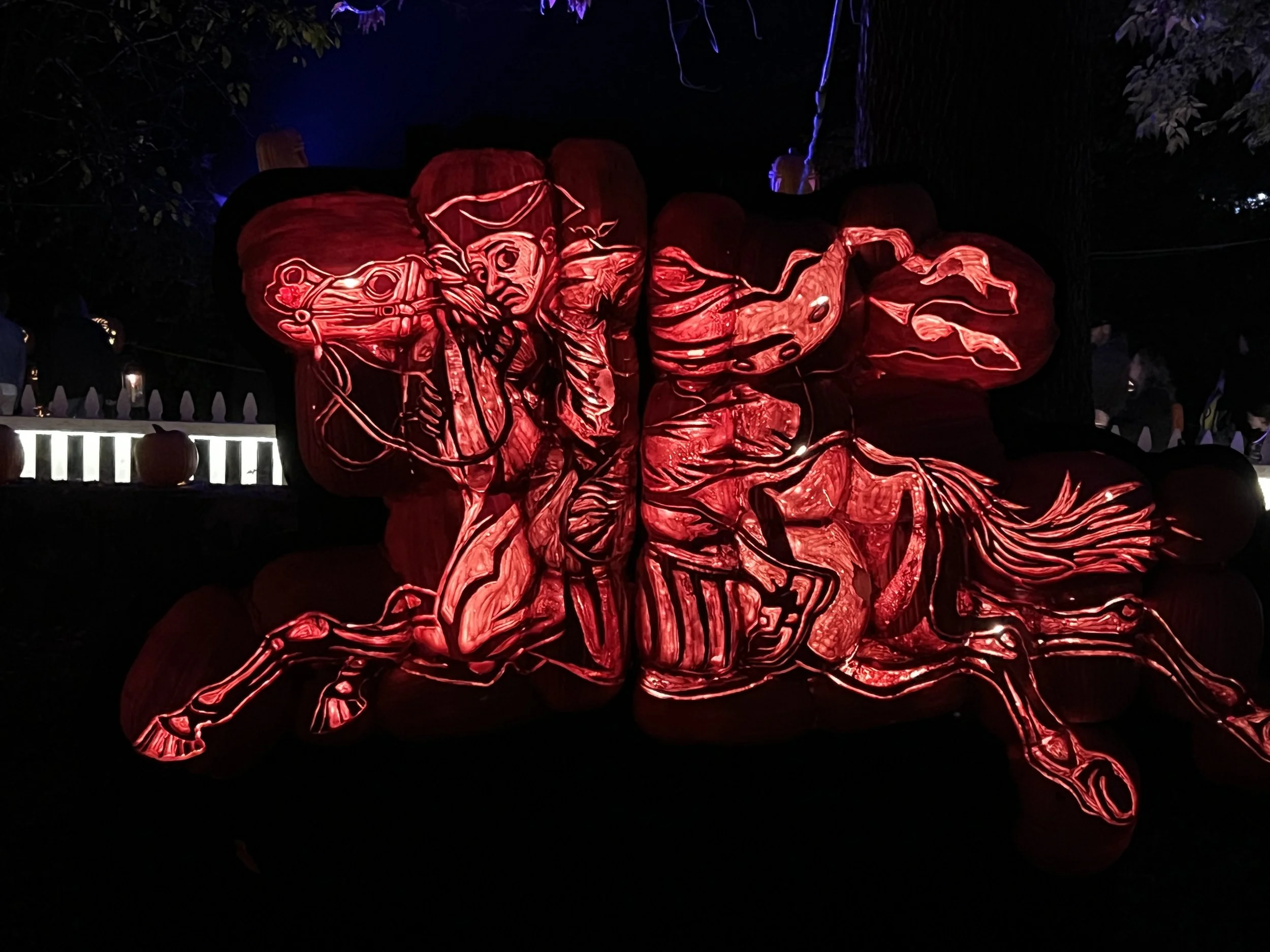
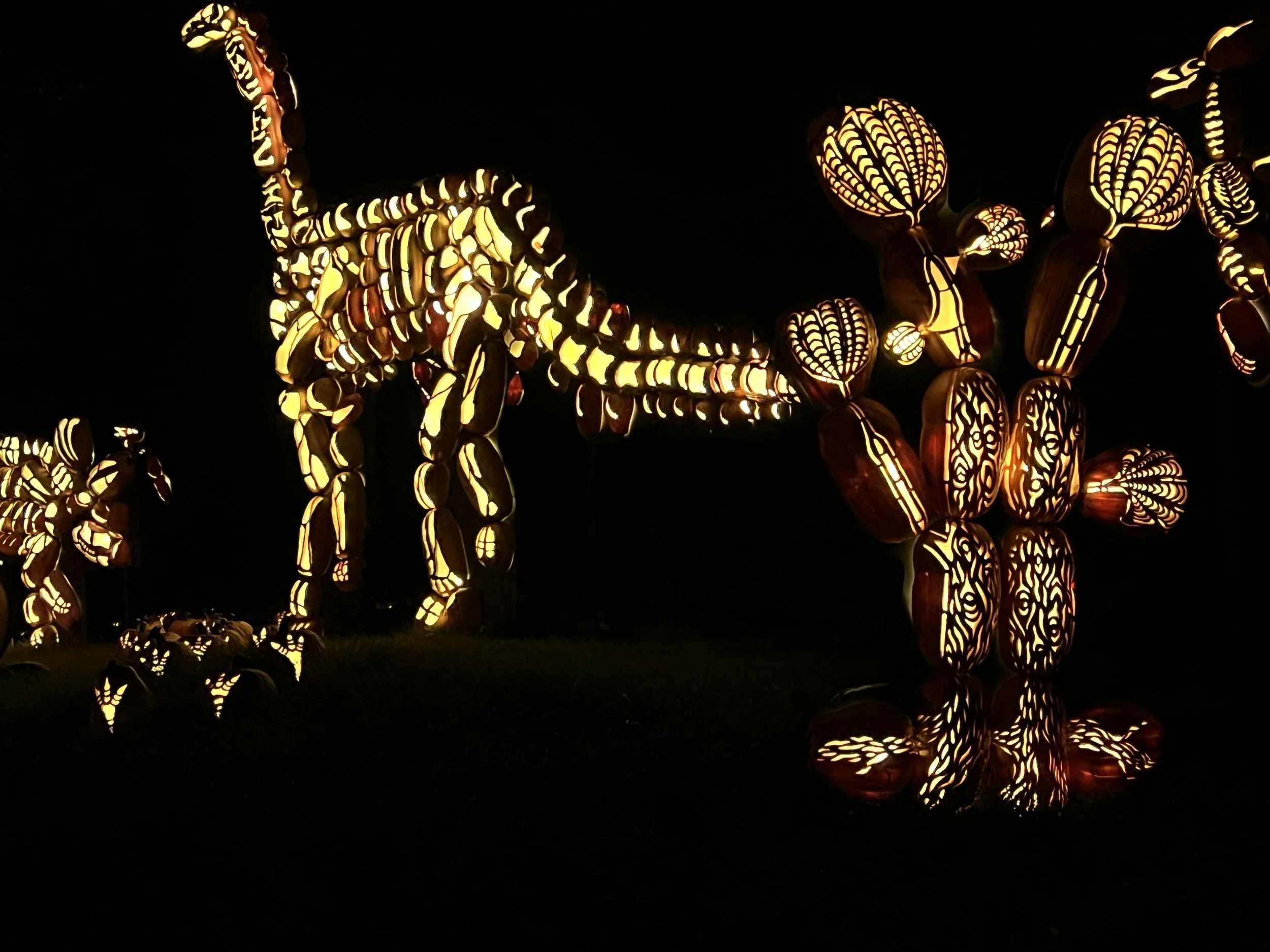
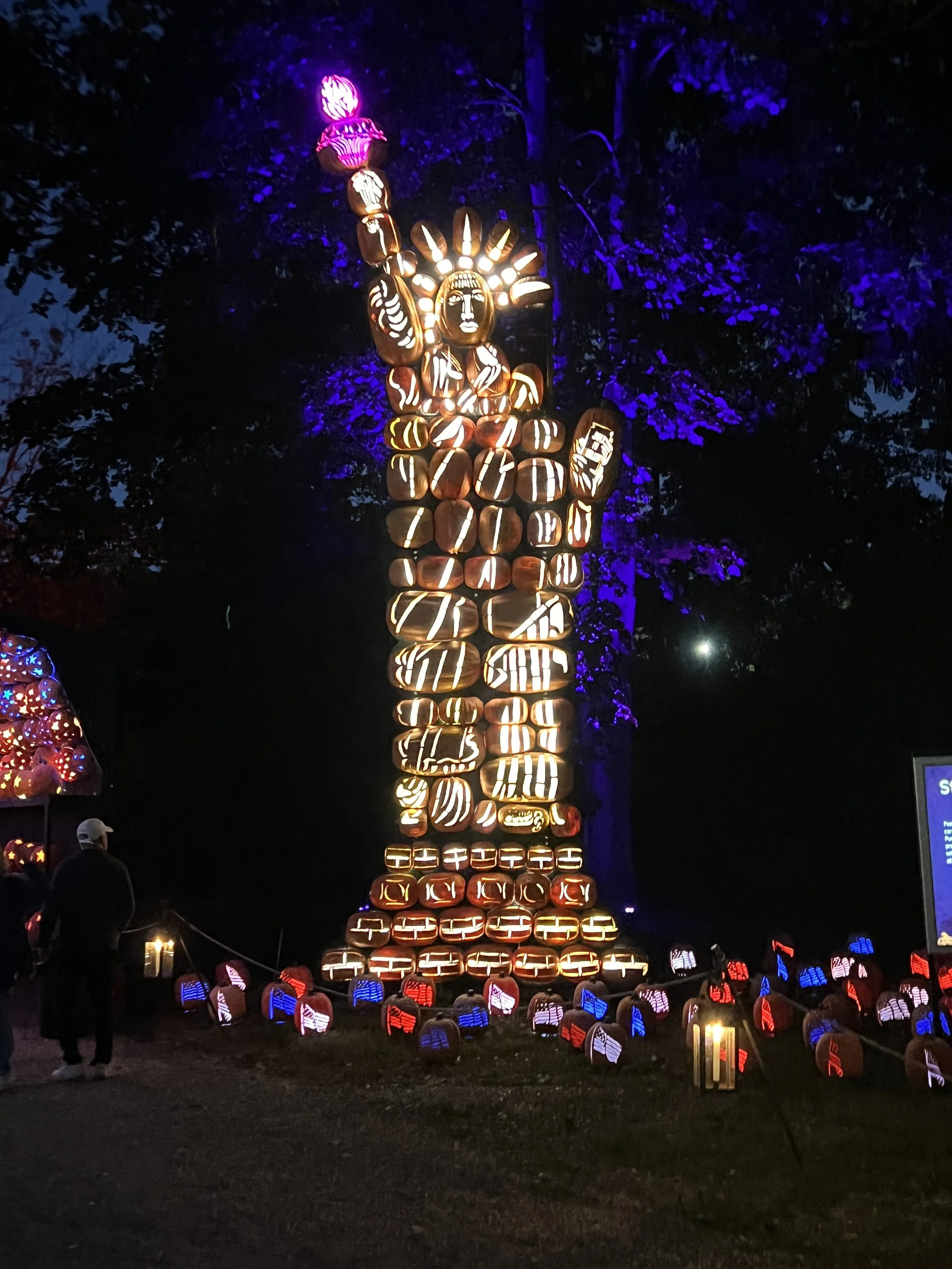
It’s October, which—if you live in Sleepy Hollow—you know is the Spooky Season on steroids. A major part of the Halloween Season is Van Cortlandt Manor’s “The Great Jack O’Landtern Blaze,” a breathtaking display of more than 7,000 illuminated jack o’ lanterns—all designed and hand-carved on site by a team of artisans. Complete with synchronized lighting and an original soundtrack.
Lisa Rosenbloom experienced The Blaze recently, and sent a few pictures along . . .
It’s a Puzzlement
All Kendal houses have puzzle tables. Two of the most active are in Clermont and Robert Fulton. Meanwhile, back at the ranch (or restoration) of Historic Hudson Valley’s headquarters (our own Philipseburg Manor) a hoard of puzzles arrived in the business/ docent office. Seems a trustee’s father was an avid puzzler and had left dozens of often new, never used puzzles. And they were mounting up and up and up. Barbara Williams serves as a docent for Historic Hudson Valley and alerted puzzlers Carlisle Spivey, Peter Sibley (Clermont), and Joe Bruno (Fulton) about the availability—free, the only thing to do was haul them away. And haul they did. In boxes and bags. Twice. Alida and Mary Powell puzzlers: need a new puzzle? As the old saying goes: Come on down!

Photo by Joe Bruno
Weekly Construction Report

From the Office of Ellen Ottstadt
Define It, Please
BEAUTY PARLOR: A place where women curl up and dye.
CHICKENS: The only animal you eat before they are born and after they are dead.
COMMITTEE: A body that keeps minutes and wastes hours.
DUST: Mud with the juice squeezed out.
EGOTIST: Someone who is usually me-deep in conversation.
HANDKERCHIEF: Cold Storage.
INFLATION: Cutting money in half without damaging the paper.
MOSQUITO: An insect that makes you like flies better.
RAISIN: A grape with a sunburn.
SECRET: A story you tell to one person at a time.
SKELETON: A bunch of bones with the person scraped off.
TOOTHACHE: The pain that drives you to extraction.
TOMORROW: One of the greatest labor-saving devices of today.
YAWN: An honest opinion openly expressed.
WRINKLES: Something other people have . . . similar to my character lines.
OLD: I very quietly confided to my friend that I was having an affair. She turned to me and asked, “Are you having it catered?” And that, my friend, is the definition of OLD!
Contributed by Barbara Wallach
I Never Knew That
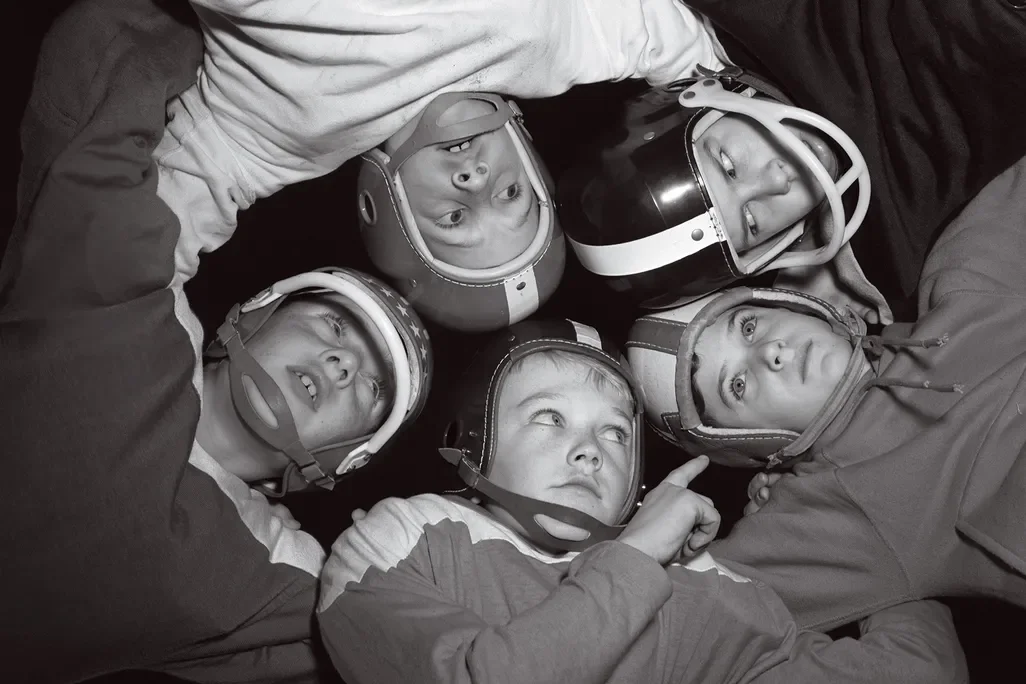
Football’s Unanswered Question Answered: Why the Huddle
Getty Images
During a tight game in the fall of 1894, Paul Hubbard—quarterback for the Gallaudet University Bison, and known as “the Eel” for his canny maneuvers—made a simple move that changed sports forever. Concerned that his hand signs were tipping off his plans to the opposing defense, Hubbard summoned his offense and directed them to form a circle around him, creating what many consider the first football huddle.
For the Bison, who have been fielding football teams since the 1880s, sight matters more than sound. Nestled in Northeast Washington, D.C., Gallaudet is the most famous and prestigious deaf university in the world. It’s been granting degrees since 1864. The Gallaudet student newspaper, the Buff and Blue, honored Hubbard in 1941 as the “daddy of huddle,” as did daily newspapers in Kansas, where he coached at the Kansas School for the Deaf, and Washington when Hubbard died in 1946.
As with any world-shifting innovation, competing claims emerged over the decades: Herb McCracken, the University of Pittsburgh player and college coach, claimed that he’d invented the huddle in 1924, and some quarters credit University of Illinois football coach Robert Zuppke—also known for inventing the onside kick, the flea flicker and the screen pass.
Source: Scott Nover, Smithsonian Magazine, September/October 2025
Contributed by Jane Hart
From the Wisdom of the Ages

Contributed by Maria Harris
Art by HartArt

Aunt Bliss wondered what had become of her old boyfriends

At last the Hollywood pigeons had their own walk of fame
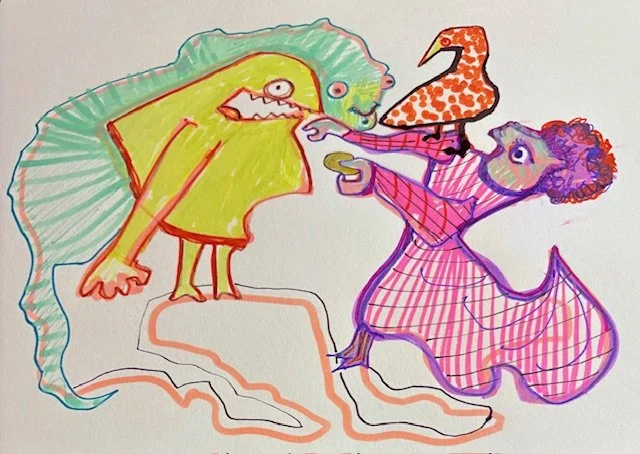
Truffle’s anti-tantrum cookie was at the ready

Crake couldn’t remember whether the newest disease bug was bad for dogs or people

Daniel went dotty over a lemon tart
Art and photos by Jane Hart
For Your Funny Bone

Contributed by Donald Butt


Contributed by Barbara Wallach

Drawing with Scissors VIII, by Sheila Benedis
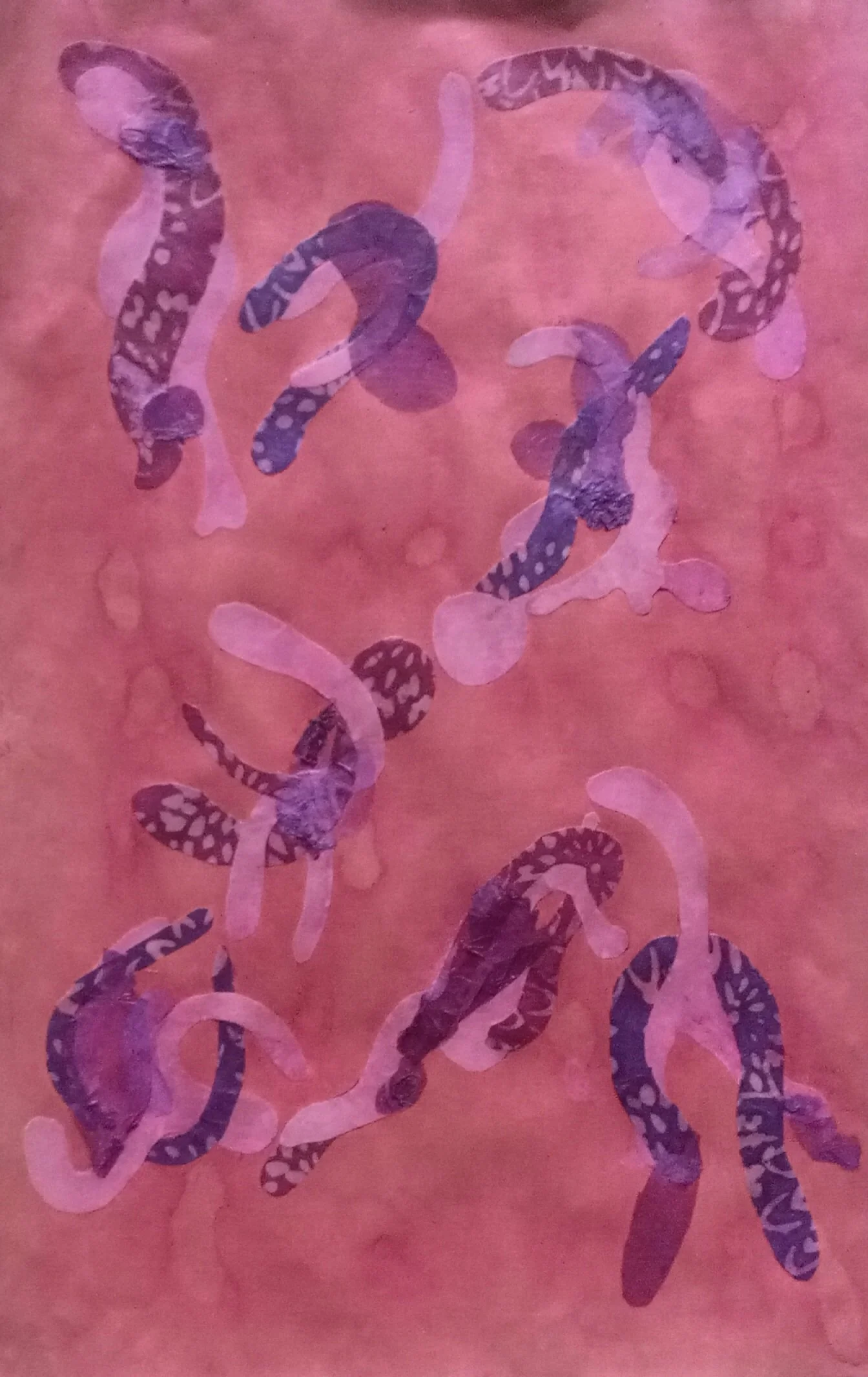
Art and photo by Sheila Benedis
In and Around Kendal
Essential Times Management
Each week, Muriel Fox makes copies of Spotlight for our community. She’s rather caught there because the copier can be finicky. So, time well spent: with the Times.
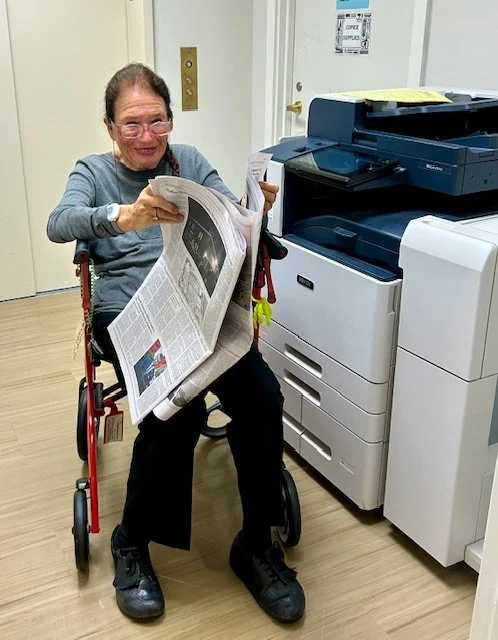
Photo by Carolyn Reiss
Clear Water in Clearwater
A new fountain now graces the Clearwater garden, following the retirement of the former fountain that had been—appropriately—feeling its age.

Photo contributed by Ellen Ottstadt
The First Kendal Pumpkin

Photo by Carolyn Reiss
Work Stoppage in the Shade

Photo by Edward Kasinec
Up Close and Personal—the Late Bloomers of Summer
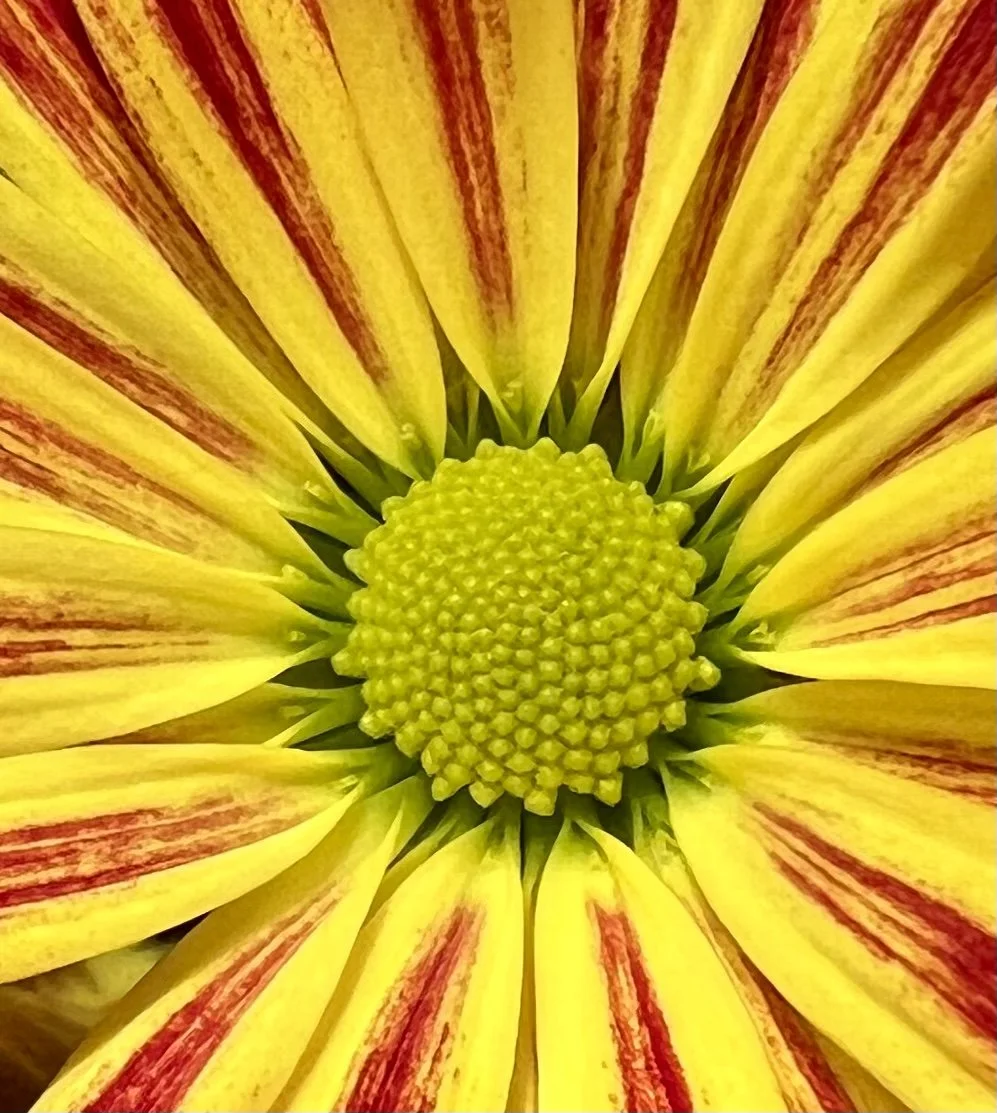
Bee’s eye view, by Ed Lannert

Late Hibiscus in the Healing Garden, by Sue Bastian
An Early Autumn Hudson View

Photo by Carolyn Reiss
Out and About
Recently, Kendalites visited Stonecrop Gardens for a tour of their vast and wonderful gardens. Here’s just a taste:





Photos by Harry Bloomfeld
The Joys of Autocorrect
Autocorrect—we love it and hate it:
We’ll, we’ll, we’ll . . . if it isn’t autocorrect.
Autocorrect can go straight to he’ll.
Autocorrect has become my worst enema.
I tried to say, “I’m a functional adult,” but my phone changed it to “fictional adult,” and I feel like that’s more accurate.
Thanks to autocorrect, 1 in 5 children will be getting a visit from Satan this Christmas.
The guy who invented autocorrect for smartphones passed away today. Restaurant in peace.
Contributed by Joe Bruno
Chair Fair, If You Care: A Chance to Ask Your Derrière

Weekly Construction Report

From the Office of Ellen Ottstadt
New Fitness Schedule

From the Office of David Pojman
I Never Knew That
The Stethoscope: Why? How? What Brought It About?
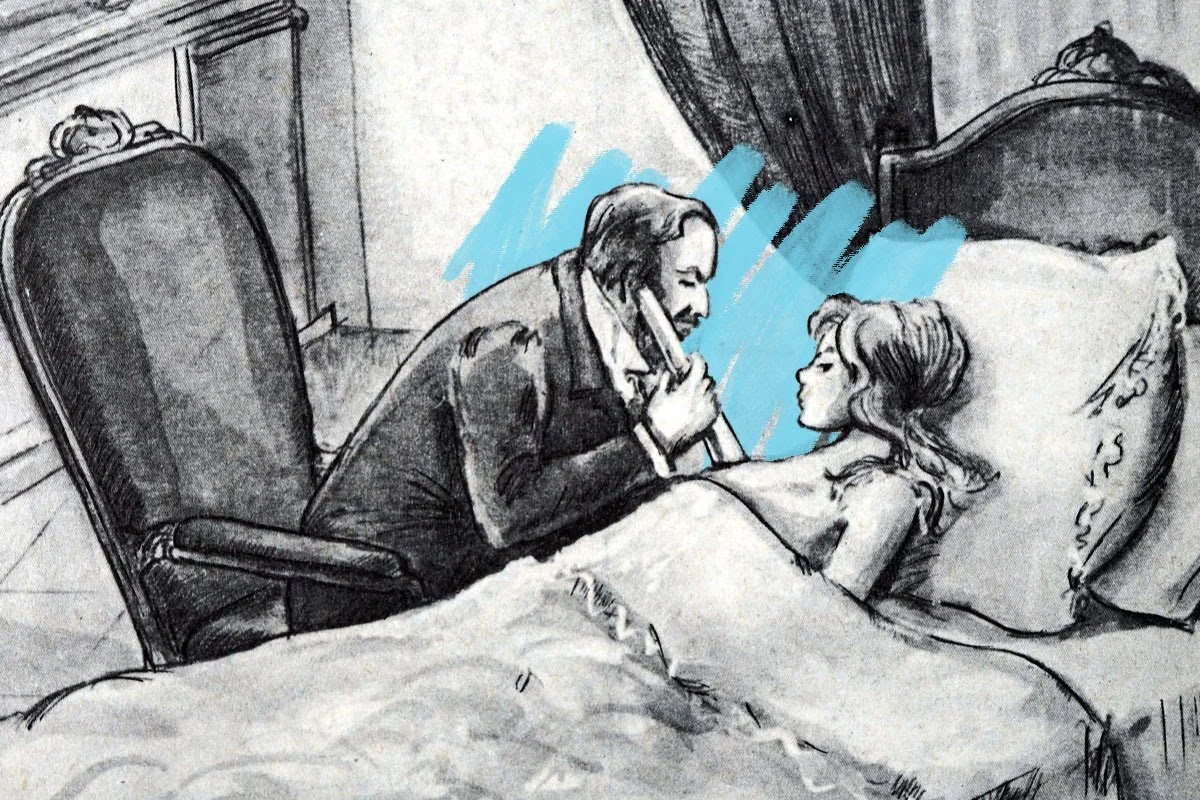
In 1816, a French physician named René Laennec found himself in a delicate situation. He needed to listen to the heart of a young female patient but didn’t have an ideal way to do so based on the standard practices of the time. Doctors in the early 19th century relied primarily on touch to assess the heart, pressing their hands to gauge its strength and rhythm. This method often wasn’t reliable, especially, as was the case in Laennec’s situation, if the patient was of a heavier weight. Applying the ear directly to a chest was another approach, but Laennec felt that would be inappropriate and uncomfortable given his patient’s age and gender.
Laennec also happened to be a skilled musician. Drawing on a basic principle of acoustics—that sound travels better through solid materials than through air—he rolled a sheet of paper into a cylinder and placed one end on the patient’s chest and the other to his ear. The heartbeat came through far more clearly and distinctly than it would have with touch or direct ear contact. Three years later, he published his findings and the first design of a monaural stethoscope, the name of which comes from the Greek words stethos, meaning “chest,” and skopein, meaning “to explore.”
The device was a simple wooden tube about 10 inches long that carried sound to one ear. The stethoscope marked the start of mediate auscultation—diagnosing conditions by listening to the body’s internal functions. Laennec’s design was used until flexible rubber-tubed binaural models appeared later in the 19th century.
Source: historyfacts.com
Contributed by Jane Hart
For Your Funny Bone


Contributed by Donald Butt




Contributed by Barbara Bruno
Art by Hart
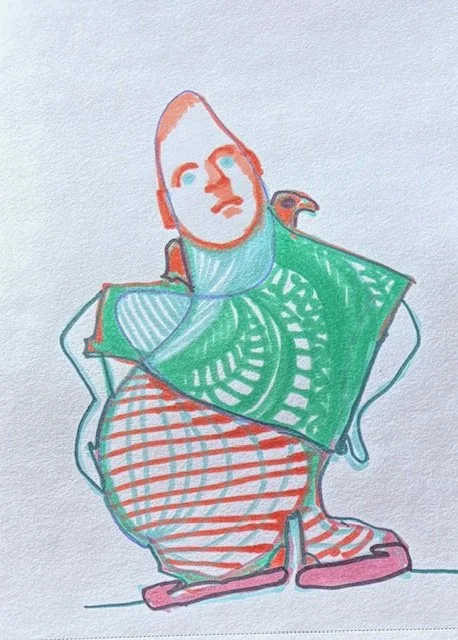
Sid and Griffin were inseparable

The Met’s new Saturday soap-opera series broadcast directly to Lena’s Laundromat

They met on the 7:00 am lizardboat—and the rest is history

It was adorable to hear the little ones mimic the politicians on TV

Bobo couldn’t get enough Great Aunt Bunni stories
Art and photos by Jane Hart
Drawing with Scissors VII, by Sheila Benedis
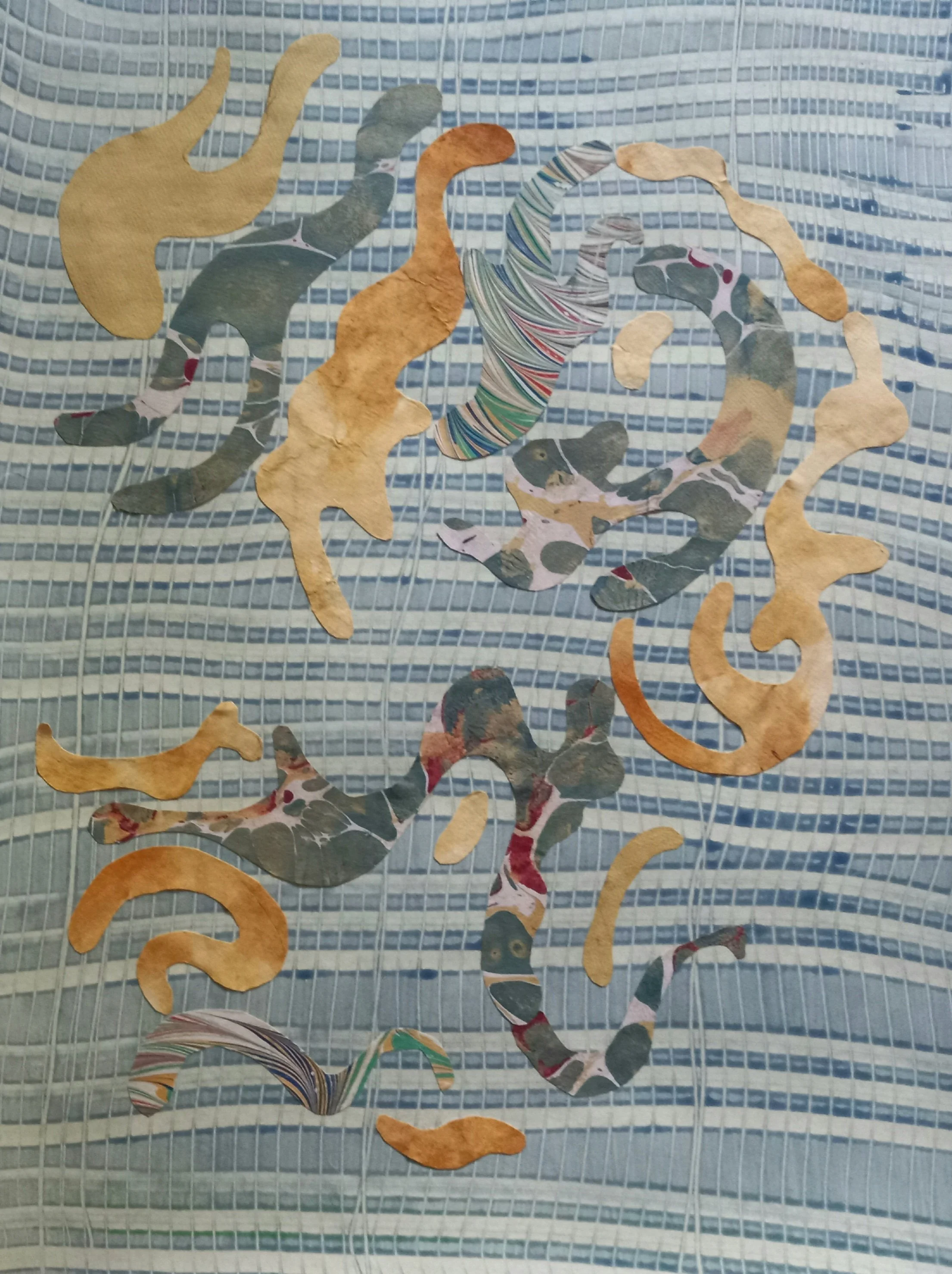
Art and photo by Sheila Benedis