There will be 2 trips to take voters to the polls at Philipsburg Manor on Tuesday, February 11.
The first trip will be at 10:45 am and the 2nd trip will be at 2:15 pm. There is a sign-up sheet at the front desk.

There will be 2 trips to take voters to the polls at Philipsburg Manor on Tuesday, February 11.
The first trip will be at 10:45 am and the 2nd trip will be at 2:15 pm. There is a sign-up sheet at the front desk.




Contributed by Don Butt

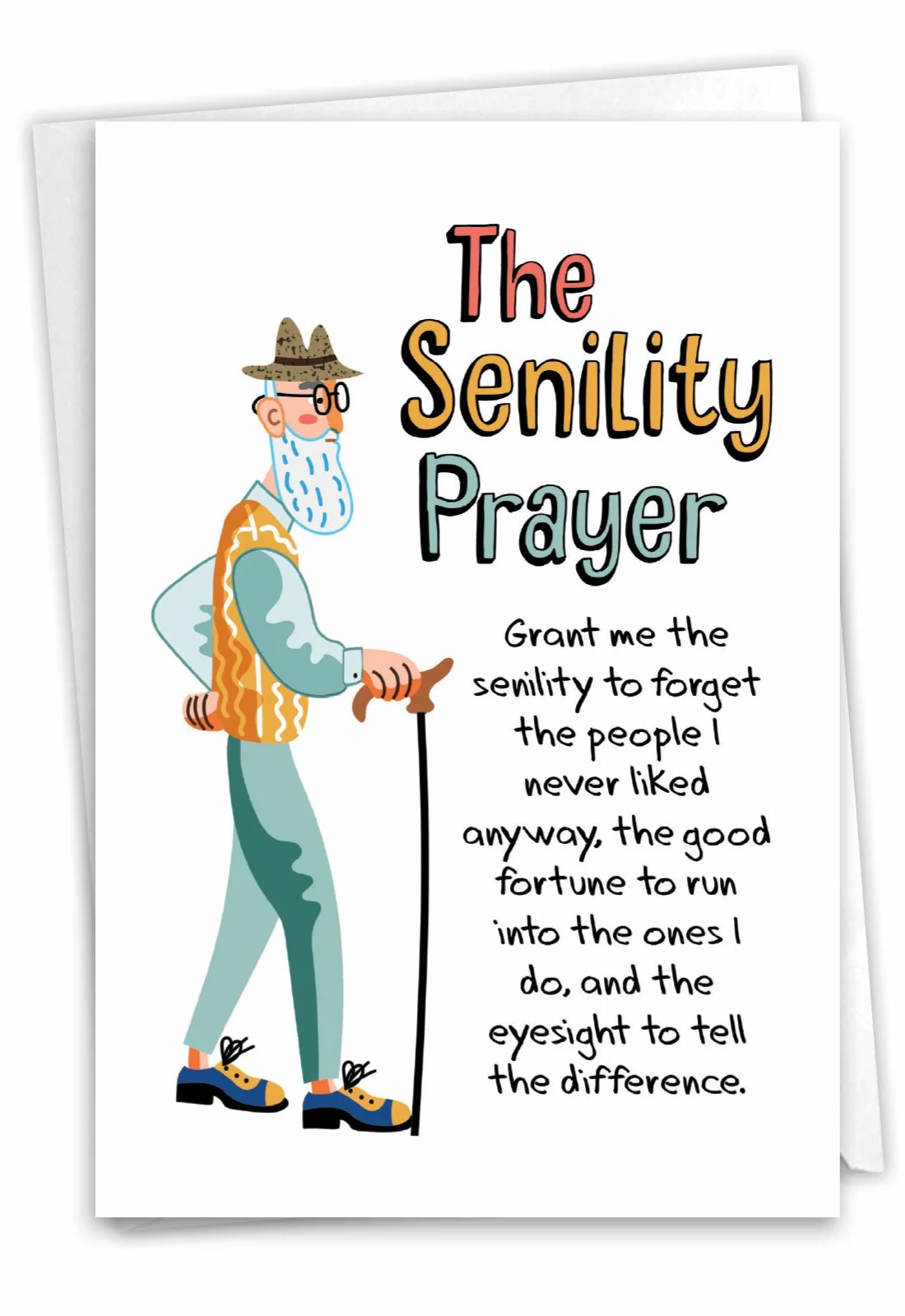
Contributed by Joe Bruno


Bobo wouldn’t have eaten the sweater if they’d served his dinner on time. (Just look at the clock for proof.)

Bugsy’s version of a luxury “SleepNumber” mattress gave Min sciatica and blueberry stains on her nightie
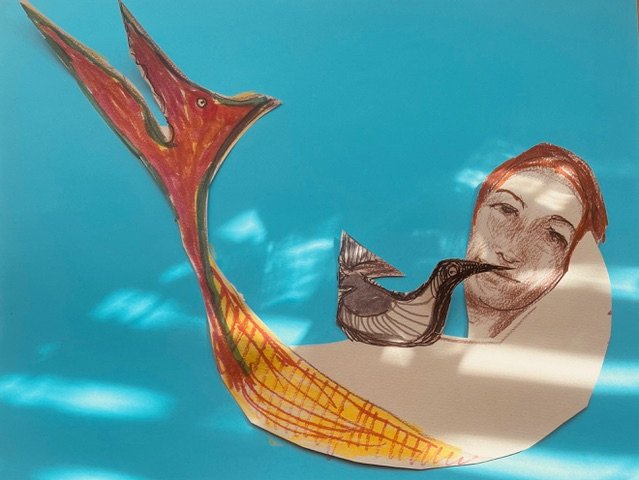
Gotham and the mermaid met in hydrotherapy

Brenner wished he had taken the elevator

Sadly, Barker’s well-coached dog paddle failed to qualify him for the junior swim team
Art and photos by Jane Hart


Art and photos by Sheila Benedis


Photos by Philip Monteleoni


Ice on the Hudson
Photos by Coco Eiseman
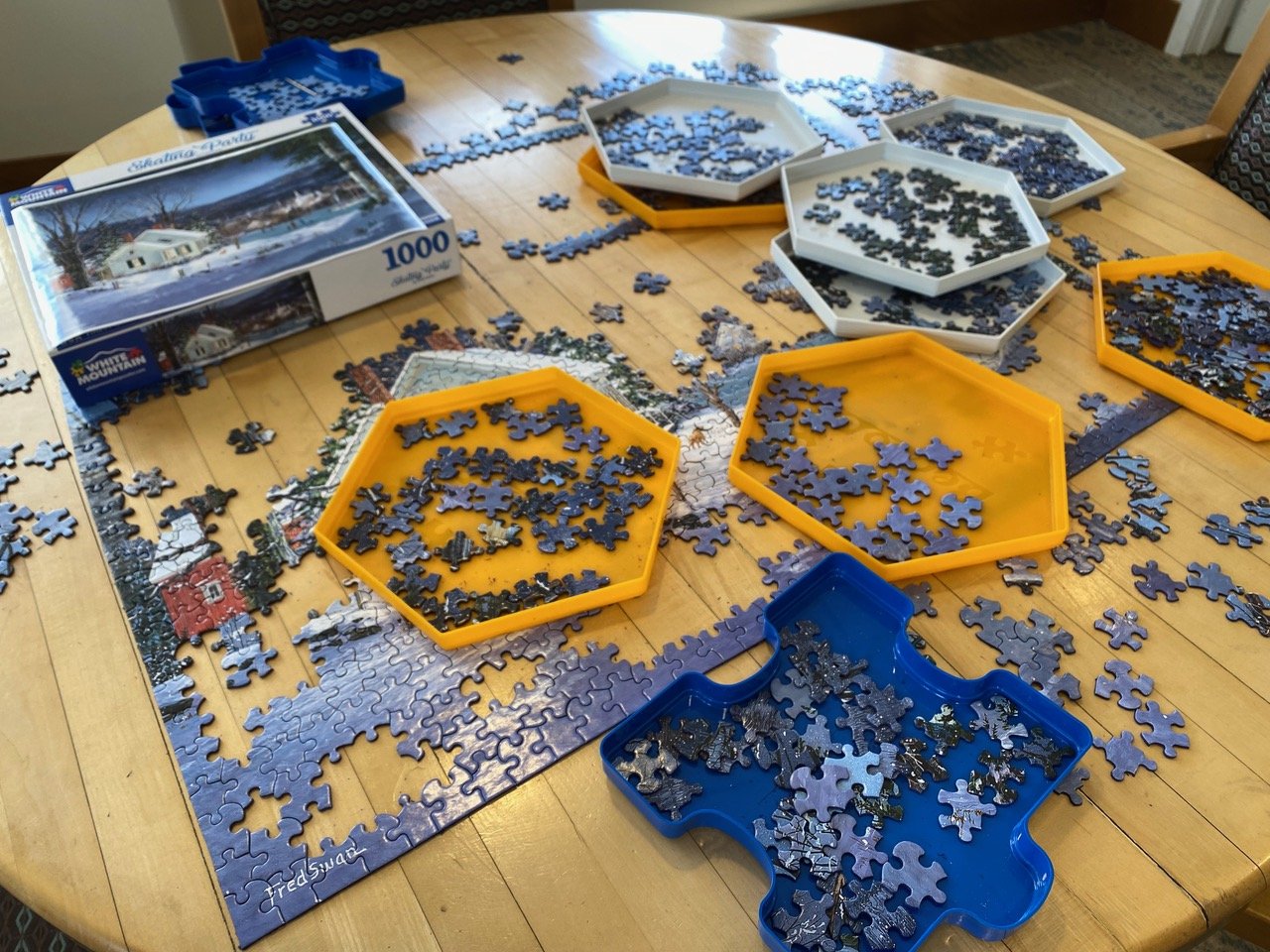
The Process
Photo by Sally Costa
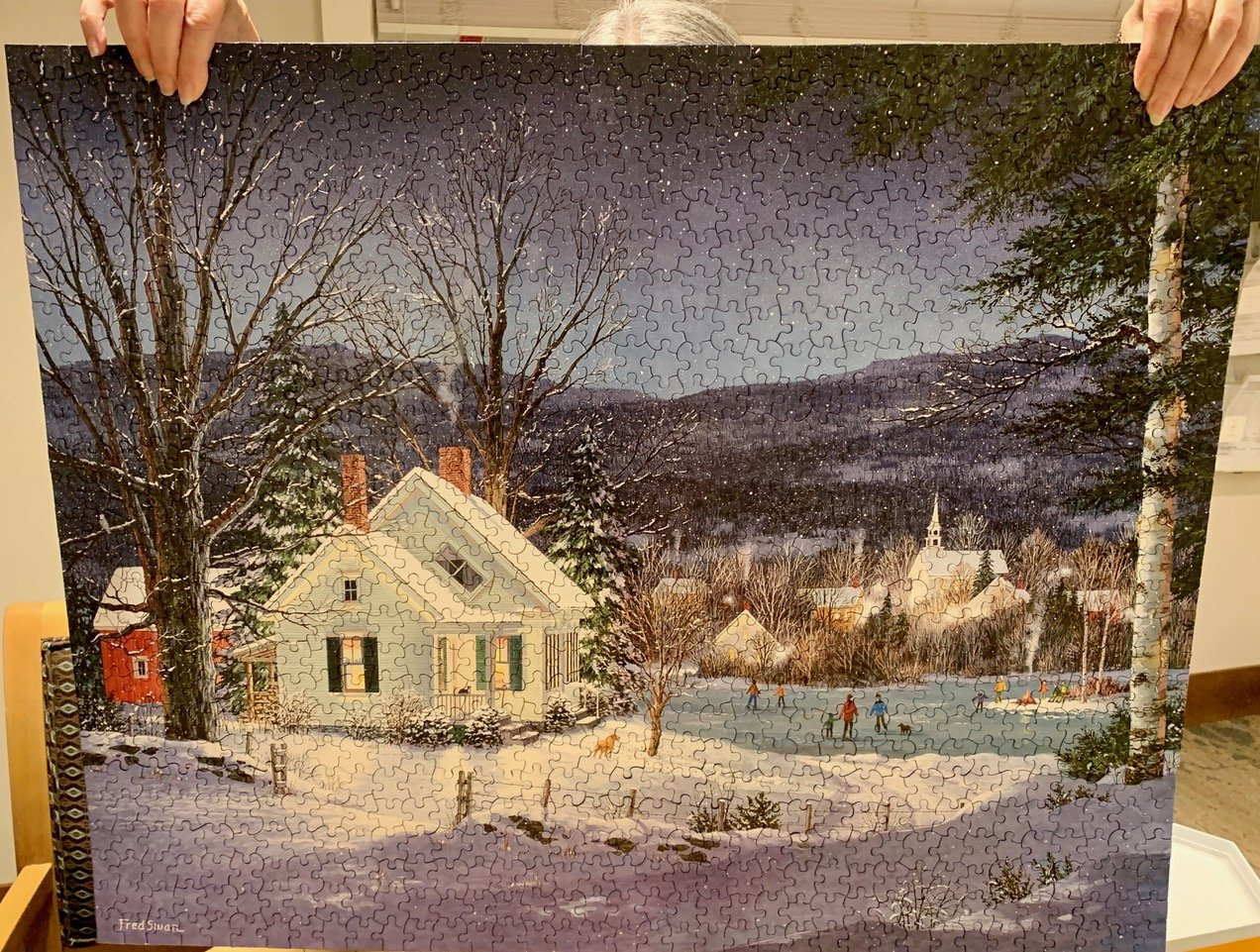
The Product
Photo by Harry Bloomfeld


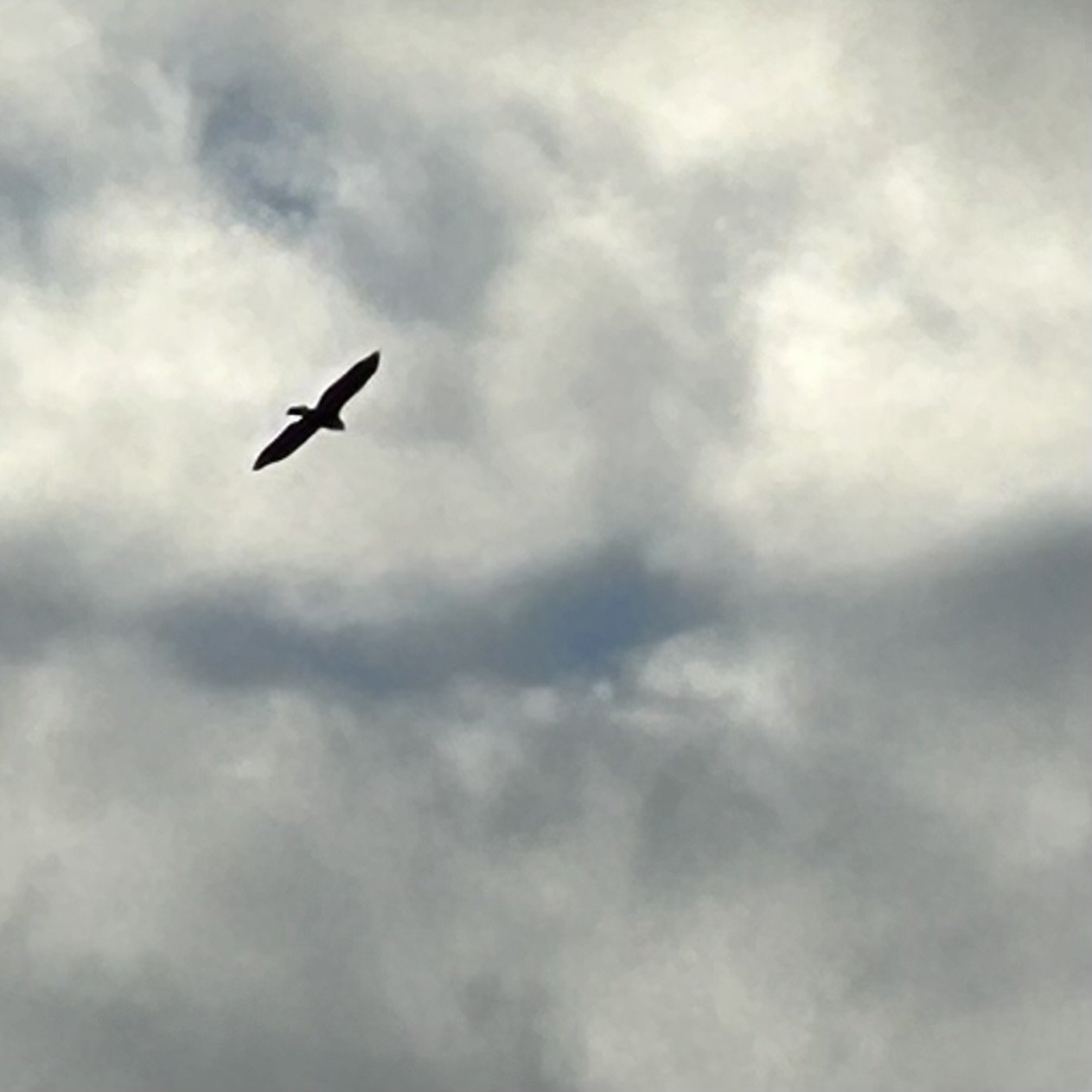
Eagle in Flight
Photos by Carolyn Reiss
Linda Mahoney and Hubert Herring traded in New York’s ice and cold for Hilton Head’s beaches. Good trade!

Hilton Head beach

Sea Pines Nature Preserve in Hilton Head, SC
Photos by Linda Mahoney
A hearty band of Kendalites braved the cold for a tour of Pleasantville’s Usonia Historic District whose houses were designed by students of Frank Lloyd Wright. Three houses were designed by Wright himself. The group was able to tour one of the Wright-designed homes, still occupied by its original owner, 100-year-old Roland Reisley. He discussed Wright’s approach to home design, including details in his own house, such as angles, geometric shapes, horizontal lines, and large windows, using materials such as wood and stone.
The Trip
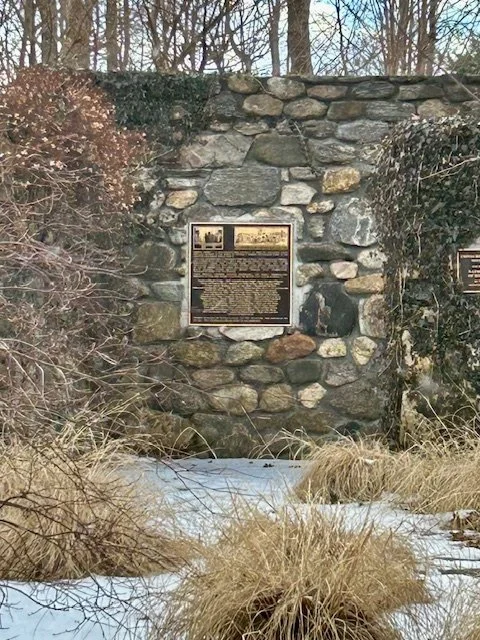
Welcome to Usonia, photo by Carolyn Reiss

Smallish and geometric shaped houses prevail, photo by Harry Bloomfeld
The People of the Trip

Roland Reisley standing in the living room of his Frank-Lloyd-Wright-designed home.

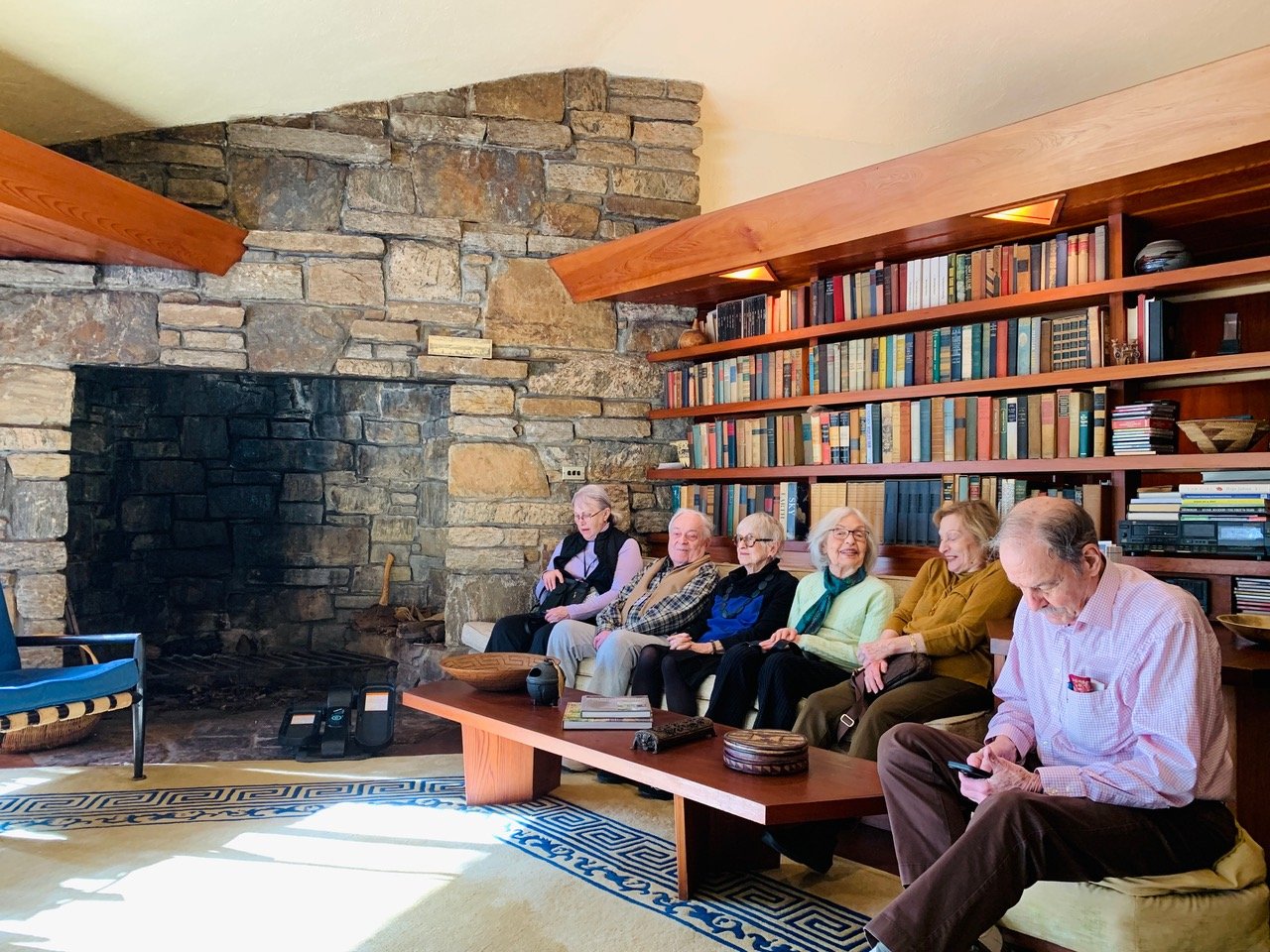
Photos by Harry Bloomfeld
Noted Features of Wright’s Designs

Wood and stone as materials, plus lots of large windows
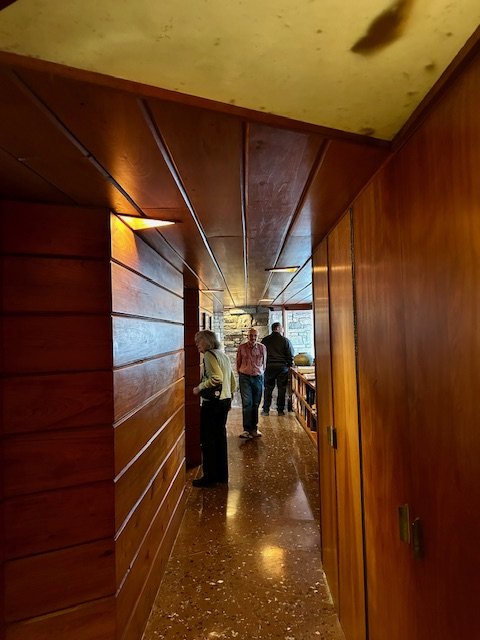
Narrow hallways
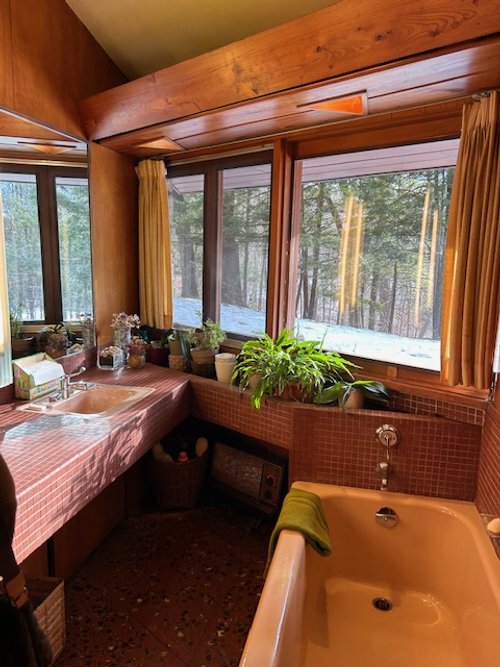
The bathroom includes the geometric design features
Photos by Carolyn Reiss


Goosebumps, known in medical parlance as piloerection, are caused by contractions in small muscles that are connected to hair follicles. This creates a depression on the skin’s surface, resulting in the hairs standing upright. Its name comes from the resemblance of skin to that of a plucked bird.
It is believed that this is an inherited trait from our prehistoric ancestors. They had thicker coats of body hair, which created insulation and kept the body warm when stimulated. While our layer of body hair is too thin to make this insulation process effective, the muscle contraction and increased electrical activity does help to stimulate the body, which is why goosebumps that are caused by the cold go away when you warm up.
Goosebumps are also associated with a wide range of emotional situations. People talk about getting goosebumps when scared, or while listening to rousing songs or watching a high-stakes sporting event. Goosebumps can be triggered by the subconscious release of the testosterone hormone. When high levels of stress occur, whether positive or negative, testosterone is released to help in the fight-or-flight decision-making process. This cues goosebumps, and we start to feel our hair prick up.
Goosebumps may be a little mysterious, but generally speaking, when you feel them cropping up, all you need to do is take a deep breath, relax a little, and maybe put on a sweater.
Source: interestingfacts.com
Contributed by Jane Hart


The world would be inhabited in very different ways if not for air conditioning. The first place to ever employ it was Brooklyn’s own Sackett & Wilhelms Lithography and Printing Company, which is still standing in East Williamsburg. On July 17, 1902, engineer Willis Haviland Carrier designed the first AC, to help with the humidity issues that were throwing off the printers’ schedules. He succeeded, and the rest is cold-air history.

On December 21, 1913, Arthur Wynne published the first crossword puzzle in the pages of the New York World. Although other word puzzles existed, Wynne’s version used several innovations that are easy to recognize in the form over a century later. Wynne called his invention a “Word-Cross Puzzle,” but a typesetting error reworked it as “Cross-Word,” as it’s been known ever since.

By Kenneth C. Zirkel - Own work
This SoHo building still stands, the site on March 23, 1857 of the world’s first passenger elevator. It was installed by a man with a familiar name—Elisha Graves Otis—who had been inspired to build the device by the challenges of lifting debris at the bedstead factory he managed in Yonkers. New York City, and every other city around the world, was forever changed by the innovation he brought to the Haughwout Emporium.
Source: “Made in NYC,” City Guide, March 20, 2024 Contributed by Bobbie Roggemann

Contributed by Barbara Bruno

Contributed by Don Butt
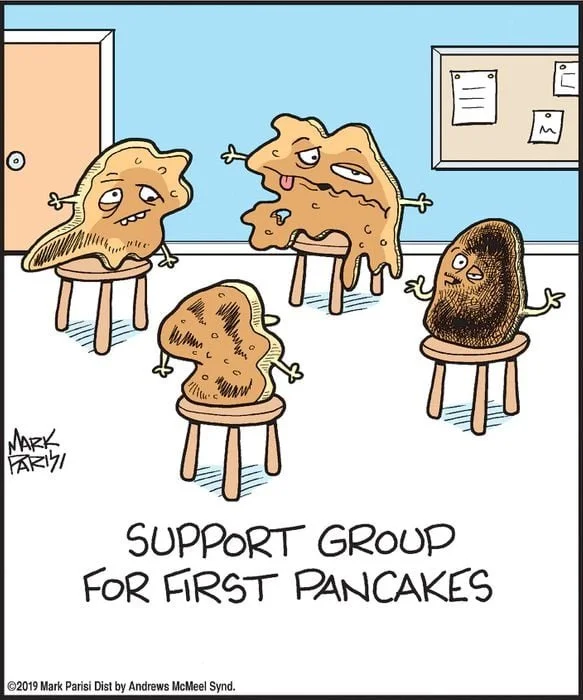
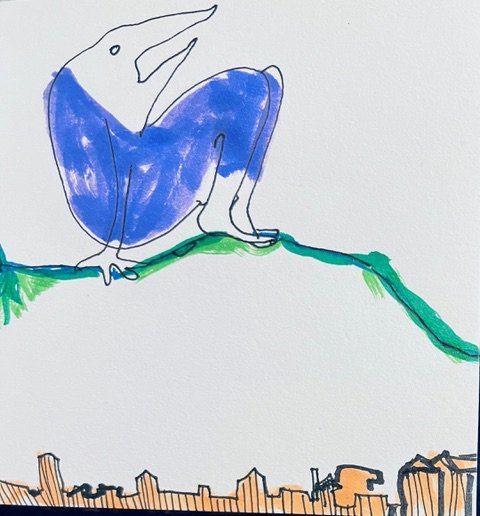
Krindle felt a sudden fear of falling

Arnold figured out a card chair to go with his card table

Corbin still held the record for uninterrupted screen time

Wendy was less than thrilled with her pas de deus partner

Nate loved his swim before work
Art and photos by Jane Hart

Art and Photo by Sheila Benedis



Photos by Peter Sibley

Photo by Carolyn Reiss

Photo by Edward Kasinec

Photo by Naomi Gross
An afternoon tea is one of life’s great indulgences. No, we’re not talking pinkie fingers at ridiculous angles or noses held high in the air. A proper afternoon tea is soothing, relaxing, and yummy. Fifty-six Kendalites signed up. And Fred, Christy, Jorge, and their staff did themselves proud when, at 2pm on January 23, the doors of the FDR opened to an honest-to-goodness tea room—gracious in design and thoughtfulness. There was a wishing tree borrowed from Lunar New Year traditions to get us in the mood. A CD provided tranquil background harp music. The table settings and decorations were exquisite, meticulously thought out to provide essentials for the menu while maintaining the relaxed graciousness of the event. And the menu met all requirements, leaving basic behind and soaring up there with the greats: Brown’s Hotel and The Savoy. First off: three tea choices in pretty pots, brought around by lacy gloved staff members. Real clotted cream, served in individual containers, as was the jam. Fred outdid himself by personally making the scones. And Executive Chef Eddie Diaz did the same with the Madeleines. Tea sandwiches met the standards of any British tea salon. And the delicious pastries were perfection. There were even ladies in hats! However, this was far from a ladies-only event. There were plenty of gentlemen who appreciate what Americans call “A High Tea.”
The whole thing was the brainstorm of Bobbie Roggemann. The planning was suberb and the execution out of this world. The perfect remedy to the grim single-digit temperatures outside. Yay, Bobbie!


Photo by Sally Costa


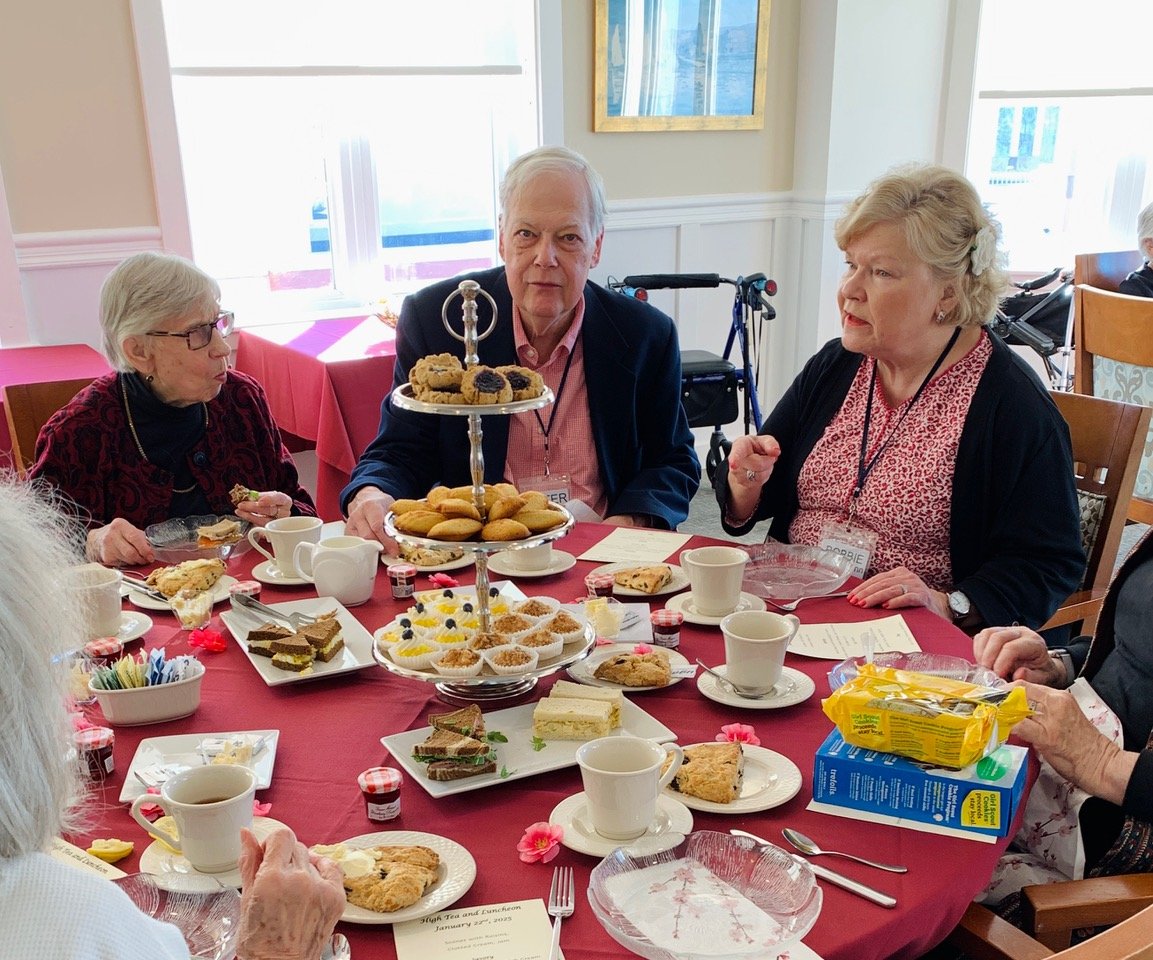
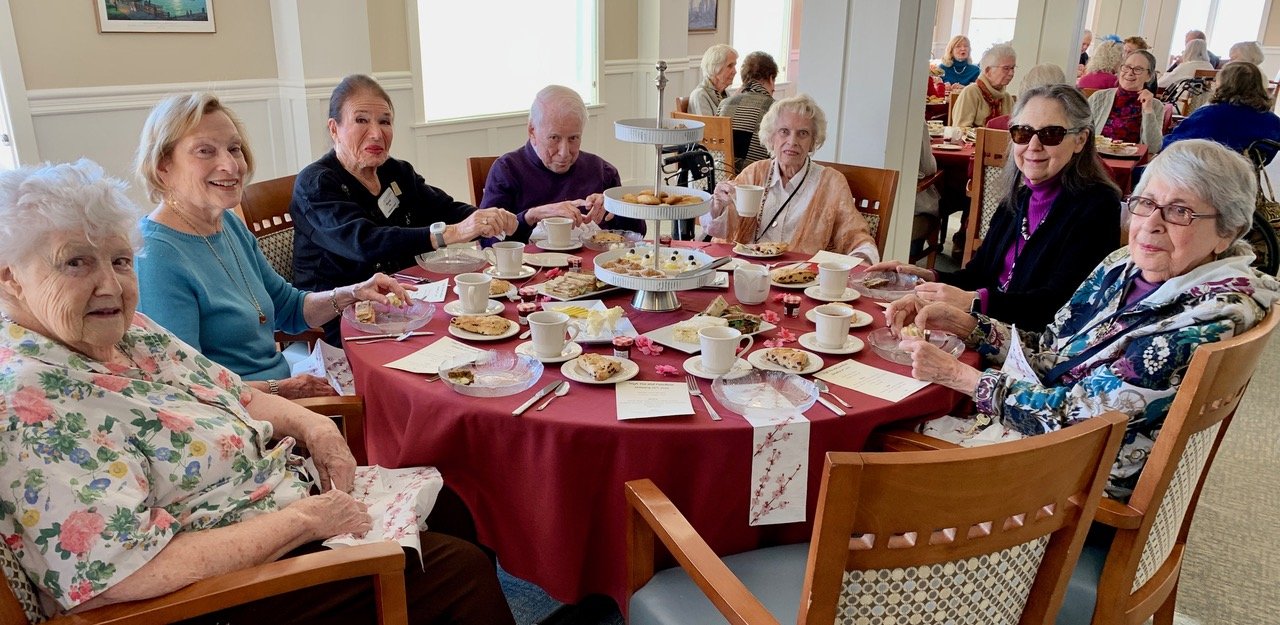


The “Wishing Tree”—write your anonymous wishes for the New Year and hang them on the tree.
Photos by Harry Bloomfeld (with one noted exception)

Bioluminescence, the strange biology that causes certain creatures to glow, is usually found at the darkest depths of the ocean where the sun’s light doesn’t reach. While these light-emitting animals seem otherworldly, the trait is actually pretty common—in fact, you’re probably glowing right now.
According to researchers at Tohoku Institute of Technology in Japan, humans have their own bioluminescence, but at levels 1,000 times less than our eyes can detect. This subtle human light show, viewable thanks to ultra-sensitive cameras, is tied to our metabolism. Free radicals produced as part of our cell respiration interact with lipids and proteins in our bodies, and if they come in contact with a fluorescent chemical compound known as fluorophores, they can produce photons of light. This glow is mostly concentrated around our cheeks, forehead, and neck, and most common during the early afternoon hours, when our metabolism is at its busiest. At such a low level, human bioluminescence likely isn’t an intentional product of evolution as it is for deep-sea fish, fireflies, and many other animals. And most other bioluminescent creatures rely on a compound called luciferin (Latin for “light bringer”)—which humans lack for their light show. Fortunately, we have unique ways of making light that are all our own.
Source: interestingfacts.com
Contributed by Jane Hart
As of January 21, 2025, the entrance to Kendal from the garages has changed. It used to be that, until 9pm, all one needed was a wave of the hand to get into the garage-floor elevator lobbies from the garage. After 9pm, one had to use one’s fob, along with the wave. No more! Now you must use the fob and wave all the time.
The cry has gone out: I don’t alway remember my fob! But you do usually have your house keys. Aha! Jeff O’Donnell has come up with an idea:

But wait! My Pet is on my key chain. I might set it off! Jeff considered that. The fob, with its name plate, shields the Pet from accidental pressure.

Just a thought . . .

You probably know the name, but do you recognize this Manhattan-made dessert? Baked Alaska started at Delmonico’s in 1876. The name honored the $7.2 million purchase of Alaska a few years prior—maybe taking inspiration from the climate of the new territory.

It started out in Williamsburg as the Brooklyn Flint Glass Works before moving to 73 Hudson St. in Lower Manhattan. In 1868, Corning Glass Works moved upstate to Corning, NY, and changed names again. Until recently it made Pyrex, a fixture of kitchens around the world. The company is still going strong today, as a major supplier of smart phone glass.
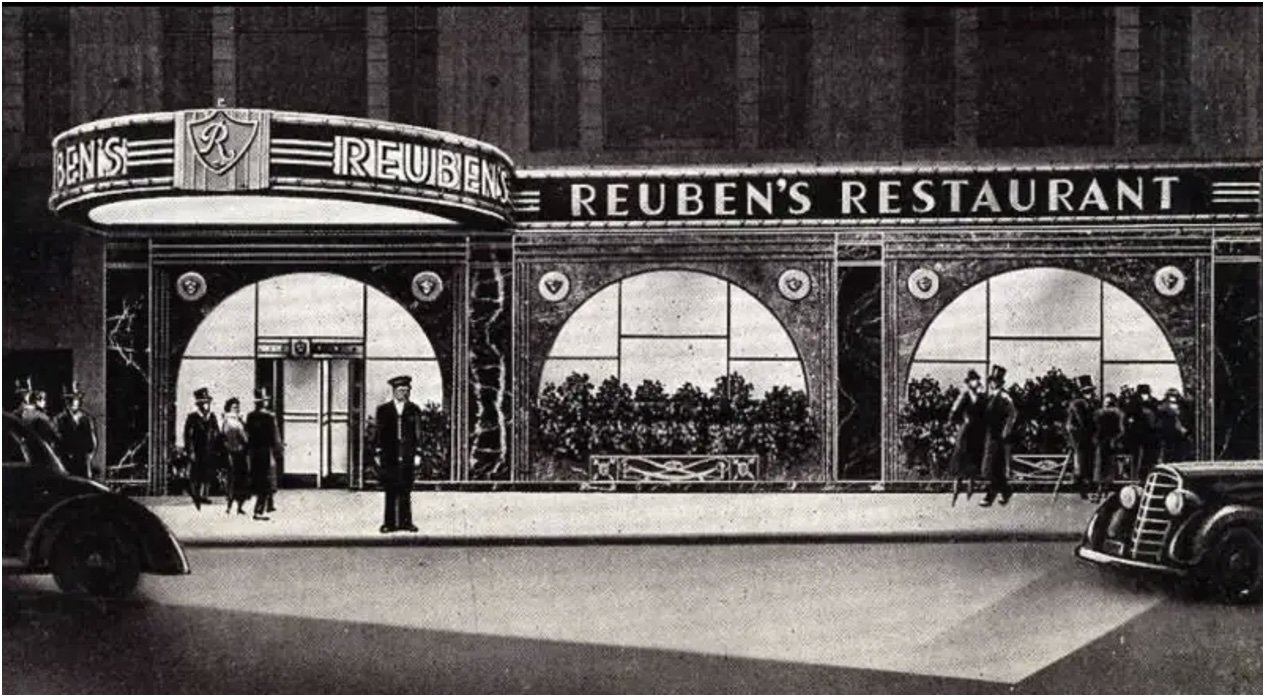
The origin story of this classic sandwich is somewhat contested, but we’ll run with a highly plausible rendition: Arnold Reuben (1883-1970) of Rueben’s Restaurant (1908-2001) created it in 1914 in a late-night improvisation. The first customer was a Charlie Chaplin leading lady, Annette Seelos, who could have gone down in history with her name on menus everywhere. But Arnold Reuben thought better of it, and the rest is sandwich history.
Source: “Made in NYC,” City Guide, March 20, 2024
Contributed by Bobbie Roggemann

Source: Awesome Science
Contributed by Jane Hart

Contributed by Don Butts


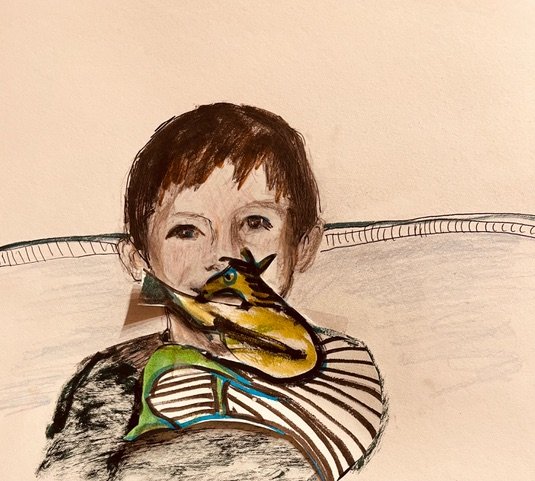
The newest member of the junior hockey team was small but mighty

Arlene was the queen of oat cuisine

Roger and Maude were excellent business partners, even though they couldn’t see eye to eye
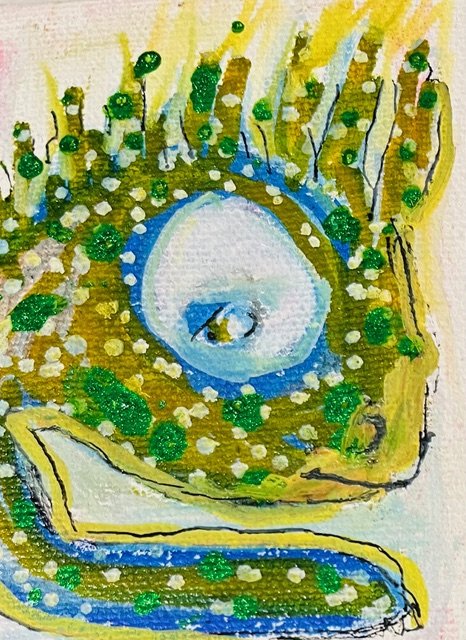
Rosella wondered if she was wearing too much glitz—or not enough

In meditation, Melissa tried to empty her mind
Art and photos by Jane Hart


© Kendal on Hudson Residents Association 2015, 2016, 2017, 2018, 2019, 2020, 2021, 2022 all rights reserved. Please do not reproduce without permission.
Photographs of life at Kendal on Hudson are by residents.