Bring your computer, phone, or tablet and your questions!
Friday, October 25, 10 am in the Gathering Room
by the Computer Committee
With added help by Pace University students!


Bring your computer, phone, or tablet and your questions!
Friday, October 25, 10 am in the Gathering Room
by the Computer Committee
With added help by Pace University students!

Picture originally published as an illustration to “Le Kinétoscope d'Edison” by Gaston Tissandier in La Nature, 1894.
Well, not quite a movie theater as we know them today, but the first commercial motion picture house opened in Manhattan on April 14, 1894. The location was the southeast corner of 27th Street and Broadway (1155 Broadway, which is the site of a modern hotel today). The venue had 10 Kinetoscope screens and you could watch 5 films for a quarter (the Kinetoscope was an early motion picture device, developed at Edison labs and designed for a single viewer to watch the movie through a peephole window.)

Over a billion people have lost their lives to tuberculosis over the last couple of centuries. Staten Island can claim credit for stemming the tide. In 1951, Dr. Edward H. Robitzek began to give the antibiotic isoniazid to patients at the Sea View Tuberculosis Hospital. The results were miraculous, enough that within a decade the last patient had left (and the bulk of the compound fallen into decay).

The international chain Benihana seems like it would have a Japanese origin, but it actually started off in New York City. The first location was on West 56th Street in midtown, where Hiroaki Aoki invested the proceeds from a Harlem ice cream route in 1964. The company now boasts more than 100 locations around the world.
Source: “Made In NYC,” by Ethan Wolff, March 2024, City Guide New York
Contributed by Bobbie Roggemann

Jane Hart is known for her portraiture, but her real love and specialty is portraits of beloved pets. Here’s her latest, held by a happy owner.
Is it good if a vacuum really sucks?
Why is the third hand on the watch called the second hand?
If a word is misspelled in the dictionary, how would we ever know?
If Webster wrote the first dictionary, where did he find the words?
Why do we say something is out of whack? What is a whack?
Why does “slow down” and “slow up” mean the same thing?
Why does “fat chance” and “slim chance” mean the same thing?
Contributed by Bobbie Roggemann
It Can Take 50 Years for a Saguaro Cactus to Grow One Arm

It’s not easy to be a cactus — surviving in a scorching environment with little water is a pretty tough task for most plants. Some cacti, like the saguaro, have adapted by taking their sweet time to grow. In fact, saguaro cacti often reach just 1.5 inches in the first 10 years of their lives. Growing their iconic arms — often featured in old Western films and desert art landscapes — can take 50 years, or even up to 100 years in drought-like conditions.
Many saguaros do not flower until they reach 35 years old. And although they produce some 40 million seeds over their lifetime, odds are that just one of their cacti descendants will survive to adulthood after battling arid conditions, trampling, human interference, and invasive species that threaten their environments. Reaching their maximum size — upwards of 45 feet tall and more than 2 tons in weight — can take 175 to 200 years, close to the end of a saguaro’s lengthy lifespan. But there is perhaps one consolation involved in that long journey: Saguaros are the largest cactus species in the US.
These slow-growing giants are found wild only in the Sonoran Desert, which stretches from southeastern California across southwestern Arizona and into Mexico. Despite their vulnerabilities, saguaro are important plants in the Sonoran ecosystem, providing fruit for birds, nectar for bats and other pollinators, and superb nesting spots for wildlife — which is why these colossal cacti are legally protected native plants in Arizona.
Source: interestingfacts.com
Contributed by Jane Hart

Contributed by Donald Butt


Contributed by Barbara Bruno

Contributed by Donald Butt

Garrett thought the new ornithology assistant was brilliant

Little Munjack’s all-terrain vehicle took him everywhere

The struggling new dance troupe heard their cue, but they couldn’t find the stage

When Luca Brasi sleeps with the fishes, they keep him up ‘til all hours

After the prince left, Cinderella opened a successful dragon daycare
Art and photos by Jane Hart

Art and photo by Sheila Benedis



Photos by Carolyn Reiss

Photo by Mimi Abramovitz

Staff and residents joined together in the Walk to End Alzheimer’s.
Photo by Harry Bloomfeld

Photo by Hudson Independent
Superintendent of Schools Raymond Sanchez has excited us with his talks on matters curricular and extra-curricular, as well as community outreach efforts in the Sleepy Hollow/Tarrytown schools. And The New York State Council of School Superintendents has noticed, naming Sanchez this year’s New York State Superintendent of the Year.
To learn more about his work and the honor bestowed, click on the button below.

TV commercials are a $60 billion dollar a year industry in the US alone. The business began on July 1, 1941, ahead of a Phillies-Dodgers game aired by NYC’s WNBT from Ebbets Field. Bulova was the first advertiser — they paid $9 for the privilege.
Why that date? The FCC had issued commercial licenses to 10 stations with a start date of July 1, and New York’s WNBT had 1 of them. They were the only station to take advantage of the new rules on that date, giving New York dibs on the beginning of TV advertising.

You might think gin rummy goes back to medieval times — or at least has a history so old that no one can trace the beginnings — but the game comes from a particular time and place, Brooklyn in 1909. Elwood Thomas Baker (1854-1938) and his son Charles Graham Baker (1883-1950) came up with the game, which has gone on to become one of the most popular card games in the world.
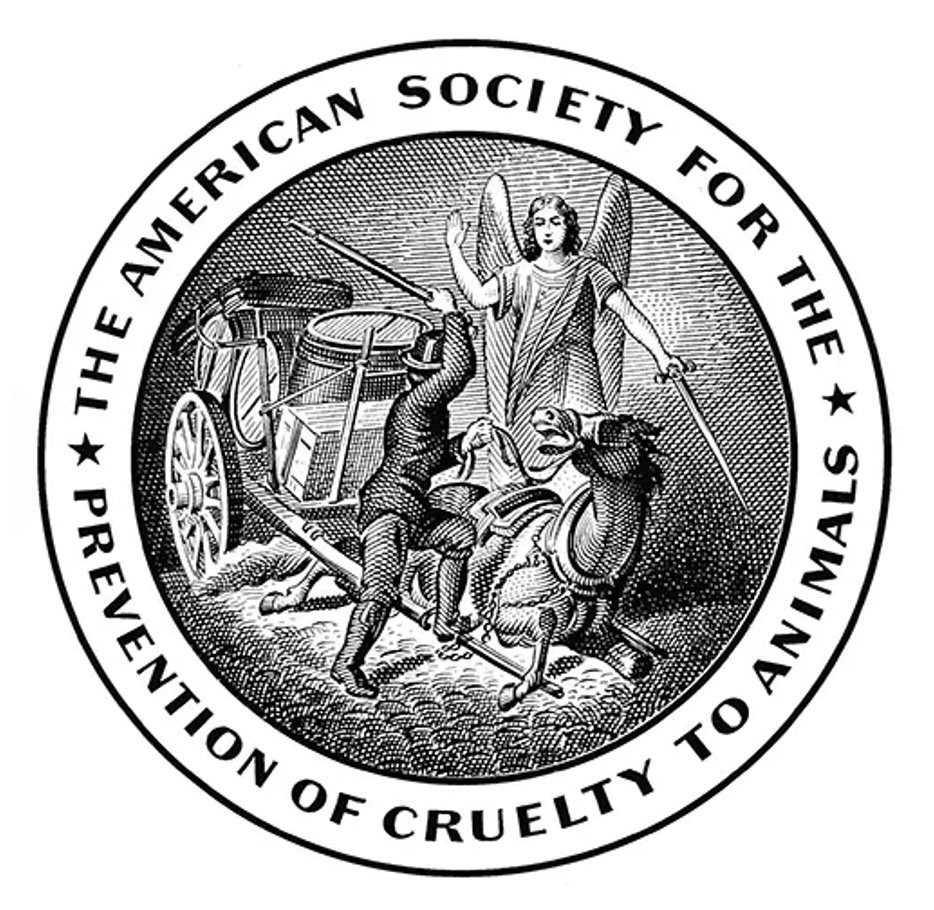
Two million Americans are members of the ASPCA, which got its start as the American Society for the Prevention of Cruelty to Animals on April 10, 1866. NYC-born Henry Bergh founded the organization in New York, where it has remained headquartered ever since, as America’s first humane society.
Source: “Made In NYC,” by Ethan Wolff, March 2024, City Guide New York
Contributed by Bobbie Roggemann
My friend said she wouldn’t eat cow’s tongue because it came out of a cow’s mouth. I gave her an egg.
Once upon a time there was a King who was only 12 inches tall. He was a terrible King, but he made a great ruler.
My friend Jack says he can communicate with vegetables. That’s right . . . Jack and the beans talk.
I want to tell you about a girl who only eats plants. You probably have not heard of herbivore.
I was struggling to understand how lightning works, and then it struck me.
Six cows were smoking joints and playing poker. That’s right. The steaks were pretty high.
I went to the paint store to get thinner. It didn’t work.
Contributed by Mimi Abramovitz
In February 1645, during the First English Civil War, the Parliament of England created the New Model Army. This single, standing army consisted of 22,000 regularly paid, well-disciplined, and properly trained men, with promotion gained on merit. To enhance the cohesion of this force, every soldier was supplied with a standardized uniform, which included a red coat.
It wasn’t long before these soldiers were unofficially dubbed “Redcoats,” a name that stuck through many conflicts to come. British soldiers only stopped wearing red when the khaki uniform was introduced during the Second Boer War (1899-1902), but even today, red coats are worn by British soldiers on ceremonial duty. But why the color red? It may seem strange today, when camouflage is so commonplace in the design of military uniforms, that such a noticeable color was used on the battlefield, rather than green, brown, or khaki. But there were a number of reasons why red was chosen, including battlefield strategies and the simple need for a uniform that could be produced quickly and efficiently.

Red Coats Weren’t Designed To Hide the Blood of Battle
First of all, British soldiers didn’t wear red to hide spilt blood, either their own or that of their enemies. There is no evidence to support this often-repeated explanation, and it doesn’t make much sense anyway. Not knowing that you are bleeding isn’t particularly helpful, and hiding any evidence of injuries from the enemy isn’t of much benefit amid the chaos of the battlefield. Also, a bloodstain on a red uniform would likely appear as black rather than red.

Red Wool Was Commonplace and Cheap
The most prosaic reason for the color of the Redcoats’ iconic jackets was one of simple economics. Supplying a large standing army with uniforms could be a costly business. As it happened, red wool was commonplace, cheap, and durable. While some dyes, such as kermes and cochineal, produced a deep scarlet favored by the wealthy and powerful, the wool used in the standard infantry jacket was colored red with a cheaper, brownish-red dye derived from the root of the madder plant, which had been used by numerous civilizations dating as far back as ancient Egypt.

Red Uniforms Offered Battlefield Benefits
While camouflage uniforms are standard today, they wouldn’t have served much purpose on the battlefields of old, when infantrymen walked slowly into battle in ordered and obvious columns and lines. Guns were also highly inaccurate, making it difficult to target and hit a particular individual, no matter how easy they were to see. What’s more, having uniforms that blended into the environment would have actually been detrimental. For the generals in command, being able to see exactly where their soldiers were was vital in the smoke and chaos of battle (and also made it easier to spot deserters running from the fight). For the soldiers, meanwhile, red jackets made it easier to tell friend from foe on the battlefield, and in turn avoid friendly fire.

Red Signified Prestige and Power
Apart from the more practical reasons for the Redcoats’ distinctive jackets, there was also the issue of British pride to consider. It’s been theorized that red was a preferred choice due to it being one of Britain’s national colors: red, white, and blue. The three colors appear on the Union Jack, and, more specifically, on the St. George’s Cross — the national flag of England — which depicts a red cross on a white background. Eventually, the Redcoats themselves became a symbol of British rule both at home and abroad. The use of red by imperial soldiers over a period of nearly three centuries made the bright and distinctive uniform a powerful symbol of the British Empire.
Source: historyfacts.com
Contributed by Jane Hart

Contributed by Donald Butt


Contributed by Barbara Bruno


The work of Kendal artist Sheila Benedis will be featured in the FUTURES Exhibition at the ARTS WESTCHESTER GALLERY. The show kicks off with an Opening Reception from 3-5 pm on Sunday, October 13, and runs through January 17, 2025.
The ARTS WESTCHESTER GALLERY is at 31 Mamaroneck Avenue in White Plains.
Below is the artwork that Sheila has provided for the show.
Diversity poem
Representation of different faces
Different social and ethnic backgrounds
Each individual unique
Each sees the world in a different way
Respect values
Respect purpose
When different values are shared
Benefits for all
Diversity drives creativity and innovation
Activism enables diversity to thrive
Diversity

Art and photo by Sheila Benedis

The wisp of a shelter puppy filled out nicely

Cecile felt compelled to redo everything

Did and Helen’s robotic car allowed them both to be backseat drivers

Simon’s “acid reflux" turned out to be just the Balaban twins

The youngest royals enjoyed hanging out with common folk
Art and photos by Jane Hart

Family and friends: Bill Rakower, with daughter Dena and friends, celebrating his 105th birthday

Photo by Harry Bloomfeld

The blowing of the shofar is the sound of the New Year. L’Shanah Tova!
Photo by Carolyn Reiss

Photo by Edward Kasinec

The LP (long-playing record) was a major force in popular culture, shifting the way we consumed music from the song to the album and opening up fresh territory for creativity. LPs were also a major economic mover, responsible for 300 million units annually in the format’s heyday. CBS Laboratories (CBS Records logo is above) gets credit for the innovation, which took place at 485 Madison Avenue. Research scientist Peter Goldmark led the way, with the LP unveiled at a press conference at the Waldorf-Astoria on June 21, 1948.

It’s hard to believe that prior to 1849, this device didn’t exist. The safety pin is a New York City original, invented by Walter Hunt of New York City. He sold his patent for $400 to W. R. Grace and Company, which was headquartered in the city for many years before moving to Maryland.

Sure, there were baby buggies going way back, but the stroller design came directly from New York City. Charles Burton got the idea in 1848, with his innovation that you would push instead of pull—that’s a follow-up patent above. We all know what happened in the long run. (In the short run, New Yorkers found the device unwieldy, and Burton had to go to England, where the royal family’s interest in the “pram” led to eventual success.)
Source: “Made In NYC,” by Ethan Wolff, March 2024, City Guide New York
Contributed by Bobbie Roggemann
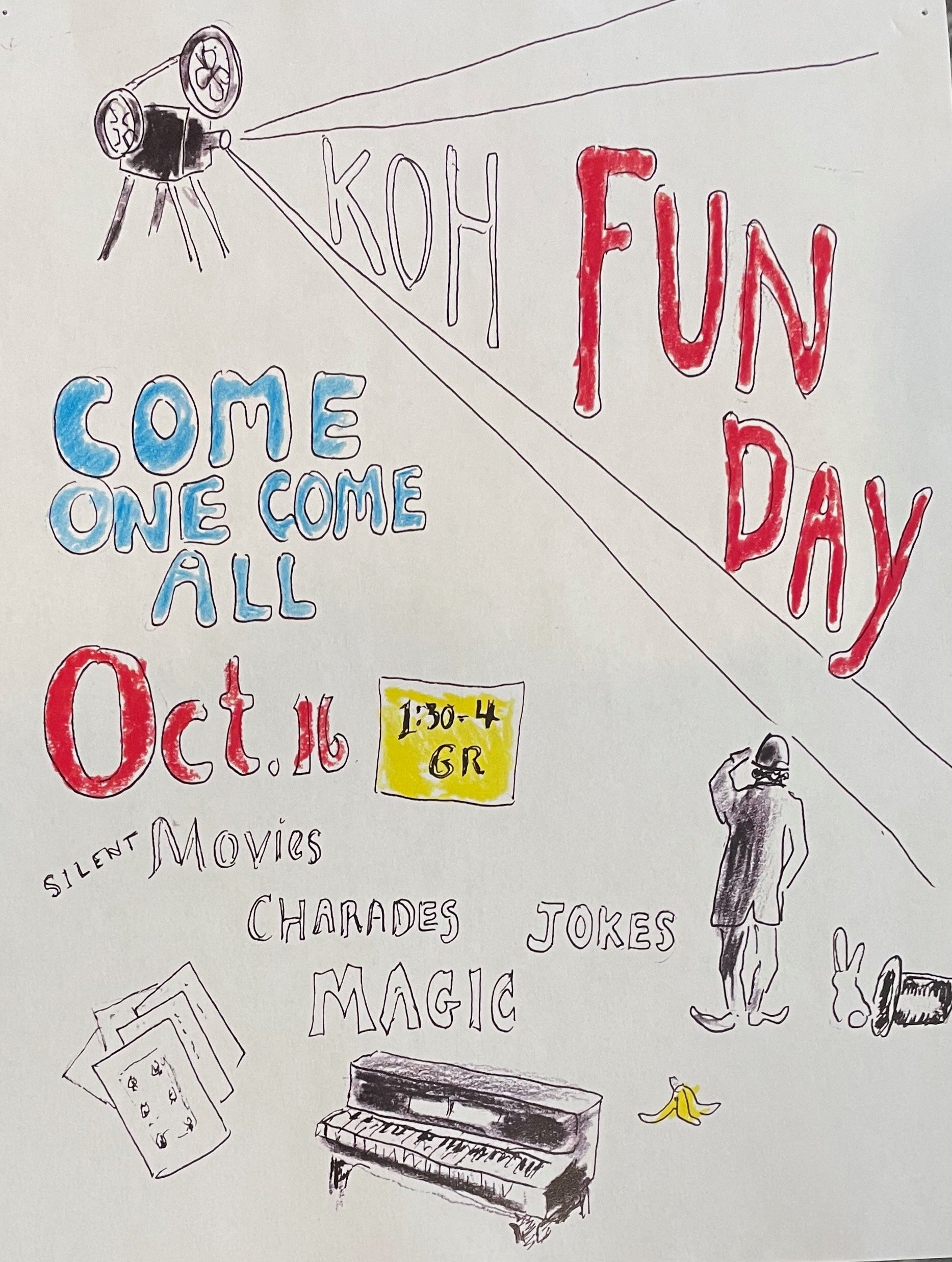
Put Aside the Troubles of the World!
Enjoy an afternoon with:

Did you know muffins spelled backwards is what you do when you take them out of the oven?
I was walking in the jungle and saw a lizard on his hind legs telling jokes. I turned to a local tribal leader and said, “That lizard is really funny!” He replied, “That’s not a lizard. He's a stand-up chameleon.”
I tried to come up with a carpentry pun that woodwork. I thought I nailed it, but nobody saw it.
Singing in the shower is fine until you get soap in your mouth. Then it’s a soap opera.
Then there was the time Fruit of the Loom took Hanes to court . . . it was a brief case.
How much does a chimney cost? Nothing, it’s on the house.
Contributed by Mimi Abramovitz
© Kendal on Hudson Residents Association 2015, 2016, 2017, 2018, 2019, 2020, 2021, 2022 all rights reserved. Please do not reproduce without permission.
Photographs of life at Kendal on Hudson are by residents.