
In and Around Kendal
Storm over the Palisades

Photo by Philip Monteleoni
Storm Debbie’s Damage in the Park


Photos by Mimi Abramovitz
Rockwood Park at Peace Again

Illumined pathway

Afternoon of a fawn
Photos by Edward Kasinec
Royalty Comes to the Terrace

Visit of a Monarch
Photo by Harry Bloomfeld
Out and About
Sleepy Hollow Connected

Each month, the Village of Sleepy Hollow puts out an online newsletter—Sleepy Hollow Connected—that outlines pertinent issues and happenings for the coming month.
You can also sign up for the newsletter to be sent each month to your email.
Lobster Night at Kendal
It happens once a summer: a night of hearty lobster feasting. Bring on the drawn butter! Bring on the accoutrement, aka, corn on the cob, cole slaw, and watermelon! Summer as summer should be. One party of lobster eaters, in particular, enjoyed the treat. And, they are:
Now that you’ve seen the “movie,” here’s a formal portrait of the evening’s fare:

Photo by Jennifer Gardy
Made In NYC: Brands, Trends, and Inventions That Began in the Big Apple
Entenmann’s

You know them for crumb cakes, loaf cakes, doughnuts, and chocolate-chip cookies, among more than 100 products in all. They can be found in most every grocery store in the country. Before they were a nationwide force, Entenmann’s was a Brooklyn original. The company’s first bakery was at 594 Rogers Avenue in Prospect Lefferts Gardens (the storefront is still there today). William Entenmann was the founder in 1898 — it remained a family business for more than 7 decades.
12 Steps

More than 2 million people across 180 countries are members of Alcoholics Anonymous. It dates its founding to 1935 and the commiseration between Bill Wilson (Bill W.) and Bob Smith (Dr. Bob). The 1939 publication of Wilson’s Alcoholics Anonymous: The Story of How More than One Hundred Men Have Recovered from Alcoholism (aka “the Big Book") gave the organization a major push. One of the foundational principles in the book is the 12 Steps, which also serve many other mutual-aid societies. They came out of a writing session at Bill Wilson’s home: 182 Clinton Street in Brooklyn Heights in December of 1938.
Bristol Myers Squibb

Bristol Myers Squibb had $45 billion in revenue in 2023, making it one of the top pharmaceutical companies in the world. Its origins are a classic New York story, as Dr. Edward Robinson Squibb formed his own laboratory in 1858 near the Brooklyn Navy Yard, where he had been employed. A brownstone at 149 Furman St. was the first Squibb lab, at least until a fire claimed it. William McLaren Bristol and John Ripley Myers later joined the fold, but Squibb’s name is still on the company 166 years later.
Source: “Made In NYC,” by Ethan Wolff, March 2024, City Guide New York
Contributed by Bobbie Roggemann
I Never Knew That
Michelangelo’s David Was Censored by Queen Victoria

The statue of David is among Michelangelo’s greatest masterpieces, but the sculpture isn’t without detractors. One such critic was none other than Queen Victoria, who reigned over England from 1837 until 1901, centuries after the original David was sculpted in 1504.
In 1857, a plaster replica of the David was shipped to Great Britain as a gift to Victoria from Leopold II, the grand duke of Tuscany. While the queen accepted the diplomatic gesture with grace, she was, according to some anecdotal reports, left aghast by the statue’s blatant nudity. The work was sent to be displayed at London’s Victoria and Albert Museum, where curators crafted a plaster fig leaf to obscure the reproductive organ that some found offensive. This leaf was attached with the help of “strategically placed hooks” that allowed it to be lowered in place in anticipation of any visits from female members of the royal family, as the statue otherwise remained uncensored.
The leaf — a replica of which can still be found in the museum’s collection — was last used during the first half of the 20th century, leaving the replica of David fully nude as Michelangelo initially intended.
However, even the original David statue endured years of unceremonious censorship. Upon its unveiling in Florence in 1504, the sculpture was covered with a garland made of 28 copper leaves to cover its nakedness, and the garland remained around David’s waist until at least the mid-16th century. Concurrently, around the year 1541, the Vatican implemented a “Fig Leaf Campaign” to censor nudity in art that it deemed offensive. At first, the Catholic Church sought to cover up the naked figures in Michelangelo’s painting “The Last Judgment,” as well as similar works. Thankfully, many of these once-censored works of art have since been restored to their original condition.
Source: Interestingfacts.com
Contributed by Jane Hart
For Your Funny Bone . . .


Contributed by Barbara Bruno


Contributed by Donald Butt

Art by Sheila Benedis
Climate Change Landslides

Art by Hart

One way or another, the Covington-Tharps were all related

The flowers Gwen could never grow in garden soil grew like gangbusters in a swatch of nylon Redi-Cut carpeting

Pistachio and Shamrock and the other precious green puppies were the joy of Sally's life

Mr. Ed was bummed when Jockey suddenly canceled his 70-year endorsement contrac

Hoyer complained about Cecelia-Ann’s recreational shedding until he was blue in the face
Art and photos by Jane Hart
In and Around Kendal
The Straight and Narrow to Kendal

Photo by Edward Kasinec
Sunshine Through Canadian Wildfire Haze

Photo by Carolyn Reiss
Ode to Kendal Planters

“The corn is as high as an elephant’s eye”

Serenity within

“Here’s lookin’ at you, kid”
Photos by Gerry Mahoney
Out and About
Carolyn Reiss and Mimi and Bob Abramovitz recently checked out one of the near-by treasures: The New York Botanical Gardens. (Note: The gardens, as you’ll see in the first photo following, are hosting a display inspired by the Alice in Wonderland story.)
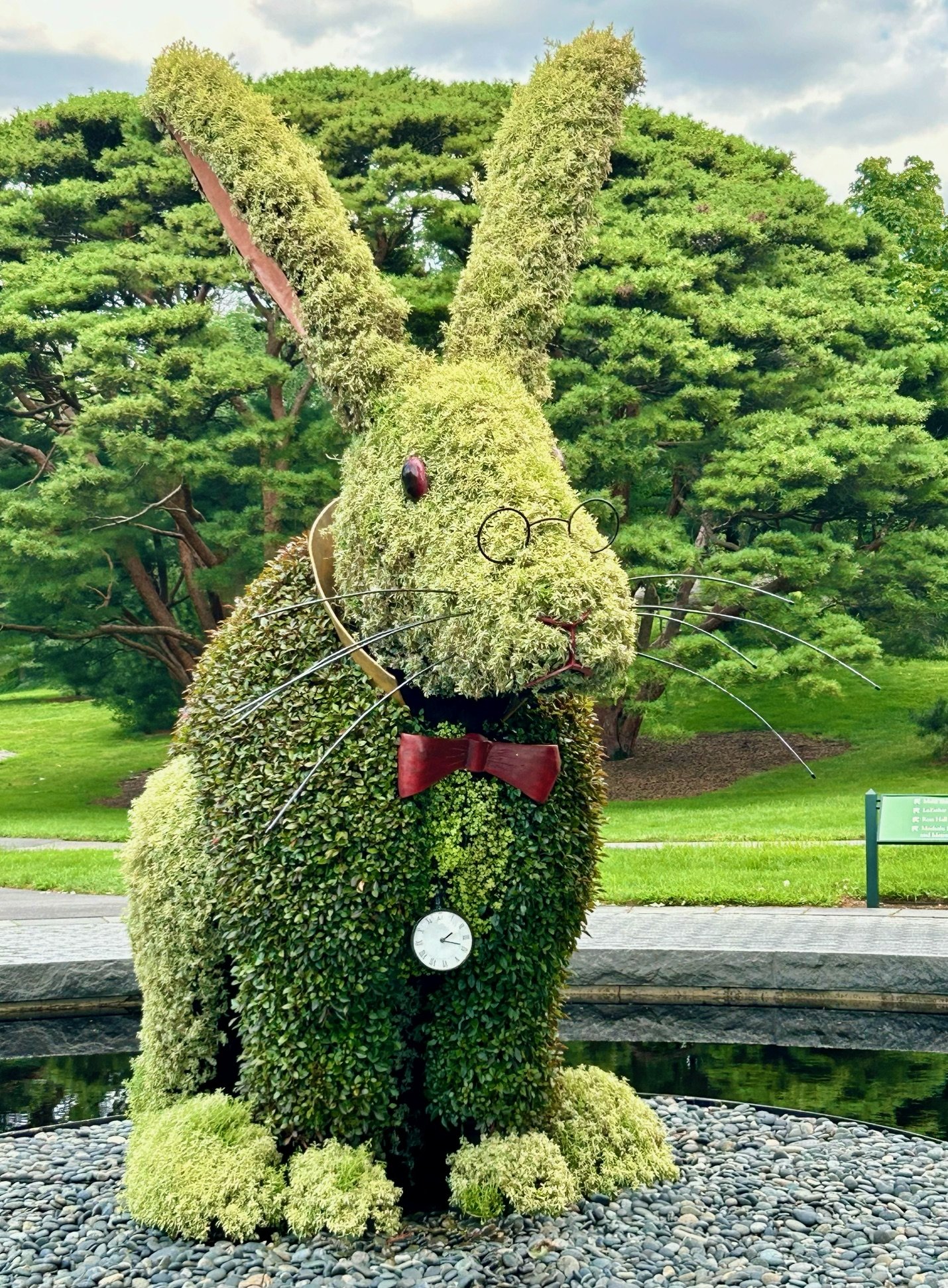
Alice’s rabbit in topiary
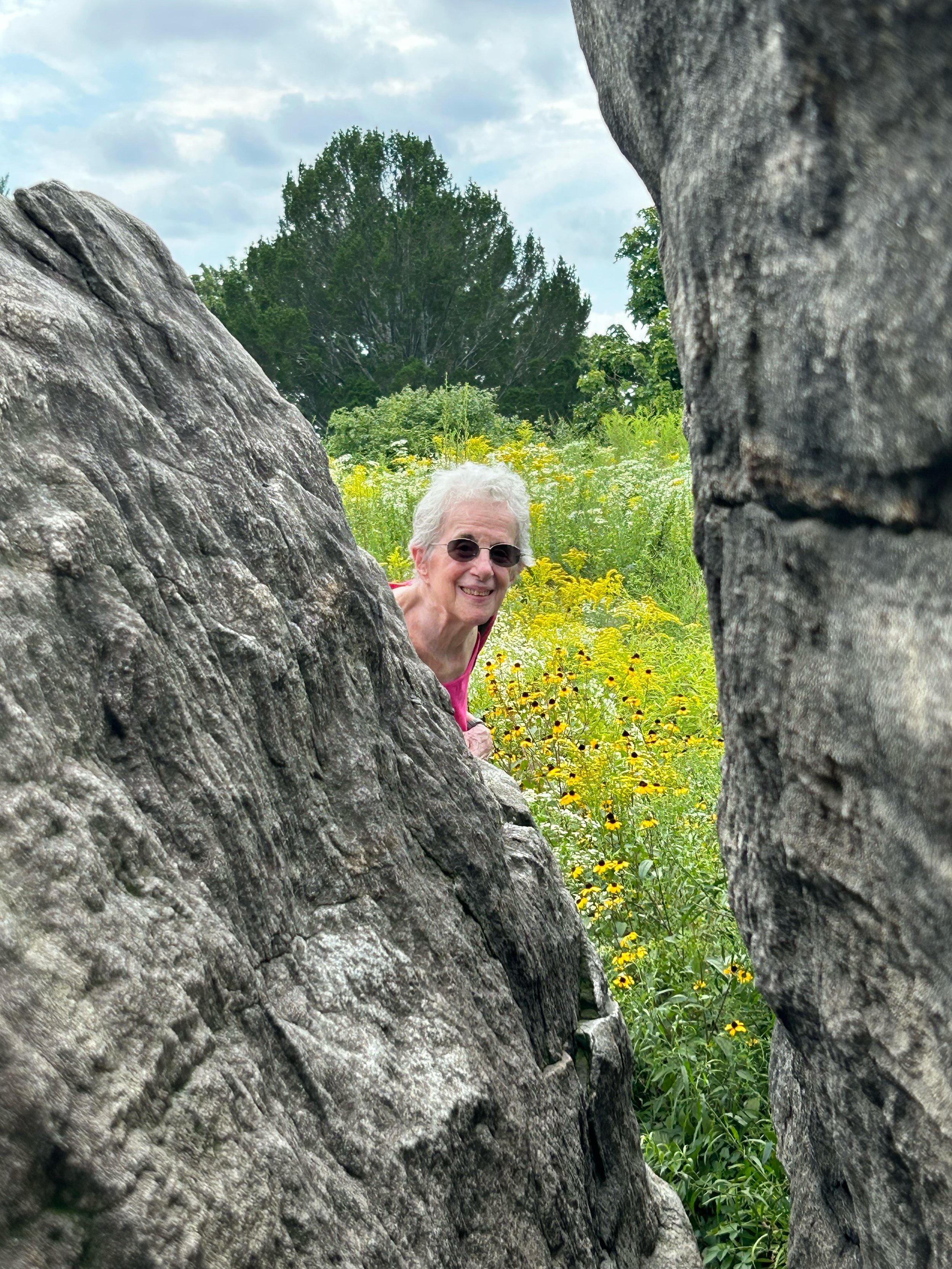
Exploring the native garden
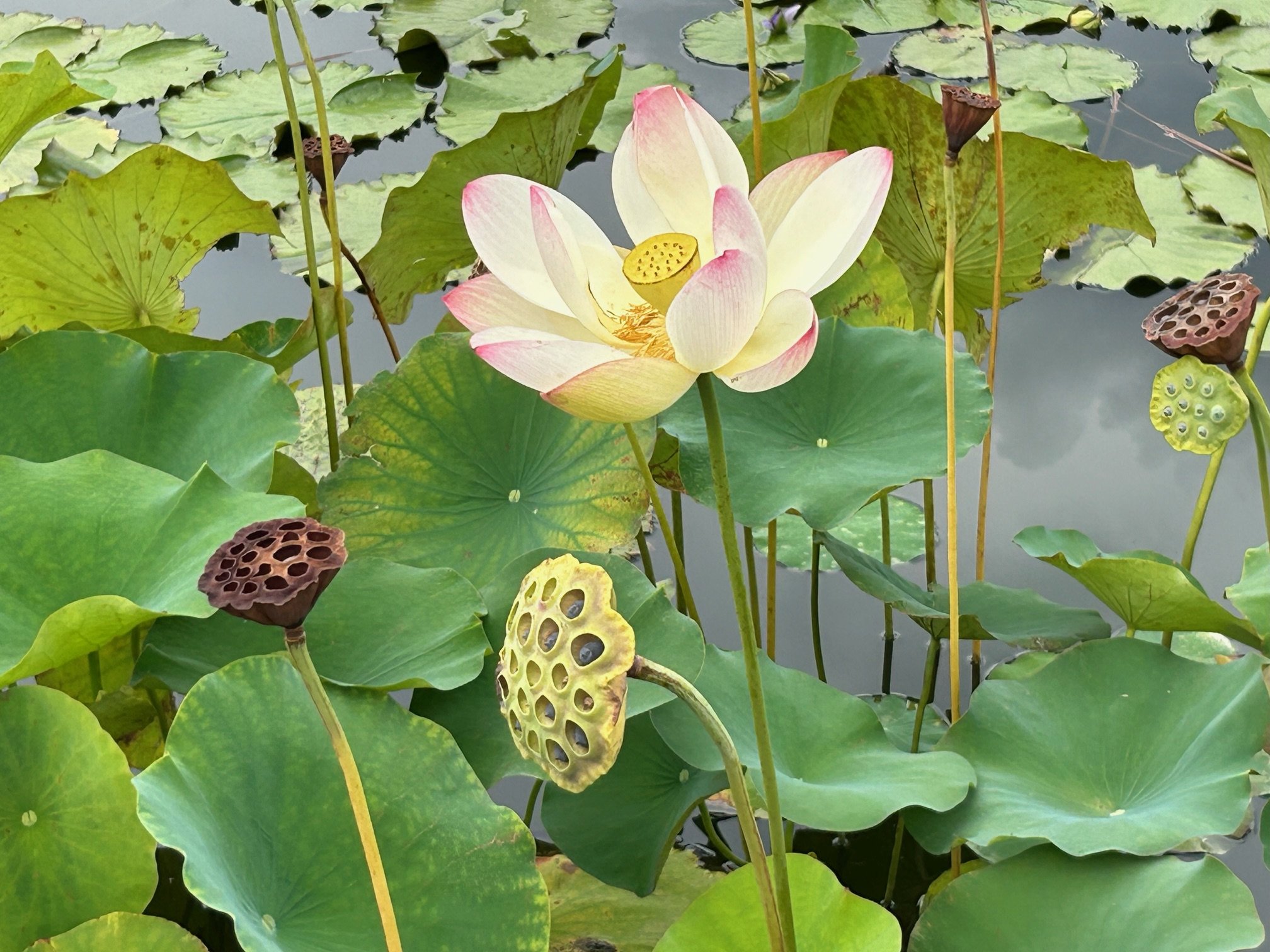
The lily pond in close-up

Stopping to smell the roses
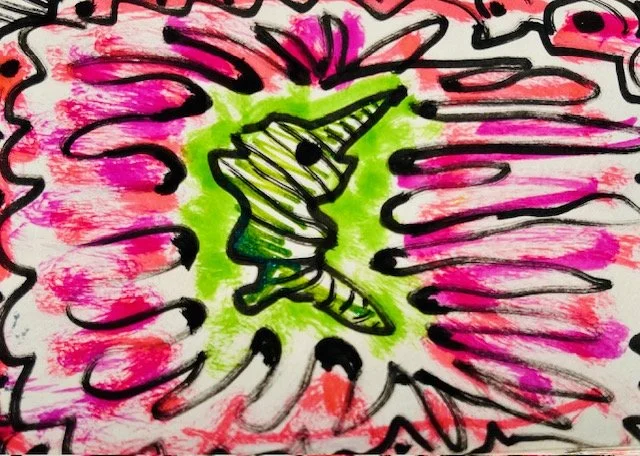
Resting by the Conservatory
Photos by Carolyn Reiss
The Artists of the Tuesday Morning Club
The Tuesday Morning Club keeps Kendal in lively decorations with the art projects they prepare for the walls and windows of the Bistro.

Ready for the summer sun

Tropical flowers for our tropical season
Photos by Sally Costa
Made in NYC: Brands, Trends, and Inventions That Began in the Big Apple
Minwax

Arthur B. Harrison invented a cotton waterproofing that became widely used in tunnels, bridges, and foundations. The company he launched is even better known. Minwax began in 1904 in Brooklyn, when Harrison developed the earliest version of “the Rolls-Royce of wood finishing products.” He eventually took over the business on his own, trademarking the name in 1914. It remained a family business for close to a century.
Schaefer Beer

Schaefer Beer seems like it should be a Milwaukee stalwart, but it started out in New York City — Manhattan to be specific. The F & M Schaefer Brewing Company, founded by Frederick Schaefer and his brother Maximilian, goes all the way back to 1842. Their first expansion was to Park Avenue and 51st Street, which is hard to imagine holding a brewery at any time. In 1916 they moved again, to bigger digs at the corner of Park and Kent Avenues in Williamsburg. They stayed on into the 1970s before finally leaving New York City for good.
Kickstarter

Although not the first crowdfunding platform, Kickstarter expanded the original concept to a wide range of creative projects. It remains a major force, responsible for more than 20% of the market. Some $7 billion has been pledged through the site. The company was born in New York City in 2009 and is still based in Brooklyn.
Source: Source: “Made In NYC,” by Ethan Wolff, March 2024, City Guide New York
Contributed by Bobbie Roggemann
To be continued . . .
I Never Knew That
How long is the world’s shortest commercial flight?

Passengers aboard Loganair Flight LM711, which travels 1.7 miles between the Scottish islands of Westray and Papa Westray, are airborne very briefly. On a good day, the world’s shortest commercial flight takes less than a minute — as little as 53 seconds, in fact. There’s no co-pilot, no lavatory, and only 8 passengers aboard the Britten-Norman BN-2 Islander aircraft. Tickets for the journey, which is made just 2 or 3 times a day, cost roughly $22. Both Westray and Papa Westray are part of the Orkney archipelago, a sparsely populated set of islands popular with adventurous travelers in search of a scenic journey that happens to include a record-setting flight.
Most of the world’s other shortest flights are likewise between islands. Those who’d prefer not to take the hour-long ferry connecting the Greek isles of Karpathos and Kasos can instead fly between them in just 5 minutes. Meanwhile, passengers flying the 12 miles from Sint Maarten (one of the Netherlands’ constituent countries) to Anguilla (a British Overseas Territory) can expect to be in the air for closer to 10 minutes.
Source: interestingfacts.com
Contributed by Jane Hart
For Your Funny Bone . . .


Contributed by Donald Butt


Contributed by Donald Butt

Contributed by Donald Butt

Art by Hart
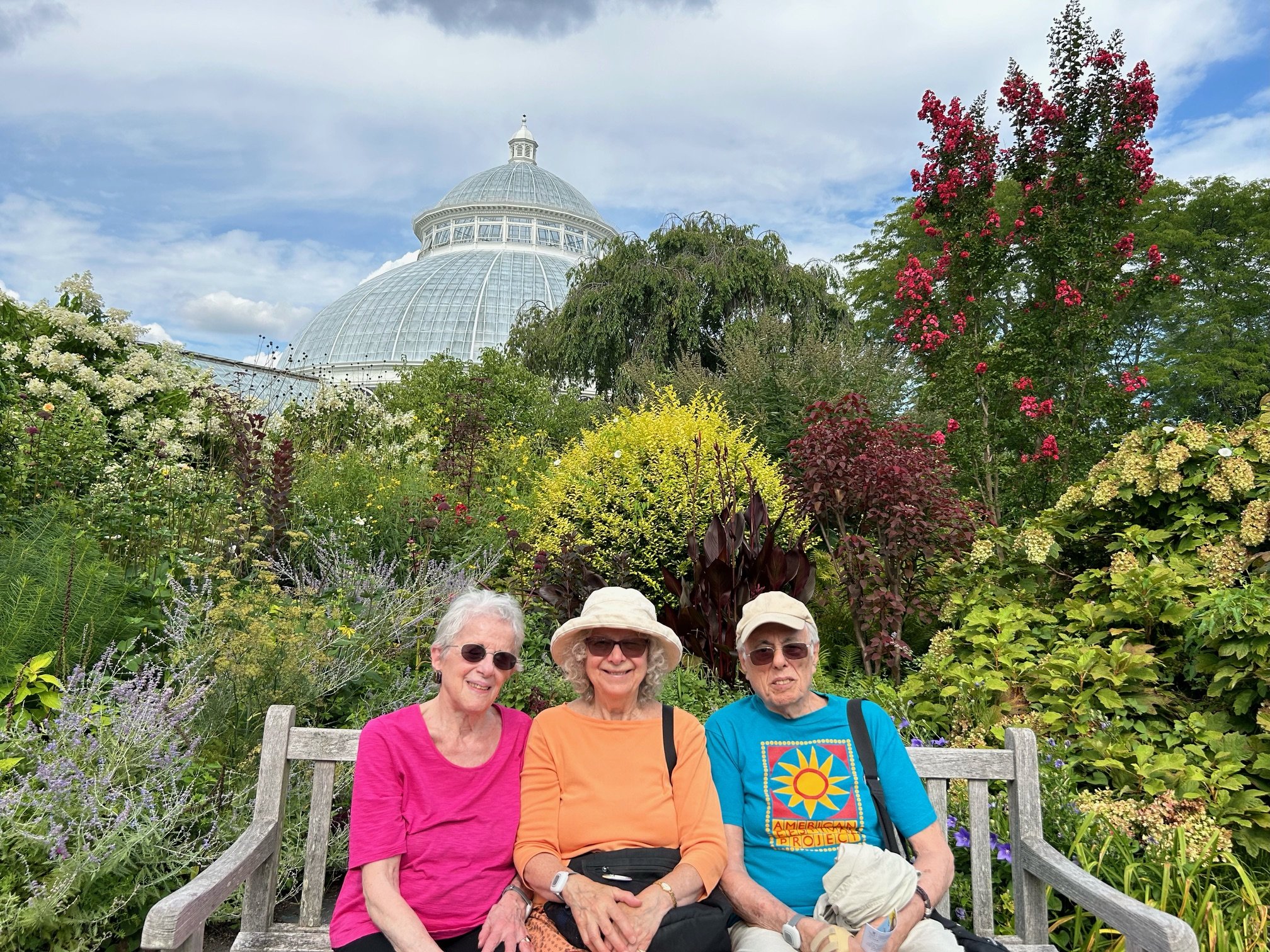
Ditz-E1 was hoping to be Microbe of the Year

The Small-fry Synchronized Swim Club was already dreaming of the L.A. Olympics

To Bibsy’s dismay, unsettled weather was forecast to continue for another 6 years

It seemed to George that a prom to celebrate the puppies successful completion of obedience training was over the top

Dr. Dromedary-Knox’s classes were extremely popular
Art and photos by Jane Hart
Art and Poetry by Sheila Benedis
Art Is Life
searching for life
creative mind
taught art group
never did before
created a path
I became so excited
kept learning more
worked hard
was passionate
felt alive
found art
success kept coming
never stopped
powerful journey
created my life3
creativity is sanctuary
art is strength
art is life
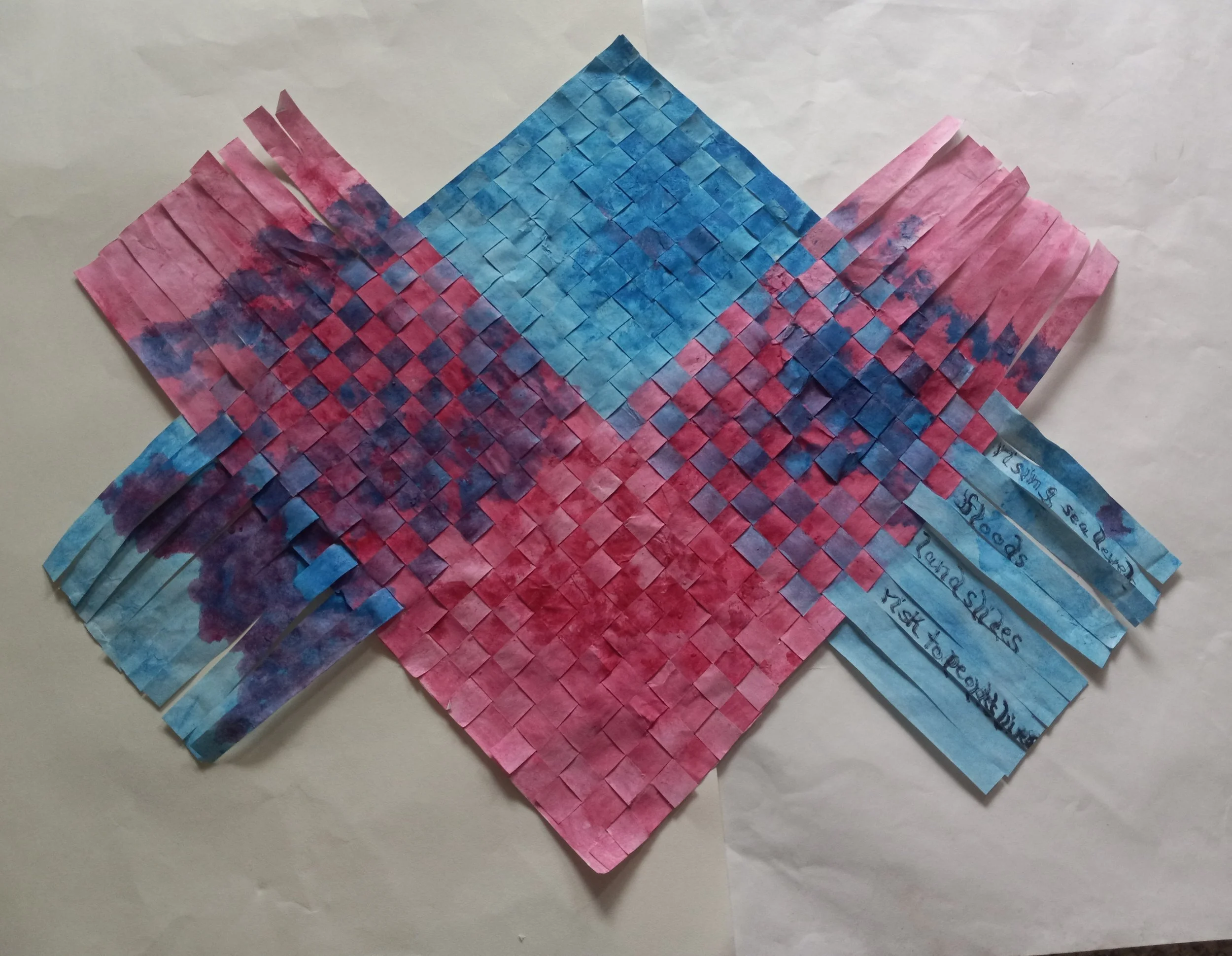
Meditation 6 Weaving: Climate Change
In and Around
The Forest Primeval . . . by Edward Kasinec
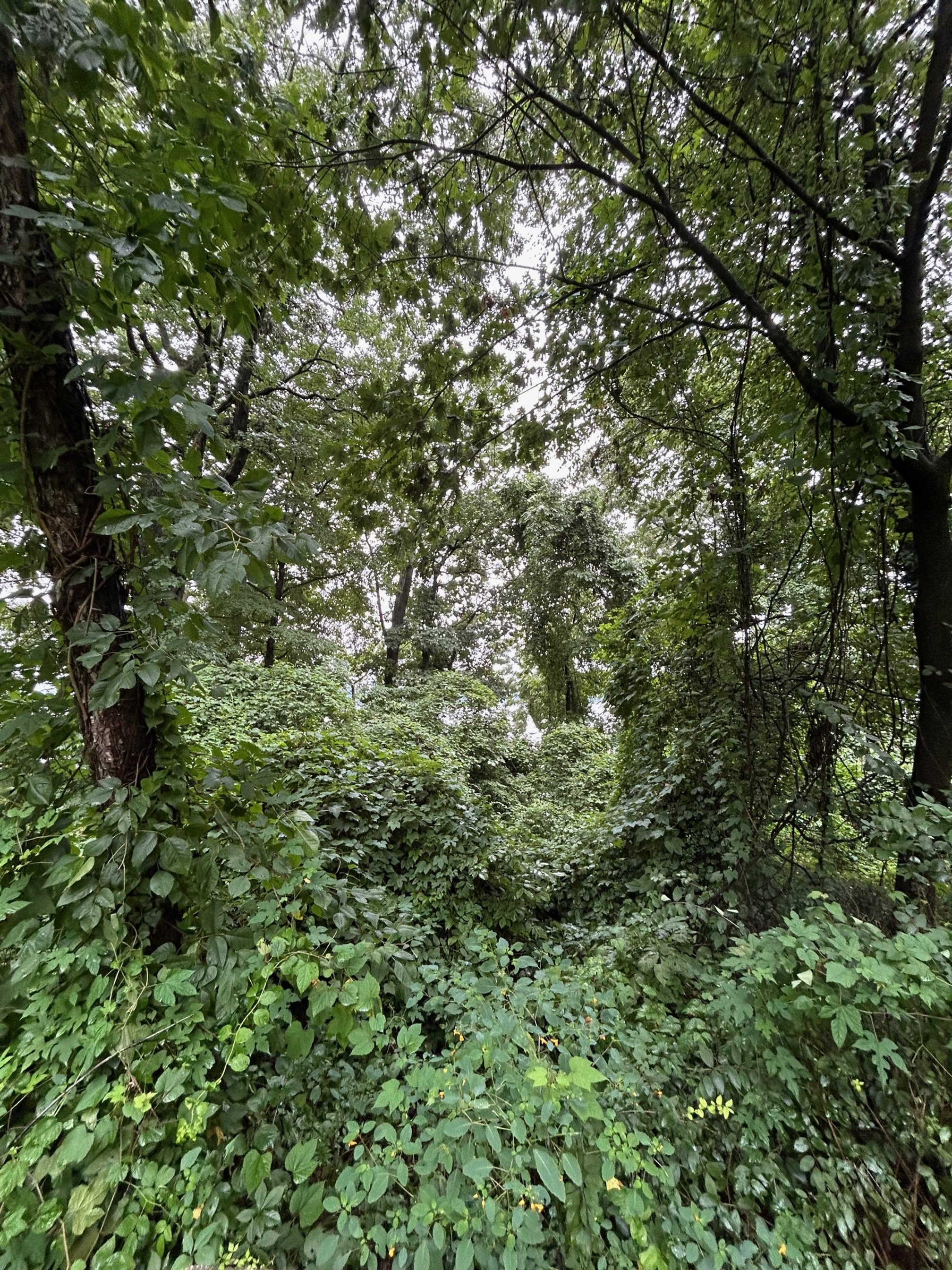
Photo by Edward Kasinec
The Park Next Door, by Carolyn Reiss


Out and About
Recently, Carol and Philip Monteleoni traveled to Tanglewood for a performance of:
Rhapsody in Blue
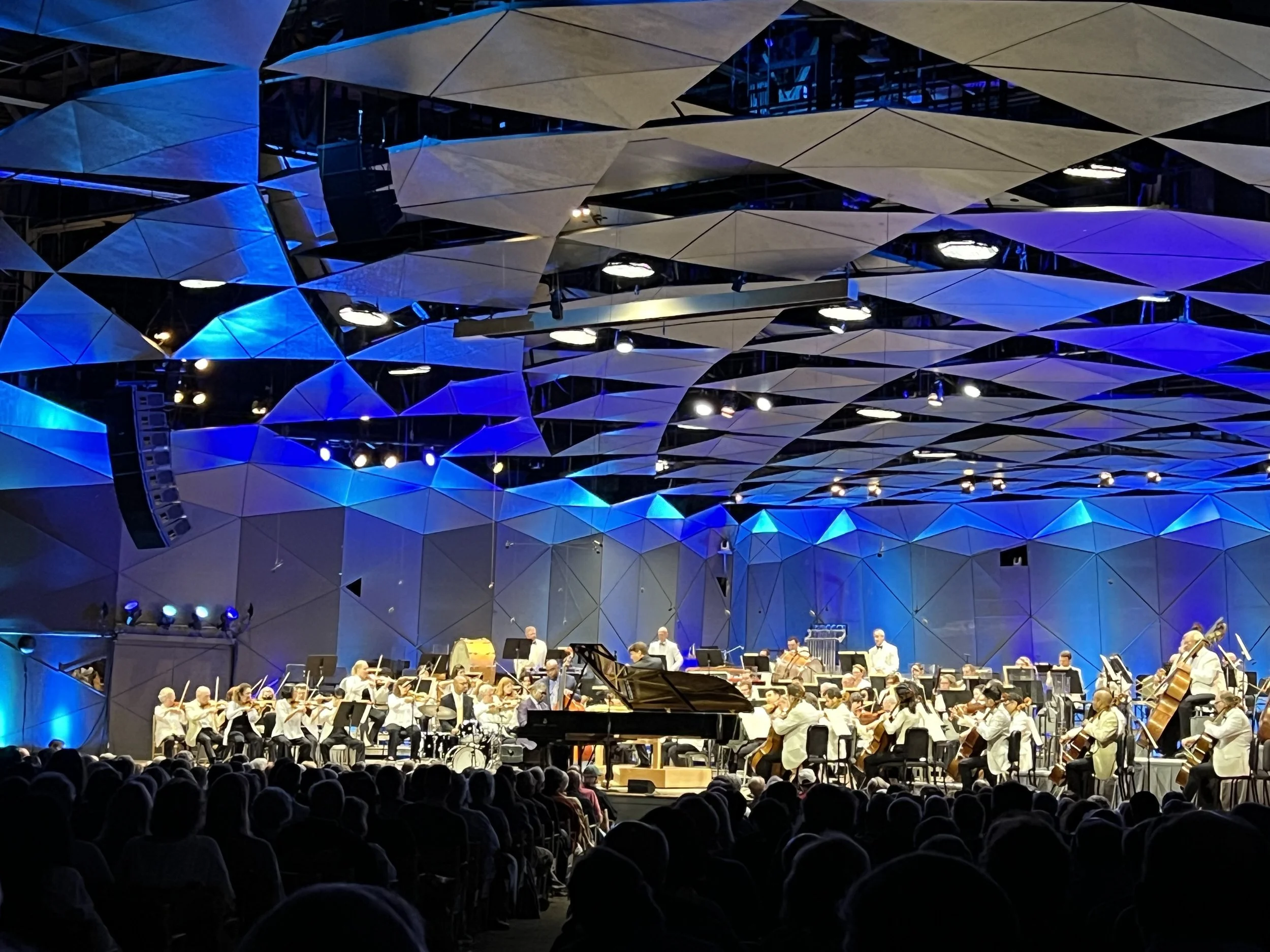
Photo by Philip Monteleoni
What I Did On My Summer Vacation
The Uncompleted Vacation Project

Valerie Wallace sends this picture of an uncompleted puzzle taken on her family’s vacation, noting that “if we had had a rainy day , we woulda finished it.” They always take a puzzle on vacation, in case of rainy days. Valerie estimates that her daughter probably did 2/3 of it, while she I did 1/3. Credit where credit is due.
Made in NYC: Brands, Trends, and Inventions That Began in the Big Apple
Rainbow Cookies

Photo Credit: wEnDy/Flickr
You might guess this is an Italian export, but it’s a New York original. The dessert goes by many names: rainbow cookies, rainbow cake, Neapolitan cookies, seven-layer cookies, Venetian cookies, seven-layer cake, Italian flag cookies, tricolor cookies, and tricolore. New York City has been making (and eating) them for a century, beginning in Italian-American neighborhoods and being then picked up by nearby Jewish communities as well.
Scientific American

Scientific American is the US’s oldest continuously published magazine, counting Albert Einstein and Nikola Tesla among its contributors (150 Nobel laureates have been featured on these pages over the years). It might seem like the offspring of California tech, but its origins are in New York City, with inventor Rufus Porter. The first issue was published on August 28, 1845 — not a bad run!
Chipwich

No less an authority than the New York Times has ranked this the #1 packaged frozen treat. You can find it anywhere, but it began in New York City. Brooklynite Richard LaMotta came up with the idea in 1978 and within two weeks he was selling New Yorkers 40,000 of them a day. By the time he sold the company to Coolbrands International in 2002, more than a billion Chipwiches had been sold.
Source: “Made In NYC,” by Ethan Wolff, March 2024, City Guide New York
Contributed by Bobbie Roggemann