



Art & Poetry by Sheila Benedis
Traveling form
easily I slide into a meditation
on beauty and intimacy
found in the natural world
each curve
each changing shape of a form
traveling across the sky
freedom of movement
changing mood
from joy to sadness
whispers a tale
a tactile and visual journey
a medium for story telling
Spiral Collage

Art by Hart

The kids had binge-watched Lassie all night

Floofy didn’t even try to hide her boredom

Roebuck was willing to meet Sears more than halfway

Guess which Sloman twin hogged the tanning bed

Cotter was the new kickboxing sensation at the senior center
Art and photos by Jane Hart
In and Around Kendal
Spring Comes to Rockwood Park

Photo by Carolyn Reiss

Enclosed Green
Photo by Edward Kasinec

Rockwood’s Secret Garden
Photo by Edward Kasinec

Torrents of Pink
Photo by Edward Kasinec

Fresh Swamp Cabbage along the Brook
Photo by Carolyn Reiss

Storm’s A-Comin’
Photo by Carolyn Reiss
Rockwood Is For the Birds, by Carolyn Reiss

Mocking Bird in Flight

Tree Swallow, Upon Arrival
Photo by Carolyn Reiss
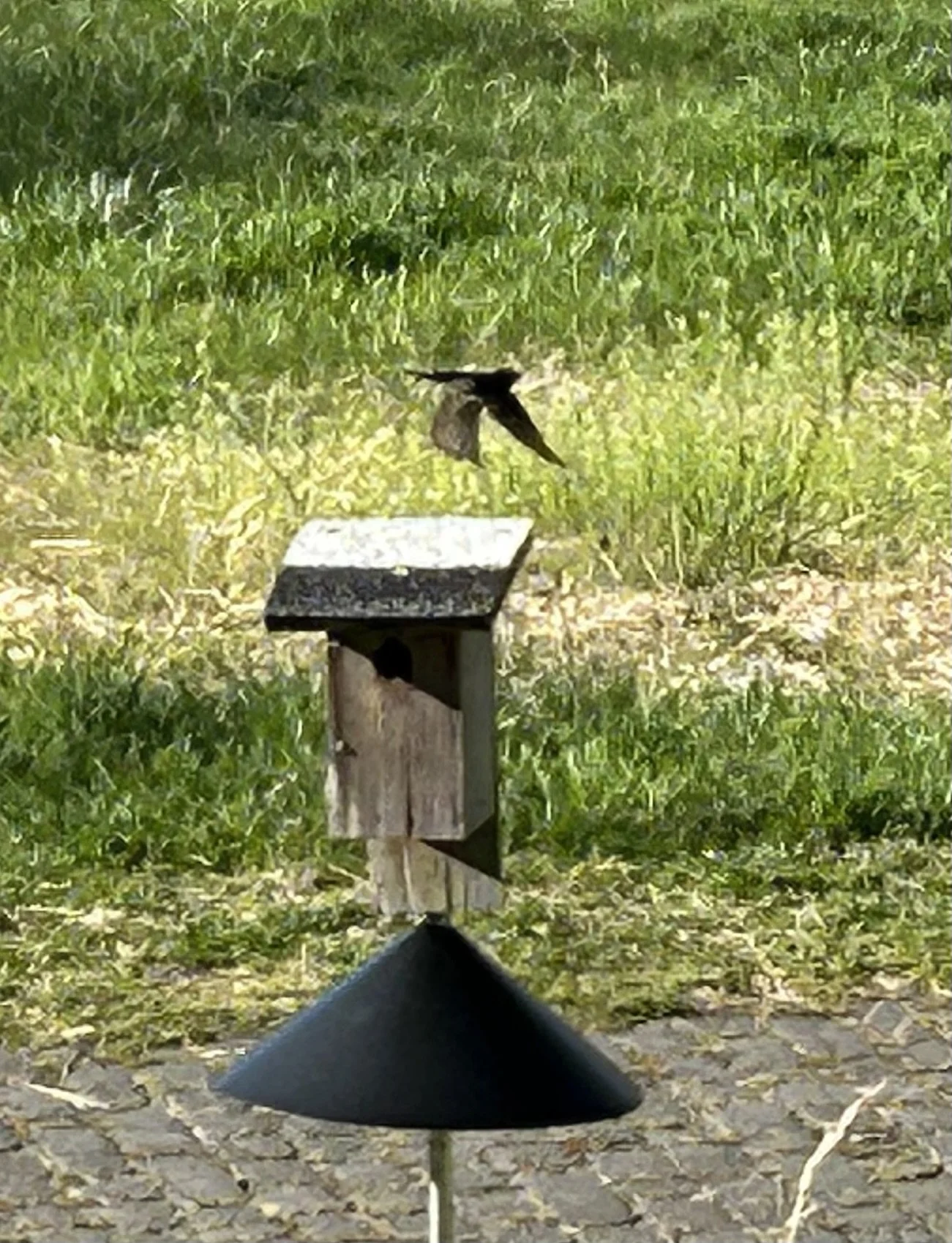
Tree Swallow, Upon Departure
Photo by Carolyn Reiss
The First Purple Martens
Photo by Carolyn Reiss
The Final Eclipse Shot

The Eclipse: in Abstract
Photo by Carolyn Reiss
Tuesday Club Celebrates 13 Years
The KoH Tuesday Morning Club celebrates its 13th birthday this year! Such a milestone deserves a commemoration, and Kendal couldn’t have agreed more. The celebration took the form of a tea party: tea sandwiches, scones, cake, and music. There even was even dancing in the aisles!


Contributed by Sally Costa
I Never Knew That
Nursery rhymes, some dating back centuries, have left a strong mark on many of our childhoods, but we often don’t realize where they came from. Some have evolved over centuries, bringing a whole new version to modern children, while others have remained tried and true since their inception. From women’s prisons and peep shows to wholesome tales of beloved pets, here are the origins of some beloved nursery rhymes.

Mary had a little lamb
Little lamb, little lamb
Mary had a little lamb
Its fleece was white as snow
Poet Sarah Josepha Hale first published a version of this poem in 1830. Around 50 years later, an elderly woman named Mary Sawyer stepped forward as the real Mary. Sawyer’s story goes pretty much like the version we know and love today. She rescued a little lamb that had been abandoned by its mother and hand-fed it until it regained its health. One morning, she and her brother decided to bring the lamb to school. The lamb hid in a basket by Mary’s feet until it bleated, drawing attention from the teacher, who gently let the lamb outside so Mary could bring it home at lunch. The other kids did, indeed, laugh.
In a letter included in a 1928 book detailing the story, Sawyer says that the lamb grew up and had a few lambs of its own.
Source: Interestingfacts.com
To Be Continued . . .
Contributed by Jane Hart
Just Joking . . .
Students in an advanced Biology class were taking their mid-term exam. The last question was “Name seven advantages of Mother’s Milk.” The question was worth 70 points or none at all. One student was hard put to think of 7 advantages. He wrote:
1) It is the perfect formula for the child.
2) It provides immunity against several diseases.
3) It is always the right temperature.
4) It is inexpensive.
5) It bonds the child to the mother and vice versa.
6) It is always available as needed
And then the student was stuck. Finally, in desperation, just before the bell rang indicating the end of the test he wrote:
7) It comes in two attractive containers and it’s high enough off the ground where the cat can’t get it.
He got an A+.
Contributed by Bob Abramovitz
For Your Funny Bone . . .

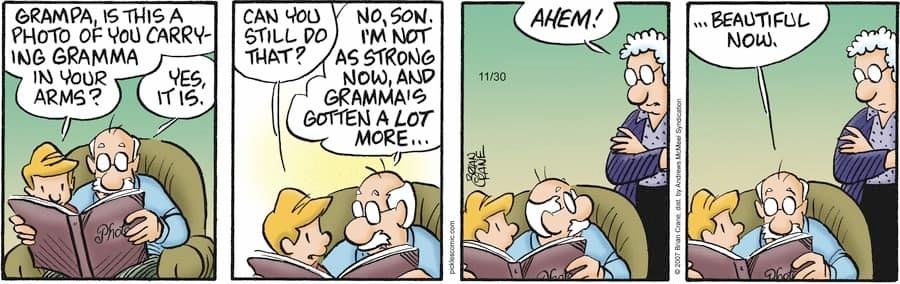
Contributed by Sally Kellock


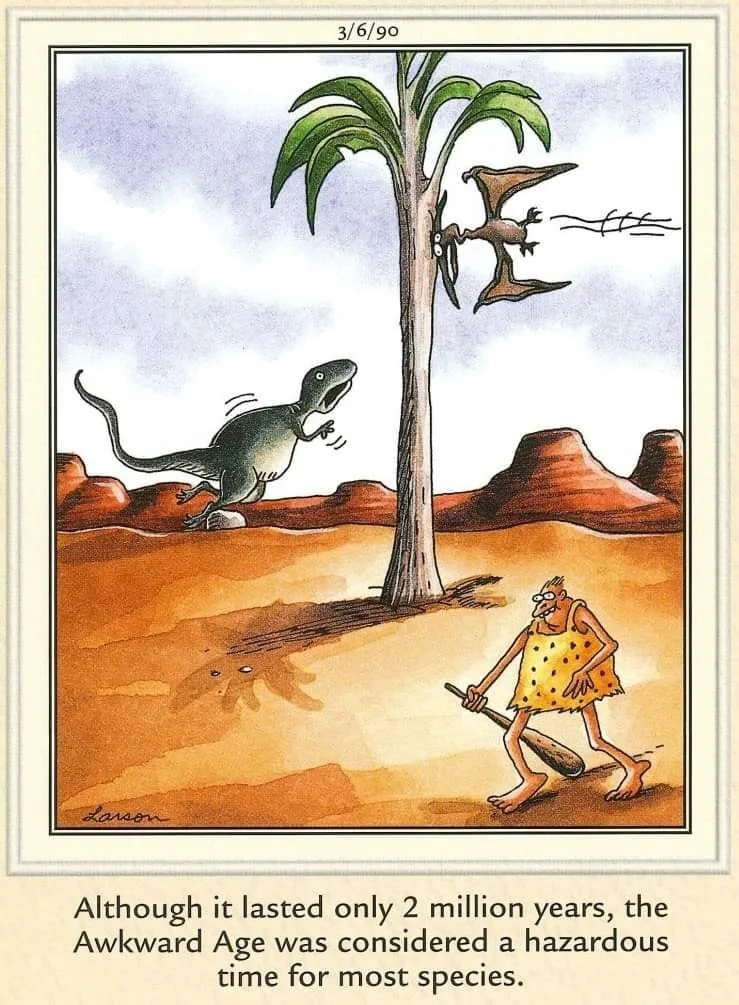

Art by Hart

Terry’s birthday party was wild

When it came to poultry fashion design, Yves-Charles was crushing it
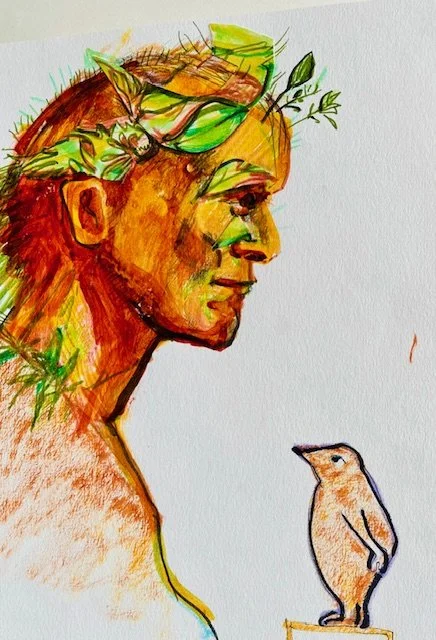
Runch-Higgins rested on his laurels so long, they took root

Nobody judged Mrs. Jervis as harshly as her own inner jury

Suzette’s Alley Cat chic was taking the fashion industry by storm

Murf was bluegrass to the core
Art and photos by Jane Hart
Power of a Tree, Poetry and Art, by Sheila Benedis
power of a tree
just look just listen
my footsteps move slowly
like dancing shadows
my faint melodies go unnoticed
but they tell a story
echoes of dreams
like the trail
a snail leaves behind
if only I could become a tree
peace and hope would be
possible in the world
a tree could turn on a light

In and Around
Monday Night, April 8, Following the Eclipse

Photo by Cynthia Ferguson
The Glories of a Kendal Spring

Photo by Peter Sibley

A Cascading Bouquet
Photo by Edward Kasinec

Beauty from a Stone
Photo by Edward Kasinec
Clermont’s Latest

Photo by Peter Sibley
Out and About
On April 10, a Kendal van full of residents had a special treat: a tour of Rockefeller University, one of the world’s premier bio-medical research institutions. A graduate-only university, Rockefeller can boast 29 Nobel laureates in its 123-year history. While the institution is usually off limits to most non-researching members of the public, the hearty band of residents toured both the architectural and the bio-medical splendors of the organization.



Photos by Harry Bloomfeld
Suits to a T . . .


Contributed by Barbara Bruno
I Never Knew That . . .
Q: Why does the moon appear larger when it is on the horizon than when it is directly overhead? In considering your answer, keep in mind that the actual size of the moon and its distance from the earth are invariable.
A: A decade or so ago I read a report of an experiment on this subject by a group of psychologists. Their conclusion was surprising because it did took into account no physical feature of the horizon, such as whether it consisted of buildings, mountains or a line of trees. Their explanation for the “moon illusion” is that all humans have an innate conception that the distance to the universe is shorter out to the horizon than directly above us; thus, the moon appears larger because it is conceived to be closer!
Q: When, where and how was the raglan sleeve introduced into the design of clothing?
A. Fitzroy Somerset, the First Baron Raglan, was a general in the British Army. During the Battle of Waterloo, in 1814, he received so severe a wound that it required an amputation of his left arm. After his return to London, he discovered that the seams of his shirts and sweaters rubbed his amputation scar and were painful. Off to his tailor, who created the new sleeve form in which the seams were not in contact with his scar. Of course, it was named after the Baron and not his employee who actually created the new style.
Contributed by Norman Sissman
The Day the Earth Went Dark . . . Almost
The Sun and Moon Come Together

Solar eclipse through a telescope
Photo by Maria Harris
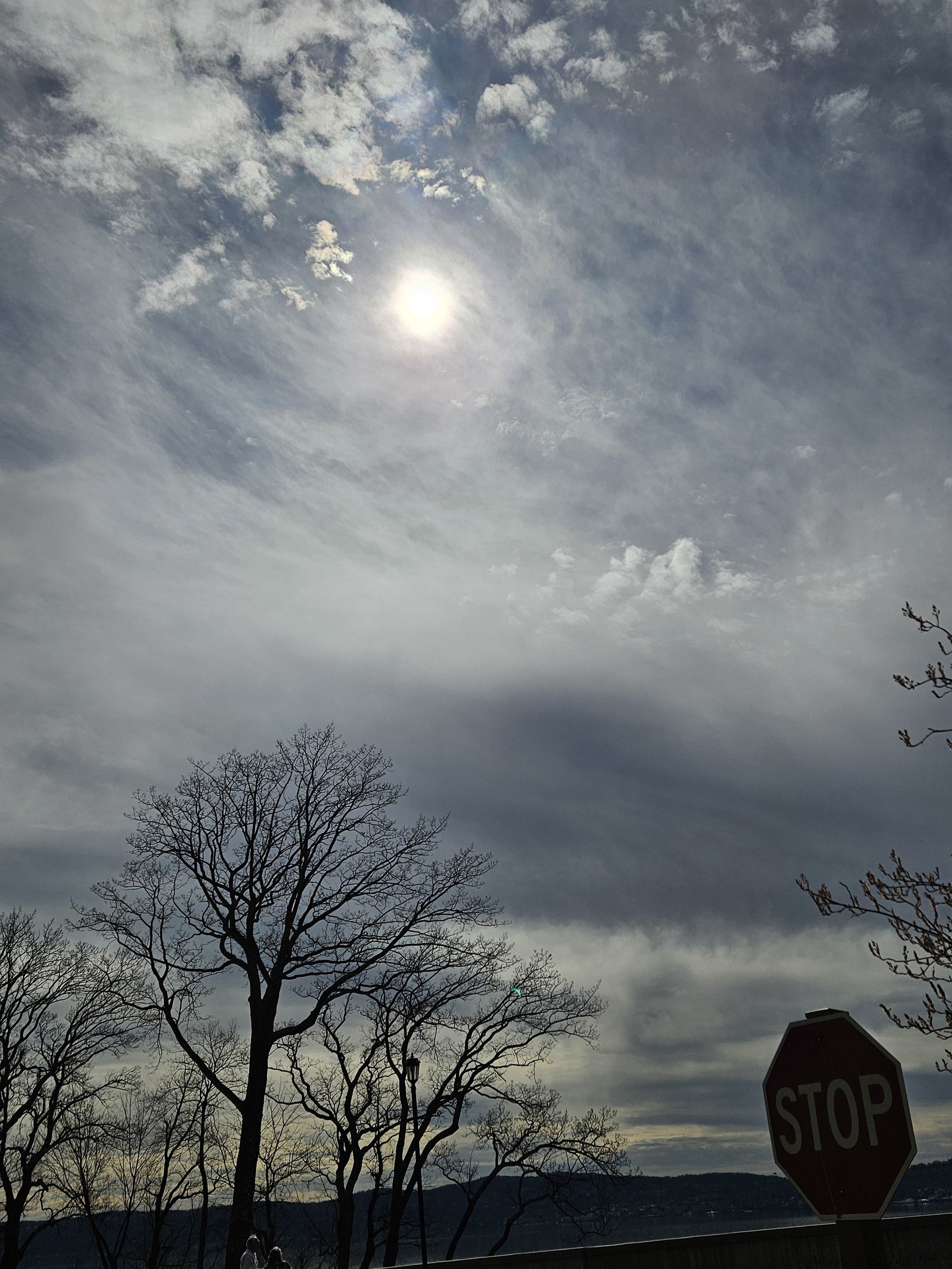
As the day grows dark.
Photo by Greg Lozier
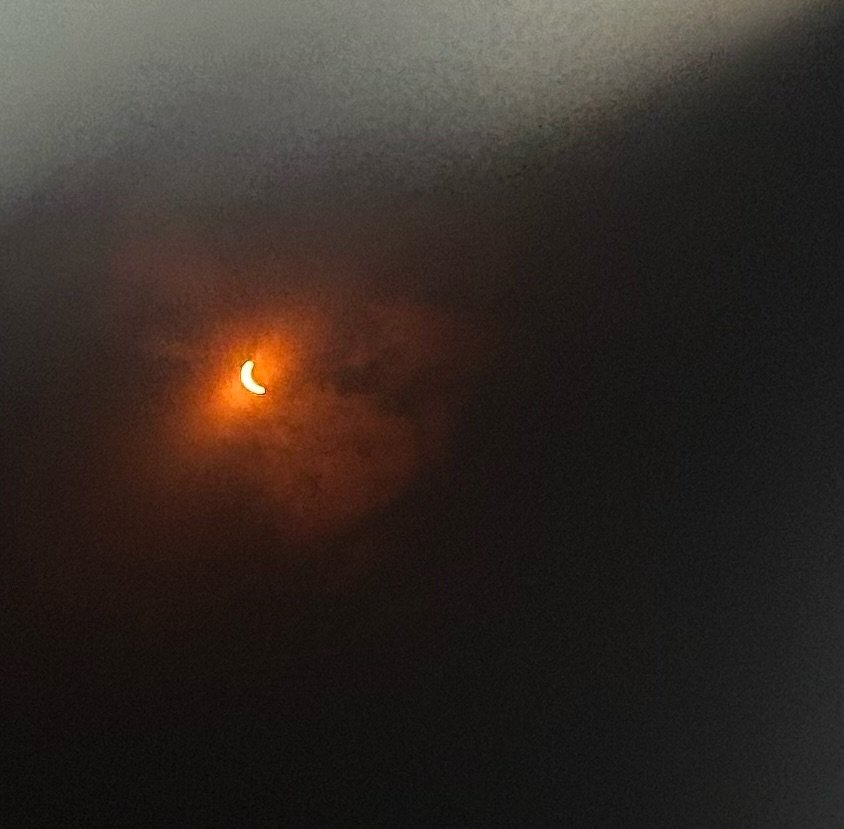
Photo by Carolyn Reiss
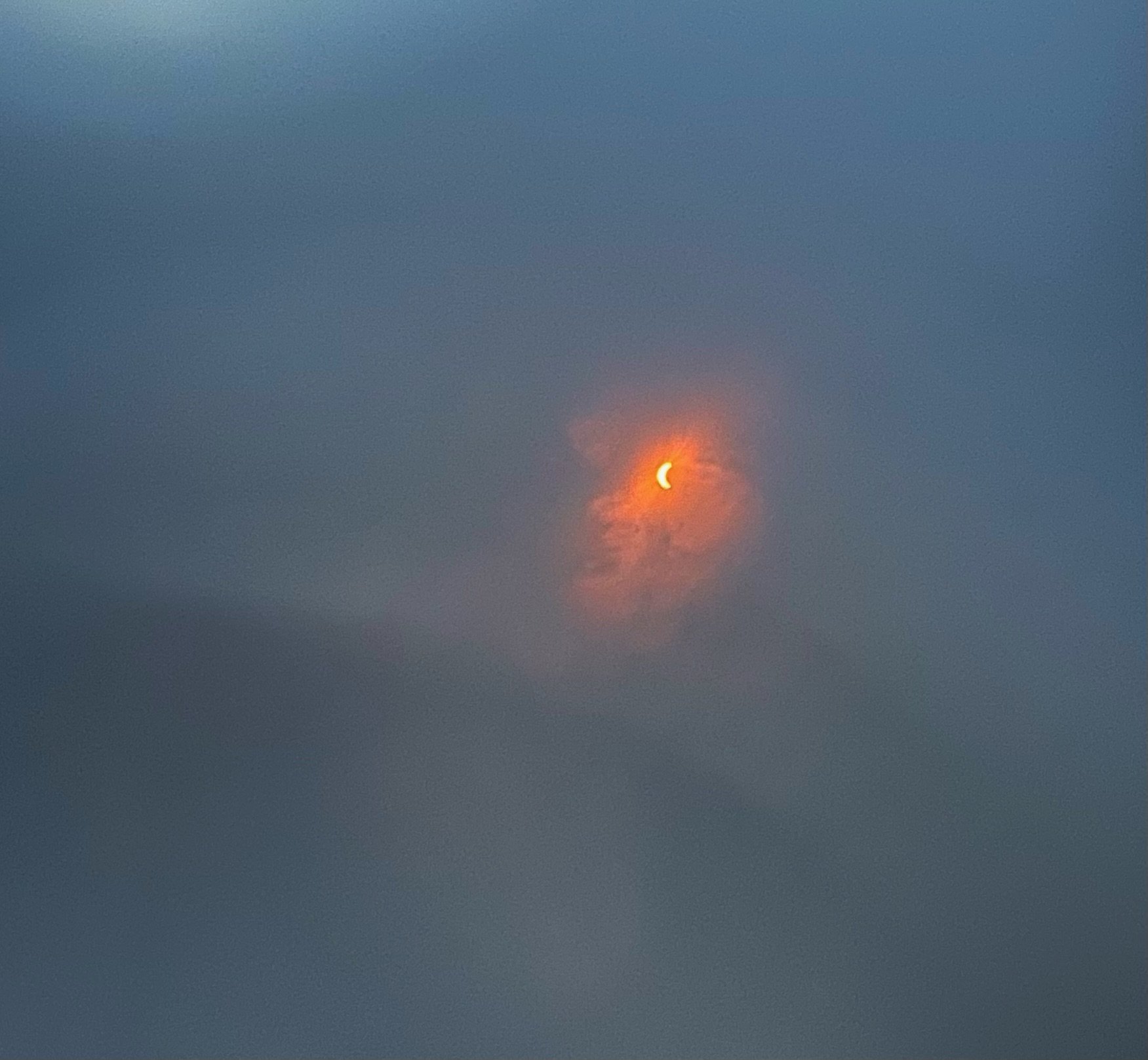
Photo by Carolyn Reiss
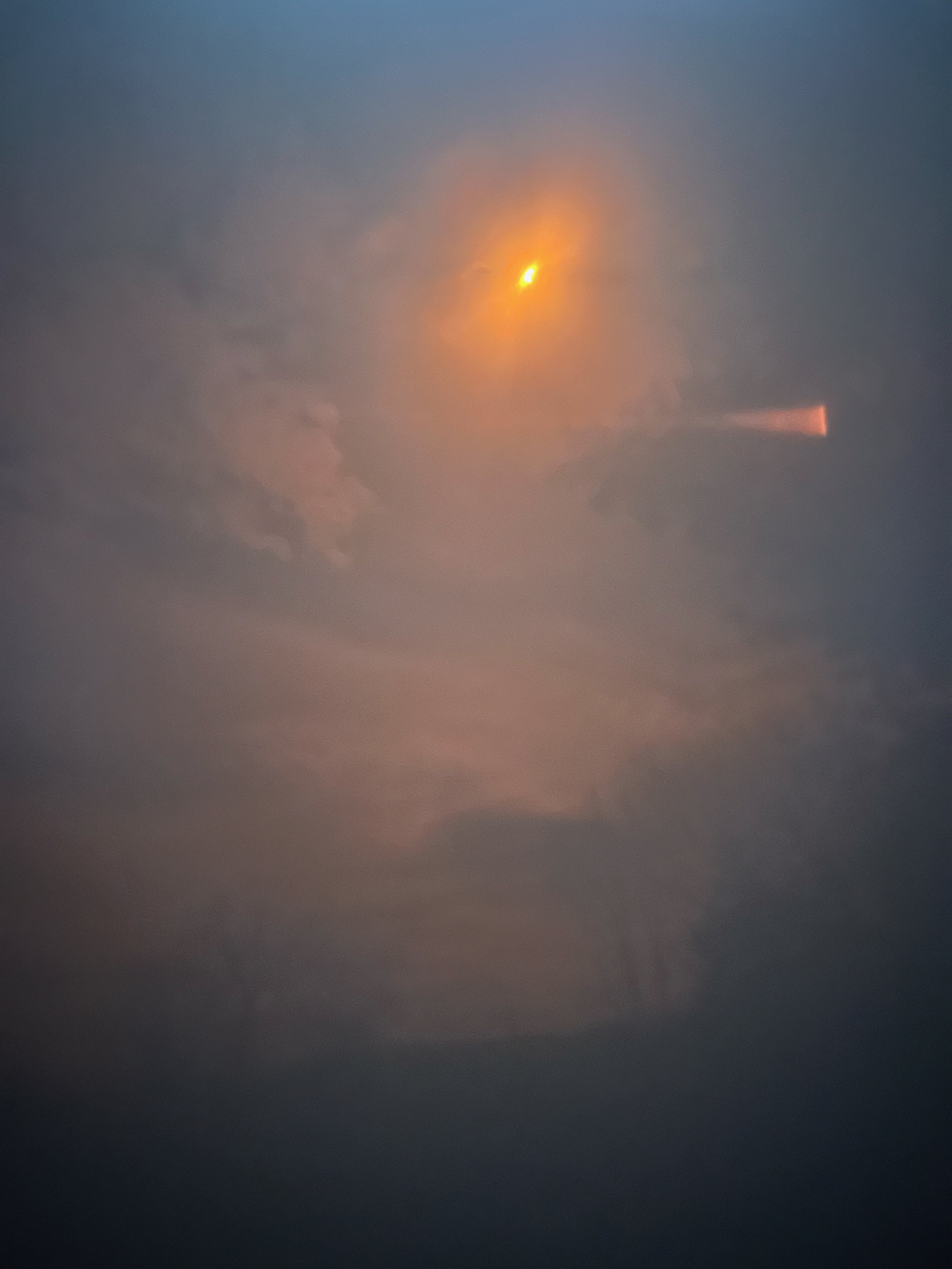
Photo by Carolyn Reiss
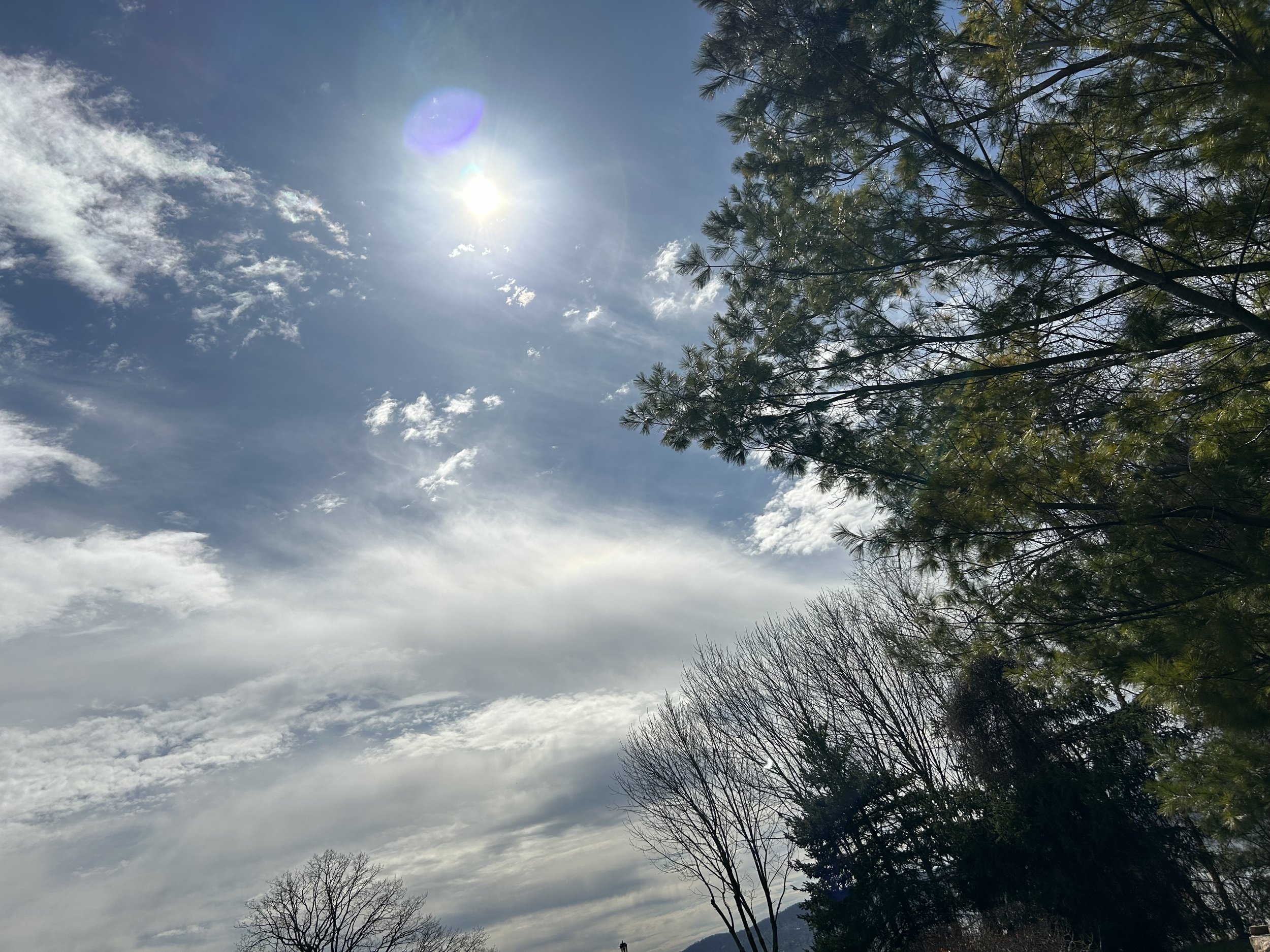
Photo by Carolyn Reiss
The People— At Home
Thanks to The Rapaports, Kendalites — staff and residents — turned out in droves to view the almost-total eclipse of the sun. They chose their spots, their seats (or not), their excitement (or not). And they took pictures—of the eclipse and of our community in awe of it (or not).

Photo by Harry Bloomfeld

Photo by Tom Wolzien
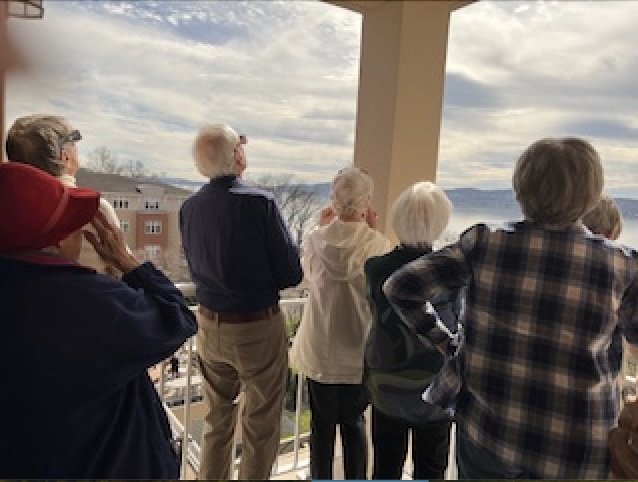
Photo by Jo-Ann Rapaport
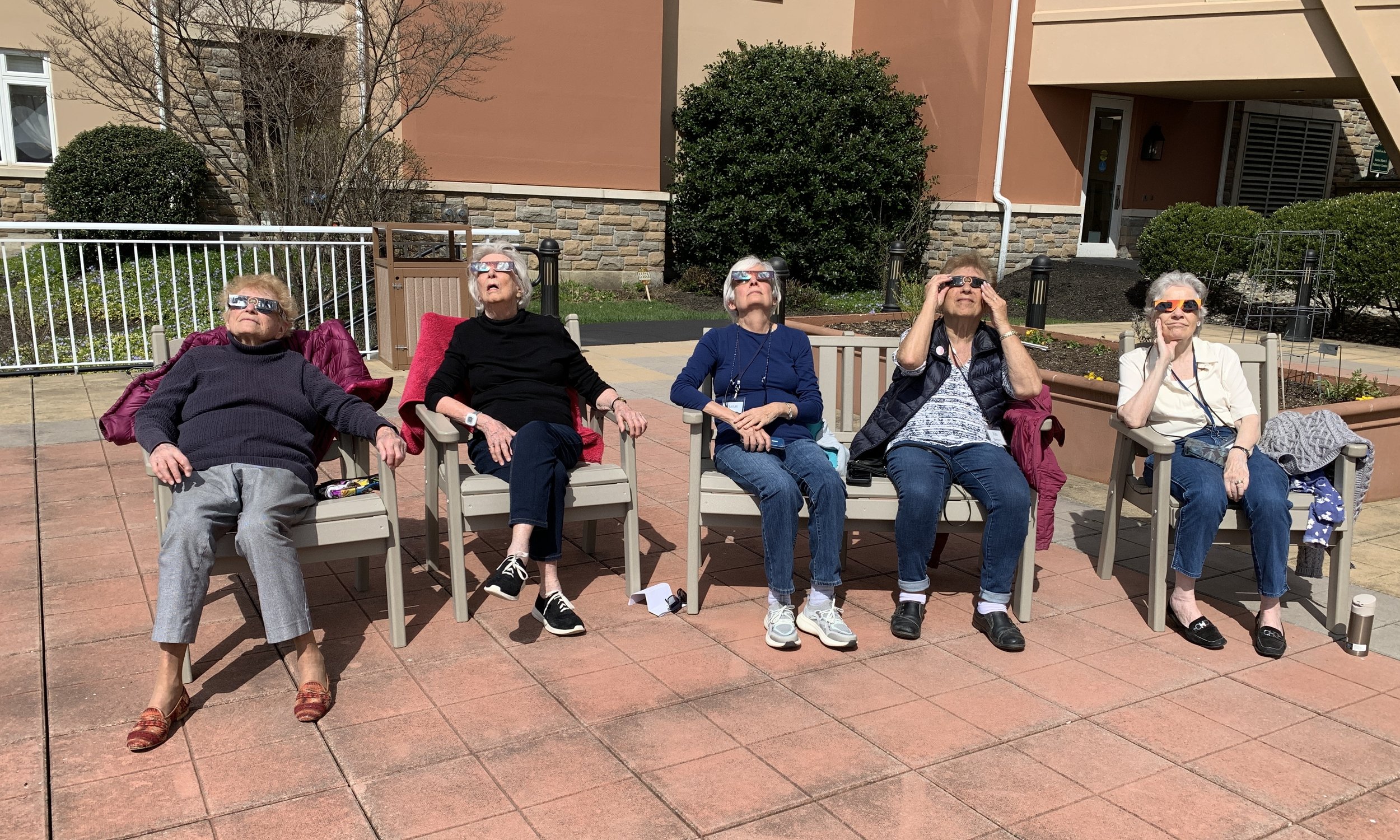
Photo by Harry Bloomfeld

Photo by Joe Bruno
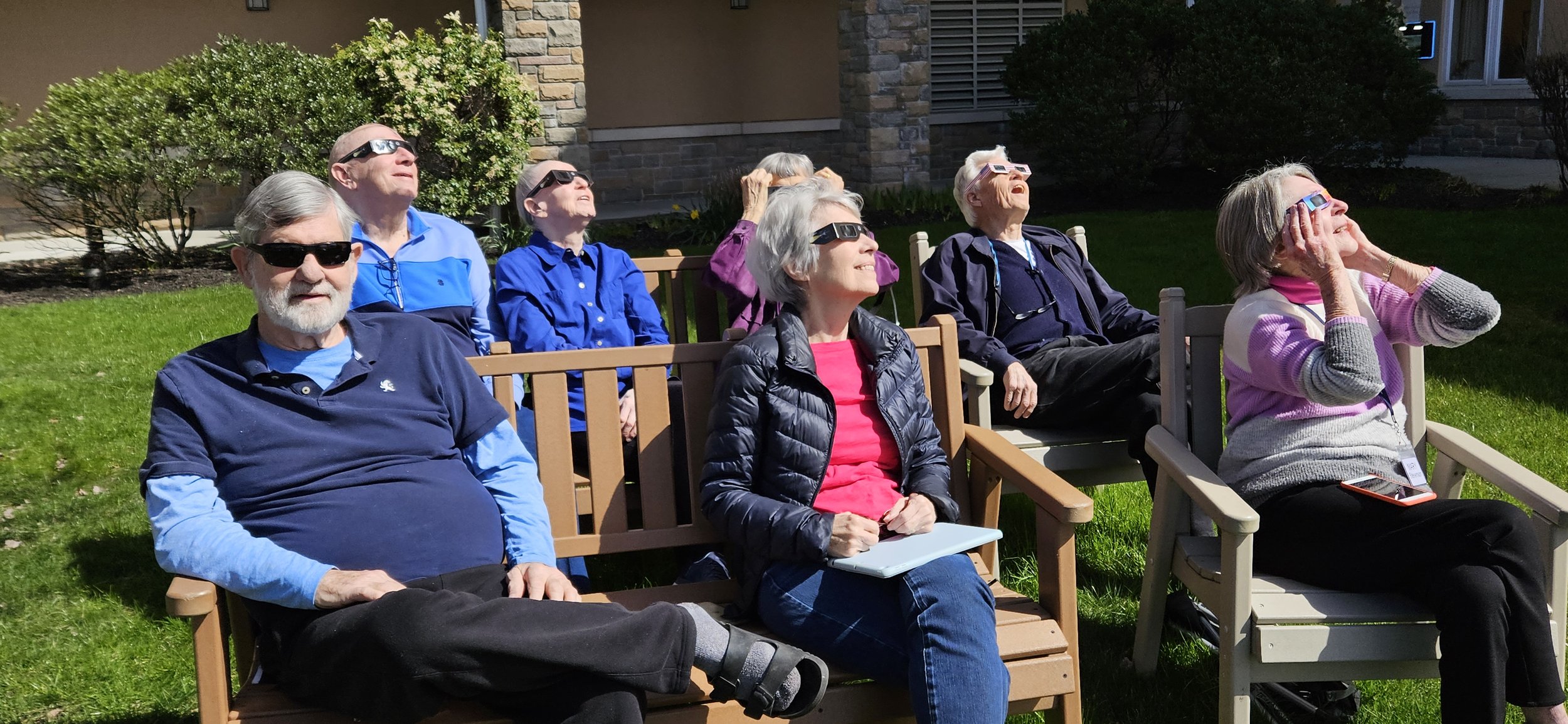
Photo by Joe Bruno

Photo by Joe Bruno
And Away
Maria Harris attended the Spectacular Super Solar Eclipse Viewing Party art the Hudson River Museum to get her view of the event.

And to Top the Week Off…

Look close: there’s a double one right above it, too…
Photo by Harry Bloomfeld
Lexophilia . . . or, Maybe, the Opposite . . .
Venison for dinner again? O deer.
How does Moses make tea? Hebrews it.
England has no kidney bank, but it does have a Liverpool.
I tried to catch some fog, but I mist
They told me I had type-A blood, but it was a Typo.
I changed my iPod’s name to Titanic. It’s syncing now.
Jokes about German sausage are the wurst.
I know a guy who’s addicted to brake fluid, but he says he can stop any time.
I stayed up all night to see where the sun went, and then it dawned on me.
This girl said she recognized me from the vegetarian club, but I’d never met herbivore.
When chemists die, they barium.
I’m reading a book about anti-gravity. I just can’t put it down.
I did a theatrical performance about puns. It was a play on words.
Did you hear about the cross-eyed teacher who lost her job because she couldn’t control her pupils?
When you get a bladder infection, urine trouble.
Broken pencils are pointless.
What do you call a dinosaur with an extensive vocabulary? A thesaurus.
I dropped out of communism class because of lousy Marx
I got a job at a bakery because I kneaded dough.
Velcro — what a rip off!
Don’t worry about old age; it doesn’t last.
Contributed by Barbara Bruno
For Your Funny Bone . . .


Contributed by Barbara Bruno


Contributed by Barbara Bruno
"Elegant Paper" Sculpture and Poem, by Sheila Benedis
Elegant paper sculpture
easily I slide into a meditation
on beauty and intricacy
found in natural world
each curve each shape
of a unique leaf
unfurled by a gingko tree
whispers a tale
a tactile and visual journey
a medium for story telling
my natural material
handmade paper
embraces my transformative touch
textures echo nature’s own handiwork
my respectful collaboration
with the organic world
marriage of craftsmanship and nature
produce an elegant paper sculpture

Art by Hart

Somebody convinced the wildlife that they’d be safer in a gated community

Grandpa kept the chicks amused so that they wouldn’t look up at the darkening 3:00 pm sky

It was dress rehearsal for the new Birth of Venus tableau

Pilates did wonders for Marcel’s flexibility

The Whittles’ clutter finally won
Art and photos by Jane Hart
In and Around Kendal
Kendal Heros: Librarians At Work

Photo by Joe Bruno
A Sure Sign of Spring: A Male House Finch Comes Calling

Photo by Art Brady
Splendor on the Hudson

Photo by Joe Bruno