Sunset Over the Hudson
Photos by Peter Sibley
An Early Sign of the Coming Autumn
Virginia Creeper provides early fall colors in Rockwood Park


Photos by Peter Sibley

Virginia Creeper provides early fall colors in Rockwood Park
On September 13, a hearty band of Kendalites boarded the Spirit of the Hudson for a river tour from Newburg to West Point and back. Rain was predicted, but after a cloudy start the sun came out and all are reported to have had a wonderful time.

A cloudy start . . .

But then clear sailing . . .
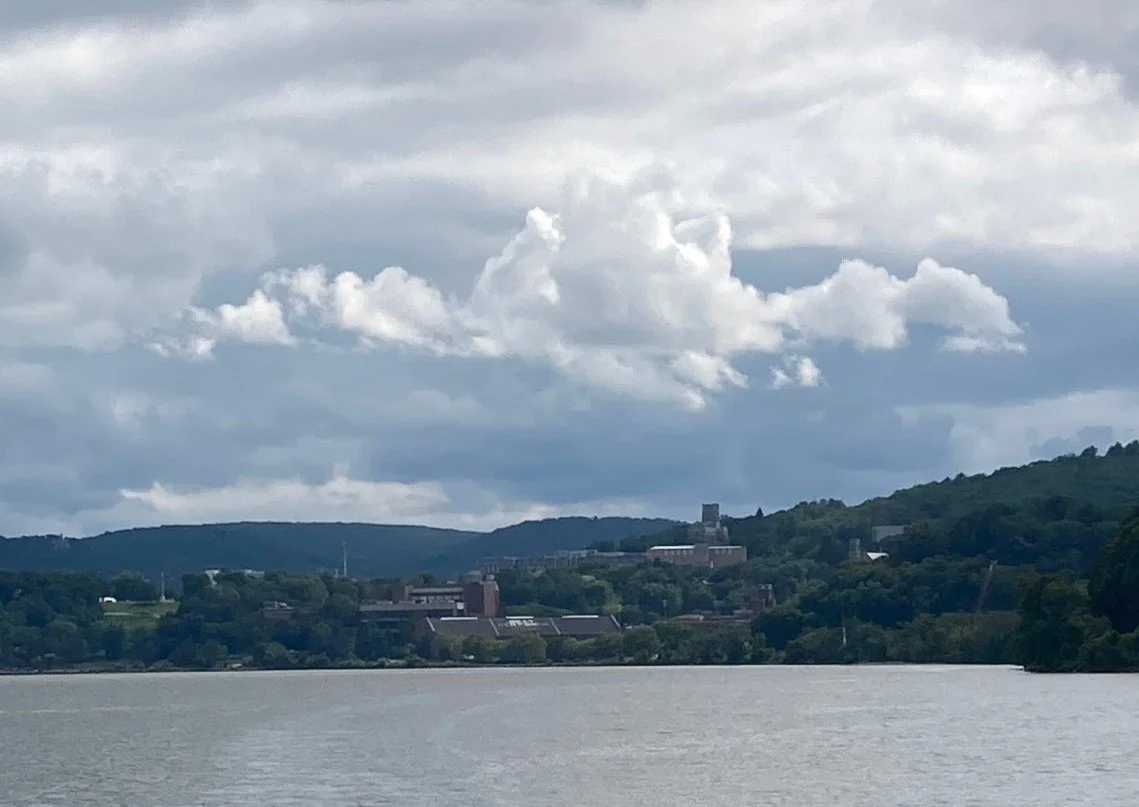
West Point from the deck of the Spirit of the Hudson
Carolyn Reiss did on vacation what she does when not on vacation: she took a lovely photograph. She and her sister were staying at a little inn in North Sutton, NH. When Carolyn took the picture—which she calls “Moonshot”—she was standing in the cemetery behind the church, which goes back to revolutionary days.

Falls: the bane of existence for “people of a certain age” (read: us). Last week, we posted a couple of articles with useful information for guarding against taking a fall. This week, you’ll find below (click on the picture) an article on guarding against a fall that has plenty of advice for Kendal-living. Use it in good health!
I’m the life of the party . . . Even if it lasts until 8 p.m.
I’m very good at opening childproof caps . . . with a hammer.
I’m awake many hours before my body allows me to get up.
I’m smiling all the time, because I can’t hear a thing you're saying.
I’m sure everything I can’t find is in a safe secure place . . . somewhere.
I’m wrinkled, saggy, lumpy, and that’s just my left leg.
I’m beginning to realize that aging is not for wimps.
Yes, I’m a SENIOR CITIZEN and I think I am having the time of my life!
Contributed by Simone
Joe Bruno sent along a handy-dandy sheet of telephone numbers for reporting fraud and identity theft to the financial/credit entities, Social Security Administration, and the Federal Trade Commission. Well done, Sir!
You might want to keep these within reach just in case . . .

(As of September, 2023)
Bank of America 800-432-1000
CapitalOne 800-227-4825
Chase 800-935-9935
Citi 800-950-5114
Citizens Bank 800-922-9999
M&T Bank 800-724-2440
Merrill Lynch 800-637-7455
Morgan Stanley 888-454-3965
PNC Bank 888-762-2265;
800-762-2035
TD Bank 800-893-8554
888-561-8861
U.S. Bank 866-821-8411
866-737-6844
877-595-6256
Wells Fargo 800-869-3557
Equifax 888-766-0008
Experian 888-397-3742
TransUnion 800-680-7289
Social Security 877-438-4338
Federal Trade Commission (FTC):
877-438-4338
Shouldn’t someone be making the word “efficiency” into one syllable?
Contributed by Peter Roggemann

Phishing: the fraudulent practice of sending emails or other messages purporting to be from reputable companies in order to induce individuals to reveal personal information, such as passwords and credit card numbers.
Ellen Ottstadt sent along a “How to” for protecting against such scams.
Opening email these days is almost as dangerous as crossing a highway in traffic. It's essential to keep your eyes open for phishing tricks. All email scams try to catch you off guard. So, if you get an email urging you to act quickly to prevent a financial catastrophe or to get a reward, STOP. Take a while to catch your breath and think. Look for the following signs that indicate you may be scammed:
1. The email is not addressed to you by name but to "Customer" or maybe to no one in particular.
2. Check the email address from which the email originated. It's usually in the upper left-hand corner of your screen. If the sender's address looks fishy, the email is suspicious.
3. Appeals to greed. You did not win the Irish sweepstakes or any gift. Don't click to find out further information.
4. Appeals to fear. If you are worried about a surprise charge on your credit card, contact your bank or credit card company directly, NOT using the link provided in the email.
5. Convinced you have received a phony communication? DELETE it. This may not be enough, so you should look in your trash folder and delete the contents.
Many of us have already heard about StoryCorp, the program where ordinary individuals tell their stories, their family’s story, or even a friend’s story. The story of StoryCorp is best told by StoryCorp itself:
“StoryCorps is committed to the idea that everyone has an important story to tell and that everyone’s story matters. Our mission: to help us believe in each other by illuminating the humanity and possibility in us all — one story at a time. Since our founding in 2003, we’ve helped more than 640,000 people across the country have meaningful conversations about their lives. These recordings are collected in the US Library of Congress and in our online archive which is now the largest single collection of human voices ever gathered. Since 2003, StoryCorps has built the largest collection of human voices ever archived — and we want to add yours. Our mission is to build connections, encourage compassion between people, and share stories, big and small. Have an incredible story to tell? Want to have a meaningful talk with someone important in your life? We’d love for you to join in and preserve your voice for future generations. It’s simple to get started! You and your partner can record a conversation either using StoryCorps’ self-directed recording tools or at one of the StoryCorps recording sites.”
Kendal resident Cathie Campbell is one of the more than half-a-million people who — with her friend and fellow artist Tony Gagliano — has taken advantage of StoryCorp so he could tell a story about his father. To hear Tony’s story, click on the picture below.
Interested in telling your — or a friend’s — own story? Check it out at storycorp.org.
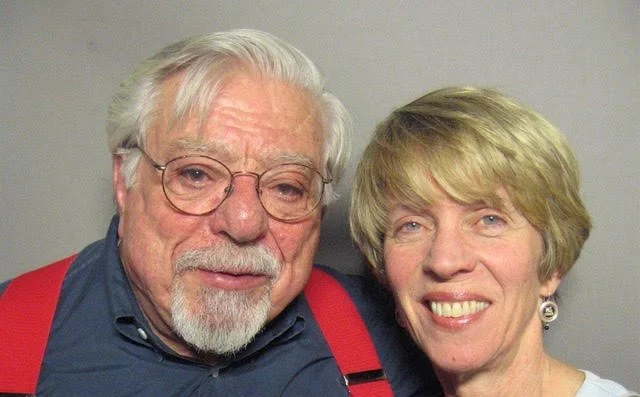
Contributed by Cathie Campbell
This is what the clover that covers the floor of the California Redwood Forest looks like.

Contributed by Simone
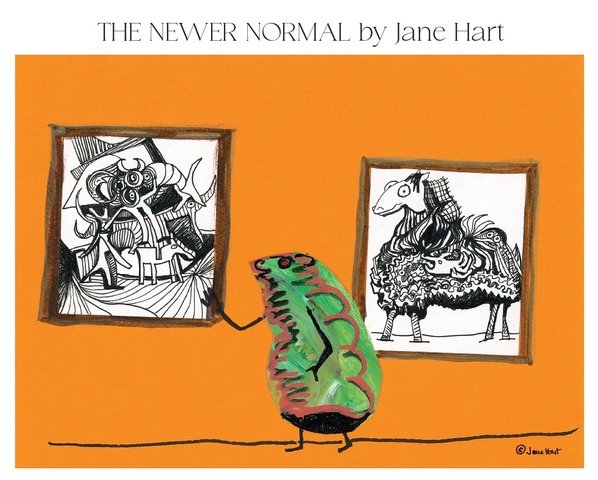
Yes, it’s true! Jane Hart’s new book is out! The Newer Normal features her, uhm, special world we all know from “Art By Hart” on this august website. The Newer Normal can be found online on Amazon and Barnes & Noble’s website . . . and as an e-book on Apple Books.
Autographs, she notes with an “LOL,” are free.
The book is dedicated “to a wonderful and generous artist and friend, Mariet Van der Heide, and to Steven D. Prince, literary smartass extraordinaire, caption-wizard, and the man I love with all my heart.” It contains 100 of the daily drawings that she’s been sending to friends since the publication of her earlier collection of drawings. That earlier book was titled Stop Screaming: How Some of Us Made It Through Covid 19.
“Now that the pandemic is in our rearview mirror,” she continues, “we are free to worry about other aspects of life — some serious, some not so serious.” She offers this new book both for fun and as a worry-guide of sorts, as well as a reminder that, even in this “newer normal,” anyone who can share a laugh is never alone.


Contributed by Joe Bruno
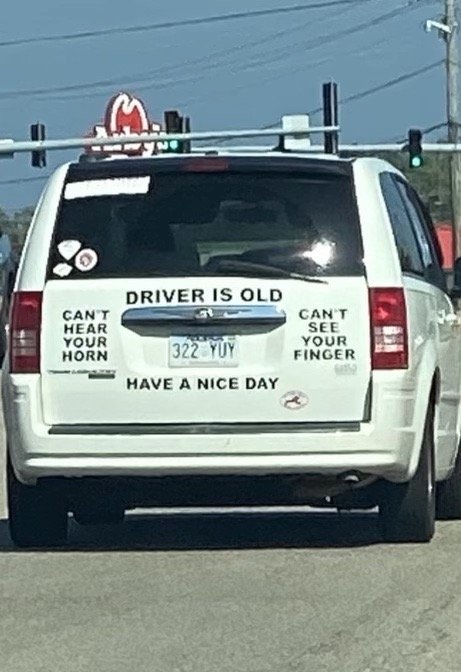
Contributed by Carolyn Reiss

Looking like a baby, Lucienne got away with everything
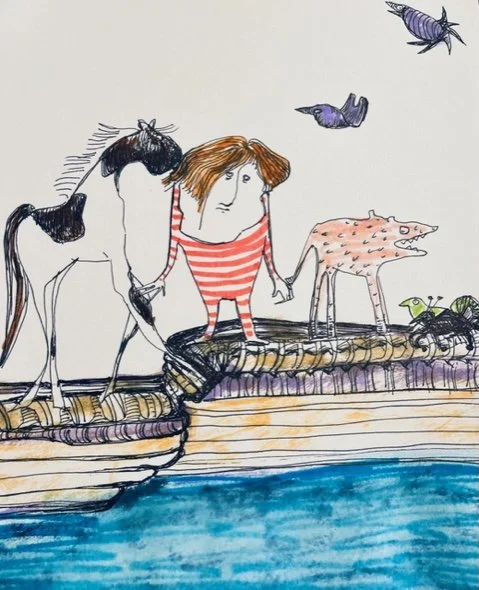
Dobbin loved sniffing Riordan's New-Mown Hay shampoo

Navigating 7th grade was a challenge

Alissa loved fish, and they loved her back

Benkard always rushed the foliage season
Art and photos by Jane Hart


SEPTEMBER 18: NATIONAL CHEESEBURGER DAY

Prepare to enjoy an American food icon — a cheeseburger oozing warm cheesy deliciousness on top of a moist, juicy patty (or two.) No matter how refined your palate might be, a good, old-fashioned cheeseburger seems to satisfy!
Tracing the origin of the cheeseburger starts with its predecessor: the hamburger. While it’s generally agreed that hamburgers traveled to the US via German immigrants during the 18th and 19 centuries, no one really knows its specific origin. Some say the hamburger can be traced to Ancient Egypt, where they shaped patties of ground meat mixed with a variety of different spices. Others believe hamburgers really started with Genghis Khan and his Mongol army. But, in both cases, where, pray tell, is the bun (not to mention the onion, tomato, ketchup, etc.).
Whatever the start, the point of modern hamburger origin is the German port of Hamburg. There was born the Hamburg Steak, a popular dish among Germans of the lower classes. While it was sometimes served raw, many Germans began to cook the meat. Sometimes it was salted or smoked, sometimes mixed with breadcrumbs. Eventually, out came the bread. And onward to the US, where it became an instant classic. After its introduction at the 1904 World’s Fair in St. Louis, it also became one of the most popular sandwiches of its time.
So, onward to the cheeseburger. While hamburgers are a German invention, cheeseburgers are an American innovation. Sometime during the late 1920s and early 1930s, someone came up with the brilliant idea to slip a slice of cheese on a hamburger. Some people claim that person was Lionel Sternberger — a 16-year old fry cook working at his dad’s restaurant in Pasadena, California called The Rite Spot. Others say the cheeseburger was invented in 1935 by Louis E. Ballast of the Humpty Dumpty Drive-In in Boulder, Colorado. He had the excellent idea of trademarking it, something he never enforced. It’s since become the generic name of the sandwich.
Today, the cheeseburger is one of the most popular sandwiches in the US. Traditionally, American cheese was the topping of choice, along with lettuce, onions, tomatoes, pickles, mustard and ketchup. However, now-a-days, there are a variety of cheeseburgers — and a variety of cheeses, buns, innards — enjoyed. And in 1963, Dale Mulder, in his A&W Restaurant, invented bacon cheeseburger. What next?
SEPTEMBER 19: TALK LIKE A PIRATE DAY
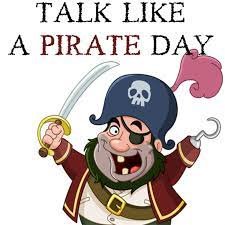
Talk Like a Pirate Day, though created as a joke, has become a beloved faux-holiday that lets everyone channel their inner Jack Sparrow. Did real pirates use much of the movie-and-TV vocabulary we now think of as “pirate lingo”? Maybe not. But, Talk Like a Pirate Day gives lets us break out of our routine, learn some history, celebrate a bygone era—and have fun.Go grab some grog (okay, rum), gather up some maties, and let your imagination take to the high seas! While ordering your coffee, ask if they have change for gold bullion. Try testing your pirate language out at the library when asking for the location of Moby Dick. Settle a debate with “I’m right or I’ll walk the plank!” And don’t forget to practice your “Arggh!” Then polish your persona with a swagger, limp or squint. Parrots not required.
Talk Like a Pirate Day was born in 1995, when 2 friends jokingly created the holiday while playing racquetball. They celebrated it together quietly for a few years, sharing the joke with a small group of friends. One day in 2002, they wrote humor columnist Dave Barry: Would he agree to be the spokesperson for National Talk Like a Pirate Day. He would! And he wrote a column about the holiday, giving it national prominence and spawning a wave of Talk Like a Pirate Day events and celebrations across the US.
From Treasure Island to Pirates of the Caribbean, pirates continue to capture our imagination. Romanticized in literature and film as rugged outlaws, pirates have been around in one form or another for hundreds of years. First recorded in Asian seas after the collapse of the Chinese Han dynasty in the 2nd century, piracy grew across the world with the increase in maritime technology and ocean commerce that happened after the discovery of the New World.
Opened in 1967, Disneyland’s “Pirates of the Caribbean” ride remains one of the park’s most popular attractions. The last attraction Walt worked on before his death, “Pirates” immerses visitors in the richly detailed world of a Caribbean port falling victim to plunder. And then came the movie “Pirates of the Caribbean: The Curse of the Black Pearl” in 2003, with the iconic character Jack Sparrow. Not seen it? Do yourself a favor. Stream it — and embrace your inner pirate!
SEPTEMBER 20: NATIONAL GIBBERISH DAY
National Gibberish Day is dedicated to nonsense. Gibberish may be random speech sounds that mean nothing, or it may be speech that means something, but is a specific jargon that not many people understand. Got that? Most times, gibberish refers to informal speech, while gobbledygook refers to the formal writing or speech so technical and convoluted that it can't be easily understood.
The word gibberish was first used in the early 16th century, and the name may be an onomatopoeia (what a word!) of what unintelligible speech may sound like. In Samuel Johnson’s A Dictionary of the English Language, published in 1755, he wrote that the word gibberish “is probably derived from the chymical cant, and originally implied the jargon of Geber and his tribe.” His theory was that gibberish came from the name of a famous 8th century Muslim alchemist, Jābir ibn Hayyān. His name, Latinized, Geber. “Gibberish” was a reference to the incomprehensible technical jargon and allegorical coded language used by Jabir and other alchemists. After 1818, editors of Johnson's Dictionary rejected that origin theory. But who knows?
Celebrate the day by talking and writing gibberish. It really doesn't matter what’s said, as long as other people can't understand what’s said. If you want some help, try a gibberish translator by clicking here.
SEPTEMBER 21: PAUSE THE WORLD DAY

Pause the World Day is a day to turn off all the extra noise in our lives that raises our blood pressure and stresses us out. On this day, pause the world and forget your troubles.
Ever been overwhelmed by the omnipresence of sirens, television, screens, radio, drilling, mowing, and endless talking? For most of us, all of these constant noises are just normal. However, continuous and uncontrollable noise stresses our bodies by raising our blood pressure and heart rate and releasing stress hormones.
Pause the World Day encourages us to relax and enjoy complete silence, which is rarely experienced and appreciated. However, silence can help us connect with ourselves and listen to our emotions, offering a sense of calm and resulting in utter rejuvenation.
That’s all. The rest is just noise.
SEPTEMBER 22: LOVE NOTE DAY

Love Note is the one day where you get to channel your inner Victorian and send warm, heartfelt love notes to your favorite love! (And, hey, we’re declaring that can mean family members, dear friends, whom-so-ever). It is a chance to convey your deepest emotions by writing down how much that person means to you and sending it to him or her in a scented envelope or an email. If you are not usually the wordy romantic type, take this day as an opportunity to be a little cheesy. Even a plain “I love you” can make someone feel happy and loved.
The oldest record of a love letter can be found in an ancient Indian text called the Bhagavata Purana, an Indian text written about 5,000 years ago. Princess Rukmini sent it to King Krishna. In Ancient Egypt and Rome, the art of writing letters — both formal and informal was a topic of great interest. The art of the love letter was taught as a skill until the start of the 18th century. By the latter half of the 18th century, literature and writing had gone through a big shift due to the influence of the Romantics. Uh oh. According to the Romantics, love letters should come from the heart. The idea of teaching how to write love letters was questioned. Boo on the Romantics!
In the first half of the 20th century, without the internet or mobile phones, the love letter was the only significant exchange and medium of communication between lovers when separated by distance. By the second half of the 20th century, the internet and technology were born and the medium of the love letter slowly started to be replaced, first by telegraph and telephone.
By the “aughts,” we already have email, social media applications, and mobile phones to communicate with our loved ones. Sadly, the art of writing and receiving love letters has already started fading away. Mail now means email, not a physical letter. However, many writers and romantics around the world still keep this tradition alive.
Who it was who started Love Note Day is unknown. But it definitely seems to be an initiative to bring this forgotten medium back. But the ability of a short expression of one's love through the handwritten form—using flowery poetry or sincere prose—to warm and fill the heart in a deep way must not be forgotten. “How do I love thee? Let me count the ways.” Then right them down. Love Note Day aims to bring love notes back, if not forever, then just for a day.
SEPTEMBER 23: NATIONAL GREAT AMERICAN POT PIE DAY

The American pot pie: a blessing for body and soul. And on National Great American Pot Pie Day, we pause to celebrate it in all its glory. Have a “savory tooth”? Pot pies are your friend. And the best excuse for guiltless consumption of carbs.
Archeologists have traced the pot pie back to the Neolithic Age, around 9500 BC. At the time, the Greeks cooked meats mixed with other ingredients in open pastry shells, called “artocreas.” These then spread to the Romans, who prepared them with various meats, oysters, mussels, lampreys, and fish, and included a crust made of a flour and oil mixture. Pot pies spread to medieval Europe during the Crusades. In the 16th century, the English gentry revived the custom of serving pot pies, calling them “meat pies.”
The American pot pie — as distinct from meat-filled pastries — was first referred to in print in the US in 1785. It usually consists of a meat — chicken, pork, or beef, occasionally turkey or ham — and most times include vegetables such as carrots, peas, green beans, and potatoes. Another common ingredient is gravy. A top flaky crust is tops it all off, and usually there’s a bottom crust as well (but not always). Recipes abound for home-cooking, but they can also be found in restaurants or bought frozen in the store. Swanson Foods introduced the first frozen pot pies (chicken) in the early 1950s (the era of TV dinners).
SEPTEMBER 24: NATIONAL PUNCTUATION DAY

From the lowly comma to the flamboyant ampersand, National Punctuation Day celebrates the punctuation that makes our words legible and gets our point across. “Let’s eat, Grandma!” or “Let’s eat Grandma!” Clearly, punctuation saves lives. Though you might not have consciously considered punctuation since elementary school, you likely use it every day. Every year, the creator of the holiday — Jeff Rubin — sets a punctuation challenge, and punctuation quizzes and games can be found countrywide.
Celebrate National Punctuation Day was created in 2004 to help people recognize the importance of proper punctuation, so important when trying to convey a message. It's also an opportunity to have some fun with language, as well as brush up on your grammar skills.
Sick of hearing him complain about the widespread abuse of commas, semicolons, and apostrophes, Jeff Rubin's wife urged him to do something about it. So, it was that in 2004 he launched National Punctuation Day. Want to celebrate National Punctuation Day? Jeff Rubin has some suggestions. Click here to find out what they are.
Forget “silver bells and cockle shells . . .,” we got:

From tiny acorns a mighty oak may grow, but from a cutting Susan Yao received from her son, an ever-expanding pumpkin has grown! Stay tuned . . .

And as the summer moves into fall, Uriel Schlair has had success of his own: a watermelon!
Photos by Cynthia Ferguson
“Our” goats have returned home for the season. A couple of final pictures to remember them by.

In the vein of “a woman’s work is never done,” everyone is taking an afternoon nap, except on nanny goat nursing a couple of kids.
Photo by Mimi Abramowitz

Adieu until summer ‘24 . . . one mouthful for the road
Photo by Edward Kasinec
We had a visitor last week, who was determed — come hell or high water — to be part of Kendal
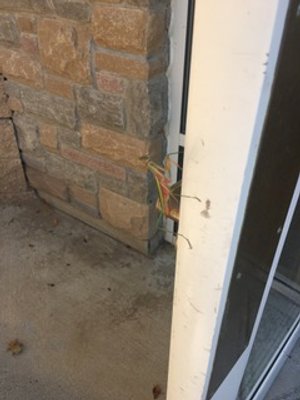
See starts her efforts . . .
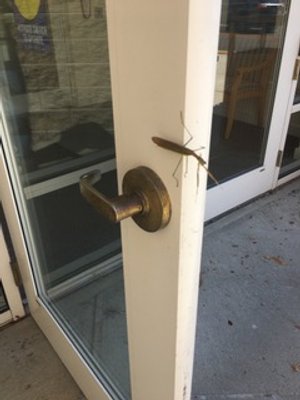
Hesitant, at first . . .
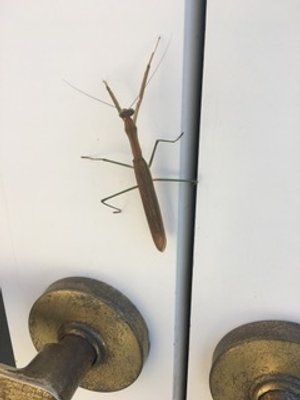
She achieves entry . . .
Above photos by Peter Sibley

Sadly, too late to see the game
Photo by Edward Kasinec

From the terrace, August 30
Photo by Cynthia Ferguson

Swan Lake at the Rockefeller Preserve
Photo by Mimi Abramowitz
Barbara Bettigole’s family shares a plethora of summertime birthdays. This year, she made a request: a Grands and Greats Weekend. Just her and her grandchildren and great-grandchildren shared a weekend in Cornwall, NY, in an airBNB that was straight out of a dream come true. “I mostly chatted and watched. The children played in the amazingly well-stocked playroom or the unbelievable outdoor playhouse/gym. The grown-ups cooked, hiked and played frisbee, etc. and took care of whichever child was available.” Seems it couldn’t be more perfect. But then it was: “We did a lot of eating. They’re all foodies.” So “dream come true” with whipped cream and a cherry on top!

We fall in love. Fall for scams. Embrace autumnal weather as Fall.
But one of the key things we at Kendal don’t want to do is take a fall. Sadly, Jo-ann Rapaport did this past summer (she’s fine now, we hasten to say) and had the bright idea that we add some prevention information to Res Web. Thus this segment is born. Click below for two good and basic discussions on steps to take (and some to avoid):
It’s that time again! Life is moving indoors. While the Westchester hospital rates for COVID admissions is “Low,” let’s try to keep it that way! Some guidelines from Ellen Ottstadt:
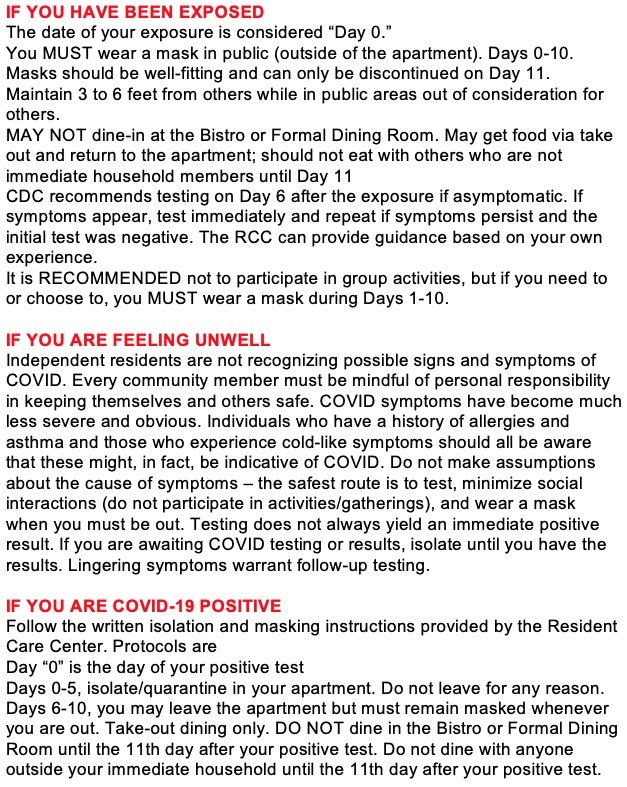
Contributed by Ellen Ottstadt
This is a process called guttation. The plant is expelling water due to a positive root pressure.

Contributed by Simone


Sea Collage

Sea Poetry

© Kendal on Hudson Residents Association 2015, 2016, 2017, 2018, 2019, 2020, 2021, 2022 all rights reserved. Please do not reproduce without permission.
Photographs of life at Kendal on Hudson are by residents.