

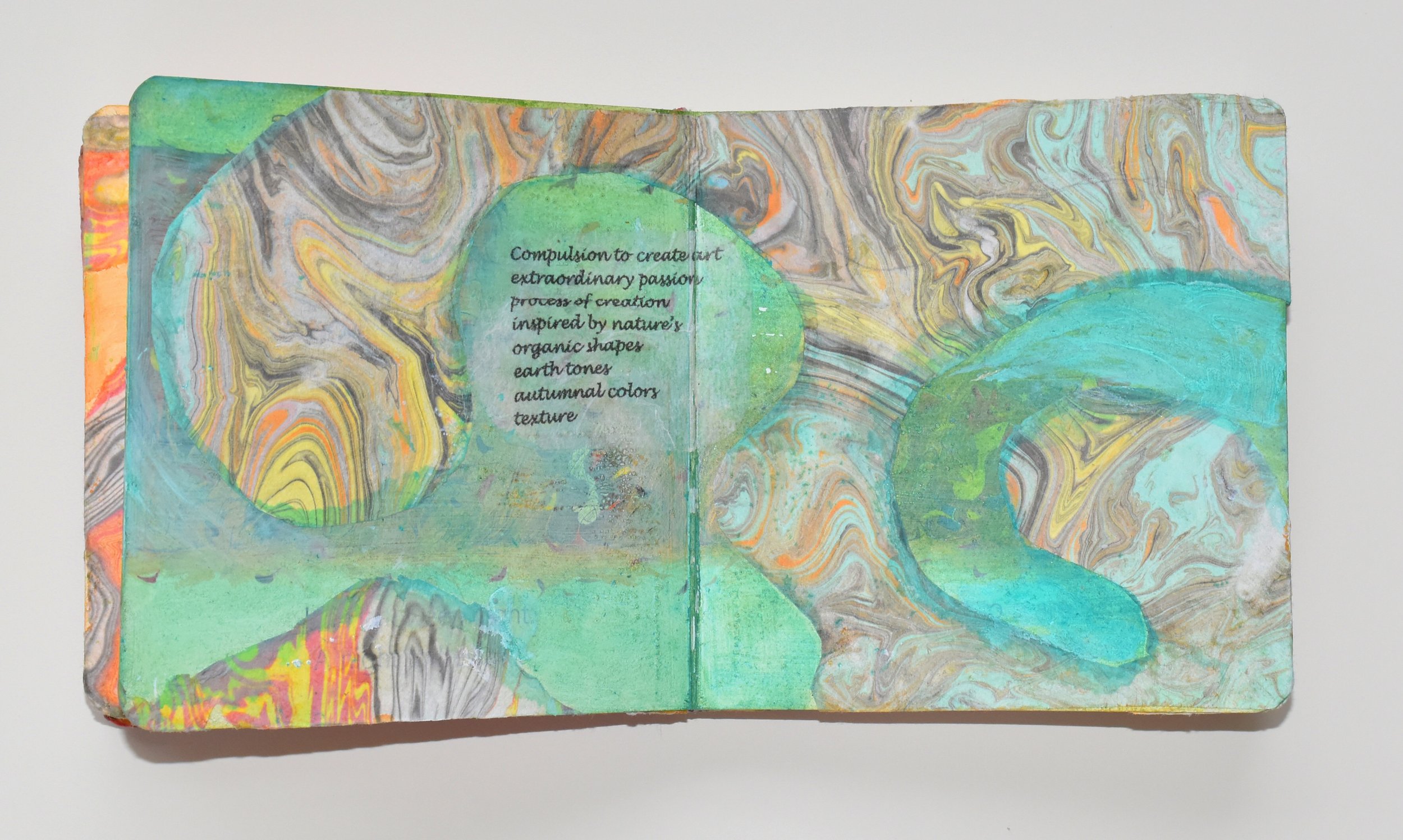

Art and Photos by Sheila Benedis
In and Around Kendal
The Flowers and Trees of Rockwood Park, by Edward Kasinec

A Touch of Color

An Orangutan Tree
A Babbling Brook and Bucolic Birds of Rockwood Park, by Carolyn Reiss
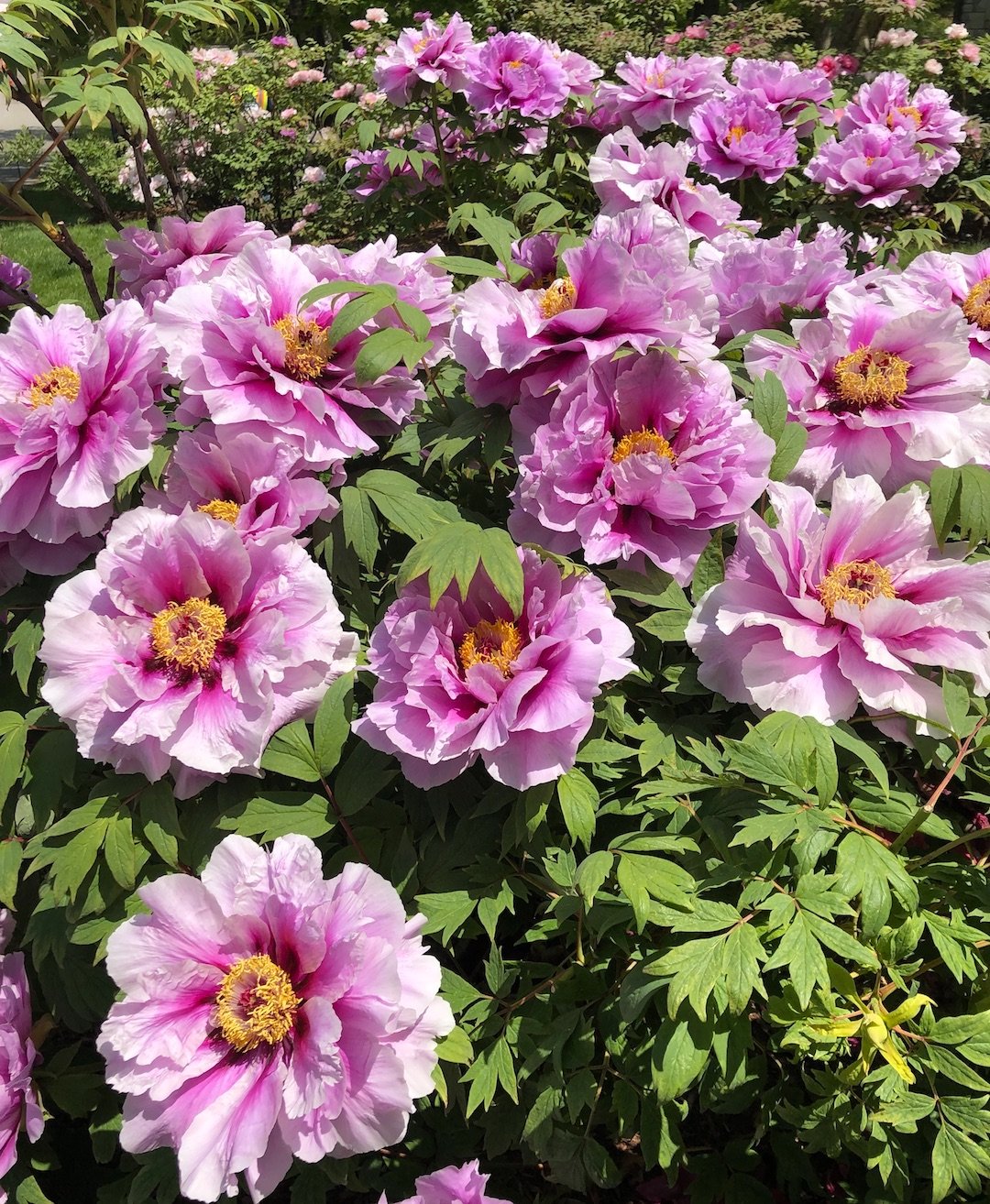
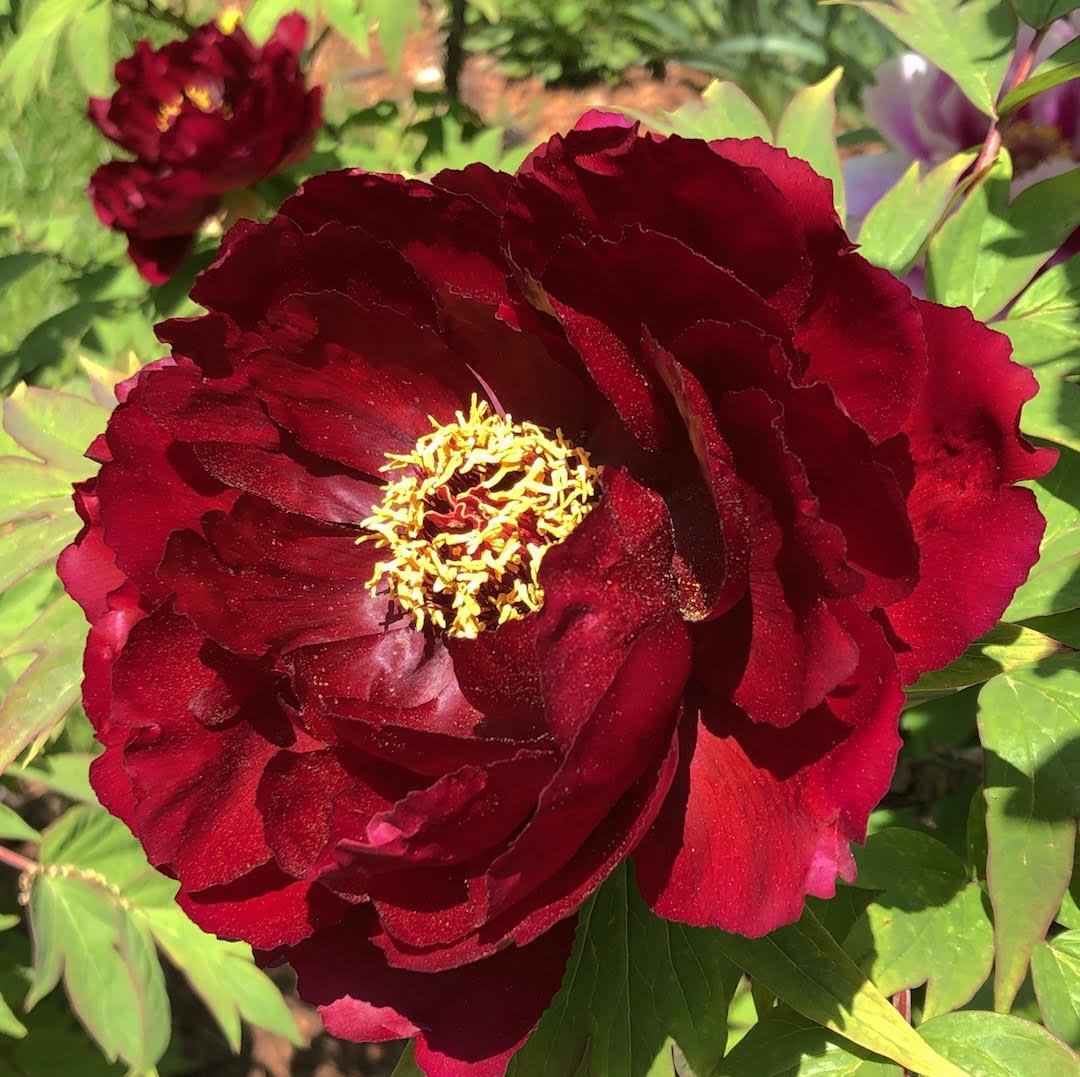
The Peonies of Rockwood Park, by Art Brady




And a Magnicent Setting Sun Out Over the Hudson, by Alice Clague

And a Little Closer to Home . . .

A male house finch dropped in on the Brady patio
Photo by Art Brady
What's Up on the Rue Des Artistes?
You may have noticed a little bit of a change on the Rue des Artistes, which recently went from picture-laden to mono-chromatic:

Photo by Art Brady
Great news! Thanks to dedicated members of the Art Committee, led by Ann Holloway, and including Judy Baker, Cathie Campbell, Carolyn Reiss, Peter Sibley, Martin Smolin, Jackie Wilke—and a very helpful Gerry Mahoney—a new show is being hung. And it will kick off with gusto (and a gala reception) on:

Check your cubbies for your very own invitation. Then come and enjoy the food, friends, and Legacy Art Show.
Books Recommended by May 18 Speaker Steve Liesman (The US Economy)
On May 18, CNBC senior economics reporter Steve Liesman gave a fascinating talk on the US economy, the outlook for a recession, the Federal Reserve, interest rates, and inflation. During the course of the discussion, he mentioned several books that we thought sounded fascinating, but whose titles we had no ability to remember—and no pen and paper to write them down. Thankfully, Education Committee Chair Fran Kelly diligently made note of them. And here they are!
Peter Bernstein: “Against the Gods: The Remarkable Story of Risk”
Todd Bucholz: “New Ideas from Dead Economists: The Introduction to Modern Economic Thought”
Ben Bernanke: “The Courage to Act: A Memoir of a Crisis and Its Aftermath”
Michael Lewis: “The Big Short: Inside the Doomsday Machine”
Andrew Ross Sorkin: “Too Big to Fail: The Inside Story of How Wall Street and Washington Fought to Save the Financial System--and Themselves”
The Continuing Saga of the Goats of Rockwood Park

Just to remind you of their mission: Stone Barns Center and Rockefeller State Park Preserve have joined together in the Rockwood Hall Goat Project for invasive-species management. Stone Barns Center goats are helping to control chocolate vine, porcelain berry, multiflora rose, wineberry, and other harmful invasive species that are eroding out native species at Rockwood Hall.
Contributed by Maria Harris
The Herd You’ve Heard Of in Their Moveable Fencing—and (center) Their Valiant Canine Protector

Photo by Carolyn Reiss
Herd Solo Members
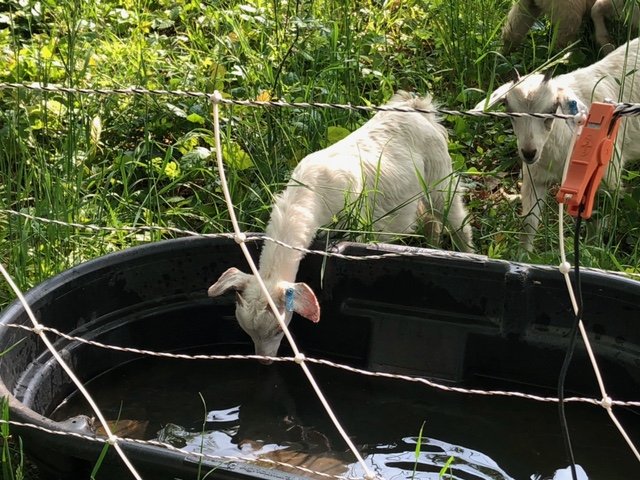
All goatish needs are attended to.
Photo by Carolyn Reiss

You lookin’ at me!?
Photo by Maria Harris
The Valiant Goat-herd Protector

Never failing to be vigilant

Checking fore and aft

Geez, this can be tiring work . . .
Photos by Valerie Wallace

Z-z-z-z-z-z: A goatherd sleeps . . .
Photo by Edward Kasinec
For Your Funny Bone . . .

Contributed by Maria Harris


Accomplishment, by Sheila Benedis
Accomplishment Artist Book


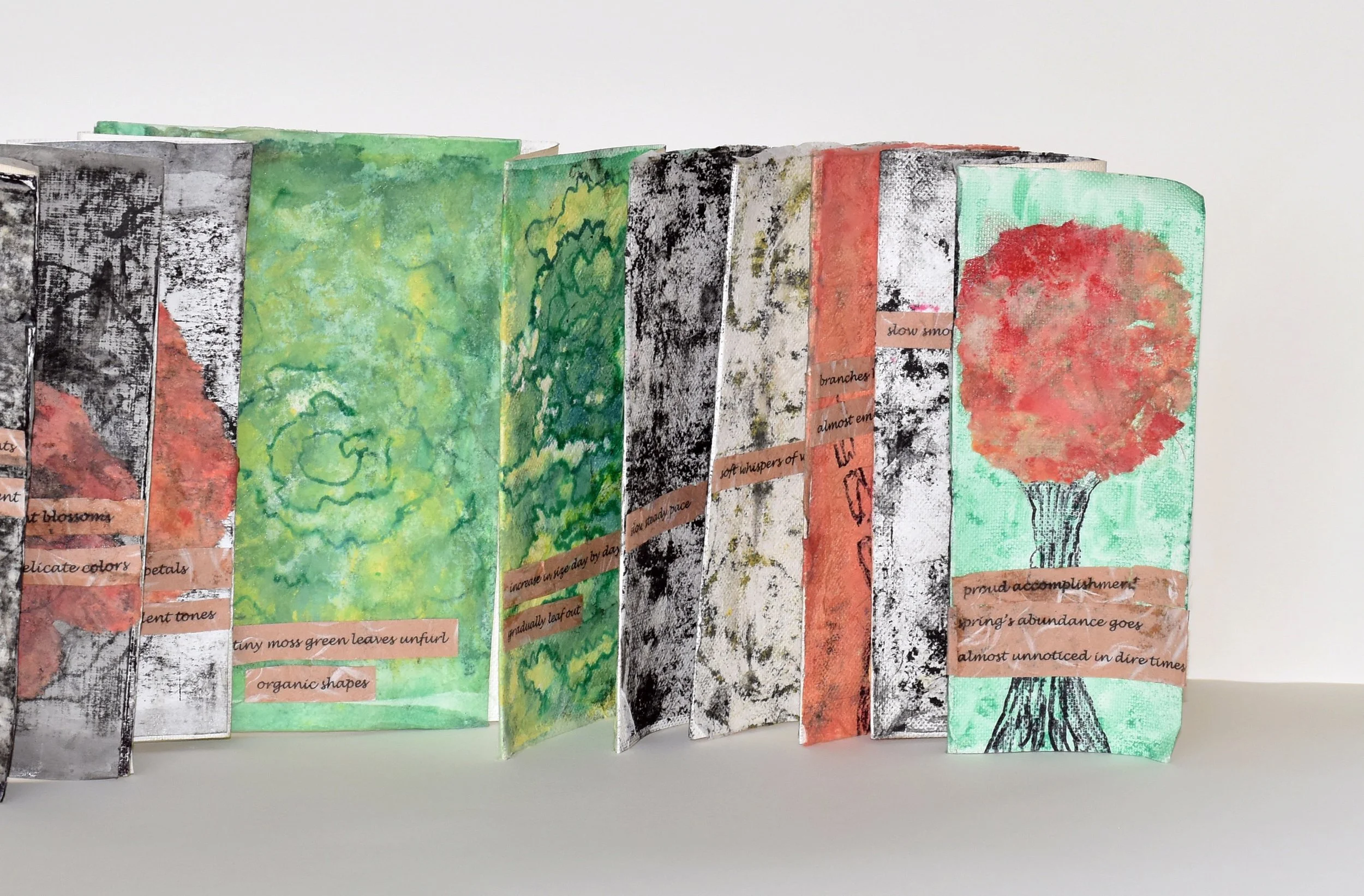
Accomplishment
In a landscape pruned of humans
Sheltering in isolation at home
The magnolia bursts forth radiant
Undeterred by a pandemic or unrest
Oblivious to the plight of its inhabitants.
Growth transforms our environment
Magnificent blossoms
Flash soft delicate colors
Smooth petals
Varying tones
Tiny moss green leaves unfurl
Organic shapes
Increase in size day by day
Gradually leaf out
Slow steady pace
Scent of air on the breeze
Soft whispers of wind
Branches hover
Almost embrace
Slow smooth soft serene
Proud accomplishment
Spring’s abundance goes
Almost unnoticed in dire times
Art and Poem by Sheila Benedis
Art by Hart

It was a heated issue in the Petco boardroom: Had Woofy's bone been a bribe, a reward or a treat?

You know you need glasses when you start tripping over fish

Always hopeful, Pierre went out on a limb to meet women
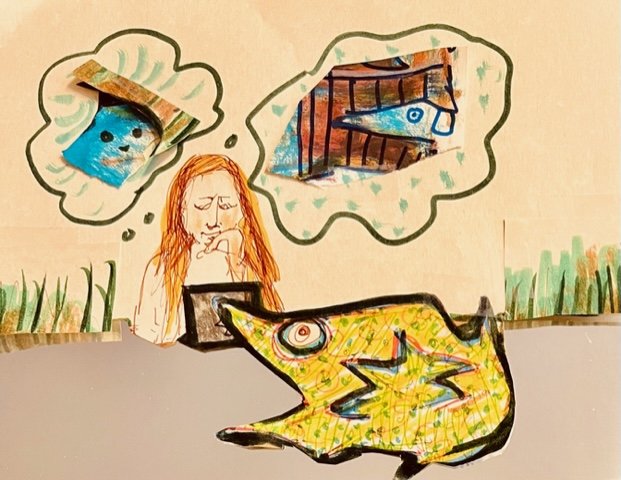
Corbin couldn't understand why he never appeared in any of Selma's novels

Lili never got Mr. Potatohead out of her system
Art and photos by Jane Hart
In and Around Kendal
Kendal’s first wisteria of spring 2023

Photo by Martin Smolin
You’ve met the herd, now meet an individual from the Rockwood Park goats

Photo by Hubert Herring
The Beading Arts
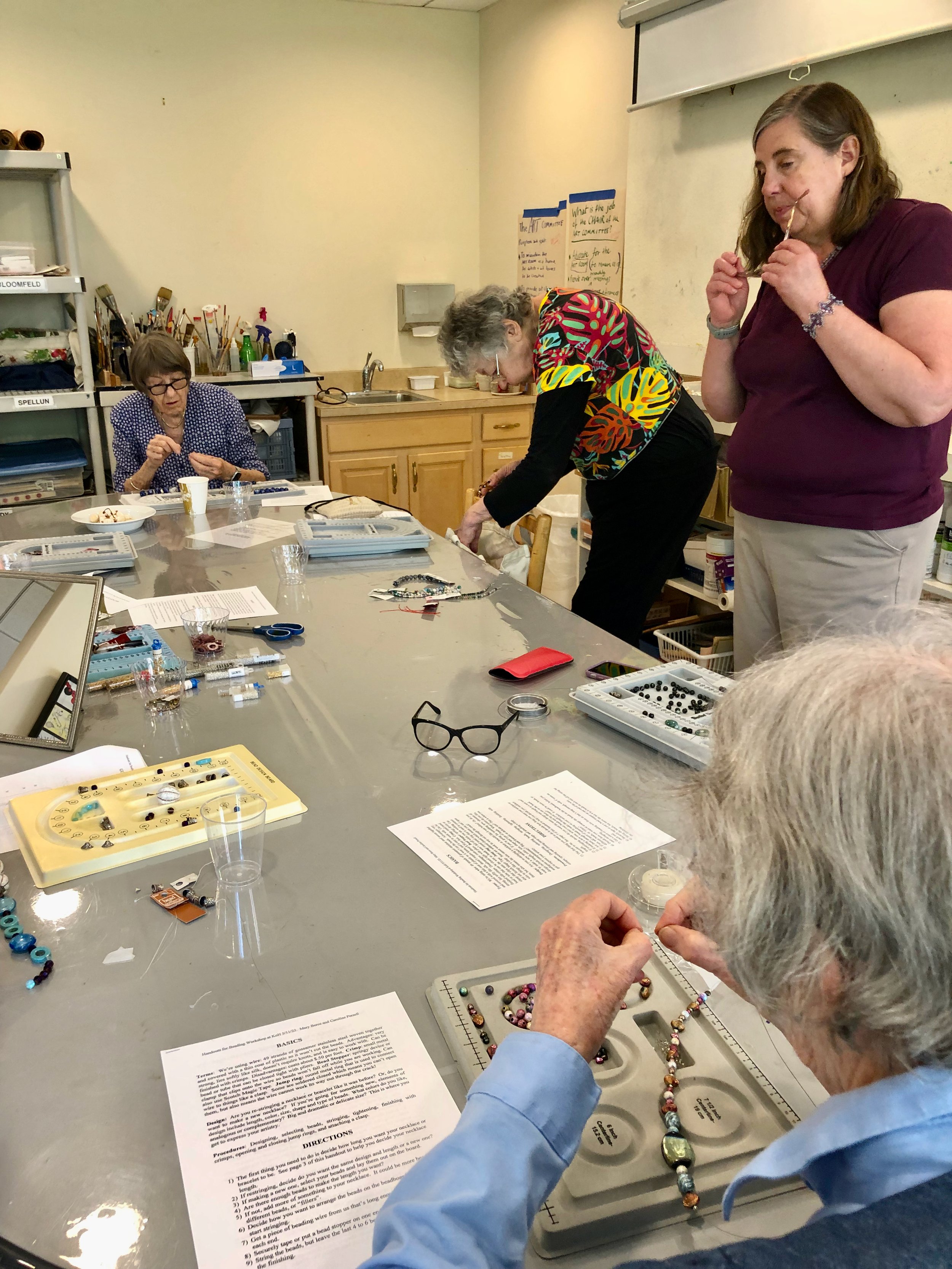
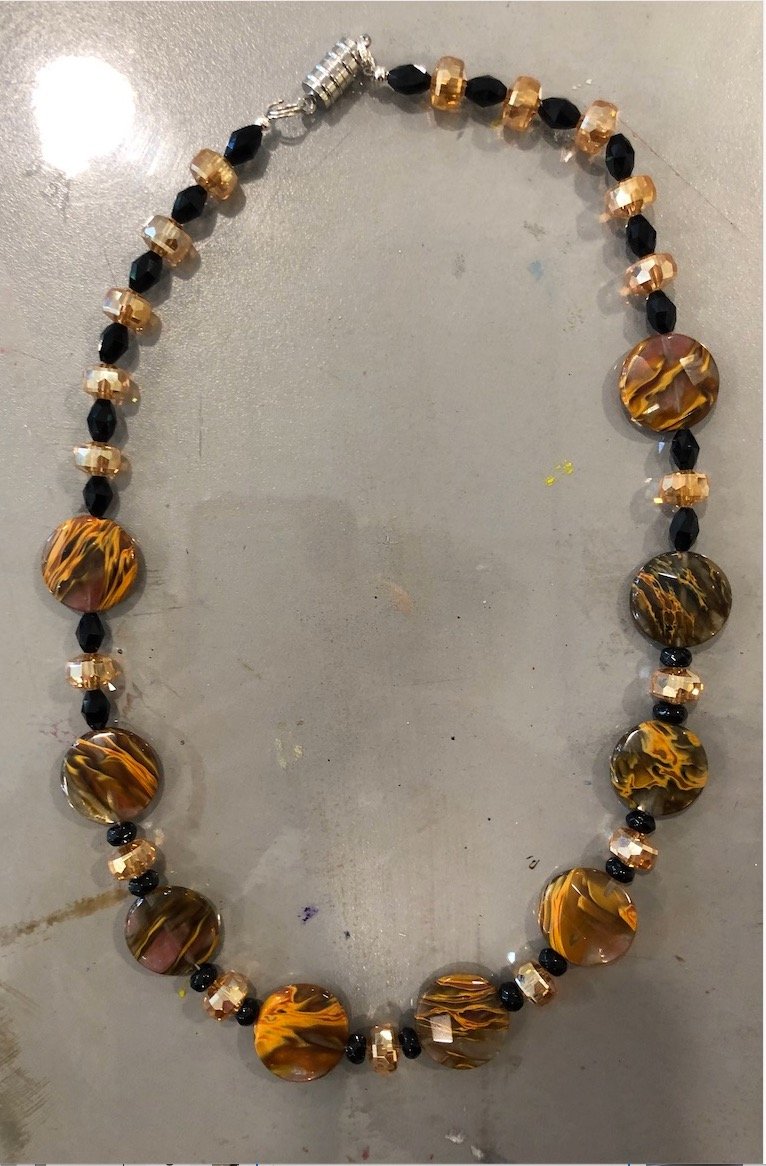
On May 11, a Bead Workshop, sponsored by the KoH Art Committee, was held in the Art Studio. Mary Berce (daughter of KoH resident Marion Lemker) and Caroline Persell organized and taught the class. The results were both creative and lovely.


The Material Arts: Quilting at Its Most Amazing
The Northern Star Quilters Guild held their annual show recently at SUNY Purchase. Several Kendal Quilters made the trip to see the offerings. The quilts were amazing. Some examples below:


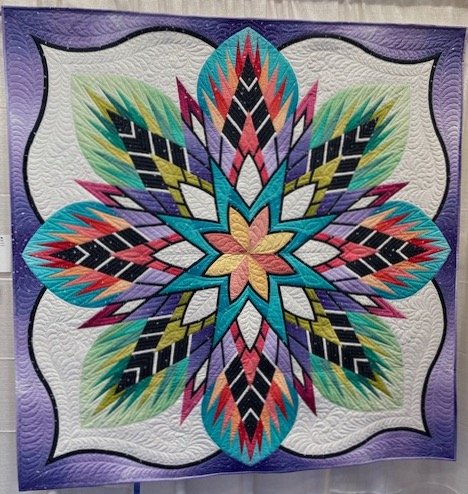

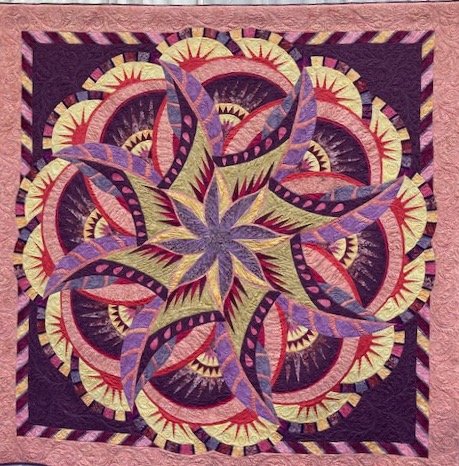
Photos by Harry Bloomfeld
Kendalites Afield
The Brunos have flown away to more exotic places than Sleepy Hollow, NY (hard to believe, right?). But they have not forgotten us. The following from their most recent locale:

A suggestion for “refreshing” Kendal’s main elevator lobby and lounge?

Directions to the “facilities.”
A Serenade . . .
Contributed by Simone
The Trip for Those Who Like Food, Not Spies
May 10, a group of Kendalites journeyed to the Culinary Institute of Arts to learn about one of the finest schools for chefs and the like — and, also, to enjoy the scenery (and the food).
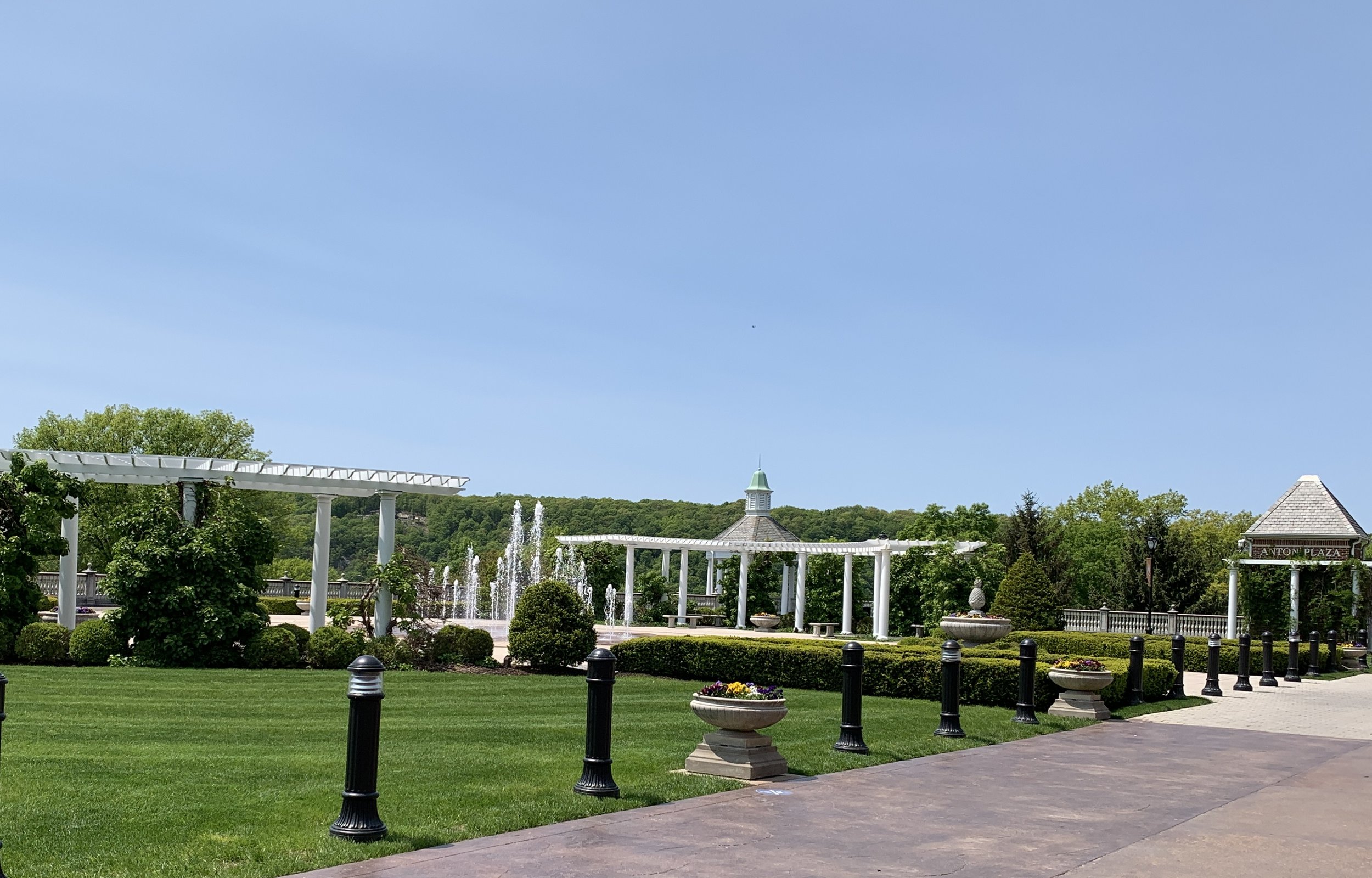
The scenery of the CIA
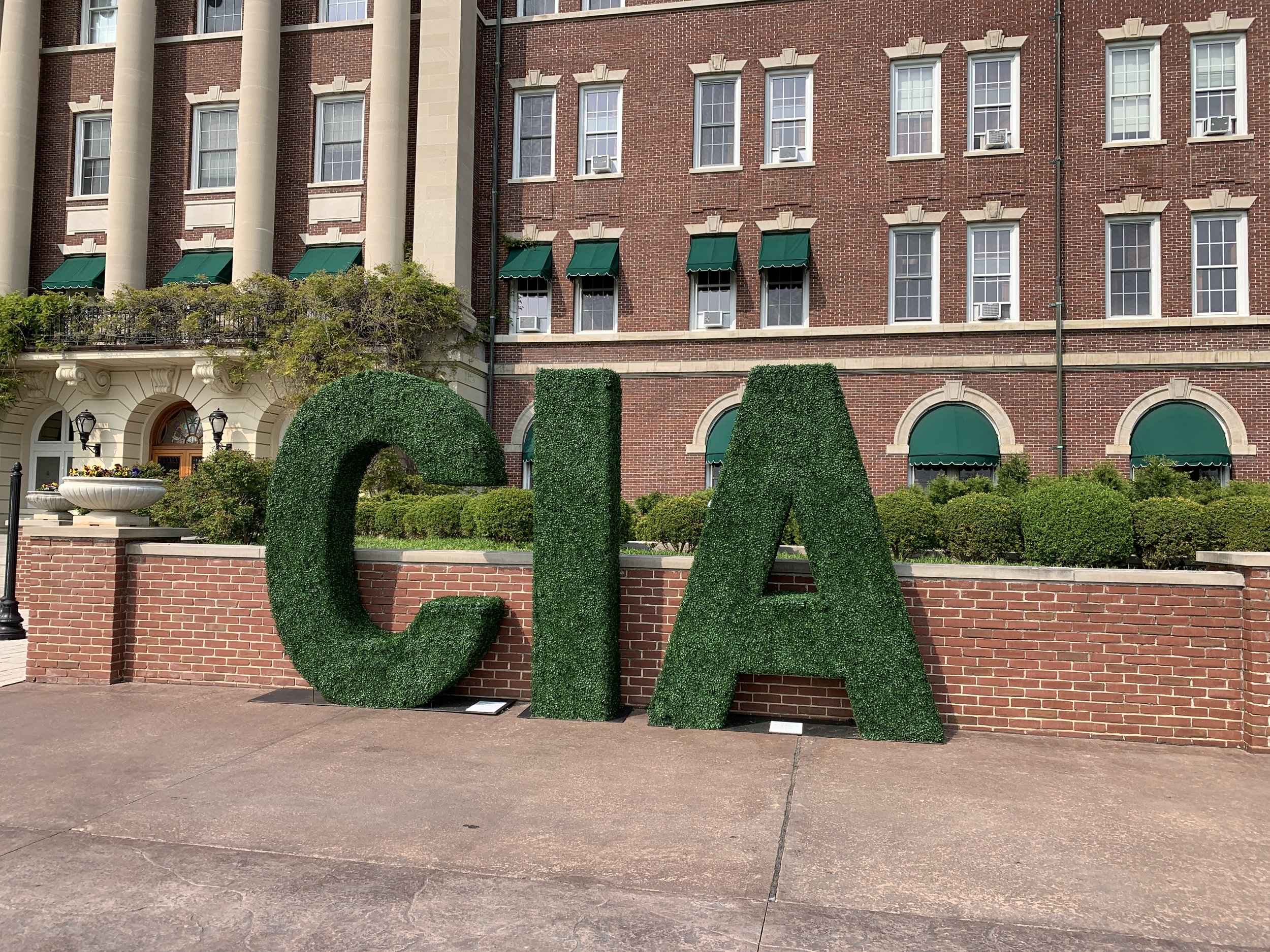
The main CIA building, with classrooms, cooking labs, eating venues, and more . . .
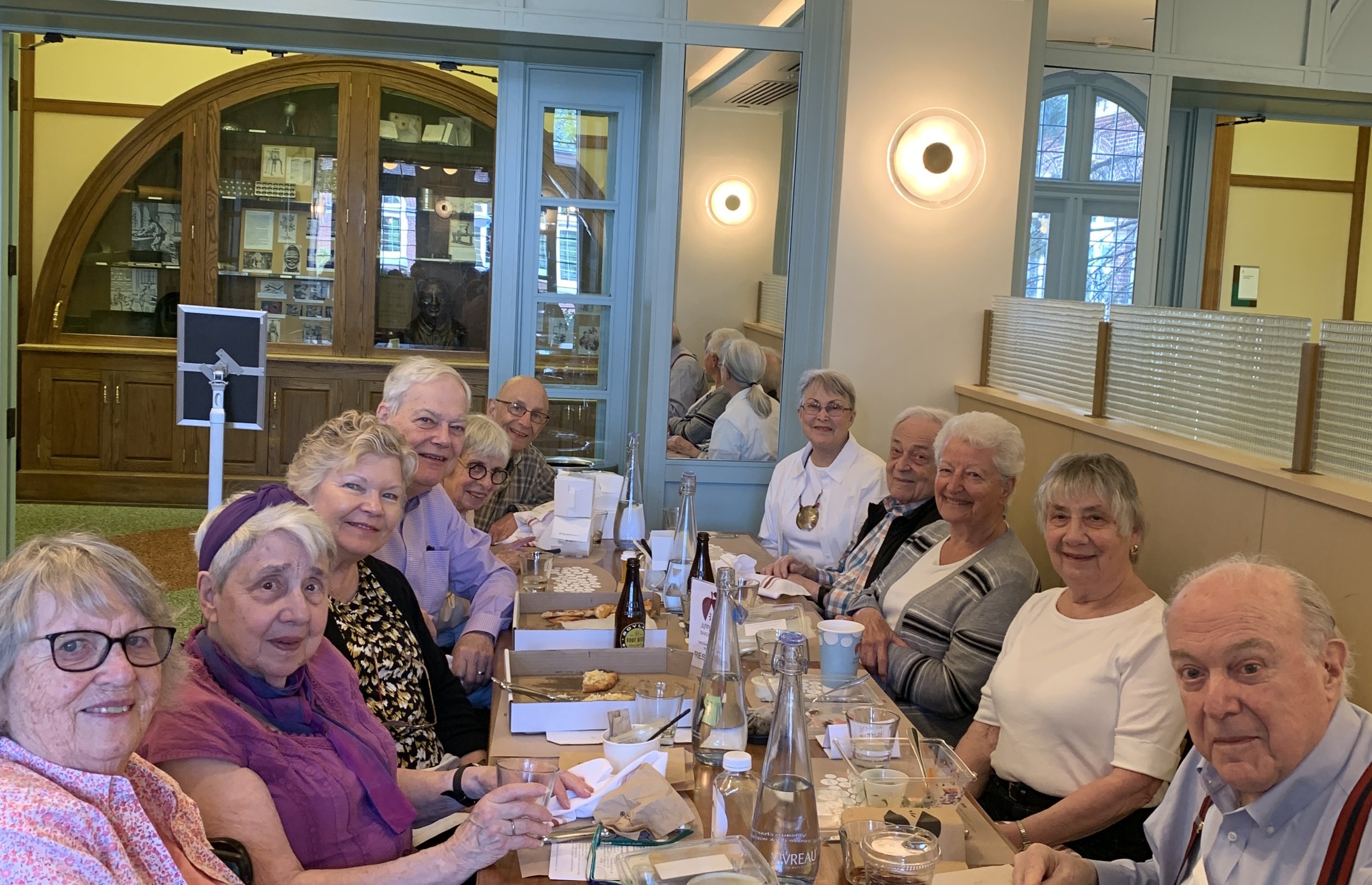
Dining at The Apple Pie Cafe of the CIA

More Apple Pie Cafe veterans
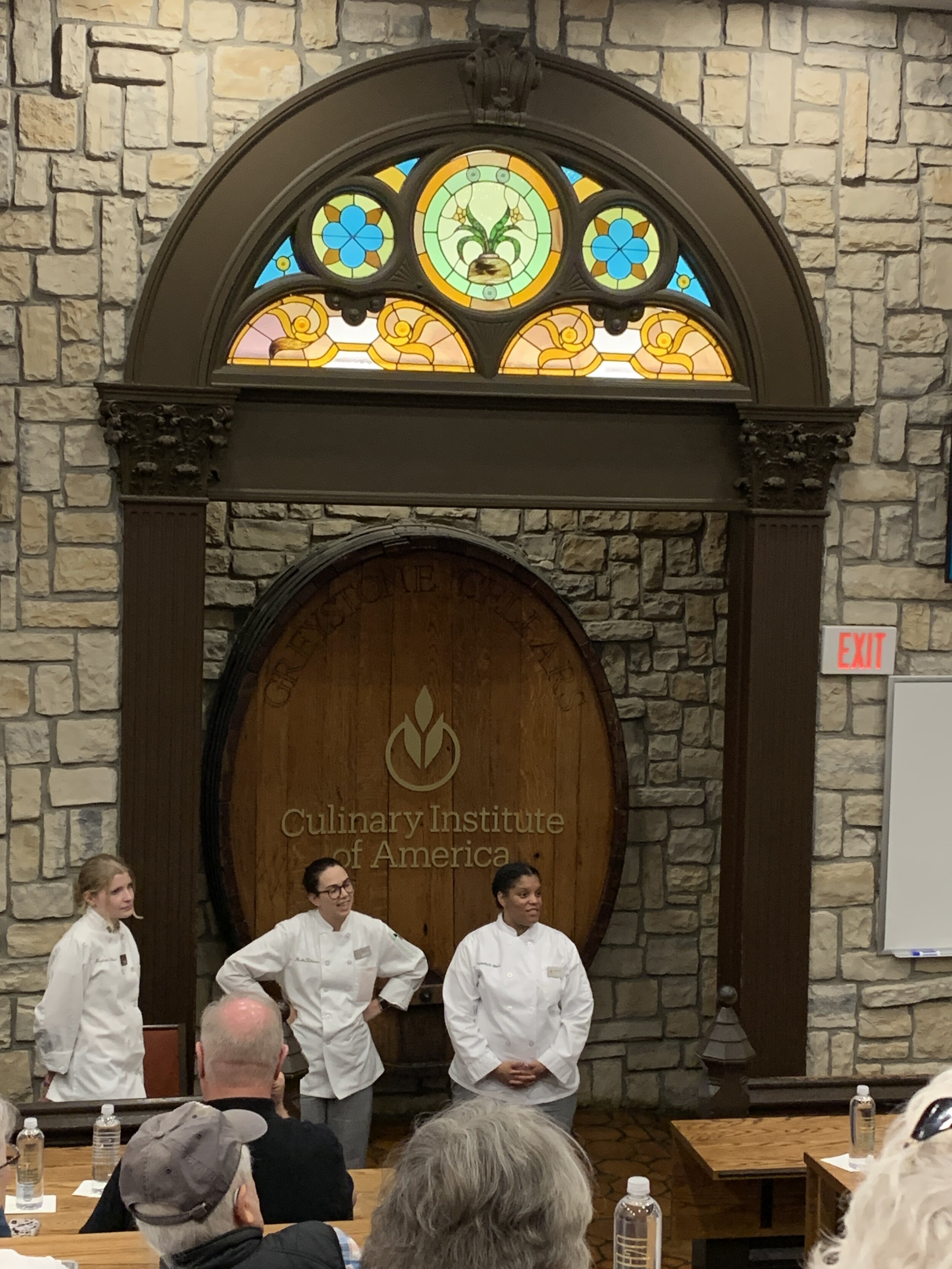
Learning about the Culinary Institute of America; tour to follow.
God Save the King (Like It or Not)
God Save the King (like it or not)
Last week, many Kendalites rose before the sun to watch the pomp and circumstance of the coronation of King Charles III. So, now Britain has a new king. Signed, sealed and delivered. But who came before Charles? Well, yes, Elizabeth. But what’s the whole line-up?
In 2011, The Monarchs' Song song appeared on the BBC’s Horrible Histories TV series, an award-winning children’s program. And this year it’s been updated for the newest monarch to arrive. In the song, the Kings and Queens of England sing a bit about themselves, with a list of every single monarch for the chorus, a challenge to learn it by heart — and a delight to listen to!
Interested? If so, click on the center right arrow below.
For Your Funny Bone . . .


Special Observances: May 15 - 21
MAY 15: INTERNATIONAL DINOSAUR DAY
The third Tuesday in May is International Dinosaur Day, falling on May 16th this year. Dinosaur Day seeks to celebrate — need we say? — Dinosaurs. Dinosaurs were a group of reptiles belonging to the ancestral family Dinosauria. These creatures lived millions of years ago during the Mesozoic era, which began around 252 million years ago. It is estimated that they went extinct 66 million years ago. So, they were the ancestors of today's common lizards, snakes, turtles, crocodiles—and even birds. IDD is the occasion to learn all about the different types of dinosaurs! This day aims to educate and inform people about dinosaurs and their descendants. It encourages everyone to learn more about dinosaurs.
MAY 16: LOVE A TREE DAY

On this holiday, go out and give a tree a great big hug. Or, climb up into your favorite tree, and share some quality time with it. Wait. Second thought: don’t climb, sit under a tree and commune any way you like.
National Love a Tree Day celebrates the joys of life provided by trees. Trees are a good thing. They give us shade, comfort, and warmth. They give off oxygen, too. Some provide fruit.
Most species of trees tend to be long-lived. Some trees live to be several thousand years old. The tallest known tree is 379 ft. tall. Between 1630 and 1910, there was a steady decline from 1,023 million acres to 754 million acres. That’s a decline from 46 percent to 34 percent of the total land area of the United States. According to the U.S. Forest Service, about 766 million acres of forest land exists in the US today. This number has held steady since 2012.
MAY 17: NATIONAL WALNUT DAY

We have an idea that the squirrels might enjoy this one.
In 1958, May 17 officially recognized National Walnut Day by a Senate resolution signed into law by President Eisenhower. Today we celebrate with delicious recipes of salads, desserts, and snack foods. Rounded, single-seeded stone fruits of the walnut tree, walnuts are a high-density source of nutrients, particularly proteins and essential fatty acids. Grown for their seeds, the Persian or English Walnut and the Black Walnut are the two most common major species of walnuts.
The United States exports more walnuts than any other country. Ninety-nine percent of the nation’s commercial English walnuts are produced in the Sacramento and San Joaquin valleys of California.
MAY 18: INTERNATIONAL MUSEUM DAY

Since 1977, the International Council of Museums (I.C.O.M.) has celebrated May 18 to pay tribute to the international museum community. Museums are vital venues for cultural exchange and enrichment, as well as for the development of peaceful coexistence and cooperation among nations and communities. This day encourages people to visit museums dedicated to many fields of human endeavor such as agriculture, fashion, astronomy, archaeology, art, and natural history.
Each year, International Museum Day has on a particular theme. This year’s theme, “Museum, Sustainability and Well-being,” focuses on the importance of the environment, health and well-being in everyday life, and how museums can contribute to these aspects as cultural institutions. Museums can play a key role in promoting sustainability and wellbeing, by implementing initiatives that encourage environmental responsibility, health and wellbeing for visitors and staff.
MAY 19: NATIONAL PIZZA PARTY DAY

Each year on the third Friday in May, millions of pizza lovers across the nation join in extolling the qualities of pizza on National Pizza Party Day.
Since pizza is one of America’s favorite foods — and Friday Pizza at Kendal is a sacred event — it comes as no surprise we would celebrate a day that features a pizza party. Pizza parties bring friends together. Birthdays and some minor achievements are also celebrated with pizza parties, too. Although, just about any excuse can be used for a good pizza party. Like a Friday.
In ancient Greece, the Greeks covered their bread with oils, herbs, and cheese, which some attribute to the beginning of the pizza. In Byzantine Greek, the word was spelled “πίτα,” pita, meaning pie. The Romans developed a pastry with a sheet of dough topped with cheese and honey, then flavored with bay leaves. Our modern pizza had its beginning in Italy as the Neapolitan flatbread.
The original pizza used only mozzarella cheese, mainly the highest quality buffalo mozzarella variant. The first United States pizza establishment opened in New York’s Little Italy in 1905. An estimated 2 billion pounds of pizza cheese was produced in the United States in 1997.
The largest pizza ever made, according to Guinness World Records, weighed 26,883 pounds. It was made in Norwood, South Africa, on December 8, 1990. As far as pizza eating contests go, the winner goes to Kelvin Medina, who ate a 12-inch pizza in 23.62 seconds on April 12, 2015.
MAY 20: WORLD FIDDLE DAY

World Fiddle Day, celebrated every third Saturday in May, is an annual celebration of fiddle music. This year, it falls on May 20. All across the world, particularly in regions where the fiddle is popular, several events are organized and put together for World Fiddle Day. The holiday was founded by Caoimhin Mac Aoidh in 2012. The date was deliberately chosen to be the same as the anniversary of the death of legendary Italian violin craftsman Antonio Stradivari.
The medieval fiddle began to show up in 10th-century Europe, deriving from an earlier instrument of similar build and purpose from the Byzantine era known as the ‘lira.’ The lira was a bowed string instrument of the Byzantine Empire and it is regarded as the ancestor of most European bowed instruments.
MAY 21: NATIONAL MEMO DAY

National Memo Day on May 21 has us getting our pens, notes, and typing skills sharp and ready. A memo is any piece of important information that is penned or typed down to be sent to a group of people. The National Memo Day was first celebrated in 1989 by KMJI Majic Radio, located in Denver, Colorado. The purpose of the day was to raise awareness about the memos that are being used by people in businesses.
Tracing the word’s origin, it comes from the Latin word ‘memorandum,’ meaning ‘it must be remembered.’ People have been using memos to convey messages and plans of action for centuries. There are several different forms of a memo (i.e. formal, informal, policy making, etc.), and the usage of each depends on the context of the situation and the people involved. At some point, memos were used to tell people about the changes in laws of a kingdom. In other times, they were used to inform military personnel about the next move. Memos have also had the reputation of falling into the wrong hands, resulting in disastrous outcomes. Major Andre’s capture in the Sleepy Hollow/Tarrytown vicinity comes to mind. Disastrous for Andre, not the American rebels.
In modern times, the main content of a memo could range from a few lines to a few pages. Today, the mighty Post-It is key to memos.
Art by Hart

After marathon negotiations, labor and management reached a shaky truce
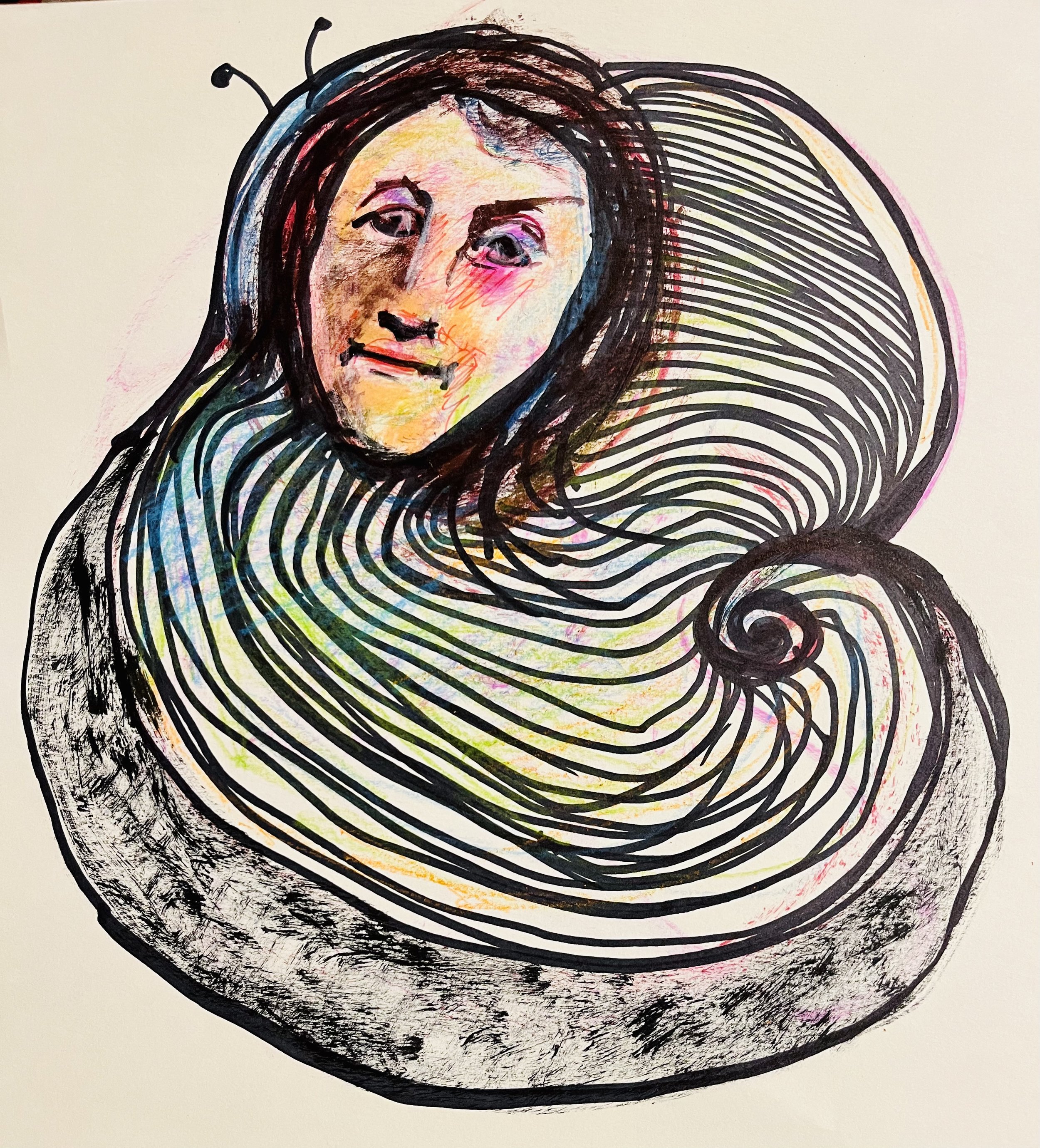
Selena was sensitive about jokes involving French menus, tiny forks and garlic butter

Migratory birds and sea captains feared Lorelei's ominous, "Come here often, Sailor?"

Mr. Greenjeans was hailed as a hero for saving Stevie from the feral hyena

Ogden's fitness coach was adamant about his 5 am breaststroke and butterfly drills
Art and photos by Jane Hart
Inspiration, by Sheila Benedis
INSPIRATION
life on the autism spectrum
has created such a problem
sensitive to noise
not gregarious
causes stress
conundrum
as a child my life started
completely left brain absorbed
felt inspiration
art emanation
gratification
Joy appeared
inspired by bold images
my act of creating art works
feels motivating
invigorating
designing
textures
organic shapes

Poem and art by Sheila Benedis
In and Around Kendal . . .

Spring palette

Fallen giant
Photos by Edward Kasinec