Special Observances, May 1 - 7

MAY 1: NATIONAL CHOCOLATE PARFAIT DAY

It’s hard to resist a sweet celebration for National Chocolate Parfait Day. The delicious layers of chocolate, cream, and more chocolate sweetly stacked together is enough to make us go straight to dessert. In French, the word “parfait” means “perfect.” French and Americans, however, have differing opinions on what a parfait really is. The traditional French parfait is made by boiling cream, adding egg, sugar, and syrup, then creating a custard-type puree, which is then frozen. Americans, on the other hand, layer ingredients of differing varieties. Both French and Americans use a clear, tall glass when serving a chocolate parfait.

MAY 2: NATIONAL PLAY YOUR UKULELE DAY

National Play Your Ukulele Day is celebrated to interest more and more people in the instrument, while also encouraging those playing it to strum their favorite tunes. The ukulele belongs to the guitar family, though the guitar has 6 strings and the ukulele only 4. When it comes to size, a ukulele is much smaller than a guitar, making it easy to carry around and play. The word ‘ukulele’ has Hawaiian roots meaning “jumping flea,” probably because the musician’s fingers look like fleas jumping on the strings. Even though the instrument’s name has Hawaiian roots, it was brought to the island of Hawaii by Portuguese immigrants. The ukulele, aslo known as the “uke,” was brought to mainstream music in the early 20th century, and quickly became a popular instrument for jazz music. Mike Lynch — “Ukulele Mike” — is behind National Play Your Ukulele Day, first celebrated in 2011. Lynch was a school teacher and an online ukulele instructor.

MAY 3: NATIONAL PUBLIC RADIO DAY

This day celebrates public radio stations and community radio organizations that have come a long way in informing, entertaining, and shaping our local communities. The first non-governmental radio broadcasting started in 1916. These broadcasts were not voices or music but rather Morse code signals. The first World War halted all non-governmental radio broadcasts, and the end of the war heralded the beginning of a new era for radio. Technology had advanced, with the radio’s ability to transmit both voices and music. Radio stations were primarily employed for academic reasons by colleges and universities in the 1920s. By the 1940s, the lowest set of numbers in the FM spectrum had been picked for educational and non-profit reasons, which served as the impetus for creating Public Radio in 1967 when President Johnson signed the Public Broadcasting Act. The Corporation for Public Broadcasting (CPB) was created, leading to the formation of the National Public Radio (NPR). Today it is a prominent media organization that sources and controls informative and educational media content in the US. The origins of National Public Radio Day are unknown, but was first observed in the 1990s — clearly influenced by the UNESCO-recognized World Radio Day in February.

MAY 4: WORLD PASSWORD DAY
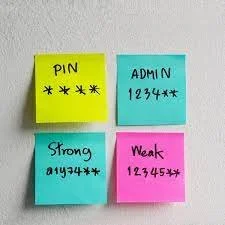
Each year, on the first Thursday in May, World Password Day promotes better password habits. Passwords are critical gatekeepers to our digital identities, allowing us to access online shopping, dating, banking, social media, private work, and life communications. In his 2005 book Perfect Passwords, security researcher Mark Burnett first encouraged people to have a “password day” where they update important passwords. Inspired by his idea, Intel Security took the initiative to declare the first Thursday in May World Password Day in 2013. World Password Day is meant to create awareness of the need for good password security.

MAY 5: NATIONAL CARTOONIST DAY

National Cartoonists Day honors all those creative ink-stained artists, past and present, and the fascinating pieces they have created. Throughout the years, their talents bring humor and  entertainment into our lives, while provoking thought and debate, too. American comic-strip writer and artist, Richard Outcault, is considered the inventor of the modern comic strip. He created the comic strips The Yellow Kid and Buster Brown.

Cartoon characters can be found in practically all media. They are on television and in newspaper and magazine comic strips (or the “funny papers”). Peanuts, Dennis the Menace, Beetle Bailey, Betty Boop, and so many more cartoon characters got their start in printed media. Comic books abound with cartoon characters. Cartoon characters have been on television since the days of black and white TV. Cartoon characters grace the big screen, too. Disney’s Mickey Mouse first appeared in the movie “Steamboat Willie” in 1928. More recent examples include Shrek, Aladdin, Nemo, and Dora the Explorer. Cartoon characters are used everywhere in advertising, too. Characters like the Trix Bunny and Captain Crunch adorn many cereal boxes. A well-recognized gecko and duck each sell insurance on television.

MAY 6: NATIONAL NURSES DAY

Often the first and last person a patient sees during a hospital visit, nurses are truly the rockstars! At the end of the 19th century, “The Lady with the Lamp” — Florence Nightingale — founded modern nursing. Thanks to her strict use of hand-washing and hygiene practices while caring for wounded soldiers in the Crimean War, Nightingale and her helpers reduced the death rate from 42% to 2% — ushering in nursing as we know it today.

Today, nurses — over 3 million — make up the highest percentage of the US healthcare workforce. They are more likely to sustain a back injury on a shift than construction workers, and walk an average of 5 kilometers per shift. The majority of registered nurses (59%) don’t practice in hospitals but elsewhere, such as nursing home or on home visits. Worldwide, they work across communities to keep people happy and healthy.

MAY 7: WORLD LAUGHTER DAY

Shrill or funny, giggly or bubbly, on this day let out your laughter to your heart’s content. Indeed, spend your life with laughter and joy. Laughter decreases stress. By laughing, the brain releases endorphins which make one feel happy.  

The first World Laughter Day gathering took place in Mumbai, India in 1998. Around 12,000 members from the international laughter clubs attended the event — and laughed and laughed. In 2000, a “Happy-demic,” the first world laughter day outside India, was held Copenhagen, Denmark. Around 10,000 people attended, putting it in the “Guinness Book of World Records.”

Origins of laughter can be traced back 10 million years. Laughter is linked to high pain tolerance and even social status, but the primary function appears to be to create profound social bonds. As our ancestors started to live life in complex social structures, the quality of relationships became crucial for survival. There is supposedly a book in which King Philip of Macedonia, the father of Alexander the Great, requested an Athenian social club to write down its member’s funniest jokes. Athenaios of Naukratis, a 2 AD Greek writer, mentions the book’s existence. But it did not survive to the present day.

A book of all our funniest jokes. Now that’s fuel for a great Kendal committee!

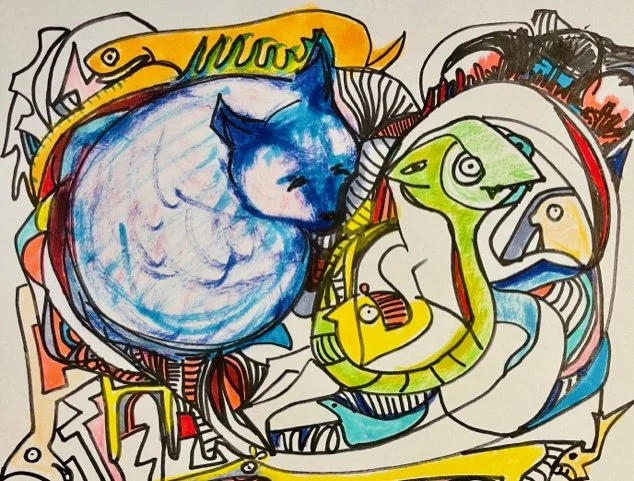
Art by Hart

This was a photo shoot. Thanks to the modern miracle of artificial food coloring, no squid were harmed in the making of Joey's famous squid ink pasta.

Arline worried a lot about her mini horse.

Despite eager assurances, few members of Margo's hockey team actually showed up for class reunion.

Woofy and Royalton were not everybody's cup of tea.

Fluff had her spicy cat food dream again.

Art and Photos by Jane Hart

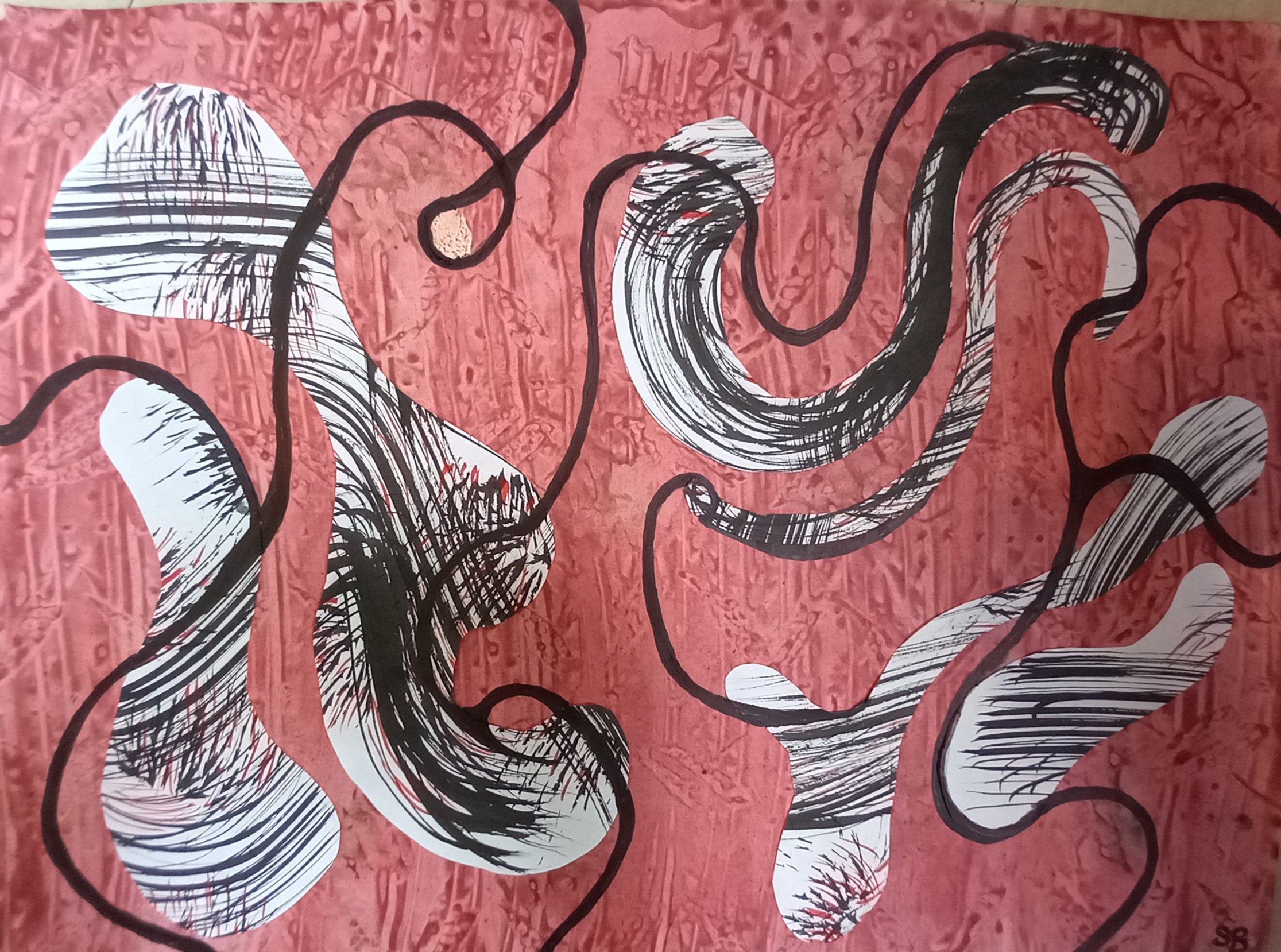
Spotlight on Sheila Benedis, Artist

A Portrait of Autism: Artists and Their Works, With Sheila Benedis

On April 14, The National Institute of Mental Health (NIMH) and the Office of Autism Research Coordination (OARC) hosted their 10th Annual Autism Awareness Month Special Event, A Portrait of Autism: Artists and Their Works. The virtual event featured four artists who talked about how their experiences as autistic individuals have shaped their artistic expression. Key among them wasour very own Sheila Benedis. The event included a sampling of their artwork and a Q&A with the artists.

If you missed it, you can find a video recording by clicking the button below.

And you can see Sheila’s most recent work here.

Click Here

Special Observances, April 24-30

April 24: National Pigs in a Blanket Day

National Pig-in-a-Blanket Day is celebrated across the world. Pigs-in-a-blanket, a dish made by wrapping pork sausage in bacon, is most common during Christmas. This dish is made with different variations in different parts of the world. In the United States, pigs-in-blankets are often baked by wrapping hot dogs or sausages in biscuit dough, croissant dough, or a pancake. These are usually made small and are served as an appetizer, though they can be served at any three mealtimes. These are also found with little differences in the United Kingdom, Denmark, Ireland, Germany, Belgium, Russia, Canada, and Japan. Children of America enjoy this dish for generations.

April 25: World Penguin Day

World Penguin Day aims to raise awareness about these flightless birds to preserve their species so future generations get to see these elegant and remarkable creatures. This day coincides with the annual northern migration of Adélie penguins, a pattern inherent and conserved across generations. Eight species are native to Antarctica. Most penguins are monogamous and have unique calls to assist them in finding their mates in large groups. Most species lay up to two eggs in a season. The King and Emperor penguins lay only one. Alarmingly though, of the 18 known living species, 10 have been listed as endangered.

April 26: Hug a Friend Day

Hug a Friend Day is the time to celebrate your favorite people on earth. Friendship has a huge impact on mental health and happiness, relieves stress, brings comfort and joy, prevents loneliness and isolation. Hugs may release a hormone called oxytocin into the bloodstream, which helps lower blood pressure, heart rate, and the stress hormone cortisol.

April 27: National Tell a Story Day

Stories have the undeniable quality of transporting us to another time and place as we sit snug in our seats. Stories are also great bonding material since people create memories as they immerse themselves in the storytelling activity. Whether they happened in real life or are a product of our imagination, stories form an interesting part of human society. In the old days, they were used as history recording tools as well as entertainment. From “Aesop’s Fables” and ancient Egypt’s hieroglyphics to modern-day Harry Potter, storytelling is no different today with the advent of shows, books, poetry, etc.

April 28: National Blueberry Pie Day

National Blueberry Pie Day on April 28th each year ushers in blueberry pie-making season. Blueberry harvest begins in April and lasts until September giving us a long season full of blueberry enjoyment. We’ve been enjoying blueberries in pies since early American settlers arrived. In 1872, the first documented recipe for blueberry pie appeared in the Appledore Cook Book. Blueberries are abundant in Maine, so it’s no surprise that blueberry pie is the state’s official dessert! (And just FYI: New York’s state dessert is cheesecake! Which you can top with blueberries, of course.)

April 28: National Peace Rose Day

National Peace Rose Day honors a well-known and fruitful garden rose. The light yellow to large cream-colored flowers of the Peace rose have slightly flushed crimson pink petal edges. It is a hybrid tea rose that is hardy, vigorous, and highly resistant to disease. French horticulturist Francis Meilland developed the Peace rose between 1935 and 1939. When Meilland foresaw the German invasion of France, to protect the new rose, he sent cutting to his friends in Italy, Turkey, Germany, and the United States. It is believed these cuttings were sent to the United States on the last plane available before the German invasion. Each country that received a cutting gave the rose a different name. The United States named the rose “Peace.” The national flower of the United States is the rose. Later in 1945, Peace roses were given to each delegate at the inaugural meeting of the United Nations, in San Francisco, with a note that read: “We hope the Peace rose will influence men’s thoughts for everlasting world peace.”

April 30: Bugs Bunny Day

National Bugs Bunny Day commemorates the date the famous bunny first appeared in a short film in 1938. Known for his comical antics, Bugs Bunny created memorable roles in Looney Tunes and Merrie Melodies cartoons produced by Warner Bros. The wascally wabbit caused many a raucous scene for his castmates Daffy Duck, Yosemite Sam, Porky Pig, Pepe Le Pew, and Marvin the Martian. However, his eminent counterpart was forever the estimable hunter, Elmer Fudd. He first appeared in 1938 in Porky’s Hare Hunt as a Happy Rabbit but later solidified his character as Bugs Bunny in the 1940 A Wild Hare. Over the years, various actors have voiced the animated bunny. However, Mel Blanc originally voiced the iconic “Eh, what’s up, doc?” voice and he did so for almost 50 years. 

Art by Hart

A riding mower was not the open two-seater Scott had hinted about

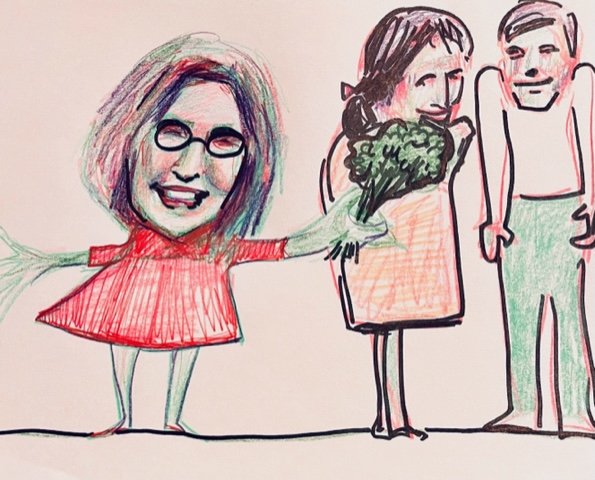
For days, Gigi had been trying to come up with the name of her wonderful hair stylist

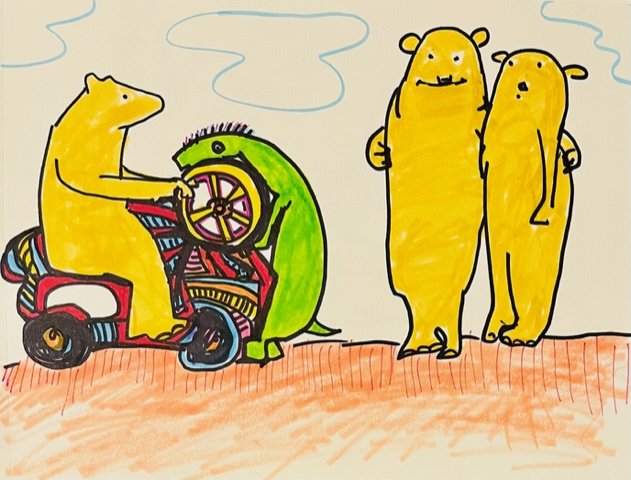
At 83 Teddy and Tuffy still fought over their favorite stuffed toy

Mrs. T solved the "simple, eco-friendly wedding" challenge for $2.36 plus tax

Mrs. Closky never should have eaten the barista

Art and photos by Jane Hart

In and Around Kendal . . .

Happy Birthday, Liz Laite! By Cynthia Ferguson

A dinner-time cascade of “orchids” spoon together, by Art Brady

Alida garden studio residence available, by Edward Kasinec

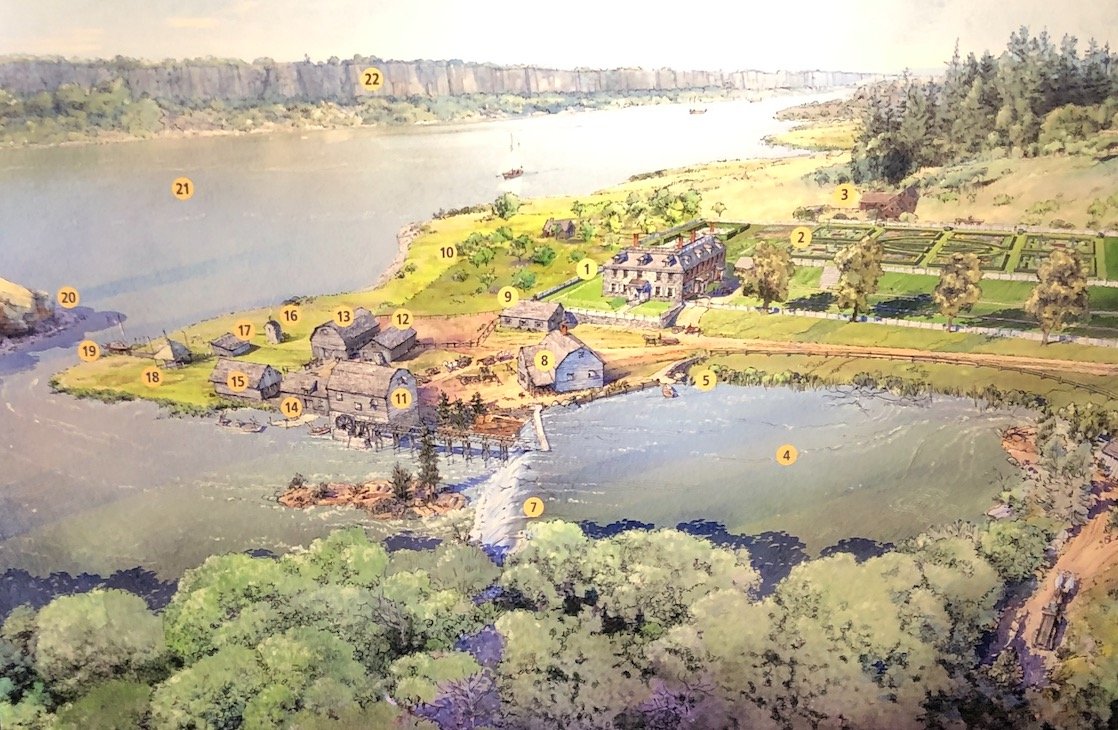
Beckoning spring path, by Edward Kasinec

Magnolia trees at Rockwood Hall, by Harry Bloomfeld

Pink harbingers of spring, by Edward Kasinec

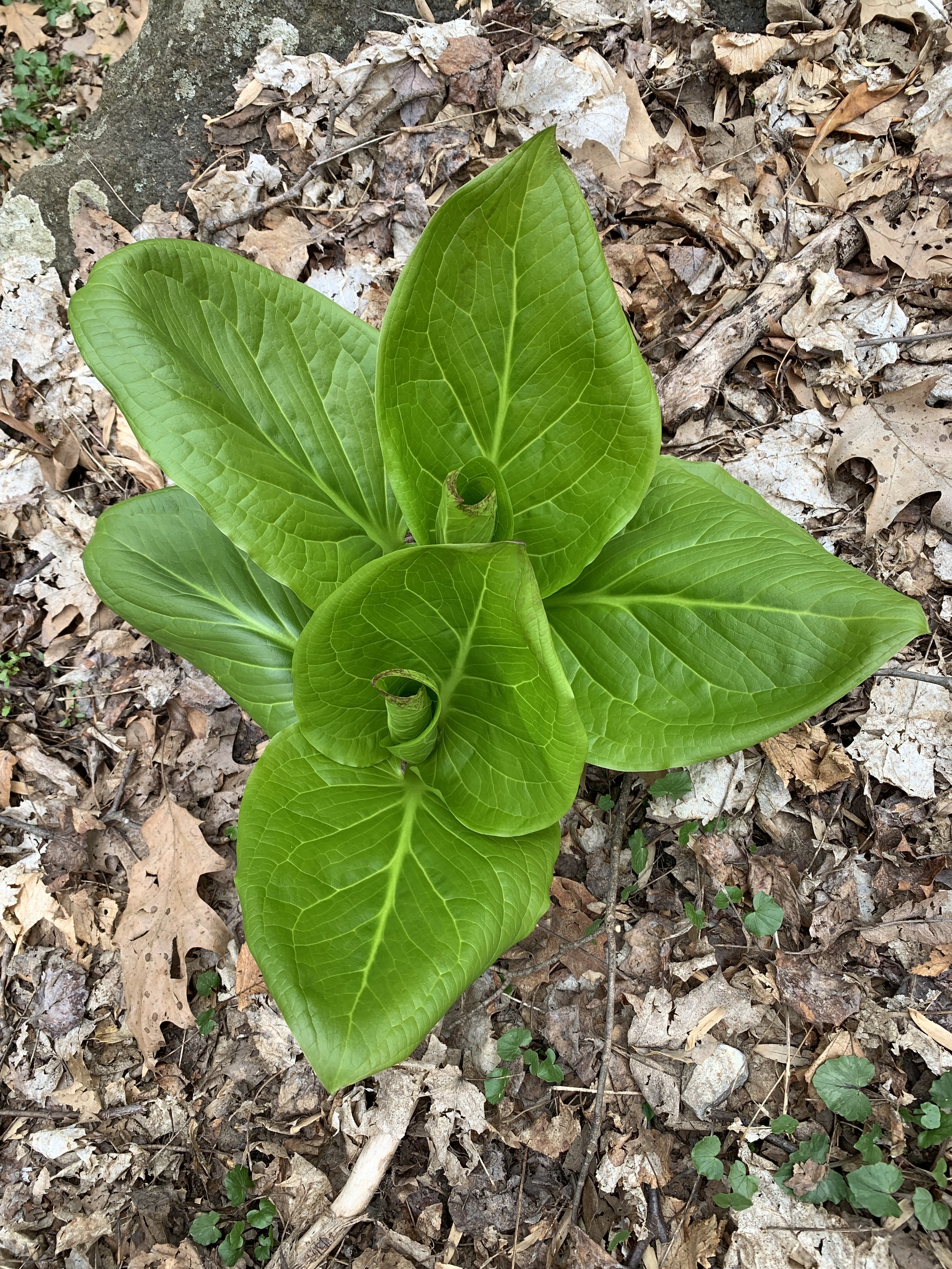
A lovely bunch of skunk cabbage in Rockwood Hall, Brook Trail, by Marianne Bloomfeld

And Way Beyond . . .

There are moments when someone tells us of something that that person has done in their lives, which leaves us gaping. Case in point: Martin Smolin. He sent a photo. Not an easily recognizable photo. When I asked, he explained casually, as if it ‘twer nothin’ at all: “While on a recent parachuting course in the Chilean Andes, I got this terrific photo of Sierra Montearbol in the northern part of the country. Just like to share it with everyone here.”

So, for you who are also not contemplating a parachuting course in the Chilean Andes (or anywhere else, for that matter), here’s what it looks like from a parachute:

Coming Soon to a Gathering Room Near You . . . NY State Government

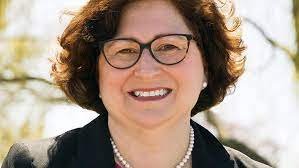
MaryJane Shimsky, Representative, 92nd District

April 21, 2 PM, in the Gathering Room, our Albany Representative will be here at Kendal to give us an update on what’s doin’ in the New York State Legislature and hear from us, her constituents.

A lifelong environmentalist, Shimsky has been most recently involved in the Holtec efforts to dispose of Indian Point nuclear power plant wastewater into the Hudson. The company has put that on hold off until early May, saying it wishes to “further engage” on its plans with elected officials. Shimsky will surely be glad of the opportunity to “further engage” with her constituents on the issue this Friday.

Fox News . . . No, Not That Fox, Our Fox

Muriel Fox is still getting press — in The NY Times, no less — and with vim and vigor, too. In her April 13 column, “How 90 Became the New 60,” Gail Collins features Muriel Fox (“a feminist pioneer”) and her signature feistiness: “ “Ninety is the new 60. I’ve got several great friends in their 100s.” (And we know who they are!)

Did you miss it the Op Ed piece? If so, click below for the link:

Click Here